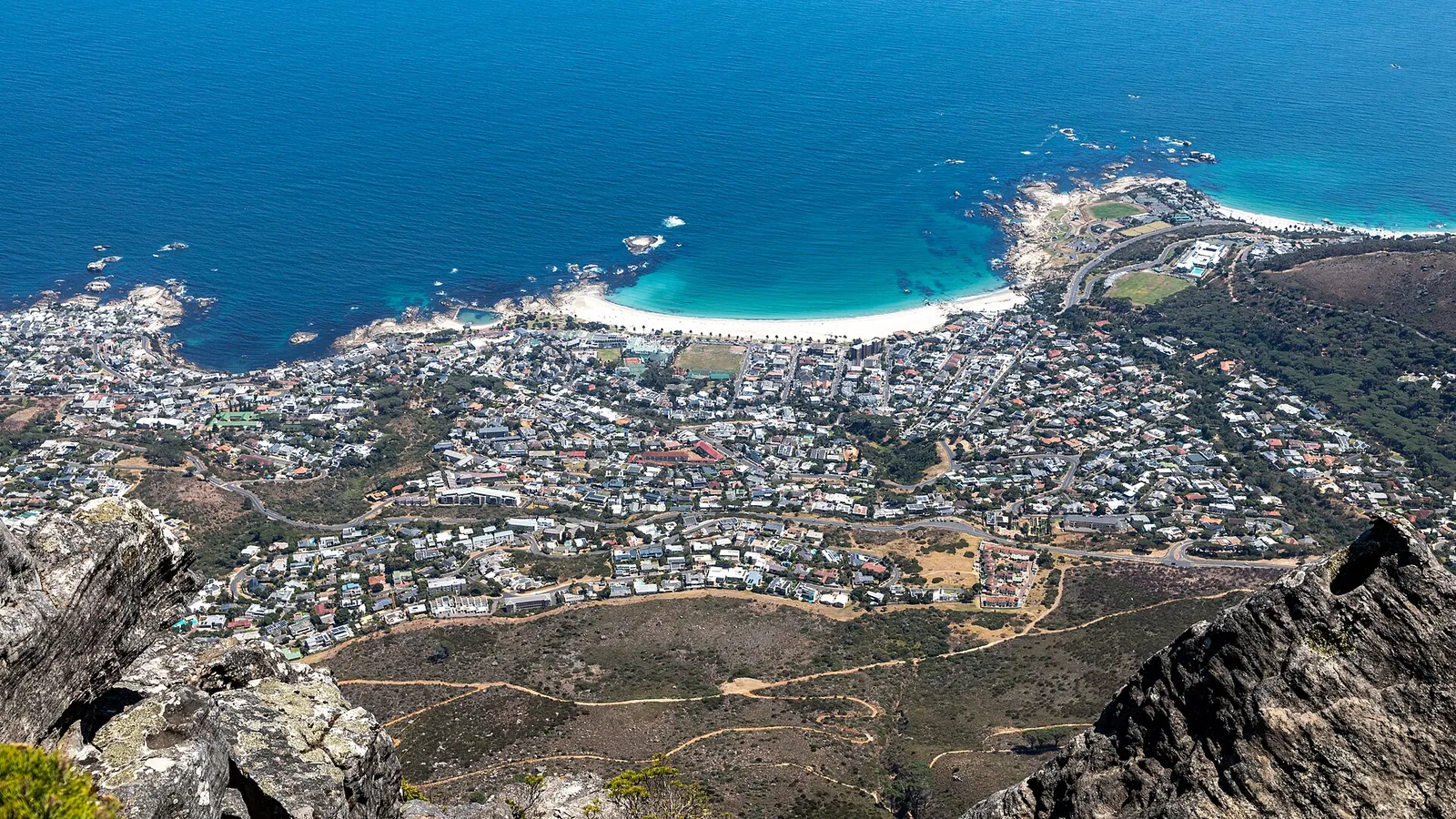
Table Mountain and the sweep of Camps Bay on the Atlantic coast of Cape Town

Africa

South Africa Travel Guide

Big Five safaris, a city beneath a flat-topped mountain, vineyards, penguin beaches, whale coasts and a democratic story that changed the world, all in one rewarding country.

  • Destinations 10 hand-picked
  • Best time Varies by region, see below
  • Ideal trip 10–14 days for a first trip

Photo: Dietmar Rabich · CC BY-SA 4.0

Why go to South Africa

South Africa lies at the southern tip of the continent, with coasts on the Atlantic and Indian Oceans, a high interior plateau, and a landscape ranging from lush subtropical coast to semi-desert. It is a country of about 60 million people and 11 official languages, often called the Rainbow Nation, and its modern story of the end of apartheid in 1994 and the election of Nelson Mandela as president is one of the great moral dramas of the 20th century.

For visitors, the attractions are outstanding and unusually varied. There are world-class safari parks, including Kruger, where the Big Five, lion, leopard, elephant, rhino and buffalo, can be seen without a guide; Cape Town, one of the world's most beautiful cities; the wine estates of Stellenbosch and Franschhoek; the Garden Route's coast and forests; whale and shark encounters; the Drakensberg mountains; and the history of Soweto and Robben Island.

South Africa is also excellent value, with good roads, modern infrastructure and high-quality food and wine at prices well below Europe. It has serious problems, notably high crime, inequality and unreliable services in places, and visitors need to take sensible precautions. But most trips go smoothly, and the welcome is warm.

Where to go

Best Places to Visit in South Africa

Ordered roughly by how strongly we would recommend each for a first visit. Cape Town, Kruger and the Garden Route are the essentials; the Winelands, Johannesburg and the Drakensberg add variety, and the others reward those with more time.

Major CityCoast & Beaches

Cape Town

Western Cape, south-west coast

One of the world's most beautiful cities: Table Mountain, the Waterfront, Robben Island, the Cape Peninsula's penguins and Cape Point, Kirstenbosch, Bo-Kaap and a superb food scene.

Don't miss The top of Table Mountain on a clear day, looking over the city, the bay and the Atlantic coast at your feet.

Explore Destination — Cape Town
National ParkNature & Wildlife

Kruger National Park

Limpopo and Mpumalanga, north-east South Africa

South Africa's flagship safari destination: 19,500 square kilometres of savanna with lions, leopards, elephants, rhinos, buffaloes and more, visited by self-drive, guided drives and private reserves.

Don't miss A dawn game drive that ends with a leopard resting in a tree beside the road.

Explore Destination — Kruger National Park
Scenic RegionCoast & Beaches

The Garden Route

Western and Eastern Cape, south coast

A scenic coastal drive from Mossel Bay to Tsitsikamma, with Knysna's lagoon, Plettenberg Bay's beaches, ancient forests, the Storms River suspension bridge and the ostrich country of Oudtshoorn.

Don't miss The sea-carved cliffs and forest of Tsitsikamma, from the suspension bridge across the Storms River mouth.

Explore Destination — The Garden Route
Food & WineScenic Region

The Cape Winelands

Western Cape, east of Cape Town

The heart of South African wine: Stellenbosch, Franschhoek, Paarl and Constantia, with historic estates, Cape Dutch architecture, food, art and superb scenery.

Don't miss A long lunch on a wine estate terrace, with a chilled chenin blanc and vineyards stretching to the mountains.

Explore Destination — The Cape Winelands
Major CityHistoric Site

Johannesburg and Soweto

Gauteng, north-east interior

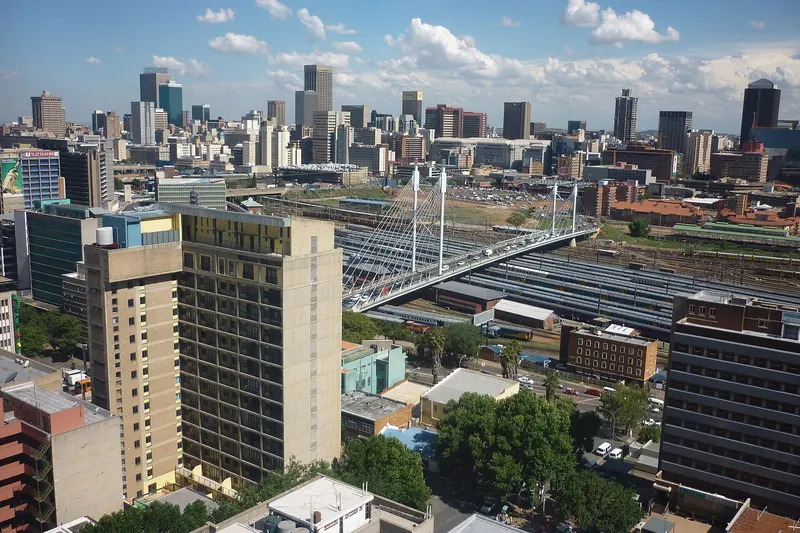
South Africa's largest city and its historic heart: the Apartheid Museum, Constitution Hill, Soweto's Vilakazi Street and Hector Pieterson Memorial, urban renewal in Maboneng and the Cradle of Humankind.

Don't miss Vilakazi Street in Soweto, where two Nobel Peace Prize winners lived a few doors apart.

Explore Destination — Johannesburg and Soweto
MountainsUNESCO Site

The Drakensberg

KwaZulu-Natal, on the Lesotho border

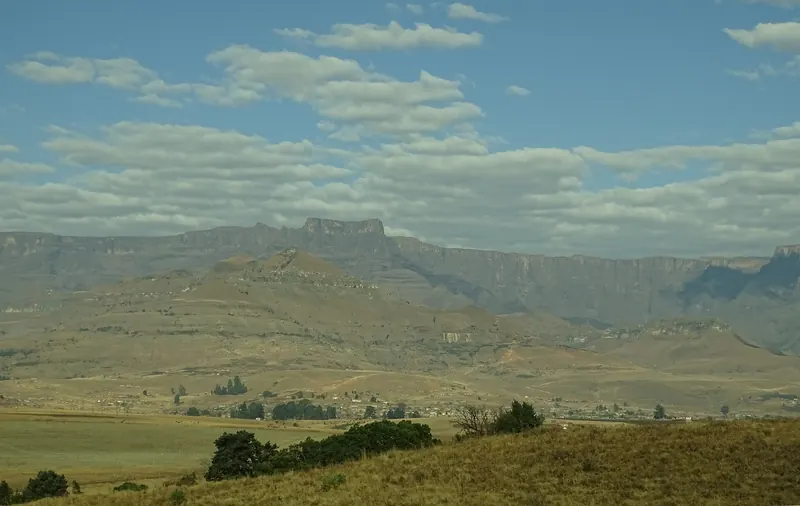
A UNESCO-listed mountain range of dramatic escarpments, with the Amphitheatre and Tugela Falls, Cathedral Peak, Giant's Castle, San rock art, hiking, horse riding and mountain resorts.

Don't miss Standing beneath the Amphitheatre, a five-kilometre rock wall towering above the Royal Natal National Park.

Explore Destination — The Drakensberg
Scenic RegionNature & Wildlife

The Panorama Route

Mpumalanga, north-east South Africa

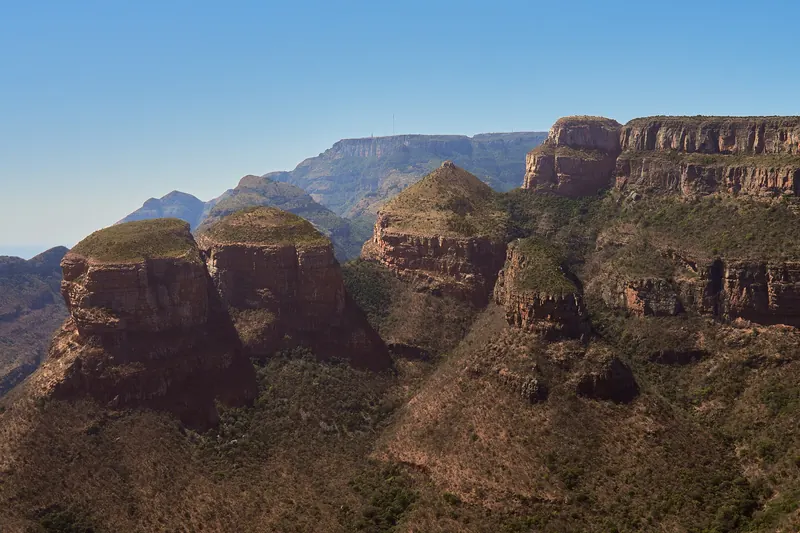
A scenic route through Mpumalanga's escarpment, with Blyde River Canyon, God's Window, the Three Rondavels, Bourke's Luck Potholes, waterfalls and the old gold town of Pilgrim's Rest.

Don't miss The view from God's Window across the lowveld, with the Blyde River Canyon and the Three Rondavels beyond.

Explore Destination — The Panorama Route
UNESCO SiteNational Park

iSimangaliso and St Lucia

KwaZulu-Natal, north-east coast

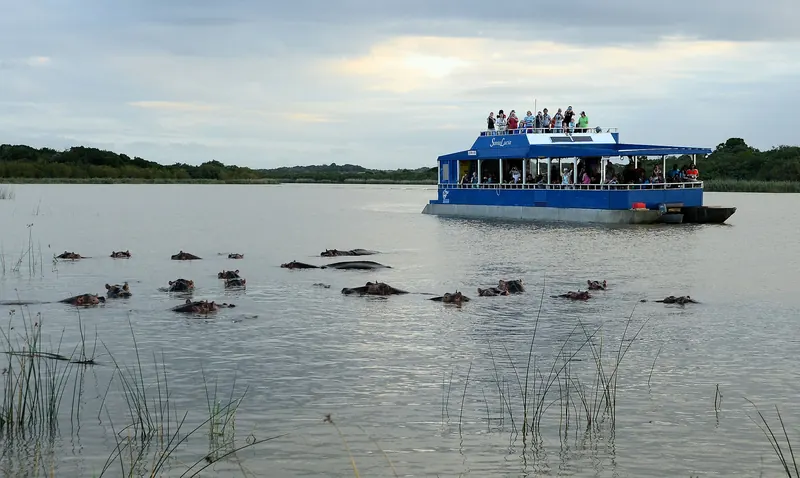
South Africa's first UNESCO World Heritage Site: hippo and crocodile cruises on the St Lucia estuary, the beaches of Cape Vidal, diving at Sodwana Bay, turtle nesting, whales and nearby big-game parks.

Don't miss A boat cruise on the St Lucia estuary at sunset, surrounded by hippos and the sound of fish eagles.

Explore Destination — iSimangaliso and St Lucia
National ParkNature & Wildlife

Addo and the Eastern Cape

Eastern Cape, near Gqeberha

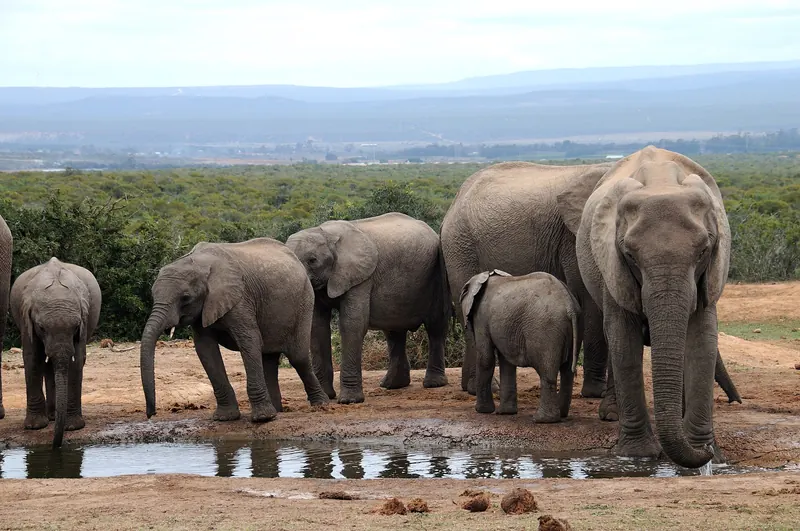
One of South Africa's most rewarding safari parks, malaria-free and easy to reach from Gqeberha, with dense elephant herds, the Big Five, dung beetle crossings and private reserves such as Shamwari.

Don't miss A herd of elephants arriving at a waterhole at dusk, with calves splashing in the mud.

Explore Destination — Addo and the Eastern Cape
Coast & BeachesNature & Wildlife

Hermanus and the Overberg

Western Cape, south coast, Overberg

A seaside town 90 minutes from Cape Town with whales from June to November, plus shark-cage diving at Gansbaai, Cape Agulhas, wine in the Hemel-en-Aarde Valley and coastal walks.

Don't miss A southern right whale mother and calf just metres from the cliff path, seen with no boat needed.

Explore Destination — Hermanus and the Overberg

Browse all 510 destinations

Experiences

Best things to do in South Africa

The experiences that recur across the country and make a South African trip feel like one.

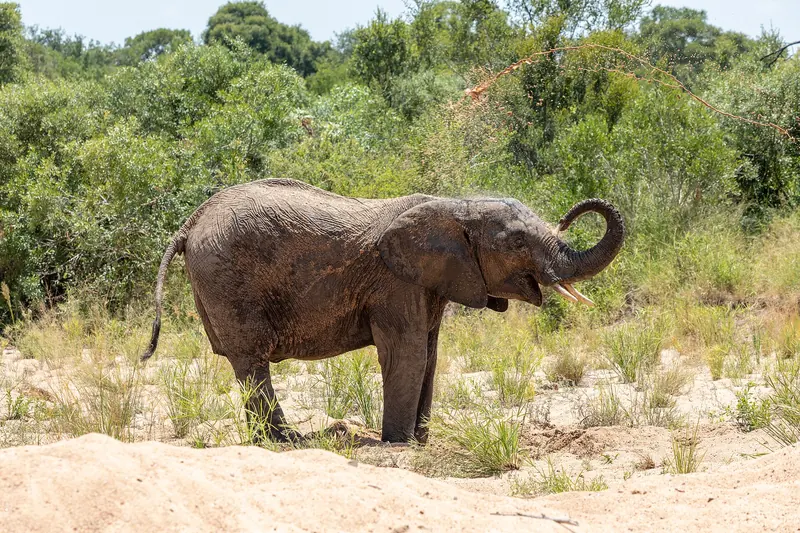
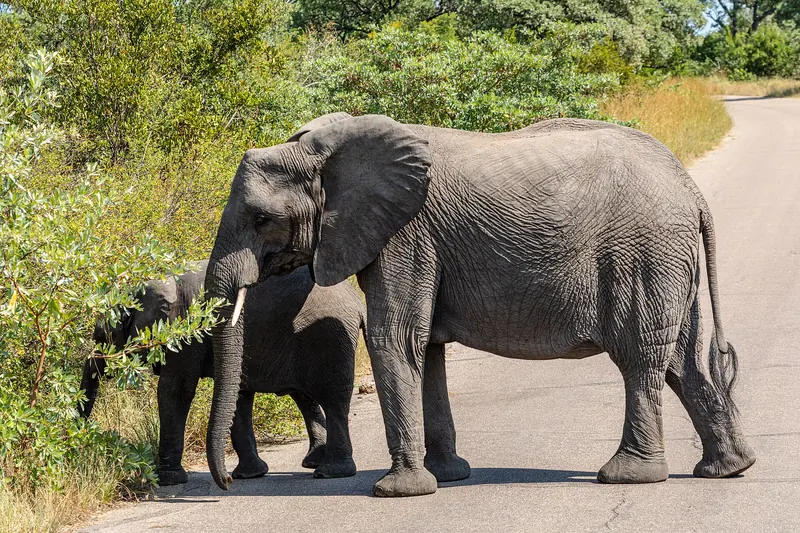
  1. A group of elephants walking in Kruger National Park

    Go on safari

    South Africa has some of Africa's best safaris, from self-drive in Kruger to luxury lodges in private reserves such as Sabi Sands. See Kruger and Addo.

    Tip Go in the dry season, from May to September, when animals gather at water.

  2. Ride the cable car up Table Mountain

    The flat-topped mountain that dominates Cape Town has a rotating cable car and views over the city and the sea. See Cape Town.

    Tip Check the wind and cloud, since the cable car closes in bad weather.

  3. Taste wine among the vines

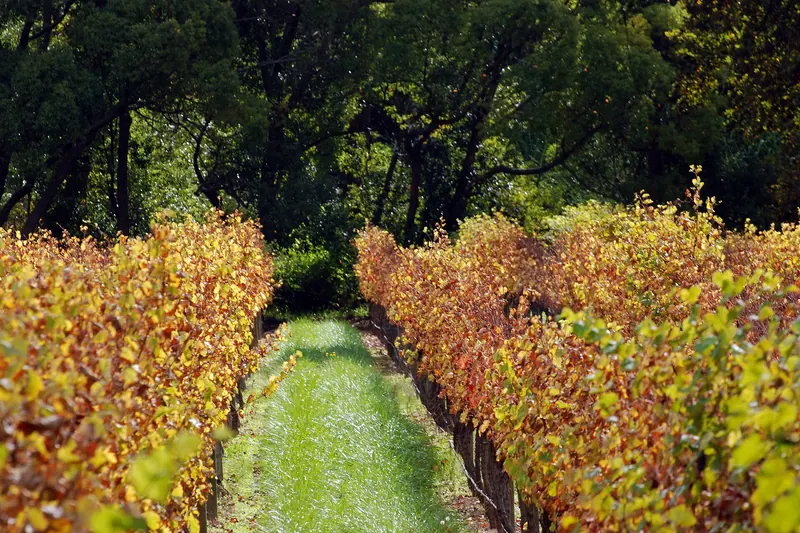
    The Cape's wine estates, in Cape Dutch settings among mountains, offer tastings, lunches and stays. See the Cape Winelands.

    Tip Book a driver, or a tour, and take a lunch break.

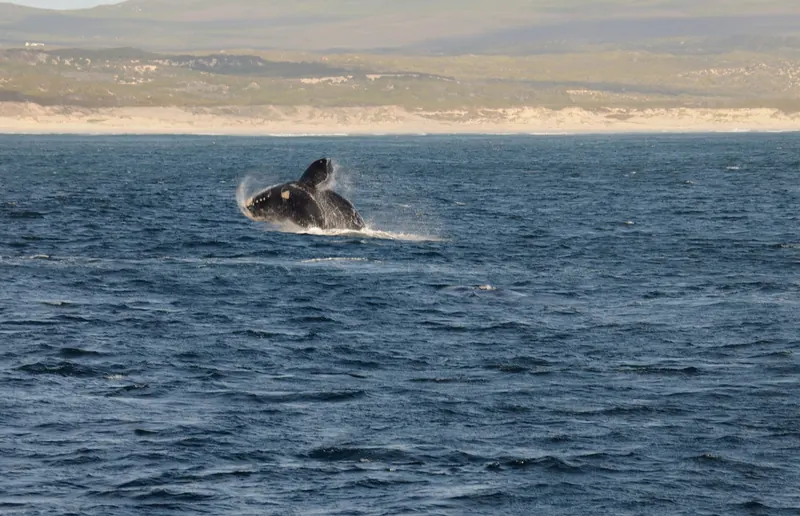
  4. Watch whales from the shore

    From June to November, southern right whales come close to the coast, and Hermanus is one of the best places in the world to see them from land. See Hermanus.

    Tip Walk the cliff path in September and October.

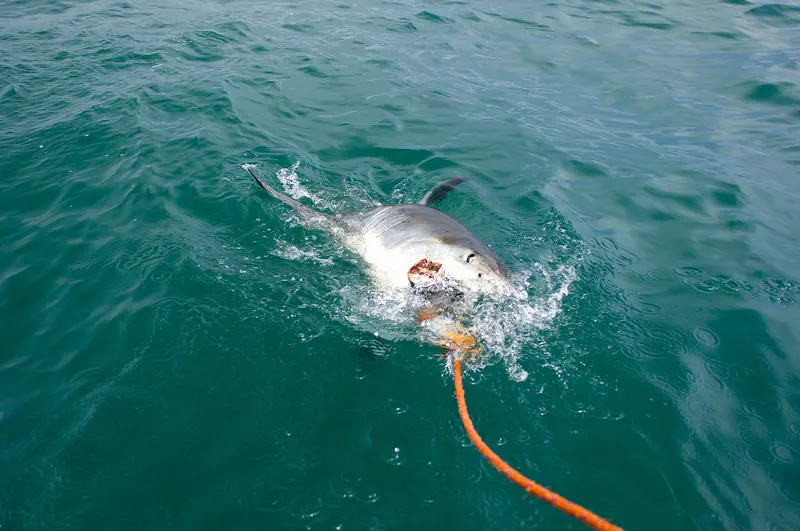
  5. A great white shark swimming near the surface

    Dive with great white sharks

    Gansbaai is the world's best-known place for cage diving with great whites, though it is a controversial activity.

    Tip Choose a responsible operator, and consider alternatives.

  6. Learn the story of apartheid

    Robben Island, the Apartheid Museum and Soweto tell the story of the struggle against apartheid and of the people who ended it. See Johannesburg and Soweto.

    Tip Book Robben Island tickets far ahead.

  7. Drive the Garden Route

    A scenic coastal road with lagoons, forests, beaches and adventure activities. See the Garden Route.

    Tip Allow four or five days, with stops.

Food and drink

South Africa foods to try

South African food is a mixture of Dutch, Malay, Indian, British and African traditions, with a strong barbecue culture and increasingly ambitious restaurants.

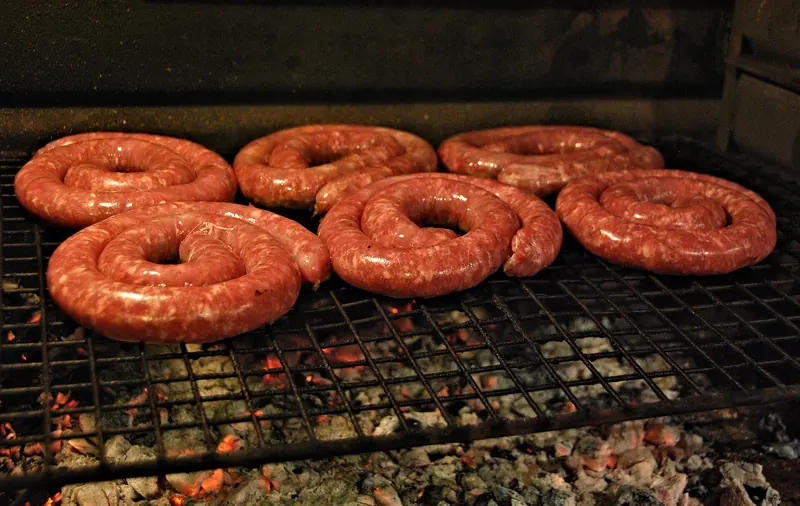
  • Boerewors sausages grilling on a South African braai

    Braai and boerewors

    The braai, or barbecue, is a national ritual, with boerewors sausages, lamb chops, steak and corn cooked over wood or charcoal, and shared with friends.

    Where to try it Everywhere, especially on weekends and in Soweto.

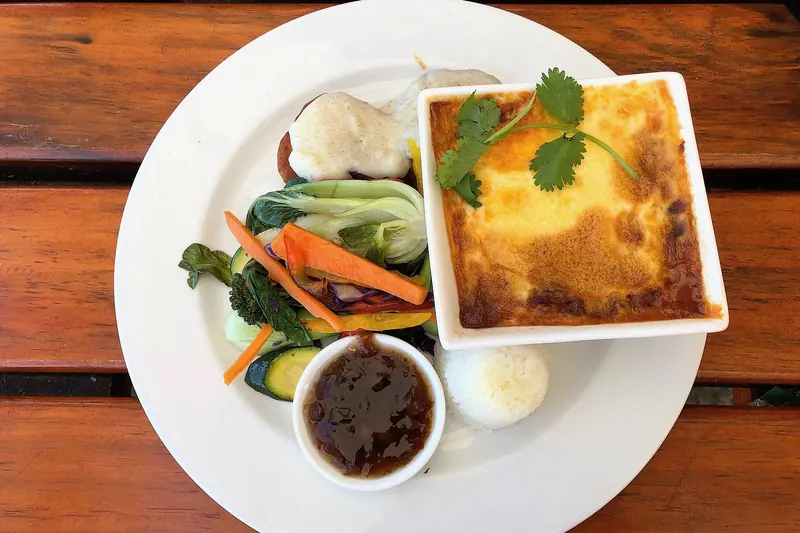
  • A serving of bobotie, spiced minced meat baked with an egg topping

    Bobotie

    A Cape Malay dish of spiced minced meat with dried fruit, baked with an egg custard topping, and served with yellow rice.

    Where to try it Cape Malay restaurants in Cape Town.

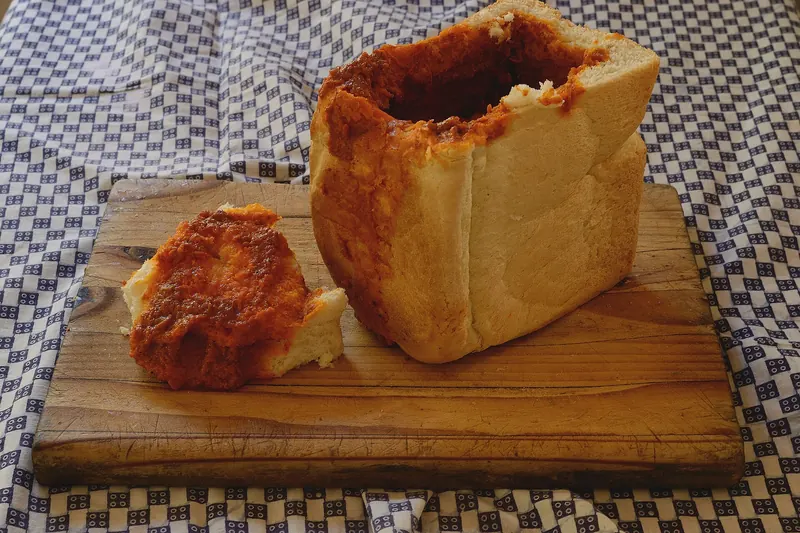
  • A bunny chow, curry served in a hollowed-out loaf of bread

    Bunny chow

    A Durban speciality of curry served in a hollowed-out loaf of bread, created by the city's Indian community.

    Where to try it Durban and takeaways across the country.

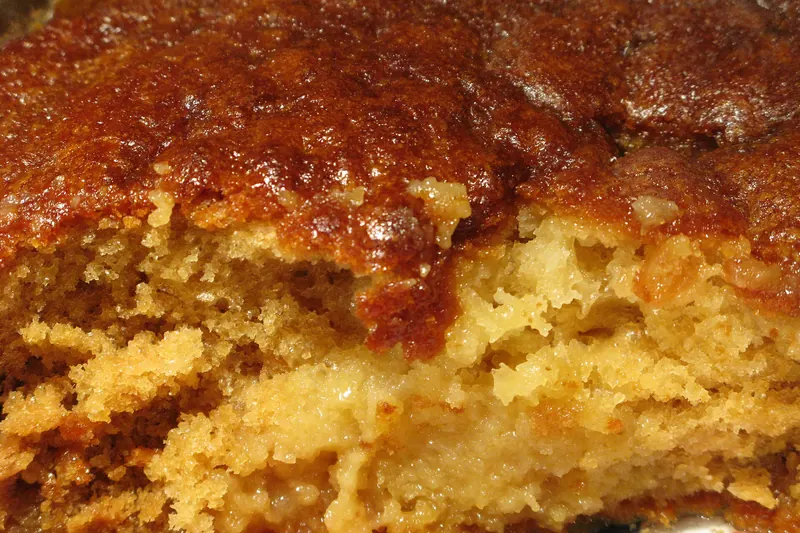
  • A warm malva pudding with custard

    Malva pudding

    A sweet, spongy baked pudding soaked in apricot-jam-based syrup, served warm with custard or ice cream.

    Where to try it Restaurants and wine estates.

  • Biltong

    Air-dried, cured meat, usually beef or game, sold in strips, a favourite snack.

    Where to try it Shops and markets.

  • A cup of freshly brewed red rooibos tea

    Rooibos tea

    A caffeine-free red tea from the Cederberg mountains, served with or without milk.

    Where to try it Cafés and hotels.

Before you go

Practical travel information for South Africa

The essentials, current for 2026. South Africa is easy to travel in, though safety, distances and power can need attention.

Capital
Pretoria (executive), Cape Town (legislative) and Bloemfontein (judicial)
Language
Eleven official languages, including English, Afrikaans, Zulu and Xhosa. English is widely spoken and used in tourism.
Currency
South African rand (ZAR, R). Roughly 17–19 rand to the US dollar in recent years.
Cards and cash
Cards are widely accepted, and ATMs are common, but use ATMs inside malls or banks. Carry some cash for tips, petrol attendants and rural areas. Cash withdrawal scams exist, so cover the keypad and refuse help.
Entry and visas
Many nationalities, including the United Kingdom, most of Europe, the United States, Canada and Australia, can enter without a visa for up to 90 days. Rules change, and travelling with children involves extra documentation, so check the official government site.
Power sockets
Type M (three large round pins) and N, 230 V, 50 Hz. A South Africa adaptor is needed.
Emergency number
10111 for police, 10177 for ambulance, and 112 from mobile phones.
Tipping
10–15% in restaurants, R5–R10 for petrol attendants, and more for guides, rangers and trackers, usually R100–200 per day per person on safari.
Safety
Crime, including robbery, carjacking and smash-and-grab theft, is a serious problem in cities. Do not walk alone at night, keep valuables out of sight, lock car doors and keep windows up in traffic, and use ride-hailing apps rather than hailing taxis. Do not visit townships or central Johannesburg without a reputable guide. Tourist areas and parks are generally safe, but follow local advice.
Internet and SIM
Good in cities and along main roads. Coverage is patchy in rural areas and the bush. Local SIM cards are cheap. Power cuts, called load shedding, have eased, but can still occur.
Time zone
South Africa Standard Time, UTC+2 all year, with no daylight saving.

Daily budget guide (per person)

Backpacker
US$40–70 per day — hostels, self-catering, buses
Mid-range
US$100–200 per day — hotels, restaurant meals, car hire
Comfortable
US$250–450 per day — boutique hotels, guides, self-drive safari
Luxury safari
US$600–1,500+ per person per day in a private reserve lodge

Excludes international flights. Figures are typical rather than absolute — cities and peak season run higher.
When to go

Best time to visit South Africa

South Africa's seasons are reversed from the northern hemisphere. The Cape has dry, hot summers, the safari areas are best in the dry winter, and the east coast is subtropical.

  • Summer (December–February)

    Good

    Hot and dry in Cape Town, with long days and beach weather. Hot, wet and green in the north and east, with thick vegetation that makes game viewing harder.

  • Autumn (March–May)

    Best time

    Warm, settled weather in the Cape, and the wine harvest. The bushveld dries out in April and May.

  • Winter (June–August)

    Best time

    The best time for safaris, with dry weather and animals concentrated at water. Cold, wet weather in the Cape, but whales arrive.

  • Spring (September–November)

    Best time

    Warm, with wildflowers in the west and whales in the south. Good for the Garden Route and Cape Town.

Worth planning around: The Cape in July and August if you want sun, and the bushveld in the January–February rains if you want to see wildlife.

Trip length

How long to spend in South Africa

South Africa has long distances, but flights and roads are good. A week covers Cape Town and the Winelands, or a safari, and two weeks allow both with the Garden Route.

  • 7–8 days

    Cape Town and the Winelands, or a safari at Kruger with Johannesburg.

    A first taste.

  • 12–14 days

    The itinerary on this page: Cape Town, the Winelands, the Garden Route, Kruger and Johannesburg.

    The classic first trip, and our recommendation.

  • 3 weeks

    Adds the Drakensberg, iSimangaliso and the Panorama Route.

    For a slower pace and more of the east.

  • 4 weeks or more

    Adds the Wild Coast, the Karoo and neighbouring countries such as Namibia.

    For those with time.

Getting around

Transportation in South Africa

Domestic flights and hire cars are the main ways to travel. Roads are good, driving is on the left, and public transport is limited outside cities.

  • Domestic flights

    Airlink, FlySafair and CemAir link Cape Town, Johannesburg, Durban, Port Elizabeth (Gqeberha), George and safari airports.

    Book early, and check baggage limits for small aircraft.

  • Hire cars

    The best way to see the Garden Route, Winelands, Kruger and the Panorama Route. Roads are good, but be careful of livestock, potholes and night driving.

    Avoid driving after dark, and keep doors locked.

  • Ride-hailing

    Uber and Bolt operate in main cities, and are safer and more convenient than hailing taxis.

    Use the app.

  • Long-distance buses

    Intercape, Greyhound and Baz Bus link main towns and hostels.

    Book in advance.

  • Trains and the Gautrain

    The Gautrain links Johannesburg, Pretoria and OR Tambo Airport, and luxury trains such as the Blue Train run long routes.

    Other passenger trains are limited.

Sample route

Two weeks in South Africa

Cape Town, the Winelands, the whale coast, the Garden Route, Addo, a safari at Kruger and Johannesburg, with two flights. Covers eight of the ten destinations in this guide.

  1. Day1

    Arrive in Cape Town

    • Morning Land and check in.
    • Afternoon The V&A Waterfront.
    • Evening Dinner at Camps Bay.
  2. Day2

    Cape Town

    • Morning Table Mountain.
    • Afternoon Bo-Kaap and the city centre.
    • Evening Sunset drinks.
  3. Day3

    The Cape Peninsula

    • Morning Chapman's Peak Drive.
    • Afternoon Boulders Beach penguins and Cape Point.
    • Evening Return to the city.
  4. Day4

    Robben Island

    • Morning The ferry to Robben Island.
    • Afternoon Kirstenbosch Garden.
    • Evening A last Cape Town dinner.
  5. Day5

    The Winelands

    • Morning Drive to Stellenbosch.
    • Afternoon Wine tasting and lunch.
    • Evening Overnight in Franschhoek.
  6. Day6

    Hermanus

    • Morning Drive to Hermanus.
    • Afternoon Whale watching from the cliff path.
    • Evening Seafood dinner.
  7. Day7

    Along the Garden Route

    • Morning Drive to Knysna.
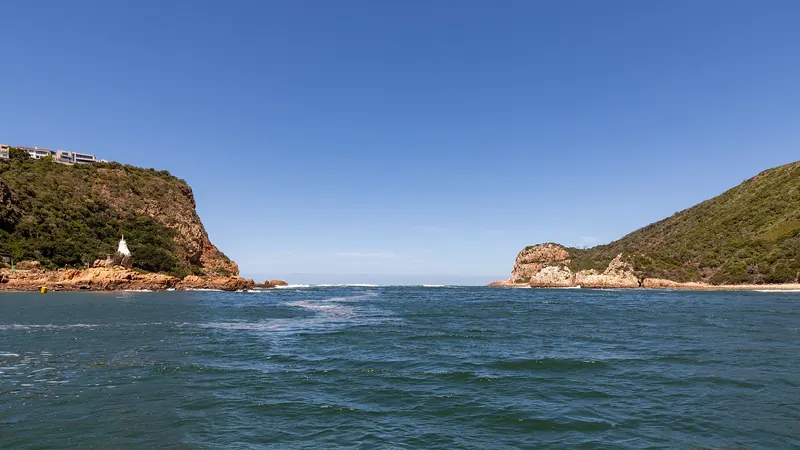
    • Afternoon Knysna Heads and the lagoon.
    • Evening Oysters.
  8. Day8

    Tsitsikamma

    • Morning The Storms River Mouth.
    • Afternoon A forest walk or a kayak.
    • Evening Overnight near Plettenberg Bay.
  9. Day9

    Addo

    • Morning Drive to Addo.
    • Afternoon A game drive among elephants.
    • Evening Fly to Johannesburg from Gqeberha.
  10. Day10

    To Kruger

    • Morning Fly to Hoedspruit or Skukuza.
    • Afternoon A game drive.
    • Evening A campfire dinner.
  11. Day11

    Kruger

    • Morning A dawn game drive.
    • Afternoon A waterhole and picnic.
    • Evening A night drive.
  12. Day12

    Kruger and the Panorama Route

    • Morning A last game drive.
    • Afternoon God's Window and Bourke's Luck Potholes.
    • Evening Overnight in Graskop.
  13. Day13

    Johannesburg

    • Morning Drive to Johannesburg.
    • Afternoon The Apartheid Museum.
    • Evening Dinner in Melville or Maboneng.
  14. Day14

    Soweto and departure

    • Morning A guided tour of Soweto.
    • Afternoon Fly home.
    • Evening Home.

Culture

Culture and etiquette in South Africa

South Africa is a diverse and vibrant country, with a young democracy and a strong sense of humour. People are usually friendly and direct, and greetings matter. The legacy of apartheid remains visible in inequality, and it is best to approach history with respect.

  • Greet people

    Say hello and ask how someone is before you ask for something. Handshakes are common.

  • Respect history

    Apartheid is a painful topic, and museums and township tours are best approached respectfully.

  • Tip generously

    Wages are low, and tips of 10–15% are expected in restaurants and for guides, car guards and petrol attendants.

  • Be careful with photography

    Ask before photographing people, especially in townships.

  • Be safe on safari

    Follow rangers' instructions, stay in your vehicle in parks and keep quiet around wildlife.

  • Join a braai

    If invited, accept, and bring something to drink.

Do

  • Learn a few words: sawubona (hello in Zulu), dankie (thank you in Afrikaans), lekker (nice)
  • Use ride-hailing apps in cities
  • Book safaris and popular attractions early
  • Tip guides, rangers and trackers
  • Wear sunscreen and a hat
  • Try local wine and braai

Don't

  • Don't walk alone at night or display valuables
  • Don't get out of your vehicle on a game drive, unless it is safe and permitted
  • Don't feed wild animals
  • Don't drive at night in rural areas
  • Don't leave luggage visible in a parked car
  • Don't swim at unpatrolled beaches or in rivers with crocodiles and hippos

Travel tips

South Africa travel tips

The things that most often catch visitors out in South Africa, several of which are specific to how the country works.

  • Take crime seriously. Use ride-hailing apps, avoid walking at night and keep valuables hidden.
  • Lock your car doors and windows, and do not leave anything visible inside.
  • Book Table Mountain, Robben Island, Kruger camps and popular restaurants well ahead.
  • Go on safari in the dry season (May to September) for the best wildlife viewing.
  • Check malaria advice if going to Kruger and northern reserves.
  • Carry small notes for tips and parking guards.
  • Fill up with fuel before long rural drives.
  • Check power-cut schedules and carry a power bank.

FAQ

Visiting South Africa: frequently asked questions

Is South Africa safe for tourists?

Millions visit safely each year, but crime is a real concern in cities. Follow local advice, use ride-hailing apps, avoid walking at night and keep valuables out of sight.

How many days do you need in South Africa?

Ten to fourteen days for a first trip, covering Cape Town, the Garden Route and a safari.

What is the best time to visit South Africa?

November to March for Cape Town, and May to September for safari. Spring and autumn suit most of the country.

Do I need a visa for South Africa?

Many nationalities can enter visa-free for up to 90 days. Check the official government site.

Do I need malaria tablets?

Cape Town and the Garden Route are malaria-free. Kruger and parts of the north-east have a risk, lower in winter. Consult a travel clinic.

Is the tap water safe?

In cities and towns, generally yes. In rural areas, use bottled water.

Is it worth self-driving in Kruger?

Yes. It is one of the world's best places for self-drive safaris, and roads are well maintained.

Ready to plan your South Africa trip?

The full travel guide covers routes, budgets, regional differences and how to string these ten destinations into a trip that actually works.

Read the South Africa travel guide

Advertisement