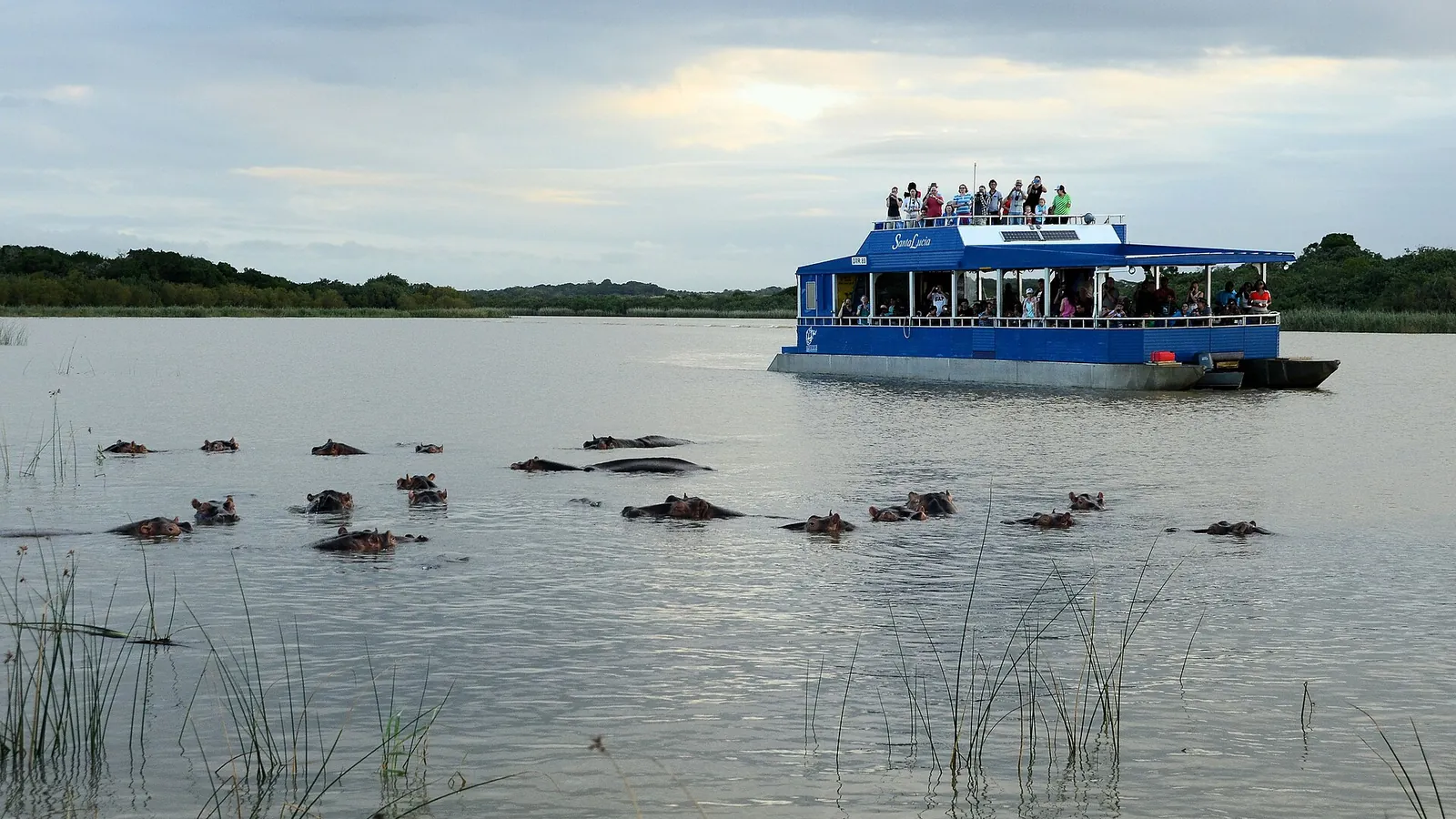
A hippopotamus in the water beside a tour boat in the iSimangaliso Wetland Park

KwaZulu-Natal, north-east coast · South Africa

iSimangaliso and St Lucia

A vast wetland and coastal park of estuaries, hippos, crocodiles, forested dunes, coral reefs and turtle beaches, with rhinos at Hluhluwe–iMfolozi close by.

  • Best time April–October
  • Stay 3 days
  • Good for Wildlife, beaches, snorkelling, birdwatching, families

Photo: Ossewa · CC BY-SA 4.0

Welcome to St Lucia

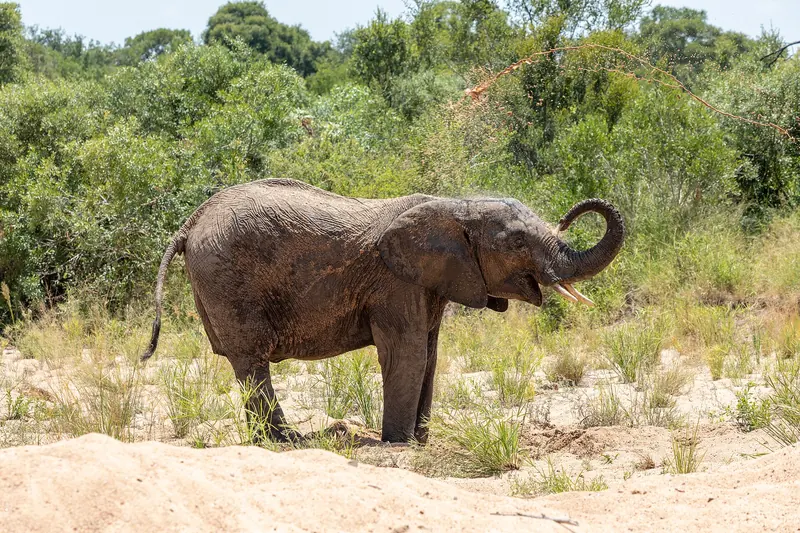
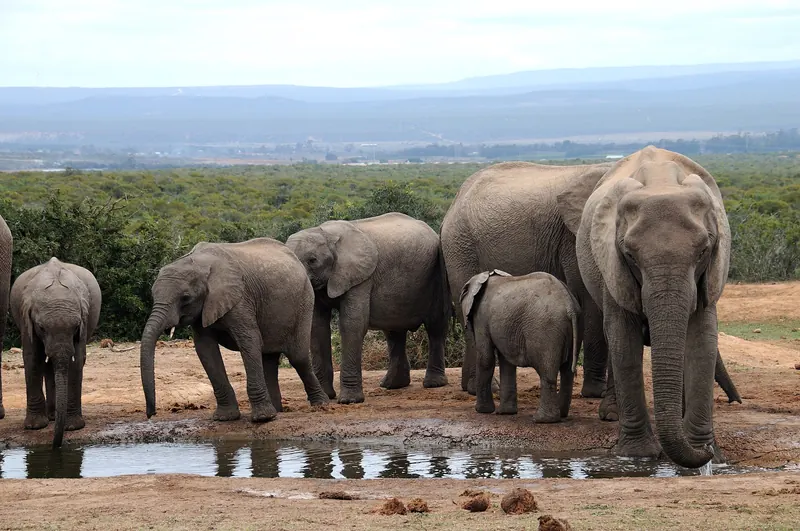
iSimangaliso Wetland Park, on the north-east coast of KwaZulu-Natal, stretches for about 220 km along the Indian Ocean, from the Mozambique border to Maphelane. Its name means miracle and wonder in Zulu, and it was South Africa's first UNESCO World Heritage Site, inscribed in 1999. The park protects a mosaic of habitats, including coral reefs, long beaches, coastal forest, dunes, lakes and swamps, and it is home to hippos, crocodiles, elephants, rhinos, leopards, turtles, whales, dolphins and hundreds of species of bird.

The centre of the park is Lake St Lucia, Africa's largest estuarine lake, and the small town of St Lucia, at its mouth, where hippos occasionally wander at night and boat trips leave to see them and the crocodiles. To the east, a sandy road leads through coastal forest to Cape Vidal, with warm-water reefs and beaches, and further north Sodwana Bay is a top diving destination, while Kosi Bay and the Maputaland coast have lakes and turtle nesting beaches. Leatherback and loggerhead turtles nest on the beaches from November to January.

Nearby, Hluhluwe–iMfolozi Park, one of the oldest game reserves in Africa, has the Big Five and is known for its white rhino conservation success. Together, they make a rewarding trip for wildlife lovers who want a mix of bush and beach. The region is a malaria area, and it is best visited in the drier winter months.

  • UNESCO Site
  • National Park
  • Nature & Wildlife
  • Coast & Beaches

Why visit

Why visit St Lucia?

iSimangaliso combines beach, wetland and bush wildlife, with a relaxed atmosphere and good value.

  • Hippos and crocodiles

    Estuary cruises get close to some of the biggest hippo populations in Africa.

  • Beaches and reefs

    Warm water, coral, snorkelling and diving, without the crowds.

  • Turtles and whales

    Nesting turtles from November to January, and humpback whales from June to November.

  • Big-game nearby

    Hluhluwe–iMfolozi and other reserves have rhinos, lions and elephants.

  • Birdlife

    Over 500 species, including fish eagles and pelicans.

Main attractions

Top things to see in St Lucia

The park has several areas, and most visitors base themselves in St Lucia town.

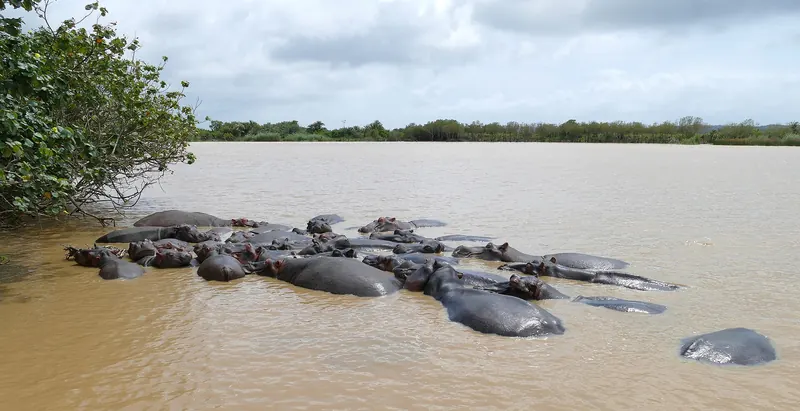
  1. A family of hippos resting on the shore of Lake St Lucia

    St Lucia estuary boat cruise

    A two-hour boat trip up the estuary, where you can see hippos, crocodiles, fish eagles and other birdlife from close range.

    Tip Book the late-afternoon trip.

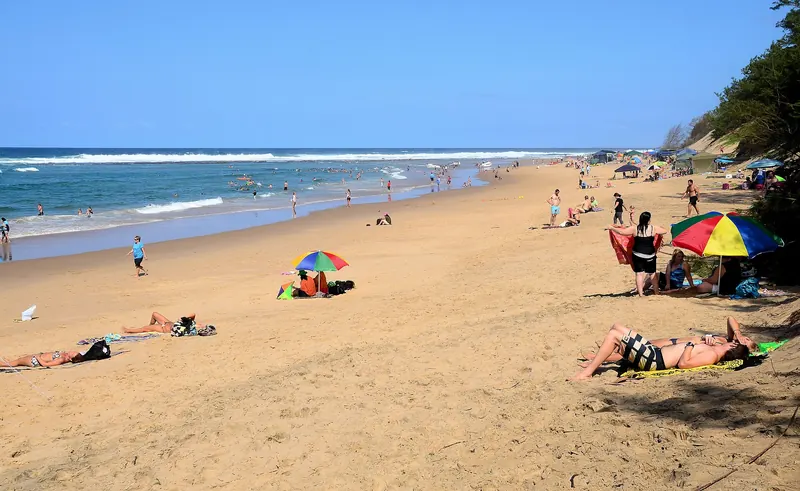
  2. The long sandy beach at Cape Vidal in iSimangaliso

    Cape Vidal

    A beach and camp on the coast, about 30 km from St Lucia, with reefs for snorkelling, a lookout for whales and a wildlife-rich drive through forest and grassland.

    Tip Go early in the morning.

  3. Sodwana Bay

    One of South Africa's top diving spots, with warm water and reef fish, about 1.5 hours north of St Lucia.

    Tip Dive schools offer courses.

  4. Hluhluwe–iMfolozi Park

    One of the oldest protected areas in Africa, established in 1895, with the Big Five and one of the best places to see white and black rhinos.

    Tip Go in the dry season.

  5. Turtle nesting beaches

    Leatherback and loggerhead turtles come ashore to nest on the beaches of Maputaland, and guided night trips are available from November to January.

    Tip Book a guided tour, and follow the rules.

  6. Kosi Bay

    A remote set of lakes and channels on the Mozambique border, with traditional fish traps and pristine beaches.

    Tip A 4x4 is needed.

Things to do

Best things to do in St Lucia

Water and wildlife activities fill the days.

  1. Take a hippo and crocodile cruise

    See hippos and crocs at close range on the estuary.

    Tip Go at sunset.

  2. Snorkel at Cape Vidal

    Warm water and reef fish.

    Tip Check the tide.

  3. Go on a game drive at Hluhluwe–iMfolozi

    See rhinos, elephants and lions.

    Tip Book a guided drive.

  4. Watch whales

    Humpback whales pass from June to November.

    Tip Look from Cape Vidal.

  5. See nesting turtles

    Guided night tours in summer.

    Tip Book far ahead.

  6. Walk with a guide

    Forest and dune walks.

    Tip Use a registered guide.

Local food

What to eat in St Lucia

Food in St Lucia is casual, with seafood and braai.

  • Prawns and fresh fish

    Grilled prawns and line fish.

    Where to try it Restaurants in St Lucia.

  • Braai

    Barbecue with steak and boerewors.

    Where to try it Lodges.

  • Bunny chow

    Curry in a bread loaf, from Durban.

    Where to try it Takeaways.

  • Tropical fruit

    Pineapples, mangoes and bananas.

    Where to try it Markets.

  • Craft beer

    Local breweries.

    Where to try it Restaurants.

Accommodation

Where to stay in St Lucia

Stay in St Lucia town, or in a lodge nearer the park.

  • St Lucia town

    Guesthouses and hotels.

    Best for: Cruises and restaurants

  • Cape Vidal and park camps

    Cabins and campsites in the park.

    Best for: Nature

  • Private game lodges

    Lodges near Hluhluwe.

    Best for: Big-game viewing

What a night costs

Guesthouse or cabin
US$40–90 per night
Mid-range lodge
US$100–200 per night
Luxury lodge
US$300–700 per night
Estuary cruise
US$15–30 per person

Transport

Getting to and around St Lucia

St Lucia is about 250 km north of Durban.

Getting there

  • Drive from Durban

    About 2.5 to 3 hours on the N2.

    Hire a car at the airport.

  • Fly to Richards Bay (RCB)

    About 1 hour 30 minutes by road.

    Limited flights.

  • From Johannesburg

    About 7 to 8 hours by road, or fly to Durban.

    Fly.

Getting around

A car is best, and the park's sand roads need care.

  • Hire car

    Tarred roads to Cape Vidal and Hluhluwe.

    4x4 for some tracks.

  • Tours

    Guided trips from St Lucia.

    Book in advance.

  • Boat

    Estuary cruises.

    Book ahead.

When to go

Best time to visit St Lucia

iSimangaliso has a subtropical climate, with hot, humid summers and mild, dry winters.

  • Summer (November–March)

    Good

    Hot and humid, with turtles nesting and rain.

  • Autumn (April–May)

    Best time

    Warm, dry and clear.

  • Winter (June–August)

    Best time

    Mild and dry, with whales and good game viewing.

  • Spring (September–October)

    Best time

    Warm and dry.

Worth planning around: January and February for heat, humidity and malaria risk.

Itinerary

Three days at St Lucia

Estuary, beach and big game.

  1. Day1

    The estuary

    Hippos.

    • Morning Arrive in St Lucia.
    • Afternoon A sunset cruise.
    • Evening Seafood dinner.
  2. Day2

    Cape Vidal

    Coast.

    • Morning Drive to Cape Vidal.
    • Afternoon Snorkelling and a beach.
    • Evening Return to St Lucia.
  3. Day3

    Hluhluwe–iMfolozi

    Big game.

    • Morning A game drive.
    • Afternoon Rhinos and lunch.
    • Evening Depart.

Travel tips

St Lucia travel tips

A few tips help you stay safe.

  • Do not walk around St Lucia at night, when hippos come ashore.
  • Never swim in the lake or estuary, where there are crocodiles.
  • Check malaria advice and take precautions.
  • Book turtle tours, cruises and camps in advance.
  • Take binoculars, a hat and sunscreen.
  • Follow rangers' instructions.
  • Carry cash for park entry fees.

FAQ

St Lucia: frequently asked questions

How many days do you need in iSimangaliso?

Three days is ideal.

Is it a malaria area?

Yes. Consult a travel clinic.

What is the best time to visit?

April to October, with turtles from November to January.

Can I swim at the beach?

At some beaches, such as Cape Vidal, with care. Never swim in the lake.

Can I see rhinos?

Yes, at Hluhluwe–iMfolozi.

Is it safe?

Yes, if you follow wildlife safety rules.

Read next

Related travel articles

Heritage

UNESCO Sites Worth Planning a Trip Around

A UNESCO listing tells you a place matters; it does not tell you whether it is worth two days and a detour. This is how to read the list usefully — and which sites reward building a trip around them.

Where to go

Choosing a Mediterranean Coast

The Mediterranean coasts in this guide are not interchangeable. Some have sand and some have rock; some are glamorous and some are cheap; two of them are effectively closed for half the year. This is a comparison by the things that decide whether a coastal week works — swimming, crowds, cost, transport and what there is to do when you get out of the water.

Advertisement