- Capital
- Seoul
- Language
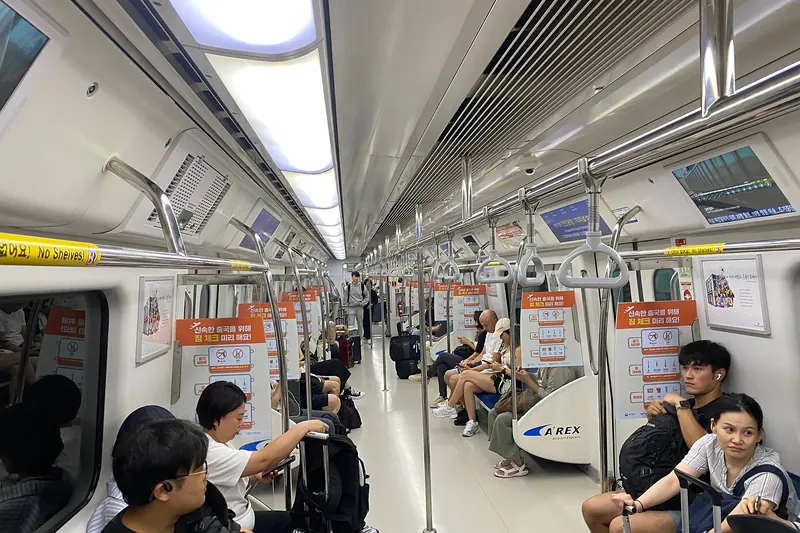
- Korean. English is spoken at major hotels and tourist sites, and signs on the subway and at stations are in English, but many restaurants and taxis have little English. A translation app such as Papago helps.
- Currency
- South Korean won (KRW, ₩). Roughly 1,350–1,450 won to the US dollar in recent years.
- Cards and cash
- Cards are accepted almost everywhere, including small shops, and contactless payment is common. Foreign cards sometimes fail at ATMs, so use those in convenience stores (7-Eleven, GS25) or banks that show a global sign. Carry some cash for markets, small stalls and rural areas.
- Entry and visas
- Many nationalities can visit without a visa for stays of up to 90 days, but most must register for the K-ETA electronic travel authorisation before flying, unless a temporary exemption applies. Rules have changed several times in recent years, so check the official K-ETA and immigration websites.
- Power sockets
- Type C and F (two round pins), 220 V, 60 Hz. Most European plugs work directly; UK and US visitors need an adaptor, and US devices should be dual voltage.
- Emergency number
- 112 for police, 119 for fire and ambulance, and 1330 for the 24-hour Korea Travel Helpline, which has English support.
- Tipping
- Not customary and not expected in restaurants, taxis or hotels. Some places will politely return money you leave.
- Safety
- South Korea is one of the safest countries for travellers, with very low violent crime. Take normal precautions with belongings in crowded areas. The main hazards are traffic (scooters on pavements), heavy summer rain and typhoons, winter ice, and air quality, which can be poor in spring. Follow advice on the DMZ and check government travel advice if tensions with North Korea rise.
- Internet and SIM
- Excellent. Fast 5G coverage is nearly universal, including on the subway and in mountain areas. Buy an eSIM or a pocket Wi-Fi, or use the free Wi-Fi at stations and airports. Google Maps is limited for walking and driving directions, so use Naver Map or Kakao Map.
- Time zone
- Korea Standard Time, UTC+9 all year, with no daylight saving.
Daily budget guide (per person)
- Backpacker
- US$50–80 per day — hostels, street food, subway
- Mid-range
- US$110–190 per day — hotels, restaurant meals, KTX trips
- Comfortable
- US$220–400 per day — boutique hotels, hanok stays, private guides
- Luxury
- US$500+ per day — five-star hotels, fine dining
Excludes international flights. Figures are typical rather than absolute — cities and peak season run higher.