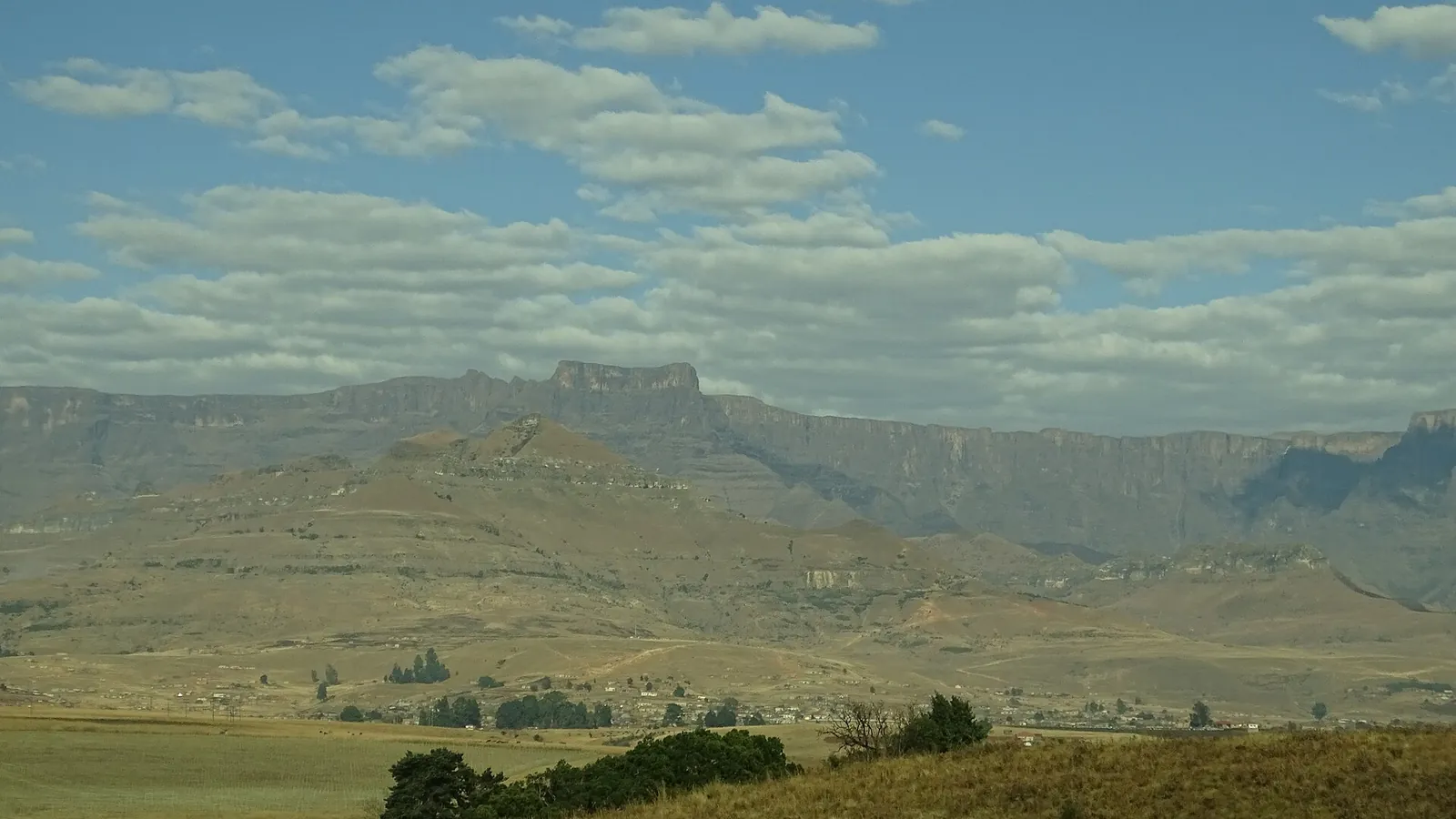
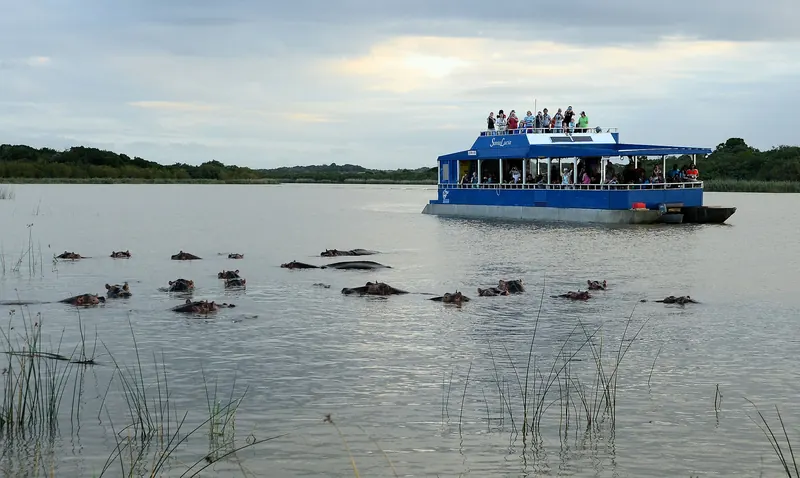
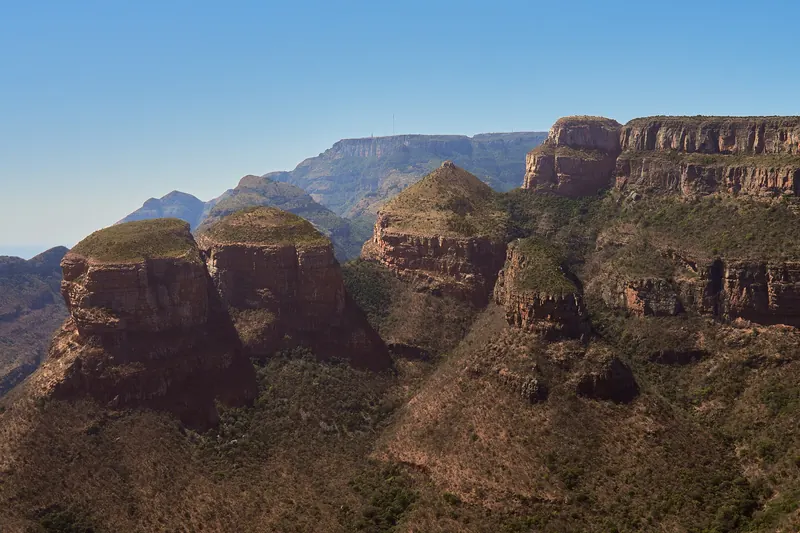
The Amphitheatre, a huge curving rock wall in the Drakensberg mountains

KwaZulu-Natal, on the Lesotho border · South Africa

The Drakensberg

A 200-kilometre wall of basalt and sandstone peaks, the Dragon Mountains, with waterfalls, hiking trails, ancient San rock paintings and the highest waterfall in Africa.

  • Best time March–May and September–November
  • Stay 3 days
  • Good for Hiking, scenery, rock art, horse riding, family holidays

Photo: Ad Meskens · CC BY-SA 4.0

Welcome to the Drakensberg

The Drakensberg, Afrikaans for Dragon Mountains and known to the Zulu as uKhahlamba, the Barrier of Spears, is the highest range in southern Africa. Its great basalt escarpment runs for about 200 km along the border between South Africa's KwaZulu-Natal province and Lesotho, rising to more than 3,400 metres, with sandstone foothills, deep valleys, grassy slopes and rivers. It was inscribed by UNESCO in 2000 for its spectacular scenery, biodiversity and its rock art.

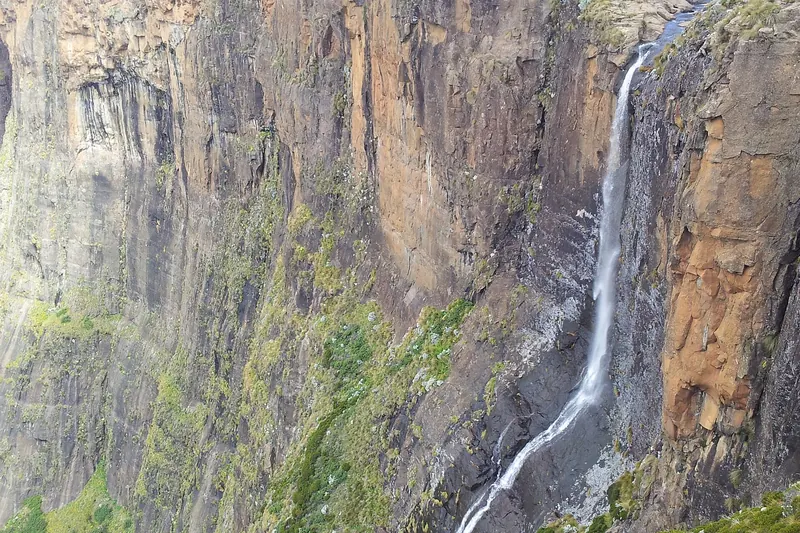
The most famous sight is the Amphitheatre, a rock wall about 5 km long and 1,200 metres high in the Royal Natal National Park, with the Tugela Falls plunging in five drops over the edge, the second-highest waterfall in the world at about 948 metres. Elsewhere, Cathedral Peak, Champagne Castle and Giant's Castle offer hiking, and the sandstone shelters hold more than 35,000 paintings by the San people, who lived here for thousands of years.

It is a place for walkers, riders, birdwatchers and those who enjoy mountain air. Small resorts and lodges are scattered through the valleys, and the days are best spent on trails, with a swim in a rock pool at the end. Weather can change fast, with summer thunderstorms and winter snow, and a car is the best way to reach the trailheads.

  • Mountains
  • UNESCO Site
  • National Park
  • Scenic Region

Why visit

Why visit the Drakensberg?

The Drakensberg is South Africa's finest mountain scenery, with excellent walks for all abilities.

  • Dramatic escarpment

    Sheer basalt walls, spires and amphitheatres.

  • Tugela Falls

    One of the highest waterfalls in the world, reached by a hike.

  • Hiking for everyone

    Easy waterfall walks to multi-day treks.

  • San rock art

    Thousands of paintings in shelters, some up to 3,000 years old.

  • Mountain resorts

    Family-friendly lodges with horse riding and swimming holes.

Main attractions

Top things to see in the Drakensberg

The range has several distinct areas, each with its own character.

  1. The Amphitheatre and Royal Natal National Park

    A great curving rock wall with the Tugela Falls behind. Trails lead to the Tugela Gorge, and a hike to the top via chain ladders from Sentinel car park reaches the escarpment.

    Tip Go on a clear day.

  2. The Tugela Falls dropping from the top of the Amphitheatre

    Tugela Falls

    A waterfall in five drops totalling about 948 metres, often cited as the second highest in the world. It flows best after rain, and can freeze in winter.

    Tip Check the flow before you go.

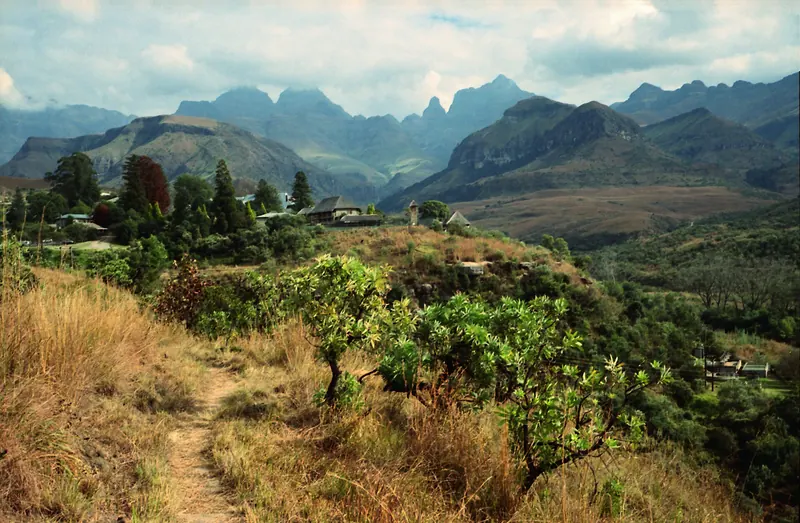
  3. The distinctive rock tower of Cathedral Peak in the Drakensberg

    Cathedral Peak

    A sharp, cathedral-like peak in the central Drakensberg, with hiking trails, rock pools and Didima Gorge, and access to San rock art.

    Tip A good base for walks.

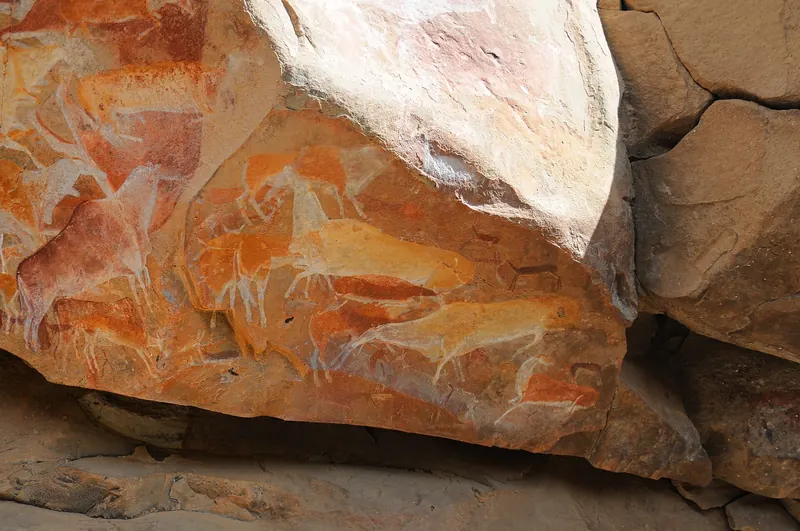
  4. San rock paintings of eland antelope on the wall of Eland Cave

    San rock art at Giant's Castle and Cathedral Peak

    The Drakensberg holds one of the world's greatest collections of rock art, with paintings of eland, humans and spirit beings, at sites such as Main Caves and Eland Cave.

    Tip Visit with a guide.

  5. Giant's Castle Game Reserve

    A high-altitude reserve with eland, other antelope and the rare bearded vulture, which can be seen at a hide in winter.

    Tip Book the vulture hide.

  6. Sani Pass

    A 4x4 route over the escarpment into Lesotho, with steep hairpins, and the highest pub in Africa at the top.

    Tip Go on a guided tour.

Things to do

Best things to do in the Drakensberg

Walking and outdoor activities make up most of the days.

  1. Hike to Tugela Gorge

    A 5-hour walk through a spectacular gorge to the base of the Amphitheatre.

    Tip Start early.

  2. Ride a horse

    Trails through the foothills and valleys.

    Tip Book at your lodge.

  3. See San rock art

    Guided walks to painted shelters.

    Tip Book in advance.

  4. Swim in a rock pool

    Cool off in mountain streams.

    Tip Check the water levels.

  5. Fly fish for trout

    Rivers and dams stocked with trout.

    Tip Book a guide.

  6. Watch birds

    Bearded vultures, cranes and sunbirds.

    Tip Bring binoculars.

Local food

What to eat in the Drakensberg

Mountain lodges serve hearty meals, with braais and traditional dishes.

  • Trout

    Freshly caught rainbow trout.

    Where to try it Lodges and restaurants.

  • Braai

    Barbecue with boerewors and steak.

    Where to try it Lodges.

  • Farm-style meals

    Roasts, stews and pies.

    Where to try it Resorts.

  • Potjiekos

    Slow-cooked stew.

    Where to try it Braai nights.

  • Rusks and coffee

    A hiker's breakfast.

    Where to try it Lodges.

Accommodation

Where to stay in the Drakensberg

Stay in a mountain lodge, resort or self-catering cottage in one of the valleys.

  • Champagne Valley and Central Berg

    Resorts and lodges beneath Champagne Castle.

    Best for: Walks and family stays

  • Royal Natal and the Northern Berg

    Hotels and cottages.

    Best for: The Amphitheatre

  • Underberg and the Southern Berg

    Guesthouses and lodges.

    Best for: Sani Pass and trout fishing

What a night costs

Self-catering cottage
US$60–120 per night
Mid-range lodge
US$120–220 per night
Luxury lodge
US$250–500 per night
Meal at a lodge
US$12–25 per person

Transport

Getting to and around the Drakensberg

The Drakensberg is 350 to 450 km from Johannesburg and Durban.

Getting there

  • Drive from Johannesburg

    About 4 to 5 hours to the central Berg.

    Roads are good.

  • Drive from Durban

    About 3.5 to 4 hours.

    Hire a car.

  • Fly to Durban or Johannesburg

    Then hire a car.

    Book early.

Getting around

A car is essential for trailheads and valleys.

  • Hire car

    Roads are paved to most lodges, with gravel to trailheads.

    Check conditions.

  • Guided tours

    For rock art and Sani Pass.

    Book in advance.

  • On foot

    Trails from lodges.

    Wear boots.

When to go

Best time to visit the Drakensberg

The Drakensberg has hot, wet summers with thunderstorms and cold, dry winters, with snow on the peaks.

  • Summer (December–February)

    Good

    Warm and green, with afternoon thunderstorms.

  • Autumn (March–May)

    Best time

    Clear, warm days and cool nights.

  • Winter (June–August)

    Good

    Dry and sunny, but very cold at night, with snow.

  • Spring (September–November)

    Best time

    Mild, with wildflowers.

Worth planning around: Summer afternoons for hiking, when storms and lightning are common.

Itinerary

Three days in the Drakensberg

Walks, waterfalls and rock art.

  1. Day1

    Arrive

    A gentle start.

    • Morning Drive to the mountains.
    • Afternoon A short walk to a pool.
    • Evening A braai.
  2. Day2

    The Amphitheatre

    The big walk.

    • Morning Tugela Gorge.
    • Afternoon The return.
    • Evening Rest.
  3. Day3

    Rock art

    San heritage.

    • Morning A guided walk to rock art.
    • Afternoon Horse riding.
    • Evening Depart.

Travel tips

The Drakensberg travel tips

A few tips help you stay safe in the mountains.

  • Check the weather. Storms and mist can arrive suddenly.
  • Register at park offices before hiking.
  • Bring layers, sun protection and waterproofs.
  • Take a guide for longer routes.
  • Do not touch rock paintings.
  • Start walks early to avoid afternoon storms.
  • Fill up with fuel and cash before arriving.

FAQ

The Drakensberg: frequently asked questions

How many days do you need in the Drakensberg?

Three days is ideal.

Is Tugela Falls really the second highest waterfall?

It is often described so, at about 948 metres in five drops, though rankings vary by definition.

What is the best time to visit?

March to May and September to November.

Can I hike without a guide?

Many day walks are fine without one. Take a guide for longer routes and rock art.

Is it cold?

Nights are cold, even in summer, and winters can be freezing.

Is the Drakensberg near Johannesburg?

It is about 4 to 5 hours by road.

Read next

Related travel articles

Practical

Packing by Season and Trip Type

Most packing advice is a list of things. This is the opposite: the small number of decisions that determine whether your luggage helps or hinders, organised by the kind of trip you are actually taking.

Heritage

UNESCO Sites Worth Planning a Trip Around

A UNESCO listing tells you a place matters; it does not tell you whether it is worth two days and a detour. This is how to read the list usefully — and which sites reward building a trip around them.

Advertisement