- Capital
- Bangkok
- Language
- Thai nationally, with good English ability in Bangkok, tourist areas and hospitality businesses, thinning out in rural areas.
- Currency
- Thai baht (฿, THB)
- Cards and cash
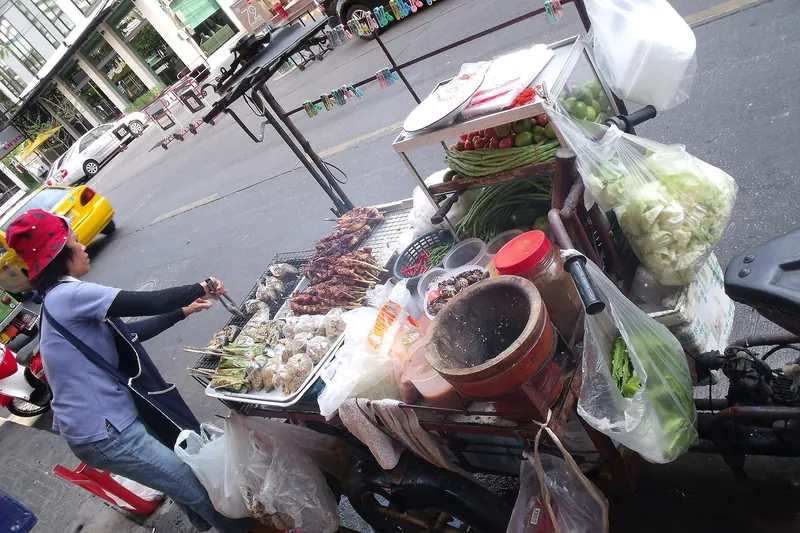
- Card payment is widely accepted in cities, malls and mid-range or higher hotels and restaurants, but street food, markets, songthaews and rural areas remain cash-based. ATMs are widespread but charge a fixed foreign withdrawal fee.
- Entry and visas
- Visa exempt entry for up to 60 days for many nationalities including the US, UK, Australia and most EU countries, extendable once for a further 30 days at an immigration office.
- Power sockets
- Type A, B, C and O, 220 V, 50 Hz — sockets in tourist hotels usually accept most plug types, but a universal adaptor is worth carrying.
- Emergency number
- 191 for police, 1669 for ambulance, nationwide.
- Tipping
- Not traditionally expected but appreciated. Rounding up or leaving small change is standard; a service charge is often already added at nicer restaurants.
- Safety
- Very safe overall for tourists, with low rates of violent crime. Common issues are overcharging, scooter accidents and occasional scams around gem shops or 'closed' temples steering visitors elsewhere — healthy skepticism of unsolicited offers avoids most of it.
- Internet and SIM
- Excellent and cheap 4G and 5G coverage in cities and most tourist areas, with a tourist SIM or eSIM easy to arrange on arrival at any airport.
- Time zone
- Indochina Time (UTC+7) year-round, no daylight saving.
Daily budget guide (per person)
- Backpacker
- ฿1,000–1,800 per day — hostels, street food, local buses
- Mid-range
- ฿2,500–4,500 per day — three-star hotels, restaurant meals, domestic flights
- Comfortable
- ฿5,500–10,000 per day — good hotels, private tours, resort islands
- Phuket and Koh Samui supplement
- Add roughly 20–35% to any budget band specifically on these two islands
Excludes international flights. Figures are typical rather than absolute — cities and peak season run higher.