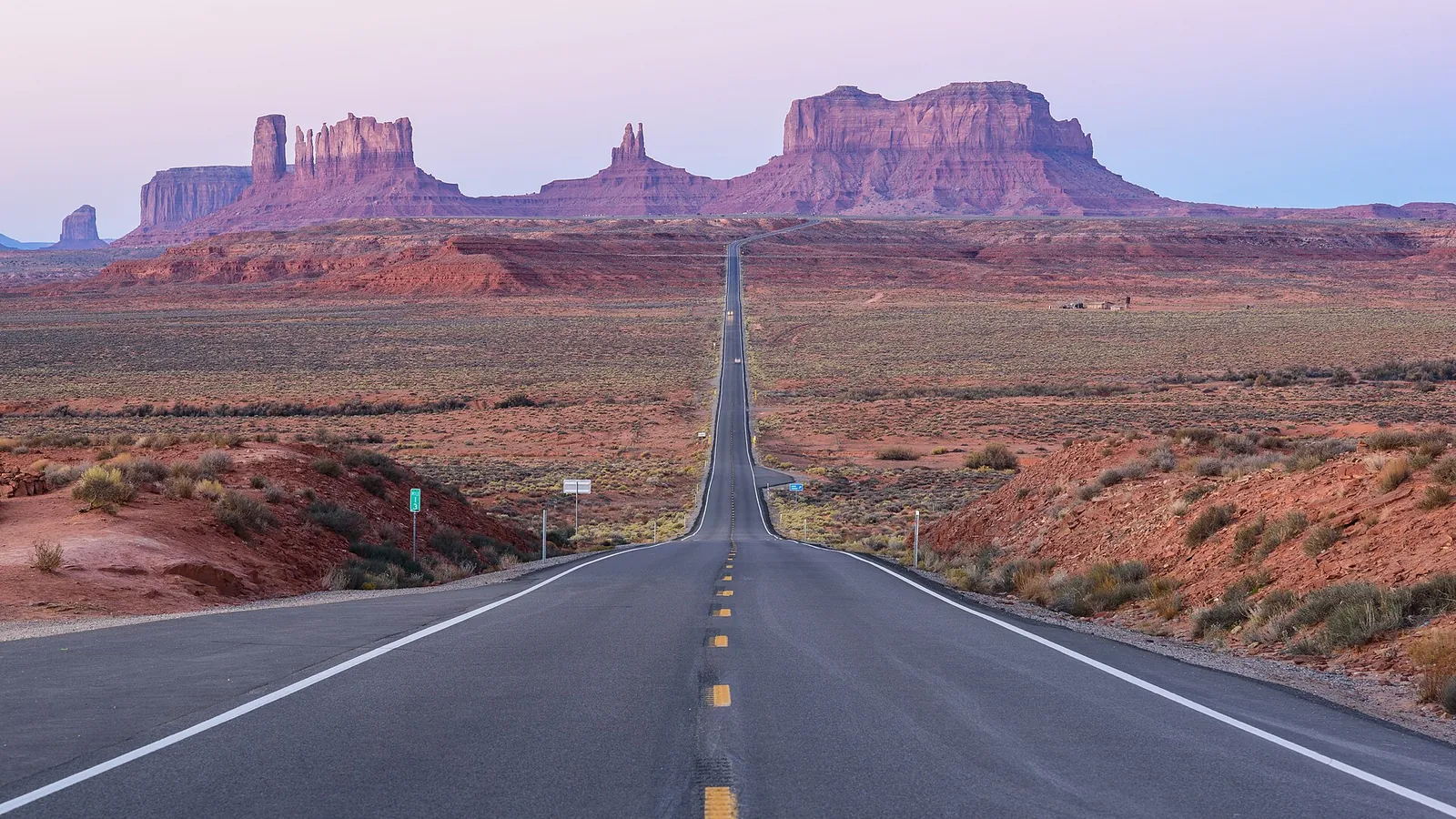
A straight desert road running towards the sandstone buttes of Monument Valley

North America

United States Travel Guide

A canyon a mile deep, a city built on jazz, a supervolcano full of wildlife and 3,000 miles of country between them.

  • Destinations 10 hand-picked
  • Best time May–June and September–October
  • Ideal trip 12–16 days for one or two regions

Photo: King of Hearts · CC BY-SA 4.0

Why go to the United States

The United States is 4,500 kilometres from coast to coast — roughly the distance from Lisbon to Moscow — and the single biggest mistake visitors make is treating it as one destination. New York and the Grand Canyon are further apart than London and Istanbul. A trip that tries to include both plus California is a trip spent on aeroplanes.

It helps to think in regions instead. The Northeast is dense, old by American standards, and walkable. The South has its own food, music and history, and moves at a different speed. The Southwest is canyon country — an arid, geologically spectacular landscape best seen by car. The West Coast has cities and coastline. The Mountain West has the great wilderness parks. And Hawai'i is 4,000 kilometres out into the Pacific and barely comparable to any of it.

This guide covers ten destinations picked to span that range: three major cities of very different character, a capital, a Southern port town most international visitors never reach, three of the world's great national parks, a canyon-country region, and a Pacific island. Pick one region, or two adjacent ones, and the country becomes manageable.

Where to go

Best Places to Visit in the United States

Ordered roughly by how strongly we would recommend each to a first-time visitor, though in a country this size the honest answer depends entirely on which corner you fly into.

Major CityCulture & Arts

New York City

New York

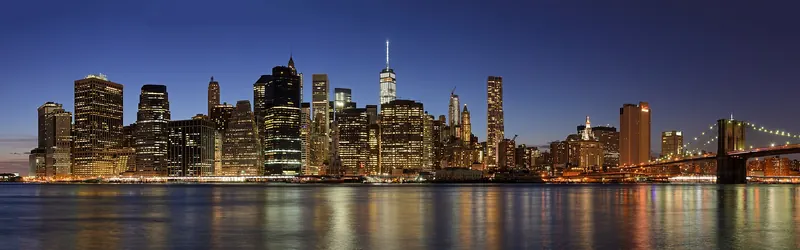
The densest, most walkable American city, where five distinct boroughs, a 24-hour subway and a century of immigration produce something no other city in the country resembles.

Don't miss The Metropolitan Museum — two million works across 5,000 years, and you could go every day for a month.

Explore Destination — New York City
National ParkNature & Wildlife

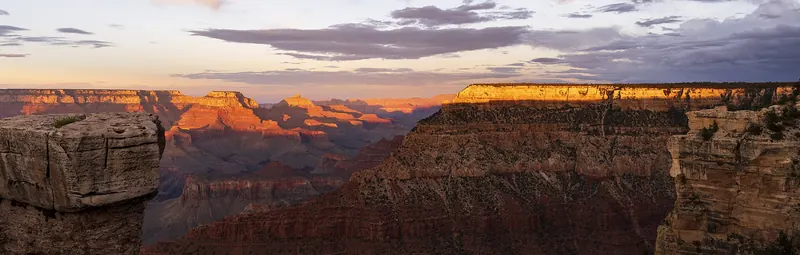
Grand Canyon National Park

Arizona

The single most overwhelming landscape in North America: a canyon so large the eye cannot process it, with a river a vertical mile below and rock at the bottom half as old as the earth.

Don't miss Sunrise or sunset from the rim, when shadow moves across the buttes and the whole thing stops looking flat.

Explore Destination — Grand Canyon National Park
Major CityCulture & Arts

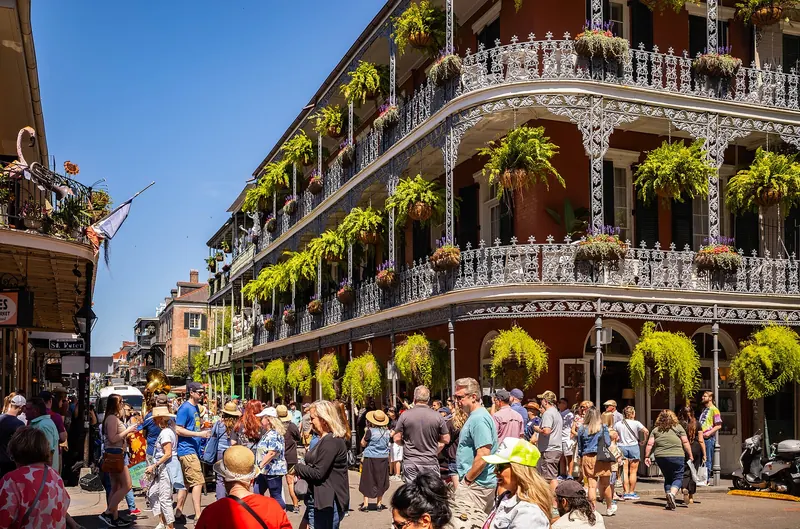
New Orleans

Louisiana

A city that was French, then Spanish, then French again before it was American, and which turned that inheritance into a food and music culture found nowhere else on the continent.

Don't miss Live brass and jazz on Frenchmen Street, seven nights a week, with no cover charge in half the rooms.

Explore Destination — New Orleans
National ParkNature & Wildlife

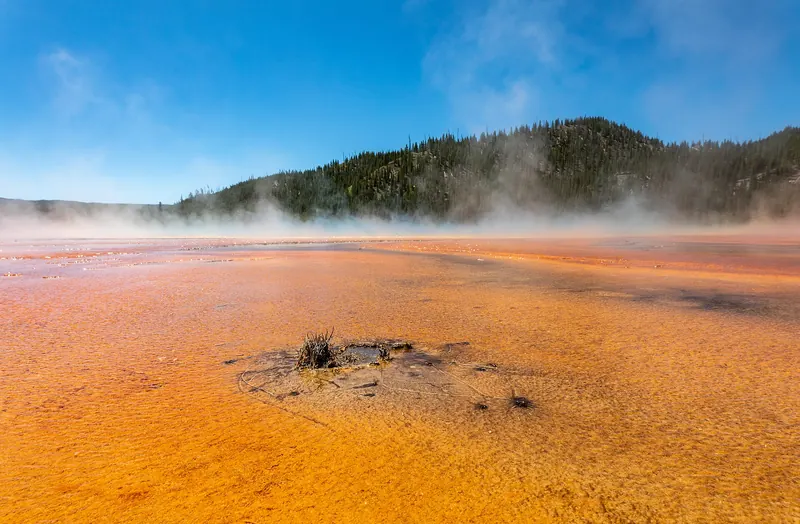
Yellowstone National Park

Wyoming, Montana and Idaho

Nearly 9,000 square kilometres of high volcanic plateau in Wyoming, holding over 10,000 thermal features, grizzly bears, wolves, and herds of bison that stop the traffic.

Don't miss Wolves and bison in the Lamar Valley at dawn — the closest thing to an African game drive in North America.

Explore Destination — Yellowstone National Park
Capital CityCulture & Arts

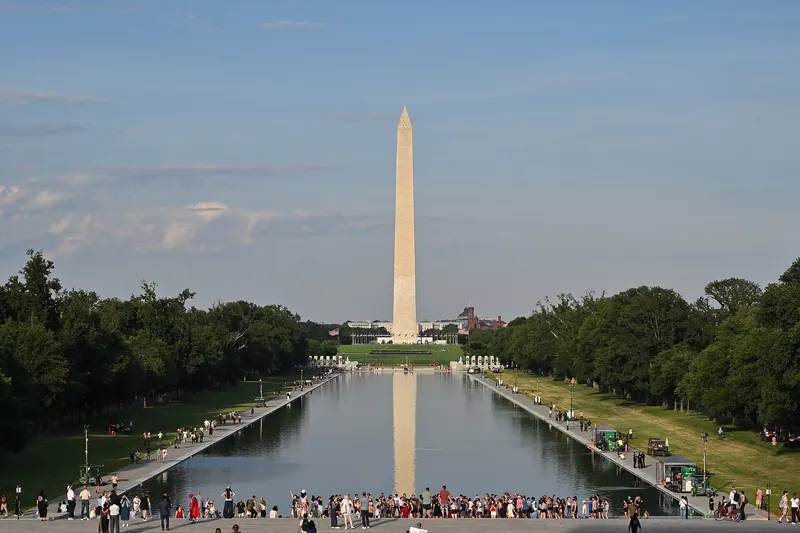
Washington, D.C.

District of Columbia

A planned capital of low neoclassical buildings and wide avenues, holding the largest museum complex in the world and charging nothing to enter almost any of it.

Don't miss The National Air and Space Museum and the National Museum of African American History and Culture — free, and among the best of their kind anywhere.

Explore Destination — Washington, D.C.
National ParkNature & Wildlife

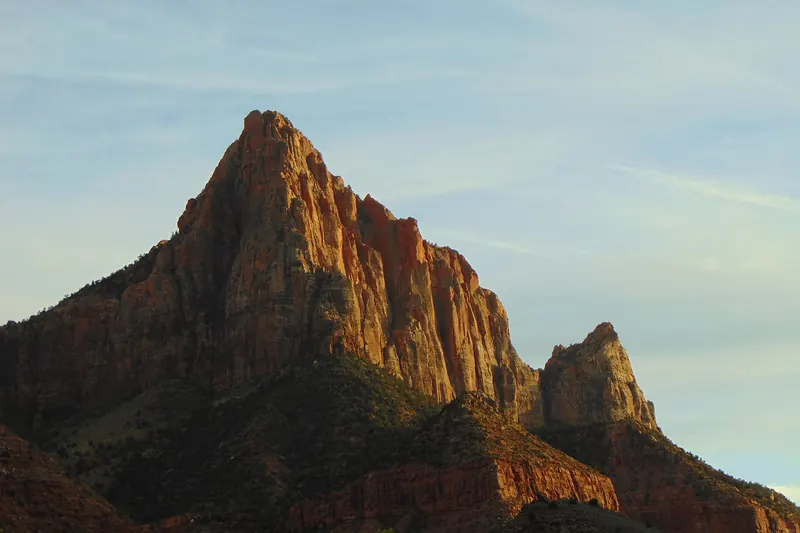
Zion & Southern Utah

Utah

A concentration of canyon country unmatched anywhere: Zion's sheer red walls, Bryce's hoodoos, Arches' sandstone spans and Canyonlands' mesas, within a few hours of each other.

Don't miss The Narrows — wading up the Virgin River between sandstone walls 300 metres high and, in places, ten metres apart.

Explore Destination — Zion & Southern Utah
Major CityCulture & Arts

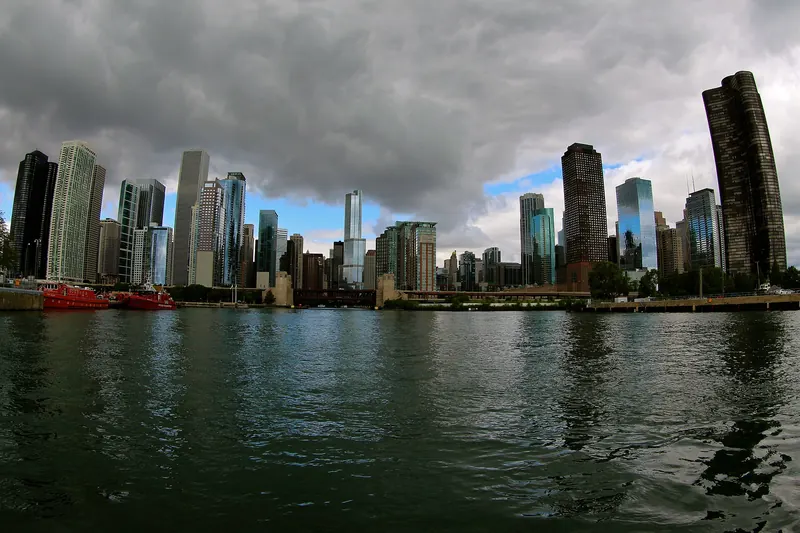
Chicago

Illinois

America's great architectural city, on a lake the size of a small country, with a museum of Impressionism to rival Paris and the blues clubs that shaped modern music.

Don't miss The architecture boat tour on the Chicago River — the best hour of sightseeing in any American city.

Explore Destination — Chicago
IslandCoast & Beaches

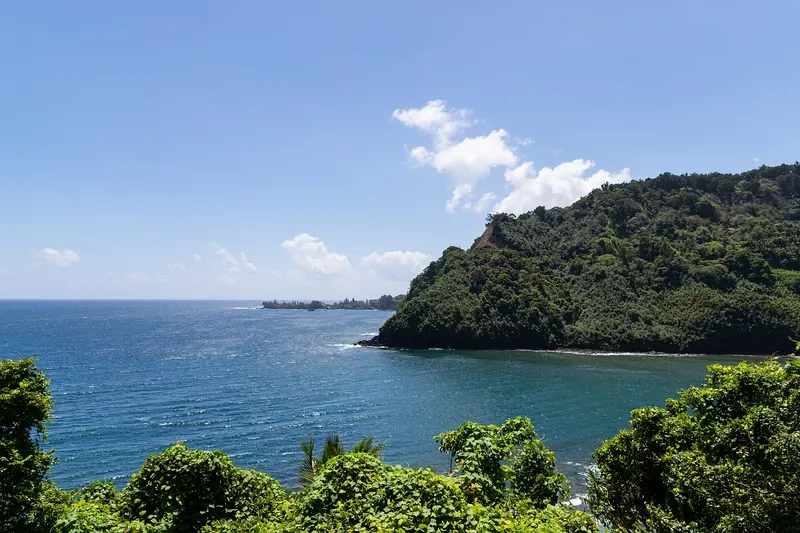
Maui, Hawai'i

Hawai'i

The second-largest Hawaiian island, with a summit above the clouds, a rainforest coast road, some of the Pacific's best snorkelling and a winter whale population in the thousands.

Don't miss Sunrise above the clouds from Haleakalā's summit crater, at 3,055 m, in near-freezing air.

Explore Destination — Maui, Hawai'i
Historic SiteCoast & Beaches

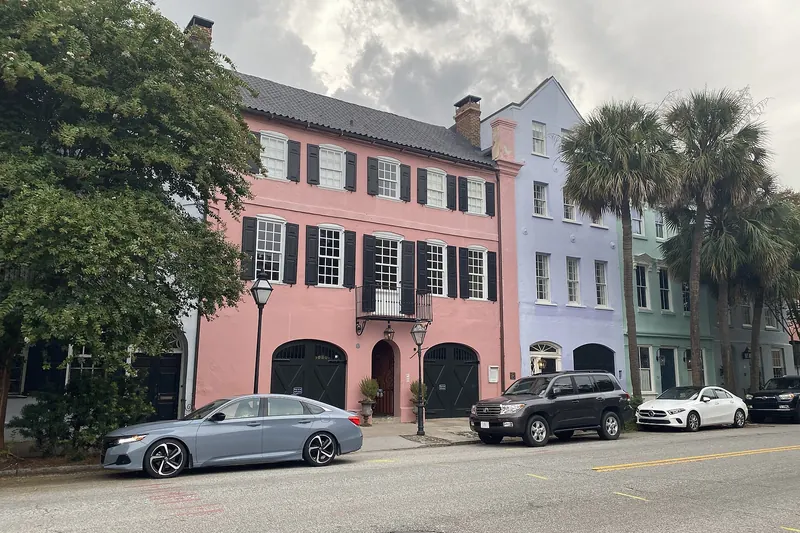
Charleston, South Carolina

South Carolina

A walkable colonial port with the best-preserved historic centre in the United States, an outstanding food scene, and a history of slavery that the city has increasingly stopped avoiding.

Don't miss The pastel houses of Rainbow Row and the double piazzas of Church Street, walked at 08:00 with nobody about.

Explore Destination — Charleston, South Carolina

Browse all 510 destinations

Experiences

Best things to do in the United States

The experiences that recur across regions, and that make an American trip feel American wherever you end up.

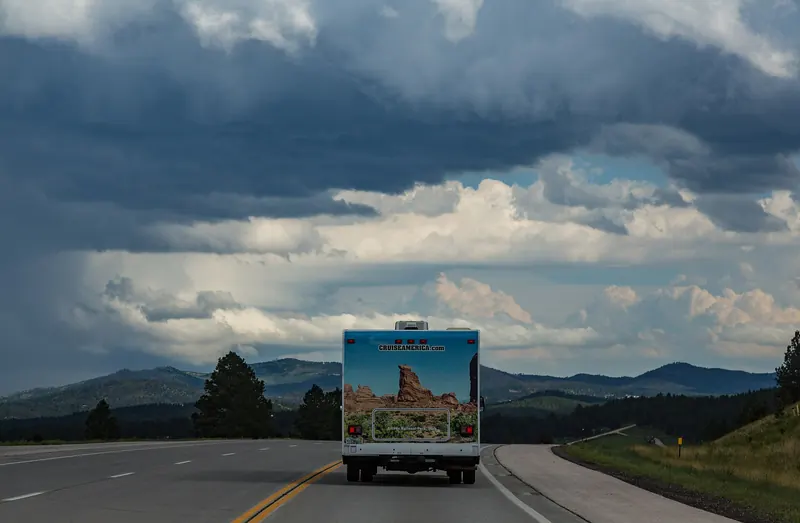
  1. An RV on a South Dakota road trip

    Take a road trip

    The car is the country's defining travel mode and the landscape is built around it. The Southwest's canyon loop, California's Highway 1, the Blue Ridge Parkway and the roads through Yellowstone National Park are all destinations in themselves rather than ways of reaching one.

    Tip Distances are enormous. Two hundred miles a day is a pleasant drive; four hundred is a chore that eats the day.

  2. Visit a national park properly

    The park system covers 85 million acres and the best of it is world-class. But the famous parks now require reservations, timed entry or shuttle systems in high season, and turning up unplanned increasingly does not work.

    Tip Check each park's current reservation system months ahead. Rules change every year and vary by park.

  3. Eat regionally

    American food is entirely regional and the national version is the worst of it. Creole and Cajun in Louisiana, barbecue that changes every 200 miles, Lowcountry cooking in South Carolina, Californian produce, Hawaiian plate lunch.

    Tip Ask what the local speciality is and order that. The regional divides are real and locals take them seriously.

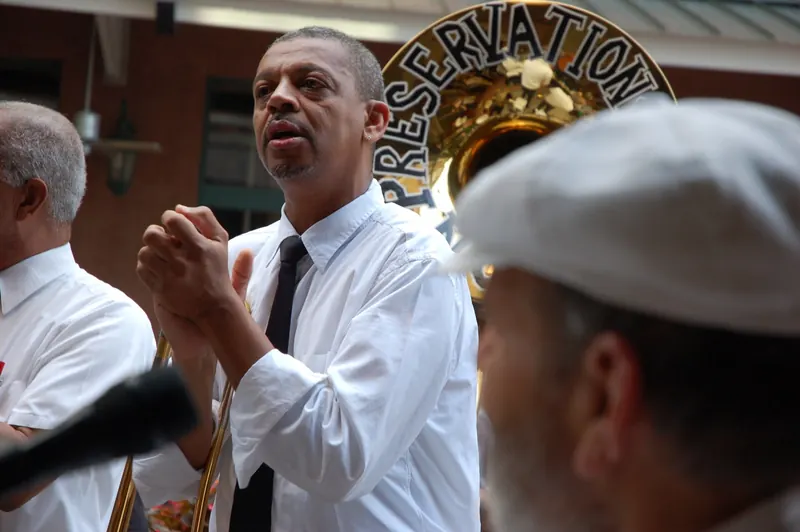
  4. A jazz band playing at Preservation Hall in New Orleans

    See live music where it started

    Jazz in New Orleans, blues in Chicago and the Mississippi Delta, country in Nashville, and a live scene in almost every mid-sized city. Much of it happens in small bars with no cover charge.

    Tip In New Orleans, Frenchmen Street rather than Bourbon Street. In Chicago, the South and West Side clubs.

  5. Use the cities on foot

    The American reputation for being un-walkable is regional. New York, San Francisco & the California Coast, Chicago, New Orleans, Charleston, South Carolina and Washington are all excellent walking cities with real public transport.

    Tip Outside those, and outside downtown cores generally, a car is usually necessary.

  6. A baseball game at an American ballpark

    Go to a game

    Baseball, American football, basketball or ice hockey. The sport matters less than the experience, which is a large and specific part of American public life — and baseball in particular is cheap and pleasantly slow.

    Tip Baseball runs April to September and tickets are often under $30. It is the easiest one to walk into without prior knowledge.

Food and drink

United States foods to try

There is no single American cuisine; there are a dozen strong regional ones, and the difference between them is larger than between many European countries.

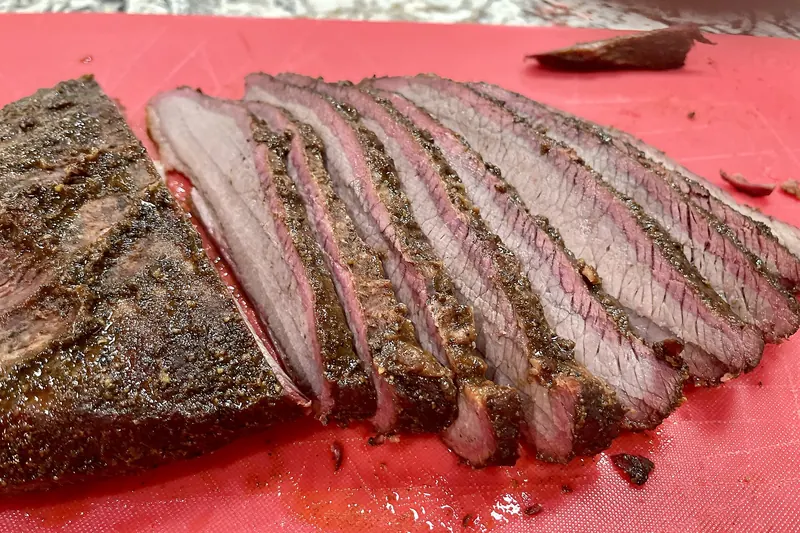
  • Smoked brisket, Texas barbecue style

    Barbecue

    Meat smoked slowly over wood, and fiercely regional. Texas does beef brisket with salt and pepper; the Carolinas do whole hog with vinegar; Kansas City uses sweet tomato sauce; Memphis does ribs. These are not variations, they are separate traditions.

    Where to try it Texas, the Carolinas, Memphis and Kansas City. Look for a wood pile outside and a queue at 11:00.

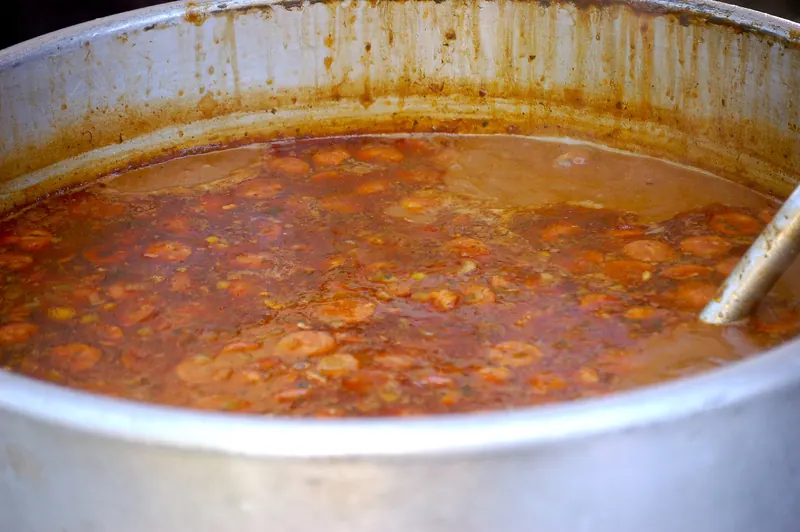
  • A pot of Louisiana gumbo

    Creole and Cajun cooking

    Gumbo, jambalaya, étouffée and po'boys from Louisiana — a fusion of French, Spanish, West African and Caribbean traditions found nowhere else. Creole is the city version, Cajun the country one.

    Where to try it New Orleans and the bayou country west of it.

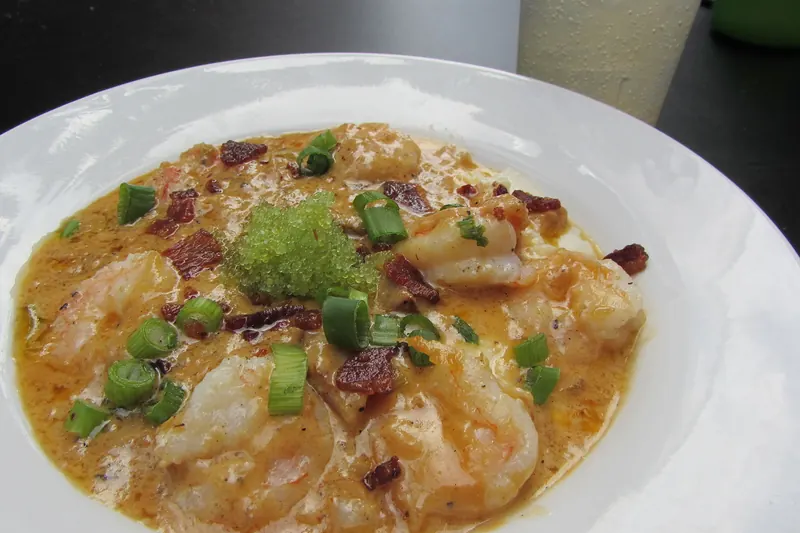
  • Shrimp and grits, the Lowcountry staple

    Lowcountry food

    The coastal South Carolina and Georgia tradition — shrimp and grits, she-crab soup, Hoppin' John, benne wafers — shaped substantially by West African cooking brought by enslaved people who grew the region's rice.

    Where to try it Charleston and Savannah.

  • Pancakes, eggs and hash browns on an American breakfast plate

    The American breakfast

    Pancakes, biscuits and gravy, hash browns, eggs any of six ways, and bottomless coffee, served in diners from 06:00. Enormous, cheap, and a genuine institution.

    Where to try it Diners everywhere. The further from a tourist district, the better it usually is.

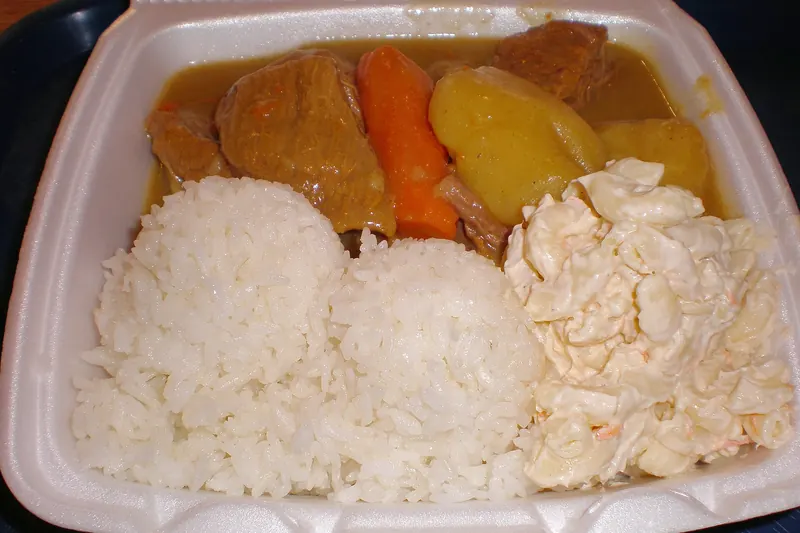
  • A Hawaiian plate lunch of rice, macaroni salad and a protein

    Hawaiian plate lunch and poke

    Two scoops of rice, macaroni salad and a protein — a legacy of the sugar plantations' mixed workforce. Poke is raw cubed fish with soy, sesame and onion, sold at supermarket counters.

    Where to try it Maui and the rest of Hawai'i. The supermarket poke counters are excellent.

  • A wide slice of New York pizza

    New York pizza and the deli

    Wide thin slices folded to eat while walking, and Jewish delicatessen food — pastrami on rye, bagels with lox, matzo ball soup — brought by Eastern European immigrants and now definitively of the city.

    Where to try it New York. Slices at neighbourhood counters, not the ones on Times Square.

  • Produce at a California farmers market

    Californian cooking

    Produce-led, lighter and heavily influenced by Mexican and East Asian cooking. Also the birthplace of the American food truck revival and of the burrito as most of the world now knows it.

    Where to try it San Francisco and the Bay Area. The Mission district for burritos, the Ferry Building for produce.

Before you go

Practical travel information for the United States

The essentials, current for 2026. Most of what catches visitors out in the United States is not logistics but cost structure — tipping, taxes and health care.

Capital
Washington, D.C.
Language
English. Spanish is very widely spoken, particularly in the Southwest, Florida and major cities.
Currency
US dollar ($)
Cards and cash
Cards everywhere and contactless is now near-universal. Note that sales tax is added at the till, not shown on the price tag, and varies by state and city — typically 4–10%.
Entry and visas
Most European, UK, Australian, NZ, Japanese and South Korean citizens travel visa-free under the Visa Waiver Program but must obtain an ESTA online before departure, ideally at least 72 hours ahead. Others need a B-2 visitor visa, which can take months to arrange.
Power sockets
Type A and B, 120 V, 60 Hz. European appliances need a voltage-compatible charger, not just a plug adapter.
Emergency number
911 for police, fire and medical, nationwide.
Tipping
Not optional in practice. 18–22% at sit-down restaurants, $1–2 per drink at a bar, 15–20% for taxis, $2–5 per night for housekeeping. Restaurant staff are frequently paid below minimum wage on the assumption of tips.
Safety
Safe for visitors in the areas they typically use. Gun violence is statistically concentrated and rarely affects tourists, but it is real. The greater practical risks are road accidents on long drives, dehydration and heat in the desert parks, and wildlife in the mountain parks.
Internet and SIM
Excellent 4G and 5G in cities and along interstates; absent in large parts of the national parks and rural West. Download offline maps before any park visit.
Time zone
Six zones across the states: Eastern (UTC−5), Central, Mountain, Pacific, Alaska and Hawai'i (UTC−10). Arizona does not observe daylight saving; Hawai'i does not either.

Daily budget guide (per person)

Backpacker
$110–170 per day — hostels, self-catering, shared car costs
Mid-range
$220–330 per day — mid-range hotel, one restaurant meal, car hire
Comfortable
$380–600 per day — good hotels, restaurants, internal flights
Add on top
Sales tax at the till, 18–22% restaurant tips, resort fees and parking in cities

Excludes international flights. Figures are typical rather than absolute — cities and peak season run higher.
When to go

Best time to visit the United States

A country spanning six time zones and every climate from subarctic to tropical has no single answer. The general rule works for most of it: late spring and early autumn avoid both the summer crowds and the seasonal extremes. The parks and the desert have their own calendars.

  • Spring (April–June)

    Best time

    The strongest all-round window. The Southwest deserts are warm rather than dangerous, the national parks open fully through May and June, and the cities are pleasant. Yellowstone's roads open progressively from late April.

  • Summer (July–August)

    Shoulder

    Peak season everywhere. The parks are at capacity and often require reservations, prices peak, and the Southwest regularly exceeds 40°C. Good for the mountain parks and the Pacific Northwest; punishing in the desert and humid in the South.

  • Autumn (September–October)

    Best time

    September is arguably the best month in the country: the parks quieten after Labor Day, the desert cools, New England colour arrives in October, and hurricane risk aside the South becomes comfortable again.

  • Winter (November–March)

    Quiet

    Cities are cheap and atmospheric, the Southwest parks are cold but empty, and Hawai'i and Florida are at their best. Yellowstone's roads mostly close and are served only by snowcoach; high-elevation Utah can be snowbound.

Worth planning around: Memorial Day, Independence Day and Labor Day weekends, when domestic travel peaks and the parks are at their fullest. Atlantic hurricane season runs June to November and peaks in September, which matters for the Southeast and the Gulf.

Trip length

How long to spend in the United States

The country is too large for a general tour. The correct question is not how long you need for the United States but how long you need for the part of it you have chosen.

  • 5–7 days

    One city, done properly, possibly with one nearby addition. New York and Washington pair well by train; San Francisco pairs with the coast; New Orleans stands alone.

    This is a perfectly good first American trip and far better than a rushed multi-city one.

  • 10–12 days

    One region. The Southwest canyon loop from Las Vegas, or California from San Francisco to Los Angeles, or the Northeast cities, or the Deep South from New Orleans.

    The sweet spot for a first visit, and where a rental car starts to earn its cost.

  • 14–18 days

    Two adjacent regions, or one region plus a park circuit. San Francisco and the Southwest; New York, Washington and Charleston; or Yellowstone with the Grand Tetons and Salt Lake.

    One internal flight is usually needed. Two or more means you are spending the trip in airports.

  • 3 weeks or more

    A genuine cross-country route, or a coast plus Hawai'i. At this length a themed trip works well — the national parks of the West, the music trail from Chicago to New Orleans, or the Pacific coast end to end.

    Hawai'i is a five-hour flight from California and works better as its own trip than as an add-on.

Getting around

Transportation in the United States

The United States is a driving country with a handful of excellent walkable cities and a rail network that only really works in the Northeast.

  • Rental car

    Essential outside the major cities and for every national park. Cheap by European standards, as is fuel. Automatic transmission is standard and roads are wide and well signed.

    Most companies require a driver aged 25 or over, or charge a young-driver surcharge. An international permit is rarely needed alongside a valid licence.

  • Domestic flights

    The practical way to cross the country. New York to Los Angeles is six hours in the air; driving it takes four days. Fares are competitive and the network is dense.

    Budget carriers charge for everything including cabin bags. Read the fare conditions before comparing prices.

  • Trains

    Amtrak's Northeast Corridor between Washington, Philadelphia, New York and Boston is good and often beats flying. Long-distance routes are scenic, slow and frequently late.

    The California Zephyr and Coast Starlight are journeys worth taking for their own sake, not for getting anywhere.

  • City transit

    New York, Washington, Chicago, San Francisco and Boston have real subway or metro systems. Most other cities have limited bus networks and are built around driving.

    Ride-hailing apps are ubiquitous and often the practical fallback in cities without transit.

  • Park shuttles

    Zion, parts of the Grand Canyon and several other parks close their main roads to private cars in season and run mandatory free shuttles.

    Check each park's system before arriving — several have changed in recent years.

Sample route

Two weeks in the American Southwest

Rather than a cross-country tour, this covers one region properly: the canyon country of Arizona and Utah, plus a coastal city at the end. It is a driving route, and the driving is much of the point.

  1. Day1

    Arrive in Las Vegas

    • Morning Land, collect a rental car, and adjust to the time zone.
    • Afternoon The Strip once, for the sheer strangeness of it, and the Neon Museum.
    • Evening Early night — tomorrow is a long drive.
  2. Day2

    To Zion

    • Morning Drive northeast to Springdale, about 2h30.
    • Afternoon The Zion shuttle up the canyon, and the Riverside Walk at the end of the road.
    • Evening Springdale, with the canyon walls turning red at sunset.
  3. Day3

    Zion

    • Morning Angels Landing if you secured a permit, or the far safer Observation Point route.
    • Afternoon The Narrows — wading up the river between 300-metre walls.
    • Evening Back to Springdale.
  4. Day4

    Bryce Canyon

    • Morning Drive to Bryce, about 2h, climbing to 2,400 m.
    • Afternoon The Navajo Loop and Queen's Garden trail down among the hoodoos.
    • Evening Sunset Point, then stargazing — Bryce has some of the darkest skies in the country.
  5. Day5

    Scenic Byway 12 to Capitol Reef

    • Morning One of the great American drives, over Boulder Mountain and along a knife-edge ridge.
    • Afternoon Capitol Reef's orchards and the Waterpocket Fold.
    • Evening Torrey, a small town with surprisingly good food.
  6. Day6

    To Moab

    • Morning Drive southeast through the desert, about 2h30.
    • Afternoon Arches National Park — Delicate Arch in the late afternoon light.
    • Evening Moab.
  7. Day7

    Canyonlands

    • Morning Island in the Sky at sunrise — Mesa Arch and the Green River overlook.
    • Afternoon Dead Horse Point, or rafting on the Colorado.
    • Evening Moab again.
  8. Day8

    Monument Valley

    • Morning Drive south into Navajo Nation, about 2h30.
    • Afternoon The valley loop drive, ideally with a Navajo guide for the backcountry.
    • Evening Stay at the valley view, and note that Navajo Nation observes daylight saving when Arizona does not.
  9. Day9

    Antelope Canyon and Horseshoe Bend

    • Morning A guided slot canyon tour at Page — the only way to enter.
    • Afternoon Horseshoe Bend, and Lake Powell.
    • Evening Page.
  10. Day10

    Grand Canyon South Rim

    • Morning Drive west, about 2h30, and arrive at the rim.
    • Afternoon The Rim Trail and Desert View Watchtower.
    • Evening Sunset at Hopi Point, then a night inside the park if you booked far enough ahead.
  11. Day11

    Into the canyon

    • Morning Descend part of the Bright Angel or South Kaibab trail — down as far as your legs allow, remembering the climb back.
    • Afternoon Rest, then the rim shuttle to the western viewpoints.
    • Evening Sunrise and sunset are the two hours that matter here. Take both.
  12. Day12

    West to Las Vegas or on to California

    • Morning Drive back towards Las Vegas, about 4h30, or continue west.
    • Afternoon Fly to San Francisco for the last leg.
    • Evening Arrive on the coast.
  13. Day13

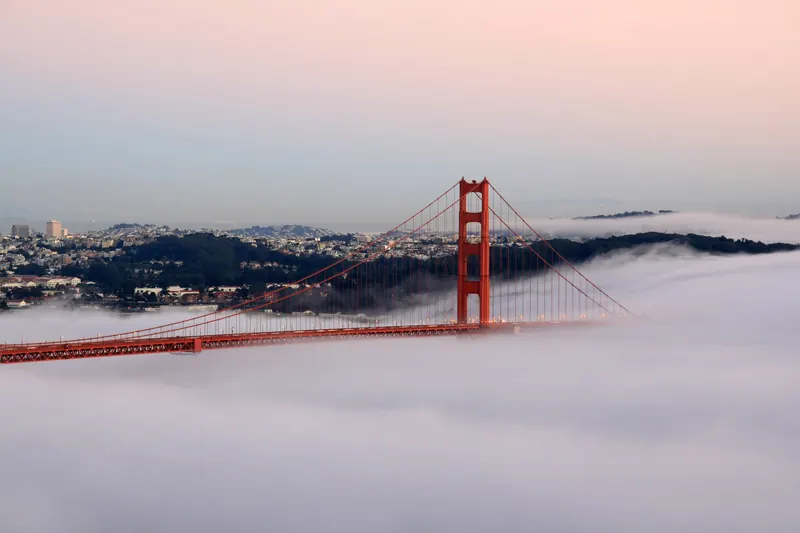
    San Francisco

    • Morning The Ferry Building, the waterfront and a cable car up Nob Hill.
    • Afternoon Golden Gate Park, or the bridge on foot or by bike.
    • Evening The Mission for burritos and bars.
  14. Day14

    Depart

    • Morning Alcatraz if booked, or the Presidio and Lands End coastal path.
    • Afternoon Fly home from San Francisco.

Culture

Culture and etiquette in the United States

American social norms are friendlier and more direct than in much of Europe, and the service culture is different — but it rests on a tipping system that visitors frequently get wrong, at real cost to the people serving them.

  • Tipping is not optional

    Restaurant servers in most states are legally paid below minimum wage on the assumption that tips make up the difference. 18–22% at a sit-down restaurant is standard, $1–2 per drink at a bar, 15–20% for taxis. Leaving nothing is not a statement about service; it takes money from someone's wage.

  • Prices exclude tax

    Sales tax is added at the till and varies by state and city, typically 4–10%. The price on the shelf is never the price you pay, and hotel taxes and resort fees can add 15–20% on top of a quoted room rate.

  • Service is chatty by design

    Servers introduce themselves, check on you repeatedly and bring the bill unprompted. This is attentiveness, not a hint to leave. If you want to linger, say so.

  • Personal space and volume

    Americans generally stand slightly further apart than southern Europeans and speak more loudly than northern ones. Small talk with strangers — in queues, lifts, shops — is normal and friendly rather than intrusive.

  • Alcohol rules are strict and local

    The drinking age is 21 everywhere and ID is checked regardless of apparent age. Open containers in public are illegal in most places, and liquor laws vary sharply by state and even by county.

  • Health care is expensive

    There is no universal system and an uninsured emergency visit can run into thousands of dollars. Comprehensive travel insurance with medical cover is essential, not a formality.

Do

  • Tip 18–22% at restaurants and $1–2 per drink at bars
  • Buy comprehensive travel medical insurance before you go
  • Get an ESTA at least 72 hours before flying if you are visa-exempt
  • Book national park entry, lodging and permits months ahead
  • Carry ID — you will be asked for it when buying alcohol at any age
  • Download offline maps before entering any national park

Don't

  • Don't assume the shelf price is what you pay — tax is added at the till
  • Don't underestimate driving distances; states are the size of countries
  • Don't rely on mobile signal in national parks or the rural West
  • Don't hike in the desert parks at midday in summer, or without far more water than feels necessary
  • Don't approach wildlife in the parks — bison injure more Yellowstone visitors than bears do
  • Don't expect trains outside the Northeast Corridor to be a practical way of getting around

Travel tips

United States travel tips

The things that most often catch international visitors out, and the planning that has to happen months ahead.

  • Book national park lodging and permits as early as humanly possible. In-park hotels at the Grand Canyon and Yellowstone open bookings 13 months ahead and fill within days, and Zion's Angels Landing permit runs a lottery.
  • Sales tax is added at the till and hotel resort fees are added at checkout. Budget 10–25% above advertised prices depending on the state and the property.
  • Tipping is a wage, not a bonus. 18–22% at sit-down restaurants and $1–2 per drink is the norm, and servers in most states are paid below minimum wage on that assumption.
  • Buy travel insurance with substantial medical cover. There is no universal health system and an uninsured emergency room visit routinely costs thousands of dollars.
  • If you are visa-exempt, apply for an ESTA at least 72 hours before departure. It is not automatic and airlines will refuse boarding without one.
  • Arizona does not observe daylight saving, but Navajo Nation within it does — which means the time can change twice on a single day's drive through Monument Valley.
  • Mobile coverage is absent across large parts of the national parks and the rural West. Download offline maps and tell someone your route.
  • Distances are the single biggest planning error. Los Angeles to San Francisco is 380 miles; New York to Chicago is 790. Check drive times before assuming two places pair well.

FAQ

Visiting the United States: frequently asked questions

How long do you need in the United States?

Long enough for one region, not the country. Twelve to sixteen days covers one or two adjacent regions properly — the Southwest canyon loop, California, the Northeast cities, or the Deep South. Five to seven days is enough for a single city done well. Attempting New York, the Grand Canyon and California in two weeks means spending the trip in airports.

Do I need a car in the United States?

Outside the major cities, almost always. New York, Washington, Chicago, San Francisco, Boston and New Orleans are walkable with real public transport, and a car there is a liability. Everywhere else — and every national park — needs one. The usual pattern is flying between regions and renting a car within them.

How much should I tip in the United States?

18–22% at sit-down restaurants, $1–2 per drink at a bar, 15–20% for taxis and ride-hailing, and $2–5 per night for hotel housekeeping. This is not discretionary in the way it is in Europe: servers in most states are legally paid below minimum wage on the assumption that tips make up the difference.

Do I need a visa to visit the United States?

Citizens of most European countries, the UK, Australia, New Zealand, Japan and South Korea can travel visa-free under the Visa Waiver Program, but must obtain an ESTA online before departure — apply at least 72 hours ahead. Everyone else needs a B-2 visitor visa, which requires an interview and can take months to arrange, so start early.

When is the best time to visit the United States?

May to June and September to October for most of the country. September is particularly good: the national parks quieten after the Labor Day weekend, the desert cools, and the humid South becomes comfortable again. July and August are peak season everywhere, with the parks at capacity and the Southwest above 40°C.

Do I need to book national parks in advance?

Increasingly, yes. Several major parks now use timed-entry reservations, mandatory shuttles or permit lotteries in high season, and the rules change annually. In-park lodging at the Grand Canyon and Yellowstone opens 13 months ahead and fills within days. Check each park's current system rather than assuming you can turn up.

Is the United States expensive?

Yes, and more than the headline prices suggest. Mid-range travel runs about $220–330 per person per day, and on top of quoted prices you should expect sales tax added at the till, 18–22% restaurant tips, hotel resort fees and city parking charges. Budget roughly 10–25% above advertised rates. Car hire and fuel, by contrast, are cheap by European standards.

Ready to plan your United States trip?

The full travel guide covers routes, budgets, regional differences and how to string these ten destinations into a trip that actually works.

Read the United States travel guide

Advertisement