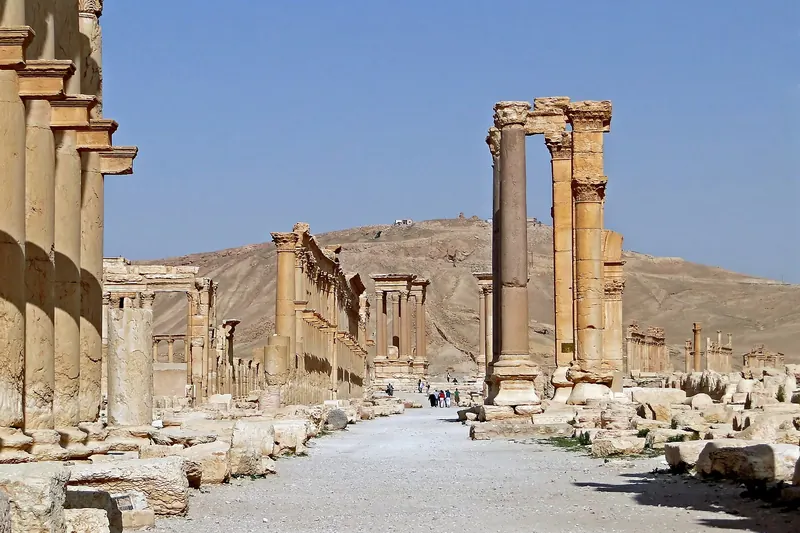
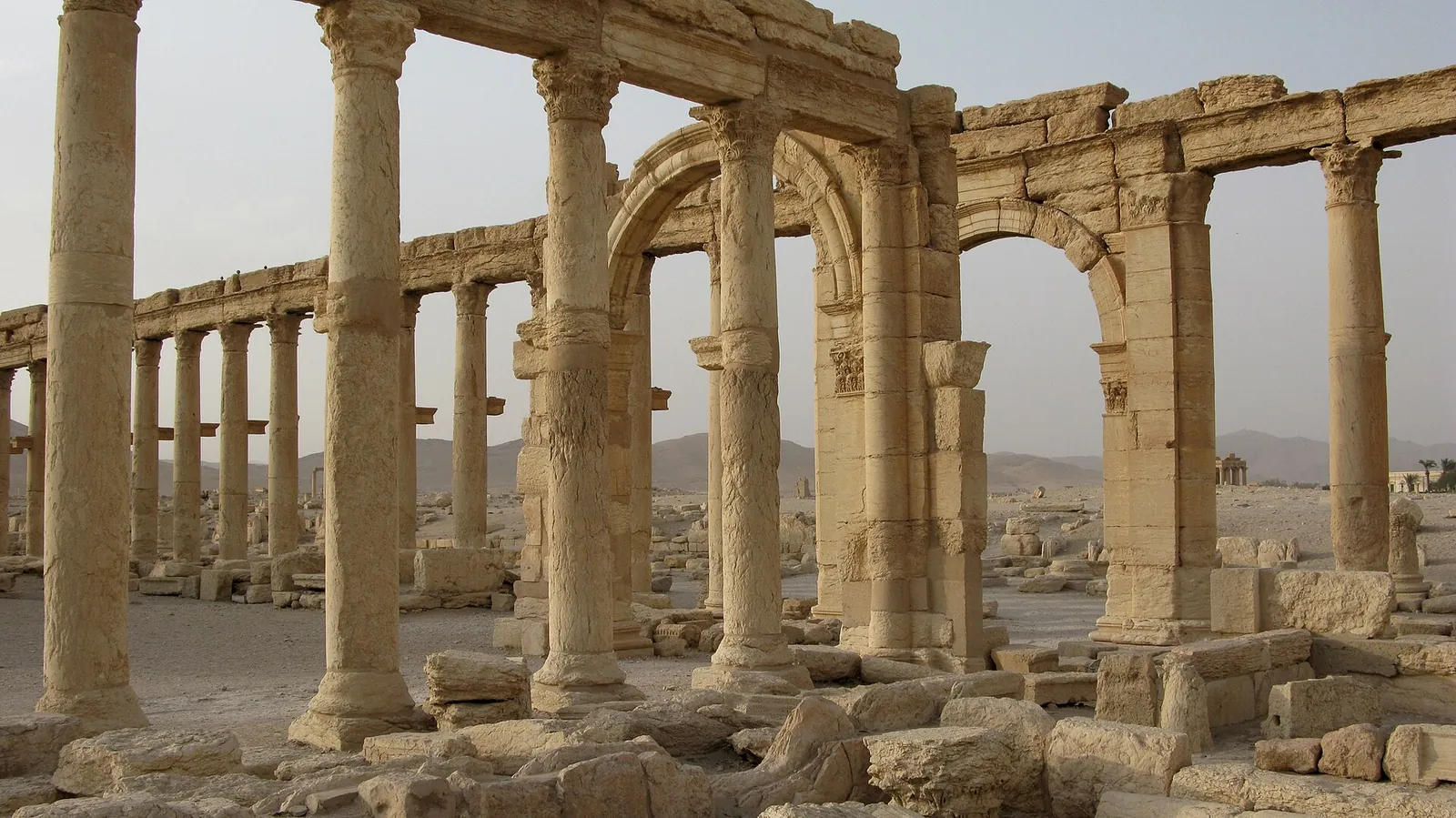
The Great Colonnade of Palmyra, photographed in 2008, before the war

Western Asia (Middle East)

Syria: A Heritage Overview

Damascus and Aleppo, two of the oldest continuously inhabited cities on Earth, the ruins of Palmyra and the Crusader castles of the coast — a heritage the world is only beginning to reassess after fourteen years of war.

  • Destinations 10 hand-picked
  • Travel status Most governments advise against travel

Photo: Vyacheslav Argenberg · CC BY 4.0

Why Syria matters

Syria sits where Mesopotamia, Anatolia, the Mediterranean and Arabia meet, and almost every empire of the ancient and medieval world passed through it. Damascus and Aleppo each claim to be among the oldest continuously inhabited cities on Earth. Ebla, in the north, left clay tablets that are among the earliest written archives. The Romans built a caravan city at Palmyra and a colonnaded metropolis at Apamea, and made Bosra the capital of their Arabian province. Early Christianity spread from Damascus, and the Umayyad caliphs ruled a vast empire from it.

The Middle Ages left the Crusader castles of Krak des Chevaliers and Saladin's Castle, the great mosques and covered souks of Damascus and Aleppo, and the norias, the huge wooden waterwheels of Hama. The limestone hills of the north are dotted with the abandoned Byzantine villages known as the Dead Cities. Six Syrian sites are on UNESCO's World Heritage List — Damascus, Aleppo, Palmyra, Bosra, Krak des Chevaliers with Saladin's Castle, and the Ancient Villages of Northern Syria — and all six have been on the List of World Heritage in Danger since 2013.

The civil war that began in 2011 killed several hundred thousand people and displaced millions. Its effects on heritage were devastating and uneven: Aleppo's old city was heavily damaged, Palmyra's temples were destroyed by Islamic State, and sites across the country were looted, shelled or occupied, while others, including much of old Damascus, came through relatively intact. The government of Bashar al-Assad fell in December 2024, and a transitional authority now governs much of the country, with other forces holding parts of the north, north-east and south. This overview tells the story of each of the ten great sites and what is known of their condition, but it is not a guide to visiting them.

Where to go

Ten places that define Syria's heritage

Ordered by historical importance rather than by ease of access. Each page describes the site's history, its key monuments and, importantly, what is known about its condition today and how reliable that information is.

Heritage overview Capital CityUNESCO Site

Damascus

Damascus Governorate

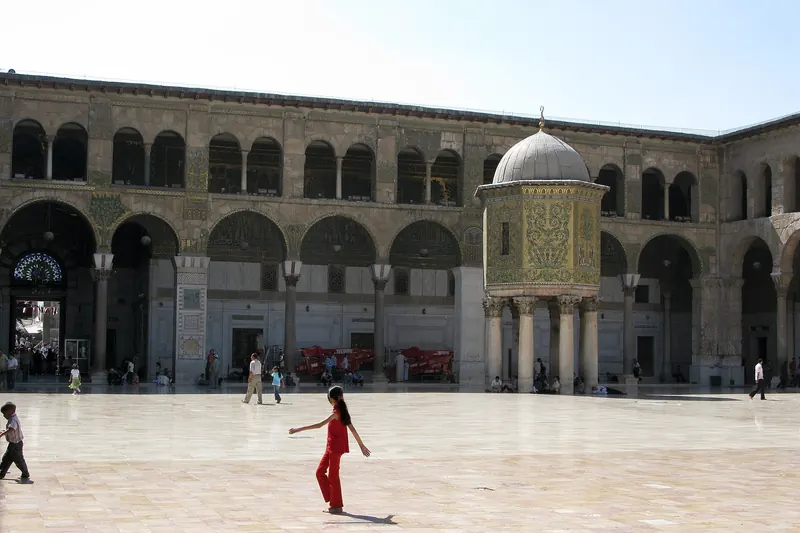
Syria's capital and one of the great ancient cities: a walled old city with the Umayyad Mosque, the Hamidiyeh souk and the Street Called Straight, which came through the war with relatively limited damage.

Best known for The Umayyad Mosque, one of the great buildings of early Islam, with its mosaics, its courtyard and a shrine to John the Baptist.

Read the overview — Damascus
Heritage overview Major CityUNESCO Site

Aleppo

Aleppo Governorate, northern Syria

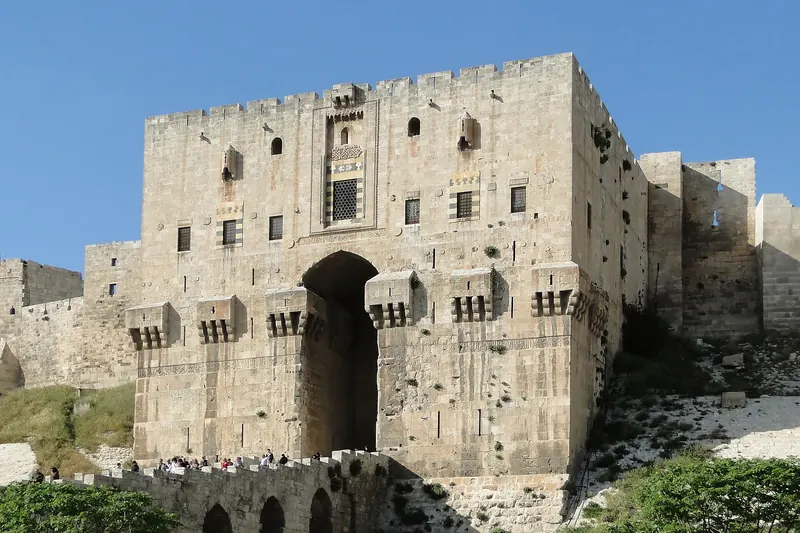
One of the world's oldest continuously inhabited cities, with a medieval citadel, the Great Mosque, khans and about thirteen kilometres of covered market, much of which was damaged or destroyed between 2012 and 2016.

Best known for The citadel and the covered souks — the most heavily damaged of any Syrian historic centre, and the focus of the country's largest heritage reconstruction effort.

Read the overview — Aleppo
Heritage overview UNESCO SiteArchaeology

Palmyra

Homs Governorate, Syrian Desert

The ruins of the Roman-era caravan city of Tadmor, with a great colonnaded street, tower tombs and temples — some of which were destroyed by Islamic State in 2015.

Best known for The Great Colonnade, a kilometre-long avenue of columns running through the desert, much of which survives.

Read the overview — Palmyra
Heritage overview UNESCO SiteHistoric Site

Krak des Chevaliers

Homs Governorate, western Syria

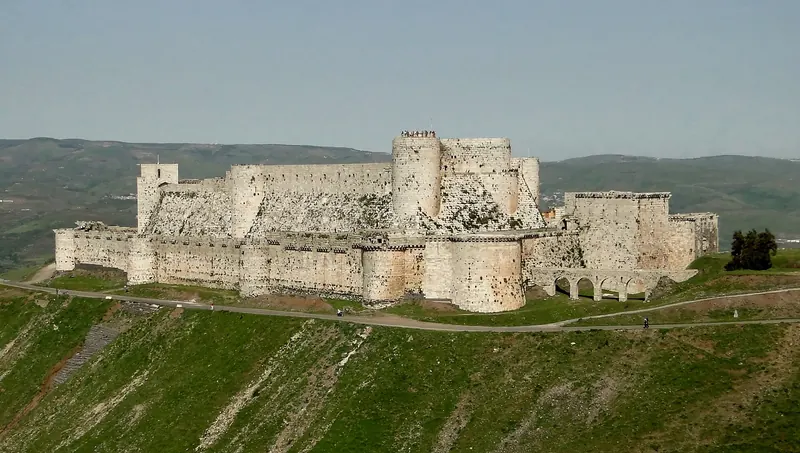
A 12th- and 13th-century Hospitaller fortress with two rings of walls, a great vaulted hall and a chapel, on a spur commanding the pass between the Syrian interior and the Mediterranean.

Best known for The concentric walls and the great hall, one of the finest surviving examples of Crusader military architecture.

Read the overview — Krak des Chevaliers
Heritage overview UNESCO SiteArchaeology

Bosra

Daraa Governorate, southern Syria

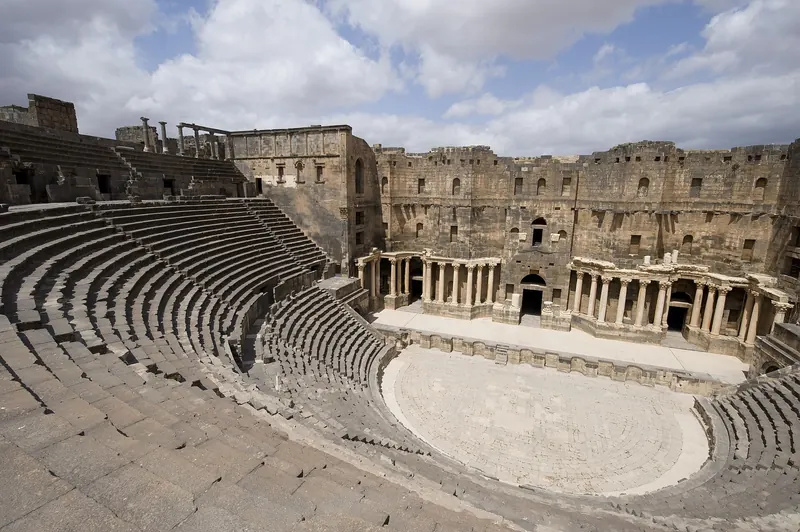
A Nabataean, Roman, Byzantine and early Islamic city built of dark volcanic stone, with a fortified theatre, one of the oldest mosques in the world and a monastery linked to the prophet Muhammad's youth.

Best known for The Roman theatre inside the Ayyubid citadel, one of the finest and best-preserved Roman theatres in the world.

Read the overview — Bosra
Heritage overview ArchaeologyHistoric Site

Apamea

Hama Governorate, Orontes Valley

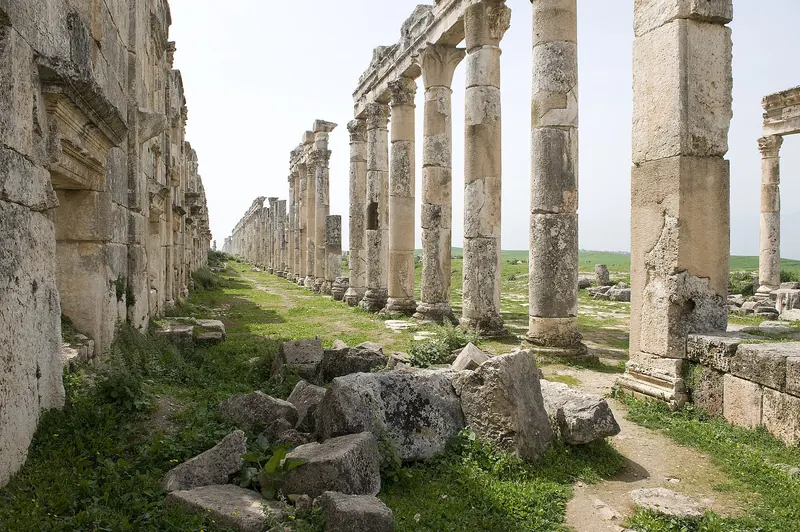
A Hellenistic and Roman city founded around 300 BCE, famed for its long colonnaded main street, its theatre and its mosaics — and now one of the most looted archaeological sites in the world.

Best known for The Cardo Maximus, a 1.85-kilometre colonnade, some of whose columns are carved with twisting and fluted patterns.

Read the overview — Apamea
Heritage overview Historic SiteCulture & Arts

Hama

Hama Governorate, central Syria

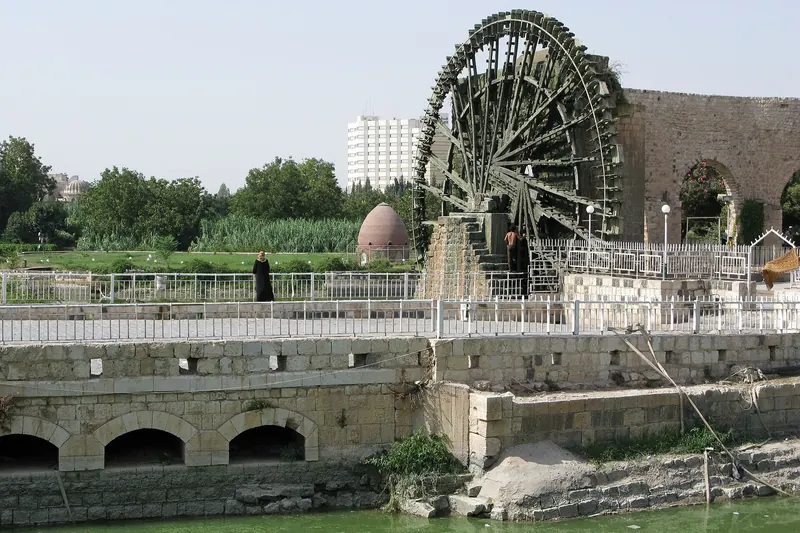
A city on the Orontes with medieval waterwheels, an Ottoman governor's palace and a Great Mosque — and a painful modern history, marked by the 1982 massacre.

Best known for The norias, some over twenty metres in diameter, groaning as they turned in the river.

Read the overview — Hama
Heritage overview Culture & ArtsHistoric Site

Maaloula

Rif Dimashq Governorate, Qalamoun Mountains

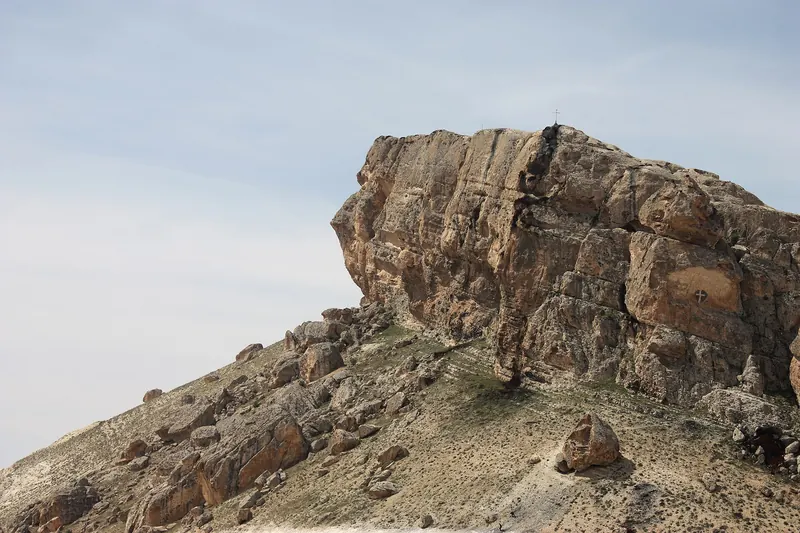
One of the last places in the world where a form of Aramaic is spoken, with Greek Orthodox and Greek Catholic monasteries, Christian and Muslim families, and houses stacked up a rock face.

Best known for The Monastery of Saint Thecla, built against a sheer cliff beside a narrow gorge that, according to tradition, opened to let her escape.

Read the overview — Maaloula
Heritage overview UNESCO SiteHistoric Site

Saladin's Castle (Qal'at Salah ed-Din)

Latakia Governorate, coastal mountains

A remote fortress on a spur between two ravines in the mountains east of Latakia, a Byzantine and then Crusader stronghold called Sahyun, captured by Saladin in 1188 and added to the World Heritage List with Krak des Chevaliers.

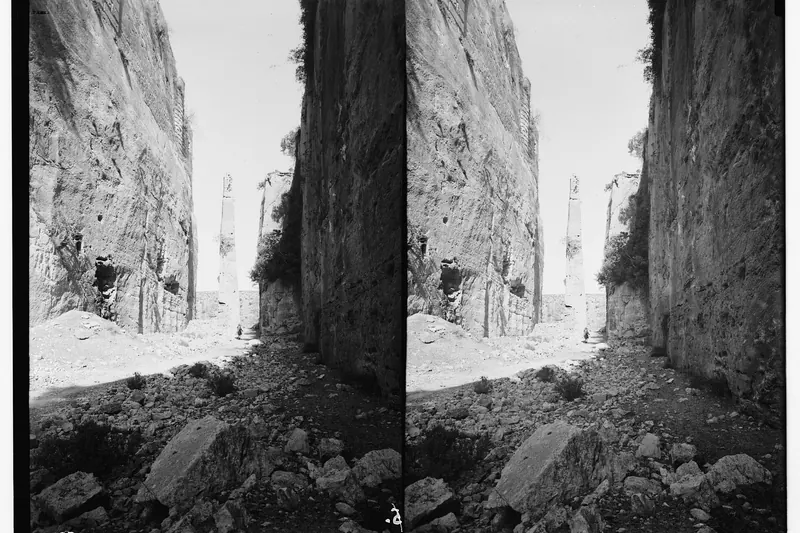
Best known for The rock-cut ditch and its 28-metre needle of stone, one of the most spectacular pieces of medieval military engineering in the world.

Read the overview — Saladin's Castle (Qal'at Salah ed-Din)
Heritage overview UNESCO SiteArchaeology

The Dead Cities (Ancient Villages of Northern Syria)

Idlib and Aleppo governorates, limestone massif

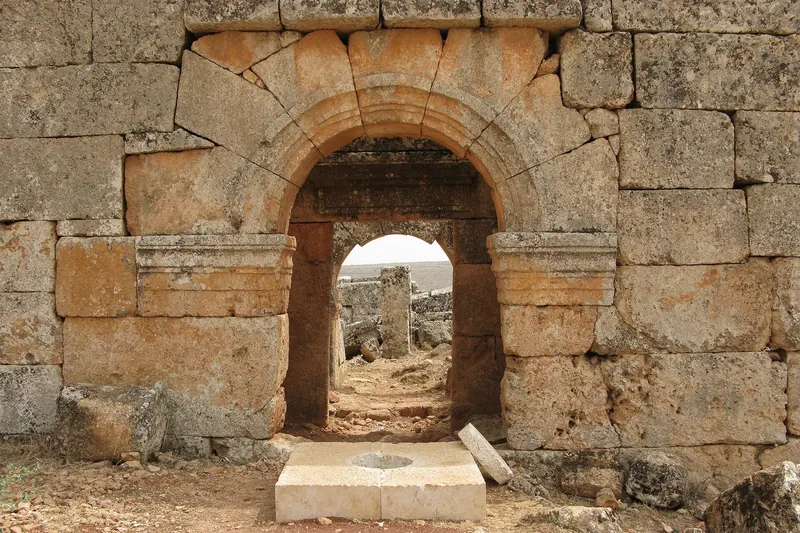
A landscape of ruined villages, churches, tombs and farms from the 1st to 7th centuries, so well preserved that it shows how ordinary people lived in late antiquity; a World Heritage Site since 2011.

Best known for The great basilica of Saint Simeon Stylites, once among the largest church complexes in the world, built around the pillar where a hermit lived for decades.

Read the overview — The Dead Cities (Ancient Villages of Northern Syria)

Browse all 510 destinations

Food and culture

Syrian cooking

Syrian cooking is one of the great cuisines of the Levant, and Aleppo in particular has long been considered the culinary capital of the Arab world. It is worth understanding as part of the country's heritage, and much of it survives in the kitchens of Syrians at home and abroad.

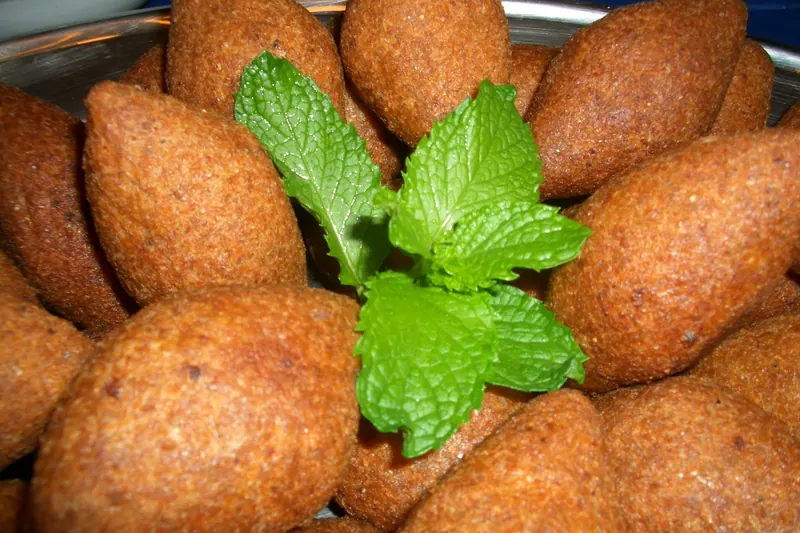
  • Fried kibbeh, torpedo-shaped croquettes of bulgur and minced meat

    Kibbeh

    Bulgur wheat and minced lamb pounded into a paste and shaped around a filling of spiced meat and pine nuts, then fried, baked, grilled or cooked in yoghurt. Aleppo is famous for having dozens of varieties.

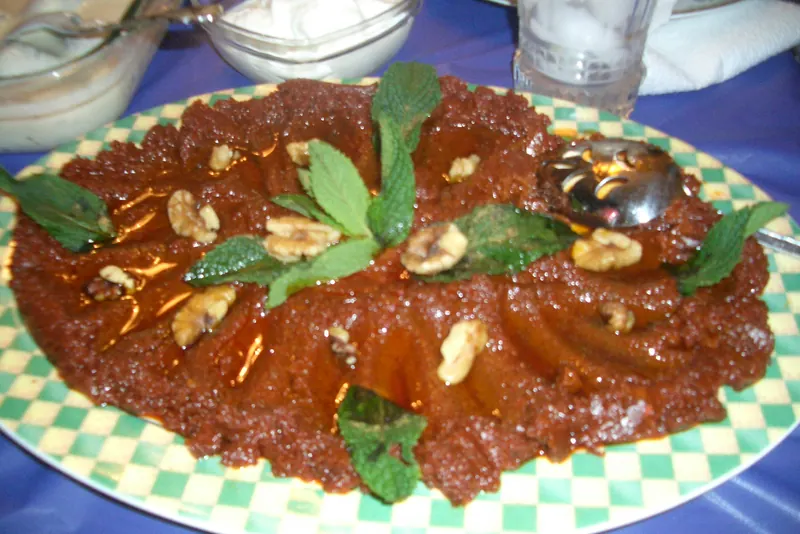
  • A bowl of muhammara, a red dip of roasted peppers and walnuts

    Muhammara

    A dip of roasted red peppers, walnuts, breadcrumbs, pomegranate molasses and olive oil, originally from Aleppo. It is sweet, sour, smoky and slightly hot, and is now eaten across the region.

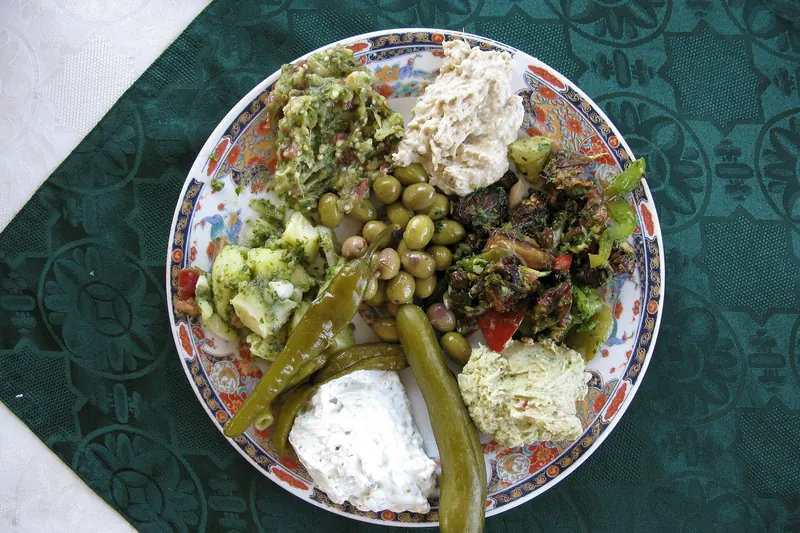
  • A spread of Arabic mezze dishes on a table

    Mezze

    A table of small dishes — hummus, baba ghanoush, tabbouleh, stuffed vine leaves, pickles and salads — that is central to hospitality and celebrations. The Syrian versions are known for their freshness and variety.

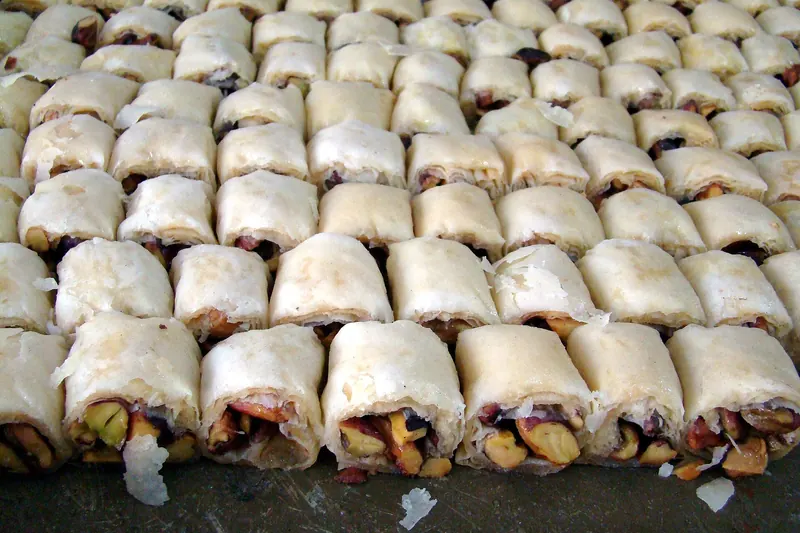
  • Trays of baklava and Arab pastries in a Damascus shop

    Damascene sweets

    Baklava, ma'amoul, barazek (sesame and pistachio biscuits) and knafeh, sold from glittering trays. Syrian confectionery has a reputation across the Arab world.

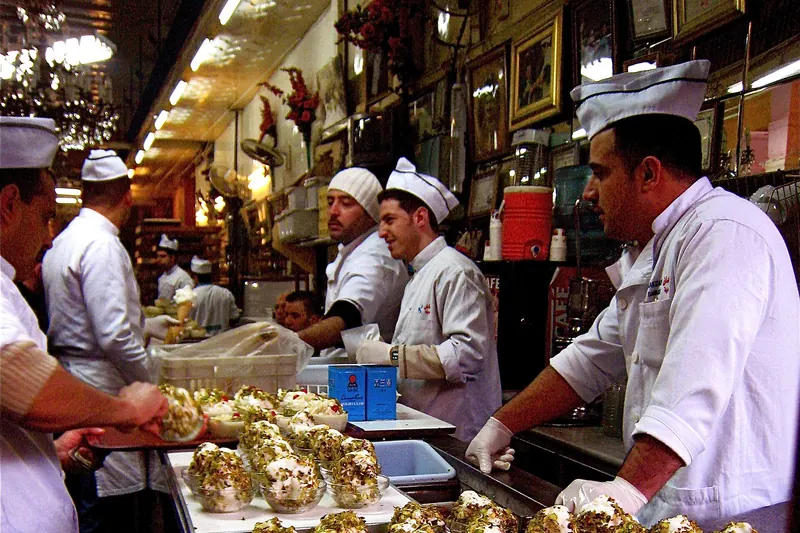
  • The Bakdash ice-cream shop in the old souk in Damascus

    Booza

    A stretchy, chewy ice cream made with mastic and salep, pounded until it stretches, and rolled in pistachios. The Bakdash shop in Damascus, founded in 1885, was among its best-known makers.

  • Aleppo pepper and spice blends

    The mildly hot, fruity, dried Aleppo pepper and the spice blends of Aleppo's old markets flavour the cooking of much of the Middle East and, in recent years, of restaurants worldwide.

Before you go

Basic facts about Syria

Basic facts, for context. Because of the situation described above, this is not a practical guide, and almost everything about entry, money and safety is unsettled.

Capital
Damascus
Language
Arabic (Levantine dialect). Kurdish, Aramaic, Armenian, Circassian and other languages are spoken by minorities, and Western Neo-Aramaic survives in a few villages near Maaloula.
Currency
Syrian pound (SYP). It has lost most of its value since 2011, and the authorities have been redenominating it, so figures in older sources are meaningless.
Cards and cash
Banking has been badly disrupted, sanctions have complicated payments, and foreign cards have generally not worked. Do not assume you will be able to withdraw or pay for anything. Sanctions rules have been changing since the government fell, so check current conditions.
Entry and visas
Entry rules and consular capacity have been in flux since December 2024. Most nationalities have needed a visa arranged in advance, and many governments advise against all travel. Do not rely on any general statement, including this one.
Power sockets
Type C, E and L, 220 V, 50 Hz. Power cuts have been severe and long in much of the country.
Emergency number
Emergency services are unreliable in much of the country. Do not depend on them.
Safety
Most governments advise against all travel to Syria or against all but essential travel. The risks include armed conflict, sectarian violence, kidnapping, landmines and unexploded ordnance, military strikes, criminality, and a lack of consular help and functioning medical care. Conditions differ by region and can change without warning. Check your own government's current advice.
Internet and SIM
Mobile and internet services are patchy and heavily disrupted in many areas.
Time zone
UTC+3 all year. Syria adopted permanent summer time in 2022.
Culture

Culture and etiquette in Syria

Syrian society is diverse: Sunni, Alawite, Shia, Druze, Ismaili and Christian communities, and Arabs, Kurds, Armenians, Circassians, Turkmen and others, live in a country that has been deeply divided by the war. The generalisations below are about traditions of courtesy that Syrians themselves describe, and not a prediction of what a visitor would experience.

  • Hospitality is a serious value

    Syrians are known across the region for generosity to guests, including offering tea, coffee, sweets and meals. Refusing food or drink repeatedly can cause offence, and a guest is expected to leave a little on the plate.

  • Greetings matter

    Greetings are long and warm, with enquiries about health and family. A handshake is common, and men and women may not shake hands with people of the opposite sex in more conservative settings.

  • Modest dress

    Both men and women are expected to cover shoulders and knees, particularly at religious sites, in the old cities and outside the big cities. Women often cover their hair in mosques.

  • Politics and the war are painful subjects

    Almost everyone in Syria has lost someone, and the war divides families and communities. Do not raise it casually, and listen without judging.

  • Photography needs care

    Photographing soldiers, checkpoints, government buildings, bridges and military sites has long been illegal and dangerous, and photographing people requires permission.

  • Respect for religious sites and practice

    Remove shoes at mosques, do not walk in front of people praying and observe the customs of each community, including the fasting month of Ramadan.

Do

  • Read your government's current advice before drawing any conclusion
  • Learn about the country's history before you think about its present
  • Listen to Syrian voices, in person and in writing
  • Support reputable heritage and humanitarian organisations
  • Treat every person you meet as an individual
  • Respect local dress and religious customs

Don't

  • Don't treat Syria as a tourist destination while advice says otherwise
  • Don't photograph soldiers, checkpoints or military sites
  • Don't take or buy antiquities, which are often looted
  • Don't assume every community shares the same political view
  • Don't raise the war or politics casually
  • Don't rely on old guidebooks, maps or prices

FAQ

Syria: frequently asked questions

Is it safe to travel to Syria?

At the time of writing (mid-2026), most governments advised against all travel to Syria or against all but essential travel. The risks include armed conflict, sectarian violence, landmines, kidnapping and a lack of consular and medical support. Check your own government's current advice, which may have changed.

Can I visit Damascus, Palmyra or Aleppo?

Some visitors, mostly journalists, aid workers and a few specialist tour groups, have visited parts of the country, but most governments advise against it and conditions are unpredictable. We do not recommend or plan trips. This site describes these places so that you can understand them.

What happened to Syria's historic sites during the war?

The damage was widespread and uneven. Aleppo's old city and its souks were heavily damaged, Palmyra's temples of Bel and Baalshamin and its Arch of Triumph were destroyed by Islamic State in 2015, many sites were looted, and Krak des Chevaliers and Bosra were shelled. Much of old Damascus survived relatively intact. Each destination page describes what is known.

Which Syrian sites are UNESCO World Heritage Sites?

Six: the Ancient City of Damascus, the Ancient City of Aleppo, the Ancient City of Bosra, Palmyra, Crac des Chevaliers and Qal'at Salah El-Din, and the Ancient Villages of Northern Syria. All six have been on the List of World Heritage in Danger since 2013.

How can I learn more or help?

Read Syrian writers and historians, follow the work of UNESCO and heritage organisations documenting the damage, and support reputable humanitarian and cultural-preservation groups. Museums abroad, including the British Museum, the Louvre and the Metropolitan Museum, hold important Syrian collections.

Why does this site cover Syria if it is not a travel destination right now?

Because Syria holds some of the most important historical places in the world, and understanding them matters whether or not anyone can visit. We have written it as a heritage overview, with a clear notice on every page, so that it is useful without encouraging anyone to take risks.

Understand first

The heritage overview explains what makes Syria one of the most important historical countries in the world, what the war did to it, and what would need to change before travel could be considered.

Read the Syria heritage overview

Advertisement