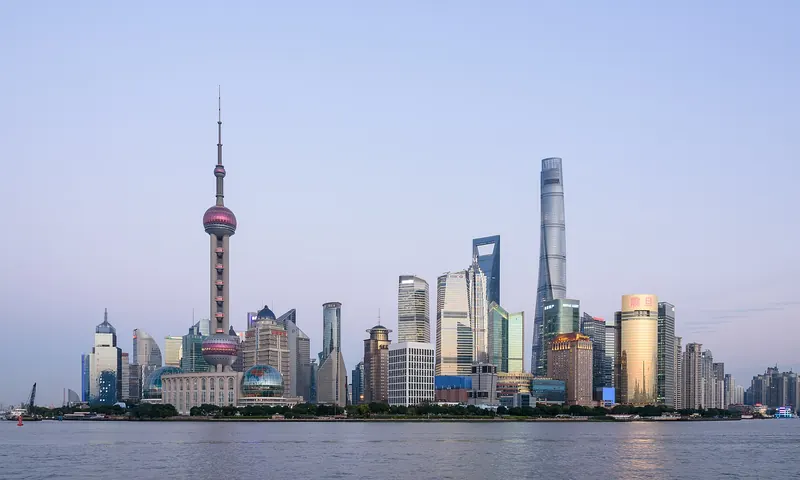
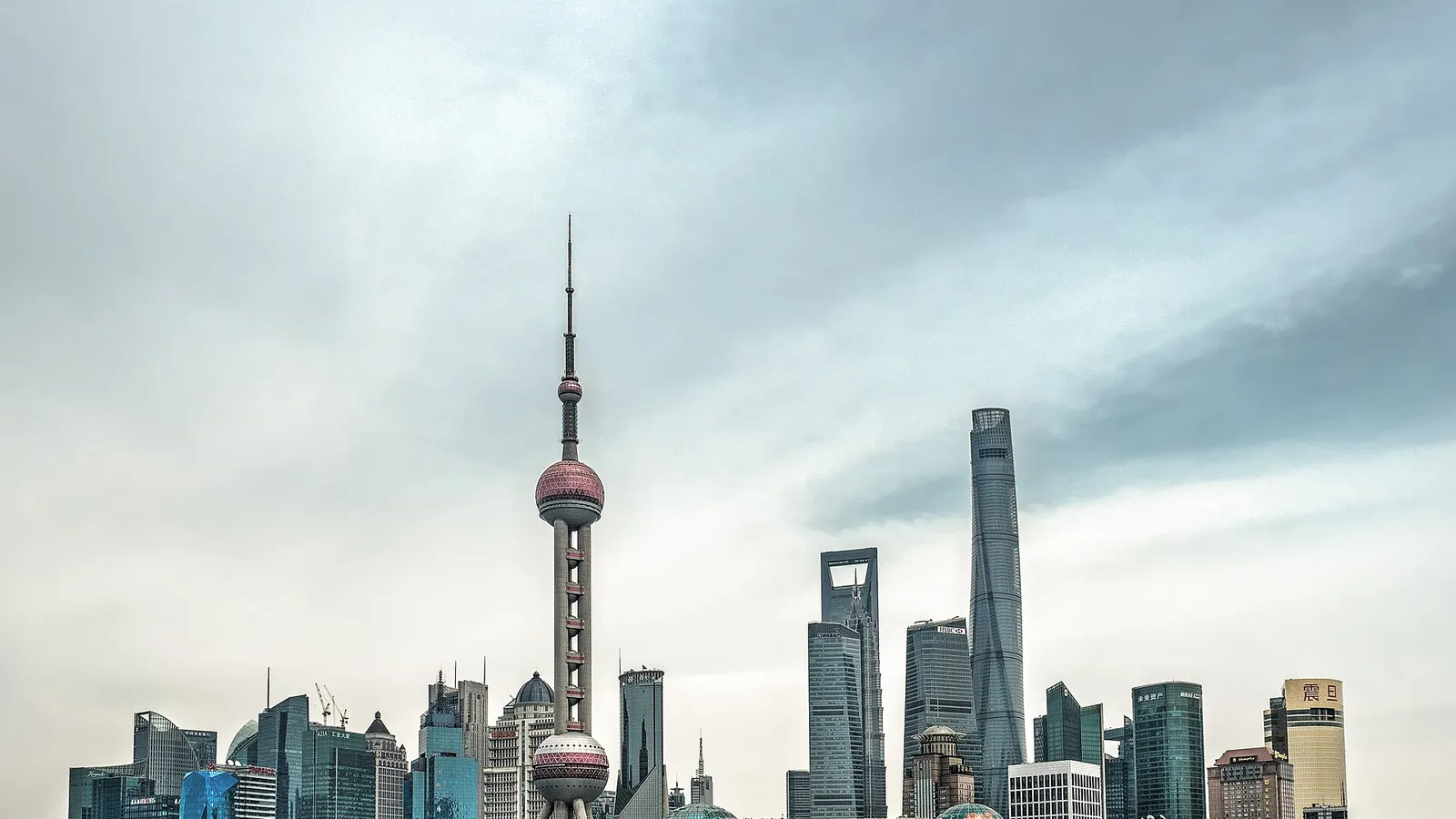
The futuristic skyline of Pudong, Shanghai, across the Huangpu River

East Asia

China Travel Guide

A country so large that its bullet trains cover the distance of Western Europe, with three thousand years of continuous history at one end of the line and neon megacities at the other.

  • Destinations 10 hand-picked
  • Best time April–May and September–October
  • Ideal trip 12–16 days for a first trip

Photo: Ermell · CC0

Why go to China

China is not one trip, it is several, and the country's own scale is the first thing to plan around. Beijing to Hong Kong is further than London to Moscow; Shanghai to the karst country of Guangxi is further than Paris to Athens. What makes this manageable rather than overwhelming is the high-speed rail network, the largest in the world, which turns journeys that would once have taken a day and a night into a comfortable few hours at 300 km/h.

The historical depth is different in kind from a European trip. Xi'an was the imperial capital when Rome was still a republic. The written language on shopfronts today descends, largely unbroken, from characters carved on oracle bones three thousand years ago. And yet the same country builds cities faster than anywhere on earth — Shenzhen was a fishing town in 1980 and is now a tech capital of seventeen million people, and Shanghai's Pudong skyline, all glass towers and a rocket-shaped observation deck, did not exist before 1990.

The practical texture of travel here is also its own thing, and worth knowing before you land rather than discovering on day one. Cash has largely given way to Alipay and WeChat Pay, both now usable by foreign cards with a little setup. Google, Gmail, WhatsApp, Instagram and most Western apps and sites do not work without a VPN installed before arrival. And English drops off sharply outside Beijing, Shanghai and Hong Kong, which makes a translation app and a hotel business card in Chinese two of the most useful things you will carry.

Where to go

Best Places to Visit in China

Ordered roughly by how strongly we would recommend each for a first visit — though the karst landscapes, the sandstone pillars of Zhangjiajie and the southwestern regions repay a second trip more than a fourth palace complex would.

Capital CityHistoric Site

Beijing

Beijing Municipality

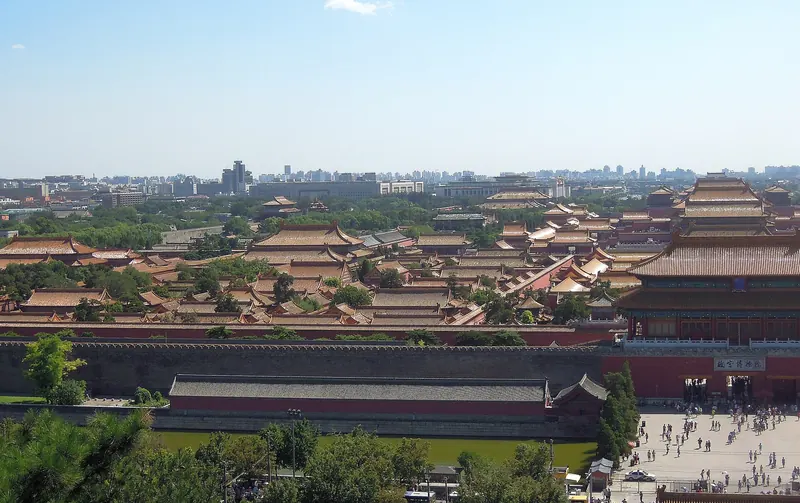
China's capital for most of the last eight centuries, where a walled Ming palace, tai-chi parks and some of the country's best duck sit inside a modern megacity of 22 million.

Don't miss The Forbidden City — 980 buildings and nearly 9,000 rooms, the seat of Chinese emperors for nearly five hundred years.

Explore Destination — Beijing
Historic SiteArchaeology

Xi'an

Shaanxi

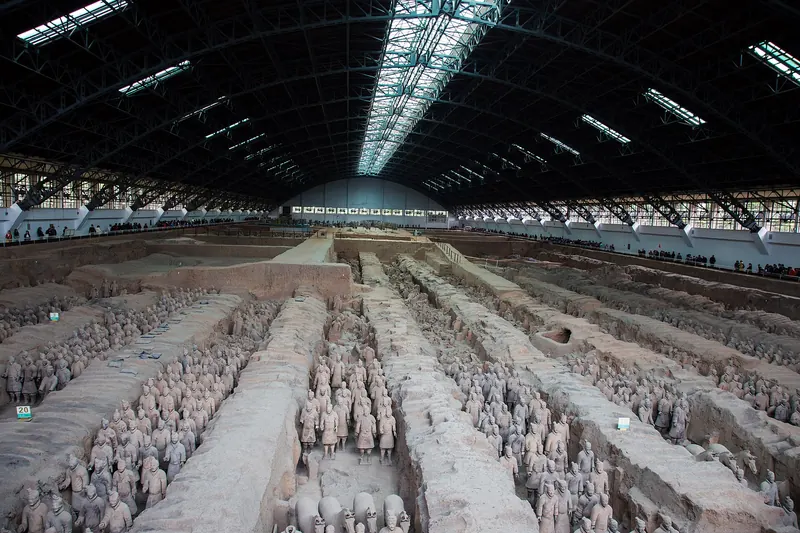
China's ancient capital for eleven dynasties and over a thousand years, where an emperor's buried army meets a walled old city and the best street food in the country.

Don't miss The Terracotta Army — over 8,000 individually sculpted life-size warriors, discovered by farmers digging a well in 1974.

Explore Destination — Xi'an
Major CityCoast Beaches

Shanghai

Shanghai Municipality

China's financial capital and its most international city, where a preserved 1920s waterfront stares across the river at a skyline that is barely three decades old.

Don't miss The Bund at dusk — a row of 1920s European banking houses facing the futuristic towers of Pudong across the Huangpu River.

Explore Destination — Shanghai
Scenic RegionNature Wildlife

Guilin & Yangshuo

Guangxi

China's most photographed landscape: limestone karst peaks by the thousand, a slow river cruise between two towns, and rice-paddy cycling at the quieter end.

Don't miss The Li River cruise from Guilin to Yangshuo — four hours drifting between thousands of forested karst peaks rising straight out of the water.

Explore Destination — Guilin & Yangshuo
National ParkNature Wildlife

Zhangjiajie

Hunan

China's strangest national park: over three thousand sandstone pillars, a glass bridge slung between two cliffs, and the tallest outdoor elevator on earth.

Don't miss The Avatar Hallelujah Mountain — a needle-thin sandstone pillar wreathed in cloud that directly inspired the floating mountains of Avatar.

Explore Destination — Zhangjiajie
Major CityNature Wildlife

Chengdu

Sichuan

Sichuan's capital, where giant pandas, the country's spiciest food and an unhurried pace of life make the case for slowing an itinerary down.

Don't miss The Chengdu Research Base of Giant Panda Breeding — dozens of pandas, from newborn cubs to full-grown adults, in naturalistic enclosures best seen at their most active in the early morning.

Explore Destination — Chengdu
Major CityCoast Beaches

Hong Kong

Hong Kong Special Administrative Region

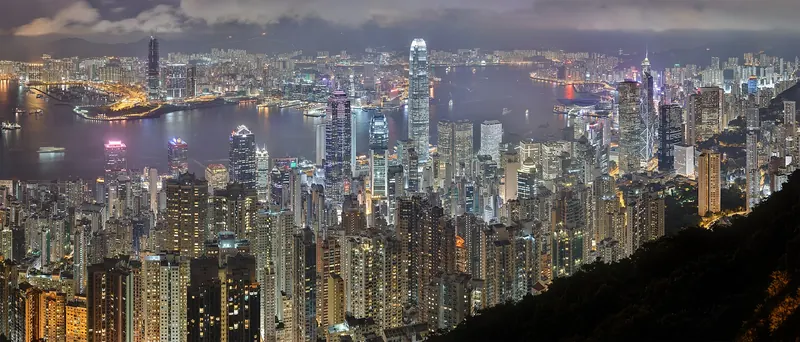
A Special Administrative Region of China with its own laws, currency and border, where dense high-rise city meets green mountains, fishing villages and some of the best dim sum on earth.

Don't miss The Star Ferry crossing Victoria Harbour at dusk — the cheapest, best view in the city, skyscrapers lighting up on both shores at once.

Explore Destination — Hong Kong
Historic SiteNature Wildlife

Lijiang & Yunnan

Yunnan

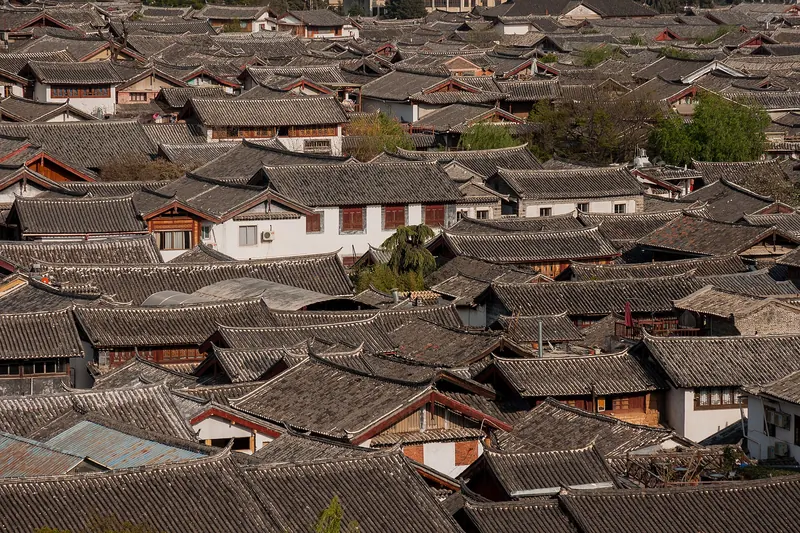
China's most ethnically diverse province, where a UNESCO-listed canal town, snow-capped mountains and terraced valleys sit far from the country's historic east-coast centres.

Don't miss Lijiang's Old Town at dawn — canal-lined cobbled lanes and Naxi-style wooden houses, quiet before the day's crowds arrive.

Explore Destination — Lijiang & Yunnan
Nature WildlifeHistoric Site

Huangshan & the Anhui Villages

Anhui

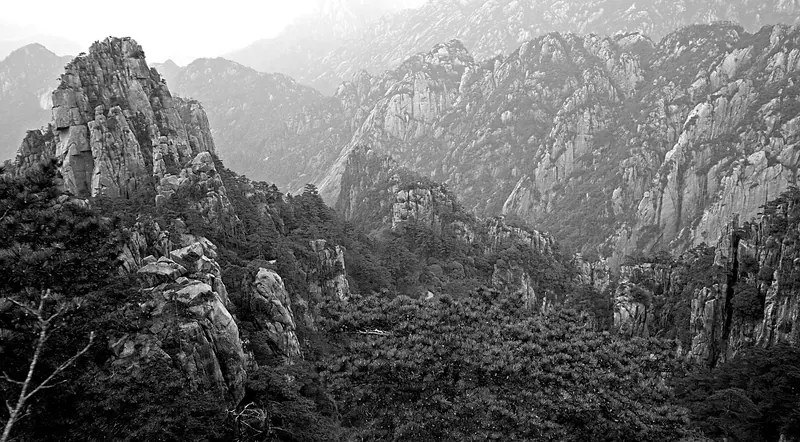
The mountain that shaped a thousand years of Chinese landscape painting, with Ming and Qing-dynasty villages preserved almost untouched at its base.

Don't miss Sunrise over Huangshan's sea of clouds — granite peaks breaking through mist below the summit hotels, the single image most associated with classical Chinese landscape painting.

Explore Destination — Huangshan & the Anhui Villages
Historic SiteScenic Region

Suzhou & Hangzhou

Jiangsu & Zhejiang

Two canal-and-lake cities under ninety minutes from Shanghai, one built around the most celebrated classical gardens in China, the other around a lake that has shaped a thousand years of poetry.

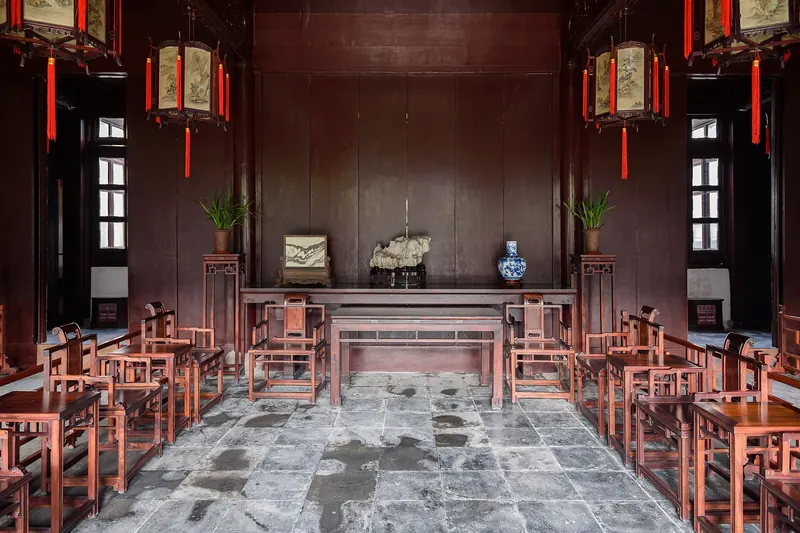
Don't miss The Humble Administrator's Garden in Suzhou — the largest and most celebrated classical garden in China, its pavilions, ponds and rockeries composed like a three-dimensional painting.

Explore Destination — Suzhou & Hangzhou

Browse all 510 destinations

Experiences

Best things to do in China

The experiences that recur across the country and that make a China trip feel like China rather than a checklist of monuments.

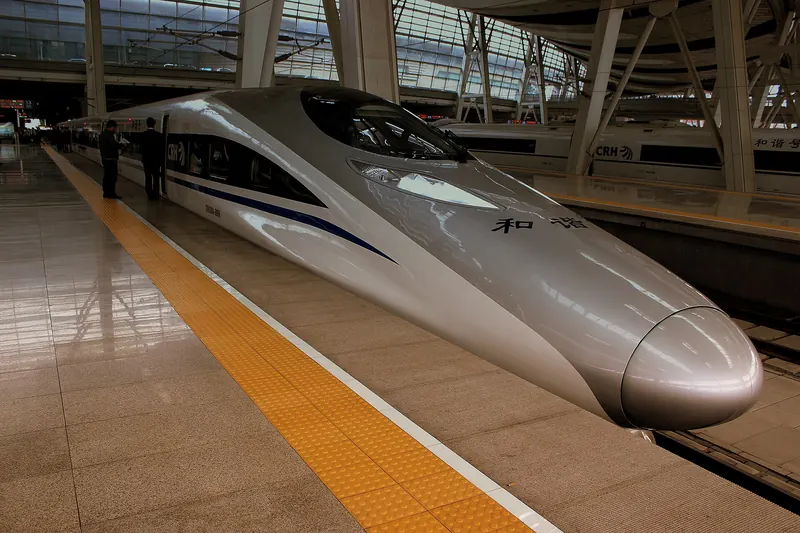
  1. A white Chinese high-speed train (CRH380) at a platform

    Ride the high-speed rail network

    Over 45,000 km of dedicated high-speed track, more than the rest of the world combined, running at up to 350 km/h between city centres. Beijing to Shanghai in under five hours is the single best demonstration of what modern China has built.

    Tip Book through Trip.com or 12306's English site. Second-class seats are perfectly comfortable; only pay for first class on very long runs.

  2. Set up a VPN before you arrive

    Google, Gmail, Maps, WhatsApp, Instagram, Facebook, X and most Western news sites are blocked by the Great Firewall. A VPN installed and tested before you cross the border is the only reliable fix, since VPN provider websites are themselves often blocked once you are inside.

    Tip Pick a paid VPN with a China-specific mode and install it at home. Free VPNs and last-minute downloads at the airport routinely fail.

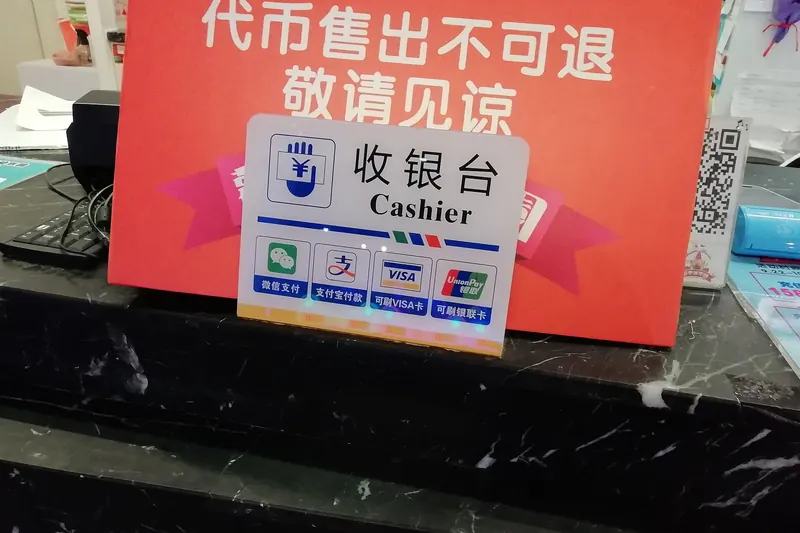
  3. A shopfront sign showing that Alipay and WeChat Pay are both accepted

    Get Alipay or WeChat Pay working

    China is close to cashless. Small vendors, taxis and street food stalls increasingly cannot break a large note or may simply not want cash at all. Both apps now let foreign visitors link an international Visa or Mastercard directly.

    Tip Set this up before you arrive, with your passport and card ready — it takes ten minutes and saves constant friction for the whole trip.

  4. Eat regionally, not nationally

    Sichuan numbs with huajiao pepper, Guangdong steams and stir-fries lightly, the northeast pickles and grills, Yunnan cooks with mushrooms and herbs found nowhere else. Ordering 'Chinese food' anywhere in China is like ordering 'European food' in Rome.

    Tip Look for restaurants full of locals with no English menu. Point at what the next table is eating if you have to.

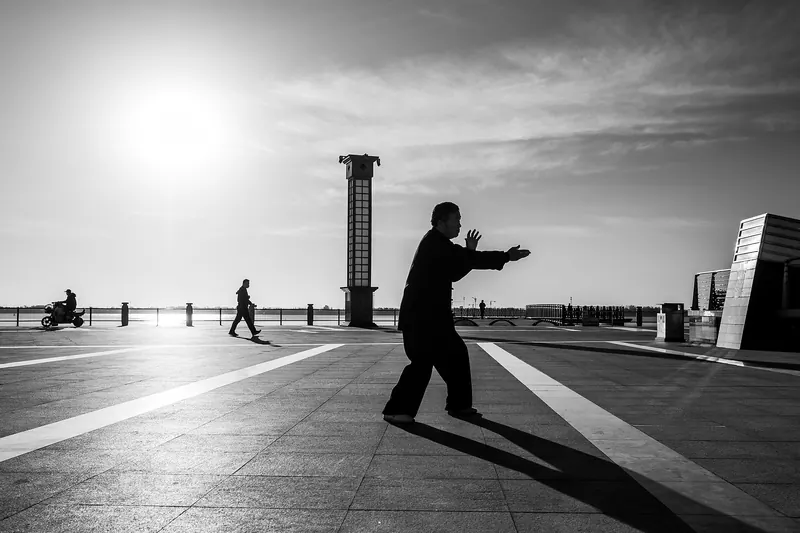
  5. People practising tai chi in a Beijing park at dawn

    Walk a city at dawn

    Parks fill before seven with tai chi, ballroom dancing, sword forms, badminton played against nothing and choirs singing revolutionary songs. It is the most unguarded, least touristed hour China offers, and it happens in every city, every day.

    Tip Temple of Heaven Park in Beijing and People's Park in Chengdu are the two best-known stages for this, but any city park works.

  6. Take the sleeper train at least once

    For journeys the high-speed line has not reached, an overnight soft-sleeper — four bunks to a compartment, a thermos of hot water for tea or instant noodles — is a genuine experience rather than just transport, and it saves a hotel night.

    Tip Book soft sleeper (软卧) over hard sleeper for real privacy and a door. Bring your own snacks and toilet paper.

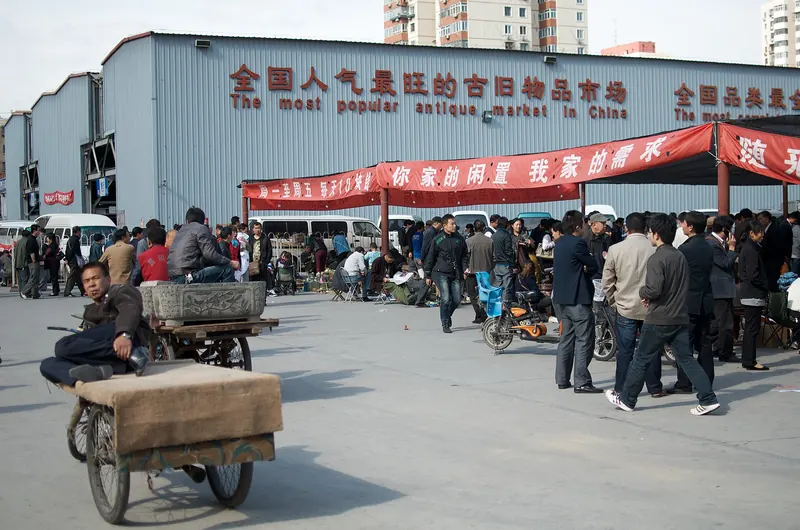
  7. Stalls of antiques and curios at the Panjiayuan market in Beijing

    Bargain in a market, not a mall

    Fixed-price shops need no haggling, but tourist markets expect it — start at forty to fifty percent of the asking price and meet somewhere in the middle, in good humour rather than confrontation.

    Tip Panjiayuan in Beijing and the fabric markets of Shanghai are both fun for this, purchases or not.

Food and drink

China foods to try

There is no single Chinese cuisine, only eight or more major regional traditions that a lifetime of eating in China would not exhaust. These are the threads that run through the country.

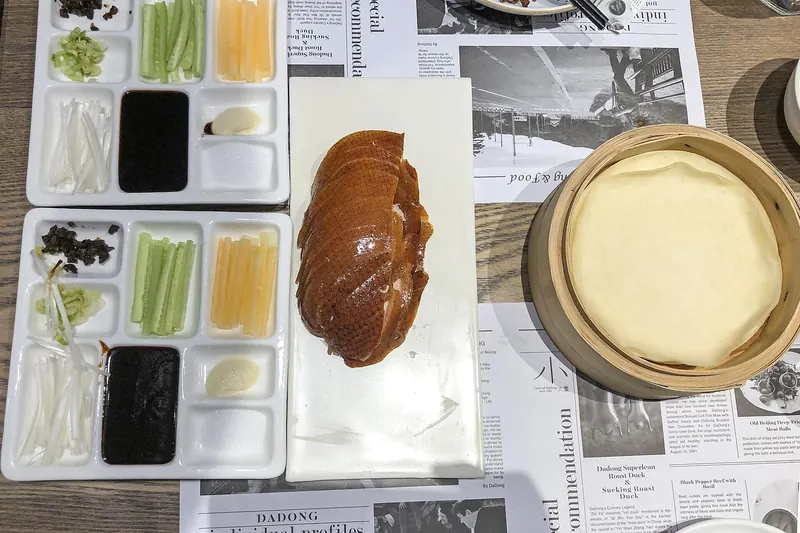
  • A whole roasted Peking duck with lacquered skin, ready to be carved

    Peking duck

    Lacquered, air-dried and roasted until the skin shatters, then carved at the table and wrapped in thin pancakes with spring onion, cucumber and sweet bean sauce. Beijing's signature dish and worth booking ahead for at the well-known houses.

    Where to try it Beijing, at Quanjude or Da Dong for the full ceremony, or a neighbourhood duck house for half the price.

  • A steamer basket of xiaolongbao soup dumplings

    Xiaolongbao and Shanghai snacks

    Soup dumplings, folded by hand and holding a mouthful of scalding broth inside a thin skin, eaten with a spoon to catch the first bite. Shanghai's broader snack culture — scallion pancakes, sheng jian bao, sweet tofu pudding — is a meal in itself.

    Where to try it Shanghai's old town and Yu Garden bazaar, or Din Tai Fung for a reliably excellent version anywhere in the country.

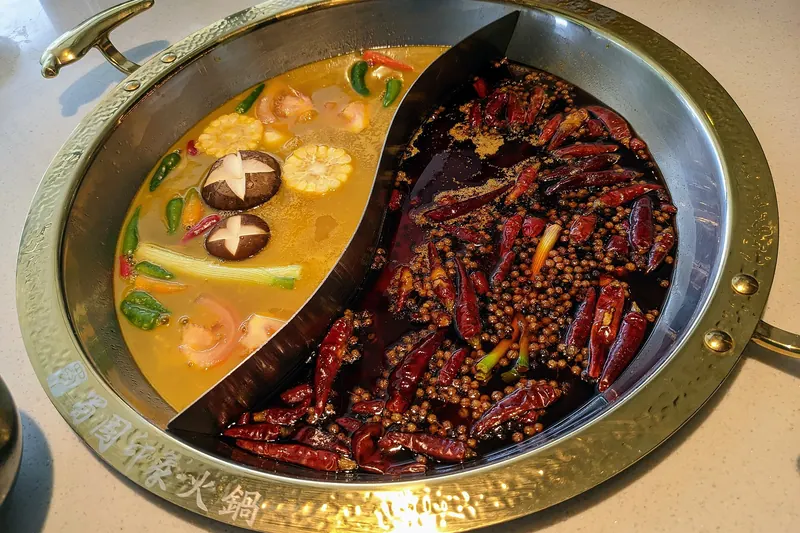
  • A divided hotpot with red spicy broth on one side, bubbling on a table burner

    Sichuan hotpot and mala

    A pot of chilli- and Sichuan-peppercorn-laced broth kept boiling at the table, into which you cook thin-sliced meat, tofu and vegetables. The peppercorns produce mala — a tingling numbness alongside the heat, not simple spice.

    Where to try it Chengdu or Chongqing, at any hotpot restaurant packed with locals at 9pm.

  • A bowl of wide, hand-pulled biang biang noodles

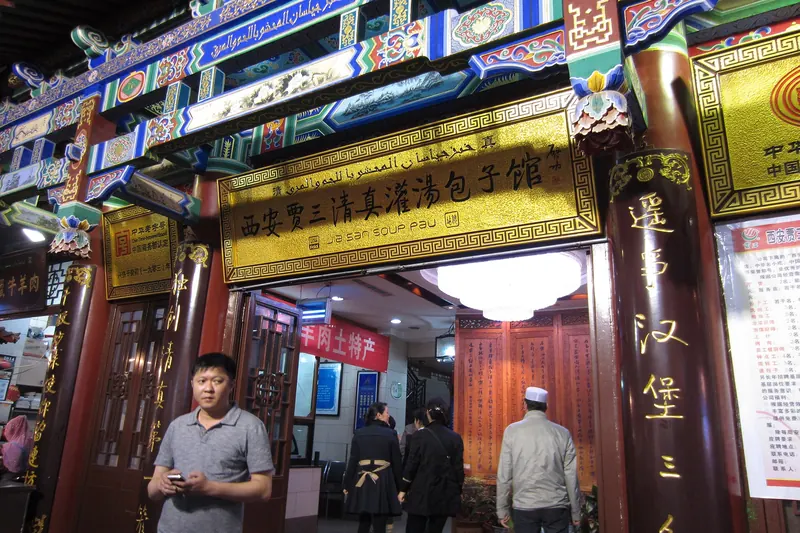
    Xi'an's noodles and Muslim Quarter street food

    Biang biang noodles — hand-pulled, wide as a belt, tossed in chilli oil — and roujiamo, a flatbread stuffed with slow-braised pork often called China's answer to the hamburger, both native to Shaanxi and best eaten standing up.

    Where to try it Xi'an's Muslim Quarter, from any stall with a queue of locals rather than tour groups.

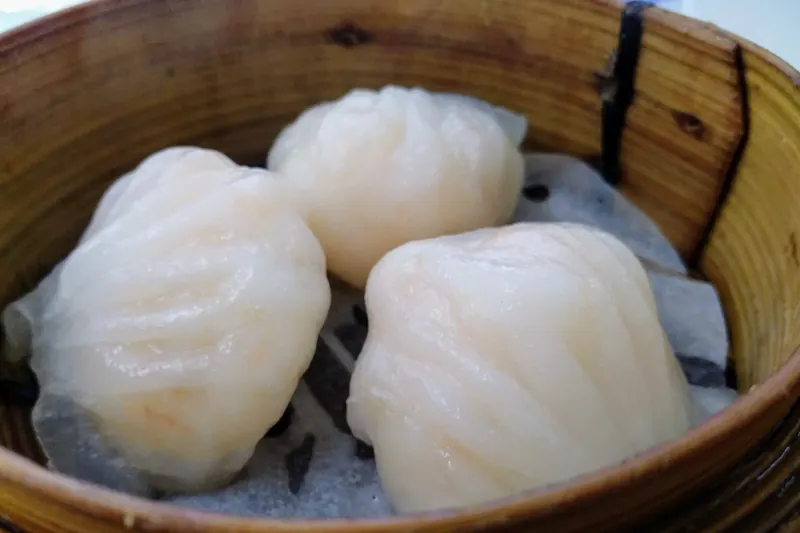
  • An assortment of dim sum dishes in bamboo steamers

    Dim sum

    Small steamed and fried plates — har gow, siu mai, char siu bao, egg tarts — ordered from a trolley or a checklist and shared over tea, traditionally a late-morning ritual rather than a quick lunch.

    Where to try it Hong Kong or Guangzhou, ideally before 11am on a weekend, when it is still a family occasion rather than a tourist sitting.

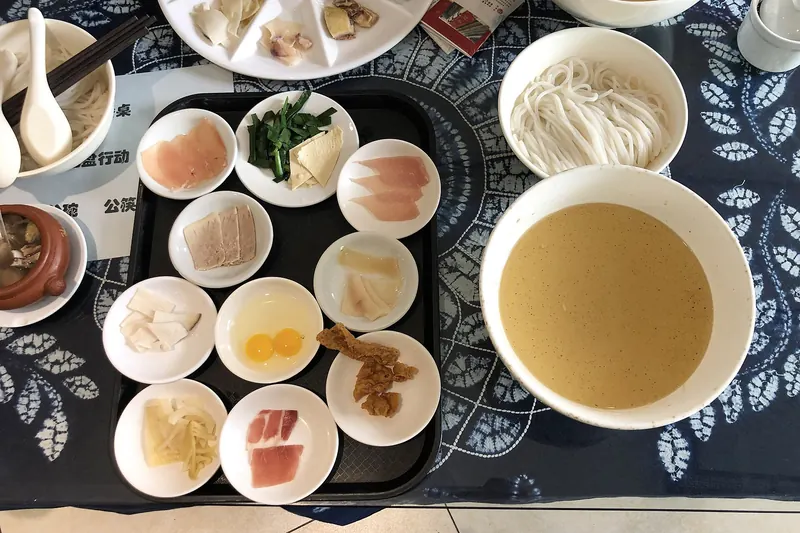
  • Crossing-the-bridge noodles served with raw ingredients around a bowl of scalding broth

    Yunnan's mushrooms and crossing-the-bridge noodles

    Wild mushrooms foraged from Yunnan's forests, cooked simply, and guoqiao mixian — a scalding broth sealed with a layer of oil, into which raw meat, egg and rice noodles are stirred tableside and cooked in seconds.

    Where to try it Kunming or Lijiang, where both are regional specialities rather than imports.

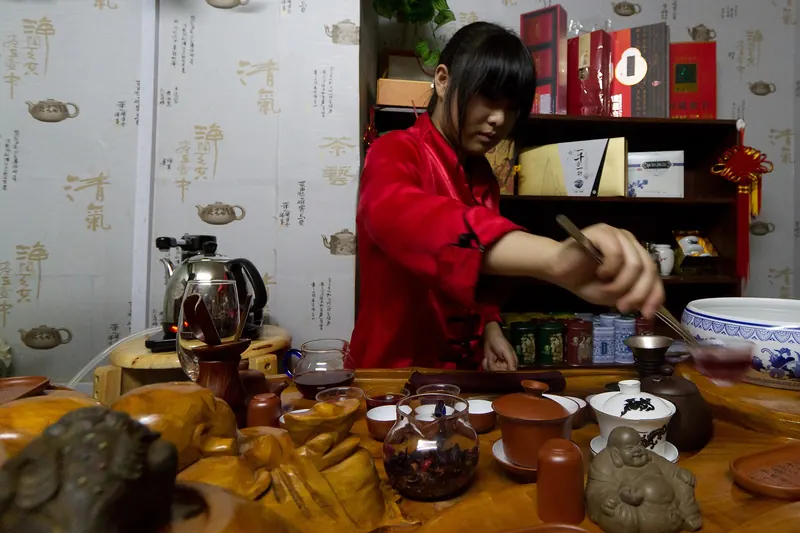
  • Tea being poured in a gongfu tea ceremony over small cups

    Tea, properly brewed

    Green, oolong, pu'er and white teas each with their own region, brewing temperature and ritual — gongfu-style brewing uses a small pot, repeated short infusions and cups the size of a shot glass rather than a mug of one long steep.

    Where to try it A teahouse in Chengdu's parks, or Hangzhou, the historic home of Longjing green tea.

Before you go

Practical travel information for China

The essentials, current for 2026. China is safe and increasingly easy to navigate, with two exceptions that catch first-time visitors out: connectivity, and payments.

Capital
Beijing
Language
Mandarin Chinese (Putonghua) nationally, with major regional languages including Cantonese in Hong Kong and Guangdong. English is spoken in international hotels and by younger people in Beijing, Shanghai and Hong Kong; much less so elsewhere. A translation app is essential.
Currency
Renminbi / Yuan (¥, CNY)
Cards and cash
Alipay and WeChat Pay, both linkable to foreign cards, are used for almost everything, from taxis to street food. Carry some cash as a backup for small towns and older vendors, and know that foreign credit cards are not universally accepted outside hotels and larger shops.
Entry and visas
Requirements vary by nationality and change often — China has extended unilateral visa-free entry (typically up to 30 days) to a growing list of countries including most of the EU, the UK, Australia and Canada since 2023, alongside a 240-hour visa-free transit for many more. Check your specific nationality's current requirement before booking, since the list is still expanding.
Power sockets
Types A, C and I, 220 V, 50 Hz. Sockets often accept two or three plug types interchangeably, but a universal adapter removes any doubt.
Emergency number
110 for police, 120 for medical emergencies, 119 for fire, nationwide.
Tipping
Not expected and can cause confusion if offered in local restaurants. High-end hotels and some tour guides catering to foreign visitors are the exception, where a modest tip is increasingly accepted.
Safety
Very safe, with low rates of violent crime and street theft. The practical risks are traffic — crossing streets requires real vigilance — and common scams around Tiananmen Square and other major sights involving overpriced 'tea ceremonies' or art students.
Internet and SIM
Excellent 4G and 5G nationally, including in most rural and mountain areas. A VPN set up before arrival is essential for Google, WhatsApp, Instagram and most Western apps; an eSIM or local SIM is cheap and simple to arrange.
Time zone
China Standard Time, UTC+8, used nationwide with no daylight saving and no regional variation despite the country's width.

Daily budget guide (per person)

Backpacker
¥350–550 per day — hostels, street food and noodle shops, hard-seat trains
Mid-range
¥700–1,200 per day — three-star hotels, sit-down restaurants, high-speed rail
Comfortable
¥1,400–2,500 per day — four- and five-star hotels, guides, domestic flights
Domestic flight
¥400–1,200 one-way, cheaper booked a few weeks ahead

Excludes international flights. Figures are typical rather than absolute — cities and peak season run higher.
When to go

Best time to visit China

China spans subtropical Hainan to sub-Arctic Heilongjiang, so 'the best time' depends on which China. The two national holiday weeks are worth avoiding almost everywhere regardless of season.

  • Spring (April–May)

    Best time

    Mild and increasingly green across the eastern and central cities, with the Guilin karst and Yunnan at their most comfortable. The main exception to avoid within this window is the first week of May, a national holiday.

  • Summer (June–August)

    Think twice

    Hot and often humid in the east and centre — Xi'an and Chengdu regularly exceed 35°C — and the wettest season in the south. The mountains (Zhangjiajie, the Tibetan plateau areas) and the northeast are the exceptions and are at their best.

  • Autumn (September–October)

    Best time

    Widely considered the finest season: clear skies, comfortable temperatures and, in the north, striking autumn colour. The first week of October is Golden Week, a national holiday and the single most crowded week of the year to avoid.

  • Winter (November–March)

    Shoulder

    Cold and dry in the north — Beijing regularly drops below freezing — mild in the south around Hong Kong and Guangzhou, and quiet and cheap almost everywhere except during Chinese New Year, when the entire country travels at once.

Worth planning around: Chinese New Year (late January to mid-February, dates vary) and Golden Week (1–7 October), when up to half a billion people travel domestically, trains sell out months ahead and prices spike everywhere.

Trip length

How long to spend in China

China's distances are large, and the high-speed rail network makes an ambitious route tempting. Two or three regions beat five spread thin.

  • 5–6 days

    Beijing alone, or Beijing and Xi'an combined by a two-hour flight or five-hour bullet train — the classic imperial-history introduction.

    A short China trip is better spent deeply in the north's two great historic capitals than spread across the whole country.

  • 10–12 days

    Beijing, Xi'an and Shanghai, connected by high-speed rail, with a day trip from Shanghai to the canal towns or gardens of Suzhou.

    The standard first route: two imperial capitals and the modern showcase city, under nine hours of total train time.

  • 14–18 days

    The itinerary on this page: Beijing and Xi'an in the north, then south to Guilin's karst country and Shanghai, or west to Chengdu and Zhangjiajie.

    Enough time to add a different landscape to the historic-cities route.

  • 3 weeks or more

    Add Yunnan (Lijiang and the southwest), Hong Kong, or a loop through the southwest's karst and mountain scenery as a second, self-contained leg.

    The southwest and the far south are where a second China trip belongs, and both reward a slower pace than the historic-cities circuit.

Getting around

Transportation in China

China's high-speed rail network is the best way to move between cities and makes the classic route effortless. Flights fill the gaps it does not reach; a car is rarely useful and rarely rented by visitors.

  • High-speed rail

    The G- and D-series bullet trains link every major city at up to 350 km/h. Beijing–Xi'an is 4h30, Beijing–Shanghai under 5h, Shanghai–Hangzhou under an hour.

    Book via Trip.com or the 12306 app a few weeks ahead in peak season. You need your passport to buy and to board.

  • Domestic flights

    Cheap and frequent for the routes rail does not cover well, including Zhangjiajie, Lijiang and Hong Kong from the interior.

    Delays are common, especially in summer thunderstorm season — build in a buffer day before an international connection.

  • Metro systems

    Beijing, Shanghai, Hong Kong, Chengdu and every other major city have extensive, cheap, clearly signed (in English and Chinese) metro networks that are the easiest way to get around within a city.

    Buy a rechargeable transit card on arrival, usable on metro, bus and often bike share, or pay by Alipay/WeChat QR code directly.

  • Ride-hailing apps

    Didi is the local equivalent of Uber and works well with a linked foreign card; street taxis are cheap but drivers rarely speak English.

    Have your destination's name and address ready in Chinese characters, not just pinyin — most drivers cannot read romanised addresses.

  • Sleeper trains

    For routes off the high-speed spine or to save a hotel night, overnight soft-sleeper trains remain comfortable and reliable, if slower than flying.

    Book soft sleeper for a closable four-berth compartment rather than the open hard-sleeper carriages.

Sample route

Two weeks in China

Beijing and Xi'an for the imperial history, then south to Guilin's karst landscape and on to Shanghai. Covers five of the ten destinations in this guide and needs no car at all.

  1. Day1

    Arrive in Beijing

    • Morning Land and take the airport express into the city.
    • Afternoon A first walk around the Drum and Bell Towers and a hutong neighbourhood.
    • Evening Peking duck at a neighbourhood duck house.
  2. Day2

    The Forbidden City and Tiananmen

    • Morning Tiananmen Square at opening, then straight into the Forbidden City.
    • Afternoon Jingshan Park's hill for the palace roofline view, then Beihai Park.
    • Evening Wangfujing snack street, for the adventurous.
  3. Day3

    The Great Wall

    • Morning Drive or bus to Mutianyu, less crowded than Badaling.
    • Afternoon Walk as much of the restored wall and its watchtowers as your legs allow.
    • Evening Back to Beijing for a quiet dinner.
  4. Day4

    The Temple of Heaven and the Summer Palace

    • Morning The Temple of Heaven at dawn, when locals practise tai chi around it.
    • Afternoon The Summer Palace, Empress Dowager Cixi's lakeside retreat.
    • Evening A final Beijing dinner near your hotel.
  5. Day5

    Beijing's other side

    • Morning The Lama Temple, Beijing's largest working Tibetan Buddhist temple.
    • Afternoon The 798 Art District, or a bike ride around Houhai lake.
    • Evening High-speed train to Xi'an, arriving late.
  6. Day6

    The Terracotta Army

    • Morning The Terracotta Warriors site at opening, before the tour buses.
    • Afternoon The Xi'an City Wall, cycled or walked in a loop.
    • Evening The Muslim Quarter's street food, biang biang noodles first.
  7. Day7

    Xi'an's other layer

    • Morning The Shaanxi History Museum for context on everything you have seen.
    • Afternoon The Big Wild Goose Pagoda and its square.
    • Evening Fly to Guilin.
  8. Day8

    The Li River

    • Morning A cruise down the Li River from Guilin to Yangshuo, through the karst peaks.
    • Afternoon Settle into Yangshuo and walk West Street.
    • Evening The Impression Sanjie Liu light show on the river, if it is running.
  9. Day9

    Yangshuo's countryside

    • Morning Cycle the Yulong River valley among the rice paddies and peaks.
    • Afternoon Moon Hill, climbed or simply admired from below.
    • Evening Beer fish, the local speciality, by the river.
  10. Day10

    To Shanghai

    • Morning Fly to Shanghai.
    • Afternoon The Bund at golden hour, looking across at Pudong.
    • Evening Xiaolongbao in the old town, near Yu Garden.
  11. Day11

    Old and new Shanghai

    • Morning Yu Garden and the old city god temple area.
    • Afternoon The French Concession's tree-lined streets and cafes.
    • Evening Pudong's observation decks for the skyline lit up.
  12. Day12

    A day in Suzhou

    • Morning High-speed train to Suzhou, twenty-five minutes.
    • Afternoon The Humble Administrator's Garden and the old canal streets.
    • Evening Back to Shanghai for a last dinner.
  13. Day13

    A day in Hangzhou

    • Morning High-speed train to Hangzhou, under an hour.
    • Afternoon West Lake's causeways and pagodas, on foot or by rented bike.
    • Evening Back to Shanghai for the night.
  14. Day14

    Depart

    • Morning A last walk or some shopping, depending on your flight.
    • Afternoon Transfer to Pudong International Airport.
    • Evening Fly home.

Culture

Culture and etiquette in China

China is a country where hospitality, hierarchy and 'face' shape everyday interactions more visibly than in most of Europe, and where a little awareness of the basics goes a long way.

  • Face (mianzi) matters in every interaction

    Avoid publicly criticising, contradicting or embarrassing someone, including service staff. Disagreements are better handled quietly and indirectly than head-on.

  • Queuing is improving but not universal

    Major cities have made real progress on orderly queues at metros and attractions, but crowding and pushing still happen, especially around ticket gates. Stay calm rather than confrontational.

  • Gifts are given and received with both hands

    If you are given a small gift, business card or drink, accept it with both hands as a mark of respect, and do the same when giving one.

  • Meals are shared, not individually plated

    Dishes arrive in the centre of the table for everyone to share with chopsticks or serving spoons. Wait for the host to begin, and never stick chopsticks upright in a bowl of rice — it echoes a funeral ritual.

  • Tipping is not part of the culture

    Restaurants, taxis and most services neither expect nor always know how to handle a tip. It is not rude to tip in tourist-facing businesses, but it is unnecessary almost everywhere else.

  • Photography of people needs the same courtesy as anywhere

    Ask before photographing individuals, particularly older people and in rural or ethnic-minority areas, where cameras pointed without asking are a real source of friction.

Do

  • Install and test a VPN before you leave home
  • Set up Alipay or WeChat Pay with a foreign card before arrival
  • Carry your passport — hotels and some train stations require it
  • Learn to say hello (nǐ hǎo) and thank you (xièxiè) at minimum
  • Book the Terracotta Army, popular Great Wall sections and high-speed rail in peak season ahead
  • Carry tissues or a small towel — public restrooms outside hotels often lack them

Don't

  • Don't expect Google, Gmail, WhatsApp or Instagram to work without a VPN
  • Don't travel during Chinese New Year or Golden Week without planning many months ahead
  • Don't stick chopsticks upright in a bowl of rice
  • Don't expect much English outside Beijing, Shanghai and Hong Kong
  • Don't rely on foreign credit cards as your main payment method
  • Don't photograph military installations, border areas or police without clear permission

Travel tips

China travel tips

The things that most often catch first-time visitors out, in rough order of how much disruption they cause.

  • Set up your VPN before you leave home, not after you land. VPN provider websites and app stores are themselves affected by the Great Firewall once you are inside the country, which makes a last-minute install unreliable.
  • Link a foreign Visa or Mastercard to Alipay or WeChat Pay before your trip. China is close to a cashless society, and struggling to pay for a taxi or a noodle stall gets old fast.
  • Carry your passport, or at minimum a photocopy and digital photo of it. Hotel check-in, some train stations and certain tourist sites require it, and you cannot buy a high-speed rail ticket without it.
  • Avoid travelling during Chinese New Year and the first week of October — both see the largest human migrations on earth, and trains, flights and hotels sell out or spike in price months ahead.
  • Download an offline translation app and a Chinese map app (Amap or Baidu Maps work far better than any Western alternative, VPN or not) before you arrive.
  • Book the Terracotta Army, the popular Great Wall sections at Mutianyu and Jinshanling, and any high-speed rail during a holiday week well in advance — all three sell out.
  • Public restrooms outside hotels and modern malls are frequently squat-style and often lack paper. Carry your own tissue packet everywhere.
  • China's domestic flights have a higher delay rate than international carriers, especially in summer. Build in a buffer day before any international connection.

FAQ

Visiting China: frequently asked questions

How many days do you need in China?

Twelve to sixteen for a first trip. Ten to twelve covers Beijing, Xi'an and Shanghai properly by high-speed rail; fourteen to eighteen lets you add a different landscape like Guilin's karst country or Zhangjiajie's sandstone pillars, which is the itinerary on this page. Five or six days is enough for Beijing and Xi'an alone, and that pairing alone justifies a trip.

Do I need a visa for China?

It depends on your nationality and changes fairly often — China has extended unilateral visa-free entry, typically up to 30 days, to a growing list of countries including most of the EU, the UK, Australia and Canada since 2023, and a 240-hour visa-free transit for many more nationalities passing through certain cities. Always check the current rule for your passport before booking, since the list keeps expanding.

Will my phone work in China?

Data and calls generally work fine, but Google, Gmail, Maps, WhatsApp, Instagram, Facebook, X and most Western news and social media sites are blocked by the Great Firewall. A VPN installed and tested before you arrive is the standard fix — download it at home, since VPN sites are themselves often inaccessible once you are inside China.

How do payments work in China?

Alipay and WeChat Pay dominate almost every transaction, from taxis to street food, and both now let foreign visitors link an international card directly, which takes about ten minutes to set up. Carry some cash as backup for small towns, and do not assume a foreign credit card will be accepted outside hotels and larger shops.

Is China expensive?

Mid-range travel runs about ¥700–1,200 per person per day, comparable to or slightly below Western Europe. Beijing, Shanghai and Hong Kong are where the money goes; inland cities and rural areas are markedly cheaper for similar quality. High-speed rail is excellent value relative to its speed and comfort.

Is China safe for tourists?

Very. Violent crime and street theft against visitors are both rare, and the country's cities are among the safest in the world to walk at night. The real risks are traffic when crossing streets and a handful of well-known tourist scams — overpriced 'tea ceremony' invitations and art-student exhibitions near major sights — rather than anything more serious.

What is the single most useful thing to prepare before arriving?

Connectivity and payments, in that order. Set up and test a VPN before you leave home, and link Alipay or WeChat Pay to a foreign card before you land. Both take ten minutes each and solve the two problems that otherwise disrupt a first-time visitor's trip daily.

Ready to plan your China trip?

The full travel guide covers routes, budgets, regional differences and how to string these ten destinations into a trip that actually works.

Read the China travel guide

Advertisement