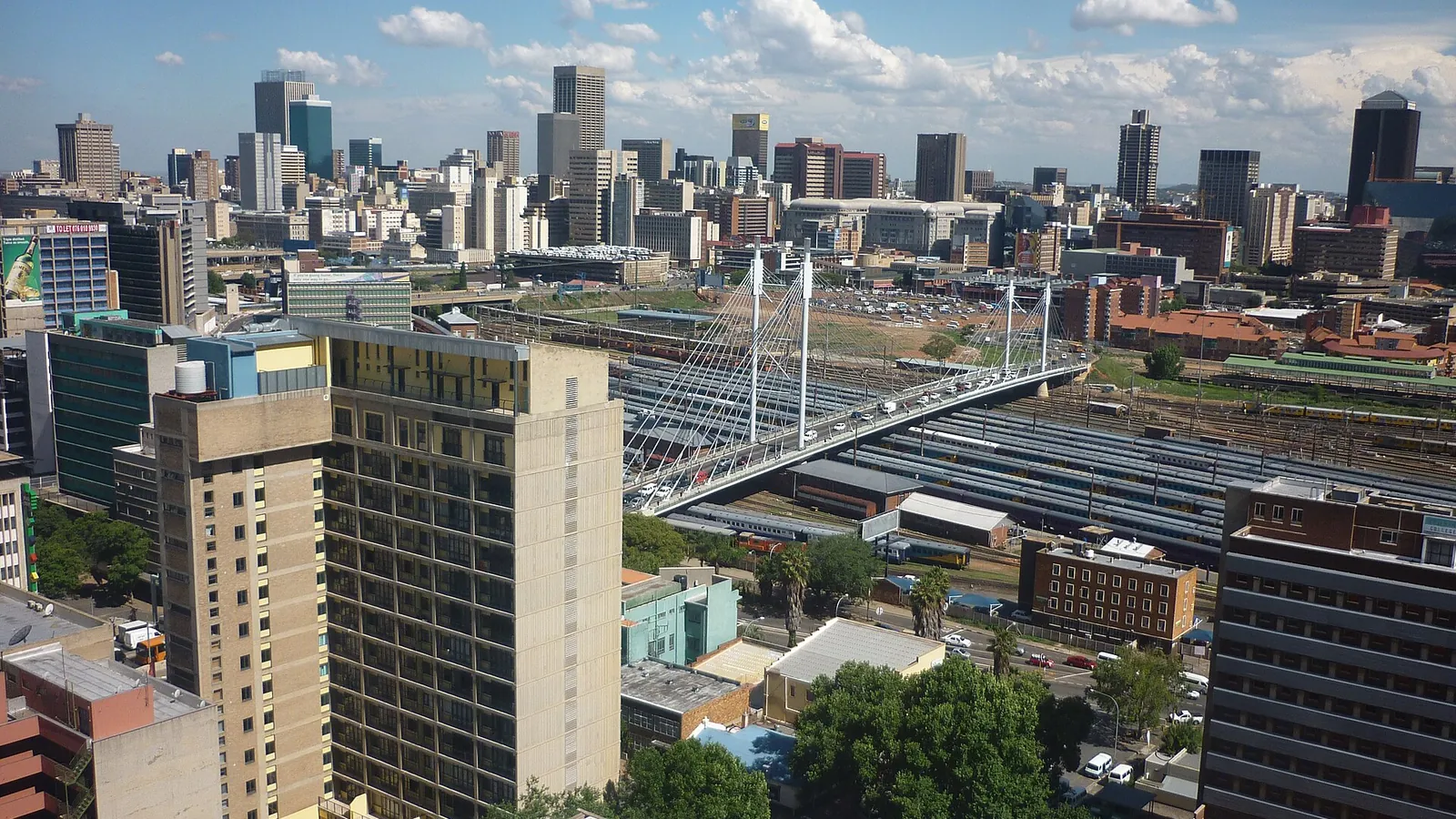
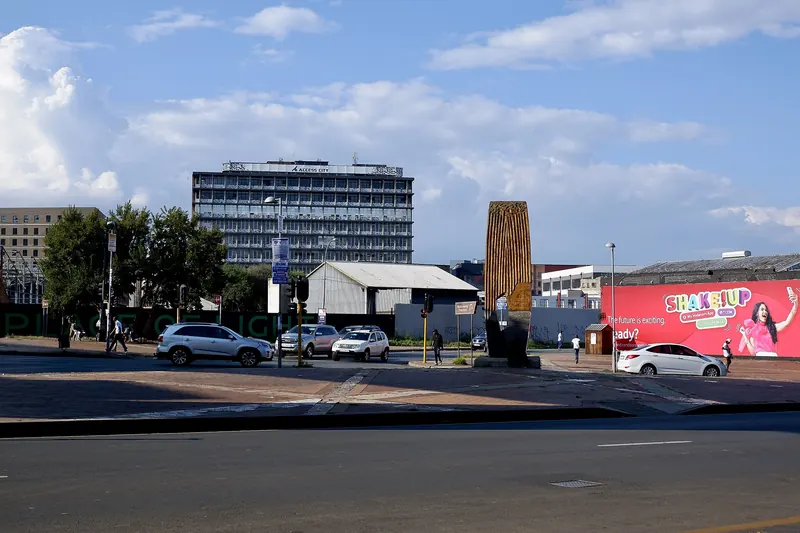
The skyline of the Johannesburg central business district with tall towers

Gauteng, north-east interior · South Africa

Johannesburg and Soweto

The City of Gold: a big, restless metropolis built on a gold rush, where the story of apartheid and the struggle to end it is told in museums and in the streets of Soweto.

  • Best time April–October
  • Stay 2 days
  • Good for History, culture, food, art, business, a gateway city

Photo: Evan Bench · CC BY 2.0

Welcome to Johannesburg

Johannesburg was founded in 1886, after gold was discovered on the Witwatersrand ridge, and it grew from a mining camp into a city of millions in a few decades. Known as Egoli, the place of gold, it is South Africa's largest city and its economic centre, at an altitude of about 1,750 metres. Despite its size and its reputation for crime, it is a city of energy, art, food and history, and one of the most important places for understanding modern South Africa.

Its history is inseparable from apartheid. The Apartheid Museum documents the rise and fall of racial segregation, and Constitution Hill, a former prison complex where Mahatma Gandhi and Nelson Mandela were held, now houses the Constitutional Court. Soweto, the South Western Townships, home to well over a million people, was the heart of the resistance. Vilakazi Street, where Mandela and Desmond Tutu lived, and the Hector Pieterson Memorial, commemorating the 1976 student uprising, are among its landmarks.

Johannesburg is best visited with local guidance, since central areas can be unsafe, but its neighbourhoods reward exploring. Maboneng and Braamfontein have galleries, cafés and markets, Melville and Rosebank have restaurants, and the Cradle of Humankind, a UNESCO site of fossil-bearing caves, lies an hour away. It is also the main gateway to Kruger and the north-east, and most visitors spend two days here at the start or end of a trip.

  • Major City
  • Historic Site
  • Culture & Arts

Why visit

Why visit Johannesburg?

Johannesburg and Soweto tell the story of modern South Africa, and offer urban culture that other cities lack.

  • The story of apartheid

    The Apartheid Museum, Constitution Hill and Soweto are moving and essential.

  • Soweto

    A living township with history, music, food and a proud community.

  • Urban culture

    Art, markets, street food and nightlife in Maboneng, Braamfontein and Melville.

  • The Cradle of Humankind

    Fossil caves where ancient hominid remains were found.

  • A gateway city

    Connections to Kruger, Cape Town and the rest of Africa.

Main attractions

Top things to see in Johannesburg

Most sights are best visited by ride-hailing or on a guided tour, and grouped by area.

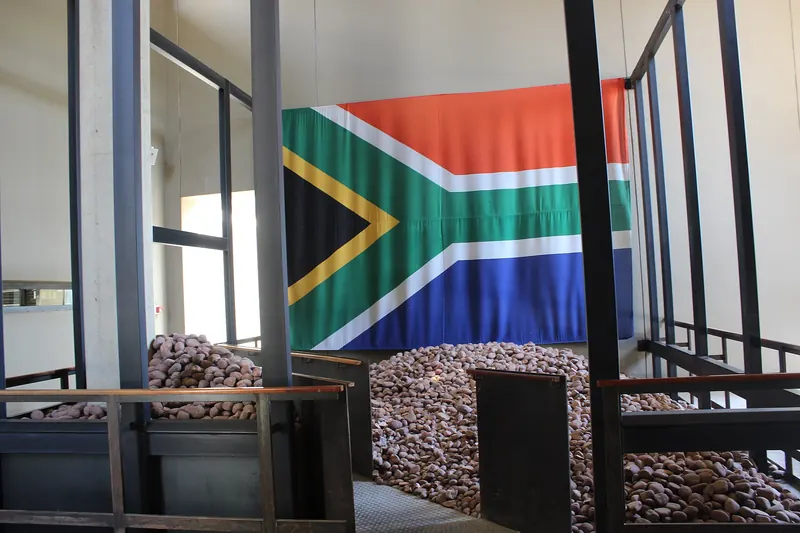
  1. The entrance to the Apartheid Museum in Johannesburg with concrete pillars and a memorial

    The Apartheid Museum

    A superbly designed museum that traces the history of segregation and the struggle against it, with film, photographs and objects. Visitors enter through separate gates marked 'White' and 'Non-White'.

    Tip Allow at least three hours.

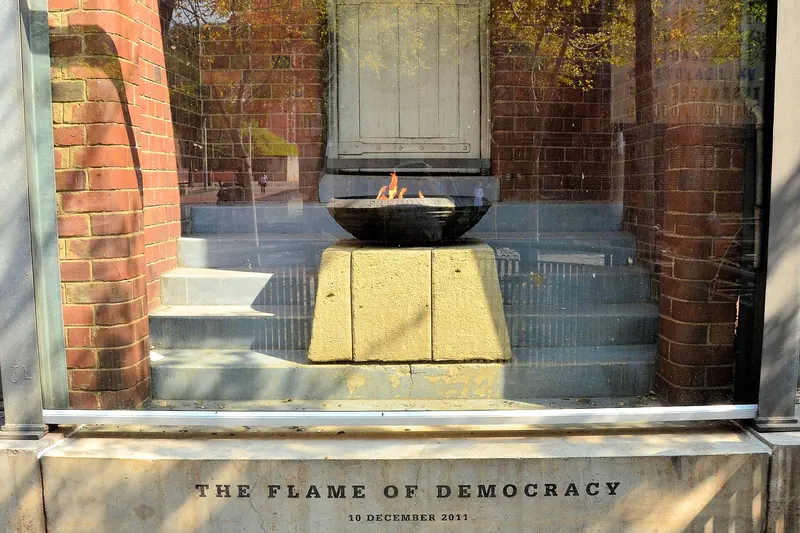
  2. The Flame of Democracy at Constitution Hill in Johannesburg

    Constitution Hill

    A former prison, called the Old Fort, and the site of the Constitutional Court, with museums and guided tours about the people who were held here, including Gandhi and Mandela.

    Tip Take a guided tour.

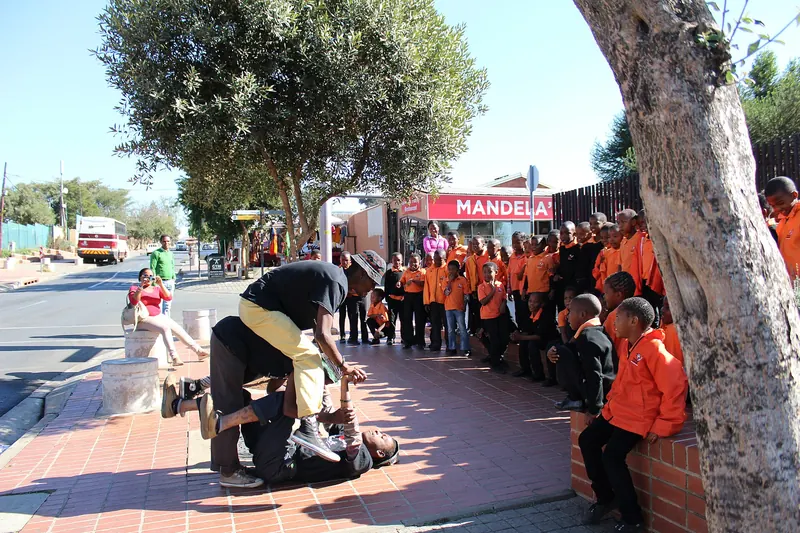
  3. Street performers on Vilakazi Street in Soweto

    Vilakazi Street and the Mandela House

    The Soweto street where Nelson Mandela and Desmond Tutu both lived. The Mandela House is a museum, and the street has restaurants and performers.

    Tip Visit with a guide.

  4. Hector Pieterson Memorial and Museum

    A memorial and museum to the 1976 Soweto student uprising, in which schoolchildren protested against apartheid education and many were killed.

    Tip A moving visit.

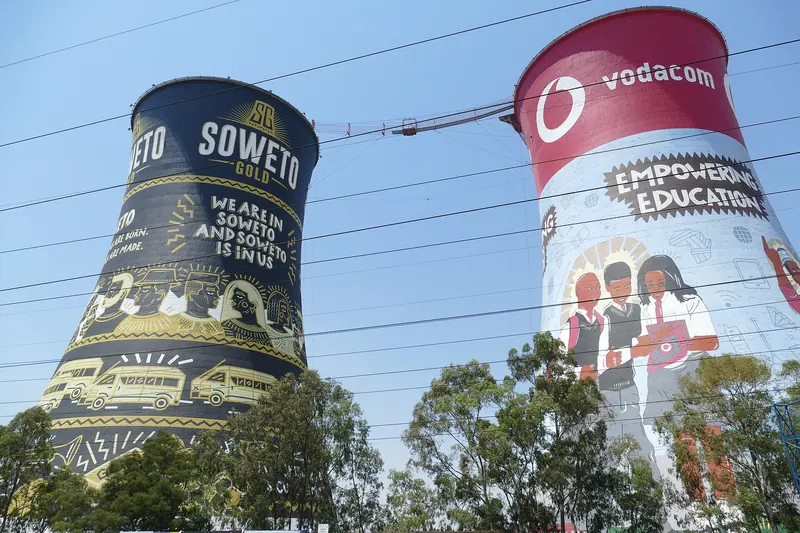
  5. The painted cooling towers of the Orlando Power Station in Soweto

    Orlando Towers

    Two colourfully painted former power station cooling towers, now an adventure venue with bungee, swing and climbing, and a symbol of Soweto.

    Tip Book activities in advance.

  6. A colourful art installation in the Maboneng precinct of Johannesburg

    Maboneng Precinct

    A revitalised inner-city district of warehouses, galleries, cafés and a Sunday market.

    Tip Go on a Sunday, and use ride-hailing apps.

Things to do

Best things to do in Johannesburg

Combine history, food and urban culture.

  1. Take a guided Soweto tour

    A local guide shows the history, homes, markets and music.

    Tip Choose a locally owned operator.

  2. Eat at a shebeen or local restaurant

    Try kota sandwiches, braai and pap.

    Tip Go with a guide.

  3. Visit the Cradle of Humankind

    See the Sterkfontein Caves and the Maropeng exhibition, about 50 km away.

    Tip A half-day trip.

  4. See a jazz or live music show

    Johannesburg has a strong music scene.

    Tip Book a taxi home.

  5. Shop at a market

    Neighbourhood Goods Market and Rosebank Rooftop Market.

    Tip Go on a weekend.

  6. Go to a football match

    A game at FNB Stadium, where the 2010 World Cup final was played.

    Tip Go with a local group.

Local food

What to eat in Johannesburg

Johannesburg's food is diverse, from township street food to fine dining.

  • Kota

    A Soweto street-food sandwich, a hollowed loaf filled with chips, egg, sausage and sauces.

    Where to try it Soweto takeaways.

  • Braai and boerewors

    Grilled meat with pap and chakalaka relish.

    Where to try it Shisanyama restaurants.

  • Pap and chakalaka

    Maize porridge with a spicy vegetable relish.

    Where to try it Local restaurants.

  • African and fusion dining

    Modern restaurants using local ingredients.

    Where to try it Rosebank and Melville.

  • Craft beer and coffee

    A strong café and craft beer scene.

    Where to try it Braamfontein and Maboneng.

Accommodation

Where to stay in Johannesburg

Stay in Sandton, Rosebank or Melville for safety and convenience, or in a Soweto guesthouse.

  • Sandton and Rosebank

    Business and leisure hotels near malls and the Gautrain.

    Best for: Safety and hotels

  • Melville and Parkhurst

    Guesthouses and boutique hotels.

    Best for: Restaurants and character

  • Soweto

    Guesthouses and B&Bs.

    Best for: A township experience

What a night costs

Budget hostel or guesthouse
US$25–60 per night
Mid-range hotel
US$80–160 per night
Luxury hotel
US$200–450 per night
Meal at a mid-range restaurant
US$10–25 per person

Transport

Getting to and around Johannesburg

Johannesburg is South Africa's main international gateway.

Getting there

  • Flight to OR Tambo (JNB)

    Direct flights from Europe, the Middle East, Asia and North America, and across Africa.

    The Gautrain links the airport with Sandton.

  • Flight from Cape Town

    About 2 hours.

    Frequent departures.

  • Drive from Kruger

    About 5 to 6 hours.

    Avoid driving at night.

Getting around

Use ride-hailing apps and tours, and avoid walking in unfamiliar areas.

  • Uber and Bolt

    The safest and easiest way to move.

    Use the app.

  • Gautrain

    A fast train linking the airport, Sandton, Rosebank and Pretoria.

    Safe and reliable.

  • Tours

    Guided tours to Soweto and central areas.

    Book in advance.

When to go

Best time to visit Johannesburg

Johannesburg has a mild highveld climate, with warm, wet summers and dry, sunny, cold-nighted winters.

  • Summer (November–March)

    Good

    Warm, with afternoon thunderstorms.

  • Autumn (April–May)

    Best time

    Warm, dry and clear.

  • Winter (June–August)

    Best time

    Sunny, dry days and cold nights.

  • Spring (September–October)

    Good

    Warming, with jacaranda blossom.

Worth planning around: Summer afternoons for storms.

Itinerary

Two days in Johannesburg

Museums, Soweto and food.

  1. Day1

    Apartheid history

    Museums.

    • Morning The Apartheid Museum.
    • Afternoon Constitution Hill.
    • Evening Dinner in Melville.
  2. Day2

    Soweto

    The township.

    • Morning A guided Soweto tour.
    • Afternoon Vilakazi Street and lunch.
    • Evening Maboneng or depart.

Travel tips

Johannesburg travel tips

A few tips help you stay safe and get the most out of the city.

  • Use ride-hailing apps, and do not walk at night.
  • Do not go to the inner city without a guide.
  • Keep phones, cameras and jewellery out of sight.
  • Book a Soweto tour with a locally owned operator.
  • Allow plenty of time for the Apartheid Museum.
  • Lock car doors and windows when driving.
  • Carry small notes for tips.

FAQ

Johannesburg: frequently asked questions

How many days do you need in Johannesburg?

Two days for the main sights, including Soweto.

Is Johannesburg safe?

Crime is a concern. Use ride-hailing apps, guided tours and reputable areas, and follow local advice.

Is Soweto safe to visit?

Guided tours are generally safe and are a highlight of a visit.

What is the best time to visit?

April to October.

What is the Apartheid Museum like?

It is powerful and sobering, and takes about three hours.

Is it worth staying in Johannesburg?

For two days, yes, for the history and culture.

Read next

Related travel articles

Heritage

UNESCO Sites Worth Planning a Trip Around

A UNESCO listing tells you a place matters; it does not tell you whether it is worth two days and a detour. This is how to read the list usefully — and which sites reward building a trip around them.

Food

A Country-by-Country Food Primer

Eating well abroad is mostly a matter of knowing when meals happen, how the menu is structured and which dish belongs to the place you are standing in. This covers all three for the five countries in this guide, plus the signals that separate a restaurant that feeds locals from one that feeds coaches.

Advertisement