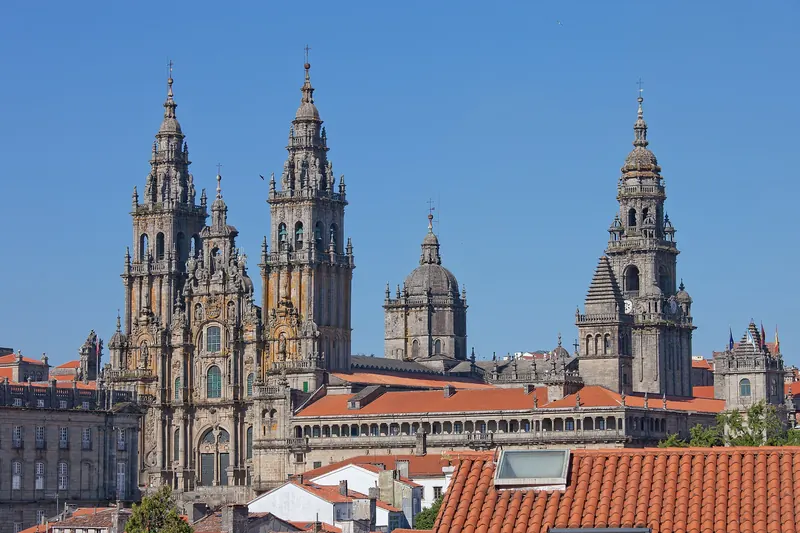
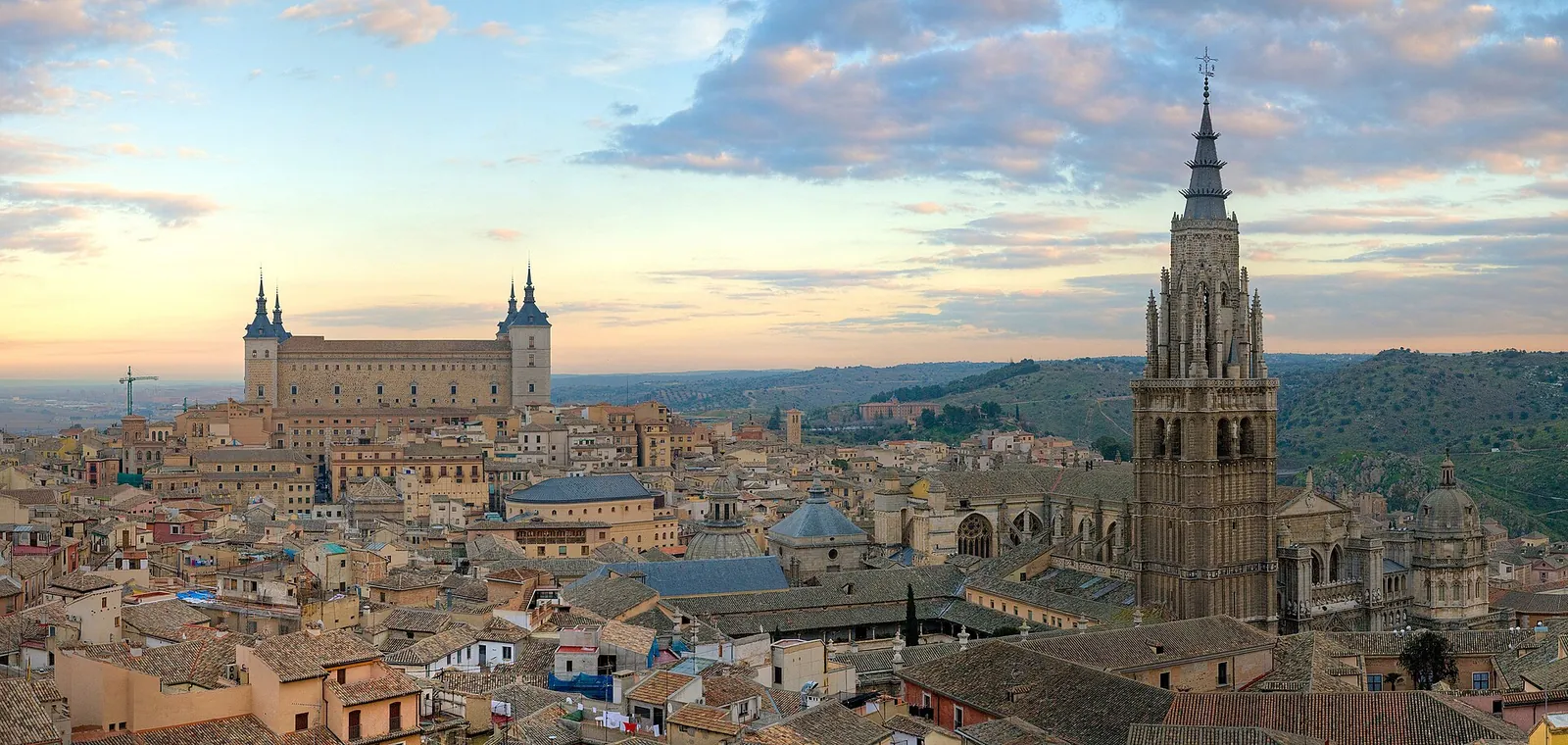
The stacked skyline of Toledo above the Tagus river at dusk

Southern Europe

Spain Travel Guide

Moorish palaces, Atlantic surf, volcanic islands and a capital that eats at eleven — four distinct cultures inside one border.

  • Destinations 10 hand-picked
  • Best time April–June and September–October
  • Ideal trip 10–14 days for a first trip

Photo: Diliff · CC BY 2.5

Why go to Spain

Spain receives around 90 million international visitors a year, second only to France, and an extraordinary share of them go to two coastlines and never see the country behind them. That is a genuine loss, because Spain is less a single nation than a federation of regions that spent most of their history as separate kingdoms and still behave that way.

The differences are not decorative. Galicia in the northwest is green, wet, Atlantic and Celtic-influenced, with bagpipes and octopus. Andalusia in the south is dry, hot and shaped by eight centuries of Islamic rule that left the Alhambra and the Mezquita behind. The Basque Country has its own language, unrelated to any other in Europe, and arguably the best food on the continent. Catalonia has its own language too, and a capital that looks nothing like Madrid.

This guide covers ten destinations chosen to show that range: three great Andalusian cities, two very different capitals, an Atlantic food city, a Mediterranean one, an island, a volcano and the end of a thousand-year-old pilgrimage. The high-speed rail network makes most of them two or three hours apart, which is what makes a trip across several of them realistic.
Where to go

Best Places to Visit in Spain

Ordered roughly by how strongly we would recommend them for a first visit, though Spain is a country where the right answer depends heavily on the month — Andalusia in August is a different proposition from Andalusia in April.

Major CityCoast & Beaches

Barcelona

Catalonia

Catalonia's capital pairs a dense Gothic core with the most ambitious modernista architecture in Europe, and puts a city beach at the end of the metro line.

Don't miss The Sagrada Família's stained glass at the right hour — blue-green in the morning, red-gold by late afternoon.

Explore Destination — Barcelona
UNESCO SiteHistoric Site

Granada

Andalusia

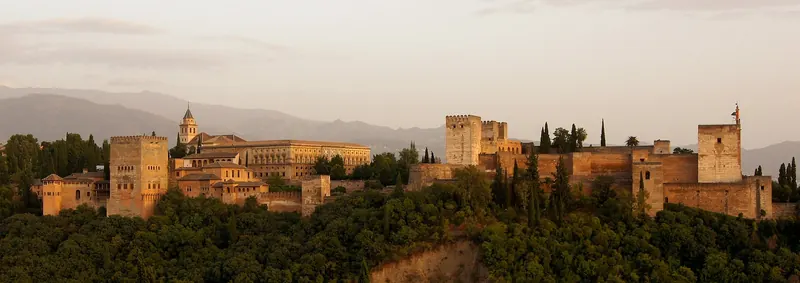
A hillside city beneath the Sierra Nevada, holding the Alhambra — the finest surviving Islamic palace complex anywhere — and a tapas culture where the food still comes free with the drink.

Don't miss The Nasrid Palaces: honeycomb vaulting, carved stucco and courtyards designed entirely around water and light.

Explore Destination — Granada
Major CityCulture & Arts

Seville

Andalusia

The heart of southern Spain, where flamenco, tapas and Holy Week processions are living traditions rather than performances, wrapped around a medieval core of white walls and orange trees.

Don't miss The Real Alcázar — an Islamic palace rebuilt by Christian kings in the same style, and still a working royal residence.

Explore Destination — Seville
Capital CityMajor City

Madrid

Community of Madrid

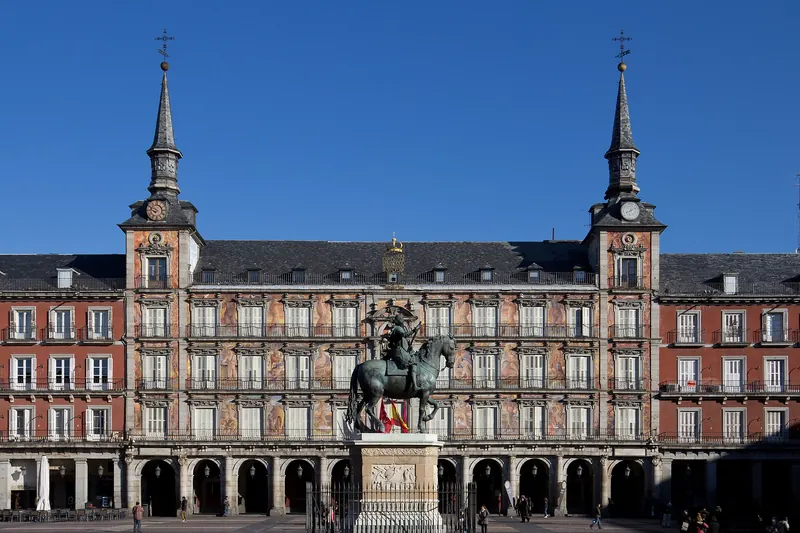
Spain's capital sits at 650 m on the Castilian plateau, with an art triangle no other European city matches and a nightlife that does not start until midnight.

Don't miss The Prado's Velázquez rooms — Las Meninas hangs where it can be walked around, in the light it was painted for.

Explore Destination — Madrid
UNESCO SiteHistoric Site

Córdoba

Andalusia

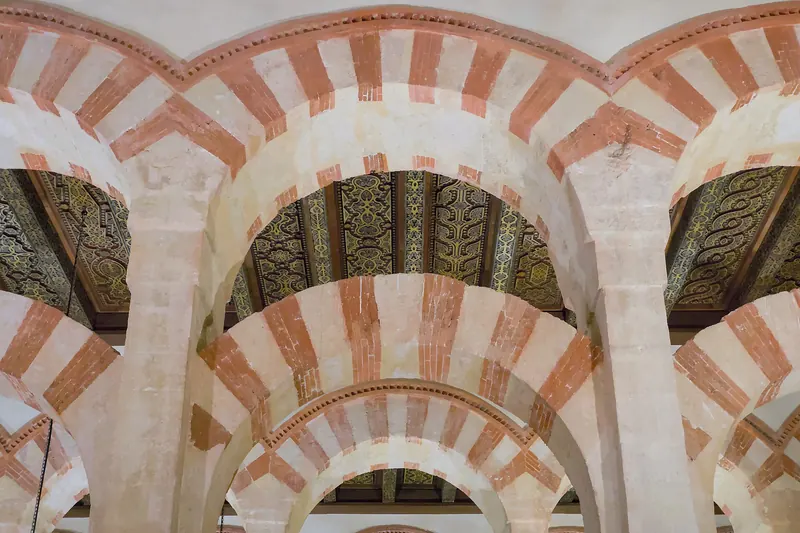
A compact Andalusian city on the Guadalquivir holding one of the most astonishing interiors in the world, plus flower-filled patios and Spain's best cold soup.

Don't miss The Mezquita's hypostyle hall — 856 columns under red-and-white double arches, with a cathedral built into the middle of it.

Explore Destination — Córdoba
Major CityCoast & Beaches

Valencia

Valencian Community

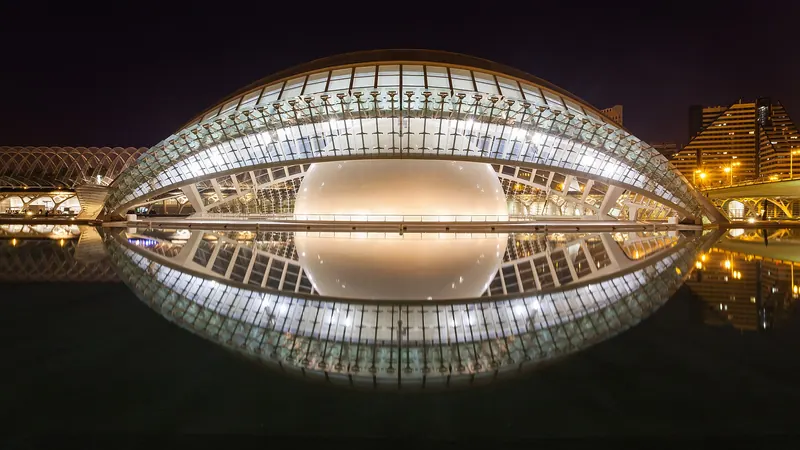
A Mediterranean city with a Gothic old town, Europe's most striking modern architectural complex, a city beach and the best-value eating of any major Spanish city.

Don't miss The Turia — a river diverted after a flood and turned into a green park running right through the middle of the city.

Explore Destination — Valencia
IslandCoast & Beaches

Mallorca

Balearic Islands

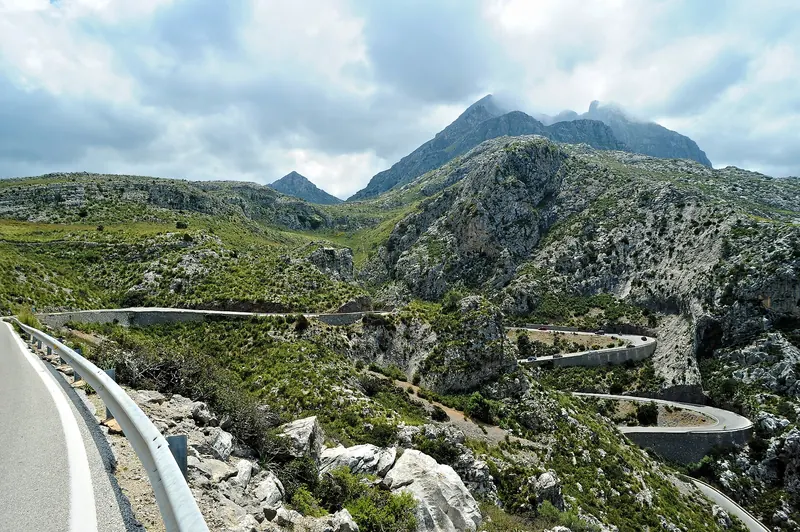
The largest Balearic island has a proper capital city, a mountain range along its entire northwest coast, and hundreds of coves that never appear in the package-holiday version of it.

Don't miss The Serra de Tramuntana — a UNESCO-listed mountain range of terraced olive groves dropping straight into the sea.

Explore Destination — Mallorca

Browse all 510 destinations

Experiences

Best things to do in Spain

The experiences that recur across regions, and that make a Spanish trip feel Spanish wherever you end up.

  1. Eat on Spanish time

    Lunch runs 14:00 to 16:00 and dinner starts at 21:00 or later — 22:00 in Madrid in summer. Restaurants that serve at 19:00 are cooking for tourists. Adjusting your day to this is the single change that most improves a Spanish trip.

    Tip Bridge the gap with a merienda around 18:00, or with tapas and a drink standing at a bar.

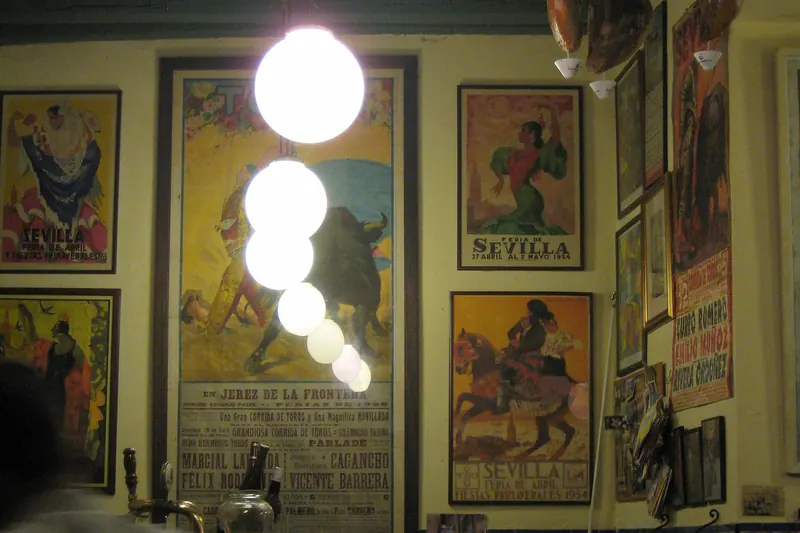
  2. A traditional tapas bar hung with hams and posters

    Do a tapas crawl properly

    The point is movement: one dish and one drink per bar, then on to the next. In Granada and parts of Andalusia a free tapa still comes with every drink. In the Basque country the equivalent is pintxos, laid out on the counter and paid for by the toothpick.

    Tip Stand at the bar rather than sitting. Many places charge more for a table and the bar is where the atmosphere is.

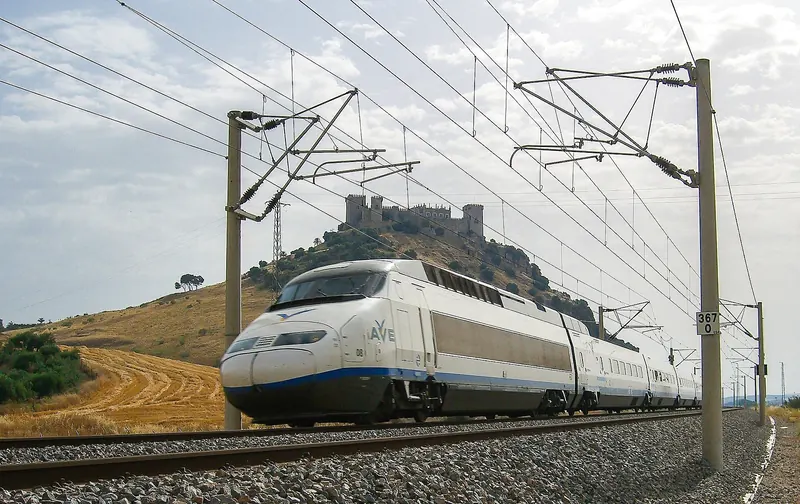
  3. An AVE high-speed train on the Spanish network

    Ride the AVE

    Spain has the longest high-speed rail network in Europe and the second longest in the world. Madrid to Seville is 2h30, to Barcelona 2h30, to Valencia 1h50. Competition from newer operators has pushed fares down substantially.

    Tip Book early on the incumbent and the low-cost operators alike — the same route can vary four-fold in price.

  4. A flamenco performance at a small tablao

    See flamenco somewhere small

    Flamenco is Andalusian, and the versions worth seeing are in small rooms in Seville, Granada and Jerez rather than in dinner-show theatres. A tablao seating forty people is a completely different experience from one seating three hundred.

    Tip Ask your accommodation for a peña — a members' club that often admits visitors and where the singing is the point rather than the dancing.

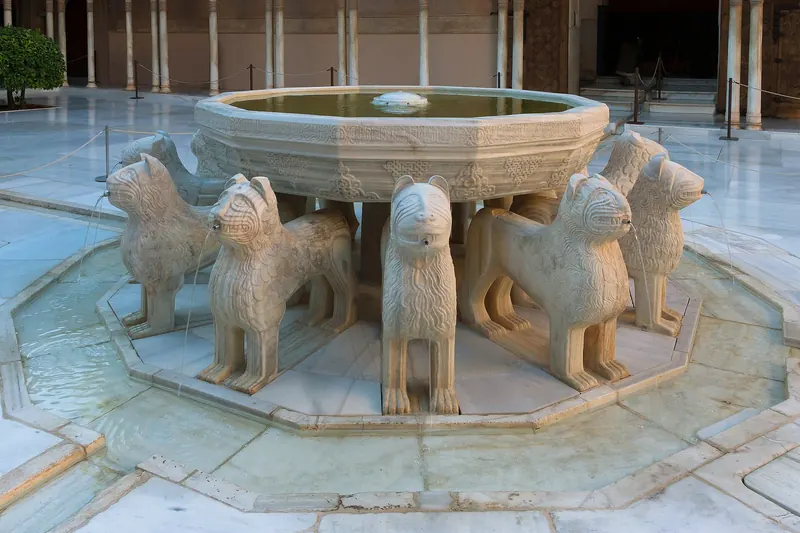
  5. The Court of the Lions in the Alhambra

    Visit a Moorish monument at opening time

    The Alhambra, the Mezquita and the Alcázar of Seville are all at their best in the first hour, when the light is low and the courtyards are empty. All three require booking ahead, and the Alhambra requires it weeks ahead.

    Tip The Mezquita offers a free early-morning entry window on weekdays, which is by far the best way to see it.

  6. Take a siesta seriously in summer

    Between roughly 14:00 and 17:00 in July and August, inland Andalusia can exceed 40°C and the streets empty. Sightseeing in that window is unpleasant and occasionally dangerous; the local pattern of early mornings and late evenings exists for good reason.

    Tip Many smaller shops and some monuments still close for several hours in the afternoon, particularly in the south.

Food and drink

Spain foods to try

Spanish food is regional to a degree that surprises people. Paella is Valencian, tapas are Andalusian, pintxos are Basque, and ordering the wrong one in the wrong place marks you out immediately.

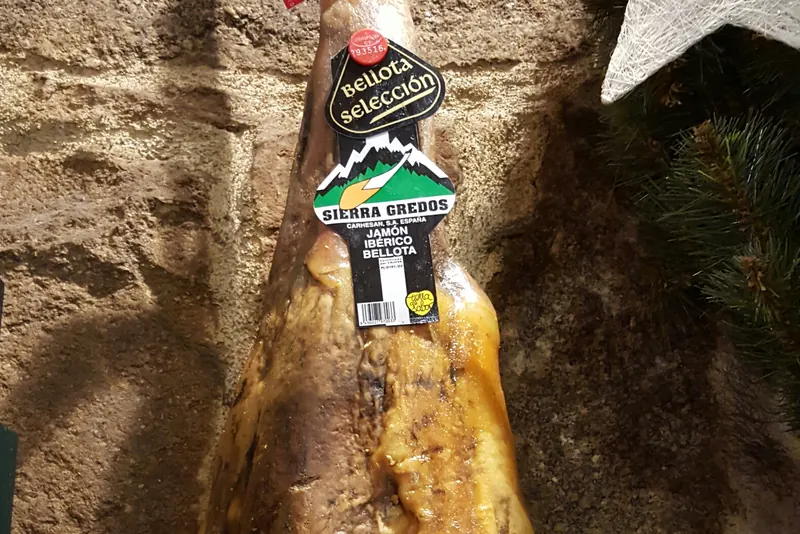
  • A leg of acorn-fed Iberian ham

    Jamón ibérico

    Cured ham from black Iberian pigs, the best of it acorn-fed and aged for three or four years. Sliced paper-thin by hand and eaten at room temperature with nothing else. Jamón ibérico de bellota is the top grade and worth the difference.

    Where to try it Any decent bar anywhere in Spain, and the specialist jamonerías of Madrid and Andalusia.

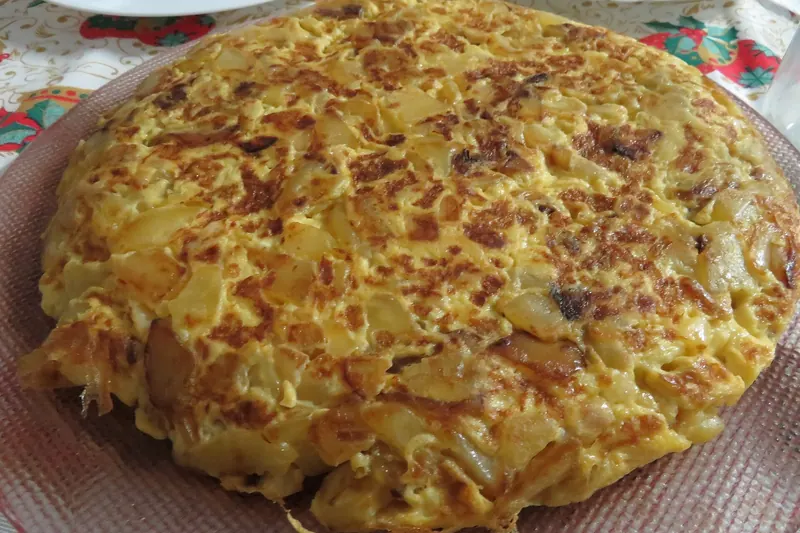
  • A thick potato and onion tortilla cut into wedges

    Tortilla española

    A thick potato and onion omelette, served hot or at room temperature, in wedges. The national argument is whether it should be runny in the middle — the correct answer, in most of Spain, is yes.

    Where to try it Every bar in the country. A good one is a reliable test of whether the kitchen cares.

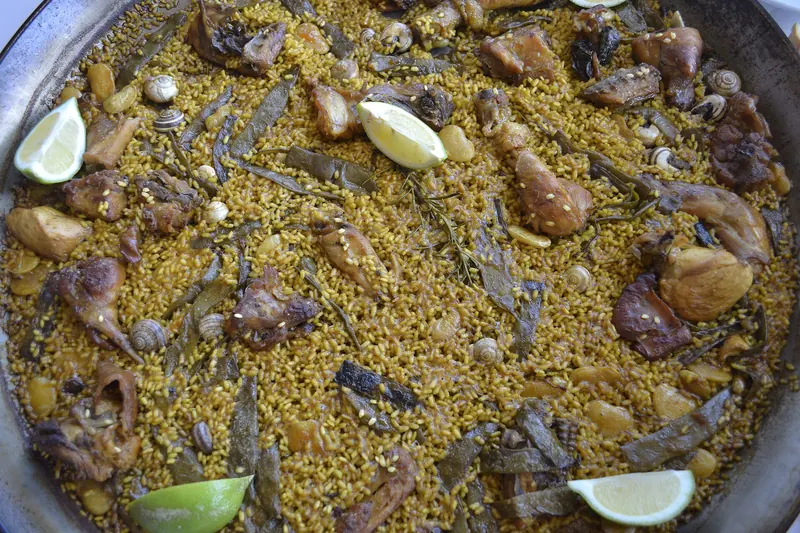
  • Paella valenciana with chicken, rabbit and flat beans

    Paella valenciana

    From Valencia, and traditionally made with rabbit, chicken and beans rather than seafood. It is a lunch dish, cooked to order over an hour, and never eaten in the evening by locals. The prized part is the socarrat, the caramelised crust on the pan bottom.

    Where to try it Valencia and the villages around the Albufera lagoon. Avoid anywhere displaying a photograph of it.

  • Pintxos laid out along a Basque bar counter

    Pintxos

    The Basque version of tapas: small constructions on bread laid out along the bar, plus a written list of hot dishes cooked to order. You take what you want and the count is settled at the end.

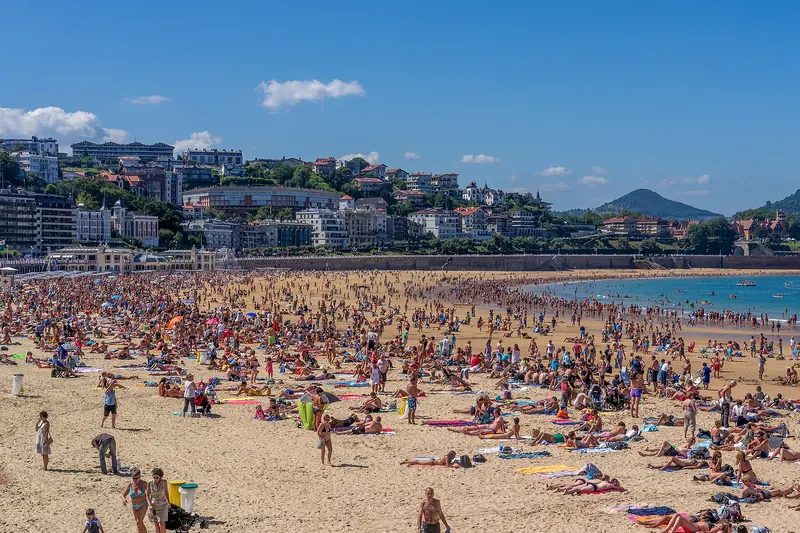
    Where to try it San Sebastián's old town and Bilbao. The hot dishes from the list are usually the best of it.

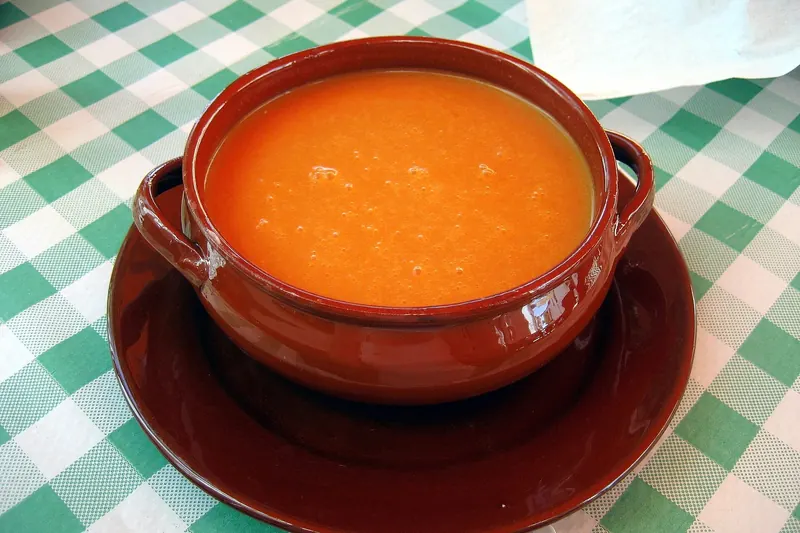
  • Gazpacho, the thin cold tomato soup of Andalusia

    Gazpacho and salmorejo

    Cold tomato soups from Andalusia, built for the heat. Gazpacho is thin and includes cucumber and pepper; salmorejo is thicker, made with bread, and topped with egg and ham. Salmorejo is from Córdoba and is the better of the two.

    Where to try it Andalusia from May to September. Rarely served in winter, when it disappears from menus entirely.

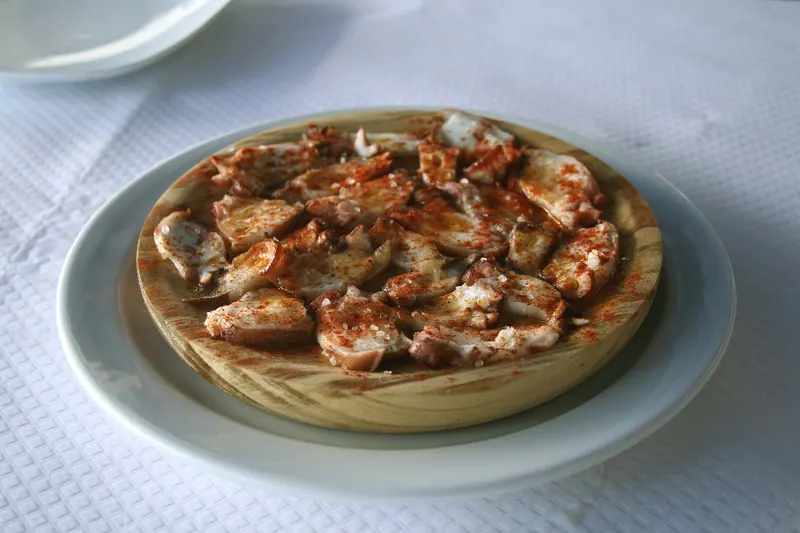
  • Galician octopus with paprika on a wooden plate

    Pulpo a feira

    Galician octopus, boiled and cut into coins, served on a wooden plate with olive oil, coarse salt and sweet paprika, with boiled potatoes underneath. Simple, and one of the great dishes of Spain.

    Where to try it Galicia, where pulperías specialise in it. Traditionally eaten with young white Ribeiro from a ceramic bowl.

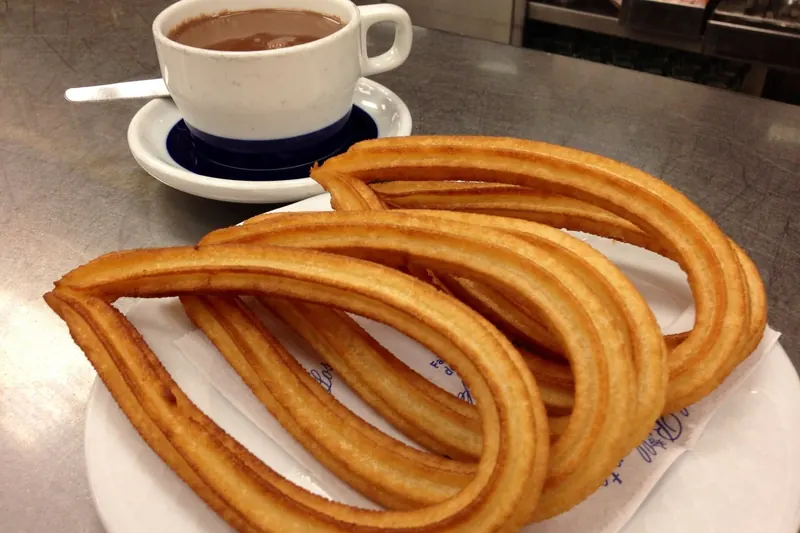
  • Churros with a cup of thick drinking chocolate

    Churros con chocolate

    Fried dough dipped in a cup of chocolate thick enough to stand a spoon in. Eaten for breakfast, or at 06:00 on the way home from a night out — both are traditional and neither is unusual.

    Where to try it Churrerías in Madrid, several of which have been open around the clock for over a century.

Before you go

Practical travel information for Spain

The essentials, current for 2026. Spain is straightforward to travel in; the adjustments that matter are cultural rather than logistical.

Capital
Madrid
Language
Spanish (Castilian) nationwide, plus co-official Catalan, Basque and Galician in their regions. English is common in tourist areas, less so inland.
Currency
Euro (€)
Cards and cash
Cards are accepted almost everywhere and contactless is standard. Small bars, markets and rural businesses may still be cash-only — carry €20–40.
Entry and visas
Part of the Schengen Area. UK, US, Canadian, Australian and NZ passport holders can enter visa-free for up to 90 days in any 180. EU biometric entry checks and ETIAS are being phased in; verify before booking.
Power sockets
Type C and F, 230 V, 50 Hz. Two round pins.
Emergency number
112 for any emergency, nationwide and in English.
Tipping
Minimal. Rounding up or leaving small change at a bar is normal; 5–10% at a restaurant is generous. Spaniards frequently leave nothing at all.
Safety
Very safe overall, with one significant caveat: Barcelona has a well-organised pickpocketing problem on La Rambla, the metro and around the Sagrada Família. Madrid and Seville are less affected but not immune.
Internet and SIM
Excellent 4G and 5G across the mainland and islands. EU roaming applies for EU SIMs; others should use an eSIM.
Time zone
Central European Time (UTC+1) on the mainland, Western European Time (UTC) in the Canary Islands.

Daily budget guide (per person)

Backpacker
€60–95 per day — hostels, menú del día, regional trains
Mid-range
€120–190 per day — three-star hotels, tapas and one restaurant meal
Comfortable
€220–350 per day — good hotels, restaurants, some car hire
Coastal peak season
Add 40–80% in August on the islands and the costas

Excludes international flights. Figures are typical rather than absolute — cities and peak season run higher.

When to go

Best time to visit Spain

Spain has three distinct climates and the right answer differs by region. The general rule holds well for the mainland: spring and autumn are close to perfect, high summer is too hot inland, and winter is excellent in the south and on the Canaries.

  • Spring (March–June)

    Best time

    The strongest season, particularly in Andalusia, where April and May are warm rather than hot and the countryside is green. Semana Santa and Seville's Feria fall in this window and are spectacular but fill the south completely.

  • Summer (July–August)

    Think twice

    Inland Andalusia regularly exceeds 40°C, and Seville and Córdoba become difficult in the middle of the day. The north coast and the islands are far more comfortable. Prices and crowds peak everywhere, and many Madrid restaurants close in August.

  • Autumn (September–October)

    Best time

    September is superb: the sea at its warmest, the heat easing, the grape harvest under way and the crowds gone after the first week. October is quieter still and remains warm in the south.

  • Winter (November–February)

    Good

    Andalusia stays mild at 15–18°C and is a good winter destination. The Canaries sit at 20–22°C year-round. Madrid and the interior get properly cold, and the north coast is wet.

Worth planning around: Semana Santa (Holy Week) and Seville's April Feria fill Andalusia and multiply accommodation prices. San Fermín in Pamplona does the same to Navarre in early July. Check the dates before booking — they move each year.

Trip length

How long to spend in Spain

Spain is large — Barcelona to Seville is 1,000 km — but the AVE network compresses it. The usual mistake is trying to combine Andalusia, Catalonia and the north in a single week.

  • 4–5 days

    One city, done properly. Barcelona, Madrid or Seville each fill four days comfortably, and each has strong day trips within an hour by train.

    Madrid works best for this because of the day trips: Toledo, Segovia and Ávila are all under 40 minutes by AVE.

  • 7–8 days

    Two cities on the same axis. Madrid and Seville, or Seville, Córdoba and Granada as an Andalusian loop. Barcelona and Valencia also pair well along the Mediterranean.

    The single best week in Spain for most first-time visitors is Andalusia: Seville, Córdoba and Granada.

  • 10–14 days

    Two regions. Andalusia plus Madrid, or Barcelona plus the north, or a Madrid–Seville–Granada–Barcelona line. Three bases, three AVE legs, no backtracking.

    This is the length at which Spain's regional variety actually becomes visible.

  • 3 weeks or more

    Adds the parts most visitors miss — Galicia, the Basque country, the Picos de Europa, Extremadura — or one of the island groups as a separate week.

    The Canaries and Balearics work better as their own trip than as an add-on.

Getting around

Transportation in Spain

Spain has the longest high-speed rail network in Europe and it radiates from Madrid. Trains between major cities; a car only for the countryside and the islands.

  • AVE high-speed rail

    Madrid to Seville 2h30, Barcelona 2h30, Valencia 1h50, Málaga 2h30, Córdoba 1h45. Comfortable, punctual and now served by three competing operators, which has cut fares substantially.

    Compare Renfe, Ouigo and Iryo on the same route — the price difference can be 60% or more.

  • Regional trains and buses

    Medium-distance trains link the Andalusian cities, and the intercity bus network is extensive, cheap and reaches places the railway does not, including much of Galicia and Extremadura.

    Buses are often the only public option for smaller towns and are more comfortable than their reputation suggests.

  • Rental car

    Needed for the Andalusian white villages, the Picos de Europa, rural Galicia, Mallorca and Tenerife. Roads are excellent and motorway tolls are lower than in France.

    City centres have restricted-traffic zones enforced by camera. Park outside and walk in.

  • Domestic flights and ferries

    Essential for the Canaries, which are 1,000 km off the African coast, and the usual choice for the Balearics. Mainland flights rarely beat the AVE once airport transfers are counted.

    Ferries to the Balearics run from Barcelona, Valencia and Dénia and take 3–8 hours.

  • City transport

    Madrid and Barcelona have excellent metros. Seville, Valencia and Bilbao have trams and metro lines, and Seville's bike-share network is among the best in Europe.

    The Andalusian old towns are all walkable and largely pedestrianised.

Sample route

Two weeks in Spain

A north-to-south line using the AVE network, covering six of the ten destinations in this guide without doubling back. Fly into Barcelona and out of Seville or Málaga.

  1. Day1

    Arrive in Barcelona

    • Morning Land and check in. The Barri Gòtic on foot, with no fixed plan.
    • Afternoon The waterfront at Barceloneta and a first look at the Eixample grid.
    • Evening Tapas in El Born, and an early night.
  2. Day2

    Barcelona — Gaudí

    • Morning Sagrada Família on a pre-booked early slot, then Casa Batlló or La Pedrera on Passeig de Gràcia.
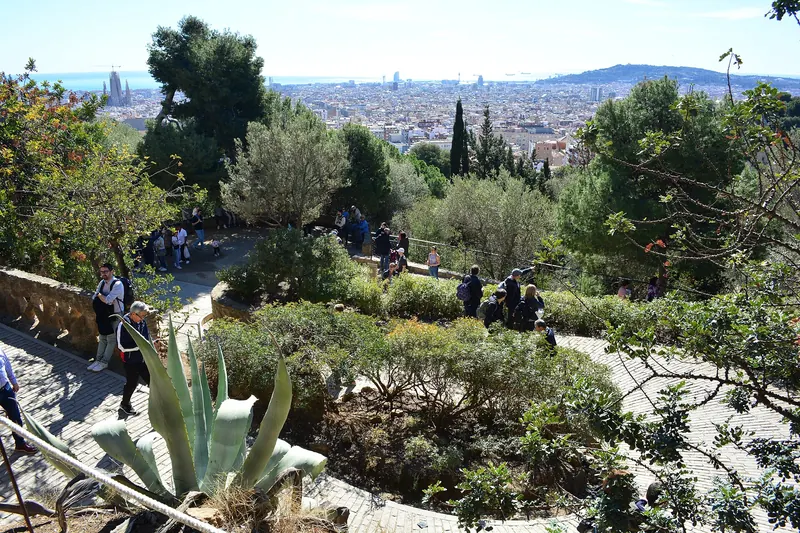
    • Afternoon Park Güell and the view back over the city.
    • Evening Dinner in Gràcia, away from the centre.
  3. Day3

    Barcelona — the other city

    • Morning The Picasso Museum or MNAC on Montjuïc, and the Mercat de Sant Josep.
    • Afternoon Montjuïc's gardens and the cable car, or a beach afternoon.
    • Evening Evening AVE or overnight before heading southwest.
  4. Day4

    Valencia

    • Morning AVE from Barcelona in about 3h. The old town, the Mercado Central and the cathedral.
    • Afternoon The Turia riverbed park and the City of Arts and Sciences.
    • Evening Paella in the Ruzafa district — at lunch tomorrow if you can wait.
  5. Day5

    Valencia and the Albufera

    • Morning The Albufera lagoon, rice fields and a boat trip.
    • Afternoon Lunchtime paella in El Palmar, where it comes from.
    • Evening Train to Madrid, 1h50.
  6. Day6

    Madrid — the art triangle

    • Morning The Prado, three hours maximum. Velázquez and Goya above all.
    • Afternoon The Reina Sofía for Guernica, or the Retiro park.
    • Evening Tapas around La Latina and Cava Baja.
  7. Day7

    Madrid and Toledo

    • Morning Toledo, 33 minutes by AVE — the cathedral, the synagogues and the Tagus gorge.
    • Afternoon Back to Madrid for the Royal Palace or the Sunday Rastro market.
    • Evening Churros and chocolate, late.
  8. Day8

    To Córdoba

    • Morning AVE south, 1h45. Check in near the Judería.
    • Afternoon The Mezquita in the late afternoon, then the old Jewish quarter.
    • Evening Salmorejo and Montilla-Moriles wine.
  9. Day9

    Córdoba and on to Granada

    • Morning The Alcázar gardens and the Roman bridge at first light.
    • Afternoon Train or bus east to Granada, roughly 2h.
    • Evening Sunset from the Mirador de San Nicolás in the Albaicín.
  10. Day10

    The Alhambra

    • Morning Pre-booked Alhambra tickets — the Nasrid Palaces slot is fixed and unmissable.
    • Afternoon The Generalife gardens and the Alcazaba walls.
    • Evening Free tapas in the bars around Calle Elvira, then flamenco in Sacromonte.
  11. Day11

    To Seville

    • Morning Bus or train west, about 3h. Check in near Santa Cruz.
    • Afternoon The Real Alcázar, booked ahead, and the cathedral with the Giralda climb.
    • Evening Tapas in Triana across the river.
  12. Day12

    Seville

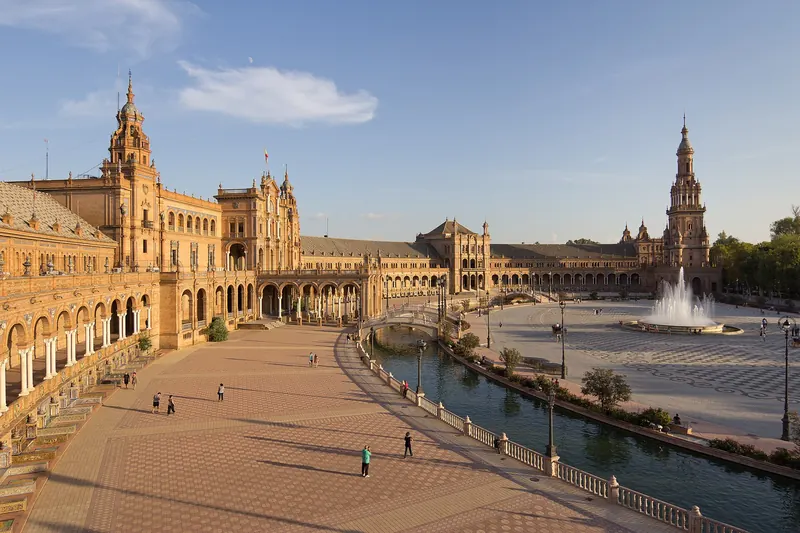
    • Morning The Plaza de España and María Luisa park before the heat.
    • Afternoon The Metropol Parasol, the Casa de Pilatos, or a slow afternoon.
    • Evening Flamenco at a small tablao, then dinner at 22:00 like everyone else.
  13. Day13

    A day out from Seville

    • Morning Jerez for sherry and horses, or Ronda for the gorge and the bridge.
    • Afternoon Back to Seville, or continue to the coast.
    • Evening Last dinner in the old town.
  14. Day14

    Depart

    • Morning The Archivo de Indias or a final wander through Santa Cruz.
    • Afternoon Fly from Seville or Málaga, or take the AVE back to Madrid in 2h30.

Culture

Culture and etiquette in Spain

Spain is informal, loud by northern European standards, and organised around a daily rhythm that catches almost every visitor out. Very little here is about formality; nearly all of it is about timing.

  • The day runs late

    Lunch at 14:00–16:00 is the main meal, dinner starts at 21:00 and often later in summer. Shops may close 14:00–17:00, particularly in the south. A restaurant serving dinner at 19:00 is aimed squarely at visitors.

  • Greet with two kisses

    Between women, and between a man and a woman, the standard greeting is a light kiss on each cheek starting with the right. Men shake hands. In a shop or bar, 'hola' and 'buenos días' or 'buenas tardes' are expected.

  • Regional identity is real

    Catalonia, the Basque Country and Galicia have their own languages and strong distinct identities. Referring to everything Spanish as Castilian, or assuming flamenco and bullfighting represent the whole country, misses a great deal and can land badly.

  • Noise is not rudeness

    Spanish conversation is louder and more overlapping than in northern Europe, and bars are cheerfully deafening. Interrupting is normal and not considered rude.

  • Eat at the bar

    In most Spanish bars there are three prices: at the bar, at an indoor table, and on the terrace. Standing at the bar is cheapest, fastest and where the locals are.

  • Dress is neat and covered

    Beachwear stays at the beach — several coastal towns fine people for walking through the centre in swimwear. Cathedrals and monasteries require covered shoulders and knees.

Do

  • Greet with 'hola' and 'buenos días' when entering a shop or bar
  • Eat lunch at 14:00 and dinner at 21:00 — the food is better at those hours too
  • Order at the bar and stand; it is cheaper and more sociable
  • Book the Alhambra, the Sagrada Família and the Real Alcázar weeks ahead
  • Try the menú del día at lunch — three courses and wine for €13–18
  • Learn a few words of the regional language in Catalonia, the Basque Country and Galicia

Don't

  • Don't expect dinner before 20:30 outside tourist restaurants
  • Don't order paella for dinner, or anywhere with a photograph of it outside
  • Don't walk through a town centre in swimwear — it is fined in several places
  • Don't assume flamenco and bullfighting are national; both are regional
  • Don't leave a bag on the back of a chair in Barcelona
  • Don't tip 15–20%; it is not expected and marks you out

Travel tips

Spain travel tips

The things that most often catch visitors out in Spain, most of which come down to timing and booking.

  • Book Alhambra tickets the day they are released — typically three months ahead. They sell out, and the Nasrid Palaces entry is a fixed half-hour slot you cannot miss or move.
  • Compare Renfe, Ouigo and Iryo for any AVE route. Three operators now compete on the main lines and the same journey can differ by 60% or more.
  • The menú del día is the best value in Spanish eating: three courses, bread and a drink for €13–18 at lunch on weekdays, in ordinary restaurants that charge double in the evening.
  • Barcelona has a serious organised pickpocketing problem on La Rambla, the metro and around the Sagrada Família. Bags in front, nothing in back pockets, and never on a chair back.
  • Inland Andalusia regularly exceeds 40°C in July and August. Sightsee from 08:00 to 13:00, stop entirely from 14:00 to 17:00, and resume in the evening.
  • Semana Santa and Seville's Feria fill the whole of Andalusia and multiply room rates. The dates move each year — check before booking anything in spring.
  • In Granada and parts of Andalusia a free tapa still comes with every drink, and three drinks amounts to dinner. This is not the case in Barcelona or Madrid.
  • The Canary Islands are on a different time zone from the mainland — one hour behind — and sit off the coast of Africa, not Europe. Plan flights accordingly.

FAQ

Visiting Spain: frequently asked questions

What is the best time of year to visit Spain?

April to June and September to October for the mainland. Spring is particularly good in Andalusia, where April and May are warm rather than punishing and the countryside is green. September brings the warmest sea of the year and thinning crowds. July and August are too hot inland — Seville and Córdoba regularly exceed 40°C — though the north coast and the islands stay comfortable.

How many days do you need in Spain?

Ten to fourteen for a first trip covering two regions. A week is enough for a single region done well — Andalusia's Seville, Córdoba and Granada is the strongest week in the country. Four or five days suits one city with day trips, and Madrid is the best choice for that because Toledo, Segovia and Ávila are all under 40 minutes away by train.

Is Spain expensive?

Less than most of Western Europe. Mid-range travel runs about €120–190 per person per day, and careful budget travel works at €60–95. The lunchtime menú del día — three courses with a drink for €13–18 — is exceptional value. Costs rise sharply in August on the islands and the coastal resorts, where prices can be 40–80% above the shoulder season.

Do I need to speak Spanish?

English is widely spoken in tourist areas, hotels and major cities, and much less so in smaller inland towns. A few words go a long way: 'hola', 'por favor', 'gracias' and the appropriate greeting on entering a shop. In Catalonia, the Basque Country and Galicia, acknowledging the regional language is noticed and appreciated.

Is Spain safe for tourists?

Very, with one specific exception. Violent crime against visitors is rare, but Barcelona has a well-organised pickpocketing problem concentrated on La Rambla, the metro, and around the Sagrada Família and Park Güell. Keep bags in front on public transport, never hang one on a chair back, and carry nothing in back pockets. Madrid and Seville are noticeably less affected.

Which region of Spain should I visit first?

Andalusia, for most people. Seville, Córdoba and Granada sit within two hours of each other, hold the three greatest monuments of Islamic Spain, and together give you flamenco, tapas culture and the most distinctive architecture in the country. Catalonia and Barcelona are the alternative if you want a major modern city and a coast.

Do I need a car in Spain?

Not between cities — the AVE high-speed network is faster and easier, with Madrid to Seville, Barcelona or Málaga all around 2h30. You do want one for the Andalusian white villages, the Picos de Europa, rural Galicia, and both island groups. The usual pattern is trains between cities and a short rental for the countryside.

Ready to plan your Spain trip?

The full travel guide covers routes, budgets, regional differences and how to string these ten destinations into a trip that actually works.

Read the Spain travel guide

Advertisement