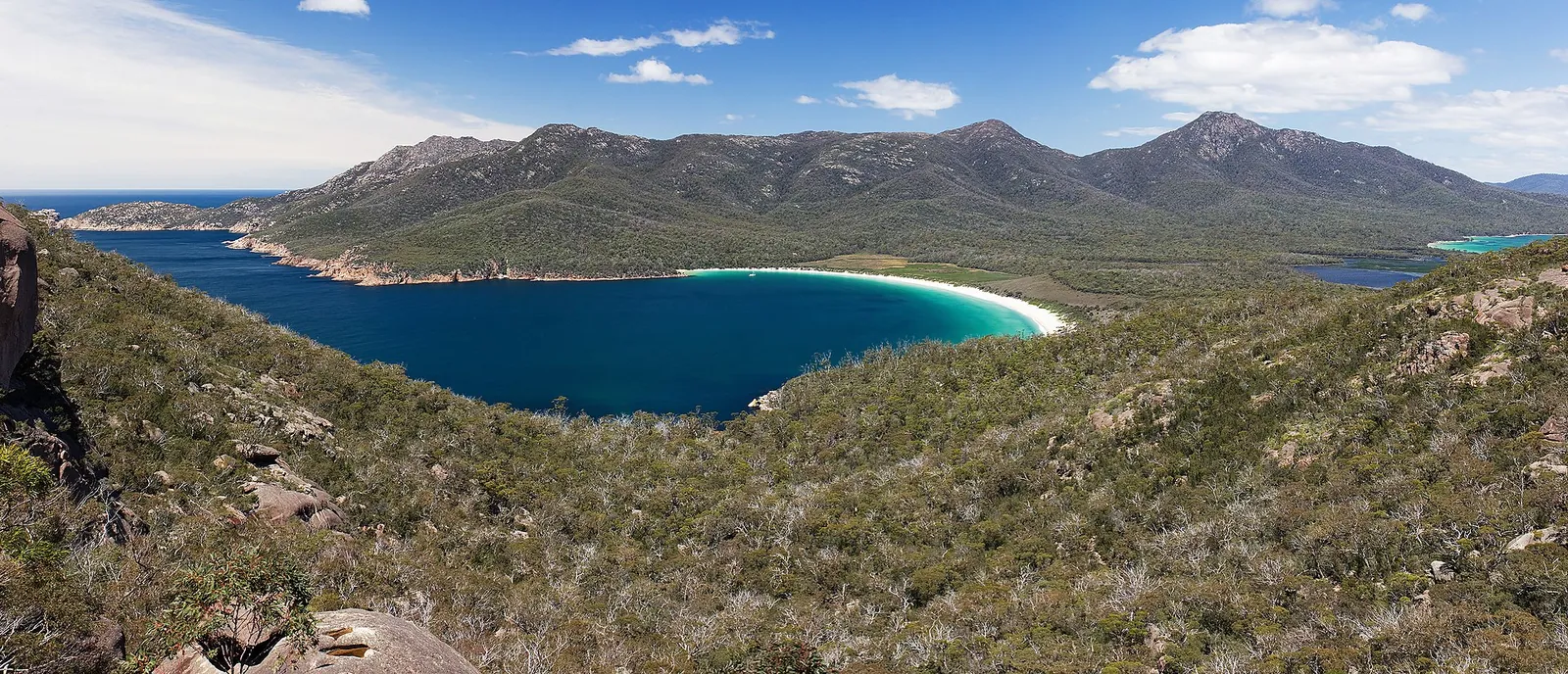
The white crescent of Wineglass Bay between forested granite peaks in Tasmania

Oceania

Australia Travel Guide

A continent-sized country of harbour cities, red desert, coral reef, tropical rainforest and the world's oldest living cultures, where the distances are vast and the outdoors is the main attraction.

  • Destinations 10 hand-picked
  • Best time Varies by region, see below
  • Ideal trip 2–3 weeks for a first trip

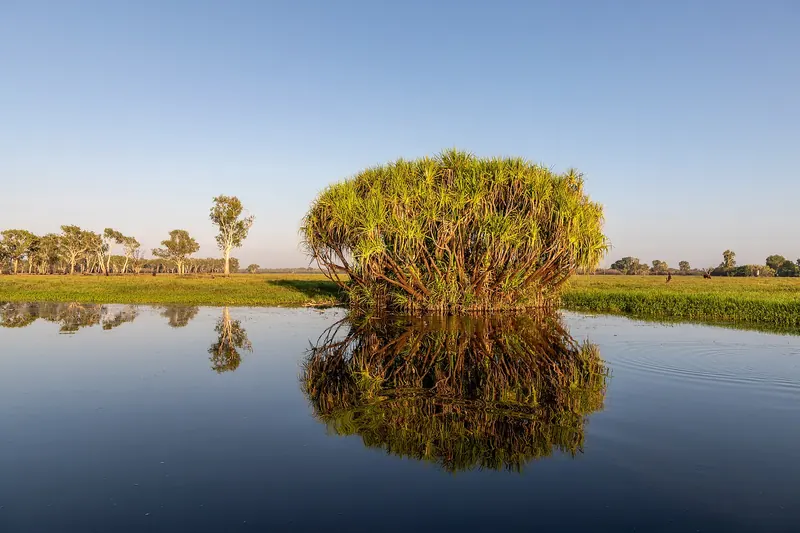
Photo: JJ Harrison · CC BY-SA 3.0

Why go to Australia

Australia is the sixth-largest country in the world, roughly the size of the contiguous United States, but with a population of only about 27 million, most of them living in a handful of cities on the coast. Aboriginal and Torres Strait Islander peoples have lived here for at least 60,000 years, making theirs the oldest continuous living cultures on earth, and their art, stories and connection to Country are increasingly part of the visitor experience. European settlement began in 1788 at Sydney, and the country became a federation in 1901.

For visitors, the country has some of the most varied natural attractions anywhere: the Great Barrier Reef, the tropical rainforest of the Daintree, the red centre around Uluru, the wildernesses of Tasmania and Kakadu, and thousands of kilometres of beaches. The cities are equally appealing, with Sydney's harbour, Melbourne's cafés and laneways and Perth's beaches and sunshine. Australians are relaxed, friendly and outdoorsy, and the infrastructure is excellent.

The main challenge is distance. Sydney to Perth is about as far as London to Baghdad, and Sydney to Cairns is a three-hour flight. It is best to choose a few regions and fly between them, rather than trying to see everything. Prices are also high by international standards, and seasons are reversed from the northern hemisphere, so summer runs from December to February.

Where to go

Best Places to Visit in Australia

Ordered roughly by how strongly we would recommend each for a first visit. Sydney, the Great Barrier Reef, Uluru and Melbourne are the classic four; the Great Ocean Road and Blue Mountains are easy additions, and Tasmania, the Whitsundays, Perth and Kakadu reward those with more time.

Major CityCoast & Beaches

Sydney

New South Wales, east coast

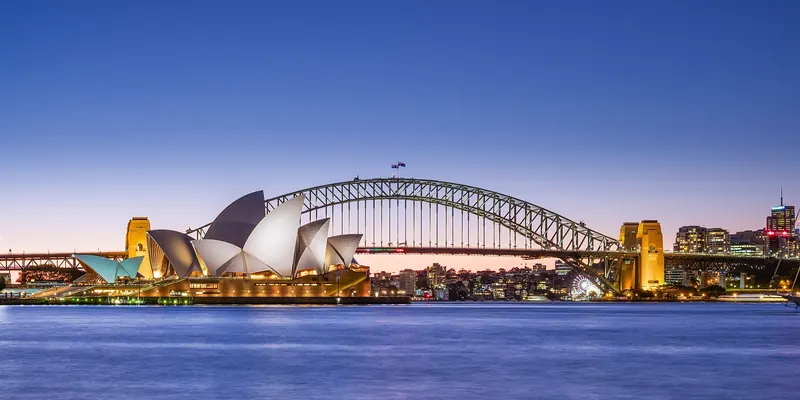
Australia's largest city: the Opera House and Harbour Bridge, The Rocks, the Botanic Garden, Bondi and Manly beaches, cliff walks, ferries and a lively food and café scene.

Don't miss A ferry across the harbour at sunset, with the Opera House and the Harbour Bridge lit gold behind you.

Explore Destination — Sydney
Major CityCulture & Arts

Melbourne

Victoria, south-east Australia

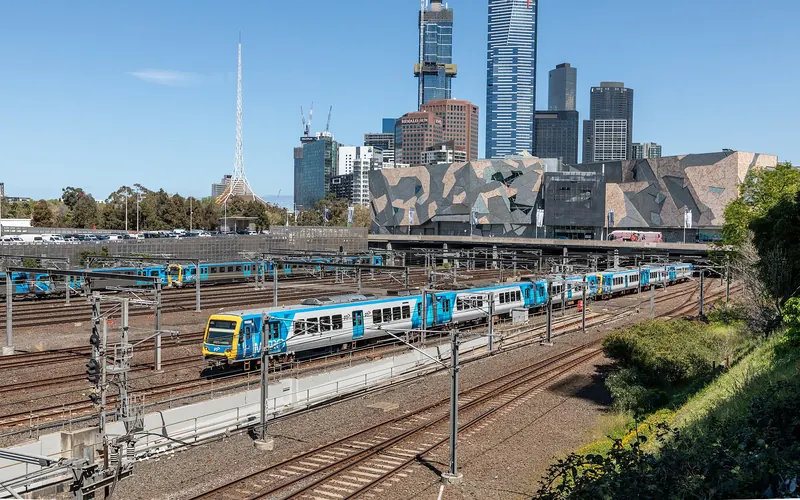
A sophisticated city of coffee culture, street art, grand Victorian architecture, galleries, markets and sport, with day trips to the Yarra Valley, Phillip Island and the Great Ocean Road.

Don't miss Wandering the laneways with a flat white in hand, from Hosier Lane's murals to the hidden cafés behind Flinders Street.

Explore Destination — Melbourne
Scenic RegionCoast & Beaches

The Great Ocean Road

Victoria, south-west coast

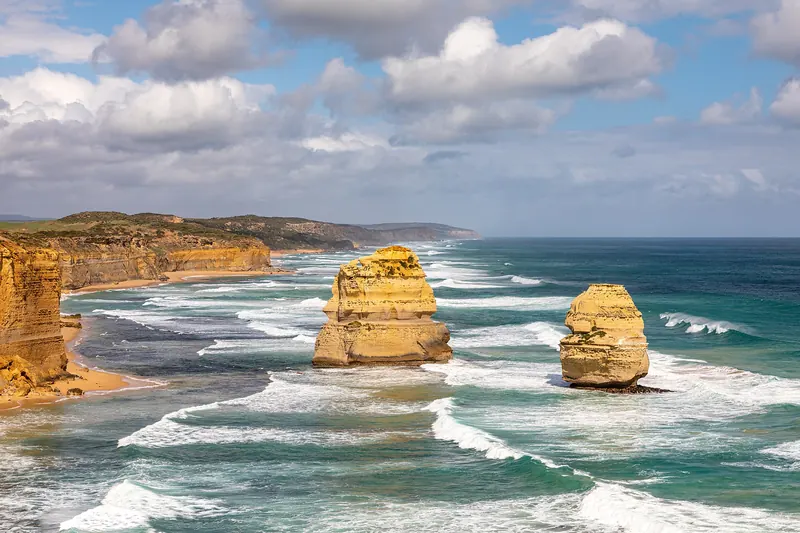
A war memorial road built by returned soldiers, winding past Bells Beach, Lorne, Apollo Bay, the Otway rainforest and the Twelve Apostles, with wildlife, waterfalls and shipwreck history.

Don't miss The Twelve Apostles at sunset, as the limestone stacks glow gold in the surf.

Explore Destination — The Great Ocean Road
IslandNature & Wildlife

Tasmania

Tasmania, island state south of the mainland

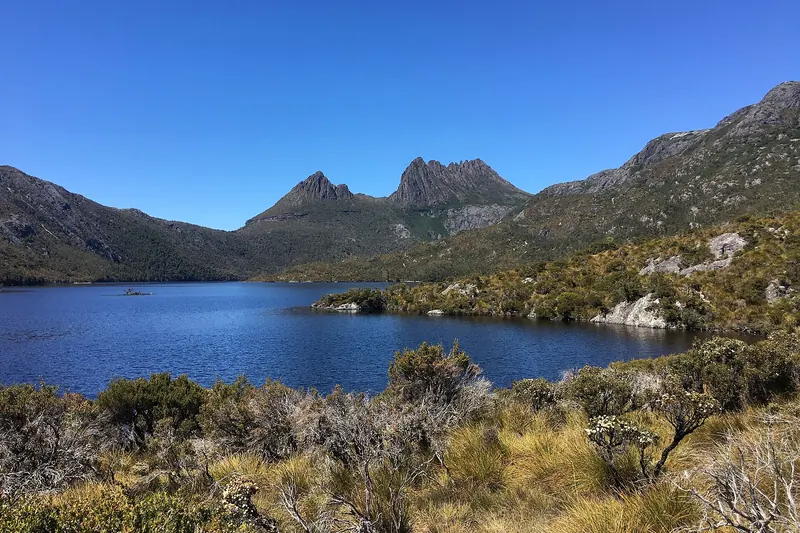
Australia's island state: Hobart and MONA, Cradle Mountain, Freycinet and Wineglass Bay, Port Arthur, Bruny Island and a wilderness of national parks, with a superb food scene.

Don't miss The view of Wineglass Bay from the lookout, a perfect white crescent of sand between pink granite peaks.

Explore Destination — Tasmania
IslandCoast & Beaches

The Whitsundays

Queensland, central coast

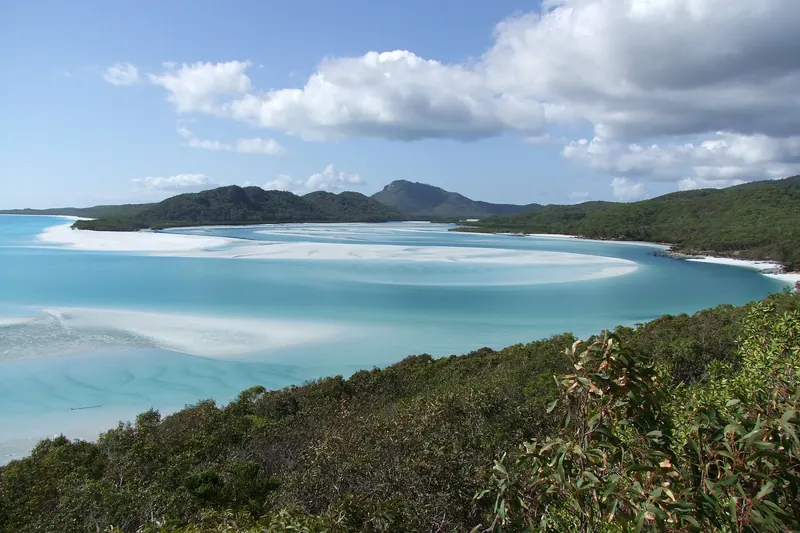
A group of tropical islands on the Great Barrier Reef, with Whitehaven Beach, Hill Inlet, sailing, snorkelling, reef trips and the resort island of Hamilton.

Don't miss Hill Inlet at low tide, where swirling sand and turquoise water form patterns you can see from the lookout.

Explore Destination — The Whitsundays
MountainsUNESCO Site

The Blue Mountains

New South Wales, west of Sydney

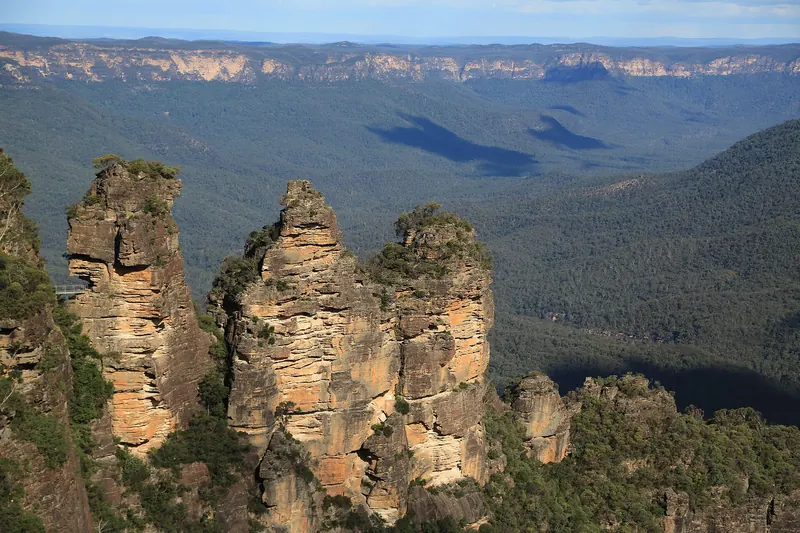
A UNESCO-listed wilderness two hours from Sydney, with Katoomba's Three Sisters, Scenic World, Wentworth Falls, cliff walks, Leura's gardens and the Jenolan Caves.

Don't miss The Three Sisters at sunset from Echo Point, as the valley turns blue and the cliffs glow orange.

Explore Destination — The Blue Mountains
Major CityCoast & Beaches

Perth and Margaret River

Western Australia, south-west

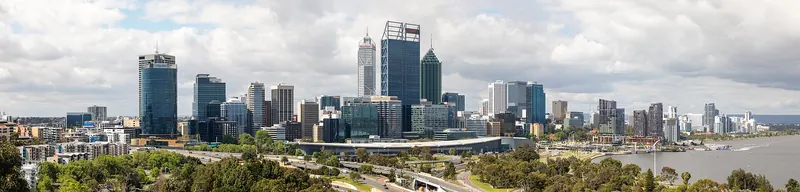
Perth's Kings Park, Fremantle and Cottesloe Beach, the quokkas of Rottnest Island and the wineries, caves, surf and forests of Margaret River, in Australia's remote west.

Don't miss Sunset over the Indian Ocean from Cottesloe Beach, or a glass of cabernet in the Margaret River vines.

Explore Destination — Perth and Margaret River
UNESCO SiteNational Park

Kakadu and the Top End

Northern Territory, tropical north

Australia's largest national park, a UNESCO site for both nature and culture, with Ubirr and Nourlangie rock art, Yellow Water cruises, Jim Jim Falls and Litchfield, reached from Darwin.

Don't miss Sunset from Ubirr, looking over the floodplains after a walk past thousands of years of rock art.

Explore Destination — Kakadu and the Top End

Browse all 510 destinations

Experiences

Best things to do in Australia

The experiences that recur across the country and make an Australian trip feel like one.

  1. Snorkel or dive the Great Barrier Reef

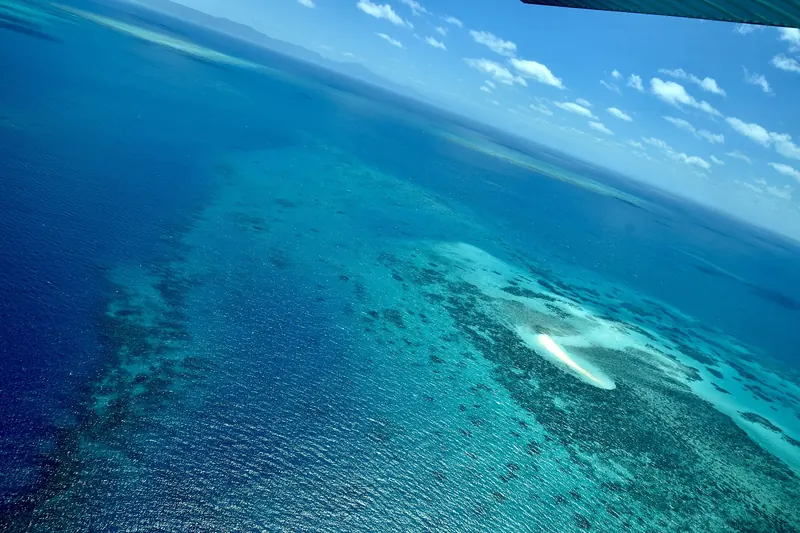
    The world's largest coral reef system is a marvel, with colourful fish, turtles and coral gardens, reached by boat from Cairns, Port Douglas or the Whitsundays. See Cairns and the Reef.

    Tip Choose an eco-certified operator, and a trip to the outer reef, where the coral is healthiest.

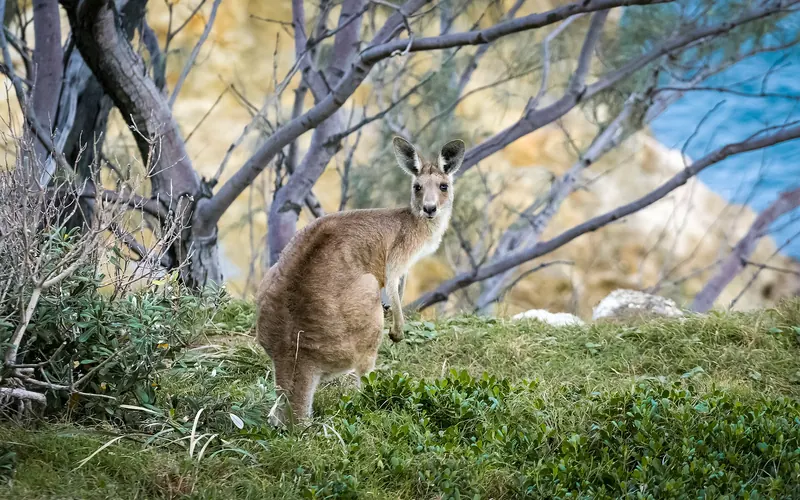
  2. A kangaroo standing in dry grass in the Australian bush

    See a kangaroo or koala in the wild

    Kangaroos, wallabies and koalas are common in national parks, on golf courses and along the coast, especially at dawn and dusk. Wildlife sanctuaries offer close encounters.

    Tip Drive slowly at dusk, when animals cross roads.

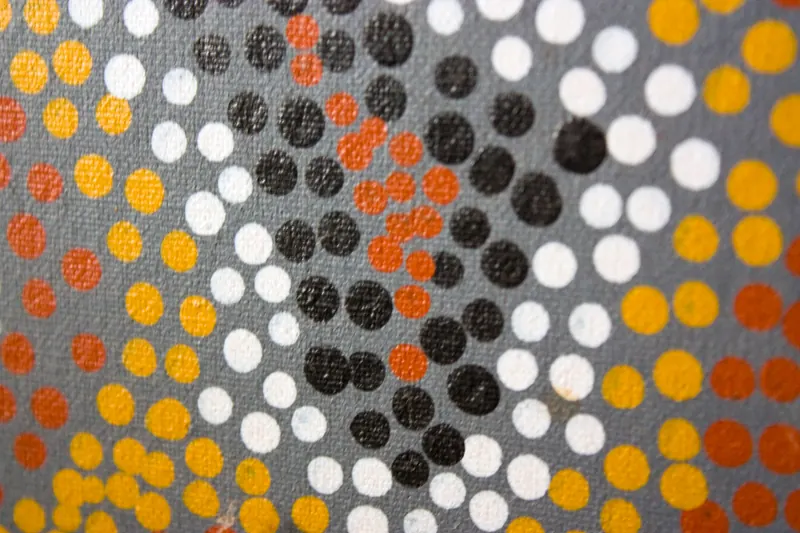
  3. Detail of an Aboriginal dot painting

    Learn from Aboriginal culture

    Guided walks with Aboriginal guides at Uluru, Kakadu and elsewhere share stories, bush foods and rock art that are tens of thousands of years old. See Uluru and Kakadu.

    Tip Choose Aboriginal-owned tours, and follow local rules about sacred sites and photography.

  4. Take a coastal road trip

    Australia is made for road trips, from the Great Ocean Road to the Pacific Highway and the west coast. See the Great Ocean Road.

    Tip Drive on the left, take breaks every two hours and never drive tired.

  5. Swim, surf and lounge on the beach

    There are more than 10,000 beaches, from Bondi's surf to Whitehaven's white sand. See Sydney and the Whitsundays.

    Tip Swim between the red and yellow flags, patrolled by lifesavers.

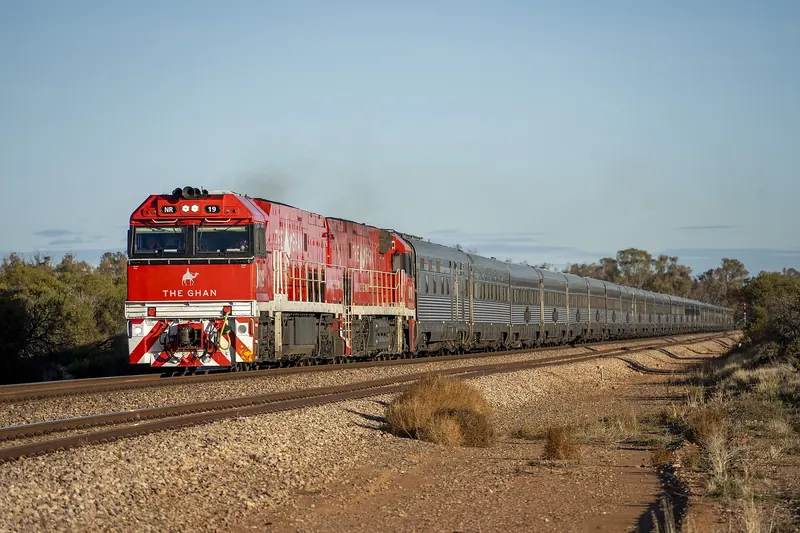
  6. The Ghan passenger train travelling through the Australian outback

    Ride a great train journey

    The Ghan (Adelaide to Darwin) and the Indian Pacific (Sydney to Perth) are among the world's great rail journeys, crossing the continent in comfort.

    Tip Book months ahead, and allow several days.

  7. Wander a market and try a flat white

    Melbourne and Sydney's cafés, laneways and food markets are among the best in the world, and Australian coffee culture has spread across the globe. See Melbourne.

    Tip Order a flat white or a long black.

Food and drink

Australia foods to try

Modern Australian cooking is a mix of British roots, Mediterranean and Asian influence and excellent local produce, from seafood and beef to wine and coffee. Each region has its specialities.

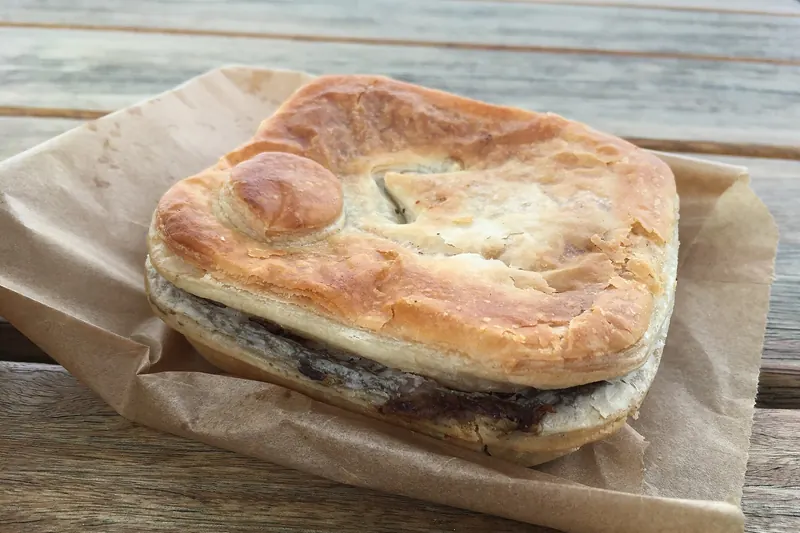
  • A traditional Australian meat pie on a plate

    Meat pie

    A flaky pastry filled with minced beef and gravy, and the classic Aussie snack, often with tomato sauce. Bakeries in small towns compete for the best.

    Where to try it Bakeries and footy stadiums, especially in Melbourne.

  • A flat white coffee with a feather pattern in the microfoam

    Flat white

    Espresso with velvety steamed milk, invented in Australia or New Zealand, depending on who you ask. Melbourne and Sydney cafés serve some of the best coffee anywhere.

    Where to try it Cafés in Melbourne's laneways and Sydney's suburbs.

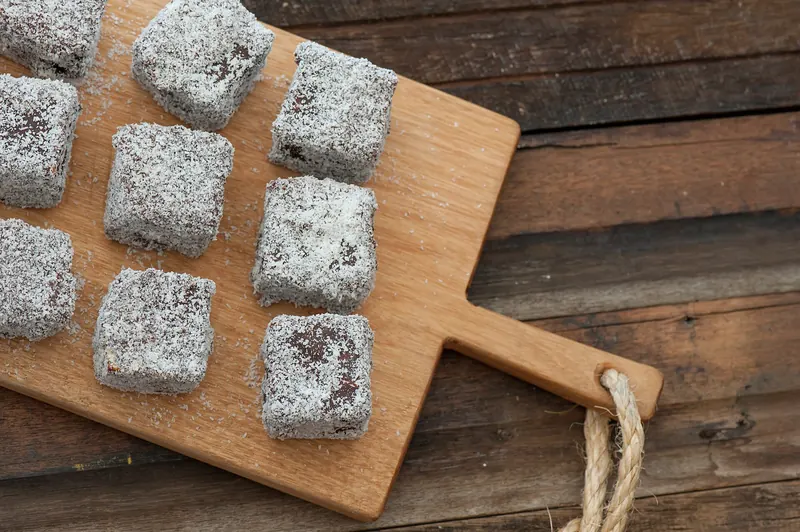
  • Lamington sponge cakes coated in chocolate and coconut

    Lamington

    Squares of sponge cake dipped in chocolate and rolled in desiccated coconut, a national sweet often filled with cream and jam.

    Where to try it Bakeries and cafés across the country.

  • A pavlova meringue dessert topped with cream and strawberries

    Pavlova

    A crisp meringue with a soft centre, topped with cream and fresh fruit, a summer and Christmas dessert.

    Where to try it Cafés and family tables, especially at Christmas.

  • Barramundi and fresh seafood

    Barramundi from the tropical north, Moreton Bay bugs, Tasmanian oysters and Western Australian rock lobster are among the many local specialities.

    Where to try it Waterfront restaurants in the Top End, Tasmania and Sydney.

  • Wine

    Australia produces excellent wine, from Barossa shiraz to Margaret River cabernet and Yarra Valley pinot noir. Many regions offer tastings within easy reach of cities.

    Where to try it Wineries in Margaret River and near Melbourne.

Before you go

Practical travel information for Australia

The essentials, current for 2026. Australia is very easy to visit, though distances, sun and prices need planning.

Capital
Canberra
Language
English. Australian English is informal, with plenty of slang, and there are many Aboriginal languages spoken in communities.
Currency
Australian dollar (AUD, A$). Roughly A$1.50 to the US dollar in recent years.
Cards and cash
Cards and contactless payments are accepted almost everywhere, including small shops and taxis. ATMs are common in cities but scarce in remote areas, so carry some cash outback. Prices in shops are quoted without tips, and tax is included.
Entry and visas
Most visitors need a visa or electronic authority before travel, usually an ETA (subclass 601), applied for through the official Australian app or an eVisitor for some European passports. New Zealand citizens do not need one. Check the official Australian government site for your passport.
Power sockets
Type I, 230 V, 50 Hz.
Emergency number
000 for police, fire and ambulance (112 also works from mobiles).
Tipping
Not expected, since wages are high, though rounding up or leaving 10% for great service is appreciated in restaurants.
Safety
Australia is very safe, but nature is powerful. Wear sunscreen and a hat, since the UV is intense; swim between the flags, since rips are common; do not swim in northern waters where saltwater crocodiles live or in the stinger season without protection; and carry water in the outback. In bushfire season, check warnings and follow local advice.
Internet and SIM
Excellent in cities and along the main highways. Coverage is patchy or absent in remote areas. Local SIM and eSIM plans are cheap.
Time zone
Three main zones: Eastern (UTC+10), Central (UTC+9:30) and Western (UTC+8), with daylight saving in some states from October to April.

Daily budget guide (per person)

Backpacker
A$100–160 per day — hostels, self-catering, buses
Mid-range
A$250–400 per day — hotels, restaurants, car hire and tours
Comfortable
A$450–700 per day — boutique hotels, guided tours
Luxury
A$800+ per day — top hotels and lodges, private tours

Excludes international flights. Figures are typical rather than absolute — cities and peak season run higher.
When to go

Best time to visit Australia

Australia's climate ranges from tropical in the north to temperate in the south, and the seasons are reversed from the northern hemisphere. The north has a dry season from May to October and a wet season from November to April.

  • Summer (December–February)

    Good

    Hot in the south and warm on the beaches, but wet, humid and stinger-prone in the tropical north, and very hot in the centre. Peak domestic holidays.

  • Autumn (March–May)

    Best time

    Warm and settled in the south, with fewer crowds. The north dries out from April.

  • Winter (June–August)

    Best time

    Mild and sunny in the north and centre, the best time for the reef, Uluru and Kakadu. Cool in the south, with snow in the mountains.

  • Spring (September–November)

    Best time

    Warm, sunny and green in the south, with wildflowers in Western Australia.

Worth planning around: The tropical north from January to March (cyclones, floods and stingers), and the Red Centre in summer, when temperatures often exceed 40°C.

Trip length

How long to spend in Australia

Australia is enormous, and flights eat time. Two weeks allow for three or four bases, and three weeks add a slower pace or a road trip.

  • 7–8 days

    Sydney with the Blue Mountains, and a few days on the Great Barrier Reef.

    A first taste with one flight.

  • 12–14 days

    The itinerary on this page: Sydney, the Blue Mountains, Cairns, Uluru, Melbourne and the Great Ocean Road.

    The classic first trip, with four flights.

  • 3 weeks

    Adds Tasmania, the Whitsundays or Perth.

    A more relaxed pace.

  • 4 weeks or more

    Adds Kakadu, the west coast and a road trip.

    For those with time to explore.

Getting around

Transportation in Australia

Distances mean that most visitors combine domestic flights with hire cars, and use public transport within the cities.

  • Domestic flights

    Qantas, Virgin Australia, Jetstar and Rex link all major cities and tourist regions. Flights are frequent, and often cheap if booked ahead.

    Book early for school holidays. Budget carriers charge for bags.

  • Hire cars and campervans

    The best way to see coastlines and national parks. Drive on the left. Distances between towns can be huge, and fuel stops far apart in the outback.

    Book insurance carefully, and avoid driving at dusk and dawn when kangaroos are active.

  • Trains

    City trains are good in Sydney, Melbourne and Perth, and long-distance services include the Ghan, the Indian Pacific and the Overland. Journeys are slow but scenic.

    Book scenic trains months ahead.

  • Coaches and tours

    Coach services cover the coasts, and organised tours are the easiest way to reach Uluru, Kakadu and the Reef.

    Small-group tours suit solo travellers.

  • City transport

    Sydney, Melbourne and Perth have trams, trains, buses and ferries on integrated smartcards. Ride-hailing is widespread.

    Use contactless payment or the local card.

Sample route

Two weeks in Australia

Sydney and the Blue Mountains, the reef and rainforest of the north, the red centre and Melbourne with the Great Ocean Road, with four domestic flights. Covers six of the ten destinations in this guide.

  1. Day1

    Arrive in Sydney

    • Morning Land and check in.
    • Afternoon A ferry across the harbour.
    • Evening Dinner near the Opera House.
  2. Day2

    Sydney

    • Morning The Opera House and the Botanic Garden.
    • Afternoon The Rocks and the Harbour Bridge.
    • Evening Dinner in Surry Hills.
  3. Day3

    Bondi and the coast

    • Morning The Bondi to Coogee coastal walk.
    • Afternoon A swim at Bondi.
    • Evening Fish and chips by the sea.
  4. Day4

    Blue Mountains

    • Morning Train to Katoomba.
    • Afternoon Echo Point and the Three Sisters.
    • Evening Return to Sydney.
  5. Day5

    Fly to Cairns

    • Morning Flight north.
    • Afternoon The Esplanade and a swim.
    • Evening Dinner by the sea.
  6. Day6

    The Great Barrier Reef

    • Morning A boat to the outer reef.
    • Afternoon Snorkelling.
    • Evening Return to Cairns.
  7. Day7

    Daintree Rainforest

    • Morning Drive north to the Daintree.
    • Afternoon A rainforest walk and Cape Tribulation.
    • Evening Return via Port Douglas.
  8. Day8

    Fly to Uluru

    • Morning Flight to the Red Centre.
    • Afternoon Kata Tjuta at sunset.
    • Evening A dinner under the stars.
  9. Day9

    Uluru

    • Morning Sunrise at Uluru and the base walk.
    • Afternoon The cultural centre.
    • Evening Sunset viewing.
  10. Day10

    Fly to Melbourne

    • Morning Flight south.
    • Afternoon Laneways and coffee.
    • Evening Dinner in the city.
  11. Day11

    Melbourne

    • Morning Queen Victoria Market.
    • Afternoon Federation Square and the gallery.
    • Evening A show or a bar.
  12. Day12

    The Great Ocean Road

    • Morning Drive along the coast.
    • Afternoon The Twelve Apostles.
    • Evening Sunset and dinner in Apollo Bay.
  13. Day13

    Back to Melbourne

    • Morning Rainforest in the Otways.
    • Afternoon Drive back.
    • Evening A last dinner.
  14. Day14

    Depart

    • Morning A last flat white.
    • Afternoon Fly home.
    • Evening Home.

Culture

Culture and etiquette in Australia

Australia is a multicultural, egalitarian and informal country. People are direct and friendly, use first names and expect good humour. Respect for Aboriginal and Torres Strait Islander peoples, and awareness of the land's history, is an important part of modern Australian life.

  • Be relaxed and friendly

    Australians value informality and a sense of humour. Chat with people and do not stand on ceremony.

  • Respect Aboriginal culture

    Follow local rules about sacred sites and ask before photographing people. Choose Aboriginal-led tours where possible.

  • Queue and wait your turn

    Queuing is taken seriously, in shops, bars and at bus stops.

  • Shout your round

    In pubs, people take turns buying rounds of drinks for the group. Join in.

  • Stay safe in the sun and sea

    Follow the lifesavers' advice, wear sunscreen, and take signs about wildlife seriously.

  • Look after the environment

    Take your rubbish with you, do not feed wildlife and stay on marked tracks.

Do

  • Wear a hat and sunscreen, all year
  • Swim between the flags
  • Book accommodation ahead in school holidays
  • Learn a few local terms, such as 'arvo' (afternoon) and 'no worries'
  • Respect signs about crocodiles and closed tracks
  • Carry plenty of water in remote areas

Don't

  • Don't climb Uluru, which has been closed to climbing since 2019
  • Don't swim in northern rivers or estuaries without a safe-swimming sign
  • Don't drive tired or at dusk in rural areas
  • Don't feed wild animals
  • Don't bring in fresh food, plants or animal products without declaring them
  • Don't photograph or enter sacred sites where signs ask you not to

Travel tips

Australia travel tips

The things that most often catch visitors out in Australia, several of which are specific to how the country works.

  • Be realistic about distances. Choose three or four bases and fly between them.
  • Wear sunscreen, a hat and sunglasses every day, even when it is cloudy.
  • Swim only at patrolled beaches, between the flags, and check for rips.
  • Book Uluru, the Reef and popular tours well ahead in high season.
  • Fill up with fuel and water before long drives in remote areas.
  • Drive on the left, and be careful of animals at dawn and dusk.
  • Declare all food and outdoor gear at the border. Biosecurity rules are strict, and fines are large.
  • Check bushfire, flood and cyclone warnings, particularly from November to April.

FAQ

Visiting Australia: frequently asked questions

Is Australia safe?

Yes, it is very safe for visitors. The biggest risks are the sun, the surf, driving and the outdoors, which is best handled with common sense and local advice.

How many days do you need in Australia?

Two weeks for a first trip, and three if you can. A week lets you do Sydney and one other place.

What is the best time to visit Australia?

It depends where. Spring and autumn suit the south, and May to October suits the north and the Red Centre.

Do I need a visa for Australia?

Most visitors need an ETA or eVisitor, applied for online before travel. Check the official government site.

Is Australia expensive?

Yes, by many standards, particularly for accommodation, food and internal flights. Camping, self-catering and off-peak travel help.

Are the animals dangerous?

Some are, but attacks are rare. Take care with crocodiles in the north, marine stingers in summer and snakes and spiders in the bush, and follow local advice.

Can I climb Uluru?

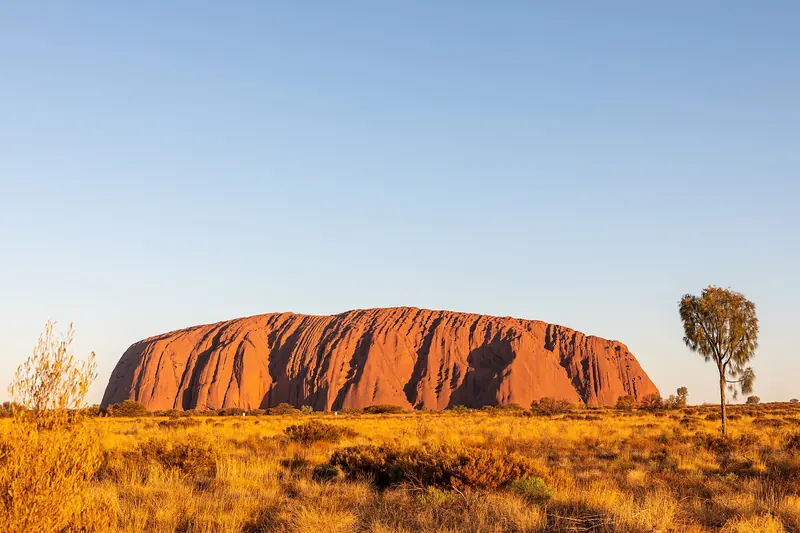
No. The climb was closed permanently in October 2019, at the request of the Anangu traditional owners. You can walk around the base.

Ready to plan your Australia trip?

The full travel guide covers routes, budgets, regional differences and how to string these ten destinations into a trip that actually works.

Read the Australia travel guide

Advertisement