- Capital
- Jakarta
- Language
- Indonesian (Bahasa Indonesia) nationally, alongside hundreds of regional languages; English is widely spoken in tourist areas.
- Currency
- Indonesian rupiah (Rp, IDR)
- Cards and cash
- Cash still matters outside big cities and malls, though card and e-wallet payments are increasingly common in Bali and Jakarta.
- Entry and visas
- Visa-free or visa-on-arrival entry for up to 30 days for many nationalities including the US, Canada, Australia and UK, extendable once at an immigration office.
- Power sockets
- Type C and F (Europlug/Schuko), 230 V, 50 Hz.
- Emergency number
- 112 for general emergencies nationwide, or 110 (police) and 118/119 (ambulance).
- Tipping
- Not obligatory, but appreciated — rounding up or leaving 5-10% at restaurants without a service charge is common practice.
- Safety
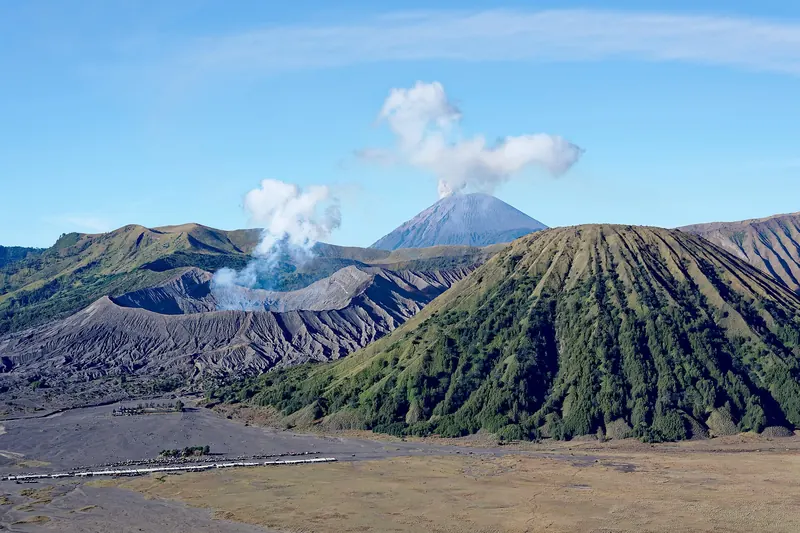
- Generally safe for travellers, with petty theft and tourist-targeted scams the main everyday risks. Natural hazards — volcanoes, earthquakes and seasonal flooding — are a genuine, ongoing practical concern.
- Internet and SIM
- Excellent and cheap 4G in Bali, Java and other major islands; patchy in remote parts of eastern Indonesia including Raja Ampat.
- Time zone
- Spans three zones — WIB (UTC+7) in Sumatra and Java including Jakarta, WITA (UTC+8) in Bali, Lombok and Komodo, and WIT (UTC+9) in Papua including Raja Ampat.
Daily budget guide (per person)
- Backpacker
- Rp 350,000–600,000 per day — hostels, warung meals, local transport
- Mid-range
- Rp 800,000–1,600,000 per day — guesthouses, restaurant meals, drivers
- Comfortable
- Rp 2,000,000–4,500,000 per day — hotels, domestic flights, private tours
- Raja Ampat supplement
- Add significantly for diving trips and eastern Indonesia domestic flights
Excludes international flights. Figures are typical rather than absolute — cities and peak season run higher.