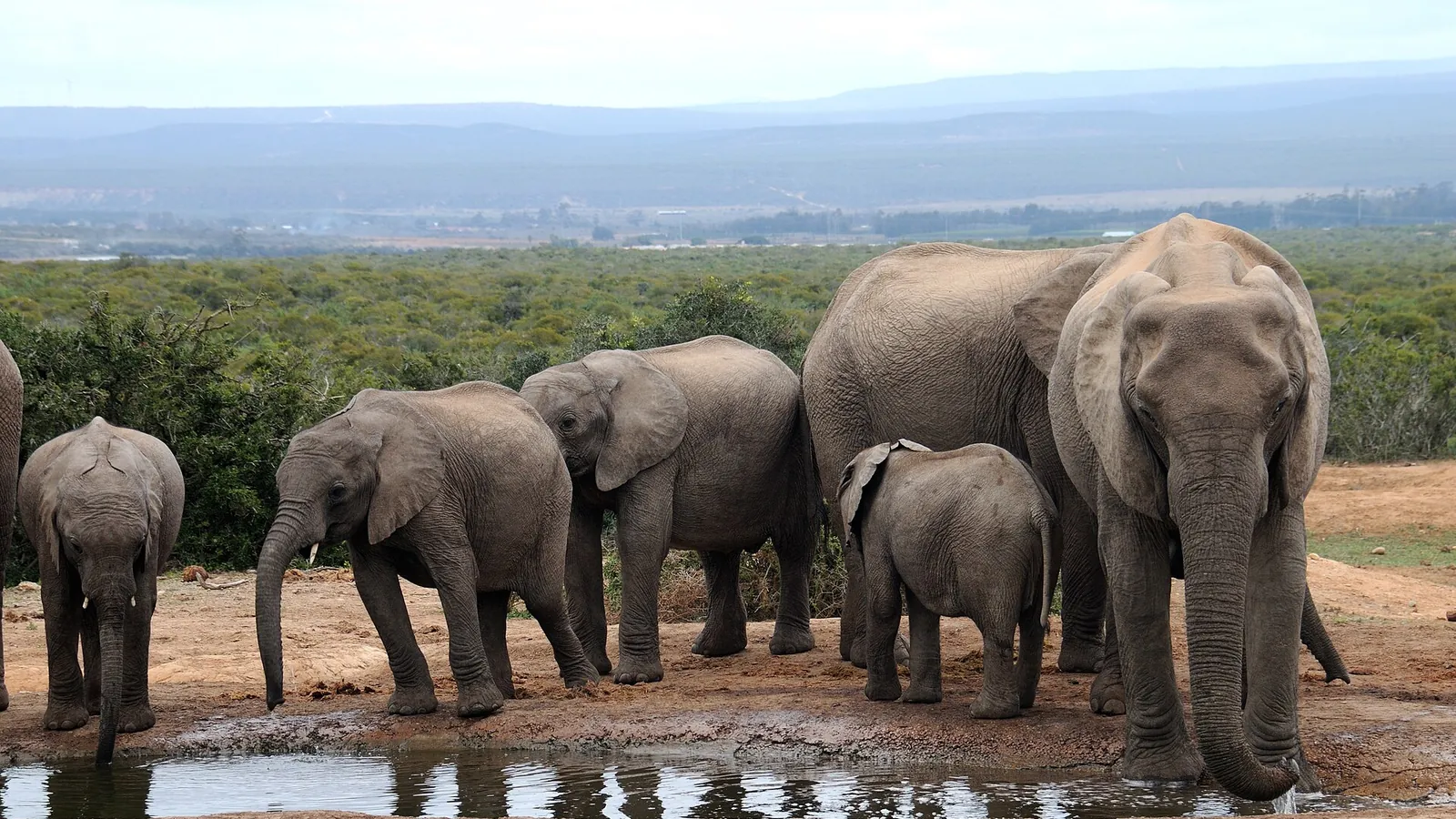
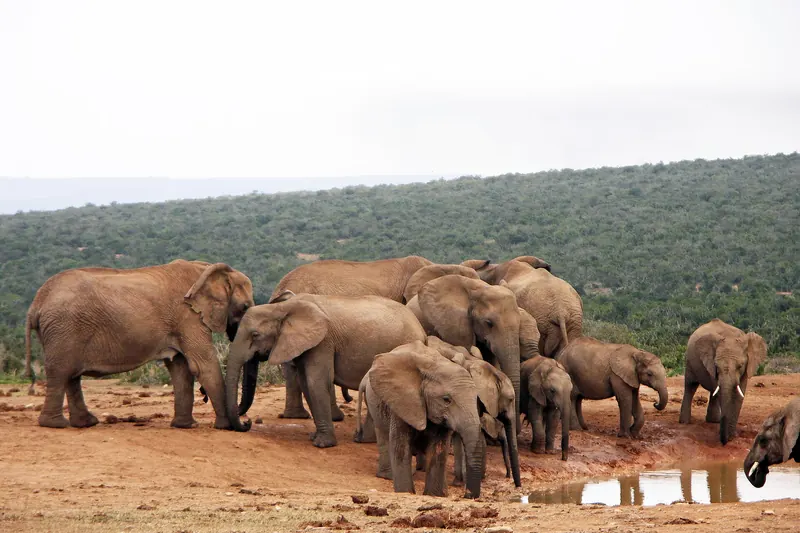
African elephants gathered at a waterhole in Addo Elephant National Park

Eastern Cape, near Gqeberha · South Africa

Addo and the Eastern Cape

A malaria-free safari park where more than 600 elephants come to drink at waterholes, with lions, rhinos and buffalo, and a coast where whales and sharks add to the Big Seven.

  • Best time All year, best April–September
  • Stay 2–3 days
  • Good for Elephants, family safaris, malaria-free wildlife, a Garden Route add-on

Photo: Josep M. Gracia · CC BY-SA 4.0

Welcome to Addo

Addo Elephant National Park, near Gqeberha, formerly Port Elizabeth, in the Eastern Cape, was established in 1931 to protect the last 11 elephants in the region, which had been hunted almost to extinction. Today it is home to more than 600 elephants and one of the densest elephant populations in Africa, and it is also home to lions, black and white rhinos, buffaloes, spotted hyenas, leopards and a wealth of antelope and birds.

The park has grown to include a marine reserve, with islands where African penguins and Cape gannets breed, and its whales and great white sharks give it the title of the Big Seven. Its main advantage is that it is malaria-free, so there are no tablets to take, and it is easy to reach, only an hour's drive from Gqeberha airport. That makes it a favourite for families and for those adding a safari to a Garden Route trip.

Game viewing at Addo is straightforward. The elephants gather at waterholes within sight of the main camp, and roads through thick, spiky thicket and open grassland allow self-drive exploring. Guided drives at dusk and night increase the chances of seeing lions and hyenas. Nearby private reserves, such as Shamwari and Kwandwe, offer luxury lodges and Big Five safaris, also malaria-free.

  • National Park
  • Nature & Wildlife
  • Coast & Beaches

Why visit

Why visit Addo?

Addo is the easiest and most family-friendly place in South Africa for an elephant safari.

  • Elephants

    Large herds visit waterholes throughout the day.

  • Malaria-free

    No need for tablets, ideal for families and pregnant travellers.

  • Easy access

    An hour from Gqeberha, and close to the Garden Route.

  • The Big Seven

    Elephants, lions, rhinos, leopards, buffaloes, whales and sharks.

  • Self-drive and guided options

    Simple roads and good-value accommodation.

Main attractions

Top things to see in Addo

The main experiences are game drives, waterholes and the private reserves.

  1. Elephants walking through the bush in Addo Elephant National Park

    The Hapoor and Domkrag waterholes

    Waterholes near the main camp where elephants gather in large numbers in the dry season, viewed from hides or from your vehicle.

    Tip Go in the late afternoon.

  2. Self-drive game drives

    Roads through the park allow visitors to look for lions, buffaloes, rhinos, kudu and zebra on their own.

    Tip Ask at the camp where animals have been seen.

  3. Dung beetle crossings

    The park has road signs warning of flightless dung beetles, which roll elephant dung across the road.

    Tip Drive slowly.

  4. Guided sunset and night drives

    Ranger-led drives in open vehicles, offering the best chance of seeing lions, hyenas and other night animals.

    Tip Book at the camp.

  5. Shamwari and private reserves

    Luxury lodges in malaria-free reserves nearby, offering Big Five game drives with rangers, often with rhino and conservation projects.

    Tip Book far ahead.

  6. The marine section and Bird Island

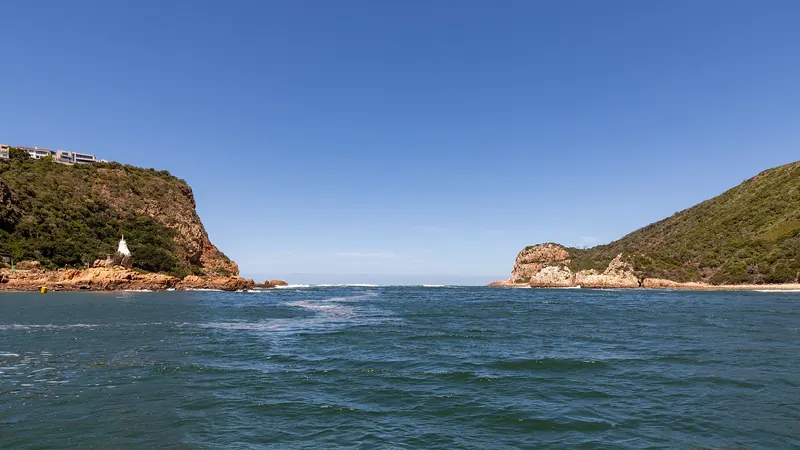
    Coastal areas with penguin and gannet colonies, whales and sharks, reached by boat from Gqeberha.

    Tip Book a boat trip.

Things to do

Best things to do in Addo

Game viewing is the main activity, with time for the coast.

  1. Watch elephants at a waterhole

    Sit in a hide or vehicle and watch herds drink and bathe.

    Tip Bring binoculars.

  2. Go on a guided game drive

    Open vehicle drives at dawn, sunset and night.

    Tip Book on arrival.

  3. Try a horseback safari

    Ride through the bush near the park.

    Tip Check the routes.

  4. Visit a private reserve

    See rhinos and lions, with luxury.

    Tip Book far ahead.

  5. See penguins and whales

    Boat trips from Gqeberha in the bay.

    Tip Choose a licensed operator.

  6. Combine with the Garden Route

    Tsitsikamma is about 1.5 hours away.

    Tip Drive on.

Local food

What to eat in Addo

Food in Addo is simple, with farm-style restaurants and braais.

  • Braai

    Barbecue with steak and boerewors.

    Where to try it Camps and lodges.

  • Citrus and local produce

    The Sundays River Valley is a citrus-growing region.

    Where to try it Farm stalls.

  • Ostrich and game meat

    Lean meats, in stews and steaks.

    Where to try it Restaurants.

  • Seafood

    Fresh fish and calamari in Gqeberha.

    Where to try it Waterfront restaurants.

  • Rusks and coffee

    A breakfast staple.

    Where to try it Lodges.

Accommodation

Where to stay in Addo

Stay in the park, in a nearby guesthouse, or in a luxury lodge.

  • Addo main camp

    Chalets, cottages and tents in the park.

    Best for: Convenience and value

  • Addo village and guesthouses

    B&Bs and lodges near the park.

    Best for: Comfort and value

  • Private reserves

    Lodges in Shamwari, Kwandwe and others.

    Best for: Luxury

What a night costs

Camping or tent
US$20–60 per night
Mid-range chalet or guesthouse
US$80–180 per night
Luxury lodge
US$400–1,000 per person per night
Park entry
A daily fee, higher for international visitors

Transport

Getting to and around Addo

Addo is about 70 km north of Gqeberha.

Getting there

  • Flight to Gqeberha (PLZ)

    Direct flights from Cape Town and Johannesburg.

    Hire a car at the airport.

  • Drive from Gqeberha

    About 1 hour.

    Good roads.

  • Drive from the Garden Route

    About 2 to 3 hours from Plettenberg Bay.

    A natural extension.

Getting around

A car is best for the park.

  • Self-drive

    A standard car is fine.

    Stay in your vehicle.

  • Guided drives

    From camps and lodges.

    Book ahead.

  • Transfers

    From Gqeberha.

    Arrange in advance.

When to go

Best time to visit Addo

Addo has a mild climate, with rain at any time of year. The dry winter months have the best game viewing.

  • Summer (December–February)

    Good

    Hot and green, with dense bush.

  • Autumn (March–May)

    Best time

    Mild and clearer.

  • Winter (June–August)

    Best time

    Cool, dry, with animals at waterholes.

  • Spring (September–November)

    Good

    Warming, with calves and blossom.

Worth planning around: The busiest holiday periods in December and January.

Itinerary

Two days at Addo

Elephants and a guided drive.

  1. Day1

    Arrive and drive

    Waterholes.

    • Morning Drive from Gqeberha.
    • Afternoon A self-drive game viewing.
    • Evening A sunset drive.
  2. Day2

    Dawn drive

    More wildlife.

    • Morning A guided dawn drive.
    • Afternoon A waterhole and lunch.
    • Evening Depart or continue.

Travel tips

Addo travel tips

A few tips help you make the most of Addo.

  • Go in the dry season, from April to September.
  • Sit at waterholes in the late afternoon.
  • Watch for dung beetles on the road.
  • Book guided drives on arrival.
  • Keep a safe distance from elephants.
  • Bring binoculars and sunscreen.
  • Book camps far ahead in holiday periods.

FAQ

Addo: frequently asked questions

How many days do you need at Addo?

Two days, or three if you add a private reserve.

Is Addo malaria-free?

Yes.

Can I see the Big Five?

Yes, in the park and private reserves.

What is the best time to visit?

April to September.

How do I get there?

By car from Gqeberha, about an hour.

Can I visit as a day trip from Gqeberha?

Yes, though it is better to stay overnight.

Read next

Related travel articles

Practical

Packing by Season and Trip Type

Most packing advice is a list of things. This is the opposite: the small number of decisions that determine whether your luggage helps or hinders, organised by the kind of trip you are actually taking.

Where to go

Beyond the Big Names: Places Worth the Detour

The most visited place in a country is rarely its best, and it is almost never its best value. This is a method for finding the destinations that do not make the postcards — and a set of examples from five of the 50 countries on this site.

Advertisement