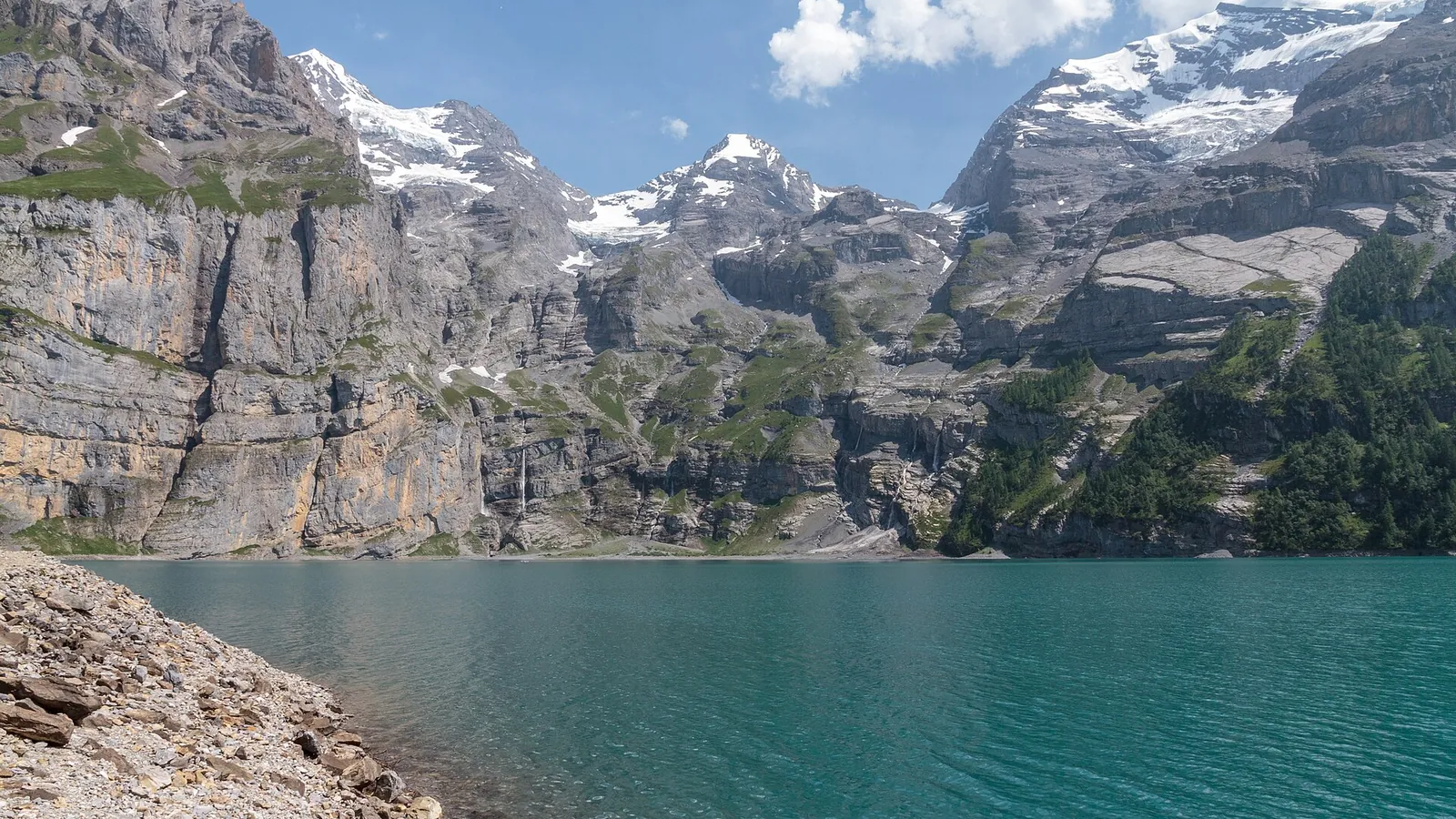
The turquoise Oeschinensee lake surrounded by steep Alpine peaks near Kandersteg

Europe

Switzerland Travel Guide

Alpine peaks, glacier-fed lakes, medieval old towns, mountain railways that run like clockwork and cheese, chocolate and wine to match, all packed into a country you can cross in a day.

  • Destinations 10 hand-picked
  • Best time June–September for hiking, December–March for snow
  • Ideal trip 8–14 days for a first trip

Photo: JoachimKohler-HB · CC BY-SA 4.0

Why go to Switzerland

Switzerland is a small, landlocked country of about 9 million people at the heart of Europe, about the same area as the Netherlands. About 60 percent of its territory is Alps, and the rest is a plateau of lakes, farmland and old cities. It has four national languages, German, French, Italian and Romansh, and a political system built on local cantons that has kept it neutral, stable and rich for centuries.

For visitors, the scenery is the star. The Matterhorn above Zermatt, the Eiger, Mönch and Jungfrau above Grindelwald and Lauterbrunnen, the glaciers of the Aletsch region, the turquoise lakes of Lucerne, Geneva and Lugano, and the vineyards of Lavaux are among the most photographed places in Europe. Just as impressive is how easy it all is to reach: trains, boats, buses and cable cars connect even remote villages on strict timetables, and a single pass covers much of the network.

The other side is cost. Switzerland is one of the most expensive countries in the world, and food, hotels and mountain lifts can shock first-time visitors. With planning, using rail passes, picnicking from supermarkets, staying in hostels or smaller towns and choosing a few big-ticket excursions rather than all of them, it is possible to see the country at a sensible price.

Where to go

Best Places to Visit in Switzerland

Ordered roughly by how strongly we would recommend each for a first visit. Interlaken and the Jungfrau, Lucerne, Zermatt and Zurich are the essentials; Bern, Geneva and Lausanne add cities and lakes, and the others reward those with more time.

Major CityHistoric Site

Zurich

Zurich, northern Switzerland

A compact, clean city on Lake Zurich, with a medieval old town, Bahnhofstrasse shopping, museums, river swimming and easy day trips to the mountains.

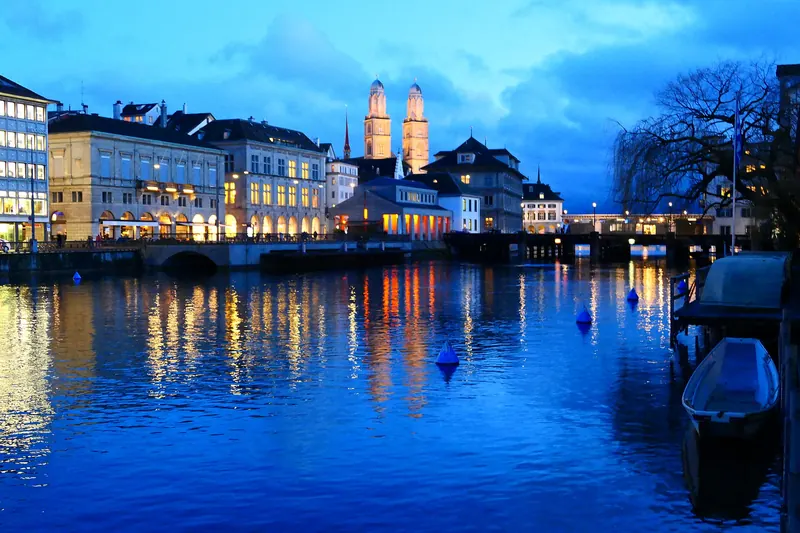
Don't miss The Limmat river with the twin towers of the Grossmünster and old-town rooftops from Lindenhof hill.

Explore Destination — Zurich
Historic SiteScenic Region

Lucerne

Central Switzerland, Lake Lucerne

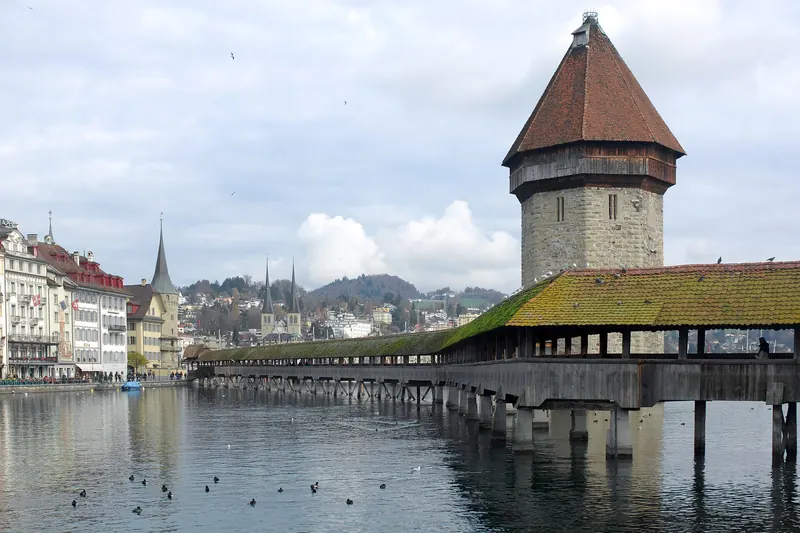
A postcard old town on Lake Lucerne, with the Chapel Bridge, the Lion Monument, Mount Pilatus, Rigi and paddle-steamer trips, ideal as a Swiss base.

Don't miss Walking across the Chapel Bridge at sunset, with the Reuss river, the water tower and the snow-dusted Pilatus behind.

Explore Destination — Lucerne
Major CityHistoric Site

Geneva

Geneva, south-west Switzerland

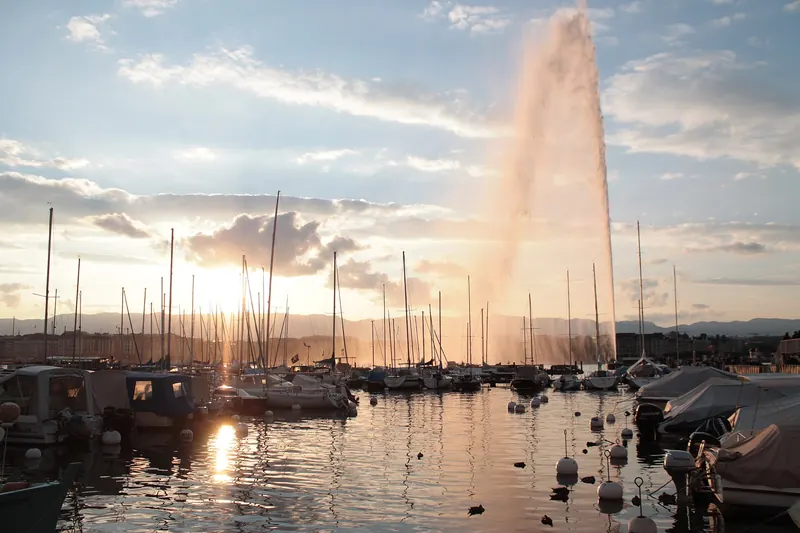
A French-speaking lakeside city, with the Jet d'Eau, the old town and St. Peter's Cathedral, the Reformation Wall, UN and Red Cross sites, watches and chocolate.

Don't miss The Jet d'Eau shooting 140 metres into the air, with the Alps and Mont Blanc behind on a clear day.

Explore Destination — Geneva
Capital CityHistoric Site

Bern

Bern, western Switzerland

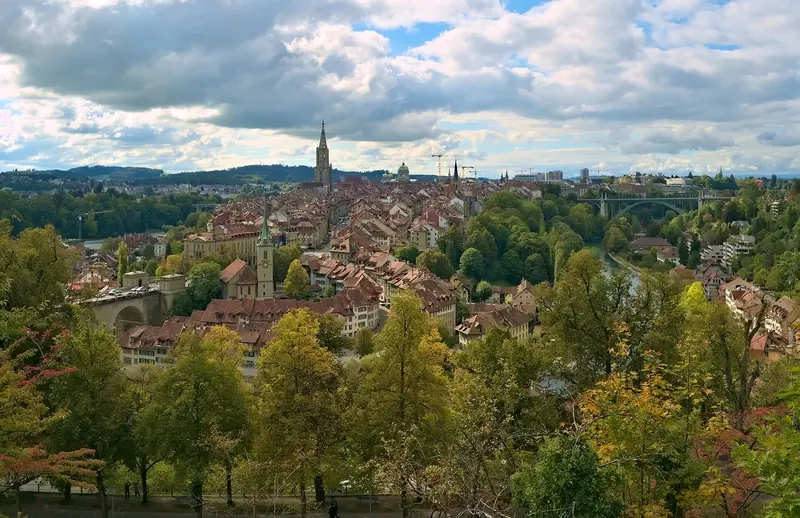
A relaxed capital with a UNESCO-listed old town, six kilometres of arcades, the Zytglogge clock tower, the Rosengarten viewpoint, the Bundeshaus, river swimming and Einstein's apartment.

Don't miss The old town's red roofs and the Aare's turquoise bend, seen from the Rosengarten.

Explore Destination — Bern
Scenic RegionCoast & Beaches

Lugano and Ticino

Ticino, southern Switzerland

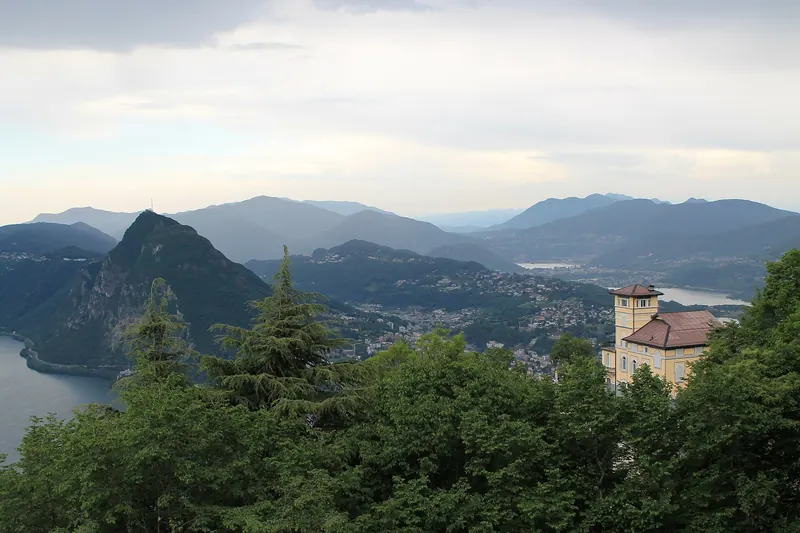
The Italian-speaking south, with Lugano's lake and piazzas, Locarno and Ascona on Lake Maggiore, the castles of Bellinzona and the Verzasca Valley.

Don't miss Sitting on Lugano's lakefront under a palm tree, with Monte Brè across the water and an espresso in hand.

Explore Destination — Lugano and Ticino
MountainsCulture & Arts

Appenzell and the Säntis

Eastern Switzerland, Appenzell

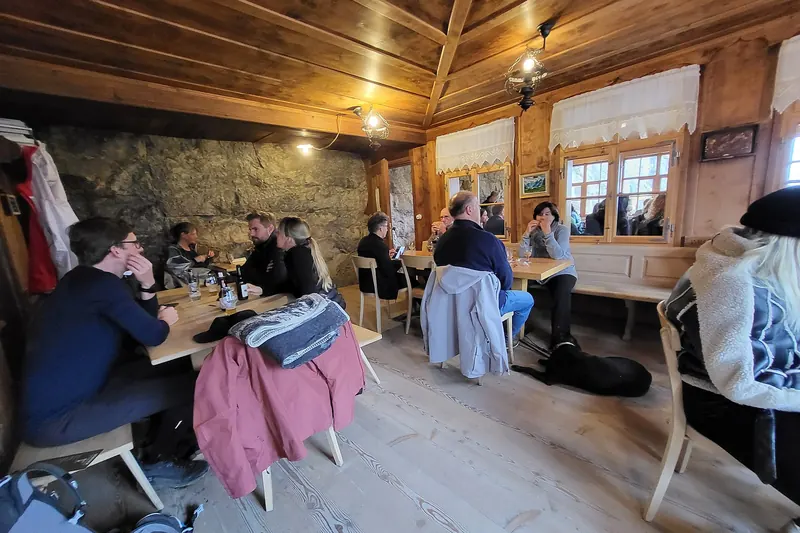
A traditional region of gentle hills, with colourful Appenzell village, the Säntis peak, the cliffside Berggasthaus Äscher, Appenzeller cheese and folk customs, away from the crowds.

Don't miss Berggasthaus Äscher, a mountain inn built into an overhanging cliff, with a view of the valley 500 metres below.

Explore Destination — Appenzell and the Säntis

Browse all 510 destinations

Experiences

Best things to do in Switzerland

The experiences that recur across the country and make a Swiss trip feel like one.

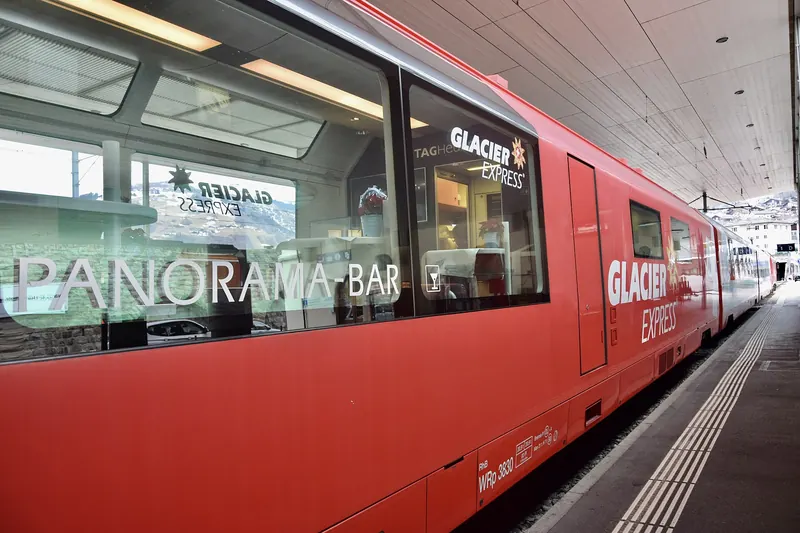
  1. The red Glacier Express train crossing an Alpine valley

    Ride a scenic train

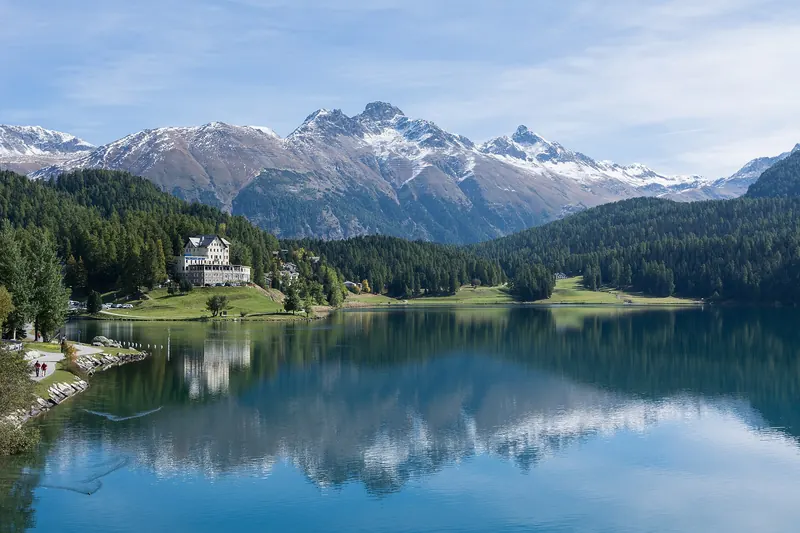
    The Glacier Express, Bernina Express and GoldenPass lines run through panoramic scenery on some of the world's most famous railways. See St. Moritz and the Engadin.

    Tip Book seat reservations early in summer.

  2. Go up a mountain

    Cable cars and cog railways climb to Jungfraujoch, Gornergrat, Pilatus, Rigi and Säntis, and views come with restaurants at the top. See the Jungfrau region and Zermatt.

    Tip Check the webcam before buying a ticket.

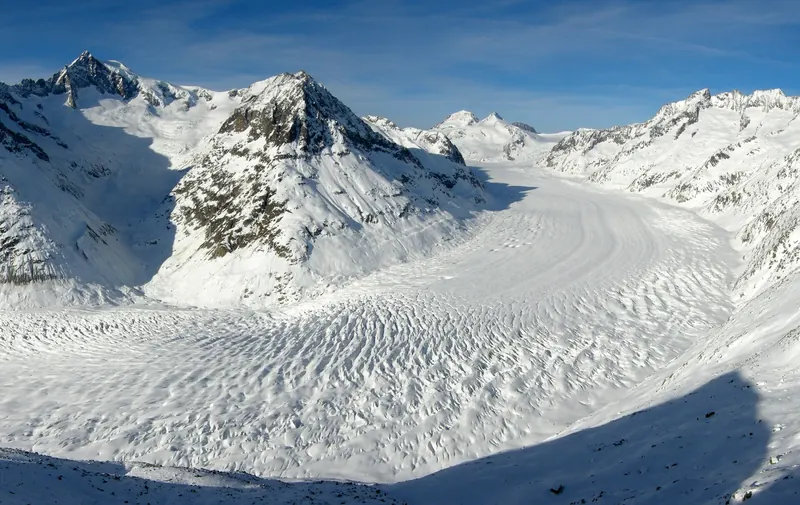
  3. The Aletsch Glacier, the longest ice stream in the Alps, seen from above

    See a glacier

    The Aletsch Glacier, the longest in the Alps, is a UNESCO World Heritage site, and Jungfraujoch has ice palaces at 3,454 metres.

    Tip Glaciers are shrinking, so go sooner rather than later.

  4. Hike in the Alps

    Well-marked trails and mountain huts make hiking easy at any level, from lake walks to high passes. The yellow signs give walking times.

    Tip Go between late June and September for open high trails.

  5. Cruise a lake

    Paddle steamers and boats on Lake Lucerne, Lake Geneva, Lake Lugano and Lake Brienz connect towns and castles. See Lucerne and Lake Geneva.

    Tip Boats are included in the Swiss Travel Pass.

  6. Eat cheese and chocolate

    Fondue, raclette and Alpine cheeses in the mountains, and chocolate from Swiss makers. See the food section below.

    Tip Try cheese at a mountain hut.

  7. Wander an old town

    Bern's medieval arcades, Lucerne's wooden bridge and Zurich's guild houses are some of Europe's best preserved old towns. See Bern and Zurich.

    Tip Walk early, before the day trippers arrive.

Food and drink

Switzerland foods to try

Swiss food is built on cheese, potatoes, bread and meat, in French, German and Italian variations, with excellent chocolate and increasingly good wine.

  • A pot of melted cheese fondue with bread cubes

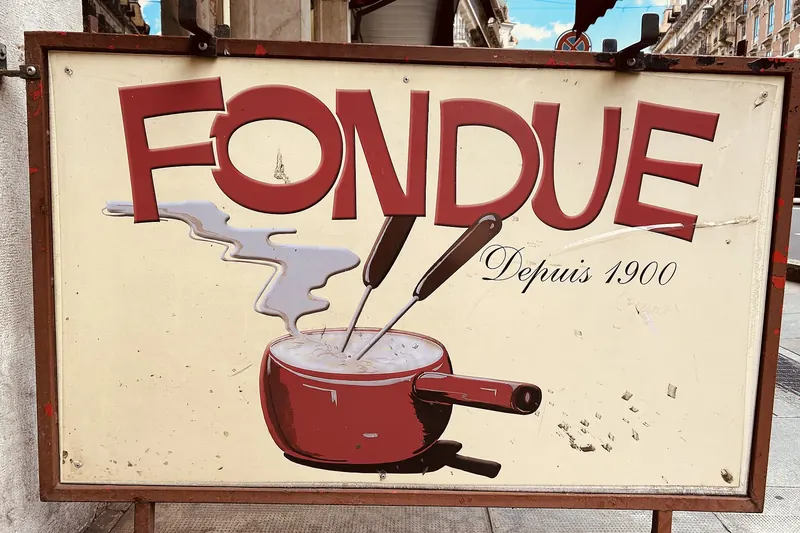
    Cheese fondue

    Melted Gruyère and Vacherin cheese with white wine, eaten by dipping cubes of bread into a shared pot. It is a winter dish, though it is served year round for visitors.

    Where to try it Mountain restaurants and old-town taverns.

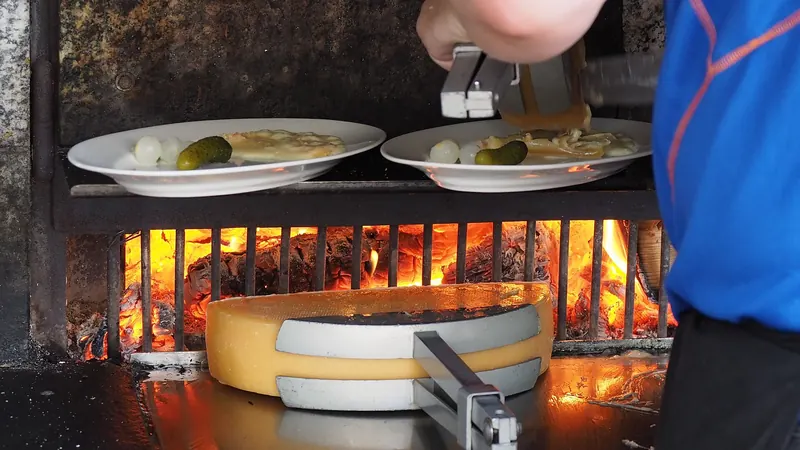
  • Melted raclette cheese being scraped over potatoes

    Raclette

    Cheese melted and scraped over boiled potatoes, pickles and onions, a favourite in the Valais and at Christmas markets.

    Where to try it Zermatt and Valais restaurants.

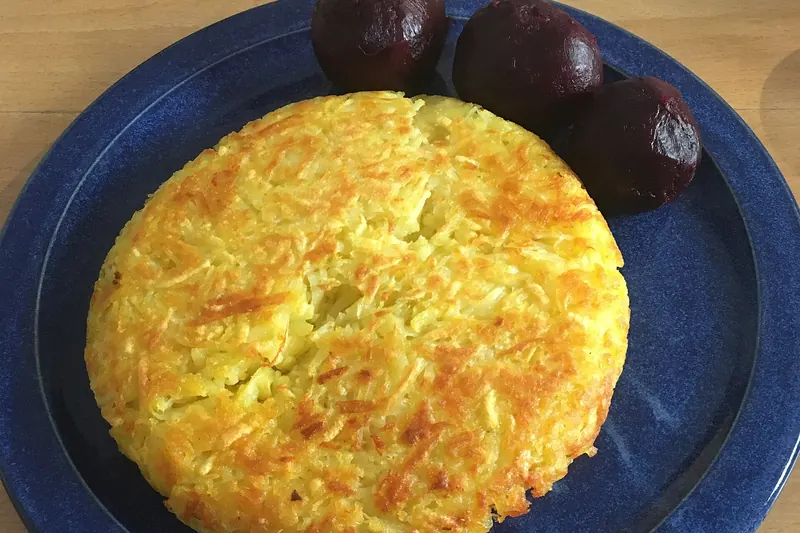
  • A golden pan-fried potato rösti on a plate

    Rösti

    Grated potato fried into a golden cake, a national dish that comes plain or topped with cheese, bacon or egg.

    Where to try it Restaurants in Bern and across the German-speaking regions.

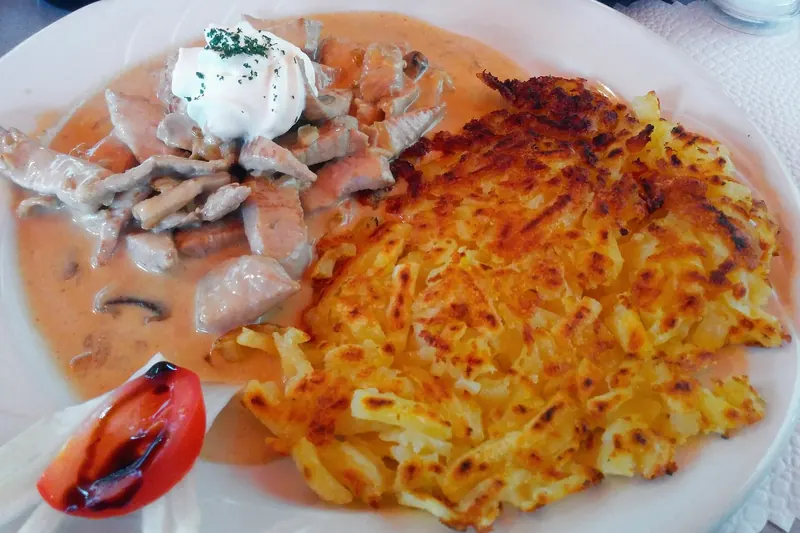
  • Sliced veal in a creamy mushroom sauce, served Zurich-style

    Zürcher Geschnetzeltes

    Sliced veal in a creamy white wine and mushroom sauce, usually served with rösti.

    Where to try it Traditional restaurants in Zurich.

  • Swiss chocolate

    Smooth milk and dark chocolate from Swiss makers, from supermarket bars to hand-made pralines.

    Where to try it Chocolatiers in Zurich, Geneva and Lucerne.

  • Swiss wine

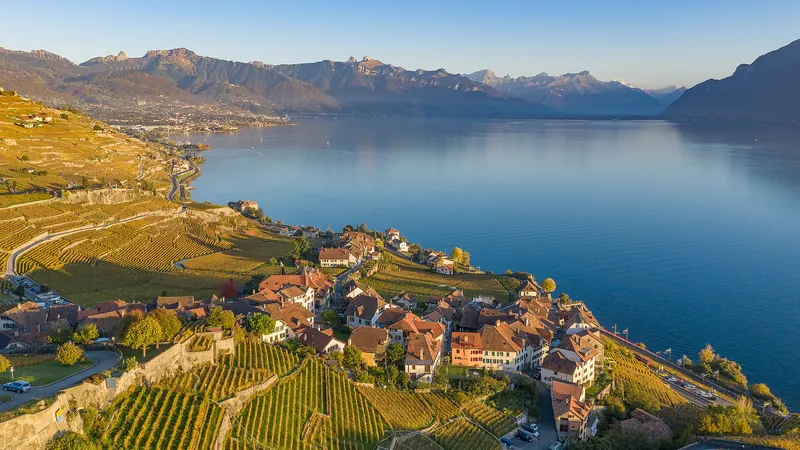
    Chasselas from Lavaux, Pinot Noir from Valais and Merlot from Ticino, most of it drunk in Switzerland rather than exported.

    Where to try it Wine terraces in Lavaux and Ticino.

Before you go

Practical travel information for Switzerland

The essentials, current for 2026. Switzerland is easy and safe, though the prices, the rules and the timetables can catch visitors out.

Capital
Bern (the federal city)
Language
Four national languages: German (about two-thirds), French, Italian and Romansh. Swiss German is spoken in the north and east. English is widely spoken in tourism and cities.
Currency
Swiss franc (CHF). Roughly 0.8–0.9 francs to the US dollar in recent years. Switzerland is not in the eurozone, although euros are accepted in some tourist places at poor rates.
Cards and cash
Cards and contactless payment are accepted almost everywhere, though a few mountain huts and small businesses prefer cash. ATMs are common. Carry some francs for huts and small shops.
Entry and visas
Switzerland is in the Schengen Area but not the EU. Many nationalities, including the United Kingdom, United States, Canada and Australia, can visit for up to 90 days in any 180 without a visa. The EU's ETIAS travel authorisation has been planned for Schengen countries, so check the current rules before you go.
Power sockets
Type J (three round pins), 230 V, 50 Hz. Type C two-pin plugs also fit in many sockets, but an adaptor is safest for UK and US visitors.
Emergency number
112 for all emergencies, 117 for police, 118 for fire, 144 for ambulance, and 1414 for Rega air rescue.
Tipping
Service is included in restaurant prices. Rounding up the bill or leaving a few francs for good service is normal, but not required.
Safety
Switzerland is one of the safest countries in the world for crime. The main risks are in the mountains: weather can change fast, and avalanche, rockfall and altitude are real hazards. Follow trail signs and closures, carry warm clothes and check forecasts. Pickpocketing happens in stations and tourist areas.
Internet and SIM
Excellent, including on mountain tops and trains. Roaming is expensive outside the EU, so buy a local eSIM or a prepaid SIM. SBB Mobile is essential for train timetables and tickets.
Time zone
Central European Time, UTC+1, and UTC+2 in summer (daylight saving time).

Daily budget guide (per person)

Backpacker
US$130–190 per day — hostels, supermarket food, regional passes
Mid-range
US$250–400 per day — three-star hotels, restaurant meals, a rail pass
Comfortable
US$450–700 per day — four-star hotels, mountain excursions
Luxury
US$900+ per day — five-star hotels, private transfers

Excludes international flights. Figures are typical rather than absolute — cities and peak season run higher.
When to go

Best time to visit Switzerland

Switzerland has two peak seasons: summer for hiking, lakes and cities, and winter for skiing. Spring and autumn are quieter, with some mountain lifts closed.

  • Spring (April–May)

    Quiet

    Wildflowers and blossom in the valleys, but snow at height and some lifts closed until late May or June.

  • Summer (June–August)

    Best time

    The best time for hiking, lakes and high-mountain excursions, with long days. Crowds and prices peak, and thunderstorms are possible.

  • Autumn (September–October)

    Best time

    Clear air, golden larches and grape harvests, with fewer crowds. Cattle come down from the high pastures in September.

  • Winter (December–March)

    Good

    Skiing and snowy villages, plus Christmas markets. Some hiking routes close, and days are short.

Worth planning around: Late April to mid-May and November, when many mountain lifts and hotels close for maintenance.

Trip length

How long to spend in Switzerland

Switzerland is small and superbly connected, so a week gets you to several regions. Two weeks allows a proper mix of cities, lakes and peaks at a comfortable pace.

  • 5–6 days

    Zurich, Lucerne and the Jungfrau region.

    The classic highlights.

  • 8–10 days

    Adds Zermatt and Bern.

    A good first trip.

  • 12–14 days

    The itinerary on this page: Zurich, Lucerne, the Jungfrau, Bern, Zermatt, Lavaux and Geneva.

    Our recommendation.

  • 3 weeks or more

    Adds Ticino, the Engadin and eastern Switzerland.

    For a slower pace or hiking.

Getting around

Transportation in Switzerland

Public transport is superb, with trains, buses, boats and cable cars linked on one timetable. A car is not needed for most trips.

  • Trains (SBB)

    Frequent and punctual, linking every city and most towns. Scenic lines such as the Glacier Express and Bernina Express run through mountains.

    Use the SBB Mobile app for timetables and tickets.

  • Swiss Travel Pass

    Unlimited travel on trains, buses and boats, plus free entry to many museums and discounts on mountain railways. Available for 3 to 15 days.

    Do the sums first. It pays off if you travel a lot.

  • Half Fare Card

    Half-price tickets on most transport for a month.

    Good for a longer stay.

  • PostBuses

    Yellow buses reach mountain villages and passes.

    Check the timetables.

  • Hire cars

    Useful for Ticino, the Engadin and remote valleys. Motorways need a vignette, and parking in towns is expensive.

    Many car-free villages need a train.

Sample route

Two weeks in Switzerland

Zurich, Lucerne, the Jungfrau, Bern, Zermatt, Lavaux and Geneva, all by train. Covers seven of the ten destinations in this guide.

  1. Day1

    Arrive in Zurich

    • Morning Land and take the train into the city.
    • Afternoon The old town and Lindenhof.
    • Evening Dinner by the Limmat.
  2. Day2

    Zurich to Lucerne

    • Morning Lake Zurich.
    • Afternoon Train to Lucerne and the Chapel Bridge.
    • Evening Dinner on the lake.
  3. Day3

    Around Lucerne

    • Morning Boat and cog railway to Rigi, or Mount Pilatus.
    • Afternoon The Lion Monument.
    • Evening Old town evening.
  4. Day4

    To Interlaken

    • Morning Scenic train to Interlaken.
    • Afternoon Lake Brienz or Harder Kulm.
    • Evening Dinner in Interlaken.
  5. Day5

    Jungfraujoch

    • Morning The train to the Top of Europe.
    • Afternoon Ice Palace and the Sphinx.
    • Evening Grindelwald.
  6. Day6

    Lauterbrunnen

    • Morning Trümmelbach Falls.
    • Afternoon Walk the valley.
    • Evening Return to Interlaken.
  7. Day7

    Bern

    • Morning Train to Bern.
    • Afternoon The old town, arcades and Zytglogge.
    • Evening Rosengarten sunset.
  8. Day8

    To Zermatt

    • Morning Train to Visp and Zermatt.
    • Afternoon The village and the Matterhorn Museum.
    • Evening Raclette dinner.
  9. Day9

    Gornergrat

    • Morning Cog railway to Gornergrat.
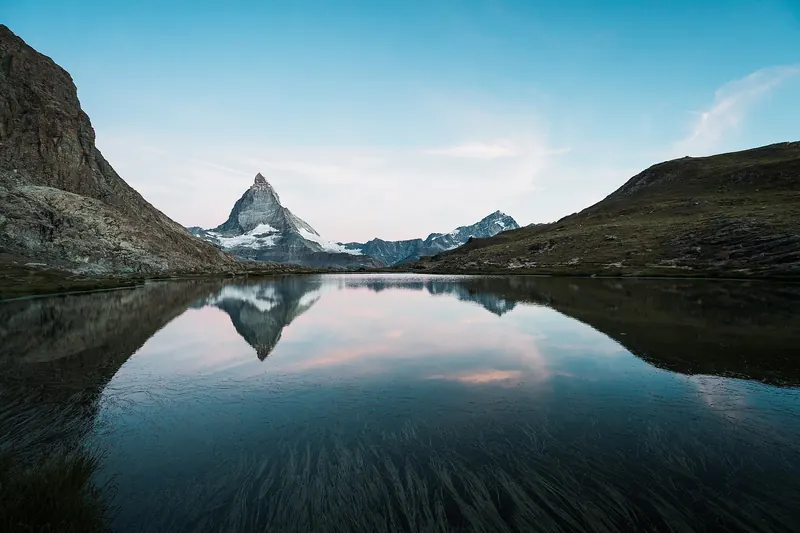
    • Afternoon Riffelsee walk.
    • Evening Fondue.
  10. Day10

    To Lake Geneva

    • Morning Train to Montreux.
    • Afternoon Château de Chillon.
    • Evening Overnight in Lavaux.
  11. Day11

    Lavaux

    • Morning Walk the vineyard terraces.
    • Afternoon Wine tasting.
    • Evening Lausanne.
  12. Day12

    Lausanne

    • Morning The cathedral.
    • Afternoon Ouchy lakefront.
    • Evening Dinner in the old town.
  13. Day13

    Geneva

    • Morning Train to Geneva.
    • Afternoon The old town and the Jet d'Eau.
    • Evening Lake promenade.
  14. Day14

    Departure

    • Morning Chocolate shopping.
    • Afternoon Fly home from Geneva.
    • Evening Home.

Culture

Culture and etiquette in Switzerland

Swiss society values punctuality, order, privacy and respect for rules and nature. People are polite and reserved, and greetings and quiet matter. The country's regions differ, from German-speaking Zurich to French-speaking Geneva and Italian-speaking Lugano.

  • Be on time

    Trains and appointments run on time, and lateness is rude.

  • Greet people

    Say hello (Grüezi in German, Bonjour in French, Buongiorno in Italian) in shops, on trails and to neighbours.

  • Keep quiet

    Speak softly on trains and in hotels, and respect Sunday and evening quiet hours, since laundry and lawn-mowing are avoided.

  • Respect nature

    Stay on trails, close gates, take litter home and do not pick flowers.

  • Recycle

    Sort your rubbish. Rules are strict, and some towns need official bags.

  • Keep to the right

    On escalators and paths, stand on the right and let others pass.

Do

  • Learn a few words in the local language
  • Validate or buy tickets before you board
  • Book scenic trains and mountain excursions early
  • Carry a warm layer even in summer
  • Buy picnic food in supermarkets such as Coop and Migros
  • Drink from public fountains, since the tap water is excellent

Don't

  • Don't be late
  • Don't leave the trail, or approach cows with calves
  • Don't fly a drone without checking the rules
  • Don't make noise late at night or on Sundays
  • Don't feed wildlife or marmots
  • Don't assume everything is open on Sundays

Travel tips

Switzerland travel tips

The things that most often catch visitors out in Switzerland, several of which are specific to how the country works.

  • Do the sums on the Swiss Travel Pass against point-to-point tickets and regional passes.
  • Check webcams and forecasts before paying for a mountain ticket.
  • Buy picnic food from supermarkets, since restaurants are expensive.
  • Book scenic trains and hotels far ahead for July and August.
  • Stay in smaller towns such as Lucerne or Thun and day-trip to save on hotels.
  • Bring a warm layer and sun protection, since mountains are cold and bright.
  • Note that shops close on Sundays in many towns.
  • Use the SBB Mobile app for timetables and ticketing.

FAQ

Visiting Switzerland: frequently asked questions

Is Switzerland expensive?

Yes. It is one of the world's most expensive countries. Supermarket picnics, hostels, regional passes and choosing fewer mountain excursions help a lot.

How many days do you need in Switzerland?

Eight to fourteen days for a first trip. A week covers Zurich, Lucerne and the Jungfrau.

When is the best time to visit Switzerland?

June to September for hiking and lakes, and December to March for skiing. September is often ideal.

Is the Swiss Travel Pass worth it?

It suits fast-moving trips with lots of trains, boats and museum visits. For a slower trip, regional passes or a Half Fare Card may be cheaper.

Do I need a car?

No. Public transport is superb. A car helps only in Ticino and remote valleys.

Do I need a visa for Switzerland?

Many nationalities can visit visa-free for 90 days under Schengen rules. Check current entry requirements, including any ETIAS changes.

Ready to plan your Switzerland trip?

The full travel guide covers routes, budgets, regional differences and how to string these ten destinations into a trip that actually works.

Read the Switzerland travel guide

Advertisement