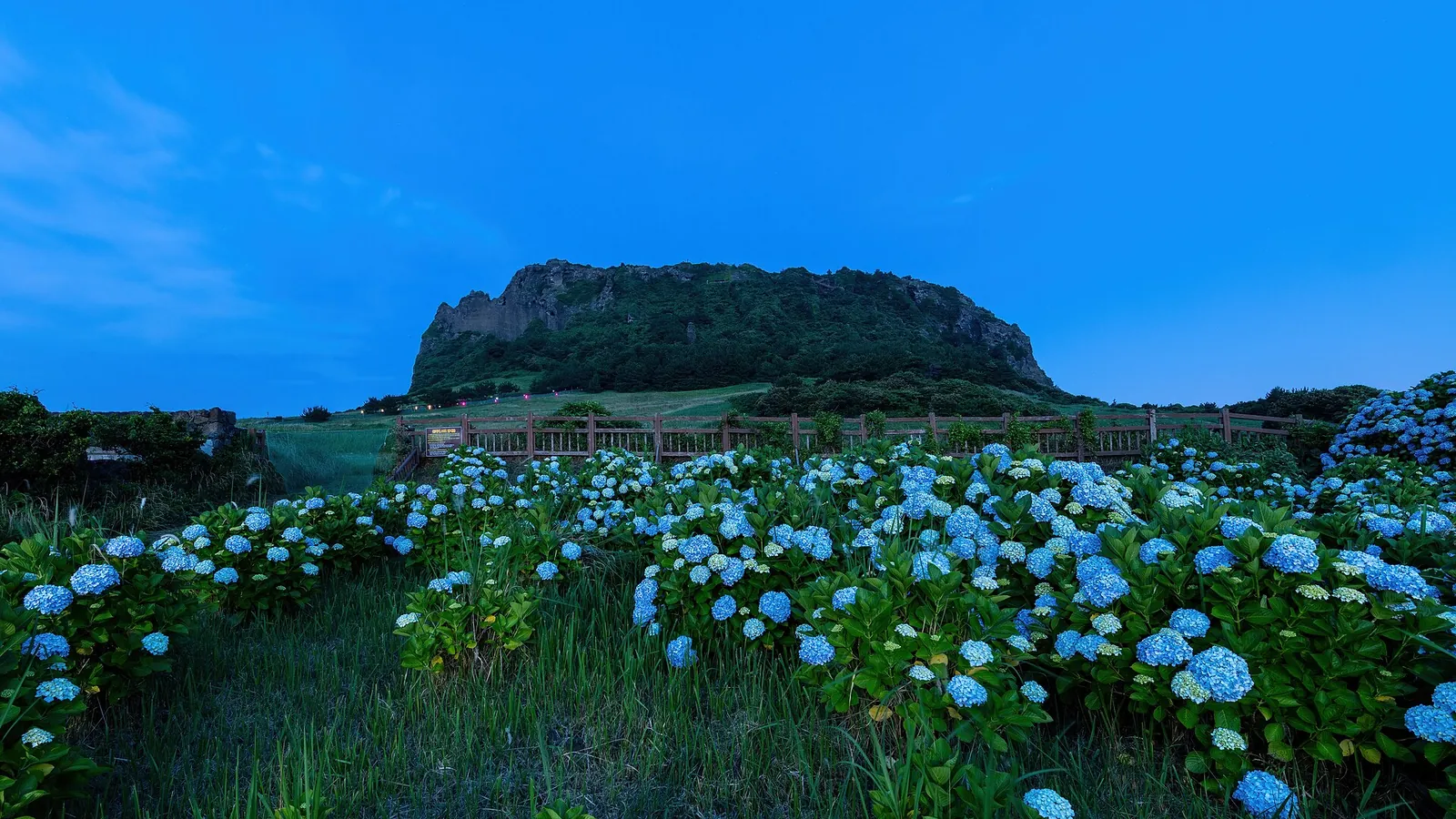
Hydrangea flowers in front of the Seongsan Ilchulbong volcanic cone at blue hour

Jeju, island south of the peninsula · South Korea

Jeju Island

A volcanic island of lava tubes, a snow-capped crater, tangerine groves, black-rock coasts and white-sand coves, an hour by air from Seoul.

  • Best time April–May and September–October
  • Stay 3 days
  • Good for Scenery, hiking, road trips, beaches, honeymooners

Photo: Basile Morin · CC BY-SA 4.0

Welcome to Jeju

Jeju is a volcanic island about 85 km south of the Korean peninsula, built by eruptions over about two million years. It is dominated by Hallasan, at 1,947 metres the highest mountain in South Korea, and dotted with hundreds of smaller cones called oreum, with a coast of black basalt cliffs, sea caves and pale beaches. The island's volcanic landscape and lava tubes are a UNESCO World Heritage Site.

Jeju has its own culture. The island's dialect, stone walls, stone grandfather statues called dol hareubang and its haenyeo, female divers who harvest seafood on a single breath, set it apart from the mainland, and the haenyeo tradition is on UNESCO's intangible heritage list. Food is distinctive too, with black pork, abalone, tangerines and hallabong fruit.

Jeju is a classic short Korean holiday, an hour by air from Seoul and Busan, and the busiest air route in the world. It is best with a car, since sights are spread around the coast. Three days covers Seongsan, the lava tube, Hallasan and a beach, and spring and autumn are the best seasons, though the rapeseed flowers of spring and the winter camellias have their own following.

  • Island
  • Nature & Wildlife
  • Coast & Beaches
  • UNESCO Site
  • Scenic Region

Why visit

Why visit Jeju?

Jeju is Korea's natural showpiece, a scenic island with a culture of its own.

  • A volcanic landscape

    Hallasan, craters, lava tubes and basalt cliffs.

  • Beaches and coast

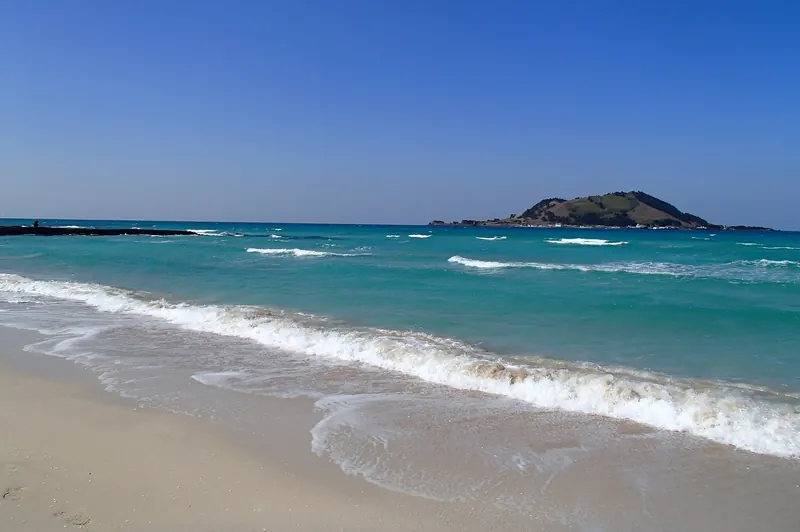
    White sand and turquoise water at Hyeopjae.

  • Unique culture

    Haenyeo divers, stone walls and local dialect.

  • Distinctive food

    Black pork, abalone and tangerines.

  • Easy to reach

    About an hour by air from Seoul.

Main attractions

Top things to see in Jeju

Sights are spread around the coast and the volcano, so a car is the best way to link them.

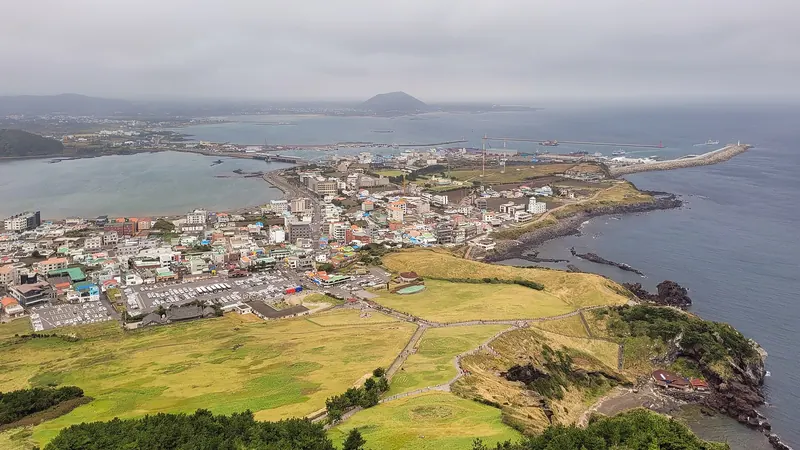
  1. The Seongsan Ilchulbong tuff cone rising from the sea on Jeju Island

    Seongsan Ilchulbong

    A 180-metre tuff cone formed by an undersea eruption, with a grassy crater rim reached by a 20-minute climb. It is famed for sunrise.

    Tip Go for sunrise, or late afternoon.

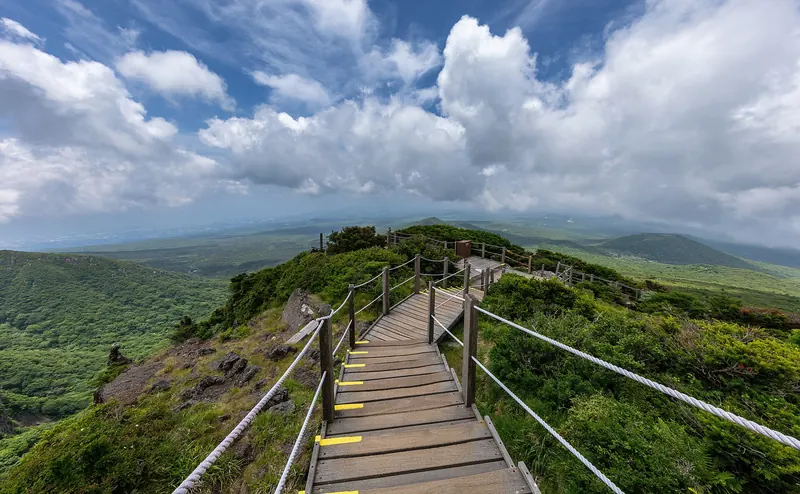
  2. A wooden staircase along the Yeongsil Trail with Hallasan mountains beyond

    Hallasan National Park

    A dormant volcano with a crater lake at its summit, and trails such as Yeongsil, Eorimok and the long Seongpanak and Gwaneumsa routes.

    Tip Reserve summit trails online, and start early.

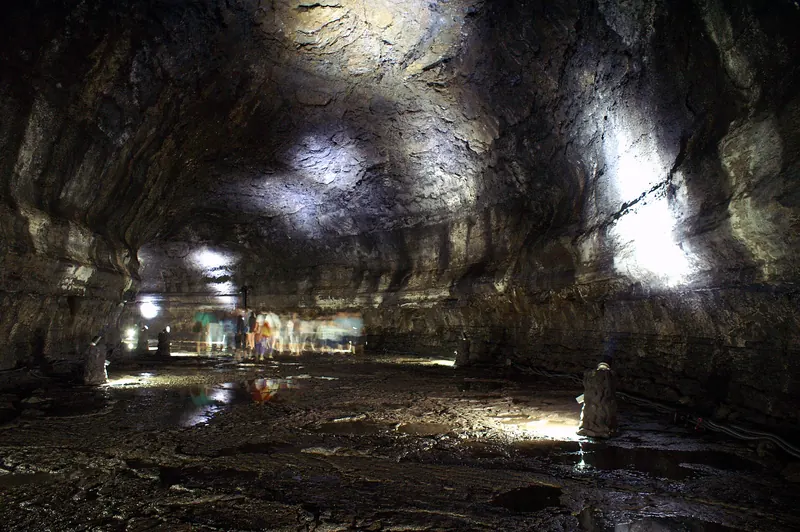
  3. The dark interior of Manjanggul Lava Tube on Jeju

    Manjanggul Lava Tube

    One of the world's longest lava tubes, with a section open to walkers, and tall passages, lava columns and a cool temperature.

    Tip Bring a jacket.

  4. The pale sand and turquoise water of Hyeopjae Beach on Jeju

    Hyeopjae Beach

    A beach on the west coast with pale sand, clear water and views of Biyangdo island.

    Tip Go in early summer.

  5. Jeju Haenyeo Museum

    A museum in the north-east about the female free divers and their culture.

    Tip Combine with a coastal seafood lunch.

  6. Oreum volcanic hills

    Small volcanic cones that are easy to climb, with sweeping views, such as Saebyeol Oreum and Yongnuni.

    Tip Go at sunset.

Things to do

Best things to do in Jeju

Jeju is for driving, hiking and slow coastal stops.

  1. Climb Hallasan

    Hike Korea's highest peak in one long day.

    Tip Book the trail slot and start at dawn.

  2. Drive the coast

    Loop the island road, stopping at beaches and cliffs.

    Tip Rent a car for three days.

  3. Watch a haenyeo dive

    See divers work at Seongsan or Hado.

    Tip Ask at the local museum.

  4. Walk the Olle Trails

    Marked coastal walking routes.

    Tip Follow the blue and orange ribbons.

  5. Visit a tangerine farm

    Pick fruit in autumn and winter.

    Tip Go in November.

  6. See waterfalls

    Cheonjiyeon and Jeongbang falls.

    Tip Visit after rain.

Local food

What to eat in Jeju

Jeju's food is built on black pork, seafood and citrus.

  • Black pork (heukdwaeji)

    Grilled slabs of Jeju's black pig.

    Where to try it Barbecue restaurants in Jeju City.

  • Abalone porridge (jeonbokjuk)

    Rice porridge with abalone.

    Where to try it Seaside restaurants.

  • Hallabong and tangerines

    Citrus fruit grown on the island.

    Where to try it Farms and markets.

  • Grilled cutlassfish

    A silvery fish from local waters.

    Where to try it Restaurants in Seogwipo.

  • Fresh seafood stew (haemul ttukbaegi)

    A spicy pot of shellfish.

    Where to try it Coastal villages.

  • Green tea and citrus desserts

    Green tea from the Osulloc fields.

    Where to try it Cafés.

Accommodation

Where to stay in Jeju

Base yourself in Jeju City or Seogwipo, or by a beach.

  • Jeju City

    The main city on the north coast.

    Best for: Restaurants and the airport

  • Seogwipo

    A quieter town on the south coast.

    Best for: Waterfalls and southern sights

  • Seongsan and the east

    Guesthouses near the cone.

    Best for: Sunrise and calm

  • West coast (Hyeopjae)

    Pensions and cafés by the sea.

    Best for: Beaches

What a night costs

Guesthouse
US$35–65 per night
Mid-range hotel
US$90–160 per night
Resort
US$200–450 per night
Rental car
US$45–90 per day

Transport

Getting to and around Jeju

Jeju is reached by air from Seoul, Busan and other cities.

Getting there

  • Flight from Seoul

    About one hour from Gimpo, with many flights daily.

    Book early for holidays.

  • Flight from Busan

    About one hour.

    Low-cost carriers fly.

  • Ferry

    Overnight ferries from Mokpo and Wando take several hours.

    Less common.

Getting around

A car is the best way to see the island.

  • Rental car

    The best option. Foreign visitors need an international driving permit.

    Book ahead and use Kakao Navi or Naver Map.

  • Bus

    Buses connect towns but are slow.

    Use Naver Map.

  • Taxi tour

    A driver for the day.

    Negotiate the price.

When to go

Best time to visit Jeju

Jeju is milder than the mainland in winter but windy, and it is rainy in summer.

  • Spring (March–May)

    Best time

    Rapeseed and cherry blossoms in April.

  • Summer (June–August)

    Good

    Beach season, but humid, rainy and busy.

  • Autumn (September–November)

    Best time

    Clear, with silver grass on the oreum.

  • Winter (December–February)

    Quiet

    Cool and windy, with snow on Hallasan and winter camellias.

Worth planning around: Typhoon days in late summer and autumn.

Itinerary

Three days on Jeju

The east on the first day, the mountain on the second, and the west coast on the third.

  1. Day1

    The east

    Cone and cave.

    • Morning Sunrise at Seongsan Ilchulbong.
    • Afternoon Manjanggul Lava Tube.
    • Evening Black pork dinner.
  2. Day2

    Hallasan

    The mountain.

    • Morning Hike the Yeongsil Trail.
    • Afternoon Rest and tangerine tea.
    • Evening Seafood in Seogwipo.
  3. Day3

    The west

    The beach.

    • Morning Drive to Hyeopjae.
    • Afternoon Swim or walk the coast.
    • Evening Fly out.

Travel tips

Jeju travel tips

A few tips make Jeju easier.

  • Rent a car, and get an international driving permit.
  • Book Hallasan summit slots ahead.
  • Bring a windbreaker.
  • Check the weather, since fog and wind can close trails.
  • Book flights early for holidays.
  • Use Naver Map or Kakao Map.
  • Do not touch or feed wild horses.

FAQ

Jeju: frequently asked questions

How many days do you need on Jeju?

Three days is good, and four to five allow a slower pace.

Do I need a car?

It is the easiest way. Buses and taxis work for a few sights.

When is the best time to visit?

April to May and September to October.

Can I hike Hallasan in a day?

Yes, it takes about 8 hours return, and requires a reservation for the summit trails.

Do I need a visa for Jeju?

Jeju has had a visa-free policy for many nationalities. Check current rules.

What is a haenyeo?

A woman free diver who harvests seafood, a tradition on Jeju.

Read next

Related travel articles

Road trips

How to Plan a US National Parks Road Trip

American national parks are no longer places you turn up at. Timed entry, permit lotteries and mandatory shuttles now govern the popular ones, and the distances between them are larger than almost any visitor expects. Here is how to plan around both.

Where to go

Beyond the Big Names: Places Worth the Detour

The most visited place in a country is rarely its best, and it is almost never its best value. This is a method for finding the destinations that do not make the postcards — and a set of examples from five of the 50 countries on this site.

Advertisement