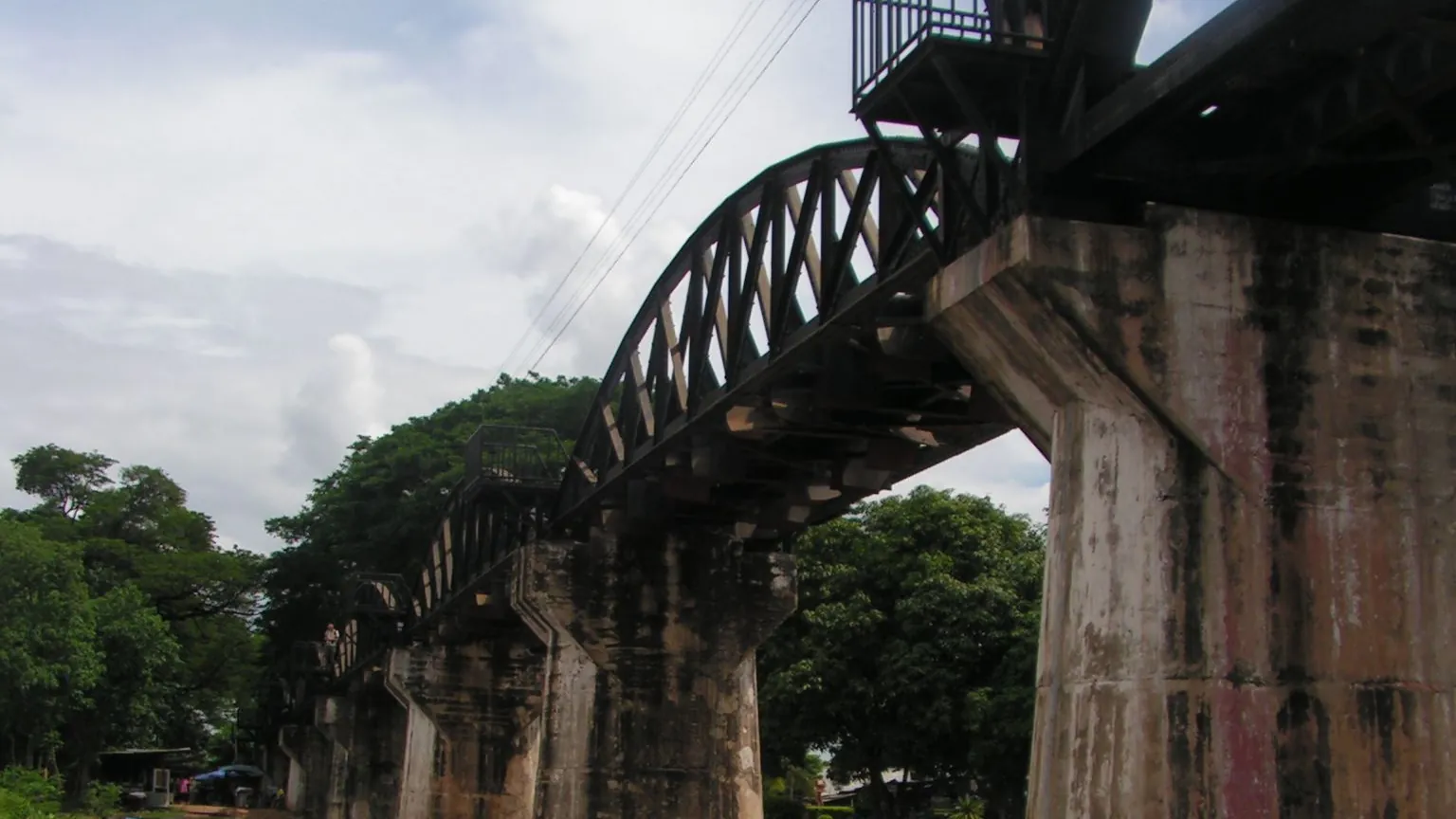
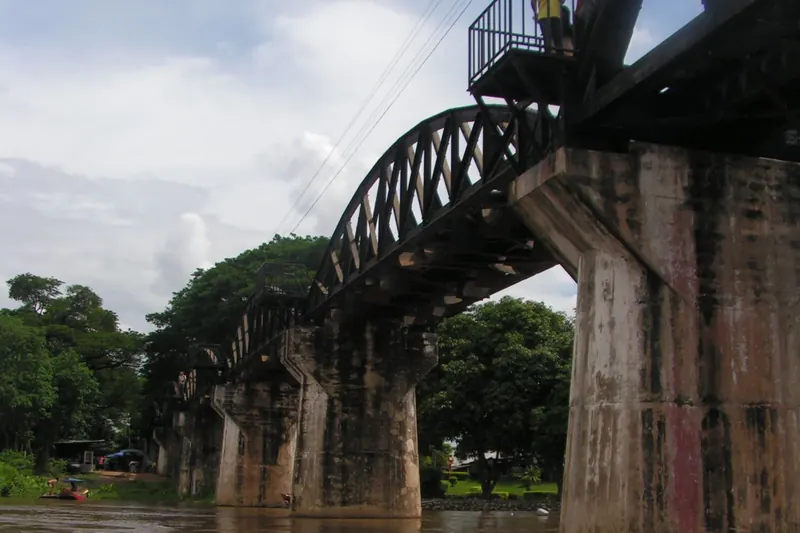
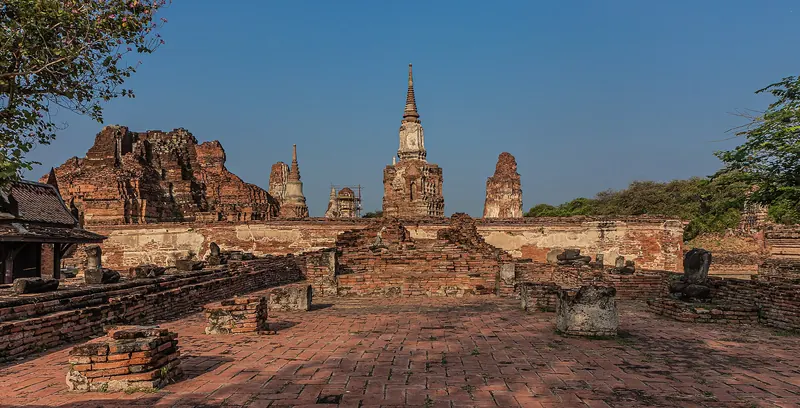
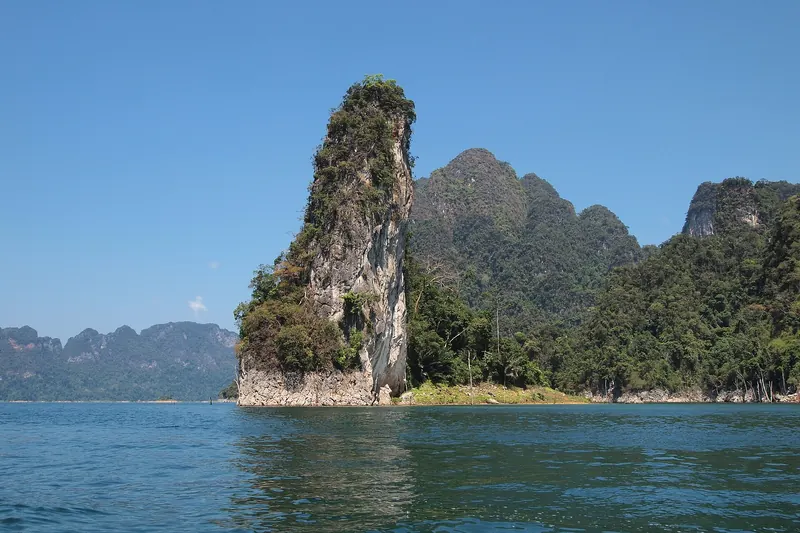
The Bridge on the River Kwai in Kanchanaburi

Western Thailand · Thailand

Kanchanaburi

A quiet riverside town holding one of the Second World War's most sobering histories, paired with waterfalls, caves and jungle a short drive from Bangkok.

  • Best time November–February, for cooler weather while exploring outdoors
  • Stay 2 days
  • Good for History, nature, an easy Bangkok escape

Photo: Vincent Teeuwen · CC BY 2.0

Welcome to Kanchanaburi

Kanchanaburi sits along the River Kwai about two and a half hours west of Bangkok, a quiet provincial town whose modern identity is shaped by one of the Second World War's grimmest chapters: the Thailand-Burma 'Death Railway', built by Allied prisoners of war and forced labourers under brutal conditions, with the town's namesake bridge as its most visible remnant.

That history sits alongside a different side of the province — waterfalls, limestone caves and jungle scenery that make Kanchanaburi one of the most rewarding nature-focused day trips or overnight stays within easy reach of Bangkok, without requiring a flight anywhere.

The combination of sobering history and genuine natural beauty, plus a noticeably slower, more local pace than Bangkok or the southern resorts, has made Kanchanaburi a consistently worthwhile stop for visitors wanting depth beyond the capital without venturing far.

  • Historic Site
  • Nature & Wildlife
  • Off the Beaten Path
  • Scenic Region

Why visit

Why visit Kanchanaburi?

Kanchanaburi's case is a rare combination of significant, sobering history and spectacular nature within easy reach of Bangkok.

  • The Death Railway history is significant

    The Bridge on the River Kwai and the associated museums offer a sobering, well-presented account of a brutal chapter of WWII history.

  • Erawan Falls is one of Thailand's best waterfalls

    A seven-tiered cascade of turquoise pools, each level offering a different, swimmable spot.

  • It's an easy addition to a Bangkok-based trip

    Under three hours away by road, making a worthwhile day trip or overnight stay without a flight.

  • The pace is noticeably slower than Bangkok

    A genuine change of rhythm, with river life, floating restaurants and a considerably more local feel.

  • It pairs history with genuine natural beauty

    Few destinations this close to a capital city combine a sobering historical site with spectacular waterfalls and caves.

Main attractions

Top things to see in Kanchanaburi

Kanchanaburi's essential sights, spanning its WWII history and the province's waterfalls and caves.

  1. The Bridge on the River Kwai in Kanchanaburi

    The Bridge on the River Kwai

    The steel bridge made famous by the 1957 film, part of the Thailand-Burma Death Railway built by Allied POWs and forced labourers, still in active rail use today.

    Tip Walk across the bridge itself, stepping onto the platforms between rail sections when a train passes — a memorable if slightly nerve-wracking experience.

  2. The Death Railway Museum and Research Centre

    A thorough, well-presented museum covering the Death Railway's construction and the immense human cost behind it, essential context before or after visiting the bridge.

    Tip Allow at least ninety minutes — the museum's depth rewards a proper visit rather than a rushed pass-through.

  3. The Kanchanaburi War Cemetery

    A moving, immaculately maintained cemetery holding the graves of thousands of Allied POWs who died building the Death Railway.

    Tip A quiet, contemplative visit — allow time to walk among the rows of headstones rather than rushing through.

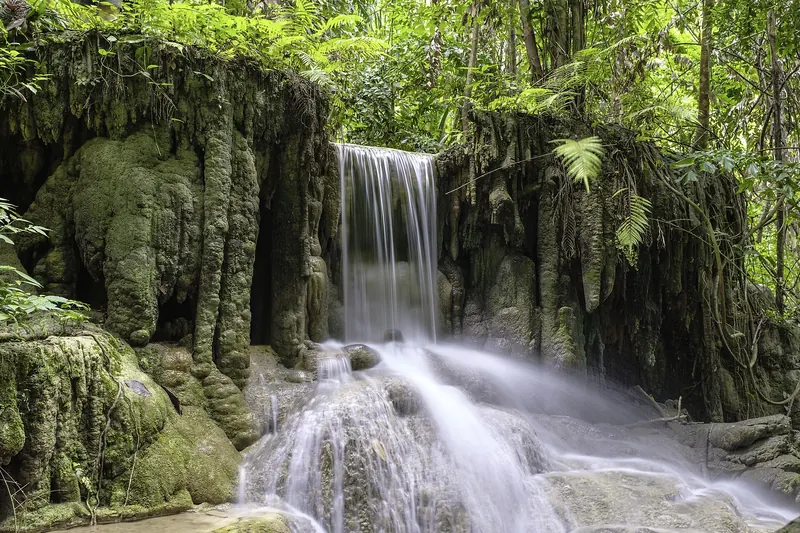
  4. The turquoise cascading pools of Erawan Falls in Kanchanaburi

    Erawan Falls

    A spectacular seven-tiered waterfall within Erawan National Park, its turquoise pools swimmable at several levels along the trail.

    Tip Wear water shoes with grip — the rocks around the pools get slippery, and fish in the lower pools will nibble your feet.

  5. Hellfire Pass Memorial

    A harrowing former Death Railway cutting, hand-carved through solid rock by POWs, preserved with a museum and a walking trail through the actual pass.

    Tip The audio guide, narrated in part by Death Railway survivors, deepens the visit considerably.

  6. Sai Yok Noi Waterfall or the Tham Lawa Cave

    A worthwhile smaller waterfall and a limestone cave system, both easy additions to a wider Kanchanaburi province day trip.

    Tip Combine with Erawan Falls or Hellfire Pass if travelling with a private driver, since public transport between the sites is limited.

Things to do

Best things to do in Kanchanaburi

Beyond the historical sites and waterfalls, Kanchanaburi rewards its river setting and surrounding countryside.

  1. Take a train ride on the surviving Death Railway line

    A section of the original railway remains in operation, including a dramatic stretch along the Wang Pho viaduct, clinging to a cliff above the river.

    Tip Sit on the right-hand side of the train for the best views along the viaduct section.

  2. Stay in a river raft house

    Floating accommodation on the River Kwai offers a distinctive overnight experience, gently rocking on the water through the night.

    Tip Book a raft house away from any nearby floating restaurants or karaoke barges if you're hoping for a quiet night.

  3. Visit the Tiger Temple area's wildlife sanctuaries

    Several reputable wildlife rescue and sanctuary operations near Kanchanaburi offer ethical animal encounters distinct from performance-focused attractions.

    Tip Research any wildlife attraction carefully — genuine sanctuaries prioritise animal welfare and rescue over visitor interaction and photo opportunities.

  4. Cycle or kayak along the River Kwai

    The river and surrounding countryside offer peaceful cycling and kayaking, a good way to see the region at a slower pace.

    Tip Early morning offers the calmest water and coolest temperatures for kayaking.

  5. Visit the JEATH War Museum

    A smaller, more intimate museum than the Death Railway Museum, set within a bamboo hut replica of the POW camps themselves.

    Tip A worthwhile complement to the larger Death Railway Museum if you have time for both.

Local food

What to eat in Kanchanaburi

Kanchanaburi's food scene centres on river life, with good central Thai and regional dishes.

  • River fish dishes

    Freshwater fish from the River Kwai, grilled or in a spicy soup, a reliable local specialty at riverside restaurants.

    Where to try it Floating and riverside restaurants along the River Kwai in central Kanchanaburi.

  • A plate of pad thai with pork

    Pad thai

    Widely available across town as elsewhere in Thailand, good from local street stalls.

    Where to try it Street stalls and market vendors throughout central Kanchanaburi.

  • A bowl of tom yum goong, spicy and sour prawn soup

    Tom yum goong

    A hot and sour prawn soup available at most local restaurants, good alongside the town's fresh river fish.

    Where to try it Riverside and local restaurants throughout Kanchanaburi.

  • Fresh fruit from local markets

    Kanchanaburi province is known for its fruit orchards, with excellent mango, durian and rambutan in season.

    Where to try it The town's central market and roadside fruit stalls throughout the province.

  • Thai iced coffee

    Strong, sweet iced coffee, a welcome break between the province's waterfalls and historical sites.

    Where to try it Cafés and street stalls throughout central Kanchanaburi.

Accommodation

Where to stay in Kanchanaburi

Kanchanaburi town and riverside raft houses both work as a base for exploring the province.

  • Central Kanchanaburi town

    A convenient base for the historical sites, with a wide range of guesthouses and hotels.

    Best for: Walking distance to the bridge and main museums

  • River raft houses

    Floating accommodation along the River Kwai, offering a different, memorable stay from a standard hotel room.

    Best for: A distinctive overnight experience on the water

What a night costs

Guesthouse room
฿400–900 per night
River raft house
฿1,000–2,500 per night
Death Railway Museum entry
฿150
Erawan National Park entry
฿300

Transport

Getting to and around Kanchanaburi

Kanchanaburi is an easy bus, train or car trip from Bangkok, without requiring a flight.

Getting there

  • Bus from Bangkok

    Regular buses from Bangkok's Southern Bus Terminal reach Kanchanaburi in about 2–2.5 hours.

    A straightforward, frequent option with no advance booking usually required.

  • Train from Bangkok

    A slower but scenic option from Bangkok's Thonburi station, taking roughly 3 hours.

    A worthwhile choice if the journey itself, including passing through the region's countryside, matters to you.

  • Private car or tour from Bangkok

    A common day-trip option from Bangkok, often combining the bridge, Death Railway sites and Erawan Falls in a single long day.

    An overnight stay allows a considerably more relaxed pace than a single rushed day trip from the capital.

Getting around

Kanchanaburi town is walkable, while the province's waterfalls and Hellfire Pass require a car or organised tour.

  • Walking

    Central Kanchanaburi's bridge, museums and War Cemetery all sit within a compact, walkable area.

    The town itself is small enough to cover comfortably on foot in a morning.

  • Rented car or private driver

    The most practical way to reach Erawan Falls, Hellfire Pass and the province's more remote sights.

    A hired driver for the day is worthwhile given the distances between the province's scattered attractions.

  • Songthaew

    Shared pickup trucks cover some routes within the province, a cheap if less flexible local option.

    Confirm the route and fare with the driver before boarding, as services aren't always clearly signed.

When to go

Best time to visit Kanchanaburi

Kanchanaburi's waterfalls and historical sites are largely outdoors, making the cool season the most comfortable time to visit.

  • Cool season (November–February)

    Best time

    The most comfortable weather for exploring the bridge, museums and waterfalls on foot.

  • Hot season (March–May)

    Shoulder

    Hot, though Erawan Falls' swimmable pools offer welcome relief on a hot-season visit.

  • Rainy season (June–October)

    Good

    The waterfalls run at their fullest and most dramatic, with thinner crowds, though trails can turn muddy.

Worth planning around: Peak midday heat from March to May if hiking extensively between Erawan Falls' seven tiers — an early morning start is considerably more comfortable.

Itinerary

Two days in Kanchanaburi

The bridge and Death Railway history first, then the province's waterfalls and nature.

  1. Day1

    The bridge and Death Railway history

    Kanchanaburi's essential WWII sites.

    • Morning The Death Railway Museum and the Kanchanaburi War Cemetery.
    • Afternoon The Bridge on the River Kwai and a ride on the surviving railway line.
    • Evening Dinner at a riverside restaurant.
  2. Day2

    Erawan Falls and the countryside

    The province's natural side.

    • Morning Erawan Falls, arriving early to beat the crowds.
    • Afternoon Hellfire Pass Memorial or a countryside drive.
    • Evening Return to Bangkok, or a final night in a river raft house.

Travel tips

Kanchanaburi travel tips

Practical notes on booking, timing and transport that make a real difference to a Kanchanaburi trip.

  • Visit the Death Railway Museum before the bridge itself — the context deepens the visit.
  • Wear water shoes with grip for Erawan Falls' slippery rocks, and expect small fish to nibble your feet in the lower pools.
  • Hire a car or driver to cover Erawan Falls and Hellfire Pass in one day — public transport between them is limited.
  • Book a river raft house stay ahead in peak season, and check for nearby noise if you want a quiet night.
  • Research any wildlife attraction carefully — choose genuine sanctuaries over performance-focused venues.
  • Consider an overnight stay rather than a single rushed day trip from Bangkok — the province rewards a more relaxed pace.

FAQ

Kanchanaburi: frequently asked questions

Is Kanchanaburi worth a day trip from Bangkok?

Yes, though an overnight stay allows a considerably more relaxed pace — the bridge, main museums and Erawan Falls together are a lot to fit into a single rushed day.

What is the Death Railway?

The Thailand-Burma Railway, built during WWII by Allied prisoners of war and forced labourers under brutal conditions, with immense loss of life — the Bridge on the River Kwai and Hellfire Pass are both preserved sections of this history.

How do I get around Kanchanaburi province?

The town itself is walkable, but Erawan Falls and Hellfire Pass require a car or organised tour, as public transport between the province's scattered sights is limited.

What is Erawan Falls like?

A seven-tiered waterfall with turquoise, swimmable pools at several levels, reached by a hiking trail through Erawan National Park — one of Thailand's best and most accessible waterfalls.

What is the best time of year to visit?

November to February offers the most comfortable weather for exploring outdoors. The rainy season from June to October brings the waterfalls to their fullest, though trails can turn muddy.

Read next

Related travel articles

Heritage

UNESCO Sites Worth Planning a Trip Around

A UNESCO listing tells you a place matters; it does not tell you whether it is worth two days and a detour. This is how to read the list usefully — and which sites reward building a trip around them.

Where to go

Beyond the Big Names: Places Worth the Detour

The most visited place in a country is rarely its best, and it is almost never its best value. This is a method for finding the destinations that do not make the postcards — and a set of examples from five of the 50 countries on this site.

Advertisement