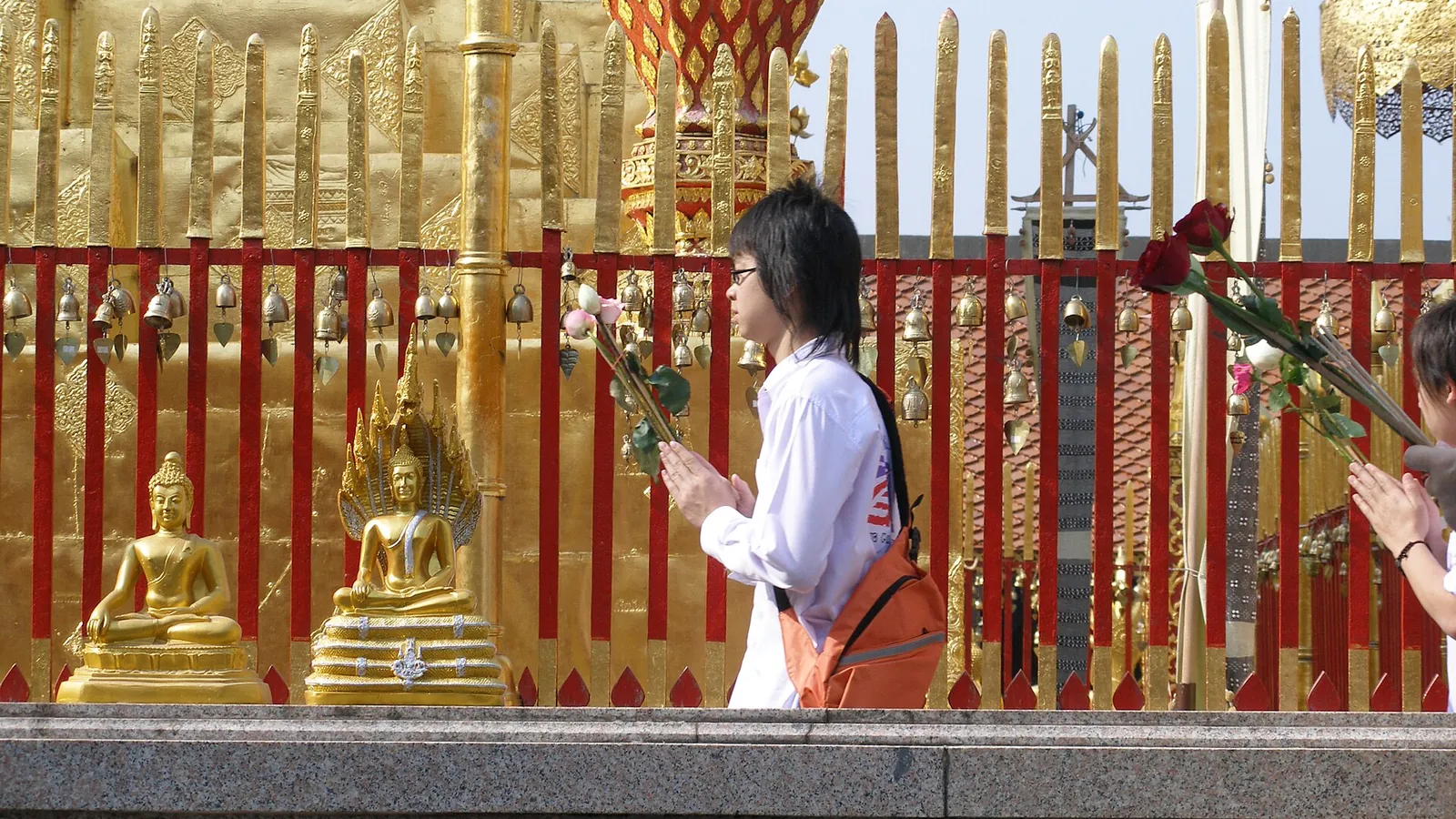
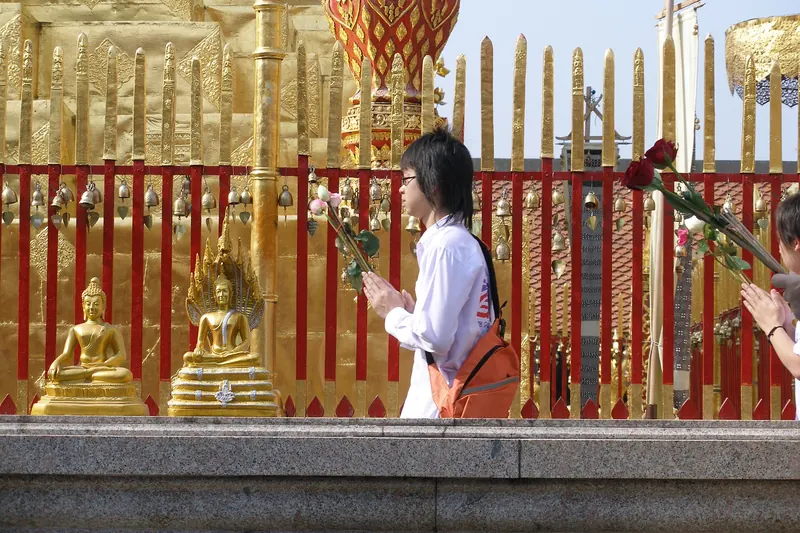
Wat Phra That Doi Suthep, the gilded mountain temple above Chiang Mai

Northern Thailand · Thailand

Chiang Mai

A moated 700-year-old former kingdom capital ringed by mountains, where temple bells and night markets replace Bangkok's traffic and skyscrapers.

  • Best time November–February, for cool, clear mountain weather
  • Stay 3–4 days
  • Good for Culture, temples, food, a slower pace than Bangkok

Photo: Vyacheslav Argenberg · CC BY 4.0

Welcome to Chiang Mai

Chiang Mai was founded in 1296 as the capital of the independent Lanna Kingdom, and the moat and remnants of the old city walls still mark out a walkable historic core packed with over thirty temples — a fraction of Bangkok's scale, considerably more of its atmosphere.

The mountains ringing the city are as much a part of Chiang Mai's identity as its temples. Doi Suthep rises directly above town, crowned by one of Thailand's most revered mountain temples, while the wider countryside holds ethical elephant sanctuaries, hill-tribe villages and some of the country's best trekking.

That combination of culture and nature, alongside a serious food and coffee scene and a slower pace than Bangkok's megacity energy, has made Chiang Mai a long-standing favourite for visitors and a growing digital-nomad community alike.

  • Historic Site
  • Culture & Arts
  • Mountains
  • Food & Wine

Why visit

Why visit Chiang Mai?

Chiang Mai's case is that no other Thai city pairs this much accessible history with easy access to mountains and nature.

  • The old city is walkable and atmospheric

    Moated and compact, with dozens of temples reachable on foot rather than requiring a car or long taxi rides.

  • Doi Suthep delivers a spectacular mountain temple

    One of Thailand's most sacred sites, with sweeping views over the city from its mountainside perch.

  • It's the best base for ethical elephant encounters

    Several reputable sanctuaries near the city prioritise elephant welfare over rides and performances.

  • The food and coffee scene is excellent

    Northern Thai cuisine and a serious specialty coffee culture set Chiang Mai apart from the rest of the country.

  • It runs at a noticeably slower pace than Bangkok

    A genuine change of rhythm after the capital, without sacrificing culture or things to do.

Main attractions

Top things to see in Chiang Mai

Chiang Mai's essential sights, spanning the moated old city and the mountain above it.

  1. Wat Phra That Doi Suthep, the gilded mountain temple above Chiang Mai

    Wat Phra That Doi Suthep

    A gilded chedi crowning a mountain above the city, reached by a 300-step naga-flanked staircase or a funicular, one of northern Thailand's most sacred sites.

    Tip Visit for sunset, when the temple's golden spires catch the light and the city's lights begin appearing below.

  2. Wat Phra Singh

    The old city's most revered temple, its Lanna-style viharn housing the Phra Singh Buddha image, one of Thailand's most important Buddha statues.

    Tip Visit in the late afternoon when local devotees come to pray, for a lived-in rather than purely touristic atmosphere.

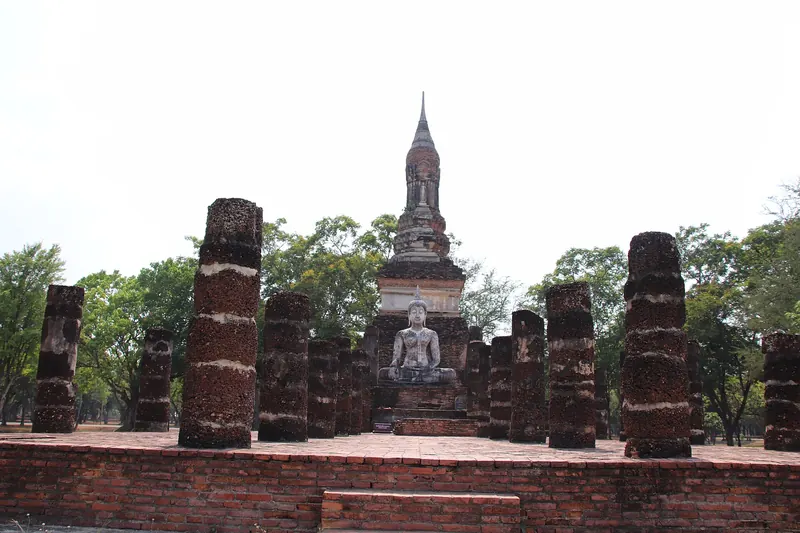
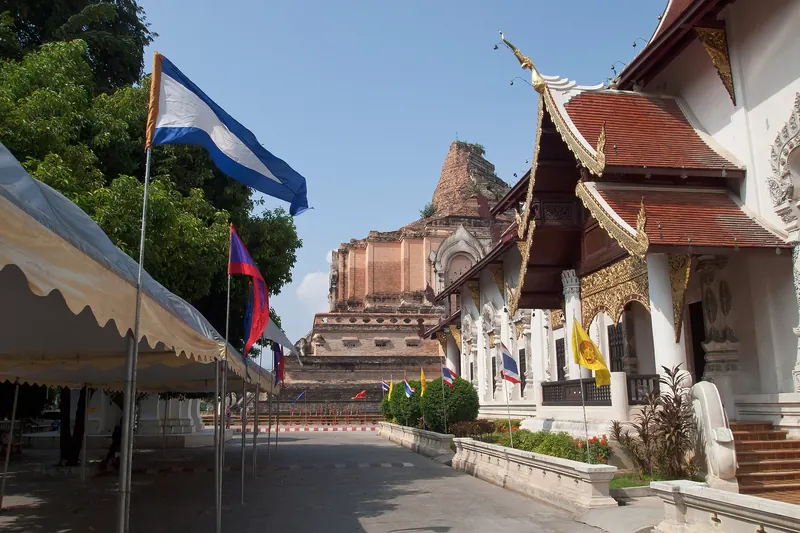
  3. The partially ruined ancient chedi at Wat Chedi Luang in Chiang Mai

    Wat Chedi Luang

    A massive, partially ruined 14th-century chedi that once briefly held the Emerald Buddha, its weathered brick structure evocative of the old Lanna kingdom.

    Tip The temple hosts a worthwhile 'monk chat' programme, where visitors can ask resident monks questions about Buddhism and daily temple life.

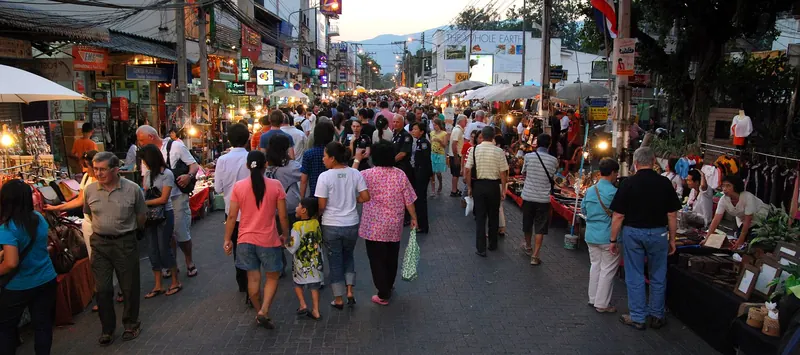
  4. Stalls along Chiang Mai's Sunday Walking Street night market

    The Sunday Walking Street market

    The old city's main street closes to traffic every Sunday evening for a sprawling market of crafts, street food and local performances.

    Tip Arrive by early evening before the crowds peak, and bring cash in small denominations for easier bargaining.

  5. An ethical elephant sanctuary

    Several reputable sanctuaries near Chiang Mai let visitors feed, bathe and observe elephants without riding or performances, prioritising the animals' welfare.

    Tip Research sanctuaries carefully — look for ones that explicitly prohibit riding and focus on observation and care rather than entertainment.

  6. Chiang Mai Night Bazaar

    A nightly market along Chang Klan Road, more permanent and tourist-oriented than the Sunday Walking Street but a reliable spot for crafts and street food any evening.

    Tip Bargain cheerfully — starting around 30–40% below the asking price is typical for most stalls.

Things to do

Best things to do in Chiang Mai

Beyond the old city's temples, Chiang Mai rewards its mountain surroundings and serious food culture.

  1. Take a Thai cooking class

    A hands-on way to learn northern Thai cuisine, typically including a market visit to shop for ingredients before cooking several dishes.

    Tip Choose a class based at a working farm outside the city for a fuller experience, including ingredient foraging.

  2. Visit a hill-tribe village

    The mountains around Chiang Mai are home to several distinct hill-tribe communities, and responsible, community-run visits offer genuine cultural exchange over spectacle.

    Tip Book through a tour operator with a genuine community partnership rather than a purely transactional 'human zoo' style visit.

  3. Trek or raft in the surrounding countryside

    The mountains and rivers around Chiang Mai offer excellent day and multi-day trekking, alongside bamboo rafting and zip-lining options.

    Tip A multi-day trek with an overnight village homestay offers considerably more depth than a rushed single-day version.

  4. Explore Chiang Mai's specialty coffee scene

    Northern Thailand's highland coffee-growing regions have fed a serious specialty coffee culture in the city, with roasters and cafés throughout the old city and Nimman.

    Tip The Nimman neighbourhood, near Chiang Mai University, holds the highest concentration of excellent independent cafés.

  5. Visit the Chiang Mai Night Safari or a temple lantern release

    The Night Safari offers a different nocturnal wildlife-viewing experience, while lantern festivals, especially around Loy Krathong in November, offer a spectacular, if seasonal, sight.

    Tip Check the calendar for Loy Krathong and Yi Peng lantern festivals if your dates allow flexibility — they're spectacular but firmly seasonal.

  6. Shop the Saturday and Sunday walking streets

    Beyond the main Sunday Walking Street, the Saturday market on Wua Lai Road offers a similar experience with noticeably fewer crowds.

    Tip The Saturday market is a good lower-crowd alternative if you can only make one night market during your stay.

Local food

What to eat in Chiang Mai

Chiang Mai's food scene is distinct from central and southern Thailand, shaped by Lanna and Burmese-Shan influence.

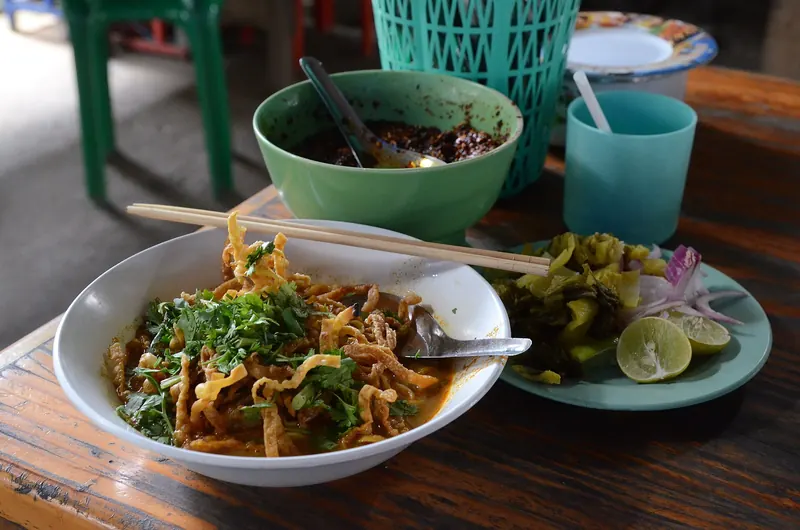
  • A bowl of khao soi, northern Thai curry noodle soup

    Khao soi

    A rich curry noodle soup topped with crispy fried noodles, Chiang Mai's signature dish and one of Thailand's best regional specialties.

    Where to try it Khao Soi Mae Sai and countless local shops throughout the old city.

  • Sai oua (northern Thai sausage)

    A herb-packed grilled pork sausage flavoured with lemongrass, galangal and chilli, distinct from central Thai sausages.

    Where to try it Street stalls throughout the old city and at the Sunday Walking Street market.

  • Khantoke dinner

    A traditional northern Thai set meal served on a low round tray, typically paired with a classical dance performance, rooted in Lanna royal court dining.

    Where to try it Dedicated khantoke restaurants around the city, several offering an evening cultural show alongside the meal.

  • Nam prik noom

    A roasted green chilli dip served with sticky rice and vegetables, an essential northern Thai staple with a distinctive smoky heat.

    Where to try it Local northern Thai restaurants and markets, particularly the Somphet Market near Tha Phae Gate.

  • Chiang Mai specialty coffee

    Highland-grown Arabica from the surrounding mountains has fuelled a serious café culture, with beans roasted and served across the city.

    Where to try it Independent roasters and cafés in the Nimman neighbourhood.

Accommodation

Where to stay in Chiang Mai

Chiang Mai's old city and Nimman neighbourhood offer different, equally convenient bases.

  • Old City

    Within the old moated walls, putting the major temples and the Sunday Walking Street within easy walking distance.

    Best for: Temple-hopping and historic atmosphere

  • Nimman

    A trendy neighbourhood near Chiang Mai University, with the city's best coffee scene and a younger, more contemporary atmosphere.

    Best for: Cafés, restaurants and a more modern feel

  • Near the Night Bazaar

    Just east of the old city, close to the Night Bazaar and a wide range of restaurants and bars.

    Best for: Nightlife and shopping convenience

What a night costs

Hostel dorm
฿200–400 per night
Mid-range hotel
฿1,500–3,000 per night
Ethical elephant sanctuary visit
฿2,500–3,500 per person
Khao soi bowl
฿40–60

Transport

Getting to and around Chiang Mai

Chiang Mai International Airport sits close to the city, with frequent domestic flights and an overnight train from Bangkok.

Getting there

  • Chiang Mai International Airport (CNX)

    About 15 minutes from the old city by taxi, with frequent flights from Bangkok and other Thai cities.

    A metered taxi or ride-hailing app is the most straightforward transfer option.

  • Overnight train from Bangkok

    A comfortable sleeper service from Bangkok, taking roughly 12 hours overnight.

    Book sleeper berths a few days ahead in peak season, when the route can sell out.

  • Buses from other northern destinations

    Reliable connections reach Chiang Rai and Sukhothai from Chiang Mai's bus terminals.

    VIP buses offer reclining seats for a modest premium over standard service.

Getting around

The old city is walkable, with songthaews and ride-hailing apps covering the wider city and surrounding attractions.

  • Walking

    The old city's temples and market streets all sit within a compact, walkable moated area.

    Comfortable shoes matter for temple visits, which often involve uneven stone courtyards.

  • Songthaews (red trucks)

    Shared pickup-truck taxis covering the city and nearby attractions, a cheap local transport option.

    Confirm the destination and fare with the driver before boarding, as routes aren't fixed.

  • Scooter or bicycle rental

    A popular way to reach Doi Suthep and the surrounding countryside independently.

    An International Driving Permit and a proper helmet are important — scooter accidents are a real risk for inexperienced riders.

When to go

Best time to visit Chiang Mai

Chiang Mai's cool season brings comfortable temperatures and clear skies, while the hot season's burning period affects air quality noticeably.

  • Cool season (November–February)

    Best time

    The most comfortable weather of the year — cool mornings and evenings, especially in the surrounding mountains.

  • Hot season (March–May)

    Shoulder

    Hot, and often affected by seasonal agricultural burning that reduces air quality and visibility in March and April.

  • Rainy season (June–October)

    Good

    Lush, green countryside and thinner crowds, with typically short afternoon downpours rather than all-day rain.

  • Yi Peng and Loy Krathong (November)

    Best time

    Chiang Mai's famous lantern festival period, spectacular but requiring accommodation booked well ahead.

Worth planning around: Late February to April if air quality is a concern — seasonal burning across the region can noticeably reduce visibility and comfort for outdoor sightseeing.

Itinerary

Three days in Chiang Mai

The old city's temples first, then the mountains and countryside beyond it.

  1. Day1

    The old city's temples

    Chiang Mai's essential Lanna-era sights.

    • Morning Wat Phra Singh and Wat Chedi Luang.
    • Afternoon Wander the old city's smaller temples and streets.
    • Evening The Sunday Walking Street, if timed right, or the Night Bazaar.
  2. Day2

    Doi Suthep and the mountains

    The city's mountain temple and surrounding nature.

    • Morning Wat Phra That Doi Suthep, arriving early.
    • Afternoon A visit to an ethical elephant sanctuary.
    • Evening Dinner in the Nimman neighbourhood.
  3. Day3

    Food, coffee or a countryside day trip

    Deeper local culture or a trip into the countryside.

    • Morning A Thai cooking class with a market visit.
    • Afternoon Free time or a day trip to a hill-tribe village.
    • Evening A final khao soi dinner.

Travel tips

Chiang Mai travel tips

Practical notes on booking, timing and transport that make a real difference to a Chiang Mai trip.

  • Book Doi Suthep visits for early morning or sunset to avoid the midday tour-bus crowds.
  • Research elephant sanctuaries carefully — choose ones that explicitly prohibit riding and prioritise animal welfare.
  • Wear a proper helmet if renting a scooter, and check your travel insurance covers it.
  • Book overnight sleeper trains from Bangkok a few days ahead in peak season.
  • Check air quality forecasts if visiting in March or April, when seasonal burning can affect the region.
  • Bring a light layer for evenings — the mountain air cools down more than Bangkok after dark.
  • Book accommodation well ahead for the Yi Peng and Loy Krathong lantern festival period in November.

FAQ

Chiang Mai: frequently asked questions

How many days do you need in Chiang Mai?

Three to four. Two covers the old city's temples and Doi Suthep at a rushed pace; four allows an elephant sanctuary visit and a cooking class without feeling hurried.

Is Chiang Mai better than Bangkok?

They're different rather than comparable — Bangkok offers scale, river life and a megacity food scene, while Chiang Mai offers a slower pace, mountain access and northern Thai culture. Most first-time visitors benefit from seeing both.

How do I choose an ethical elephant sanctuary?

Look for ones that explicitly prohibit riding and elephant performances, focusing instead on observation, feeding and bathing under the animals' own terms — genuine welfare-focused sanctuaries are transparent about this in their marketing.

What is the best time of year to visit?

November to February offers the most comfortable, clear weather. March and April can bring seasonal agricultural burning that affects air quality, worth checking forecasts for if that concerns you.

Is Chiang Mai safe for tourists?

Yes, very — it's generally considered even more relaxed than Bangkok. The main practical risk is scooter accidents among inexperienced riders, manageable with a proper helmet and genuine riding experience.

Read next

Related travel articles

Practical

Packing by Season and Trip Type

Most packing advice is a list of things. This is the opposite: the small number of decisions that determine whether your luggage helps or hinders, organised by the kind of trip you are actually taking.

Where to go

Beyond the Big Names: Places Worth the Detour

The most visited place in a country is rarely its best, and it is almost never its best value. This is a method for finding the destinations that do not make the postcards — and a set of examples from five of the 50 countries on this site.

Advertisement