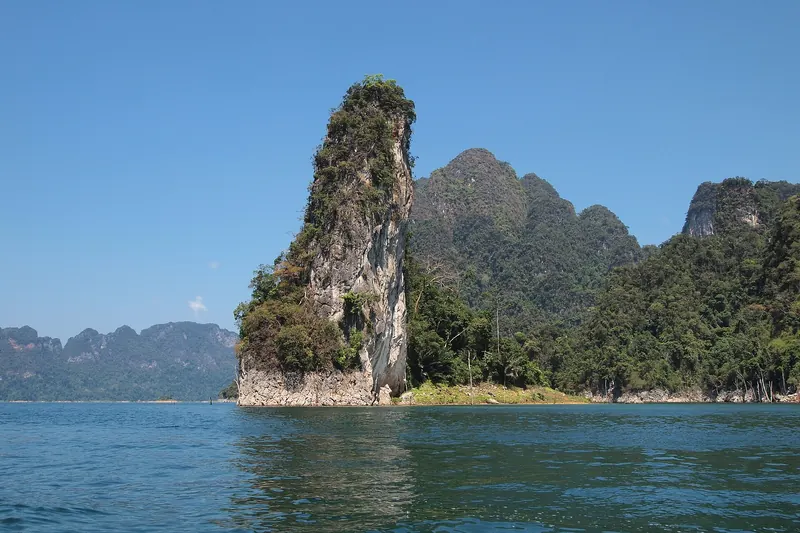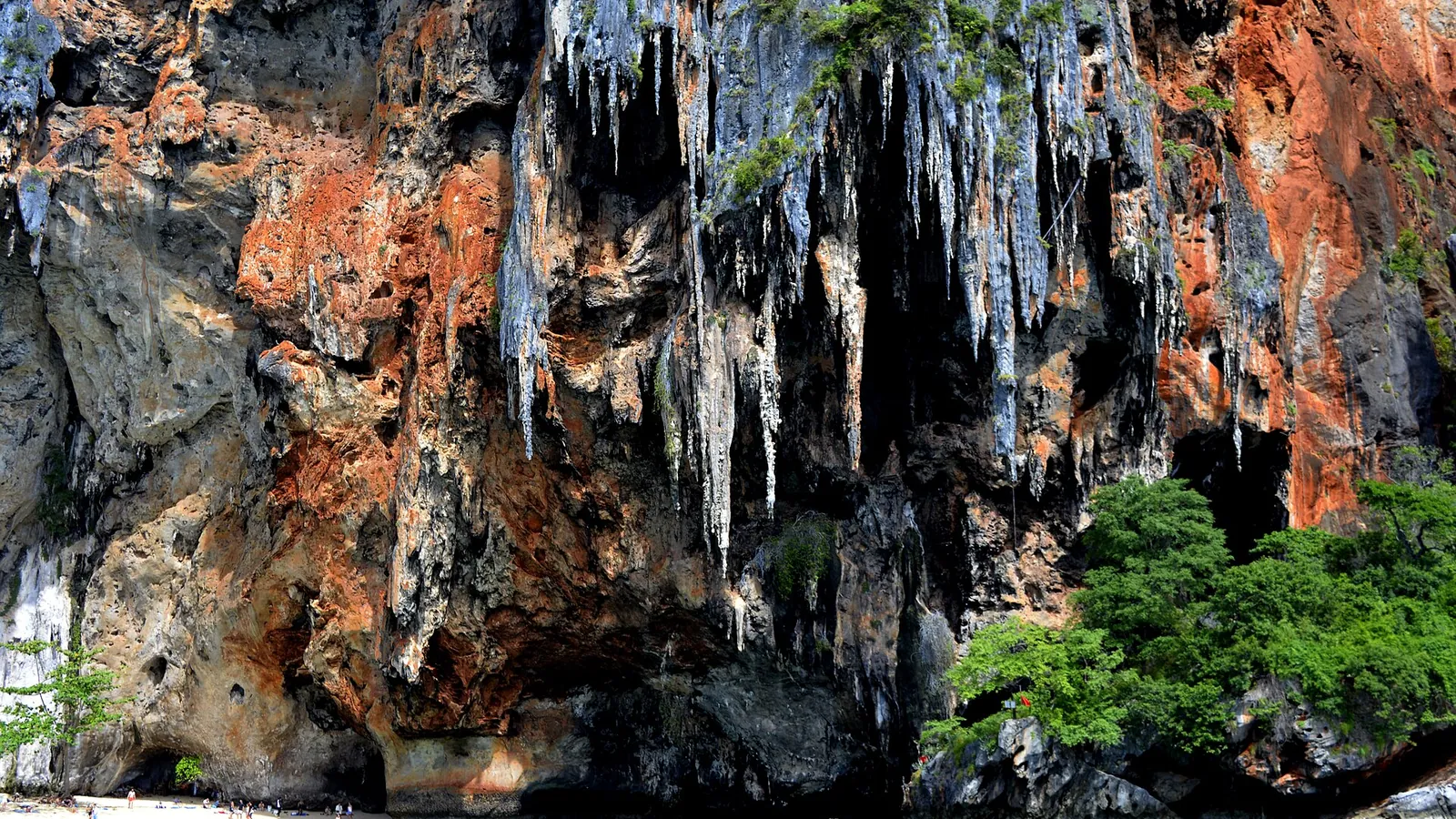
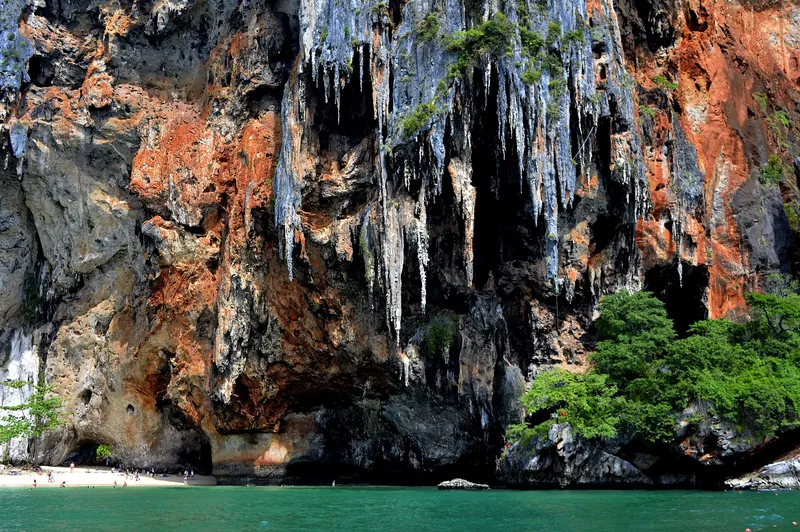
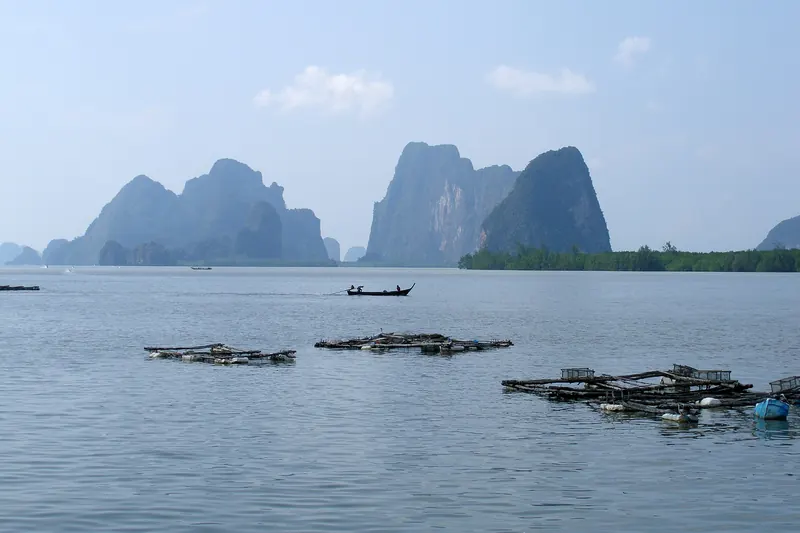
Railay Beach's limestone cliffs rising from the turquoise water

Andaman Coast, Southern Thailand · Thailand

Krabi & Railay

A mainland province of sheer limestone cliffs, a beach reachable only by boat, and some of the best rock climbing on earth rising directly out of the sea.

  • Best time November–April, for the driest Andaman coast weather
  • Stay 3–4 days
  • Good for Scenery, rock climbing, beaches, a quieter alternative to Phuket

Photo: Shivashanky · CC BY-SA 4.0

Welcome to Krabi & Railay

Krabi province holds some of the most dramatic coastal scenery in Thailand, its sheer limestone karsts rising directly from the Andaman Sea in formations that make the whole region feel different from anywhere else in the country.

The centrepiece is Railay, a small peninsula reachable only by boat, its towering cliffs cutting it off from the mainland road network entirely and creating a singular setting of beaches, jungle and rock that draws climbers from around the world alongside beach-focused visitors.

Beyond Railay, Krabi town serves as the practical gateway to the wider province, with Ao Nang's more developed beach strip, dozens of nearby islands and Phang Nga Bay's karst-studded waters all within easy boat reach, giving the region a genuine range beyond its famous cliffs alone.

  • Coast & Beaches
  • Nature & Wildlife
  • Scenic Region
  • Off the Beaten Path

Why visit

Why visit Krabi & Railay?

Krabi's case is that its limestone scenery is more dramatic than anywhere else on Thailand's Andaman coast, and Railay's isolation keeps it feeling special.

  • Railay's isolation is part of the appeal

    Reachable only by boat, its cliffs and beaches feel considerably more remote than the short journey from Krabi town suggests.

  • The rock climbing is world-class

    Railay draws climbers internationally for its sheer limestone walls, with routes suited to complete beginners and experts alike.

  • The karst scenery outclasses anywhere else on this coast

    Krabi's limestone formations are more concentrated and dramatic than Phuket's comparatively gentler coastline.

  • It's a quieter alternative to Phuket

    A smaller-scale, less developed atmosphere while still offering excellent infrastructure and island access.

  • Island-hopping is excellent from here too

    The Phi Phi Islands and Phang Nga Bay are both easily reached from Krabi's ports, not just Phuket's.

Main attractions

Top things to see in Krabi & Railay

Krabi and Railay's essential sights, centred on the region's dramatic limestone coastline.

  1. Railay Beach's limestone cliffs rising from the turquoise water

    Railay Beach (East and West)

    The peninsula's two main beaches, West Railay's postcard sand and East Railay's mangrove-lined boat pier, both framed by sheer limestone cliffs on every side.

    Tip West Railay is better for swimming and sunset; East Railay is where the boats and most budget accommodation sit.

  2. Phra Nang Cave Beach

    Railay's most celebrated beach, a short walk from the main peninsula, home to a shrine where local fishermen leave offerings for a legendary sea princess.

    Tip Visit early morning or late afternoon to avoid the midday crowds that gather at this popular spot.

  3. The Railay viewpoint and lagoon

    A strenuous climb via ropes and ladders up a limestone cliff face leads to a hidden lagoon and a sweeping viewpoint over the peninsula.

    Tip Wear proper closed-toe shoes with grip — the climb involves steep, muddy sections in places.

  4. Phang Nga Bay

    A dramatic seascape of limestone karst islands, including the famous James Bond Island, reachable by longtail boat from Krabi's piers as well as from Phuket.

    Tip A sea kayak tour into the bay's hidden lagoons offers a more intimate experience than a large tour boat.

  5. The Phi Phi Islands

    A stunning day trip of turquoise water and dramatic cliffs, including Maya Bay, reachable from Krabi's ports on a comparable journey time to Phuket.

    Tip An early-departure boat from Krabi reaches Maya Bay before the bulk of Phuket's tour boats arrive.

  6. Tiger Cave Temple (Wat Tham Suea)

    A hilltop temple reached by 1,237 steps, its summit offering a sweeping view over Krabi's karst landscape, a worthwhile inland counterpoint to the coastal sights.

    Tip Start the climb early in the morning, both for cooler temperatures and to avoid climbing in the afternoon heat.

Things to do

Best things to do in Krabi & Railay

Beyond the beaches, Krabi and Railay reward rock climbing and boat trips into the surrounding karst landscape.

  1. Try rock climbing at Railay

    Railay is one of the world's best rock climbing destinations, with sheer limestone walls and routes suited to complete beginners through experts.

    Tip A half-day introductory course with a local climbing school is an accessible way to try it even with zero prior experience.

  2. Take a longtail boat island-hopping tour

    Krabi's four-island tour, covering Poda, Tup, Chicken and Phra Nang islands, is a popular half-day trip combining snorkelling, beaches and karst scenery.

    Tip Book a smaller-group longtail boat tour rather than a large speedboat for a more relaxed pace.

  3. Hike to the Railay lagoon and viewpoint

    The climb up ropes and ladders to the hidden lagoon behind Railay is challenging but rewards with a view found nowhere else on the peninsula.

    Tip Go in the dry season — the climb's muddy sections become more difficult after rain.

  4. Visit the Emerald Pool and hot springs

    A refreshing inland day trip from Krabi town, combining a jungle-set turquoise pool with natural hot springs a short drive away.

    Tip Visit the hot springs first and the Emerald Pool second, since the cooling pool water is more welcome after the warm springs.

  5. Explore Krabi's night market

    Krabi town's night market offers a good, low-key introduction to southern Thai street food away from the beach resort strips.

    Tip Try the region's seafood specialties, fresher here than at many beach-town tourist restaurants.

Local food

What to eat in Krabi & Railay

Krabi's food scene leans heavily on fresh Andaman seafood alongside southern Thailand's spicier regional cuisine.

  • Gaeng tai pla

    A fiery southern Thai curry made with fermented fish innards, chillies and vegetables, considerably spicier and more pungent than central Thai curries.

    Where to try it Local southern Thai restaurants in Krabi town, though be warned it's an intense introduction to the region's heat.

  • Fresh grilled seafood

    Prawns, squid and whole fish grilled simply and priced by weight, excellent around Krabi and Railay's beachside restaurants.

    Where to try it Beachfront restaurants on Railay West and Ao Nang, where the day's catch is often on direct display.

  • Khao yam

    A southern Thai rice salad tossed with herbs, dried shrimp, lime and a tangy budu sauce, refreshing in the region's heat.

    Where to try it Local markets and southern Thai restaurants in Krabi town.

  • Roti (sweet or savoury)

    Crispy pan-fried flatbread, served sweet with condensed milk and banana or savoury alongside a curry, a popular street snack across southern Thailand.

    Where to try it Street carts throughout Krabi town and Ao Nang, several running well into the evening.

  • Fresh coconut water

    Served straight from the shell, an essential way to rehydrate after a hot day of climbing or beach-hopping.

    Where to try it Beach vendors and roadside stalls throughout the region.

Accommodation

Where to stay in Krabi & Railay

Railay's boat-only access and Krabi town's mainland convenience offer different bases for the region.

  • Railay

    Accessible only by boat, with accommodation ranging from budget bungalows to upscale resorts, all sharing the same cliff-framed setting.

    Best for: Climbers and those wanting the peninsula's dramatic isolation

  • Ao Nang

    Krabi's main beach resort strip, with good infrastructure and easy boat connections to Railay and the islands.

    Best for: A wider range of restaurants and easier mainland access

  • Krabi Town

    The provincial capital, offering a lower-key atmosphere with easy access to inland sights like the Emerald Pool.

    Best for: A more local, less touristy base

What a night costs

Beach bungalow
฿600–1,200 per night
Mid-range resort
฿2,200–4,500 per night
Half-day climbing course
฿1,200–1,800 per person
Four-island longtail tour
฿700–1,200 per person

Transport

Getting to and around Krabi & Railay

Krabi International Airport connects to Bangkok directly, with Railay reached onward by a short boat ride.

Getting there

  • Krabi International Airport (KBV)

    Direct flights from Bangkok and several other Thai cities, about 40 minutes from Ao Nang by road.

    A pre-booked transfer or taxi covers the airport-to-Ao Nang journey.

  • Longtail boat to Railay

    Railay has no road access — a short longtail boat from Ao Nang or Krabi town's pier is the only way in.

    Boats run frequently through the day but stop by early evening — plan your arrival accordingly.

  • Bus or minivan from Phuket

    Regular connections link Phuket to Krabi in about 3 hours by road.

    A private transfer avoids the multiple stops a shared minivan often makes along the way.

Getting around

Railay itself is entirely walkable, while Ao Nang and Krabi town rely on scooters, taxis and longtail boats.

  • Walking (within Railay)

    Railay's East and West beaches and the viewpoint trail are all reachable on foot, connected by a short path through the peninsula's centre.

    Wear sturdy shoes for the jungle path between beaches, which can be muddy after rain.

  • Longtail boat

    The main way to reach Railay from the mainland, and to island-hop around Krabi's surrounding waters.

    Shared longtail boats run fixed routes at set fares — confirm the price before boarding.

  • Scooter or taxi (Ao Nang and Krabi town)

    Useful for reaching inland sights like the Emerald Pool or Tiger Cave Temple from the mainland side.

    An International Driving Permit and a proper helmet are important on the region's roads.

When to go

Best time to visit Krabi & Railay

Krabi and Railay's dry season offers the most reliable weather for climbing and island-hopping, while the monsoon months bring rougher seas.

  • Cool, dry season (November–February)

    Best time

    The most comfortable and reliable weather for climbing, beaches and boat trips, alongside the year's biggest crowds.

  • Hot season (March–April)

    Good

    Still dry and swimmable, hot but with thinner crowds than the December–January peak.

  • Rainy season (May–October)

    Shoulder

    The Andaman coast's wetter, rougher-sea season — boat trips can be cancelled, and climbing routes can become slick.

Worth planning around: Rock climbing on wet limestone during or right after rain — the surface becomes dangerous, and reputable operators will pause sessions accordingly.

Itinerary

Three to four days in Krabi and Railay

Railay's beaches and climbing first, then Krabi's wider island-hopping and inland sights.

  1. Day1

    Arrive and settle into Railay

    • Morning Boat transfer to Railay and check in.
    • Afternoon A first swim at West Railay Beach.
    • Evening Sunset from Phra Nang Cave Beach.
  2. Day2

    Climbing and the lagoon viewpoint

    • Morning A half-day introductory rock climbing course.
    • Afternoon The climb to the hidden lagoon and viewpoint.
    • Evening Dinner on East Railay.
  3. Day3

    Island-hopping around Krabi

    • Morning A four-island longtail boat tour.
    • Afternoon Snorkelling around Poda and Chicken Island.
    • Evening Return to Ao Nang or Krabi town.
  4. Day4

    Inland sights or Phang Nga Bay

    • Morning The Emerald Pool and hot springs, or a Phang Nga Bay boat trip.
    • Afternoon Free time or Tiger Cave Temple's climb.
    • Evening A final dinner in Krabi town.

Travel tips

Krabi & Railay travel tips

Practical notes on booking, timing and transport that make a real difference to a Krabi and Railay trip.

  • Book Railay accommodation ahead in peak season — the peninsula's boat-only access makes rooms limited.
  • Pack proper closed-toe shoes if you plan to hike to the Railay lagoon viewpoint — flip-flops aren't enough for the climb.
  • Avoid climbing on wet limestone — reschedule with your climbing school if it's rained recently.
  • Confirm longtail boat return times, since services to Railay stop running by early evening.
  • Book Phi Phi Islands and Phang Nga Bay tours through a reputable operator with a smaller group size where possible.
  • Pack reef-safe sunscreen for snorkelling around the region's coral.

FAQ

Krabi & Railay: frequently asked questions

How many days do you need in Krabi and Railay?

Three to four. Two covers Railay's beaches and a climbing taster at a rushed pace; four allows island-hopping and an inland day trip without feeling hurried.

Do I need climbing experience to try Railay's routes?

No — Railay offers beginner-friendly routes and half-day introductory courses with local climbing schools, alongside serious routes for experienced climbers.

Is Krabi or Phuket better for a first trip?

Krabi and Railay offer more dramatic scenery and a quieter, climbing-focused atmosphere; Phuket offers considerably more infrastructure, nightlife and flight options. Many visitors combine both, since they're only about three hours apart by road.

How do I get to Railay?

Only by boat — a short longtail boat ride from Ao Nang or Krabi town's pier, since no road reaches the peninsula.

What is the best time of year to visit?

November to April offers the most reliable dry-season weather for climbing and island-hopping. May to October brings the Andaman coast's rainy season, with rougher seas and wetter climbing conditions.

Read next

Related travel articles

Where to go

Beyond the Big Names: Places Worth the Detour

The most visited place in a country is rarely its best, and it is almost never its best value. This is a method for finding the destinations that do not make the postcards — and a set of examples from five of the 50 countries on this site.

Practical

Packing by Season and Trip Type

Most packing advice is a list of things. This is the opposite: the small number of decisions that determine whether your luggage helps or hinders, organised by the kind of trip you are actually taking.

Advertisement