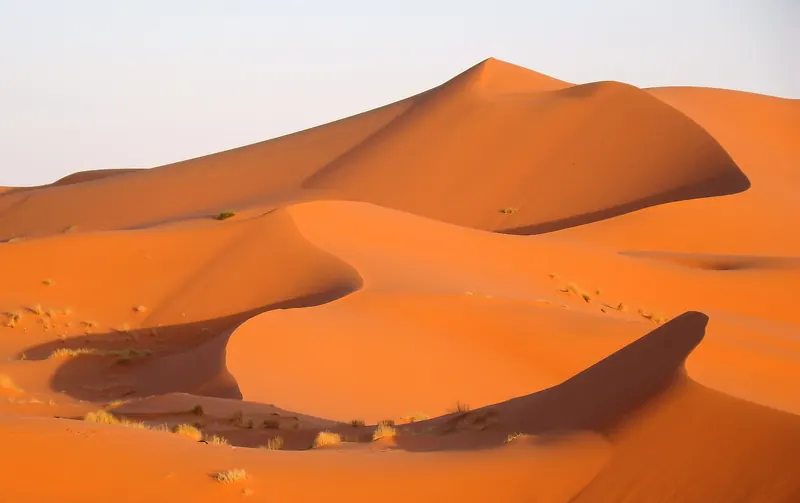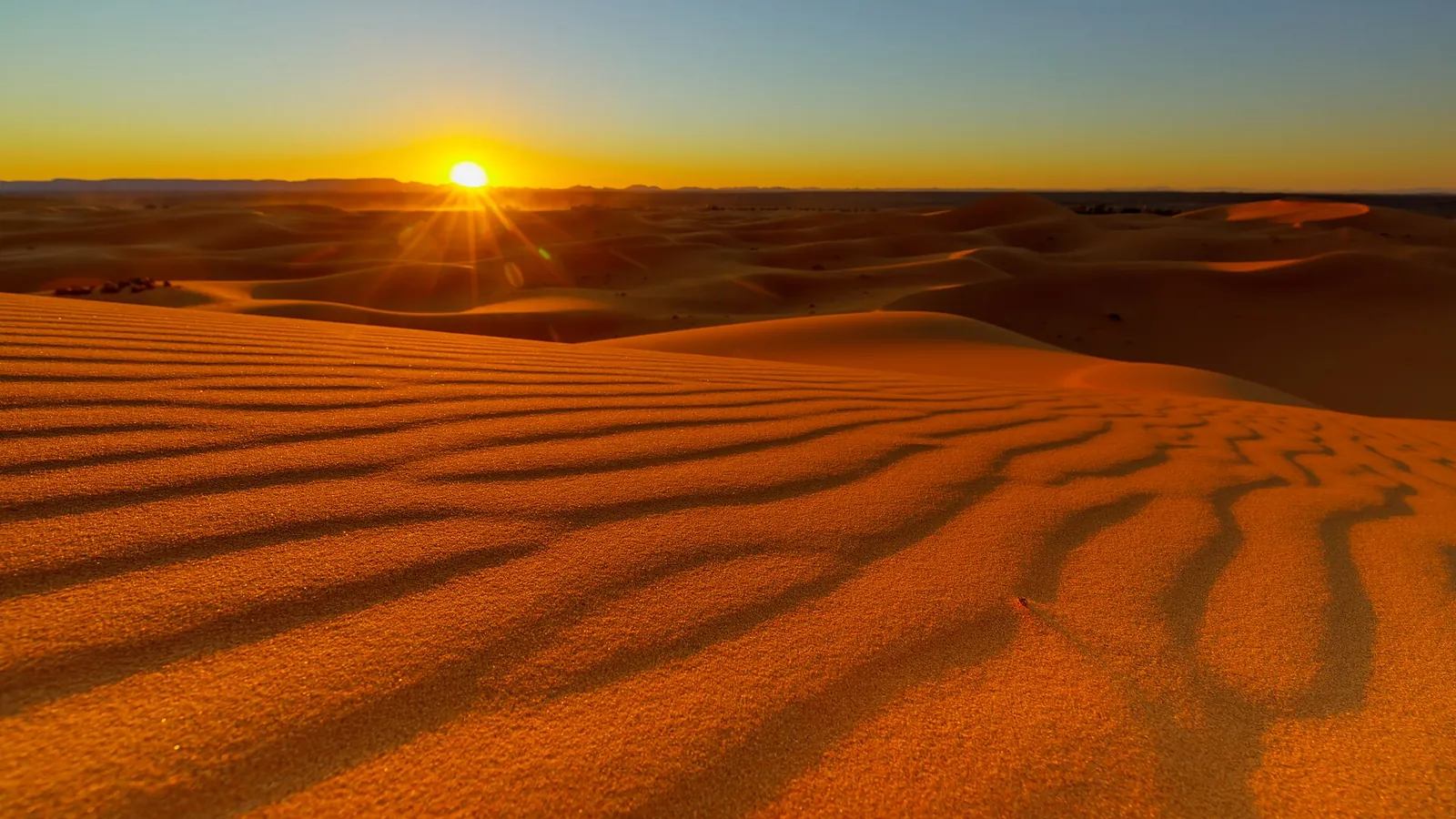
The dunes of Erg Chebbi in the Moroccan Sahara glowing at sunset

Morocco · Travel guide

The Complete Morocco Travel Guide

How the country divides, how to choose between the ten destinations, how to cover the distances, and what two weeks can realistically hold.

  • Reading time 13 min read
  • Covers 10 destinations
  • Updated 2026

Photo: Thomas Fuhrmann · CC BY-SA 4.0

Morocco packs imperial medinas, mountains, desert and two coasts into a country about the size of California. This guide covers how the regions divide, how to choose between the ten destinations, how to move around, when to go, what it costs and three routes that work.

How Morocco divides

Morocco is roughly 1,000 km from the Mediterranean to the edge of the Sahara, and the country falls into five zones that organise almost any trip.

The imperial cities. Fes, Meknes, Rabat and Marrakech were each a capital at some point, and each has a walled medina, royal palaces and monuments. Fes is the most medieval and Marrakech the most vibrant.

The north. Chefchaouen lies in the Rif Mountains, a blue-washed town in the hills above the Mediterranean, closer to Spain in feel than the rest of the country.

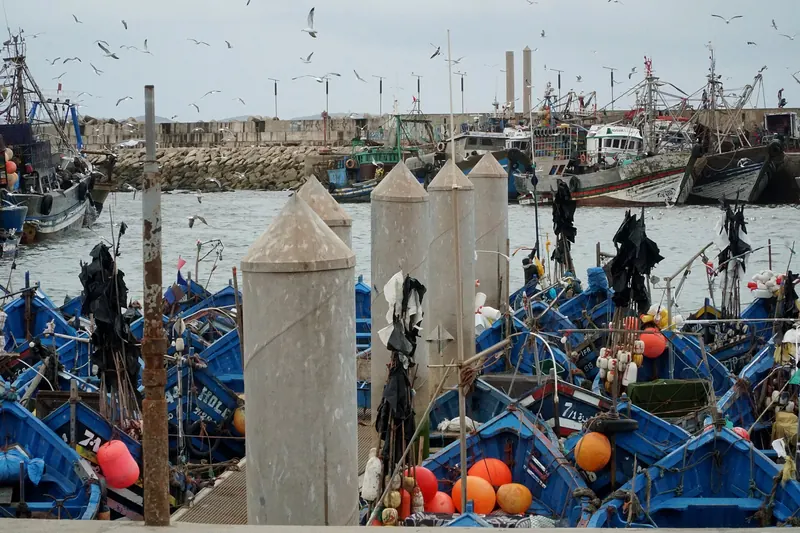
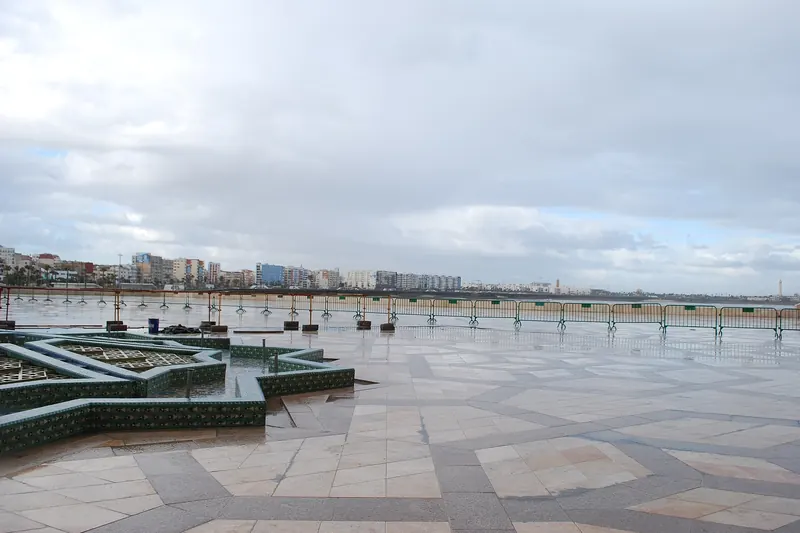
The Atlantic coast. Casablanca is the economic capital and home to the Hassan II Mosque, and Essaouira is a wind-blown fishing port with Portuguese ramparts and a relaxed, artistic atmosphere.

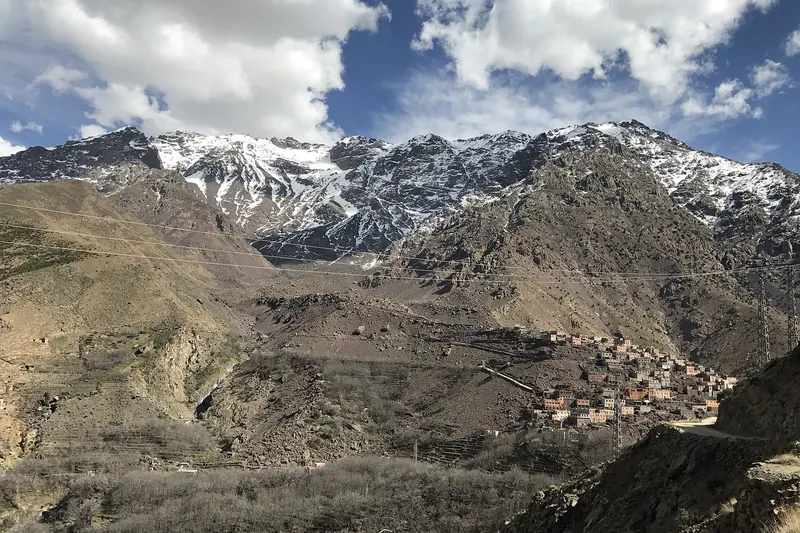
The Atlas mountains. The High Atlas runs across the centre of the country. Imlil and Toubkal are the most accessible hiking base, an hour or two from Marrakech, and the passes lead south to the kasbah country.

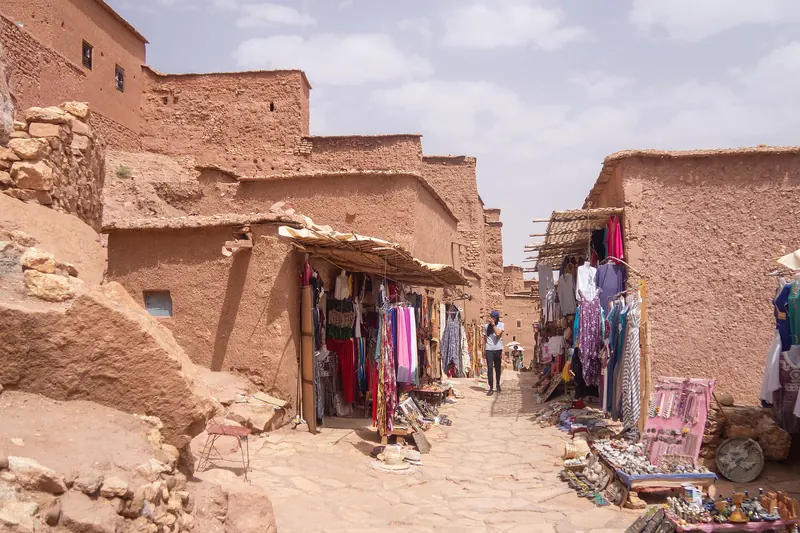
The south and the desert. Aït Benhaddou and Ouarzazate sit on the old caravan routes with mud-brick ksars and film studios, and Merzouga has the largest dunes of the Moroccan Sahara.

Worth knowing: The practical unit is two or three of these regions. Marrakech and the south, or Fes and the north, are both good short trips.

Choosing between the ten destinations

  • If you have one week

    Marrakech with a day in the Atlas or at Essaouira, or Marrakech plus the kasbah road to Aït Benhaddou. Add Merzouga only if you can stretch to eight or nine days.

  • If you love medinas

    Fes first, for its enormous, medieval, largely car-free medina, then Marrakech for its energy, and Meknes for a quieter imperial city.

  • If you want the desert

    Merzouga has the tallest dunes, and the drive there passes through kasbah country.

  • If you like hiking

    Imlil for Toubkal and valley walks, with Chefchaouen for gentler trails in the Rif.

  • If you like history

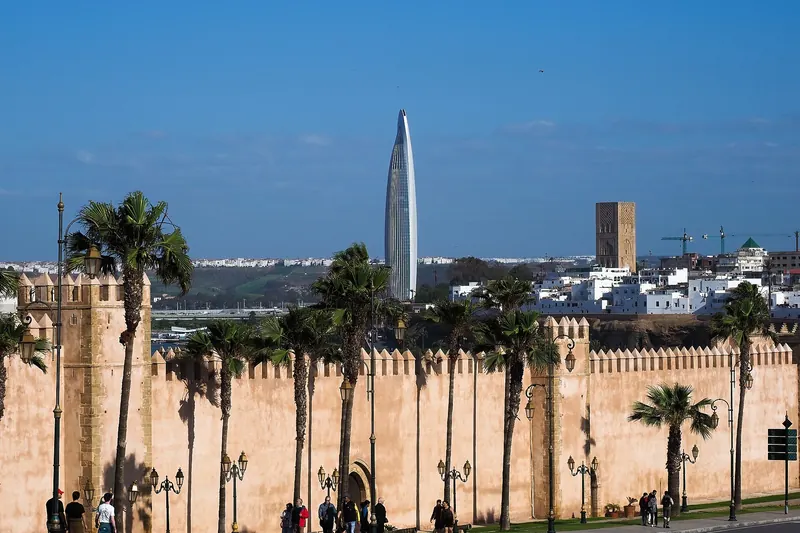
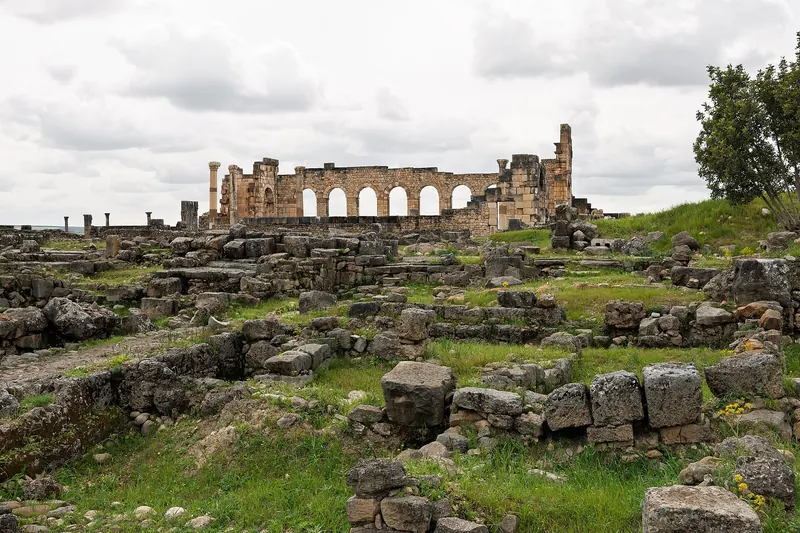
    Volubilis for Roman ruins, Fes and Marrakech for medieval Islamic architecture, and Rabat for the Almohad Hassan Tower and the Kasbah of the Udayas.

  • If you want a coast and a rest

    Essaouira is the easiest stop, and Casablanca adds the great mosque and Art Deco architecture.

Getting across a long country

Morocco's distances are larger than they look on the map, and the mountain roads slow everything down. Marrakech to Merzouga is about 560 km, and the drive takes around nine hours with stops.

Trains. The ONCF network is comfortable, reliable and cheap. It covers Tangier, Rabat, Casablanca, Marrakech, Fes and Meknes, and the Al Boraq high-speed line links Tangier with Casablanca in a little over two hours.

Buses. CTM and Supratours are the reliable coach companies and reach most towns, including Essaouira and Chefchaouen.

Driver or hire car. The best way to reach the desert, the Atlas and the kasbah road. A driver removes the stress of mountain roads and lets you stop for photographs.

Grands taxis. Shared long-distance taxis link nearby towns, and are cheap but crowded.

Worth knowing: Avoid driving after dark outside cities, when livestock, unlit vehicles and pedestrians share the roads.

When to go

Morocco's climate depends on altitude and distance from the sea. Spring and autumn are the best seasons almost everywhere.

March to May is warm and green, with snow on the Atlas peaks. It is the best time for the imperial cities and the mountains, and also the busiest.

June to August is very hot inland. Marrakech and the south often exceed 40°C, and the Sahara is extreme. The Atlantic coast and the high mountains are cooler.

September to November brings warm days and cooler nights, and is excellent for the desert from October.

December to February is mild by day in the south, but very cold at night in the desert and the mountains, and wet in the north and Fes. Skiing is possible at Oukaïmeden in a good snow year.

Worth knowing: Ramadan moves about 11 days earlier each year. Many restaurants close by day away from tourist areas, and the evenings are lively, but sights keep shorter hours.

Money, costs and hassle

Morocco is good value by European standards. A meal in a local restaurant costs US$5–12, a riad double room US$50–150, and a private driver around US$70–130 per day.

Cash is important. Cards are accepted in hotels and upmarket restaurants, but medinas, taxis and small shops take only dirhams. The dirham cannot be exchanged in large amounts abroad, so use ATMs on arrival.

Tip 10% in restaurants, and a few dirhams for small services. Agree prices for guides, taxis and drivers in advance.

The main annoyance is hard selling and unofficial guides in the big medinas. A polite refusal works better than a heated one, and a licensed guide for the first morning saves a great deal of stress.

Three routes that work

  1. One week: Marrakech and the south

    Three nights in Marrakech, then two days on the kasbah road to Aït Benhaddou, and a day at Essaouira or in the Atlas at Imlil. No internal flights.

    Tip Fly in and out of Marrakech to avoid backtracking.

  2. Ten days: the imperial cities and the desert

    Fly into Casablanca or Marrakech. Three nights in Fes, a night at Chefchaouen, two in the Sahara and the kasbah road, ending in Marrakech for three.

    Tip Use a driver for the desert legs and trains elsewhere.

  3. Two weeks: the classic loop

    The itinerary on the country page: Casablanca, Rabat, Meknes and Volubilis, Fes, Chefchaouen, the Sahara, the kasbah road, Marrakech and Essaouira.

    Tip Swap Chefchaouen for the Atlas at Imlil if you prefer walking to blue streets.

Reference

The 10 destinations in this guide

Every place named above has its own detailed guide — attractions, food, where to stay, how to get around and a suggested day-by-day plan.

Major CityUNESCO Site

Marrakech

Marrakech-Safi, central Morocco

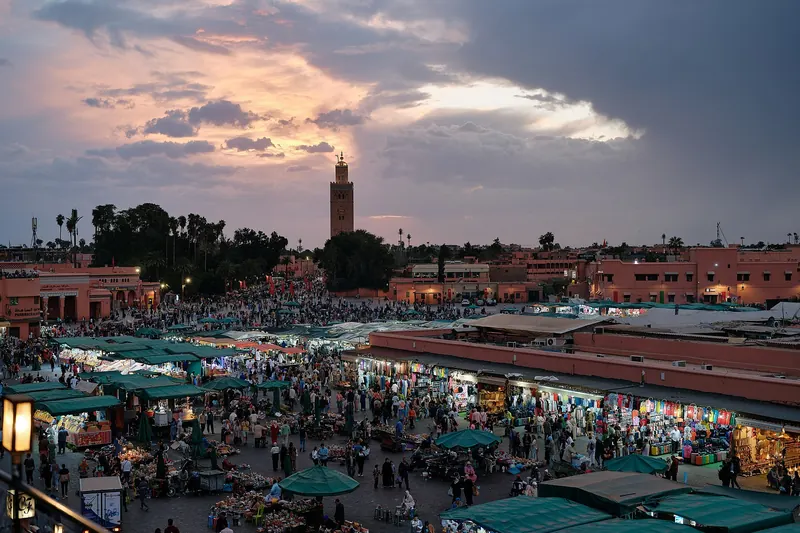
The most visited city in Morocco: a walled medina of souks, madrasas and palaces, the great square of Jemaa el-Fnaa, the Majorelle Garden and a hundred riads.

Don't miss Jemaa el-Fnaa at dusk, when the storytellers, musicians and food stalls take over the square.

Explore Destination — Marrakech
UNESCO SiteHistoric Site

Fes

Fès-Meknès, northern Morocco

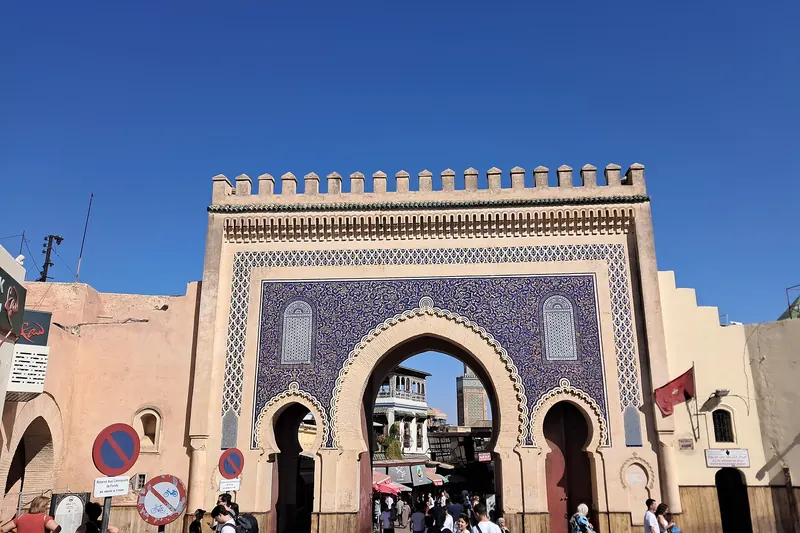
Morocco's spiritual and cultural capital: a 9th-century medina of thousands of lanes, the world's oldest surviving university, ornate madrasas and traditional crafts.

Don't miss A guided walk through Fes el-Bali, ending on a terrace above the tanneries.

Explore Destination — Fes
Scenic RegionCulture & Arts

Chefchaouen

Tanger-Tétouan-Al Hoceïma, Rif Mountains

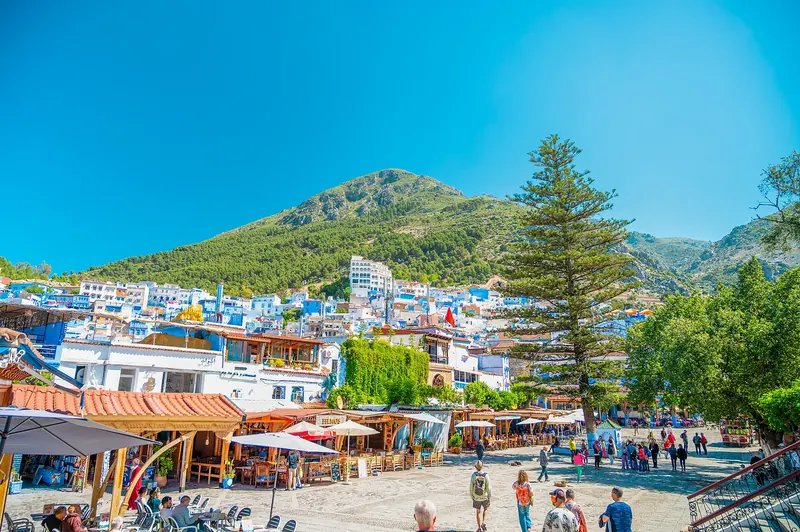
The famous 'blue pearl' of Morocco: a hillside medina of blue-washed walls and stairways, a lively square, a spring-fed river and trails into the Rif.

Don't miss The blue lanes of the old medina at first light, before the tour groups arrive.

Explore Destination — Chefchaouen
Coast & BeachesUNESCO Site

Essaouira

Marrakech-Safi, Atlantic coast

A whitewashed fortress town on the Atlantic, with a UNESCO-listed medina, a working port, long beaches and a relaxed, breezy atmosphere.

Don't miss Grilled fish straight from the boats at the harbour stalls, with gulls wheeling above the blue fishing fleet.

Explore Destination — Essaouira
Major CityCoast & Beaches

Casablanca

Casablanca-Settat, Atlantic coast

A modern port city with a monumental oceanfront mosque, French colonial Art Deco streets, a small old medina, seafood and a lively café and arts scene.

Don't miss The Hassan II Mosque at the edge of the Atlantic, its minaret rising above the waves.

Explore Destination — Casablanca
Capital CityUNESCO Site

Rabat

Rabat-Salé-Kénitra, Atlantic coast

Morocco's capital: a UNESCO-listed city with the Hassan Tower, the Mohammed V Mausoleum, the Kasbah of the Udayas, the Chellah ruins and a relaxed medina.

Don't miss The Kasbah of the Udayas, with its blue-and-white lanes and Andalusian garden above the Bouregreg river.

Explore Destination — Rabat
UNESCO SiteArchaeology

Meknes and Volubilis

Fès-Meknès, northern Morocco

A UNESCO-listed imperial city built by Sultan Moulay Ismail, with vast gates and granaries, plus the Roman site of Volubilis and the holy town of Moulay Idriss nearby.

Don't miss The mosaics of Volubilis, still in place, with the Roman arch and the Zerhoun hills behind.

Explore Destination — Meknes and Volubilis

Back to the Morocco country page

FAQ

Planning a trip to Morocco

Can I combine Marrakech, Fes and the Sahara in one trip?

Yes, but plan for long drives. Marrakech to Fes is about eight hours by road, or a little over seven by train via Casablanca and Rabat, and Fes to Merzouga is about nine. Ten days is the comfortable minimum for all three.

Is it better to go on an organised tour or independently?

Independent travel works well in the cities and along the coast by train and bus. For the desert and the Atlas, a private driver or a small-group tour saves a great deal of time.

Do I need French or Arabic?

Not strictly, since English is spoken in tourist areas, but French is the second language of much of the country and a few words of Darija or French go a long way in shops and markets.

When should I book?

Riads in Marrakech and Fes fill up in spring, autumn and over Christmas, so book a month or two ahead. Desert camps are easy to arrange locally, except in peak weeks.

Advertisement