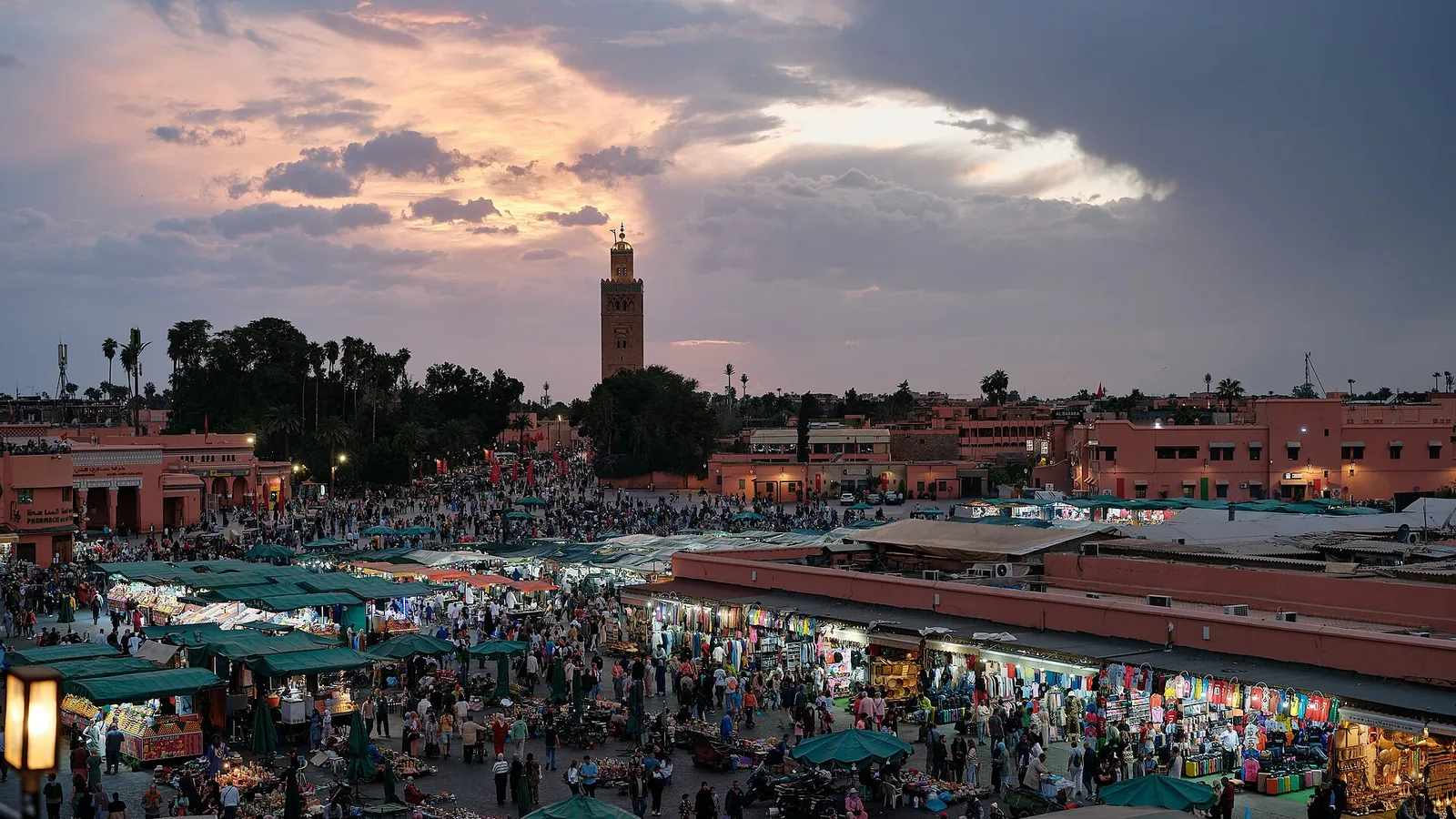
Jemaa el-Fnaa square in Marrakech at sunset with the Koutoubia minaret in the background

Marrakech-Safi, central Morocco · Morocco

Marrakech

A rose-red imperial city of souks, palaces and hidden gardens, with a square that turns into a theatre every evening and the snowy Atlas on the horizon.

  • Best time March–May and October–November
  • Stay 3 days
  • Good for Souks, architecture, food, first-time visitors, base for the Atlas

Photo: Herokk · CC BY-SA 4.0

Welcome to Marrakech

Marrakech was founded in the 11th century by the Almoravids, a Berber dynasty from the Sahara, and it gave the country its name. Its walls, built of local pink-red earth, still surround one of the largest medinas in Morocco, and the colour gives it the nickname of the Red City. The medina was inscribed by UNESCO in 1985.

Its centre is Jemaa el-Fnaa, a huge open square that by day holds snake charmers, orange-juice sellers and henna artists, and at dusk turns into a vast open-air restaurant with smoking grills, storytellers and musicians. Around it, the souks run north through a maze of lanes, each specialising in leather, metal, spices, carpets or lanterns.

Beyond the medina lies the newer city of Guéliz, with cafés and galleries, and beyond that palm groves, golf courses and the High Atlas. Marrakech is loud, hot and intense, and it rewards those who retreat to a riad courtyard between excursions.

  • Major City
  • UNESCO Site
  • Historic Site
  • Culture & Arts

Why visit

Why visit Marrakech?

Marrakech is the most complete introduction to Morocco, and an easy place to fly into from Europe.

  • An extraordinary square

    Jemaa el-Fnaa is inscribed by UNESCO as a piece of intangible heritage for its oral traditions and performance, and it is a spectacle in its own right.

  • The souks

    Miles of covered lanes selling leather, brass, carpets, spices and babouches, with some of the best shopping in the country.

  • Palaces and madrasas

    The Bahia Palace, the Saadian Tombs and the Ben Youssef Madrasa show Moroccan decoration at its finest.

  • Riads and gardens

    Quiet courtyards behind plain walls, from budget guesthouses to palaces, and the Majorelle Garden in its blue.

  • A base for the mountains

    The Atlas, Ourika Valley, Essaouira and the desert road are all within a day's reach.

Main attractions

Top things to see in Marrakech

Three days lets you see the main sights, with a slow pace in the middle of the day when it is hot.

  1. Jemaa el-Fnaa

    The great square, quiet by day and thrilling at night. The food stalls, numbered and lit by lanterns, serve grilled meat, snail soup and sheep's head.

    Tip Watch from a rooftop café first, and agree prices before you photograph performers.

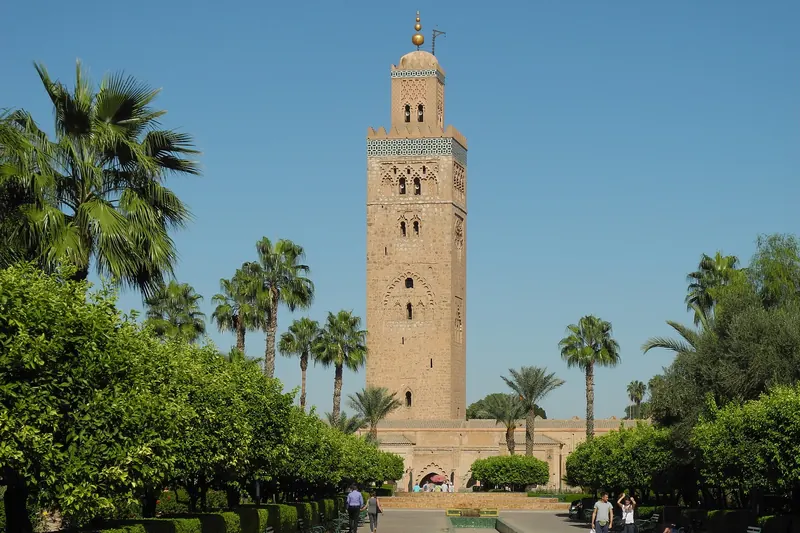
  2. The Koutoubia Mosque minaret rising above Marrakech

    The Koutoubia Mosque

    A 12th-century Almohad mosque whose 77-metre minaret, one of the most elegant in the Islamic west, is the city's landmark. Non-Muslims cannot enter, but the gardens are open.

    Tip Walk around the gardens at sunset, when the stone glows.

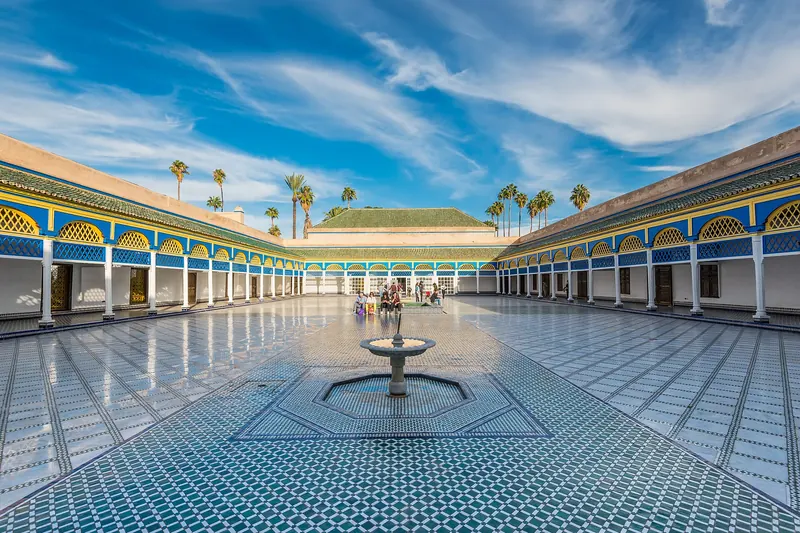
  3. The large courtyard of the Bahia Palace in Marrakech

    The Bahia Palace

    A 19th-century palace of painted cedar ceilings, zellige tile and courtyards with orange trees, built for a grand vizier and his family.

    Tip Go at opening time, before the tour groups.

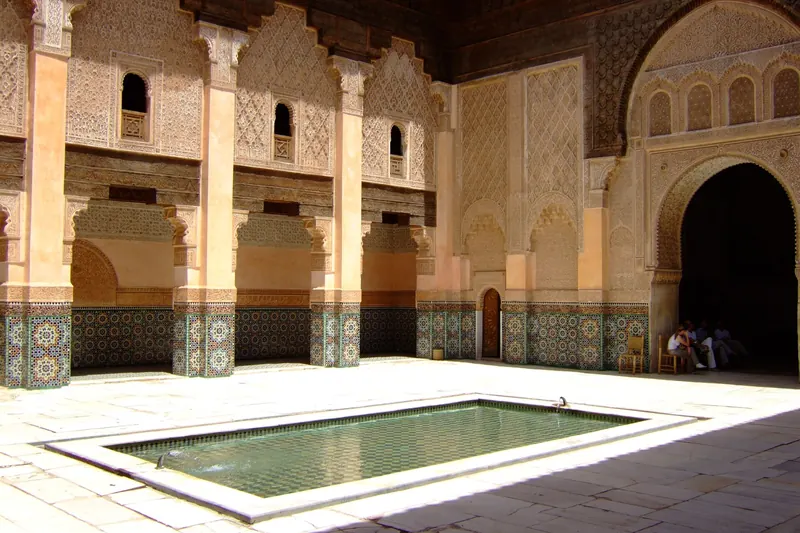
  4. The courtyard of the Ben Youssef Madrasa with carved stucco and zellige tiles

    The Ben Youssef Madrasa

    A former Islamic college, rebuilt in the 16th century, with a courtyard pool, carved cedar and stucco and rooms where students lived. It reopened after a long restoration.

    Tip Check opening days, and combine it with the nearby Marrakech Museum.

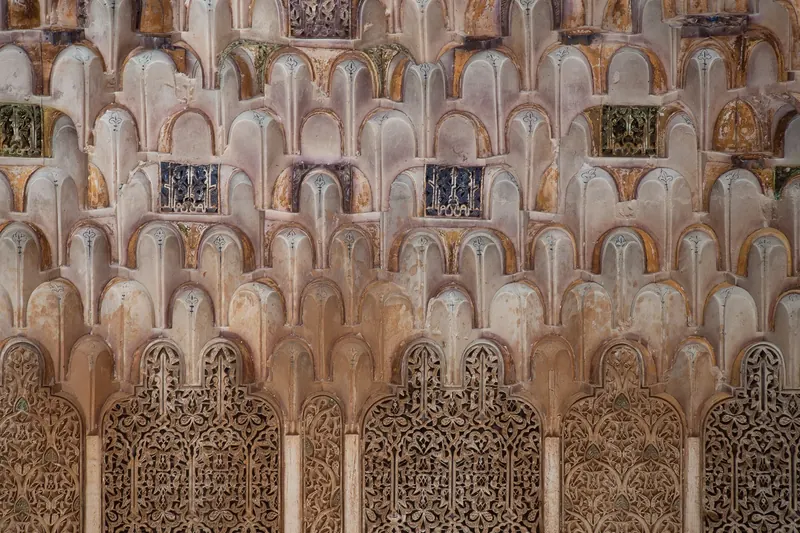
  5. Ornate carved and tiled detail inside the Saadian Tombs

    The Saadian Tombs

    A 16th-century royal cemetery sealed off for centuries and rediscovered in 1917, with intricate carved cedar and marble in the Hall of the Twelve Columns.

    Tip The queue can be long, so go early or late.

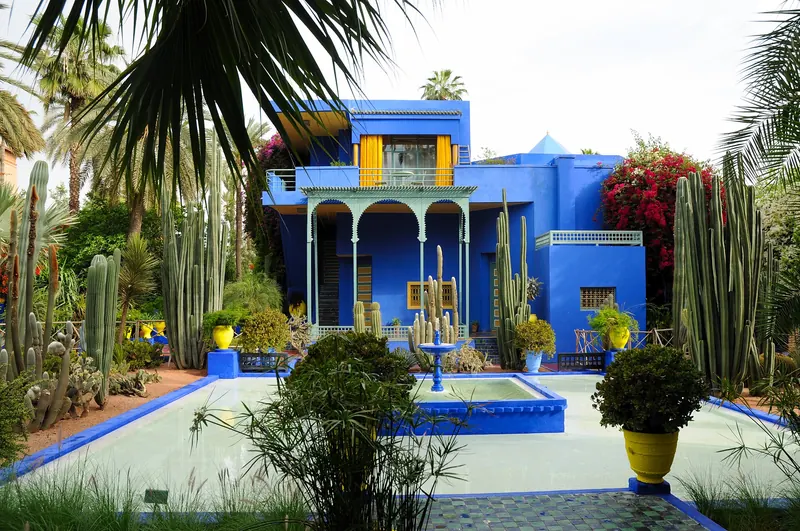
  6. Cobalt-blue buildings among cacti and palms in the Majorelle Garden

    The Majorelle Garden

    A garden created by the French painter Jacques Majorelle, famous for its intense cobalt blue, later owned by Yves Saint Laurent. It also houses a Berber museum and a nearby YSL museum.

    Tip Buy timed tickets online, since entry is limited.

  7. The souks

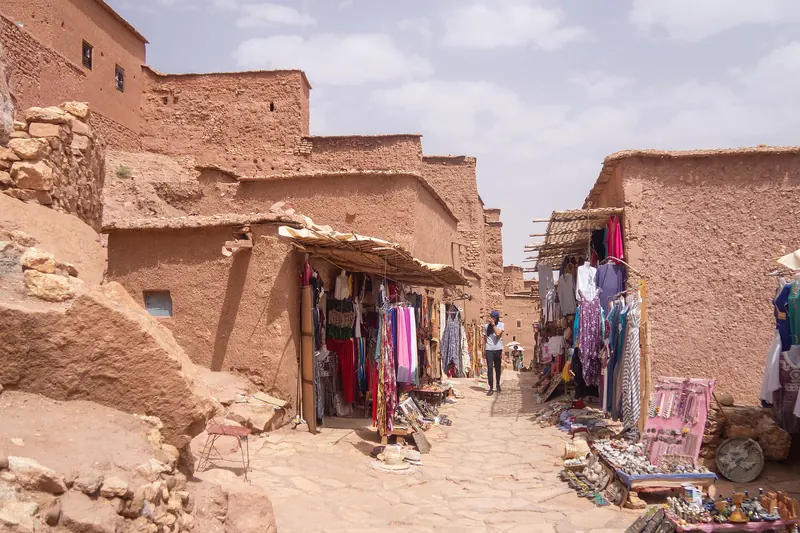
    North of Jemaa el-Fnaa, the covered markets sell spices, lanterns, leather bags, slippers and rugs, from the Souk Semmarine onward.

    Tip Explore in the morning, when it is cooler, and treat the first price as an opening offer.

Things to do

Best things to do in Marrakech

Marrakech is at its best on foot, at dawn and dusk, and inside its courtyards at noon.

  1. Eat at the Jemaa el-Fnaa stalls

    Sit at a numbered stall at dusk for grilled meat, merguez, salads and harira. Stalls run by families with long queues are usually the best.

    Tip Check the prices on the menu board.

  2. Take a hammam

    A traditional bathhouse steam, scrub with black soap and massage, either in a local hammam or a more polished spa.

    Tip Bring a swimsuit for spas, and ask what to expect at a local hammam.

  3. Take a cooking class

    Classes often start with a souk visit and end with a tagine lunch, and are a good way to understand the cuisine.

    Tip Book through your riad.

  4. Have a rooftop mint tea

    Terrace cafés overlooking the square and the Koutoubia offer cool drinks and views.

    Tip Go at sunset.

  5. Visit the Ourika Valley or the Agafay Desert

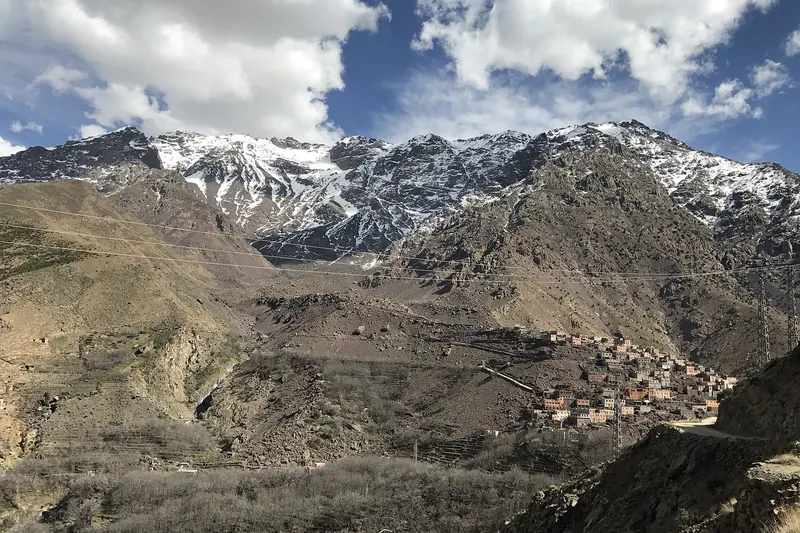
    Day trips take you to Berber villages and waterfalls in the Atlas, or to a stony desert 40 minutes from the city with camel rides and sunset dinners.

    Tip Agafay is a stony plain, not a sand desert, so do not treat it as a substitute for Merzouga.

  6. Float over the palm groves at dawn

    Balloon flights over the palm groves and Atlas at sunrise are popular, and expensive.

    Tip Book with a reputable operator.

Local food

What to eat in Marrakech

Marrakech's cooking is rich in spices, dried fruit and slow-cooked meat, and the best of it is in family-run restaurants and at riads.

  • Tanjia

    A Marrakech speciality: beef or lamb, preserved lemon, garlic and spices sealed in a clay urn and cooked slowly in the embers of a hammam furnace.

    Where to try it Traditional restaurants in the medina.

  • Mechoui

    Lamb slow-roasted in an underground oven until it falls off the bone, served with cumin and salt.

    Where to try it Mechoui alley near Jemaa el-Fnaa.

  • Tagine

    Lamb with prunes and almonds, or chicken with olives and preserved lemon.

    Where to try it Restaurants and riads.

  • Orange juice

    Freshly squeezed on the square for a few dirhams, and the best refreshment for a hot afternoon.

    Where to try it The stalls on Jemaa el-Fnaa.

  • Pastries and mint tea

    Almond pastries and sweets with sweet mint tea.

    Where to try it Pastry shops in the medina.

  • Moroccan street food

    Skewers, kefta sandwiches, snail soup and fried fish.

    Where to try it Jemaa el-Fnaa and the souks.

Accommodation

Where to stay in Marrakech

Most visitors stay in a riad in the medina, and a few in the modern city or in a resort out of town.

  • The medina

    Riads of all price levels near Jemaa el-Fnaa, the Kasbah and Mouassine.

    Best for: Atmosphere and sights

  • Guéliz

    The French-built new town, with cafés, galleries and larger hotels.

    Best for: Modern hotels and restaurants

  • The Palmeraie

    Resorts in the palm grove 20 minutes from the centre.

    Best for: Pools and space

What a night costs

Budget riad
US$30–70 per night
Mid-range riad
US$80–160 per night
Luxury riad or hotel
US$200–500 per night
Meal at a local restaurant
US$5–15 per person

Transport

Getting to and around Marrakech

Marrakech is the main gateway to southern Morocco, with direct flights from most European cities.

Getting there

  • Flight to Marrakech (RAK)

    Direct flights from Europe, including many low-cost routes, and from Casablanca.

    The airport is 15 minutes from the medina.

  • Train from Casablanca or Tangier

    About 2 hours 40 minutes from Casablanca, and on the ONCF line from Tangier and Rabat.

    First-class seats are good value.

  • Bus from Essaouira

    About 3 hours on CTM or Supratours coaches.

    Book the day before.

Getting around

The medina is on foot, and taxis help beyond it.

  • Walking

    The best way to see the medina, but expect to get lost in the alleys.

    Use Google Maps offline, and ask riad staff.

  • Petits taxis

    Cheap and useful between the medina and the newer city.

    Insist on the meter, or agree the fare.

  • Horse carriages

    A tourist option along the walls.

    Agree a price in advance.

When to go

Best time to visit Marrakech

Marrakech has a hot, dry semi-arid climate. Spring and autumn are ideal, and winter is sunny by day but cold at night.

  • Spring (March–May)

    Best time

    Warm and sunny, with the Atlas still snow-capped.

  • Summer (June–August)

    Think twice

    Extremely hot, often above 40°C.

  • Autumn (September–November)

    Best time

    Warm days and fewer visitors, cooler from October.

  • Winter (December–February)

    Quiet

    Mild days and chilly nights, and good for sightseeing.

Worth planning around: July and August, when heat makes sightseeing uncomfortable.

Itinerary

Three days in Marrakech

The main sights of the medina, the gardens and a change of pace on the third day.

  1. Day1

    The medina

    Squares and souks.

    • Morning The Koutoubia gardens and the Bahia Palace.
    • Afternoon The souks and the Ben Youssef Madrasa.
    • Evening Jemaa el-Fnaa at dusk.
  2. Day2

    Palaces and gardens

    History and colour.

    • Morning The Saadian Tombs and the El Badi Palace.
    • Afternoon A hammam and a rest.
    • Evening The Majorelle Garden in the late light, and dinner in Guéliz.
  3. Day3

    Out of the city

    Mountains or coast.

    • Morning A day trip to the Ourika Valley or Essaouira.
    • Afternoon Village walks or the harbour.
    • Evening A cooking class or a rooftop dinner.

Travel tips

Marrakech travel tips

Marrakech is intense, and a few habits make it easier.

  • Arrange airport pick-up through your riad. Lanes are too narrow for taxis, and finding a riad alone is hard.
  • Say no politely to touts and ignore anyone who says the way is closed.
  • Agree prices for taxis, guides and photographs before you begin.
  • Sightsee in the morning and rest in the middle of the day.
  • Buy Majorelle tickets in advance.
  • Drink bottled water and avoid ice from doubtful sources.
  • Dress modestly, particularly outside the tourist areas.

FAQ

Marrakech: frequently asked questions

How many days do you need in Marrakech?

Three days for the main sights. Add a day for each excursion to the Atlas, the desert or Essaouira.

Is Marrakech safe?

Generally yes. The main problems are hassle, overcharging, and pickpocketing in crowded places. Solo women often experience unwanted attention, so dress modestly and stay alert.

Was Marrakech affected by the 2023 earthquake?

The September 2023 earthquake, centred in the High Atlas about 70 km away, damaged parts of the medina, including some historic buildings, and many sites have since reopened or been restored. Check that the sights you want are open.

What is the best time to visit?

March to May and October to November. July and August are extremely hot.

Is Marrakech better than Fes?

They are different. Marrakech is livelier, more polished and easier for first-timers, while Fes is older, more medieval and less touristy.

Should I visit the Agafay Desert?

It is a stony desert with camps and views, and convenient for a short trip, but it does not have the sand dunes of Merzouga.

Read next

Related travel articles

Food

A Country-by-Country Food Primer

Eating well abroad is mostly a matter of knowing when meals happen, how the menu is structured and which dish belongs to the place you are standing in. This covers all three for the five countries in this guide, plus the signals that separate a restaurant that feeds locals from one that feeds coaches.

Practical

Packing by Season and Trip Type

Most packing advice is a list of things. This is the opposite: the small number of decisions that determine whether your luggage helps or hinders, organised by the kind of trip you are actually taking.

Advertisement