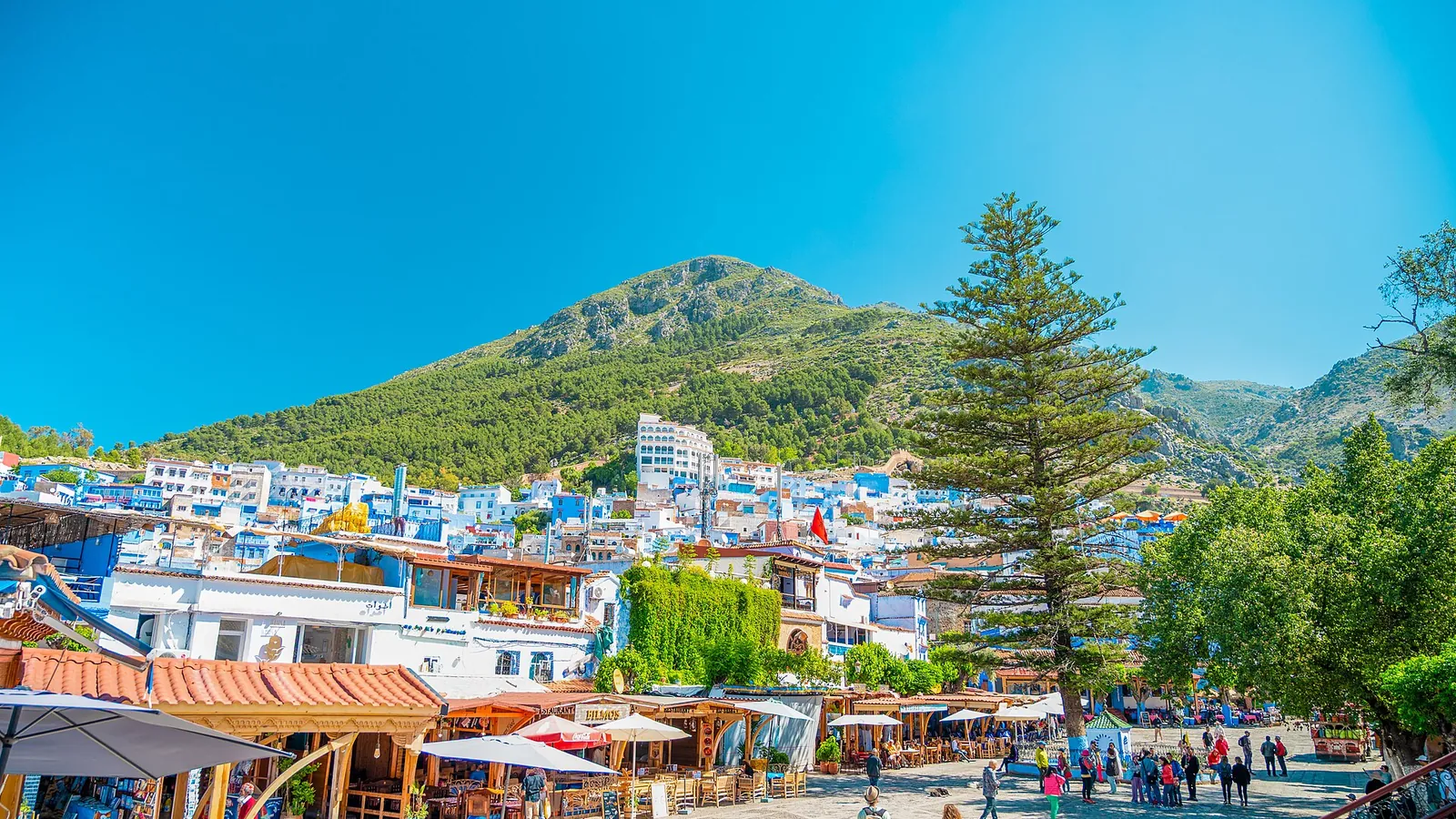
The blue houses of Chefchaouen with the Rif mountains rising behind

Tanger-Tétouan-Al Hoceïma, Rif Mountains · Morocco

Chefchaouen

A small mountain town in the Rif, washed in every shade of blue, with a relaxed pace, waterfalls nearby and some of the best walking in northern Morocco.

  • Best time April–June and September–November
  • Stay 1–2 days
  • Good for Photography, walking, relaxing, crafts, an easy pace

Photo: Badr Rachadi · CC BY-SA 4.0

Welcome to Chefchaouen

Chefchaouen was founded in 1471 as a small fortress, or kasbah, to defend the region against Portuguese attacks on the northern coast. After the fall of Granada in 1492, it received waves of Muslim and Jewish refugees from Andalusia, who shaped its architecture, its whitewashed houses and its red-tiled roofs. It remained closed to foreigners until the Spanish took it in 1920, and it became part of Morocco again after independence in 1956.

The blue is the town's signature. The tradition is often traced to the Jewish refugees who settled here, with blue symbolising the sky and heaven, though the story is disputed and much of the blue is now repainted regularly for visitors. Whatever its origin, the effect of blue-washed steps, doorways, pots and walls against the green Rif Mountains is remarkable.

Chefchaouen sits at about 600 metres, and the air is cool and fresh. It is small, relaxed and very photogenic, and it makes a welcome pause between the intensity of Fes and the Mediterranean coast.

  • Scenic Region
  • Culture & Arts
  • Mountains

Why visit

Why visit Chefchaouen?

Chefchaouen is a place to slow down, with an atmosphere unlike the imperial cities.

  • A unique look

    Streets, stairs and doorways washed in shades of blue, with terracotta pots and painted doors.

  • Relaxed and walkable

    The medina is small, and there is little hard selling compared with Marrakech or Fes.

  • Mountain scenery

    The Rif Mountains and Talassemtane National Park offer walking, waterfalls and cedar forest.

  • Crafts and food

    Woven blankets, wool goods, goat's cheese and honey are sold in the market.

  • Andalusian traces

    The whitewashed houses and Spanish influence recall southern Spain, which lies across the strait.

Main attractions

Top things to see in Chefchaouen

The medina is small, and one full day covers it, but the surroundings make it worth staying a night.

  1. The blue medina

    The heart of the town, where every stair and doorway seems to have been painted for a photograph. The blue changes with the light and is at its best in early morning and late afternoon.

    Tip Go early, and be respectful when photographing residents.

  2. Plaza Uta el-Hammam

    The main square, shaded by trees and lined with cafés facing the Kasbah and the Great Mosque, whose octagonal minaret is unusual in Morocco.

    Tip Have a mint tea and watch the town go by.

  3. The Kasbah and Ethnographic Museum

    The 15th-century fortress with a garden courtyard, a small museum of regional crafts and a tower with views over the roofs.

    Tip Climb the tower for the panorama.

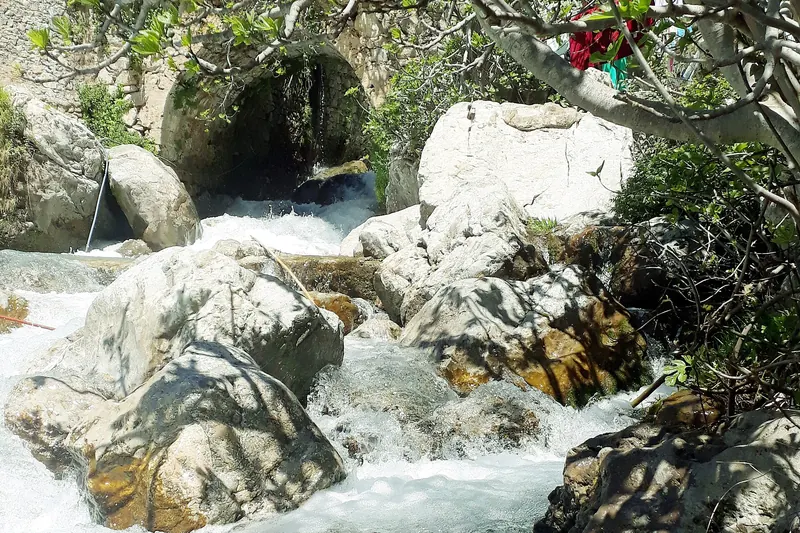
  4. The stream and waterfall at Ras El Maa on the edge of Chefchaouen

    Ras El Maa

    The spring at the top of the town where the river emerges from the mountain, with a waterfall, small cafés and old washing places.

    Tip Walk up in the afternoon.

  5. The Spanish Mosque

    A disused mosque on a hilltop east of town, built by the Spanish in the 1920s, reached by a 30-minute walk. It is the classic sunset viewpoint.

    Tip Take water and a jacket.

Things to do

Best things to do in Chefchaouen

Chefchaouen is for walking, photography and doing very little.

  1. Wander at dawn

    The medina is empty in the early morning, and the light is soft. It is the best time for photographs.

    Tip Set an alarm.

  2. Walk to the Spanish Mosque at sunset

    A short climb gives a view over the blue town and the surrounding mountains.

    Tip Go about an hour before sunset.

  3. Walk to the Akchour waterfalls

    A day trip to Talassemtane National Park, where a trail leads to the Akchour waterfalls and the rock formation known as God's Bridge.

    Tip Take a shared taxi from town, and check trail conditions.

  4. Shop for wool and crafts

    Woven blankets, hats, and locally made goat's cheese and honey.

    Tip Bargain politely.

  5. Sit in a café

    The terraces around Plaza Uta el-Hammam are good for slow tea and coffee.

    Tip Try the rooftop cafés for views.

  6. Continue to the coast

    Tetouan, the Mediterranean beaches and Tangier are within a few hours.

    Tip Buses from the main station.

Local food

What to eat in Chefchaouen

Chefchaouen's cooking is northern Moroccan, with Andalusian touches, and it is known for its goat's cheese.

  • Jben (goat's cheese)

    Fresh white goat's cheese, sold in the market wrapped in leaves, and eaten with honey and bread.

    Where to try it The market and cafés.

  • Tagine and couscous

    Local versions, often with vegetables and preserved lemon.

    Where to try it Restaurants around the square.

  • Bissara

    A thick bean soup, popular on cool mornings.

    Where to try it Street stalls.

  • Grilled meats

    Skewers and kefta, served with bread and salads.

    Where to try it Small grill restaurants.

  • Mint tea and pastries

    Served in cafés with almond pastries.

    Where to try it Plaza Uta el-Hammam.

Accommodation

Where to stay in Chefchaouen

Most visitors stay in the medina, in small guesthouses with roof terraces.

  • The medina

    Small riads and guesthouses, some with views of the mountains.

    Best for: Atmosphere and walkability

  • The edge of town

    Hotels with views over the medina and easier access for cars.

    Best for: Easy parking and quieter nights

What a night costs

Budget guesthouse
US$20–45 per night
Mid-range riad
US$60–110 per night
Boutique hotel
US$120–220 per night
Meal at a local restaurant
US$5–12 per person

Transport

Getting to and around Chefchaouen

Chefchaouen is in the Rif, and the nearest major cities are Tangier, Tetouan and Fes.

Getting there

  • Bus from Fes

    About 4 hours on CTM or Supratours.

    Book ahead.

  • Bus or grand taxi from Tangier or Tetouan

    About 2 hours 30 minutes from Tangier, and about 1 hour 30 minutes from Tetouan.

    Buses run several times a day.

  • Private driver or car

    Chefchaouen is a scenic drive, and works as a stop between Fes and Tangier.

    The roads through the Rif are winding.

Getting around

The town is small and walkable.

  • Walking

    Everything in the medina is on foot, with steep steps.

    Wear comfortable shoes.

  • Taxis

    Petits taxis serve the edges of town, and shared taxis go to Akchour.

    Agree fares.

When to go

Best time to visit Chefchaouen

Chefchaouen has a mild, wetter climate than the south, with cold, damp winters.

  • Spring (March–May)

    Best time

    Warm and green, with wildflowers.

  • Summer (June–August)

    Good

    Warm and busy, but cooler than the interior.

  • Autumn (September–November)

    Best time

    Pleasant and quieter.

  • Winter (December–February)

    Quiet

    Cold and rainy, with few visitors.

Worth planning around: Winter for waterfall hikes, and busy weekends in summer.

Itinerary

Two days in Chefchaouen

A day for the medina and a day for the mountains.

  1. Day1

    The blue medina

    Streets and views.

    • Morning Wander the medina at dawn.
    • Afternoon The Kasbah and Ras El Maa.
    • Evening Sunset at the Spanish Mosque.
  2. Day2

    Into the mountains

    Waterfalls and walking.

    • Morning A shared taxi to Akchour.
    • Afternoon Walk to the waterfalls and God's Bridge.
    • Evening Dinner on Plaza Uta el-Hammam.

Travel tips

Chefchaouen travel tips

A few tips help you enjoy the town.

  • Go early in the morning for photographs without crowds.
  • Ask before photographing people.
  • Be wary of touts who offer cannabis. The Rif is known for its cultivation, but it is illegal to buy or use.
  • Bring layers. Evenings and winters can be cold.
  • Wear comfortable shoes for the steps.
  • Stay a night rather than making a day trip.

FAQ

Chefchaouen: frequently asked questions

Why is Chefchaouen blue?

The tradition is often attributed to Jewish refugees who settled here in the 20th century, with blue symbolising heaven. The truth is disputed, and today the paint is renewed for visitors.

How long do you need in Chefchaouen?

One night is enough for the medina. Two nights lets you walk to the waterfalls.

Is Chefchaouen safe?

Generally yes. Touts may offer cannabis, which is illegal, and it is best to decline.

Is it crowded?

It can be at midday and on weekends, but early mornings and evenings are calm.

Can I visit as a day trip from Fes?

It is possible but long. It is better to stay a night.

What is the best time to visit?

Spring and autumn. Winter is cold and wet.

Read next

Related travel articles

Where to go

Beyond the Big Names: Places Worth the Detour

The most visited place in a country is rarely its best, and it is almost never its best value. This is a method for finding the destinations that do not make the postcards — and a set of examples from five of the 50 countries on this site.

Practical

Packing by Season and Trip Type

Most packing advice is a list of things. This is the opposite: the small number of decisions that determine whether your luggage helps or hinders, organised by the kind of trip you are actually taking.

Advertisement