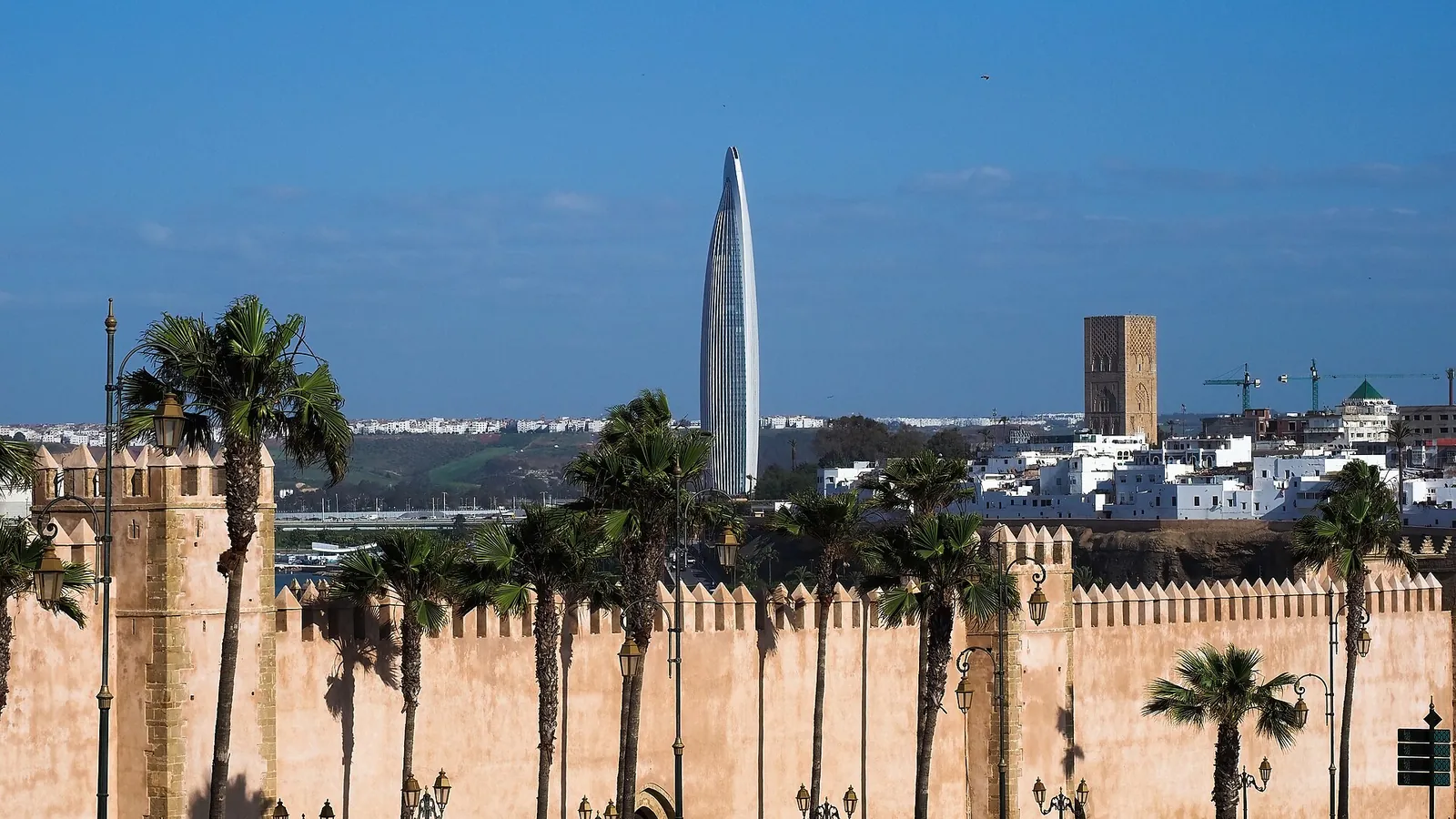
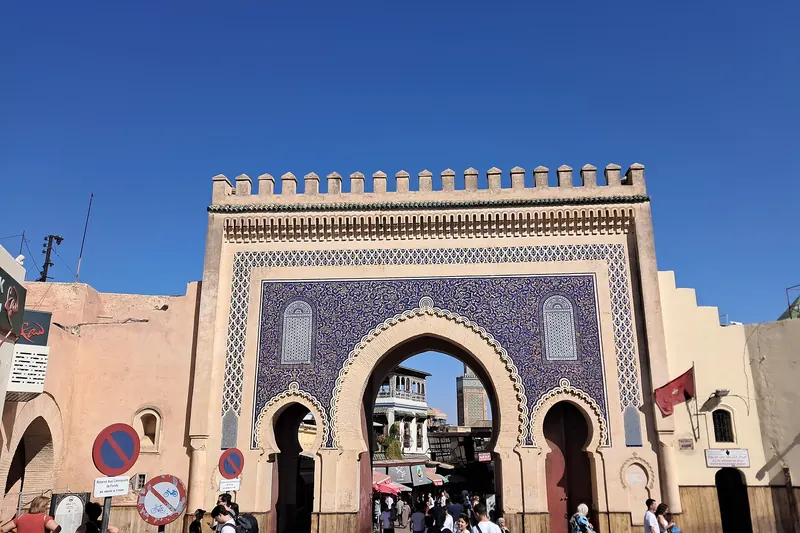
The walls of the Kasbah of the Udayas in Rabat with a modern tower behind

Rabat-Salé-Kénitra, Atlantic coast · Morocco

Rabat

The calm, green and surprisingly relaxed capital, with a blue-and-white kasbah above the river, an unfinished medieval minaret and a modern city of museums and boulevards.

  • Best time March–June and September–November
  • Stay 1–2 days
  • Good for Relaxed sightseeing, history, museums, a calm base

Photo: Petar Milošević · CC BY-SA 4.0

Welcome to Rabat

Rabat has been the capital of Morocco since the French made it the seat of the protectorate in 1912, and it remained the capital after independence in 1956. It sits on the Atlantic coast at the mouth of the Bouregreg river, facing its twin, Salé. Unlike Marrakech or Fes, it is calm, green and easy to navigate, and it has a more relaxed pace.

Its history goes back much further. The Romans had a settlement at Chellah, the Almohad sultan Yacoub al-Mansour began a great mosque in the 12th century whose unfinished minaret, the Hassan Tower, is now the city's symbol, and the Kasbah of the Udayas dates from the same period. In 2012 UNESCO listed the city as 'Rabat, Modern Capital and Historic City: a Shared Heritage', recognising both the historic monuments and the French-designed new city.

It is a good place to slow down, with pleasant cafés, a growing art scene, the Mohammed VI Museum of Modern and Contemporary Art, and an unhurried medina where shopkeepers rarely hassle. Many travellers spend a day here between Casablanca and the imperial cities.

  • Capital City
  • UNESCO Site
  • Historic Site
  • Culture & Arts

Why visit

Why visit Rabat?

Rabat is one of the easiest and most relaxed Moroccan cities, with excellent monuments.

  • The Kasbah of the Udayas

    A 12th-century fortress above the river with a blue-and-white village and Andalusian garden.

  • The Hassan Tower and the Mausoleum

    An unfinished minaret and forest of columns face the elaborate tomb of Mohammed V.

  • The Chellah

    Roman and Marinid ruins in a walled garden, with storks nesting on the walls.

  • A relaxed medina

    Shopping without the pressure of Marrakech or Fes.

  • Easy connections

    Rabat is on the main train line between Tangier, Casablanca and Fes.

Main attractions

Top things to see in Rabat

The main sights can be seen in a day, with a second day for the Chellah and museums.

  1. The Kasbah of the Udayas

    A fortified quarter above the river, entered by an ornate Almohad gate, with white-and-blue lanes, a small museum and the Andalusian Gardens. The café with terraces above the river serves mint tea.

    Tip Go in the morning, and walk to the river viewpoint.

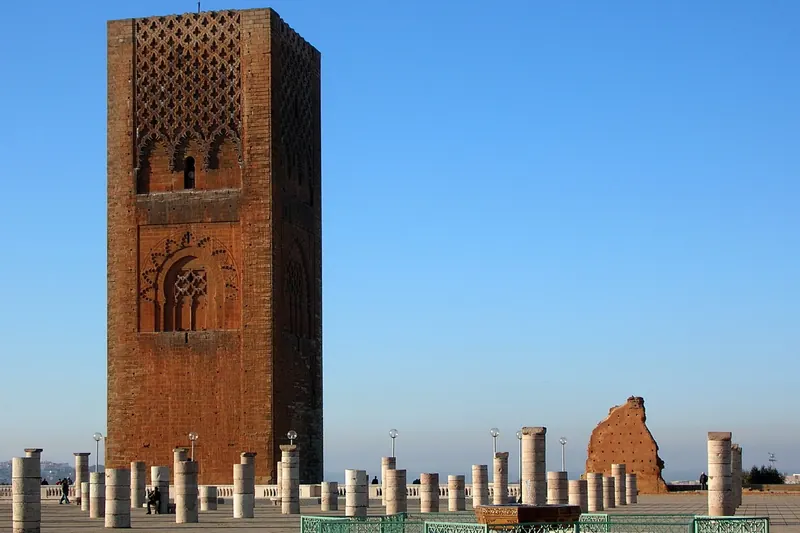
  2. The unfinished red-sandstone Hassan Tower and rows of columns in Rabat

    The Hassan Tower

    The minaret of a mosque begun in 1195 that was meant to be the largest in the world. It was left unfinished after the sultan's death, and rows of columns remain in the space.

    Tip Visit with the Mausoleum next door.

  3. The Mausoleum of Mohammed V

    A white marble tomb of the king who led Morocco to independence, and his sons, decorated with carved wood and tile, guarded by royal guards on horseback.

    Tip Open to visitors, and free.

  4. The Chellah

    A walled necropolis on the site of a Roman town, later a Marinid burial ground, now overgrown with gardens and home to storks.

    Tip Go in the morning, when it is quiet.

  5. The medina and Rue des Consuls

    A calm medina with a long market street and old consuls' houses, along which the shops sell crafts.

    Tip Bargain lightly.

  6. The Mohammed VI Museum

    A modern museum of Moroccan and international art, with rotating exhibitions.

    Tip Check current shows.

Things to do

Best things to do in Rabat

Rabat is a city for walking, with time for cafés and views.

  1. Stroll the Andalusian Gardens

    Shady paths with orange trees and Andalusian design inside the Kasbah.

    Tip Combine with mint tea in the café.

  2. Walk along the river

    The Bouregreg promenade has views across to Salé and to the kasbah.

    Tip Cross by small boat for a few dirhams.

  3. Visit Salé

    Rabat's twin across the river has a historic medina and the Marinid Medersa.

    Tip Go by tram or boat.

  4. Watch the changing of the guard

    Ceremonial guards on horseback stand at the Mausoleum.

    Tip Photographs are welcome from a distance.

  5. Try the beaches

    Rabat's beach, by the river mouth, is popular with locals in summer.

    Tip Currents can be strong.

  6. Have a long café lunch

    The Ville Nouvelle has French-style cafés and restaurants, where Rabatis linger.

    Tip Try the Avenue Mohammed V.

Local food

What to eat in Rabat

Rabat's food is fresh and simple, with strong seafood and pastry traditions.

  • Seafood

    Fish and prawns grilled or in tagines, from restaurants along the river and the port.

    Where to try it Restaurants near the Bouregreg.

  • Pastries

    French-influenced Moroccan pastries.

    Where to try it Bakeries in the Ville Nouvelle.

  • Tagine

    Standard versions, served in family restaurants.

    Where to try it Restaurants in the medina.

  • Harira

    The classic soup, with dates.

    Where to try it Cafés.

  • Street food

    Sandwiches, fried fish and sweets.

    Where to try it The medina.

Accommodation

Where to stay in Rabat

Rabat has a good mix of hotels and a few riads.

  • The medina and Kasbah

    Small riads and guesthouses.

    Best for: Atmosphere

  • The Ville Nouvelle

    Hotels near the station and Avenue Mohammed V.

    Best for: Cafés and transport

What a night costs

Budget hotel
US$30–60 per night
Mid-range hotel or riad
US$70–140 per night
Luxury hotel
US$170–350 per night
Meal at a local restaurant
US$6–15 per person

Transport

Getting to and around Rabat

Rabat lies on the main north-south railway.

Getting there

  • Train

    About 1 hour from Casablanca, about 1 hour 20 minutes from Tangier on the Al Boraq, and about 3 hours from Fes.

    Rabat Ville is the central station.

  • Flight to Rabat–Salé (RBA)

    Limited flights from Europe.

    Many visitors use Casablanca (CMN).

  • Bus

    CTM buses connect Rabat to Fes and other cities.

    Book ahead.

Getting around

Rabat is compact, and a tram and taxis link the main sights.

  • Tram

    Two lines run through Rabat and to Salé.

    Cheap and reliable.

  • Petits taxis

    Blue taxis serve the city.

    Ask for the meter.

  • Walking

    The centre is pleasant on foot.

    Comfortable shoes help.

When to go

Best time to visit Rabat

Rabat has a mild, coastal climate, with cooler summers than the interior.

  • Spring (March–May)

    Best time

    Mild and green.

  • Summer (June–August)

    Good

    Warm, with a sea breeze.

  • Autumn (September–November)

    Best time

    Pleasant.

  • Winter (December–February)

    Quiet

    Cool and rainy.

Worth planning around: Winter rain.

Itinerary

Two days in Rabat

The main monuments on the first day and a slower second.

  1. Day1

    Monuments

    Kasbah and tower.

    • Morning The Kasbah of the Udayas.
    • Afternoon The Hassan Tower and the Mausoleum.
    • Evening Dinner in the Ville Nouvelle.
  2. Day2

    Ruins and the medina

    A slower day.

    • Morning The Chellah.
    • Afternoon The medina and Rue des Consuls.
    • Evening A riverside walk.

Travel tips

Rabat travel tips

Rabat is easy, and a few tips help.

  • Visit the Chellah in the morning.
  • Use the tram, which is cheap and clean.
  • Dress modestly at the Mausoleum.
  • Combine Rabat with Casablanca, an hour apart by train.
  • Cross the river by boat for the views.
  • Bargain gently in the medina, which is less pushy than others.

FAQ

Rabat: frequently asked questions

Is Rabat worth visiting?

Yes, for a day or two. It is more relaxed than the tourist cities, with excellent monuments.

Is Rabat the capital of Morocco?

Yes, since 1912. Casablanca is larger, and Marrakech and Fes are better known.

Can I visit the Mausoleum of Mohammed V?

Yes, the Mausoleum is open to visitors, including non-Muslims, free of charge.

How far is Rabat from Casablanca?

About 90 km, an hour by train.

Is Rabat safe?

Yes, it is one of the calmer Moroccan cities.

What is the Hassan Tower?

An unfinished minaret from the 12th century, part of a mosque that was to be the largest in the world.

Read next

Related travel articles

Heritage

UNESCO Sites Worth Planning a Trip Around

A UNESCO listing tells you a place matters; it does not tell you whether it is worth two days and a detour. This is how to read the list usefully — and which sites reward building a trip around them.

Where to go

Beyond the Big Names: Places Worth the Detour

The most visited place in a country is rarely its best, and it is almost never its best value. This is a method for finding the destinations that do not make the postcards — and a set of examples from five of the 50 countries on this site.

Advertisement