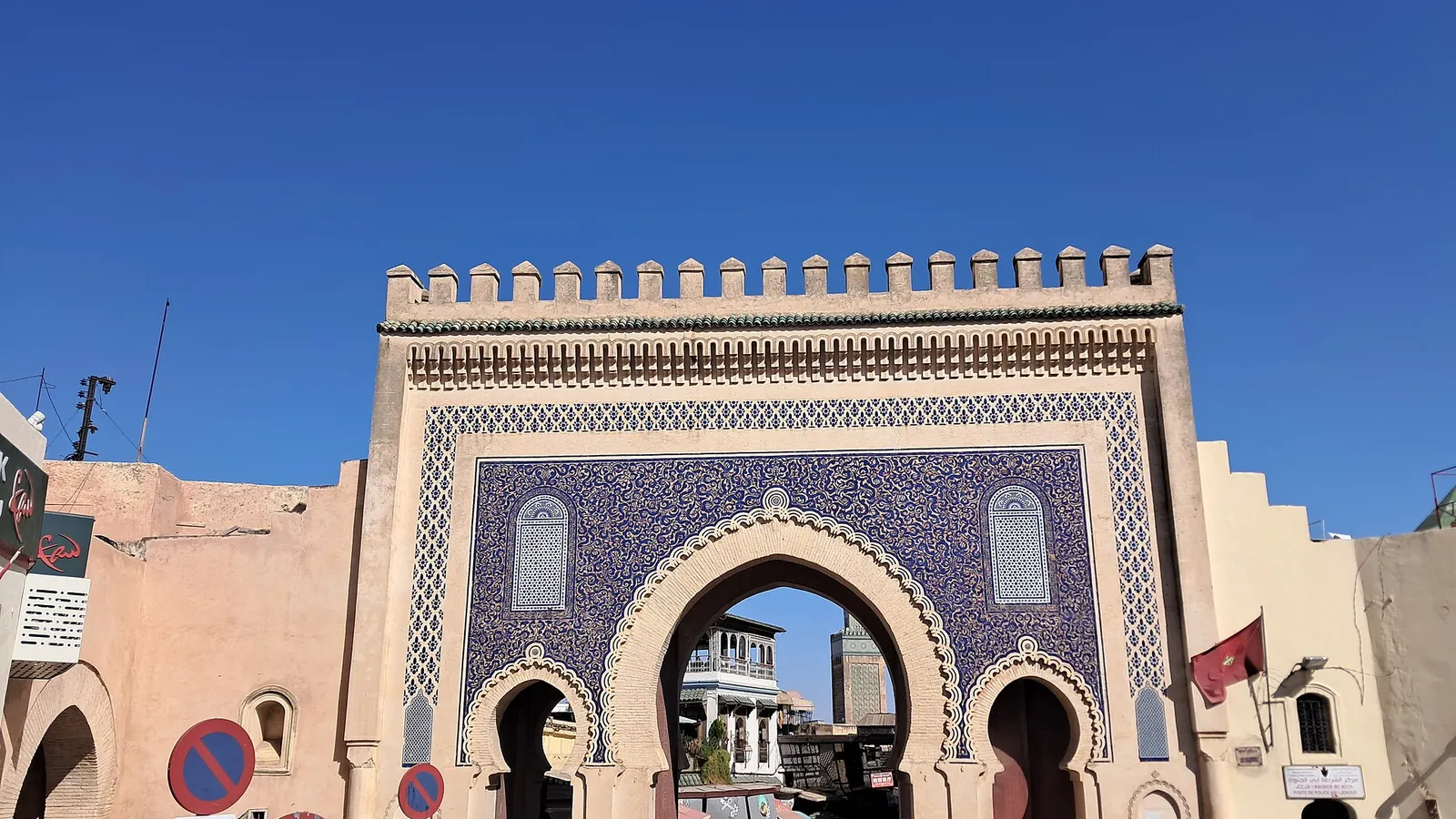
The blue-tiled Bab Boujloud gate at the entrance to the medina of Fes

Fès-Meknès, northern Morocco · Morocco

Fes

The most complete medieval city in the Arab world, a car-free maze of madrasas, tanneries and workshops that has barely changed in centuries.

  • Best time March–May and September–November
  • Stay 2–3 days
  • Good for History, crafts, food, architecture, a medieval atmosphere

Photo: Ideophagous · CC BY-SA 4.0

Welcome to Fes

Fes was founded in 789 by Idris I, and his son Idris II made it his capital around 809. It grew as a centre of learning and trade, receiving waves of refugees from Córdoba and Kairouan in the 9th century, and it has been the intellectual and religious capital of Morocco for much of the time since. UNESCO inscribed the medina in 1981.

The old city, Fes el-Bali, is one of the largest car-free urban areas in the world. Thousands of lanes wind between houses, workshops, fondouks (caravan inns), fountains and mosques, and mules and handcarts carry everything. It is easy to be overwhelmed, and even harder to get out, but with a guide for the first morning, it becomes a place of extraordinary craftwork and quiet corners.

Al-Qarawiyyin, founded in 859 by Fatima al-Fihri, is often described as the oldest continuously operating university in the world. Around it stand the great Marinid madrasas of the 14th century, and outside the walls the newer Ville Nouvelle offers cafés and more modern hotels.

  • UNESCO Site
  • Historic Site
  • Culture & Arts
  • Major City

Why visit

Why visit Fes?

Fes is the best place in Morocco to feel the country's medieval past, and one of the great historic cities of the Islamic world.

  • A living medieval city

    Craftspeople still make brass, leather, ceramics and textiles in the same quarters, by the same methods, as their predecessors.

  • Superb Islamic architecture

    The Bou Inania and Al-Attarine madrasas are covered in carved cedar, stucco and zellige tile.

  • The tanneries

    The Chouara tannery, with its stone vats of dye, is one of the most photographed and pungent sights in Morocco.

  • Real food

    Fes is regarded as the culinary capital of the country, and its pastilla and rich stews are celebrated.

  • Fewer resorts, more life

    Fes remains a working city, and the medina is a place where people live, shop and pray.

Main attractions

Top things to see in Fes

The main sights are in Fes el-Bali. Hire a guide for the first day and then explore alone.

  1. Bab Boujloud

    The blue-tiled gate, from 1913, at the western entrance to the medina. Blue outside, green inside, the colours of the city and of Islam.

    Tip Enter here for the most gradual introduction to the medina.

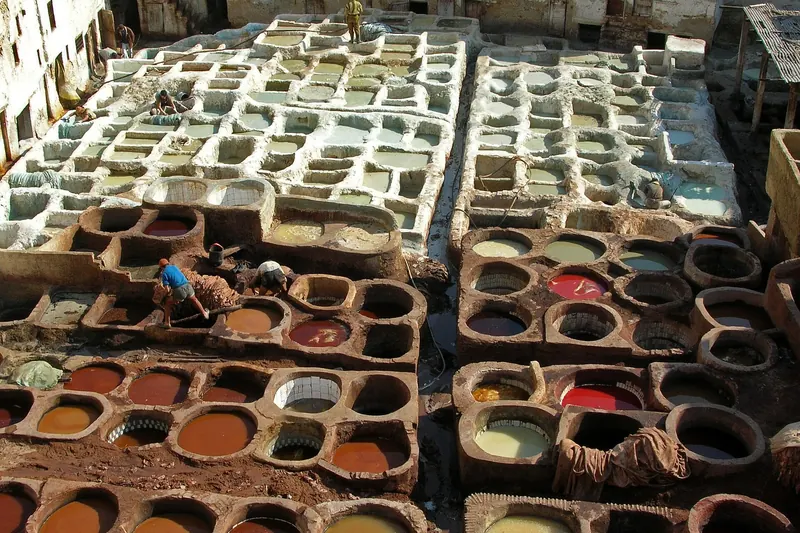
  2. The colourful stone vats of the Chouara tannery in Fes, seen from above

    The Chouara tannery

    A medieval leather tannery where hides are soaked in vats of dye and pigeon droppings. Visitors watch from the terraces of leather shops, which give out sprigs of mint.

    Tip Best in the morning, and you are expected to browse the shop.

  3. The courtyard of the University of al-Qarawiyyin in Fes

    Al-Qarawiyyin and its library

    The mosque and university founded in 859. The interior is closed to non-Muslims, but the gates and courtyard can be glimpsed from outside, and its restored library has reopened to visitors at times.

    Tip Ask your guide about the library's current opening.

  4. Bou Inania Madrasa

    A 14th-century Marinid college with a courtyard of cedar, marble and tile, one of the few religious buildings in Morocco open to non-Muslims.

    Tip Visit early for the best light.

  5. Al-Attarine Madrasa

    A smaller, more intimate 14th-century madrasa with immaculate decoration, next to the spice market.

    Tip Combine it with the spice and perfume stalls.

  6. Fes el-Jdid and the Mellah

    The 13th-century royal quarter and the old Jewish quarter, with distinctive balconies, the palace gates and a Jewish cemetery.

    Tip Go by petit taxi, since it is outside the medina.

  7. The Borj Nord and the Marinid Tombs

    Hilltop viewpoints above the medina, which give the classic panorama of the old city.

    Tip Go at sunset.

Things to do

Best things to do in Fes

Fes rewards a slow rhythm, and wandering with a purpose, whether shopping, eating or learning a craft.

  1. Take a guided medina walk

    A licensed guide takes you through the main lanes, explains the crafts and keeps you from getting lost. Book through a riad for a fair price.

    Tip Agree the price and the length in advance.

  2. Watch the craftspeople

    The Seffarine Square coppersmiths, the weavers, the woodcarvers and the potters all work in the open.

    Tip Ask permission before taking photographs.

  3. Take a cooking class

    Learn to make a tagine or pastilla in a riad kitchen, after a shopping trip to the market.

    Tip Book a day ahead.

  4. Visit the pottery at Ain Nokbi

    The potteries outside the medina fire the celebrated blue Fassi ceramics, and offer demonstrations.

    Tip Combine with the Borj Nord view.

  5. Look at the city from above

    The Marinid Tombs on the hill give a sweeping view over the medina, and are quietest at dusk.

    Tip Take a petit taxi up.

  6. Base yourself for day trips

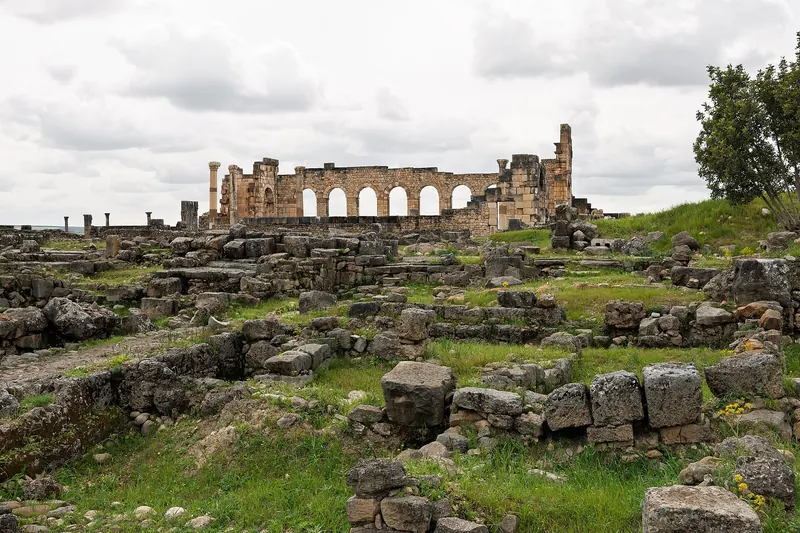
    Meknes, Volubilis and Chefchaouen are all within reach. See Meknes and Volubilis.

    Tip Ask your riad to arrange a driver.

Local food

What to eat in Fes

Fassi cuisine is considered the most refined in Morocco, based on rich sauces, pastry and slow cooking.

  • Pastilla

    The famous pigeon or chicken pie in paper-thin pastry with almonds, cinnamon and sugar.

    Where to try it Riads and upscale restaurants.

  • Rfissa

    Shredded msemen pancakes with chicken, lentils and fenugreek in a spiced broth, traditionally served to new mothers.

    Where to try it Traditional restaurants.

  • Bissara

    A thick, warming fava bean soup with olive oil and cumin, eaten for breakfast in winter.

    Where to try it Street stalls in the medina.

  • Fassi tagine

    Lamb or chicken cooked with dried fruit, saffron and preserved lemon.

    Where to try it Restaurants in the medina.

  • Msemen and harcha

    Flat breads and semolina cakes eaten for breakfast with honey and butter.

    Where to try it Bakeries and cafés.

  • Mint tea and pastries

    Sweet pastries and tea in a café or riad courtyard.

    Where to try it Cafés in the medina.

Accommodation

Where to stay in Fes

Staying in the medina is a major part of the Fes experience, and riads range from simple to palatial.

  • Fes el-Bali

    Riads near Bab Boujloud and the Bou Inania are easiest to reach.

    Best for: Atmosphere

  • Fes el-Jdid

    Guesthouses and small hotels near the Royal Palace.

    Best for: Quieter stays

  • Ville Nouvelle

    The French-built new town, near the station.

    Best for: Modern hotels and easy transport

What a night costs

Budget riad
US$25–60 per night
Mid-range riad
US$70–140 per night
Luxury riad
US$180–400 per night
Meal at a local restaurant
US$5–12 per person

Transport

Getting to and around Fes

Fes is about 200 km east of Rabat and 300 km north-east of Marrakech.

Getting there

  • Train from Casablanca or Rabat

    About 4 hours from Casablanca and 3 hours from Rabat.

    First class is cheap and comfortable.

  • Flight to Fès–Saïs (FEZ)

    Direct flights from several European cities, and from Casablanca.

    The airport is 20 minutes from the centre.

  • Bus or car

    CTM buses from Chefchaouen (about 4 hours) and Meknes (about 1 hour).

    Book the day before.

Getting around

Fes el-Bali has no cars, and the rest of the city is served by taxis.

  • Walking

    The only way in the medina.

    Wear good shoes, and mind mules in the lanes.

  • Petits taxis

    Cheap taxis take you between the gates and the new town.

    Insist on the meter.

  • Guide

    A licensed guide is the best way to find a route.

    Arrange through your riad.

When to go

Best time to visit Fes

Fes is inland and has hot summers and cool, wet winters.

  • Spring (March–May)

    Best time

    Mild, sunny and green.

  • Summer (June–August)

    Think twice

    Hot, often above 35°C.

  • Autumn (September–November)

    Best time

    Warm days, cooler nights.

  • Winter (December–February)

    Quiet

    Cold and wet at times, but few visitors.

Worth planning around: July and August. The Festival of World Sacred Music in spring draws crowds.

Itinerary

Two days in Fes

The classic medina sights with a guide on the first day and self-guided exploring on the second.

  1. Day1

    The medina with a guide

    Gates, crafts and tanneries.

    • Morning Bab Boujloud, the Bou Inania Madrasa and the crafts quarters.
    • Afternoon The Chouara tannery and lunch.
    • Evening Dinner at a riad.
  2. Day2

    On your own

    Slow exploring.

    • Morning Al-Attarine Madrasa and the spice market.
    • Afternoon Fes el-Jdid and the Mellah, or a cooking class.
    • Evening Sunset at the Marinid Tombs.

Travel tips

Fes travel tips

Fes is a maze, and a few tips make it easier.

  • Hire a licensed guide for the first morning. They keep touts away and orient you.
  • Ignore anyone who says a street is closed or that a shop is not open.
  • Make a note of your riad's name and gate. Landmarks help.
  • Move out of the way of donkeys and mules when you hear 'balak'.
  • Take cash for shopping and taxis.
  • The tannery visit is best in the morning.
  • Fridays are quieter, with shops closed at midday for prayer.

FAQ

Fes: frequently asked questions

How many days do you need in Fes?

Two or three. One day gives you a taste, but the medina rewards a slower pace.

Do I need a guide in Fes?

It is strongly recommended for the first morning. The medina has thousands of lanes, and a licensed guide helps you navigate and avoid unofficial ones.

Is Fes safe?

Yes, for most visitors. Expect hassle from touts, and take care of valuables in crowded lanes.

Is Fes better than Marrakech?

Fes is older, more authentic and less polished. Marrakech is livelier and easier. Many visitors do both.

Can non-Muslims enter mosques in Fes?

Generally no. The Bou Inania Madrasa and some others are open as historic monuments, but most mosques are closed to non-Muslims.

Is the tannery smell that bad?

It is pungent, and shops give mint sprigs to hold to your nose. It is worth seeing.

Read next

Related travel articles

Food

A Country-by-Country Food Primer

Eating well abroad is mostly a matter of knowing when meals happen, how the menu is structured and which dish belongs to the place you are standing in. This covers all three for the five countries in this guide, plus the signals that separate a restaurant that feeds locals from one that feeds coaches.

Heritage

UNESCO Sites Worth Planning a Trip Around

A UNESCO listing tells you a place matters; it does not tell you whether it is worth two days and a detour. This is how to read the list usefully — and which sites reward building a trip around them.

Advertisement