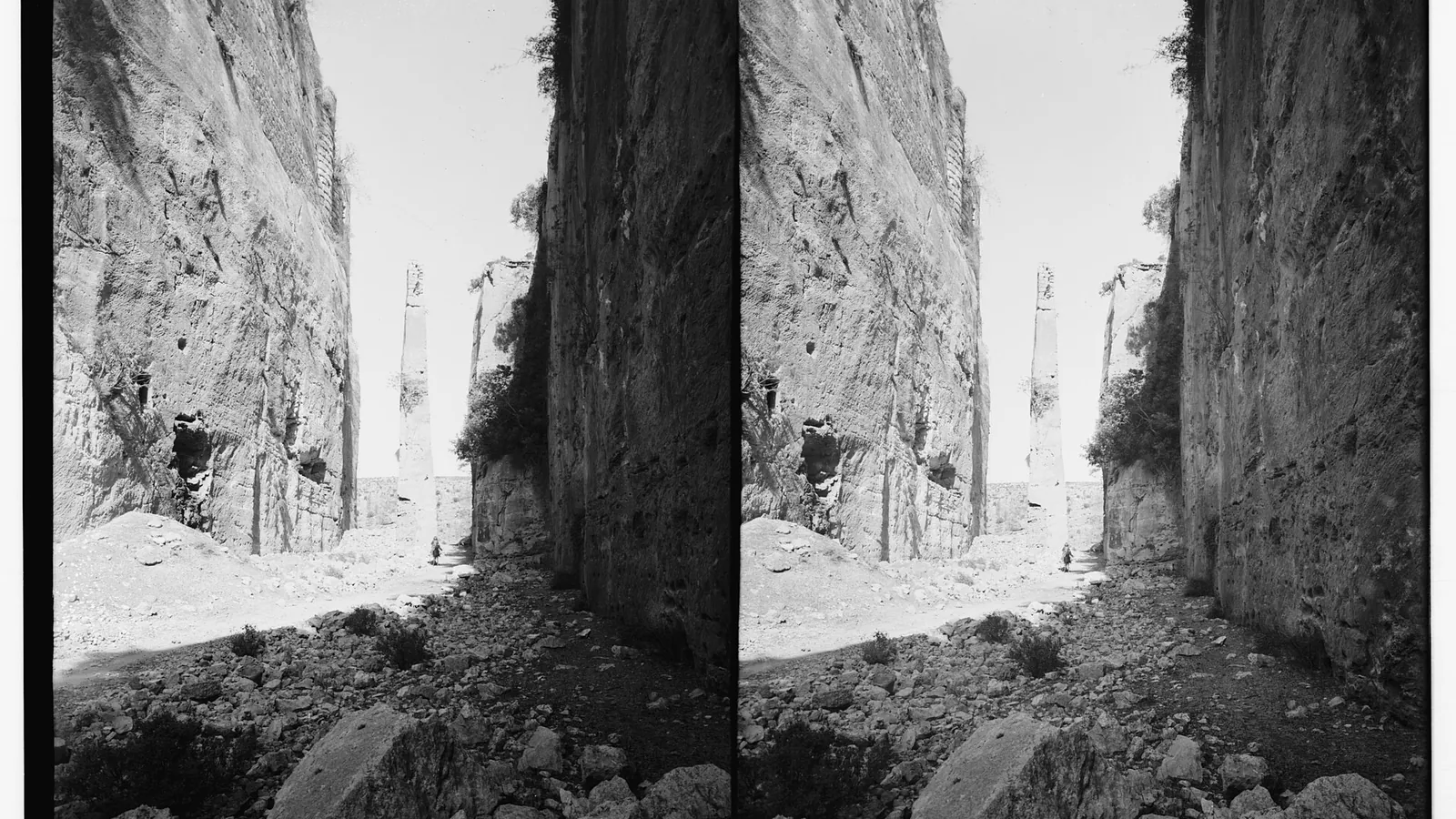
A historic photograph of the tall stone needle in the rock-cut moat that once carried the drawbridge at Saladin's Castle

Latakia Governorate, coastal mountains · Syria

Saladin's Castle (Qal'at Salah ed-Din)

A Crusader fortress on a forested ridge, cut off from the hill behind it by a moat carved 28 metres deep out of solid rock, with a single needle of stone left to carry the drawbridge.

  • Site status Largely intact, information limited
  • Known for The rock-cut moat and stone needle, the Crusader keep, Saladin's conquest in 1188

Photo: Matson Collection · Public domain

Welcome to Saladin's Castle

The castle now called Qal'at Salah ed-Din, Saladin's Castle, was known to the Crusaders as Sahyun (or Saône). It stands on a narrow ridge, about 450 metres above sea level, between two deep ravines in the coastal mountains, some 30 kilometres east of Latakia. The site was fortified by the Byzantines in the 10th century, and after the Crusaders took it around 1108 they turned it into one of the strongest castles in their principality of Antioch.

The Crusaders' great achievement was to cut the moat. To separate the castle from the ridge behind it, they hacked a huge ditch about 28 metres deep and 20 metres wide out of the solid rock, removing an enormous quantity of stone in the process. They left a slender column of rock in the ditch, about 28 metres high, to carry a drawbridge. A keep, a chapel and a series of towers and halls stood beyond.

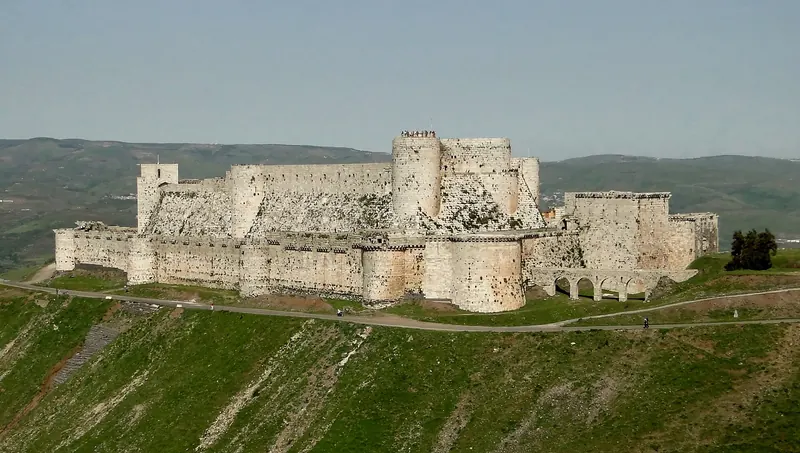
In July 1188, Saladin attacked the castle with siege engines, and after three days the garrison surrendered. The Ayyubids added a palace, a mosque and other buildings, and the castle was later used by the Mamluks. UNESCO inscribed it in 2006, together with Krak des Chevaliers, as 'Crac des Chevaliers and Qal'at Salah El-Din'. This page describes its history and what is known of its condition, and is not a guide to visiting.

  • UNESCO Site
  • Historic Site
  • Mountains

Why it matters

Why Saladin's Castle matters

The castle matters for the boldness of its engineering and for how much of it survives, in a setting that remains remote and quiet.

  • The rock-cut ditch

    One of the largest man-made ditches of the Middle Ages, cut entirely out of rock, with a needle of stone left standing in it.

  • Crusader and Ayyubid architecture together

    A Crusader keep and towers stand alongside an Ayyubid palace and a mosque, showing how the site changed hands and was reused.

  • Saladin's campaign

    The castle fell in 1188 during the campaign that reversed much of the Crusaders' conquests after the Battle of Hattin, and it is one of the best-documented sieges of the period.

  • A wooded setting

    Unlike the desert castles, Sahyun stands in forest, on a ridge with views over the valleys and, on a clear day, the sea.

  • A companion to Krak des Chevaliers

    Seen together, the two castles show the range of Crusader and Islamic military building in Syria.

Main attractions

Key sites and monuments in Saladin's Castle

The following are the main features of the castle as they were documented before the war. It is not a visitor route.

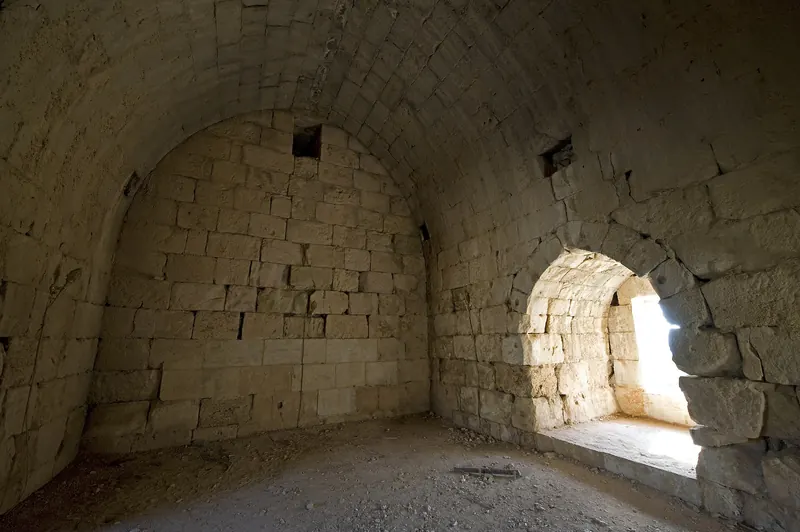
  1. A vaulted hall inside Saladin's Castle, photographed in 2008

    The rock-cut moat and the needle

    A ditch about 28 metres deep, cut through the ridge to isolate the castle, with a single column of rock, the 'needle', that carried a drawbridge across the gap.

  2. The Crusader keep

    A great square keep of the 12th century with thick walls, an entrance protected by a tower, and vaulted rooms, on the highest part of the ridge.

  3. The Byzantine castle

    The remains of the earlier fortress on the ridge, including a chapel and a large cistern, that were built into the Crusader defences.

  4. The Ayyubid palace and mosque

    A palace, a hammam and a mosque built in the 13th century after Saladin's conquest, with fine decorative stonework.

  5. The towers and vaulted halls

    A series of towers along the walls, and large vaulted halls used as stables and storerooms.

  6. The cisterns

    Underground cisterns cut into the rock, which held enough water for a long siege.

Condition and access

Saladin's Castle today

Saladin's Castle is thought to have suffered much less damage than Krak des Chevaliers, though it lies in a region affected by fighting, and access has been limited for years.

  • During the war

    Fighting occurred in the mountains of Latakia province from 2012, and the area near the castle was contested for a time. UNESCO reported concerns but no comprehensive assessment of damage, and the structure is thought to be largely intact.

  • Condition

    The castle's massive stone construction has helped it survive. Some looting and neglect were reported, and vegetation has grown over parts of the site.

  • World Heritage status

    Together with Krak des Chevaliers, it has been on the List of World Heritage in Danger since 2013.

  • The wider region

    The Syrian coast and its mountains saw serious outbreaks of sectarian violence in March 2025, and the security situation in the region has remained unsettled.

  • Advice

    Most governments advised against travel to Syria, including the coast, at the time of writing. Check your government's current advice. This page is not a recommendation to go.

FAQ

Saladin's Castle: frequently asked questions

Why is it called Saladin's Castle?

Because Saladin captured it from the Crusaders in July 1188. Before that the Crusaders called it Sahyun, or Saône in French. In Arabic it is Qal'at Salah ed-Din, 'the castle of Saladin'.

What is special about the moat?

It was cut out of solid rock, about 28 metres deep and up to 20 metres wide. The builders left a tall column of rock standing in the middle to support a drawbridge, which is one of the most striking features of any medieval castle.

Is it part of the same UNESCO site as Krak des Chevaliers?

Yes. UNESCO listed them together in 2006 as 'Crac des Chevaliers and Qal'at Salah El-Din', because they show the interchange of military design between Crusaders and Muslims.

How badly was it damaged in the war?

It is thought to have suffered relatively little compared with other Syrian sites, but it was not accessible to independent inspection for years, and detailed information is limited.

Is Saladin's Castle safe to visit?

Most governments advised against all travel to Syria at the time of writing, including the coastal mountains. This site does not recommend travel. Check your government's current advice.

Who was Saladin?

Salah ad-Din Yusuf ibn Ayyub, a Kurdish-born sultan of Egypt and Syria who founded the Ayyubid dynasty and led the Muslim reconquest of Jerusalem in 1187. He died in Damascus in 1193 and is buried beside the Umayyad Mosque.

Read next

Related travel articles

Heritage

UNESCO Sites Worth Planning a Trip Around

A UNESCO listing tells you a place matters; it does not tell you whether it is worth two days and a detour. This is how to read the list usefully — and which sites reward building a trip around them.

Where to go

Beyond the Big Names: Places Worth the Detour

The most visited place in a country is rarely its best, and it is almost never its best value. This is a method for finding the destinations that do not make the postcards — and a set of examples from five of the 50 countries on this site.

Advertisement