Welcome to Apamea
Apamea was founded around 300 BCE by Seleucus I Nicator, one of the generals of Alexander the Great who divided his empire, and named after his Persian wife, Apama. It served as the main military base of the Seleucid kingdom, with stables for hundreds of war elephants and a huge army barracks, on a plateau above the Orontes River, about 55 km north-west of Hama.
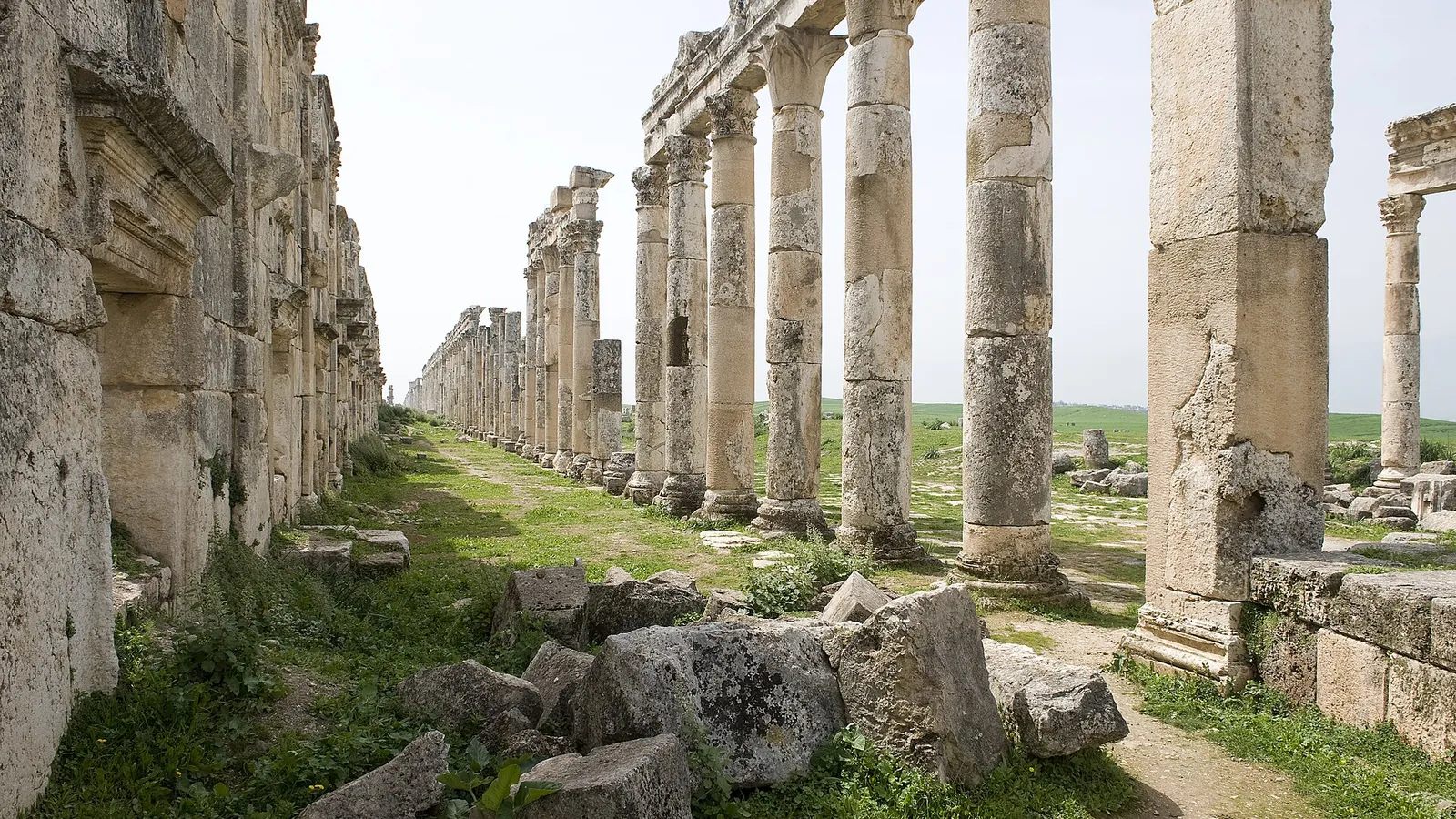
Under the Romans, Apamea became one of the largest and wealthiest cities in Syria. A Roman census recorded more than 100,000 citizens in the 1st century CE. Its main street, the Cardo Maximus, was lined with columns on both sides, many of them decorated with spiral fluting or twisting patterns, and it ran straight for about 1.85 kilometres from the northern gate to the southern gate. A large theatre, temples, baths and mansions with mosaic floors filled the rest of the city.
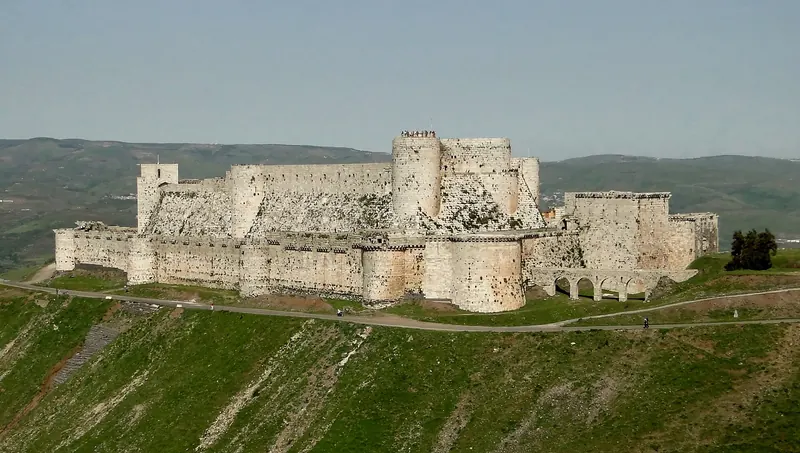
A series of earthquakes, including one in 1157, ruined the city, and the site was taken over by a Crusader and then Ottoman fort on the neighbouring hill, Qalaat al-Mudiq. Excavations by Belgian archaeologists from the 1930s revealed the colonnade and the mosaics. During the war, the site suffered some of the most extensive looting anywhere in Syria. This page describes its history and condition, and is not a guide to visiting.