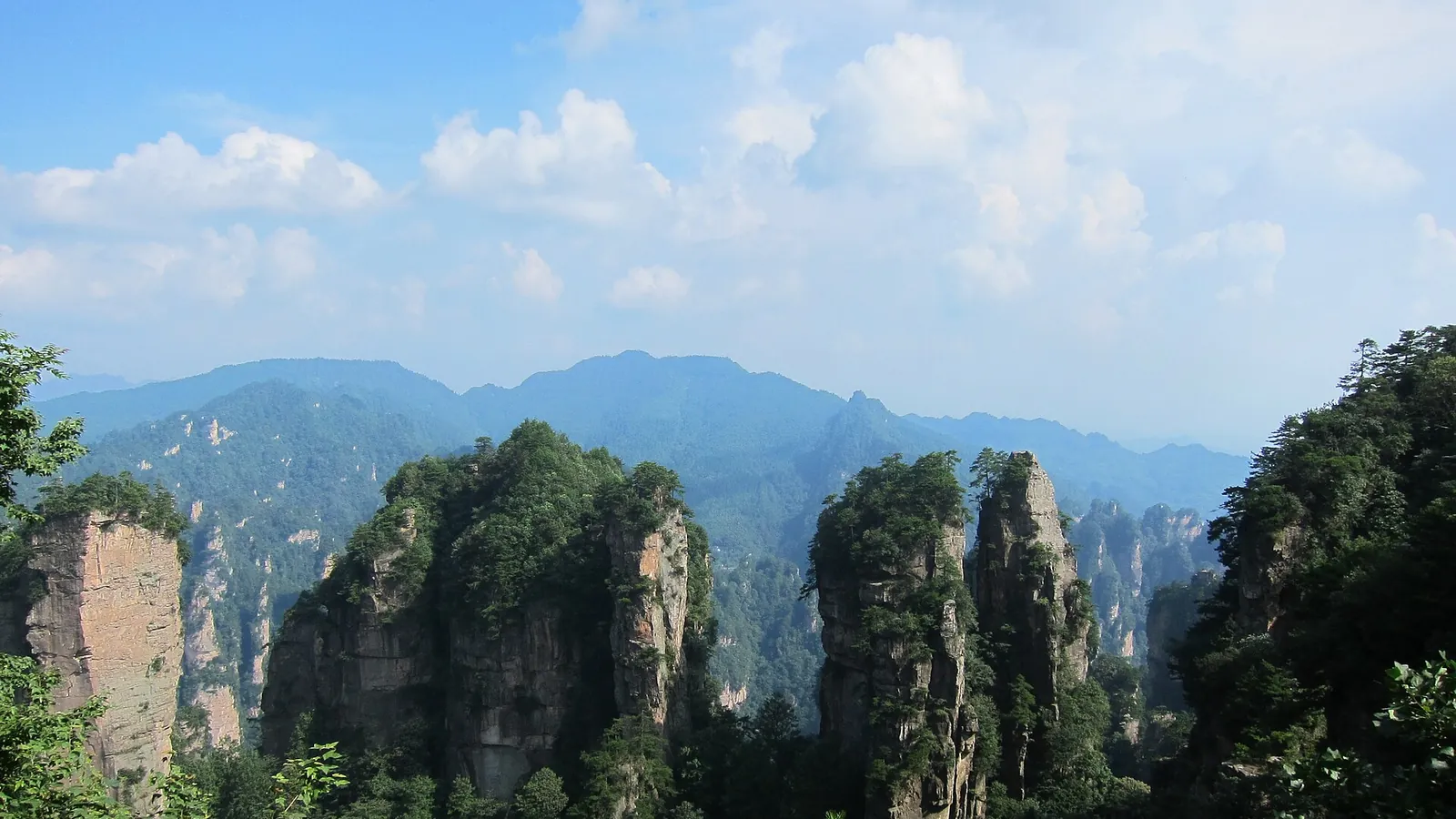
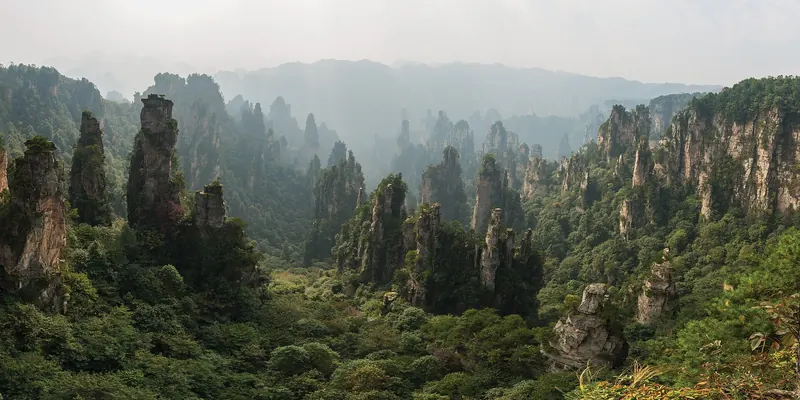
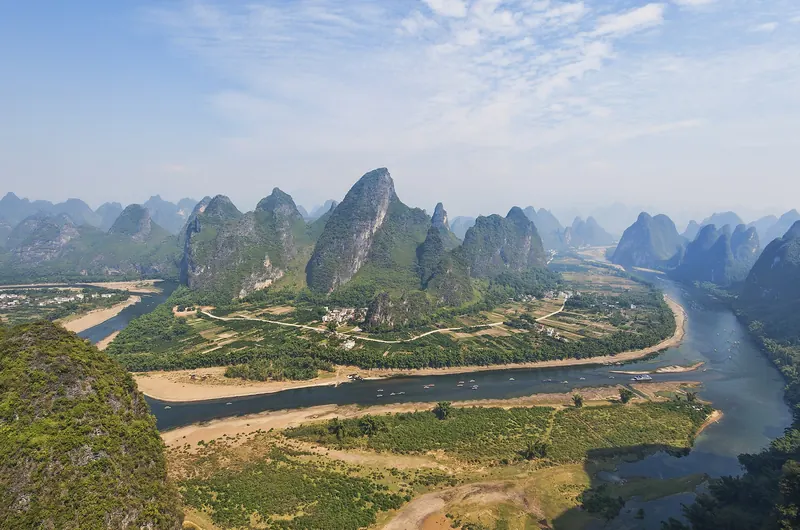
Thousands of sandstone pillars rising through mist in Zhangjiajie National Forest Park

Hunan · China

Zhangjiajie

Thousands of sandstone pillars rising straight out of the forest floor, the real-world landscape that inspired the floating mountains of a famous Hollywood fantasy film.

  • Best time April–May and September–November
  • Stay 3 days
  • Good for Nature, hiking, photography, dramatic scenery

Photo: Kuruman from Tokyo, Japan · CC BY 2.0

Welcome to Zhangjiajie

Zhangjiajie looks like nowhere else on earth, which is exactly why a Hollywood art department used it as the visual reference for an alien planet. Over three thousand narrow sandstone pillars, some rising more than 200 metres straight out of the forest floor, formed over hundreds of millions of years as softer surrounding rock eroded away and left only the hardest quartzite columns standing. On a misty morning, with cloud drifting between the pillars at different heights, the effect really does look like something floating.

China's first national forest park, designated in 1982, the site's international fame arrived decades later when a specific pillar, now officially renamed Avatar Hallelujah Mountain, was confirmed as a direct inspiration for the film's floating Hallelujah Mountains. That renaming turned an already-remarkable natural site into a minor pilgrimage destination, but the crowds have not diminished what is underneath: a vast park of gorges, pillars and forest that rewards more than one day.

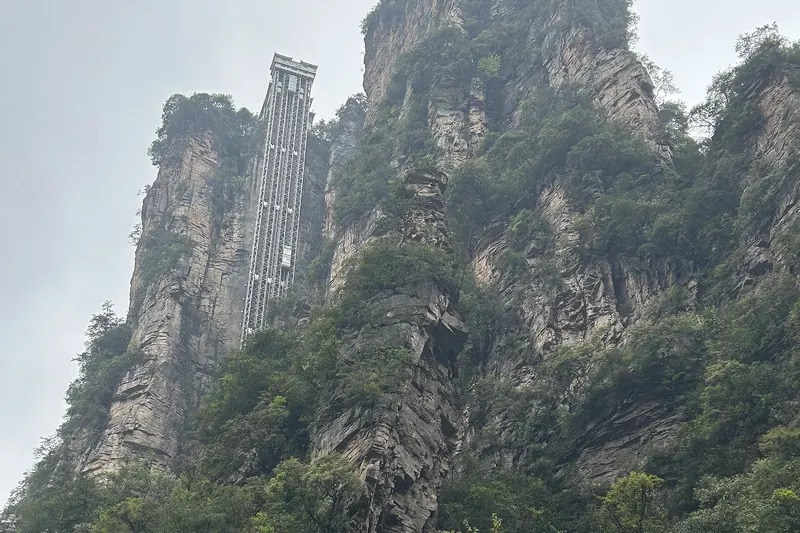
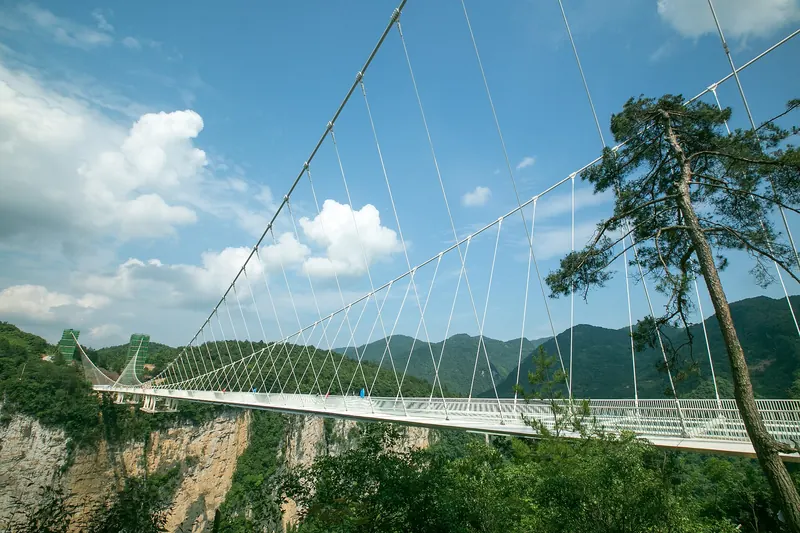
The surrounding area has leaned hard into engineering spectacle to match the natural one — the Bailong Elevator, the tallest outdoor lift on earth, runs 326 metres up a cliff face in under two minutes, and a glass-bottomed bridge nearby is slung 300 metres above a canyon floor. Neither is subtle, and neither is really necessary to enjoy the park, but both are, in their own way, as much a part of a Zhangjiajie trip now as the pillars themselves.

  • National Park
  • Nature Wildlife
  • Off Beaten Path

Why visit

Why visit Zhangjiajie?

Zhangjiajie's case is that no other landscape in this guide, or arguably in China, looks quite so otherworldly.

  • The pillar landscape has no real comparison

    Three thousand-plus sandstone columns rising directly out of forest, a geological formation essentially unique to this part of Hunan.

  • It directly inspired a landmark film's landscape

    Avatar Hallelujah Mountain's renaming reflects a genuine, confirmed inspiration, not just marketing, and seeing it in person explains exactly why.

  • The engineering is its own spectacle

    The Bailong Elevator and the glass bridge are dramatic additions, not distractions, for visitors who want more than a quiet nature walk.

  • It is a complete change of landscape from the rest of a China trip

    Nothing else in a typical Beijing-Xi'an-Shanghai itinerary looks remotely like this, making it an excellent landscape counterpoint.

  • The hiking rewards effort

    Trails through the pillar forest, away from the cable cars and elevators, offer a much quieter, slower version of the same extraordinary scenery.

Main attractions

Top things to see in Zhangjiajie

The park is large — plan two full days inside it if you want to see the highlights without rushing.

  1. Avatar Hallelujah Mountain

    A slender, cloud-wreathed sandstone pillar in the Yuanjiajie area, officially renamed after being confirmed as a direct visual inspiration for the film's floating mountains — the single most photographed spot in the park.

    Tip Arrive early morning for the best chance of the cloud and mist that make the pillar look otherworldly.

  2. The pillar forest seen from a Tianzi Mountain viewing platform

    Tianzi Mountain

    A cable car ride to a high viewing platform overlooking a dense forest of sandstone pillars stretching to the horizon, considered by many the single best panoramic view in the entire park.

    Tip Take the cable car up and hike partway down through the pillars for a slower, more immersive descent.

  3. The Bailong Elevator's glass shaft built into the cliff face

    The Bailong Elevator

    The tallest outdoor elevator on earth, rising 326 metres up a sheer cliff face in under two minutes, engineered directly into the rock and offering a vertiginous view as you ascend.

    Tip Queues can be long in peak season — go early morning or be prepared to wait an hour or more.

  4. The glass-bottomed bridge suspended above Zhangjiajie Grand Canyon

    The Zhangjiajie Glass Bridge

    A 430-metre glass-bottomed bridge suspended 300 metres above the Zhangjiajie Grand Canyon, one of the longest and highest glass bridges in the world, with a bungee jump platform at one end for the brave.

    Tip Book tickets online in advance — daily visitor numbers are capped and it regularly sells out.

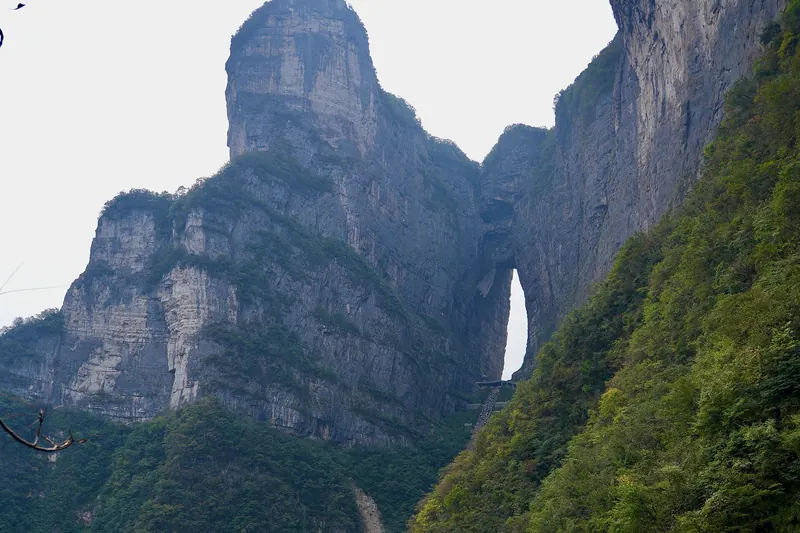
  5. The natural rock arch of Heaven's Gate on Tianmen Mountain

    Tianmen Mountain and the Heaven's Gate cave

    A separate mountain reached by one of the world's longest cable cars, its summit holding a natural arch, 999 steps, and a glass skywalk clinging to the cliff face beneath it.

    Tip The cable car alone is a spectacular ride, climbing nearly 1,300 vertical metres over its full length.

  6. The Golden Whip Stream

    A gentle, mostly flat walking trail following a stream through the base of the pillar forest, one of the easiest and most rewarding ways to experience the landscape at close range.

    Tip Suitable for all fitness levels and much quieter than the cable-car viewpoints above.

Things to do

Best things to do in Zhangjiajie

Zhangjiajie rewards mixing the big engineered spectacles with quieter forest walks between them.

  1. Hike the Golden Whip Stream trail

    A flat, forested walk beside a stream, pillars rising on either side, that takes a few unhurried hours and needs no cable car or elevator to enjoy fully.

    Tip Start early to have the trail relatively to yourself before the tour groups arrive.

  2. Ride the Bailong Elevator up and hike down

    Take the elevator up the cliff face for the engineering spectacle, then walk back down through the pillar forest on foot for a slower, more immersive second look at the same scenery.

    Tip The descent takes a couple of hours at an easy pace — wear proper shoes, as steps can be uneven and occasionally wet.

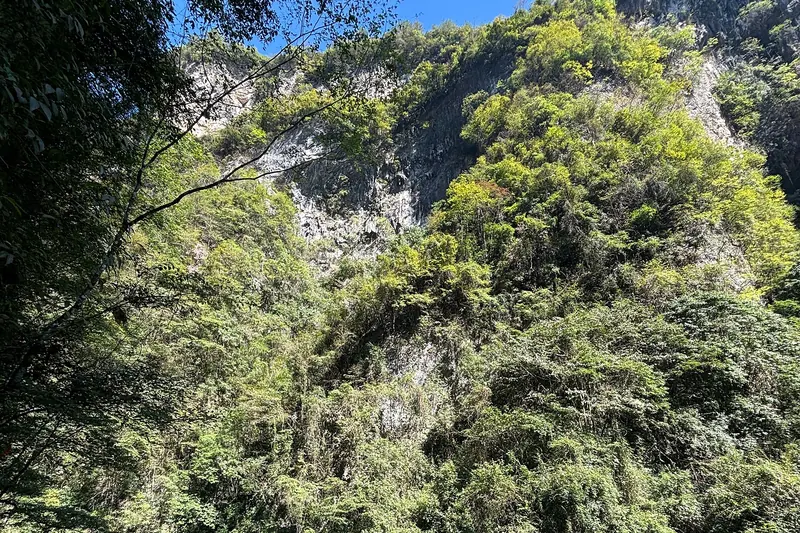
  3. The steep, forested walls of Zhangjiajie Grand Canyon

    Cross the glass bridge

    A nerve-testing walk across 430 metres of glass suspended 300 metres up, with the option to bungee jump from a dedicated platform at one end for those who want more than a walk.

    Tip Shoe covers are provided and required to protect the glass — factor a few extra minutes for this at the entrance.

  4. Take the Tianmen Mountain cable car

    One of the longest cable car rides in the world, climbing from the city almost directly to Tianmen's summit, with the natural Heaven's Gate arch visible partway up.

    Tip Weather affects operation — check conditions before committing to a Tianmen Mountain day, as low cloud can close the cable car.

  5. Walk the Tianmen Mountain skywalk

    A glass and metal walkway clinging to the cliff face near Tianmen's summit, offering a vertiginous view straight down the mountainside — not for anyone with a serious fear of heights.

    Tip Several sections are glass-floored; others are metal grating, which some visitors find easier.

  6. Sandstone pillars at the Qianguqing scenic viewpoint

    Watch the sunrise or sunset over the pillar forest

    Several viewing platforms across the park, particularly around Tianzi Mountain and Yuanjiajie, offer dramatic light over the pillars at the edges of the day, when the crowds thin and the mist often gathers.

    Tip Check cable car operating hours — reaching the best viewpoints for true sunrise can require staying inside the park overnight.

Local food

What to eat in Zhangjiajie

Hunan cuisine is famous nationally for its heat, built around fresh and pickled chillies rather than the numbing peppercorns of neighbouring Sichuan.

  • Hunan-style spicy fish head

    A whole fish head braised in a fiery, chilli-laden sauce, a signature Hunan dish and a genuine test of spice tolerance, meant to be shared and eaten with rice to balance the heat.

    Where to try it Local Zhangjiajie and wider Hunan restaurants, usually a specialty rather than an everyday order.

  • Cured Hunan bacon (larou)

    Pork belly smoked and cured over a wood fire for weeks, then stir-fried with chillies and leeks — intensely savoury and smoky, a genuine regional signature distinct from other Chinese cured meats.

    Where to try it Local restaurants across Zhangjiajie and the wider Hunan region.

  • Stir-fried chillies with fermented black beans

    A simple, fiery vegetable dish that shows off Hunan's love of fresh green and red chillies stir-fried hard and fast, often served as a side to balance richer meat dishes.

    Where to try it Any local Hunan restaurant — a reliable, cheap side dish across the province.

  • Zhangjiajie sour fish soup (suanla yu)

    A sour and spicy fish soup specific to the region, built on pickled chillies and vinegar rather than the oil-heavy sauces of some other Hunan dishes, refreshing after a day of hiking.

    Where to try it Restaurants in Zhangjiajie town and around the park entrances.

  • Tujia ethnic minority dishes

    The Tujia people are native to this part of Hunan, and their cooking — smoked meats, wild vegetables and rice cakes — appears on menus around the park alongside standard Hunan fare.

    Where to try it Guesthouses and restaurants run by local Tujia families, particularly in villages near the park.

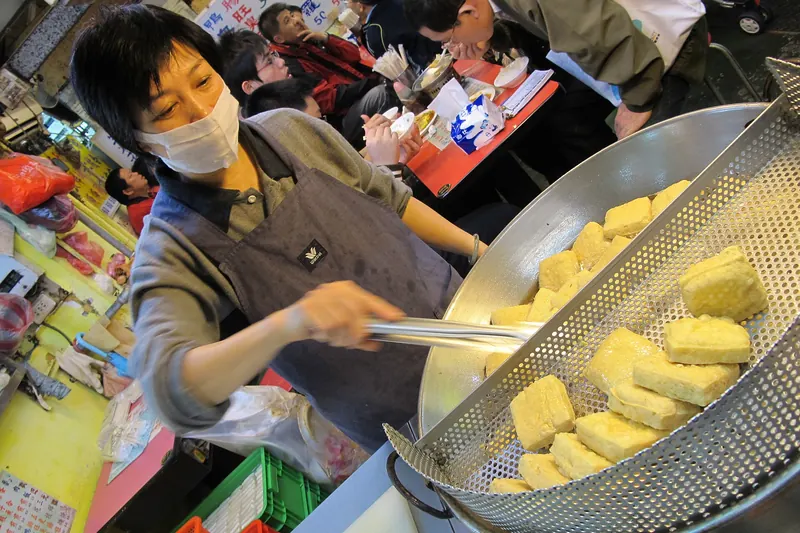
  • Fermented tofu frying in a street-side wok

    Hunan-style stinky tofu

    Deep-fried fermented tofu, black-skinned and pungent, served with a chilli sauce — a divisive street snack that Hunan claims as its own regional variant of the wider Chinese dish.

    Where to try it Street stalls in Zhangjiajie town, best eaten fresh and hot from the fryer.

Accommodation

Where to stay in Zhangjiajie

Most visitors stay either in Zhangjiajie city, well outside the park, or inside the park itself near Wulingyuan for easier access.

  • Wulingyuan, near the park entrance

    A small town directly outside the main park gate, with easy access for multiple park days without a long daily commute.

    Best for: Most visitors

  • Inside the national park

    A handful of hotels sit inside the park boundary itself, useful if you specifically want to catch dawn light over the pillars without an early transfer.

    Best for: Sunrise and sunset viewing

  • Zhangjiajie city centre

    Further from the park — around 40 minutes by road — but with more hotel choice and easier onward transport connections.

    Best for: Transport convenience and value

What a night costs

Hostel dorm
¥50–90 per night
Mid-range hotel
¥250–500 per night
Park entrance ticket (4-day validity)
¥225
Bailong Elevator and internal transport
¥76–150 combined

Transport

Getting to and around Zhangjiajie

Zhangjiajie has its own small airport and a growing rail connection, making it reachable without backtracking through a major hub.

Getting there

  • Zhangjiajie Hehua Airport (DYG)

    A small airport with domestic connections to most major Chinese cities, about 15 minutes from Zhangjiajie city centre.

    Limited international routes — most visitors connect through Beijing, Shanghai or Guangzhou.

  • High-speed rail

    Zhangjiajie West Station connects to the growing regional network, with links toward Guilin and other southern cities improving each year.

    Check current routings, as this connection has expanded significantly in recent years — verify your specific route before booking.

  • Domestic flights from Xi'an or Shanghai

    Direct flights connect Zhangjiajie to several major cities on this guide's itinerary, useful for adding it without extensive backtracking.

    Compare total journey time against rail options, which can vary significantly depending on your starting city.

Getting around

The national park is large, hilly and not designed around independent driving — a mix of park shuttle buses, cable cars and walking is standard.

  • Park shuttle buses

    Included in the park entrance ticket, these buses connect the main areas — Yuanjiajie, Tianzi Mountain, Golden Whip Stream — and are the backbone of getting around inside the park.

    Buses can be crowded in peak season; allow extra time between planned stops.

  • Cable cars and the Bailong Elevator

    Separate paid tickets get you up to the main viewpoints quickly, saving hours of climbing versus walking trails alone.

    Combine an upward cable car or elevator ride with a walking descent for the best of both.

  • Walking trails

    Extensive, well-marked trails connect much of the park on foot for those with time and stamina, including the flat Golden Whip Stream route.

    Some trails involve significant stairs — pace yourself and carry water.

  • Taxis and Didi between town and park

    The standard way to reach the park entrance from Zhangjiajie city or Wulingyuan accommodation.

    Agree fares or confirm the meter is running, particularly for longer city-to-park transfers.

When to go

Best time to visit Zhangjiajie

Zhangjiajie's mist and cloud, part of its visual appeal, are more common in spring and after rain — the shoulder seasons balance good weather with atmospheric conditions.

  • Spring (April–May)

    Best time

    Mild temperatures and a higher chance of the misty, cloud-wreathed conditions that make the pillars look their most dramatic.

  • Summer (June–August)

    Shoulder

    Hot and humid with a real chance of rain, but also lush and green, and the mist effect remains common after summer showers.

  • Autumn (September–November)

    Best time

    Comfortable, clearer overall than spring, and from October the surrounding forest begins to show autumn colour against the sandstone.

  • Winter (December–March)

    Shoulder

    Cold, occasionally with light snow dusting the pillars for a striking effect, but some cable cars and the glass bridge may close in poor weather.

Worth planning around: The first week of October and the week around Chinese New Year, when the park sees a significant spike in domestic visitors.

Itinerary

Three days in Zhangjiajie

Two days inside the main national park, one day for Tianmen Mountain — a workable pace that avoids rushing either.

  1. Day1

    Yuanjiajie and Tianzi Mountain

    The park's headline viewpoints.

    • Morning The Bailong Elevator up, then Yuanjiajie and Avatar Hallelujah Mountain.
    • Afternoon Tianzi Mountain's cable car and panoramic viewpoints.
    • Evening Back to Wulingyuan for dinner.
  2. Day2

    The glass bridge and Golden Whip Stream

    One engineered spectacle, one quiet trail.

    • Morning The Zhangjiajie Glass Bridge, booked ahead.
    • Afternoon The Golden Whip Stream trail at an easy pace.
    • Evening A Tujia or Hunan-style dinner in town.
  3. Day3

    Tianmen Mountain

    A separate mountain and cable car system.

    • Morning The Tianmen Mountain cable car and Heaven's Gate cave.
    • Afternoon The cliffside skywalk, weather permitting.
    • Evening Depart or transfer onward.

Travel tips

Zhangjiajie travel tips

Zhangjiajie-specific practicalities, mostly about weather, cable cars and the park's scale.

  • Buy a multi-day park ticket if you plan two visits — the standard entrance ticket is valid for several consecutive days, avoiding a second full fee.
  • Check weather before a Tianmen Mountain day specifically — its cable car and skywalk are more weather-sensitive than the main national park.
  • Book the glass bridge online in advance; it caps daily visitors and regularly sells out in peak season.
  • Wear proper walking shoes regardless of how much cable car and elevator use you plan — the park involves more walking between stops than first-time visitors expect.
  • Mist and cloud, part of the appeal, can also obscure views entirely on a bad day — build in a buffer day if the specific viewpoints matter to you.
  • The park is large; do not try to see Yuanjiajie, Tianzi Mountain and the glass bridge all in one day without a very early start.

FAQ

Zhangjiajie: frequently asked questions

How many days do you need in Zhangjiajie?

Three. Two full days inside the main national park cover the headline viewpoints and at least one proper trail, and a third day for Tianmen Mountain, which is a separate system entirely. Two days total is possible if you skip Tianmen Mountain, but it is a worthwhile addition.

Is Zhangjiajie really the inspiration for Avatar?

Yes, specifically one pillar in the Yuanjiajie area, since officially renamed Avatar Hallelujah Mountain, was confirmed as a direct visual reference for the film's floating mountains. The wider park's misty pillar landscape clearly informed the broader aesthetic even beyond that one formation.

Is the glass bridge worth it?

For most visitors, yes — it is a dramatic structure and experience, 430 metres of glass 300 metres above a canyon. It is a separate paid attraction from the main park entrance and books out in peak season, so plan ahead if you want to cross it, or add the bungee jump.

What is the best time of year to visit Zhangjiajie?

April to May and September to November. Both are comfortable and increase the odds of the misty, atmospheric conditions that make the pillars most photogenic. Summer is hot and humid but lush; winter is cold and occasionally snow-dusted but can close weather-sensitive cable cars.

How physically demanding is Zhangjiajie?

As demanding as you choose to make it. Cable cars and the Bailong Elevator handle most of the elevation change, and the Golden Whip Stream trail is flat and suitable for nearly anyone. Hiking the full pillar forest on foot instead of using the elevator is a strenuous full day.

Read next

Related travel articles

Practical

Packing by Season and Trip Type

Most packing advice is a list of things. This is the opposite: the small number of decisions that determine whether your luggage helps or hinders, organised by the kind of trip you are actually taking.

Heritage

UNESCO Sites Worth Planning a Trip Around

A UNESCO listing tells you a place matters; it does not tell you whether it is worth two days and a detour. This is how to read the list usefully — and which sites reward building a trip around them.

Advertisement