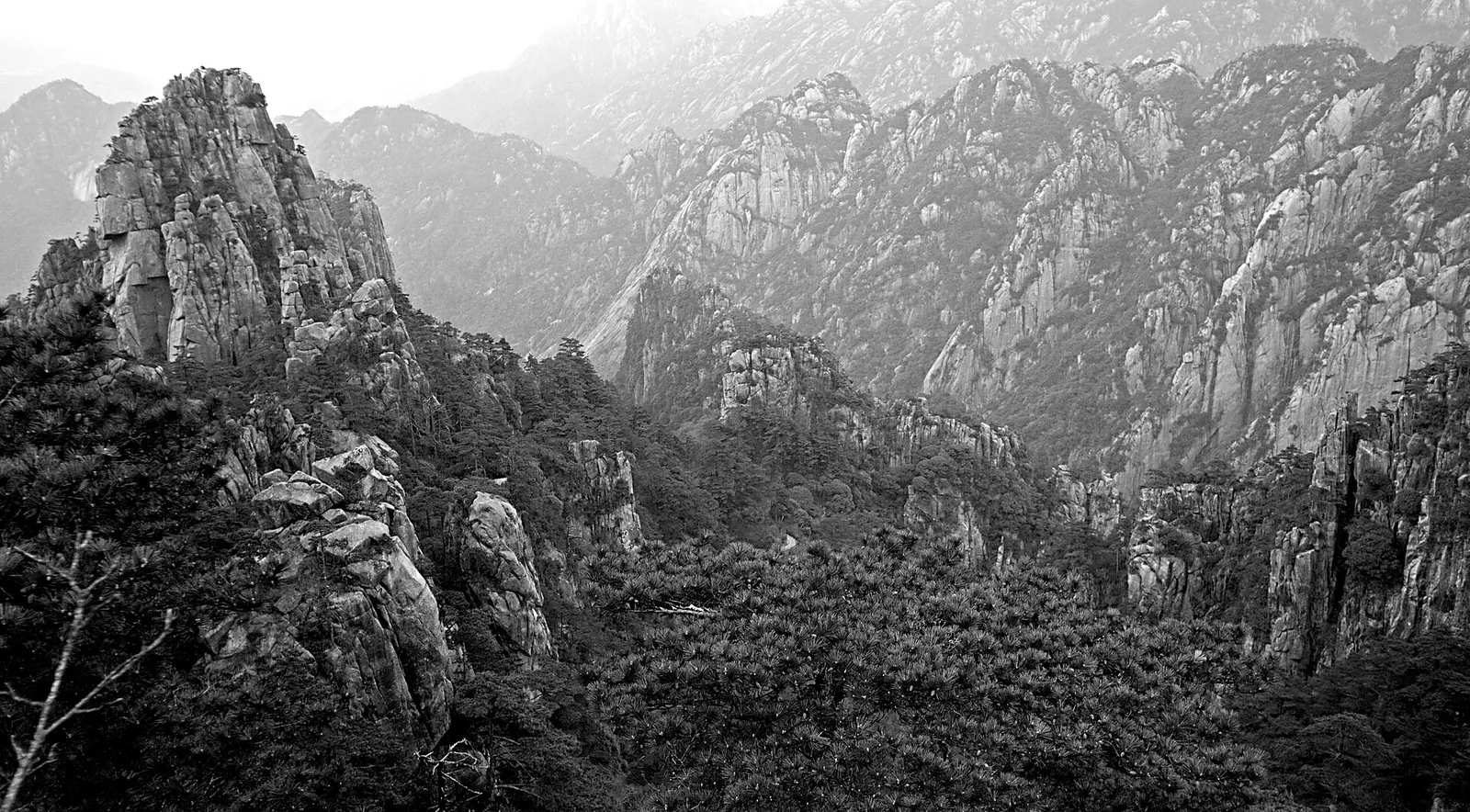
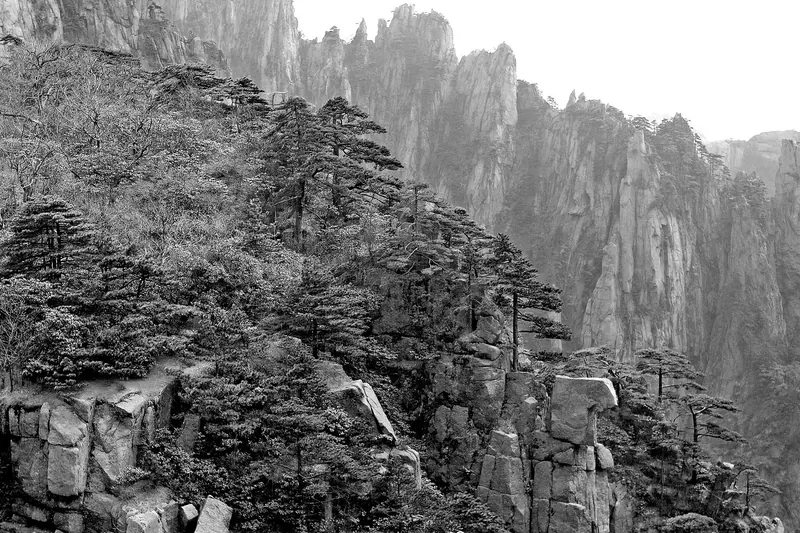
Granite peaks of Huangshan rising through cloud, with pine trees in the foreground

Anhui · China

Huangshan & the Anhui Villages

Granite peaks wreathed in cloud and stubborn gnarled pines, the exact landscape that has been the model for Chinese ink painting for a thousand years, with Ming-dynasty villages preserved almost untouched at its foot.

  • Best time April–May and September–November
  • Stay 3 days
  • Good for Nature, hiking, photography, architecture

Photo: Chi King · CC BY 2.0

Welcome to Huangshan & the Anhui Villages

Huangshan, the Yellow Mountain, has shaped Chinese landscape painting and poetry for well over a thousand years, and standing on one of its granite peaks at dawn makes the reason obvious immediately: sheer rock towers rising through drifting cloud, twisted pines growing improbably from bare stone, and a sense of scale and mystery that photographs consistently undersell. A well-known Chinese saying holds that once you have seen Huangshan, you need never see China's Five Great Mountains — a claim that is more a compliment to Huangshan than a literal ranking.

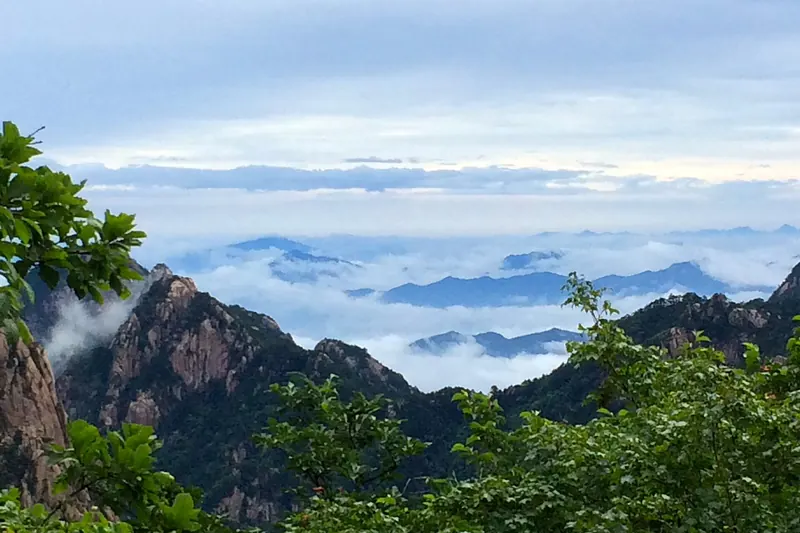
The mountain itself is demanding to explore properly, with a network of stone-stepped trails connecting its major peaks, cable cars for those who want the views without the full climb, and a small cluster of summit hotels that let dedicated visitors catch sunrise over the sea of clouds — mist pooling in the valleys below the peaks, one of the most photographed natural phenomena in China.

At the mountain's base, a cluster of villages in the surrounding Anhui countryside preserve a version of rural Chinese life that has largely vanished elsewhere. Hongcun and Xidi, both UNESCO World Heritage Sites, retain their Ming and Qing-dynasty layouts almost entirely intact — whitewashed walls, black tile roofs, carved wooden doorways and, in Hongcun's case, an ingenious ox-shaped water system still functioning after six hundred years.

  • Nature Wildlife
  • Historic Site
  • Off Beaten Path

Why visit

Why visit Huangshan & the Anhui Villages?

Huangshan's case is that it is simultaneously the landscape that defined a thousand years of Chinese art and one of the country's most intact clusters of historic rural architecture.

  • It is the literal source of a painting tradition

    Chinese ink landscape painting's characteristic peaks, mist and gnarled pines were modelled directly on Huangshan, and seeing it in person recontextualises centuries of art.

  • The sea of clouds is a genuine natural spectacle

    Mist pooling below the summit peaks at dawn is a real, weather-dependent phenomenon rather than a marketing image, and worth the effort of a summit overnight to see.

  • Hongcun and Xidi are extraordinarily well preserved

    UNESCO-listed Ming and Qing villages with intact street plans, carved architecture and, in Hongcun, a still-functioning centuries-old water system.

  • It is a genuine change of landscape from a China itinerary's usual stops

    Neither an ancient capital nor a modern megacity, Huangshan offers mountain scenery and rural architecture found nowhere else in this guide.

  • The region rewards unhurried exploration

    Both the mountain trails and the surrounding villages are best experienced slowly, on foot, rather than as a rushed checklist.

Main attractions

Top things to see in Huangshan & the Anhui Villages

Huangshan itself deserves at least a full day, ideally with a summit overnight for sunrise; the villages below deserve a second full day.

  1. Granite summits of Huangshan connected by stone-cut trails

    Huangshan's granite peaks

    A network of granite summits connected by stone-cut trails, the most famous — Lotus Peak, Bright Summit and Celestial Capital Peak — each offering distinct views over the surrounding sea of pines and cloud.

    Tip Lotus Peak is the highest but not always open; check current access before building a summit plan around it specifically.

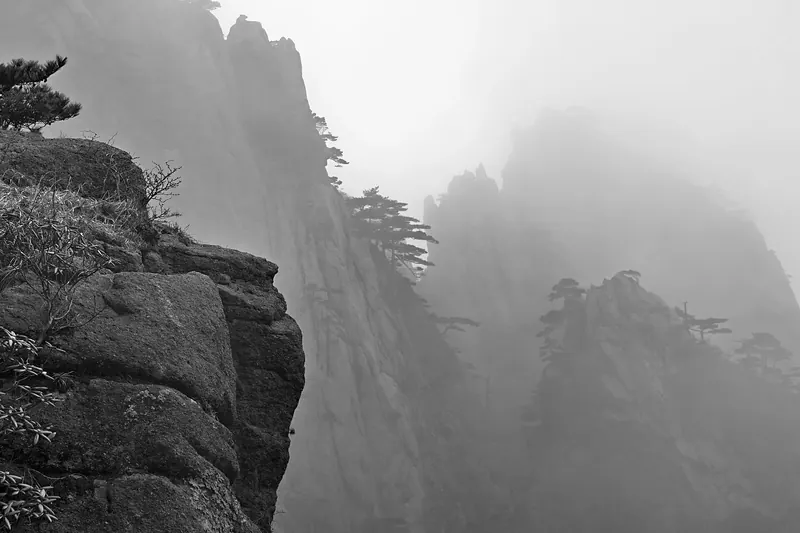
  2. Mist pooling below Huangshan's granite peaks, seen from the summit

    The sea of clouds

    Mist that pools in the valleys below Huangshan's peaks, most commonly visible at dawn and after rain, creating the illusion of granite summits floating on a white sea — the mountain's signature phenomenon.

    Tip Staying overnight at a summit hotel is the only reliable way to be in position for a clear dawn viewing, weather permitting.

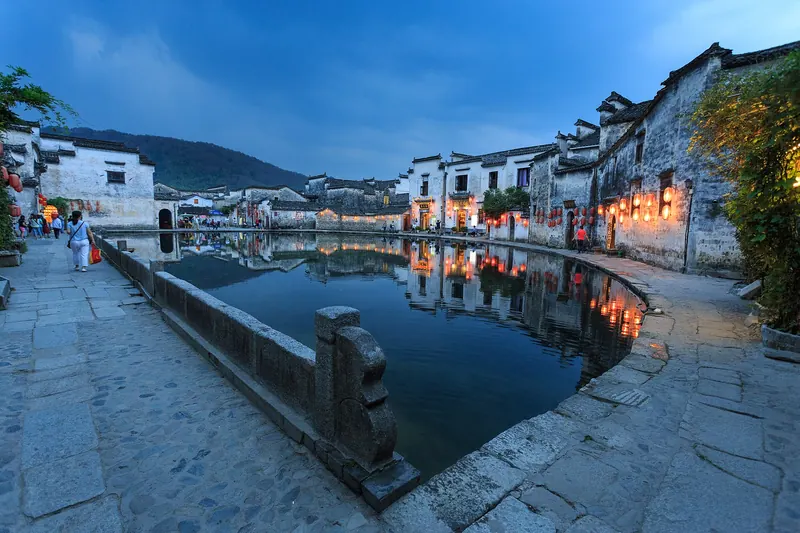
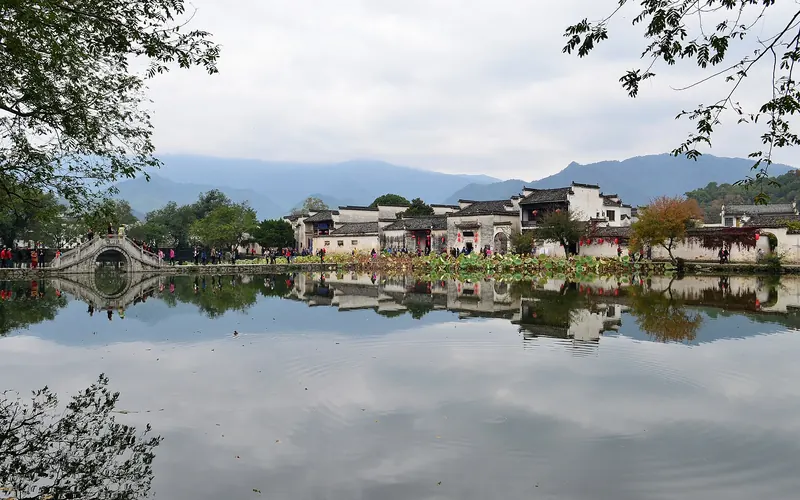
  3. Whitewashed, black-roofed houses reflected in Hongcun's Moon Pond

    Hongcun Village

    A UNESCO-listed Ming and Qing village built around an ingenious ox-shaped water system, its central Moon Pond and surrounding whitewashed, black-roofed houses among the most photographed rural scenes in China.

    Tip Arrive early morning or stay overnight in the village itself to see it before the day-trip tour groups arrive.

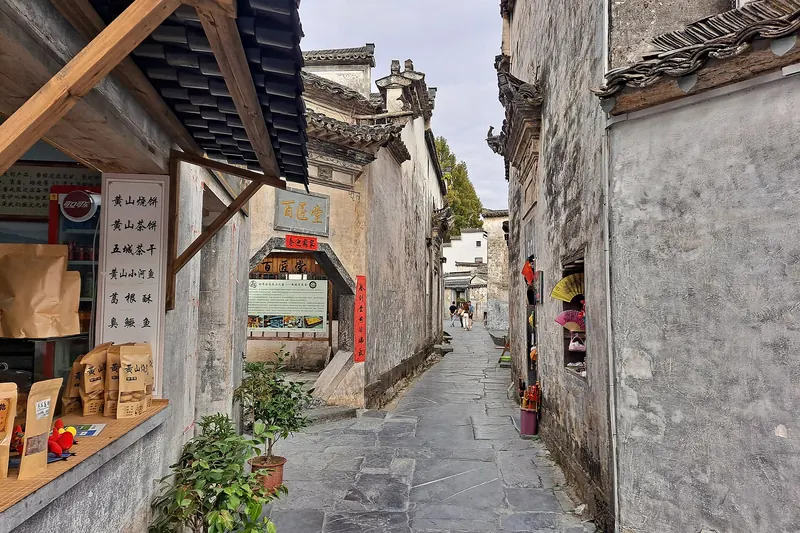
  4. Traditional houses along a stone lane in Xidi Village

    Xidi Village

    A second UNESCO-listed village near Hongcun, slightly less visited, known for its elaborately carved memorial archways and well-preserved merchant houses from the Ming and Qing dynasties.

    Tip Combine with Hongcun in a single day — the two villages are a short drive apart and offer a useful comparison.

  5. The Xihai (West Sea) Grand Canyon

    A dramatic canyon route within the Huangshan scenic area, its cliffside walkways and viewing platforms offering some of the mountain's most vertiginous, spectacular perspectives.

    Tip A strenuous half-day route — allow ample time and expect significant stairs in both directions.

  6. Shexian Ancient City

    A less-visited historic town near Huangshan with its own well-preserved Ming and Qing streets, memorial archways and merchant houses, offering the region's architectural character without Hongcun's crowds.

    Tip A good alternative or addition for visitors who want the village atmosphere without Hongcun's tour-group density.

Things to do

Best things to do in Huangshan & the Anhui Villages

The mountain and the villages reward different paces — strenuous hiking on Huangshan, unhurried wandering in the villages below.

  1. Stone-cut trail steps climbing toward a Huangshan summit

    Climb (or cable-car) to a Huangshan summit

    Either the full stone-stepped ascent, a demanding multi-hour climb, or a cable car directly to near-summit stations for those who want the views without the full effort.

    Tip Combining an ascent by cable car with a descent on foot, or vice versa, is a popular and sensible compromise.

  2. Stay overnight on the summit for sunrise

    A small cluster of hotels near Huangshan's peaks let visitors be in position before dawn for a chance at the sea of clouds — a different experience from a day trip.

    Tip Book summit accommodation well in advance in peak season, and pack warm layers regardless of the season in the valley below.

  3. South Lake and traditional houses at Hongcun village

    Wander Hongcun's lanes without a map

    The village's stone lanes, canals and courtyard houses reward simply walking without a fixed route, particularly in the early morning before the crowds and tour groups arrive.

    Tip The Moon Pond at the village centre is the classic photo spot, but the quieter side lanes are where the village feels most genuine.

  4. Study the carved architecture of Xidi

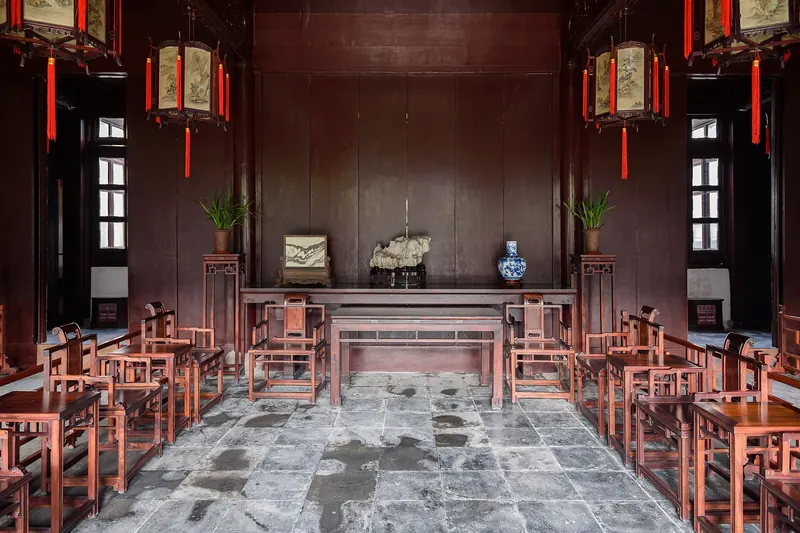
    Xidi's memorial archways and merchant houses feature intricate stone, wood and brick carving — take time to look closely rather than simply walking past.

    Tip A few houses are still occupied by descendants of the original families, offering informal, low-key insight into their history.

  5. Walk the Xihai Grand Canyon route

    A demanding but spectacular cliffside trail within the Huangshan scenic area, with walkways carved directly into the rock face and views down into forested canyons.

    Tip Not for anyone with a serious fear of heights — some sections are narrow with significant drops.

  6. Photograph Huangshan's pines

    The mountain's twisted, wind-shaped pines, particularly the famous Guest-Greeting Pine near the Jade Screen area, are as much a symbol of Huangshan as the peaks themselves.

    Tip Soft, diffused light — overcast or misty conditions — often photographs the pines more evocatively than bright sun.

Local food

What to eat in Huangshan & the Anhui Villages

Anhui cuisine, one of China's eight major culinary traditions, favours wild mountain ingredients, slow braising and a genuine restraint that distinguishes it from its spicier or richer neighbours.

  • A cooked whole stinky mandarin fish, Anhui's signature dish

    Stinky mandarin fish (chou guiyu)

    Fish lightly fermented for several days before cooking, developing a strong smell that largely cooks away, leaving firm, flavourful flesh — Anhui's most famous and most divisive dish.

    Where to try it Local restaurants throughout the Huangshan region, usually clearly signed given the dish's fame.

  • Huangshan stewed pigeon

    A whole pigeon slow-braised with local herbs and mountain ingredients, a regional delicacy said to have been favoured by past emperors for the meat's tenderness.

    Where to try it Traditional restaurants in Tunxi and around the mountain's base.

  • Mao tofu (hairy tofu)

    Fermented tofu grown a fine white mould coating before being pan-fried, developing a distinctive texture and umami depth quite unlike fresh tofu — a genuine regional specialty around Huizhou.

    Where to try it Local restaurants in the old streets of Tunxi and the surrounding villages.

  • Huizhou-style braised dishes

    Slow, oil-and-soy-based braises of pork, bamboo shoots and mountain vegetables, characteristic of the wider Huizhou culinary tradition that Anhui cuisine draws heavily from.

    Where to try it Traditional restaurants throughout the Huangshan and Hongcun area.

  • Wuyuan-style green tea

    High-quality green tea grown in the hills around the wider region, prized nationally and often served simply, without the elaborate ceremony of some other Chinese tea traditions.

    Where to try it Teahouses in Tunxi's old street and shops throughout the surrounding villages.

  • Huangshan mountain vegetables

    Wild greens, bamboo shoots and fern fronds foraged from the mountain's slopes, cooked simply, a genuine reflection of the region's foraging traditions and cooler mountain climate.

    Where to try it Any restaurant near the mountain base advertising 'wild vegetables' or seasonal foraged greens.

Accommodation

Where to stay in Huangshan & the Anhui Villages

Most visitors split their stay between the mountain itself, for those wanting sunrise, and Tunxi or a village guesthouse for the rest of the trip.

  • On the Huangshan summit

    A small cluster of hotels near the peaks, more basic and expensive than options at the base, but the only way to reliably catch dawn light over the mountain.

    Best for: Sunrise and the sea of clouds

  • Tangkou, at the mountain's base

    The main gateway town for Huangshan's cable cars and trailheads, with the widest range of hotels and restaurants near the mountain.

    Best for: Convenience

  • Hongcun or a nearby village

    Guesthouses inside or near Hongcun let you experience the village before and after the day-trip crowds, a different experience from a quick visit.

    Best for: Village atmosphere

  • Tunxi Old Street

    Huangshan City's old quarter, with a wider choice of restaurants and easy transport connections to both the mountain and the villages.

    Best for: A base with more amenities

What a night costs

Hostel dorm
¥50–100 per night
Mid-range hotel (base town)
¥250–500 per night
Summit hotel
¥600–1,200 per night
Huangshan entry and cable car
¥190 entry, ¥80–100 per cable car leg

Transport

Getting to and around Huangshan & the Anhui Villages

Huangshan has its own airport and a high-speed rail connection, making it reachable without extensive backtracking.

Getting there

  • Huangshan Tunxi Airport (TXN)

    Domestic connections to major Chinese cities including Shanghai and Beijing, about an hour from the mountain's main gateway towns.

    Limited direct international routes — most visitors connect through a major hub.

  • High-speed rail

    Huangshan North Station connects to the national network, including routes toward Shanghai and Hangzhou, both reachable in a few hours.

    Book via Trip.com or 12306. The station is some distance from the mountain itself — budget for an onward transfer.

  • Bus or car from Shanghai or Hangzhou

    A road journey of several hours from either city, sometimes chosen by visitors combining Huangshan with a wider Jiangnan-region road trip.

    High-speed rail is generally faster and more comfortable for this specific route.

Getting around

Huangshan's peaks are reached by a mix of cable cars and stone-cut trails, while the surrounding villages need a short taxi or bus ride between them.

  • Cable cars up Huangshan

    Three separate cable car lines reach different sections of the mountain, the standard way for visitors not attempting a full trail ascent to reach the peaks.

    Book tickets in advance in peak season, particularly for the most popular Yungu line.

  • Stone-cut trails

    Extensive, well-maintained but demanding trail networks connect the mountain's peaks and valleys for those hiking rather than using the cable cars.

    Proper walking shoes and trekking poles are strongly recommended — the steps are steep and can be slippery when wet.

  • Buses and taxis to the villages

    Regular transport connects Tangkou, Tunxi and the mountain's base to Hongcun, Xidi and other nearby villages, a straightforward day-trip loop.

    Hongcun and Xidi are close enough together to combine easily in a single day's transport.

  • Didi and local taxis

    Useful for reaching Shexian Ancient City or other less-touristed spots not well served by the main tourist bus routes.

    Have your destination in Chinese characters ready for the driver.

When to go

Best time to visit Huangshan & the Anhui Villages

Huangshan's dramatic sea of clouds forms most reliably after rain and in the shoulder seasons, which makes spring and autumn the best balance of accessibility and atmosphere.

  • Spring (April–May)

    Best time

    Mild temperatures and a relatively high chance of the mist and cloud conditions that make the mountain's signature views possible.

  • Summer (June–August)

    Shoulder

    Warm and often rainy, which paradoxically increases the odds of a dramatic sea of clouds, though thunderstorms can also close trails temporarily.

  • Autumn (September–November)

    Best time

    Comfortable and generally clearer than summer, with the added draw of autumn foliage colouring the mountain's forests from October.

  • Winter (December–February)

    Shoulder

    Cold, and Huangshan's peaks occasionally see snow, creating a striking effect on the granite and pines, but some trails and cable cars may close in severe weather.

Worth planning around: The first week of October, when domestic tourism peaks and both the mountain trails and the villages become significantly more crowded.

Itinerary

Three days in Huangshan and the Anhui villages

A mountain day with a summit overnight, then a full day for the villages — a pace that gives both halves of the region proper time.

  1. Day1

    Ascend Huangshan

    Climb or cable car up, then position for sunrise.

    • Morning Travel to the mountain base and begin the ascent.
    • Afternoon Continue to the major peaks — Lotus Peak or Bright Summit, conditions permitting.
    • Evening Check into a summit hotel ahead of dawn.
  2. Day2

    Sunrise and descent

    The sea of clouds, then down to the villages.

    • Morning Sunrise over the sea of clouds, weather permitting, then a further peak or two.
    • Afternoon Descend by cable car or trail, then transfer to Hongcun.
    • Evening Settle into Hongcun and walk the village at dusk.
  3. Day3

    Hongcun and Xidi

    The villages at an unhurried pace.

    • Morning Hongcun's lanes and Moon Pond before the day-trip crowds arrive.
    • Afternoon Xidi's carved archways and merchant houses.
    • Evening Depart or transfer onward from Tunxi.

Travel tips

Huangshan & the Anhui Villages travel tips

Region-specific practicalities, mostly about the mountain's weather and the villages' crowd patterns.

  • Book summit hotels well in advance in peak season — capacity is limited and rooms sell out.
  • Pack warm, waterproof layers regardless of the season — Huangshan's summit weather can shift quickly and is noticeably colder than the base.
  • Stay overnight in or near Hongcun if the village's early-morning atmosphere matters to you — day-trip tour groups arrive by mid-morning and change its character considerably.
  • The stone-cut trails are demanding — do not underestimate a full ascent, and consider a cable car for one direction if fitness or time are limited.
  • Xidi is a worthwhile addition to a Hongcun visit precisely because it sees fewer tour groups, offering a calmer comparison.
  • Check cable car and trail status before committing to a route — sections occasionally close for weather or maintenance without much advance notice.

FAQ

Huangshan & the Anhui Villages: frequently asked questions

How many days do you need for Huangshan and the villages?

Three. A mountain day with a summit overnight to catch sunrise, and a full further day for Hongcun and Xidi. Two days is possible if you skip the summit overnight, but you lose the sea-of-clouds phenomenon that is the mountain's signature experience.

Is the sea of clouds guaranteed?

No — it is a genuine weather phenomenon, most likely at dawn and after rain, but not certain on any given day. A summit overnight maximises your chances, and even without it, Huangshan's peaks and pines are worth the visit on their own.

How physically demanding is Huangshan?

As demanding as you choose. Cable cars reach most major viewpoints without requiring the full stone-stepped ascent, though even short walks between cable car stations and peaks involve significant stairs. A full trail ascent is a strenuous multi-hour effort.

Should I visit Hongcun or Xidi, or both?

Both if time allows — they are close together and offer a useful comparison, Hongcun more famous and more visited, Xidi quieter with particularly fine carved architecture. If choosing one, Hongcun's water system and Moon Pond make it the more singular sight.

What is the best time of year to visit?

April to May and September to November, both offering a good balance of mild weather and reasonable odds of the sea-of-clouds phenomenon. Autumn adds foliage colour from October; winter can bring striking snow on the peaks but with more closures.

Read next

Related travel articles

Practical

Packing by Season and Trip Type

Most packing advice is a list of things. This is the opposite: the small number of decisions that determine whether your luggage helps or hinders, organised by the kind of trip you are actually taking.

Heritage

UNESCO Sites Worth Planning a Trip Around

A UNESCO listing tells you a place matters; it does not tell you whether it is worth two days and a detour. This is how to read the list usefully — and which sites reward building a trip around them.

Advertisement