A giant panda eating bamboo at the Chengdu panda base

Sichuan · China

Chengdu

Pandas by the dozen, a food culture built around chilli and Sichuan peppercorn, and a pace of life the rest of China half-jokingly calls lazy — meant, and taken, as a compliment.

  • Best time March–May and September–November
  • Stay 3 days
  • Good for Food, wildlife, relaxed pace, first-time and repeat visitors

Photo: MspreilsCN · CC BY 4.0

Welcome to Chengdu

Chengdu has a reputation, within China, as the country's most laid-back major city, a place where the local greeting translates as something close to 'have you eaten yet' and where an afternoon spent doing nothing in particular at a teahouse is considered a perfectly respectable use of time. For a country often associated with relentless pace and scale, Chengdu is a deliberate exception, and it wears that reputation as a point of civic pride rather than an insult.

It is also, not coincidentally, the easiest place in the world to see giant pandas. The Chengdu Research Base of Giant Panda Breeding sits within the city limits and houses dozens of pandas across naturalistic, forested enclosures — cubs tumbling over each other, adults methodically working through armfuls of bamboo, all considerably more active and visible than most people expect from an animal with a reputation for sleeping most of the day.

The food is the other reason people build a trip around Chengdu specifically. Sichuan cuisine's defining characteristic, mala — a tingling numbness from Sichuan peppercorn layered under real chilli heat — reaches its purest, most confident expression here, in a city where hotpot is closer to a civic religion than a meal option.

  • Major City
  • Nature Wildlife
  • Culture Arts

Why visit

Why visit Chengdu?

Chengdu's case rests on two very different pleasures done better here than almost anywhere else: seeing pandas properly, and eating Sichuan food at its source.

  • The panda base is excellent

    Large, naturalistic enclosures and a real research and breeding mission, not a zoo exhibit — and morning visits reliably catch pandas active and visible.

  • The food is the real thing, not an export version

    Sichuan cuisine outside Sichuan is routinely toned down; Chengdu's hotpot and street food hold nothing back.

  • The pace is a genuine change from the rest of a China trip

    Teahouse culture and an unhurried civic identity make Chengdu a deliberate rest stop between more intense stops like Beijing or Xi'an.

  • It is the natural gateway to Sichuan's wider landscapes

    Jiuzhaigou's lakes, Mount Emei's temples and the Leshan Giant Buddha are all reachable from here for those with extra time.

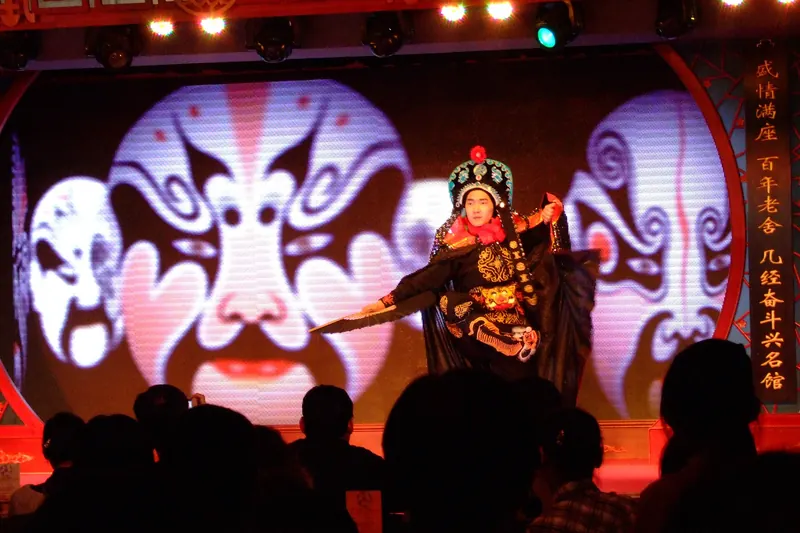
  • Sichuan Opera's face-changing is a genuine spectacle

    A theatrical tradition unique to the region, performers changing masks faster than the eye can follow, alongside puppetry and traditional music.

Main attractions

Top things to see in Chengdu

Chengdu rewards a relaxed three-day pace more than a rushed checklist — the pandas and one teahouse afternoon are non-negotiable; the rest is flexible.

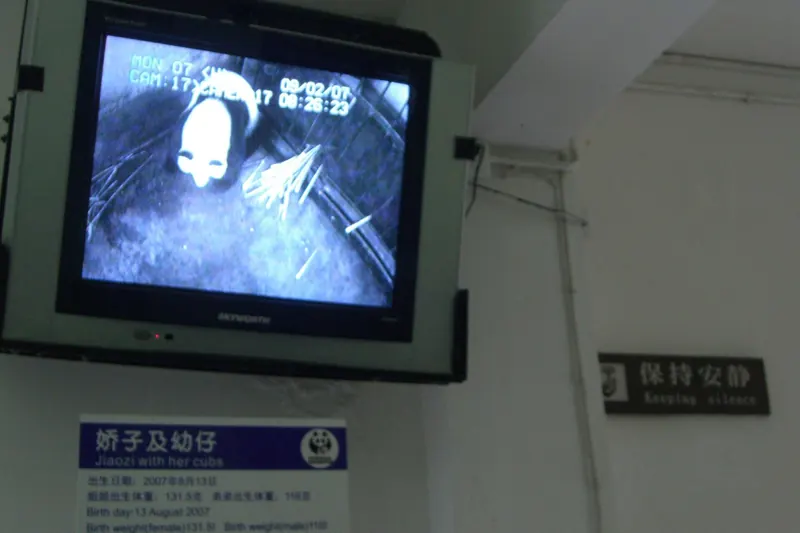
  1. A panda and her cubs at the Chengdu panda research centre

    Chengdu Research Base of Giant Panda Breeding

    Dozens of giant pandas, from newborn cubs in the nursery to adults in large forested enclosures, alongside red pandas, in a genuine research and conservation facility rather than a conventional zoo.

    Tip Arrive at opening, 7:30am — pandas are noticeably more active in the cool morning hours and considerably sleepier by midday.

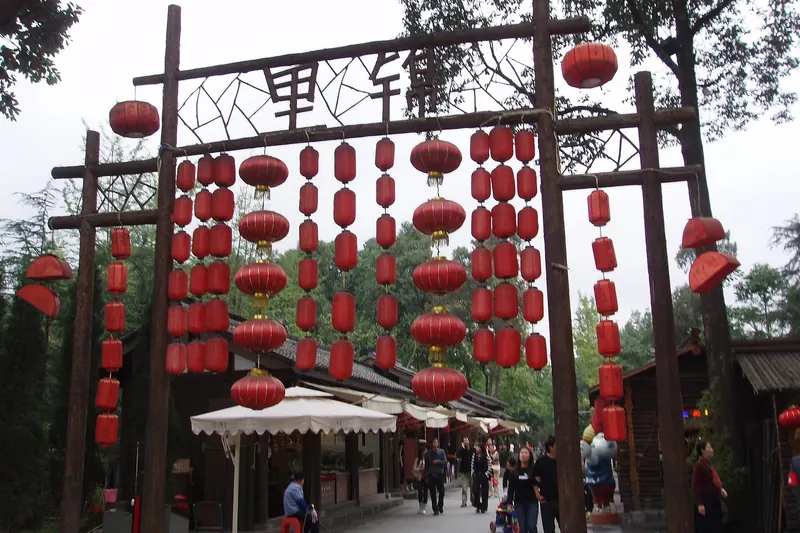
  2. The lantern-lit old-style shops of Jinli Street

    Wuhou Shrine and Jinli Street

    A temple honouring the Three Kingdoms-era statesman Zhuge Liang, attached to Jinli, a reconstructed old-style street of lantern-lit shops, snacks and teahouses that is pleasant despite being unabashedly touristy.

    Tip Evening is the best time for Jinli, when the lanterns light up and the street feels considerably more atmospheric.

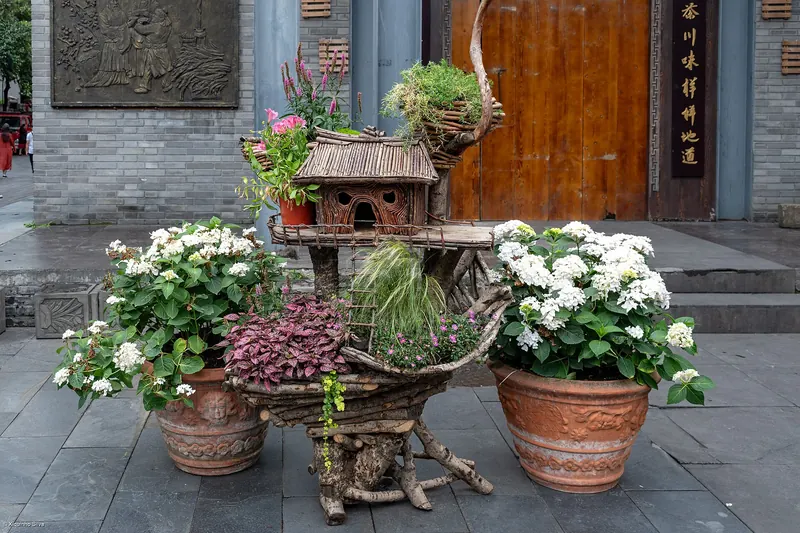
  3. One of the restored Qing-dynasty lanes of Kuanzhai Alley

    Kuanzhai Alley (Wide and Narrow Alleys)

    Three parallel restored Qing-dynasty lanes in the city centre, now filled with teahouses, boutique shops and restaurants, and one of the best places to sit down with tea and watch the city pass by.

    Tip Come for a slow afternoon rather than a quick photo stop — the point of this street is sitting still, not walking through.

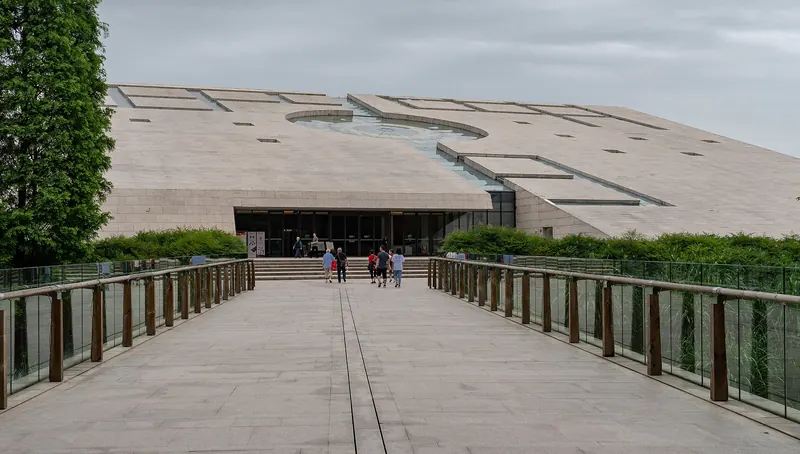
  4. The Jinsha Site Museum, built over a Bronze Age archaeological site

    Jinsha Site Museum

    An archaeological museum built directly over a Bronze Age site discovered in 2001, holding gold, jade and ivory artefacts from a civilisation that predates most of what is commonly taught about ancient China.

    Tip The excavation pits themselves, visible in situ under the museum floor, are as striking as the artefact displays.

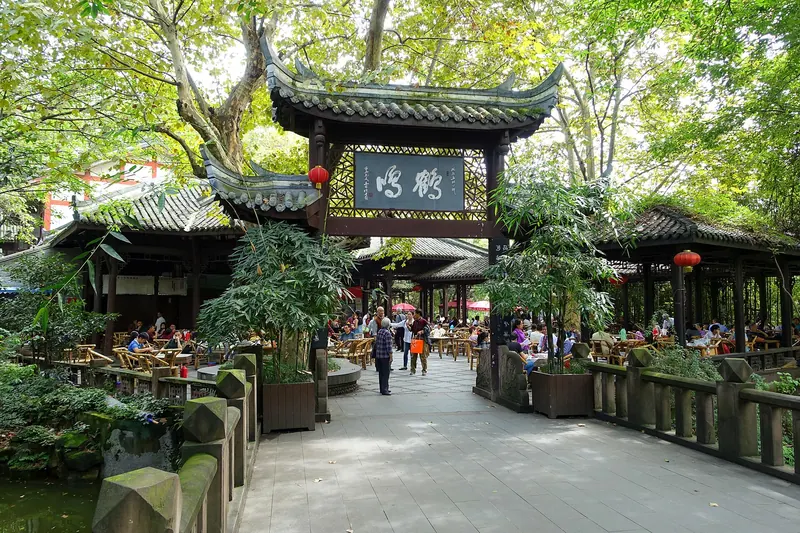
  5. Tables and chairs at an outdoor teahouse in People's Park

    People's Park and its teahouses

    A central city park that functions as Chengdu's living room — mahjong games, ear-cleaning services, matchmaking corners where parents advertise their adult children, and the famous Heming Teahouse under the trees.

    Tip Order a single cup of tea and simply sit for an hour — refills are typically included and nobody will hurry you along.

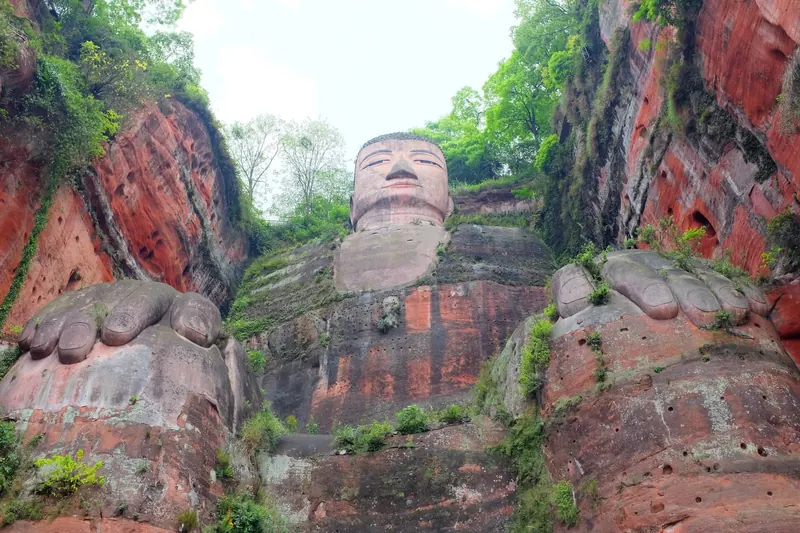
  6. The 71-metre Leshan Giant Buddha carved into a cliff face

    Leshan Giant Buddha (day trip)

    A seated Buddha carved into a cliff face over the course of ninety years starting in 713 AD, at 71 metres the tallest stone Buddha statue on earth, reachable as a long but worthwhile day trip from Chengdu.

    Tip Take a boat on the river for the classic full-figure view, then walk down alongside the statue for scale.

Things to do

Best things to do in Chengdu

Chengdu is best enjoyed by deliberately doing less — one major sight a day, with real time given to sitting still.

  1. Watch pandas at their most active

    Timing a panda base visit for opening, when the animals are cool, fed and active, transforms the experience from occasional glimpses of a sleeping animal into real, sustained observation.

    Tip The base is large — allow at least three hours to see the main enclosures and nursery without rushing.

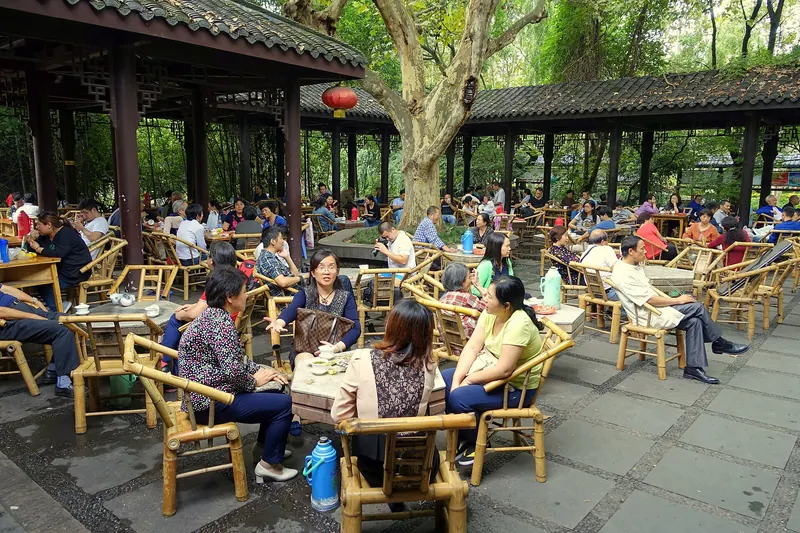
  2. Locals relaxing at an outdoor teahouse in Chengdu

    Sit in a teahouse and do nothing in particular

    Chengdu's teahouse culture is not really about the tea — it is a genuine local institution for socialising, playing mahjong or cards, and passing an entire afternoon without any specific agenda.

    Tip People's Park's Heming Teahouse is the best-known, but any neighbourhood teahouse offers the same experience with fewer visitors.

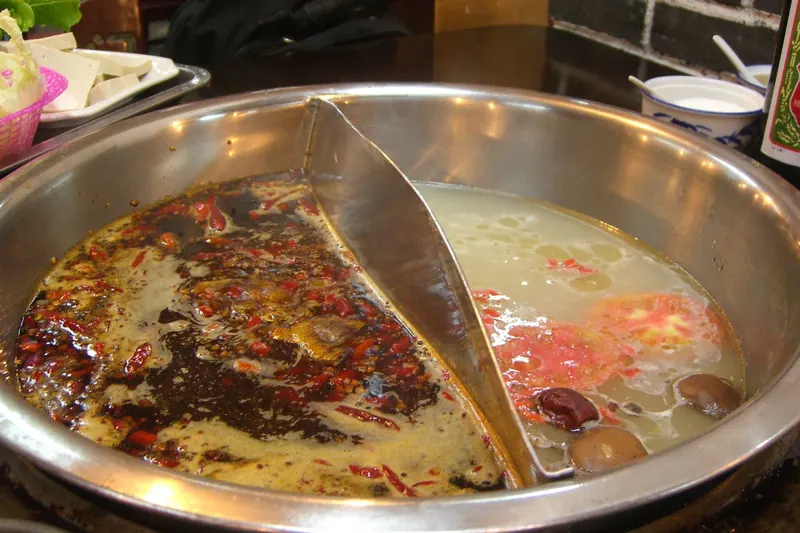
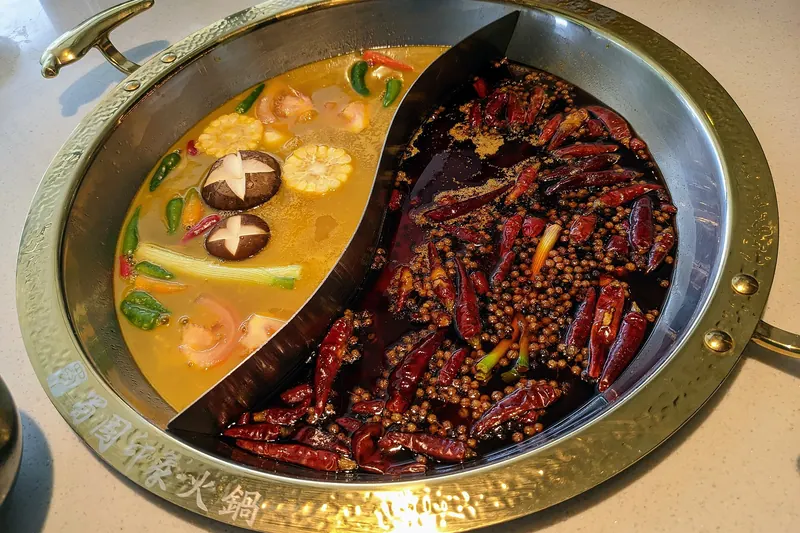
  3. A bubbling pot of fiery mala Sichuan hotpot broth

    Eat a real Sichuan hotpot

    A divided pot — mild broth on one side, fiery mala broth on the other — into which thin-sliced meat, tofu and vegetables are cooked at the table, the definitive Chengdu communal meal.

    Tip Order the mild-spicy split pot if you are unsure of your tolerance; the full mala side is intense.

  4. A Sichuan Opera performer mid face-changing act

    Watch a Sichuan Opera performance

    An evening of face-changing (bian lian), fire-spitting, shadow puppetry and traditional music, a distinct regional theatrical tradition rarely seen with this quality outside Sichuan.

    Tip Several theatres cater specifically to visitors with English programme notes — check current listings for the best show that evening.

  5. Get your ears cleaned in a park

    A local, slightly eccentric Chengdu tradition — practitioners with specialised tools offering ear cleaning as a public park service, watched by curious onlookers as much as it is used by clients.

    Tip People's Park is the classic spot to see this, whether or not you try it yourself.

  6. Day-trip to the Leshan Giant Buddha or Mount Emei

    Both reachable from Chengdu in a long day, the Buddha for its sheer scale and the mountain for its Buddhist temples and, at the summit, a genuine chance of seeing monkeys along the trail.

    Tip Leshan alone works as a single day trip; Mount Emei's higher reaches are better with an overnight if you want to summit properly.

Local food

What to eat in Chengdu

Sichuan food's defining trait is mala — the combination of fiery chilli heat and the tingling numbness of Sichuan peppercorn — and Chengdu is where it is done with the most confidence.

  • A divided Sichuan hotpot with mild and spicy broths side by side

    Sichuan hotpot

    A boiling, chilli- and peppercorn-laden broth at the centre of the table, into which thin-sliced meats, tofu and vegetables are cooked — Chengdu's defining communal meal, best eaten with a large group.

    Where to try it Any hotpot restaurant packed with locals in the evening — Shudaxia and Xiaolongkan are well-known local chains.

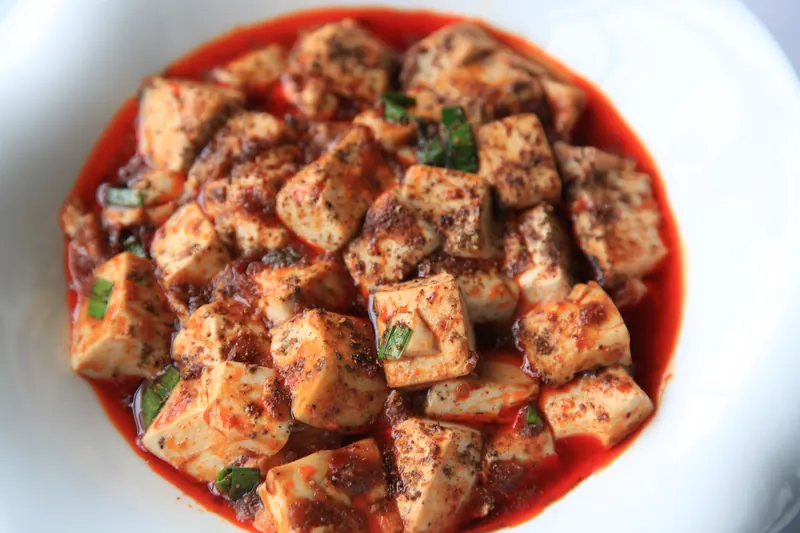
  • A bowl of mapo tofu in fiery, numbing sauce

    Mapo tofu

    Silken tofu in a fiery, numbing sauce of fermented broad bean paste, minced pork and Sichuan peppercorn — one of the province's most famous exports, and considerably better and spicier at its source.

    Where to try it Chen Mapo Tofu, the restaurant credited with inventing the dish over a century ago.

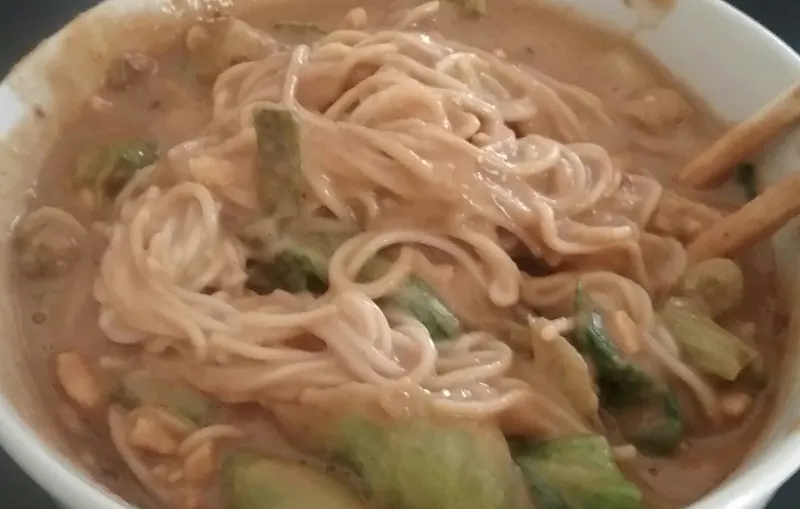
  • A small, intense bowl of dandan noodles in chilli oil

    Dandan noodles

    A small, intensely flavoured bowl of noodles in chilli oil, minced pork and preserved vegetables, originally sold by street vendors carrying the ingredients on a shoulder pole — a snack rather than a full meal.

    Where to try it Street stalls and small local noodle shops throughout the city, particularly near Jinli and Kuanzhai Alley.

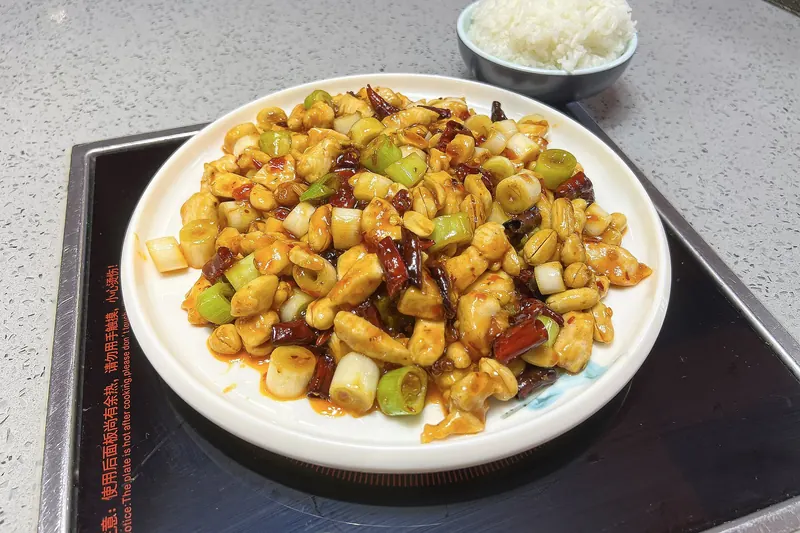
  • Kung Pao chicken with peanuts and dried chillies

    Kung Pao chicken (gongbao jiding)

    Diced chicken stir-fried with peanuts, dried chillies and Sichuan peppercorn, a dish famous worldwide in a much-milder export form and considerably spicier and more peppercorn-forward in its home city.

    Where to try it Any proper Sichuan restaurant — a reliable order to gauge how a kitchen handles the region's signature flavours.

  • Chengdu-style skewers (chuan chuan)

    Small skewers of meat, tofu and vegetables cooked in a shared spicy broth similar to hotpot but ordered individually by the skewer, tallied at the end by counting empty sticks.

    Where to try it Casual street-side chuan chuan restaurants, especially popular for a late, informal dinner.

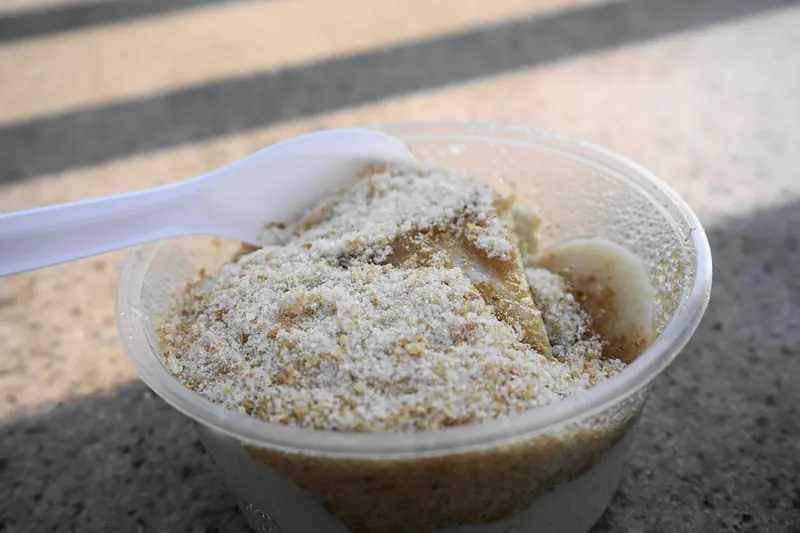
  • A bowl of savoury dou hua tofu pudding

    Sichuan-style street snacks

    Dou hua (savoury tofu pudding), leaf-wrapped rice bundles, and a wide range of cold, chilli-oil-dressed noodle and vegetable dishes sold from small stalls throughout the old city.

    Where to try it The lanes around Kuanzhai Alley and any street with a queue of local office workers at lunchtime.

Accommodation

Where to stay in Chengdu

Chengdu is spread out but its main visitor areas are well connected by metro, so neighbourhood choice matters less than in some cities.

  • Chunxi Road / city centre

    Central, well connected by metro to the panda base and other sights, with the widest choice of hotels and restaurants.

    Best for: First visits

  • Kuanzhai Alley area

    Boutique hotels near the old lanes and teahouses, a pleasant base for soaking up Chengdu's slower pace.

    Best for: Atmosphere

  • Near the panda base

    Useful if you specifically want to arrive at opening without an early cross-city transfer, though further from the old city's restaurants.

    Best for: An early panda visit

What a night costs

Hostel dorm
¥40–80 per night
Mid-range hotel
¥250–450 per night
Panda base entry
¥55
Hotpot dinner for two
¥120–250

Transport

Getting to and around Chengdu

Chengdu has two major airports and is well connected to the rest of China's high-speed rail network, making it an easy addition to a wider trip.

Getting there

  • Chengdu Tianfu Airport (TFU)

    The newer of Chengdu's two airports, handling a growing share of both domestic and international flights, about an hour from the city centre.

    Check which airport your flight uses — Chengdu is one of the few Chinese cities with two major active airports.

  • Chengdu Shuangliu Airport (CTU)

    The older, more central airport, closer to the city and well served by metro.

    Still handles a substantial share of flights, including many domestic and some international routes.

  • High-speed rail

    Chengdu East Station connects to the national network, with routes toward Xi'an and other major cities.

    Book via Trip.com or 12306. Journey times vary significantly by route — check current options for your specific connection.

Getting around

Chengdu's metro is extensive and growing, reaching the panda base and most central sights directly.

  • Metro

    A large, modern network covering the city centre, the panda base and outlying districts, cheap and simple with English signage throughout.

    The panda base has its own dedicated metro stop, making it easy to reach independently.

  • Walking within the old city

    Kuanzhai Alley, Jinli and the surrounding lanes are compact and best explored on foot at an unhurried pace.

    This is the one part of Chengdu worth not rushing through by any faster transport.

  • Didi (ride-hailing)

    Reliable and inexpensive once linked to a foreign card, useful for day trips or reaching restaurants off the metro grid.

    Have your destination address ready in Chinese characters for the driver.

  • Organised transport for day trips

    Leshan and Mount Emei are typically reached by bus, high-speed rail plus onward transfer, or an organised tour.

    High-speed rail to Leshan or Emeishan stations, followed by a local bus or taxi, is usually the most flexible option.

When to go

Best time to visit Chengdu

Chengdu's basin location gives it a humid, often overcast climate year-round, which makes temperature more relevant than sunshine when choosing a season.

  • Spring (March–May)

    Best time

    Mild and comfortable, with the panda base's outdoor enclosures at their most pleasant for both pandas and visitors.

  • Summer (June–August)

    Shoulder

    Hot and humid, with pandas sometimes moved to cooler indoor enclosures during the worst heat, though the city's food and teahouse culture remain fully enjoyable.

  • Autumn (September–November)

    Best time

    Comfortable and slightly drier than spring, a reliably good season for both the city and day trips to Leshan or Mount Emei.

  • Winter (December–February)

    Shoulder

    Cool, grey and often overcast — Chengdu sees relatively little direct sun year-round — but mild enough that panda viewing and city sightseeing both remain comfortable.

Worth planning around: The first week of October, when domestic tourism peaks nationwide and the panda base and old-city lanes are noticeably busier.

Itinerary

Three days in Chengdu

Pandas first, then the old city and food, then a day trip — a pace that leaves real room for sitting still.

  1. Day1

    Pandas

    A full morning at the panda base, then the old city.

    • Morning The panda base at opening, allowing at least three unhurried hours.
    • Afternoon Kuanzhai Alley for tea and a slow wander.
    • Evening Sichuan hotpot for dinner.
  2. Day2

    Old Chengdu and culture

    Temples, museums and an evening of theatre.

    • Morning Wuhou Shrine and Jinli Street.
    • Afternoon The Jinsha Site Museum.
    • Evening A Sichuan Opera performance, face-changing included.
  3. Day3

    A day trip

    Leshan's Giant Buddha or Mount Emei.

    • Morning High-speed train to Leshan or Emeishan.
    • Afternoon The Giant Buddha by boat and on foot, or a partial ascent of Mount Emei.
    • Evening Back to Chengdu for a final chuan chuan skewer dinner.

Travel tips

Chengdu travel tips

Chengdu-specific practicalities, mostly about pandas, spice tolerance and the city's two airports.

  • Arrive at the panda base right at opening — pandas are noticeably more active in the cool morning hours than by midday.
  • Order the half-and-half hotpot broth if you are unsure of your spice tolerance — Chengdu's mala heat is intense even by Chinese standards.
  • Double-check which of Chengdu's two airports your flight uses when booking transport — Tianfu and Shuangliu are a significant distance apart.
  • Leshan and Mount Emei are both long day trips — start early and confirm the last return train or bus time before setting off.
  • Chengdu's weather is reliably overcast much of the year; pack layers rather than relying on forecasts for sunshine.
  • Book Sichuan Opera tickets a day ahead in peak season — the better-known theatres with English notes can sell out.

FAQ

Chengdu: frequently asked questions

How many days do you need in Chengdu?

Three. A full morning at the panda base alone deserves unhurried time, a second day covers the old city's temples, alleys and museums, and a third allows a day trip to the Leshan Giant Buddha or Mount Emei. Two days is workable if you skip the day trip.

Is the panda base worth it?

Yes, unreservedly. It is one of the best wildlife viewing experiences in the country — genuine research facility rather than a zoo, naturalistic enclosures, and, with an early-morning visit, pandas that are demonstrably active rather than asleep.

How spicy is Chengdu food really?

Spicy, and specifically numbing as well as hot thanks to Sichuan peppercorn's mala effect. Most restaurants can adjust heat level on request, and hotpot's divided pots let you choose mild broth for some ingredients and full heat for others.

What is the best time of year to visit Chengdu?

March to May and September to November, both mild and comfortable. Chengdu's basin location keeps it humid and often overcast year-round regardless of season, so temperature matters more than expecting reliable sunshine.

Can I do Leshan and Mount Emei in one day?

Not properly. Both are worthwhile long day trips individually from Chengdu, but combining them in one day means rushing both. If you have time for only one, Leshan's Giant Buddha is the more compact, self-contained visit.

Read next

Related travel articles

Practical

Packing by Season and Trip Type

Most packing advice is a list of things. This is the opposite: the small number of decisions that determine whether your luggage helps or hinders, organised by the kind of trip you are actually taking.

Heritage

UNESCO Sites Worth Planning a Trip Around

A UNESCO listing tells you a place matters; it does not tell you whether it is worth two days and a detour. This is how to read the list usefully — and which sites reward building a trip around them.

Advertisement