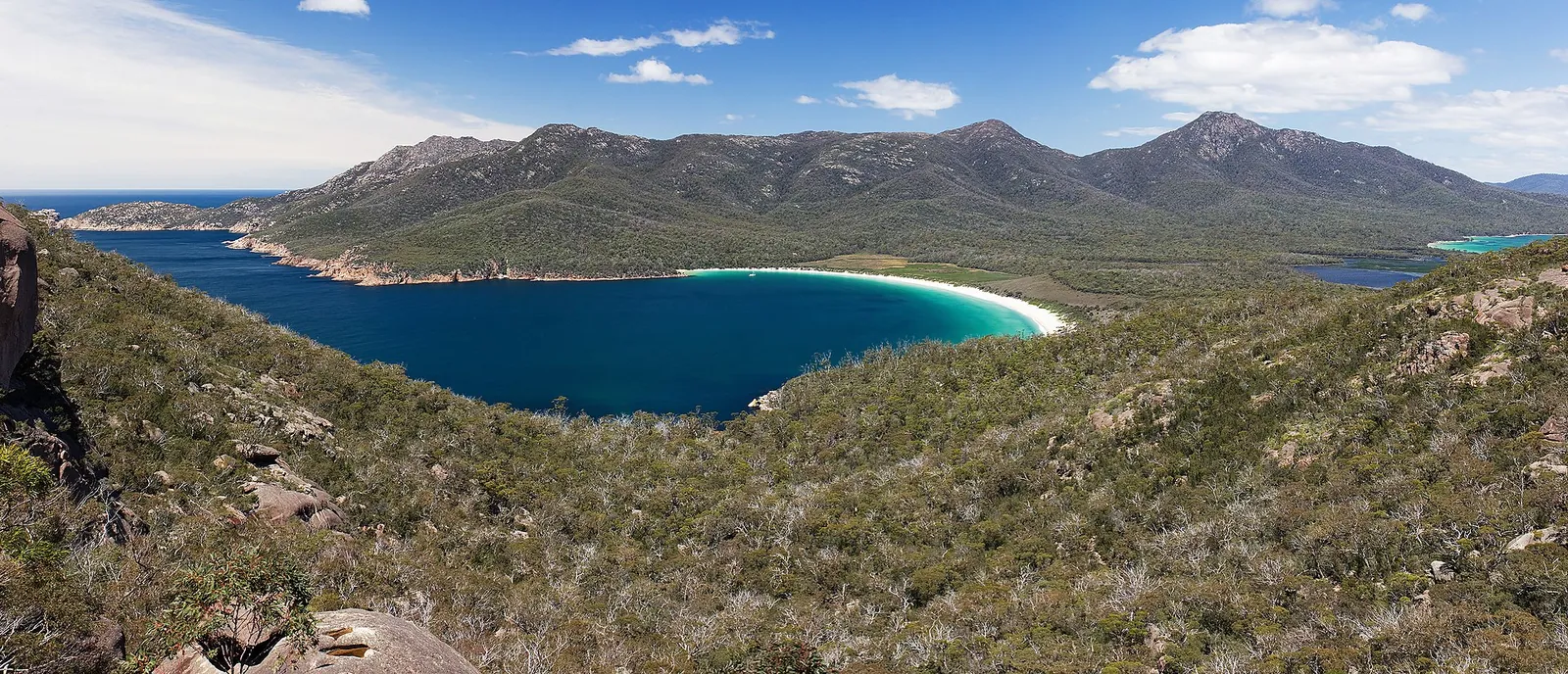
The white crescent of Wineglass Bay between forested granite peaks in Tasmania

Australia · Travel guide

The Complete Australia Travel Guide

How the country divides, how to choose between the ten destinations, how to handle enormous distances, and what two weeks can realistically hold.

  • Reading time 14 min read
  • Covers 10 destinations
  • Updated 2026

Photo: JJ Harrison · CC BY-SA 3.0

Australia is an island continent, and no trip covers more than a slice of it. This guide covers how the regions divide, how to choose between the ten destinations, how to fly and drive, when to go, what it costs and three routes that work.

How Australia divides

Australia is about 4,000 km from east to west, and its regions differ enormously in climate and character. Six zones organise most trips.

The south-east. Sydney and Melbourne are the two great cities, about 880 km apart. Around them are the Blue Mountains and the coastal drive of the Great Ocean Road.

Tasmania. Tasmania is an island of mountains, wilderness, food and convict history, south of the mainland.

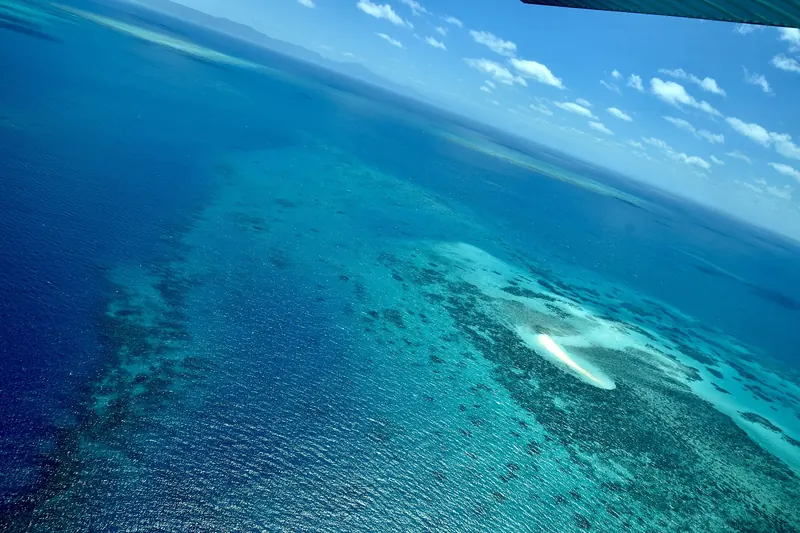
Tropical Queensland. Cairns and the Great Barrier Reef sit beside the Daintree Rainforest, and the Whitsundays have white beaches and sailing in the south.

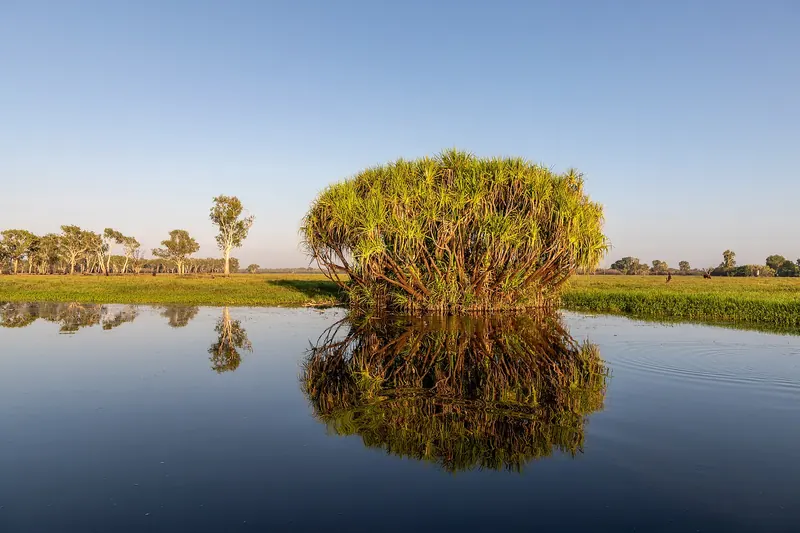
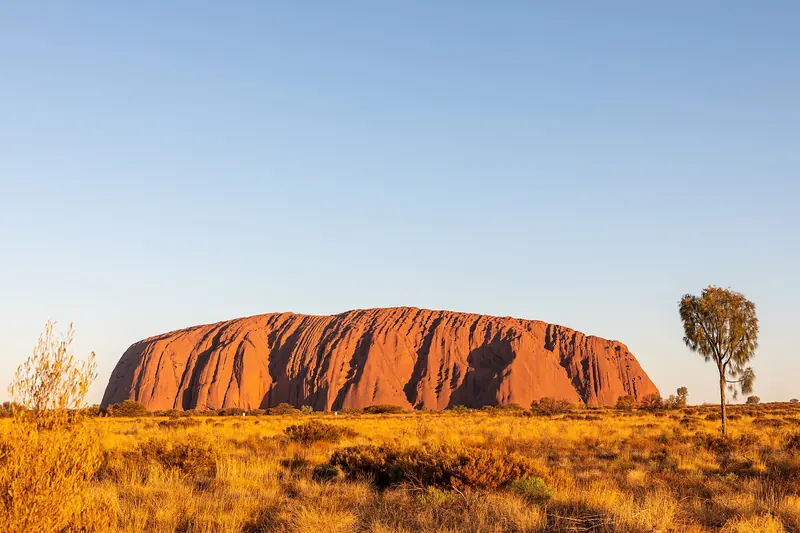
The Red Centre and the Top End. Uluru is the heart of the desert, and Kakadu is the great wetland and rock-art region of the tropical north.

Western Australia. Perth and Margaret River have sunshine, wine, beaches and the world's most remote big-city location.

Worth knowing: The practical unit is two or three of these regions, joined by flights. Trying to see more turns the trip into an exercise in airports.

Choosing between the ten destinations

Handling enormous distances

Australia's size dominates any plan. Sydney to Perth is about 3,300 km, and Sydney to Cairns about 2,400 km.

Flights. The only sensible way between regions. Qantas, Virgin Australia, Jetstar and Rex fly all major routes, and fares are lowest when booked early.

Hire cars. Ideal for regional exploring, such as the Great Ocean Road, Tasmania and Margaret River. Drive on the left, avoid dawn and dusk in rural areas and take rests every two hours.

Trains. The Ghan, the Indian Pacific and other long-distance trains offer scenic journeys, though they are slow and expensive.

Tours. Organised tours suit the reef, Uluru and Kakadu, where guides and permits make things easier.

Worth knowing: In the outback, carry extra water and fuel, tell someone your route and do not leave your vehicle if it breaks down.

When to go

Australia's seasons are reversed from the northern hemisphere, and the far north has a wet and dry season rather than four seasons.

December to February is summer, with hot weather in the south and centre and the monsoon in the north. It is beach season in Sydney, Melbourne and Perth, and the peak for domestic holidays.

March to May is autumn, with warm days and fewer crowds in the south. The north dries out from April.

June to August is winter, the best time for the reef, Kakadu and Uluru, with clear skies and mild days. The south is cool, with snow in the mountains.

September to November is spring, with wildflowers in Western Australia, warm weather and few crowds in the south.

Worth knowing: Cyclone season in the north runs from November to April, with the highest risk from January to March.

Money, costs and safety

Australia is expensive by global standards. A coffee costs about A$5, a restaurant main meal A$25–40, a mid-range hotel A$200–350 and a hire car A$60–120 per day.

Tours to the reef, Uluru and Kakadu are a large part of the budget, at A$150–400 per day. Booking ahead and choosing shoulder seasons can save money.

Cards are accepted nearly everywhere, and tipping is not expected. Sales tax is included in prices.

The main risks are natural. Sun, surf, crocodiles, marine stingers and heat all need respect, and local advice is usually clear and sensible.

Three routes that work

  1. One week: Sydney and the Reef

    Four nights in Sydney, with a day in the Blue Mountains, then a flight north for three nights in Cairns and the Reef.

    Tip Fly into Sydney and out of Cairns.

  2. Ten days: the south-east

    Sydney, Melbourne and the Great Ocean Road, with a short flight between them, plus a side trip to Tasmania if time allows.

    Tip Fly Sydney to Melbourne, and rent a car for the coast.

  3. Two weeks: the classic

    The itinerary on the country page: Sydney, the Blue Mountains, Cairns and the Reef, Uluru, Melbourne and the Great Ocean Road.

    Tip Swap Uluru for the Whitsundays if you prefer beaches to desert.

Reference

The 10 destinations in this guide

Every place named above has its own detailed guide — attractions, food, where to stay, how to get around and a suggested day-by-day plan.

Major CityCoast & Beaches

Sydney

New South Wales, east coast

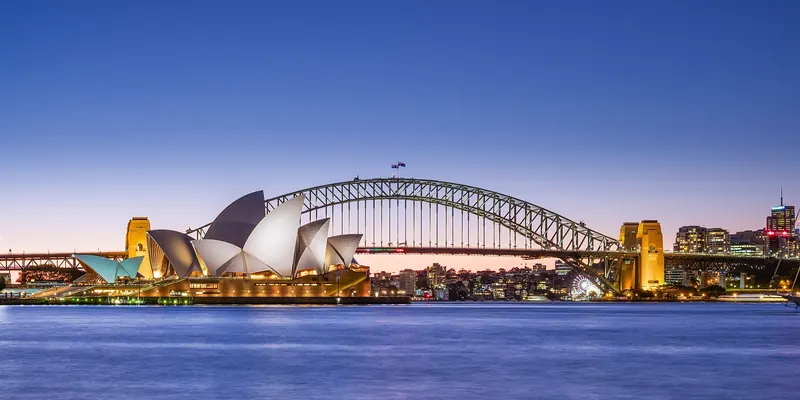
Australia's largest city: the Opera House and Harbour Bridge, The Rocks, the Botanic Garden, Bondi and Manly beaches, cliff walks, ferries and a lively food and café scene.

Don't miss A ferry across the harbour at sunset, with the Opera House and the Harbour Bridge lit gold behind you.

Explore Destination — Sydney
Major CityCulture & Arts

Melbourne

Victoria, south-east Australia

A sophisticated city of coffee culture, street art, grand Victorian architecture, galleries, markets and sport, with day trips to the Yarra Valley, Phillip Island and the Great Ocean Road.

Don't miss Wandering the laneways with a flat white in hand, from Hosier Lane's murals to the hidden cafés behind Flinders Street.

Explore Destination — Melbourne
Scenic RegionCoast & Beaches

The Great Ocean Road

Victoria, south-west coast

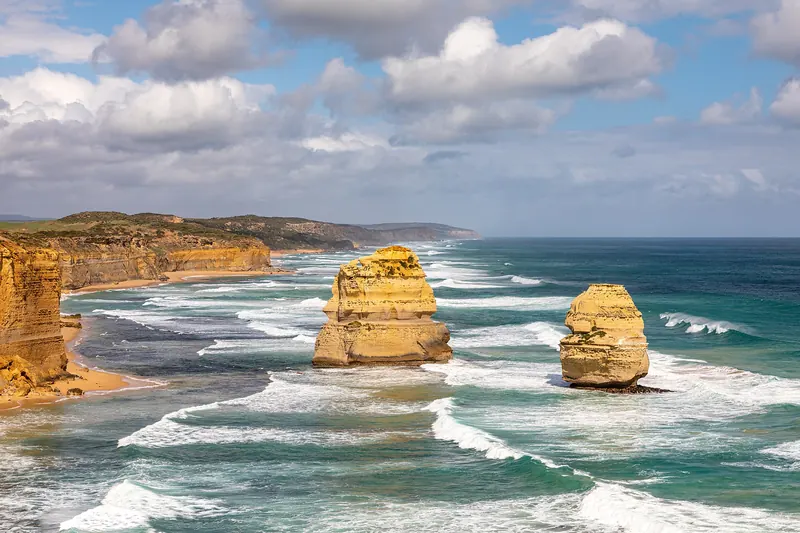
A war memorial road built by returned soldiers, winding past Bells Beach, Lorne, Apollo Bay, the Otway rainforest and the Twelve Apostles, with wildlife, waterfalls and shipwreck history.

Don't miss The Twelve Apostles at sunset, as the limestone stacks glow gold in the surf.

Explore Destination — The Great Ocean Road
IslandNature & Wildlife

Tasmania

Tasmania, island state south of the mainland

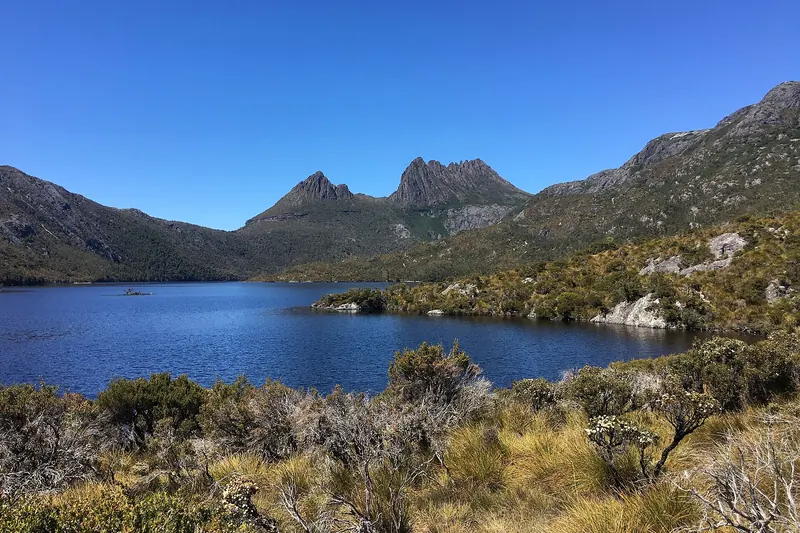
Australia's island state: Hobart and MONA, Cradle Mountain, Freycinet and Wineglass Bay, Port Arthur, Bruny Island and a wilderness of national parks, with a superb food scene.

Don't miss The view of Wineglass Bay from the lookout, a perfect white crescent of sand between pink granite peaks.

Explore Destination — Tasmania
IslandCoast & Beaches

The Whitsundays

Queensland, central coast

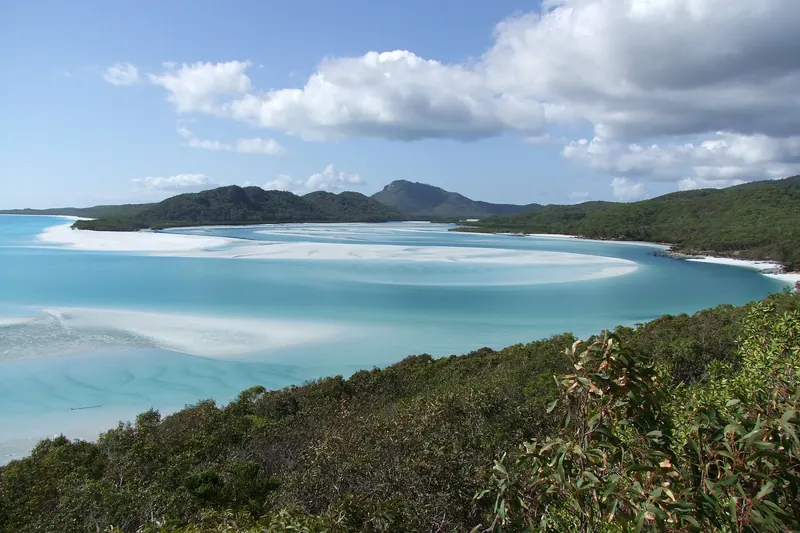
A group of tropical islands on the Great Barrier Reef, with Whitehaven Beach, Hill Inlet, sailing, snorkelling, reef trips and the resort island of Hamilton.

Don't miss Hill Inlet at low tide, where swirling sand and turquoise water form patterns you can see from the lookout.

Explore Destination — The Whitsundays
MountainsUNESCO Site

The Blue Mountains

New South Wales, west of Sydney

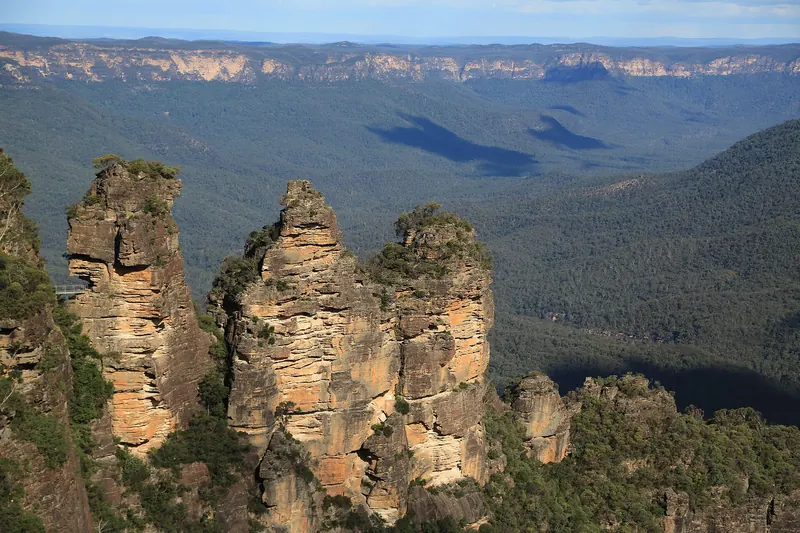
A UNESCO-listed wilderness two hours from Sydney, with Katoomba's Three Sisters, Scenic World, Wentworth Falls, cliff walks, Leura's gardens and the Jenolan Caves.

Don't miss The Three Sisters at sunset from Echo Point, as the valley turns blue and the cliffs glow orange.

Explore Destination — The Blue Mountains
Major CityCoast & Beaches

Perth and Margaret River

Western Australia, south-west

Perth's Kings Park, Fremantle and Cottesloe Beach, the quokkas of Rottnest Island and the wineries, caves, surf and forests of Margaret River, in Australia's remote west.

Don't miss Sunset over the Indian Ocean from Cottesloe Beach, or a glass of cabernet in the Margaret River vines.

Explore Destination — Perth and Margaret River
UNESCO SiteNational Park

Kakadu and the Top End

Northern Territory, tropical north

Australia's largest national park, a UNESCO site for both nature and culture, with Ubirr and Nourlangie rock art, Yellow Water cruises, Jim Jim Falls and Litchfield, reached from Darwin.

Don't miss Sunset from Ubirr, looking over the floodplains after a walk past thousands of years of rock art.

Explore Destination — Kakadu and the Top End

Back to the Australia country page

FAQ

Planning a trip to Australia

Can I see Sydney, the Reef and Uluru in one trip?

Yes, with domestic flights. Sydney to Cairns takes about three hours and Cairns to Uluru about three hours plus a connection. Ten days is a comfortable minimum.

Is it better to hire a car or take tours?

A hire car is best for the Great Ocean Road, Tasmania and the coast. Tours are easier for the Great Barrier Reef, Uluru and Kakadu, where distances and permits complicate independent travel.

What time of year should I avoid?

The far north during the wet season from January to March, and the Red Centre in summer. Christmas and January school holidays are also busy and expensive.

When should I book?

Flights, Uluru accommodation and reef tours should be booked two to three months ahead for peak periods. City hotels can often be arranged closer to the date.

Advertisement