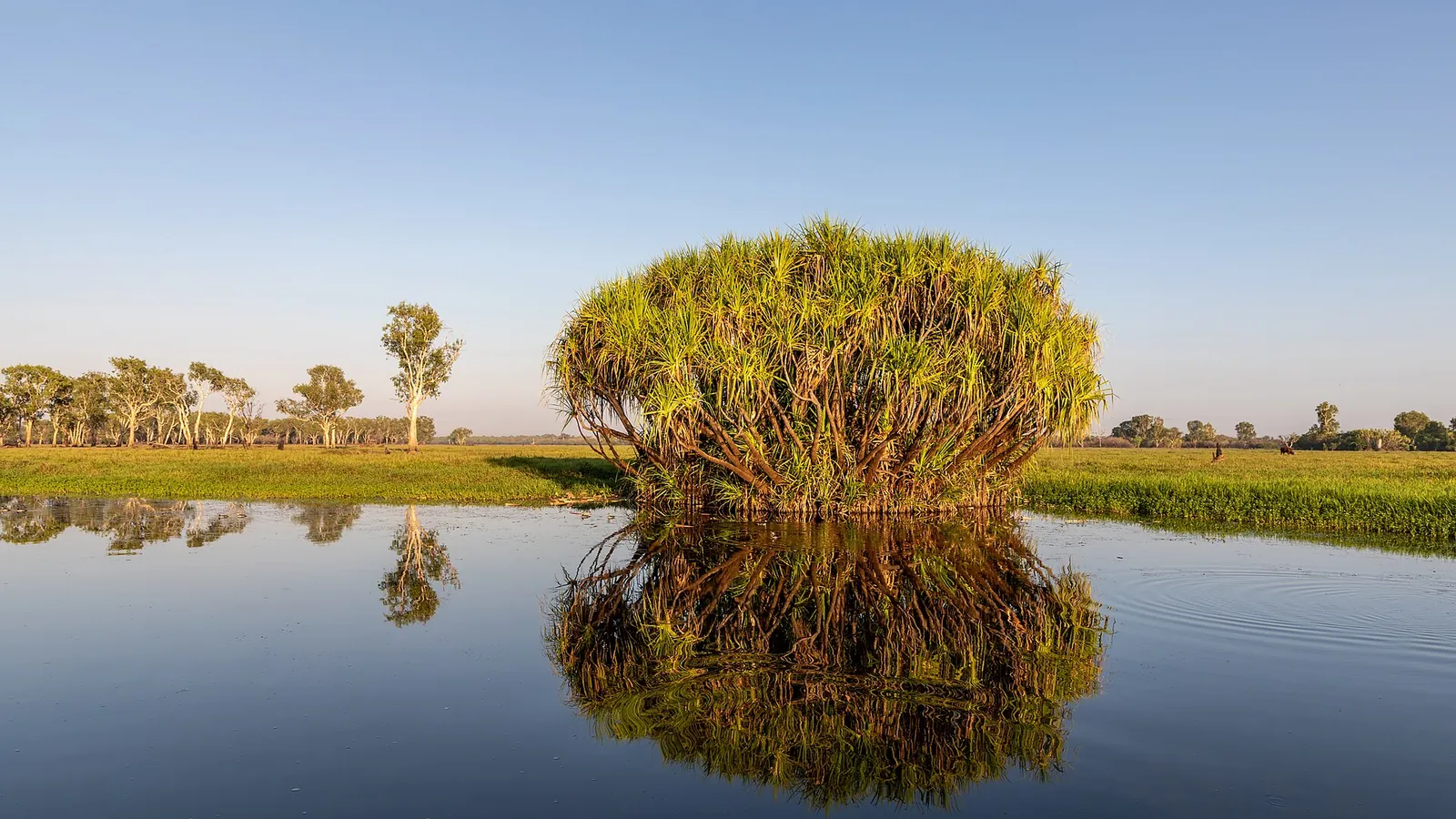
The Yellow Water billabong at Kakadu National Park with wetlands and water lilies

Northern Territory, tropical north · Australia

Kakadu and the Top End

A vast tropical wilderness of wetlands, escarpments, waterfalls and some of the world's oldest rock art, in the heart of Bininj/Mungguy country and home to saltwater crocodiles.

  • Best time May–October
  • Stay 3–4 days
  • Good for Aboriginal culture, wildlife, birdwatching, waterfalls, adventure

Photo: Dietmar Rabich · CC BY-SA 4.0

Welcome to Kakadu

Kakadu National Park, in the Northern Territory, is the largest national park in Australia, covering about 20,000 square kilometres, an area nearly the size of Wales. It is on the UNESCO World Heritage List for both its natural and its cultural values, one of the few places in the world to hold a dual listing. It is jointly managed by its Aboriginal traditional owners, the Bininj/Mungguy, and Parks Australia.

The landscape ranges from tidal flats and floodplains to billabongs, lowland forest and the stone country of the Arnhem Land escarpment. It is home to more than 280 bird species, huge numbers of saltwater crocodiles, and rock art galleries at Ubirr, Nourlangie and other sites that record thousands of years of human occupation, and some of them are among the oldest in the world. Aboriginal people have lived here for at least 65,000 years.

The Top End has two seasons: the dry, from May to October, and the wet, from November to April. Most visitors come in the dry, when the roads are open, the weather is warm and sunny and the waterfalls are accessible, though the falls run best early in the season. The wet brings flooding, closed roads, dramatic storms and green landscapes for those who are prepared. Darwin, the regional capital, is the gateway.

  • UNESCO Site
  • National Park
  • Nature & Wildlife
  • Culture & Arts

Why visit

Why visit Kakadu?

Kakadu is one of the most remarkable places in Australia, both for its wildlife and its cultural heritage.

  • Ancient rock art

    Galleries at Ubirr and Nourlangie, with paintings that span tens of thousands of years.

  • Wetlands and wildlife

    Boat cruises on Yellow Water spot crocodiles, jabirus, sea eagles and thousands of waterbirds.

  • Waterfalls and gorges

    Jim Jim and Twin Falls tumble off the escarpment in the early dry season.

  • Living culture

    Aboriginal-led tours and cultural centres share stories and knowledge.

  • Vastness and quiet

    An immense wilderness, still uncrowded.

Main attractions

Top things to see in Kakadu

The main sights are spread across a huge park, so plan a route and a few nights of accommodation.

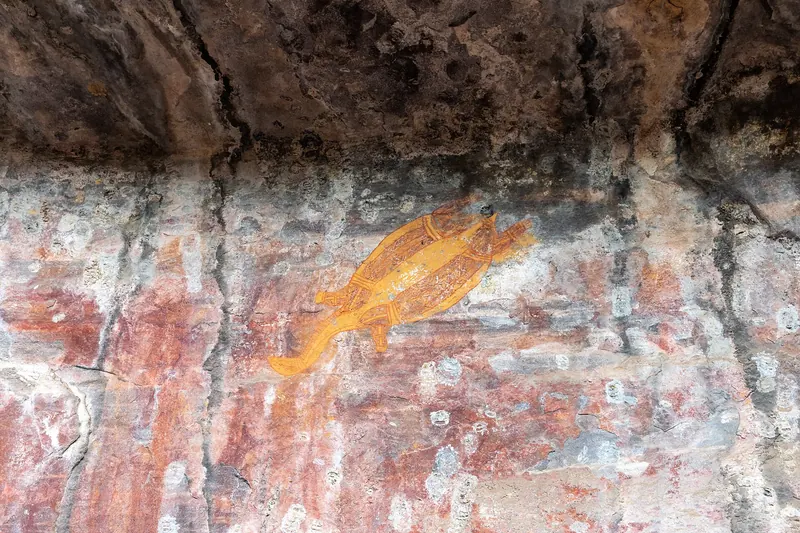
  1. Aboriginal rock art paintings on a sandstone wall at Ubirr in Kakadu

    Ubirr Rock Art

    A rock outcrop in the north of the park with galleries of paintings of fish, animals and figures, and a climb to a lookout over the floodplains, one of the best sunset views in Australia.

    Tip Go in the late afternoon, and stay for sunset.

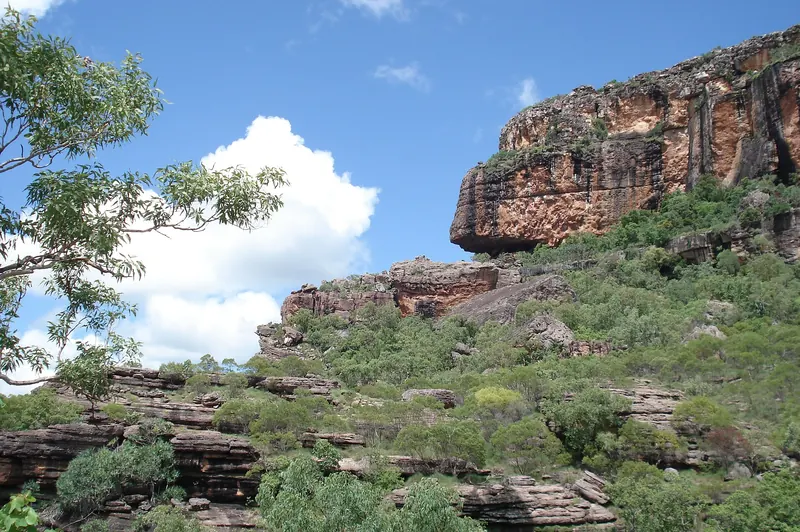
  2. The sandstone outlier of Nourlangie Rock in Kakadu National Park

    Nourlangie (Burrungkuy)

    A sandstone outlier with shelters decorated with rock art, including some paintings of spirit beings, and a lookout at Nawurlandja.

    Tip Read the interpretive signs, which tell of the creation stories.

  3. Yellow Water (Ngurrungurrlba) Billabong

    A wetland on the South Alligator River floodplain, explored by boat at sunrise or late afternoon, with crocodiles, jabirus, whistling ducks and water lilies.

    Tip Book the sunrise cruise.

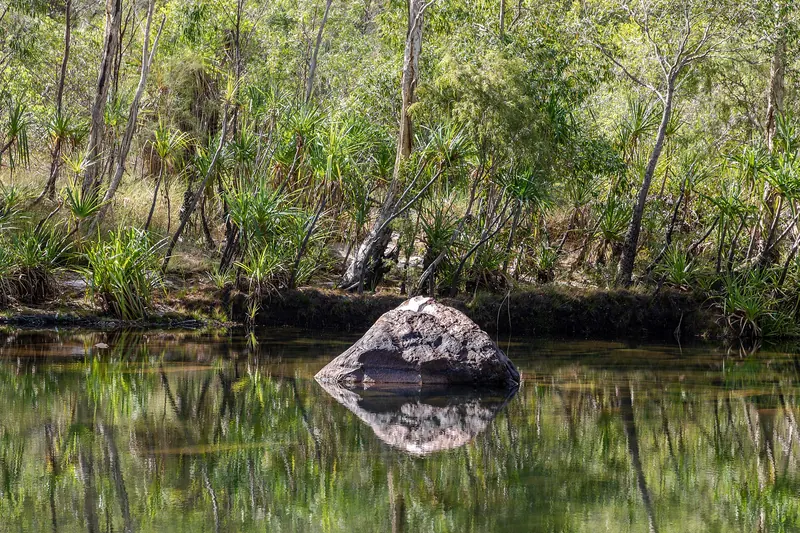
  4. The rocky gorge and creek at Jim Jim in Kakadu National Park

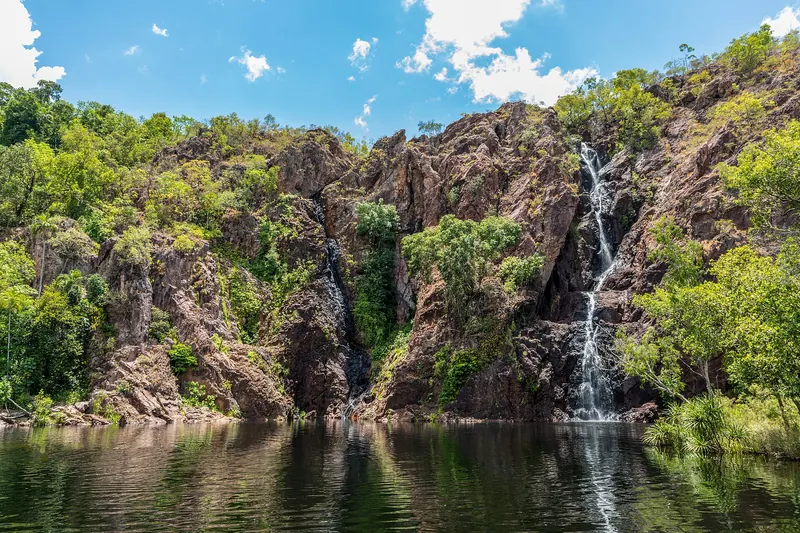
    Jim Jim and Twin Falls

    Waterfalls that plunge over the escarpment, reached by a 4WD track and a walk, and open only in the dry season when the track is passable. Swimming may be prohibited if crocodiles are present.

    Tip Check road and swimming conditions with park rangers.

  5. Warradjan Aboriginal Cultural Centre

    A centre in the shape of a pig-nosed turtle, with displays about the Bininj/Mungguy culture, art and stories.

    Tip Visit early in your trip for context.

  6. Wangi Falls tumbling into a plunge pool in Litchfield National Park

    Litchfield National Park

    A smaller park about 1.5 hours south of Darwin, with waterfalls and swimming holes at Wangi Falls and Florence Falls, and giant termite mounds. A good option for a day trip.

    Tip Swim only in designated areas.

Things to do

Best things to do in Kakadu

Kakadu is about culture, wildlife and time outdoors.

  1. See the rock art at Ubirr

    Walk a short trail past painted shelters, and climb for the view.

    Tip Go with a ranger talk if available.

  2. Cruise Yellow Water

    A boat trip at dawn among crocodiles and birds.

    Tip Book in advance.

  3. Take an Aboriginal-led tour

    Local guides share knowledge of bush foods, fishing and rock art.

    Tip Choose operators owned by Traditional Owners.

  4. Swim at a safe pool

    Some waterholes are monitored and safe for swimming, such as Maguk and Gunlom, when open.

    Tip Check ranger warnings.

  5. Watch birds

    Kakadu is one of Australia's best birding areas.

    Tip Go early.

  6. Visit Darwin's markets

    The Mindil Beach Sunset Market has food, crafts and sunsets in the dry season.

    Tip It runs on Thursday and Sunday evenings.

Local food

What to eat in Kakadu

Food in Kakadu is simple, with barramundi and barbecue, and Darwin has a lively multicultural scene.

  • Barramundi

    The northern fish, served grilled, battered or in a curry.

    Where to try it Restaurants and pubs across the Top End.

  • Buffalo and crocodile

    Local meats served at outback pubs and barbecues.

    Where to try it Roadhouses and Darwin restaurants.

  • Laksa and Asian food

    Darwin's food reflects its links with Southeast Asia, with excellent laksa and satay.

    Where to try it The Mindil Beach Sunset Market.

  • Bush tucker

    Native fruit, honey and herbs, such as Kakadu plum, one of the richest sources of vitamin C in the world.

    Where to try it Cultural tours and cafés.

  • Tropical fruit

    Mangoes, from October, and other fruit.

    Where to try it Markets.

Accommodation

Where to stay in Kakadu

Accommodation in the park is limited and should be booked ahead, particularly in the dry season.

  • Jabiru

    The park's main town, with hotels and a caravan park.

    Best for: Central base

  • Cooinda and Yellow Water

    A lodge and campground near the billabong.

    Best for: Wetlands and cruises

  • Darwin

    A wide range of hotels and restaurants.

    Best for: Facilities and flights

What a night costs

Campsite
A$15–50 per night
Mid-range lodge
A$200–350 per night
Luxury lodge
A$500–1,000 per night
Park pass
About A$40 per adult, valid for a week

Transport

Getting to and around Kakadu

Kakadu is about 250 km east of Darwin.

Getting there

  • Hire car from Darwin

    About 2.5 to 3 hours to Jabiru or Cooinda, on sealed roads. 4WD is needed for some tracks, such as Jim Jim.

    Book early in the dry season.

  • Organised tour

    Day tours and multi-day trips leave Darwin.

    The easiest option for first-timers.

  • Flight to Darwin (DRW)

    Direct flights from Sydney, Melbourne, Perth and Asian cities.

    The airport is near the city.

Getting around

Distances within the park are long, and roads can flood.

  • Car or 4WD

    Essential for independence.

    Carry fuel and water, and check road conditions.

  • Tour

    Guided trips remove the driving stress.

    Small groups are best.

  • Boat

    Cruises on Yellow Water and the East Alligator River.

    Book ahead.

When to go

Best time to visit Kakadu

The dry season is best, with warm days and low humidity. The wet season from November to April brings storms, flooding and closed roads.

  • Early dry (May–June)

    Best time

    Green, with waterfalls at their best and cooler weather.

  • Late dry (July–October)

    Good

    Hot, dry and dusty, with wildlife concentrating at water.

  • Build-up (October–November)

    Think twice

    Hot, humid and stormy.

  • Wet season (December–April)

    Quiet

    Extreme humidity, flooding and closed roads, but dramatic and green.

Worth planning around: The wet season, unless you are prepared for closures and heat.

Itinerary

Four days in Kakadu

From Darwin into the park, with rock art, a cruise and waterfalls.

  1. Day1

    Darwin to Kakadu

    Into the wilderness.

    • Morning Drive from Darwin.
    • Afternoon The cultural centre.
    • Evening Sunset at Nawurlandja.
  2. Day2

    Ubirr

    Rock art.

    • Morning A ranger talk at Ubirr.
    • Afternoon The rock art and lookout.
    • Evening Sunset over the floodplains.
  3. Day3

    Yellow Water and Nourlangie

    Wetlands and rock.

    • Morning The Yellow Water cruise.
    • Afternoon Nourlangie Rock art.
    • Evening A campfire dinner.
  4. Day4

    Jim Jim or return

    Waterfalls.

    • Morning Jim Jim Falls, if open.
    • Afternoon Drive back to Darwin.
    • Evening Depart.

Travel tips

Kakadu travel tips

Safety and respect matter in Kakadu.

  • Never swim in water not marked safe. Saltwater crocodiles are present in rivers, billabongs and some waterholes.
  • Check the park website and road conditions for closures.
  • Buy a park pass in advance.
  • Follow the rules about sacred sites and photography.
  • Carry plenty of water, and wear sunscreen and insect repellent.
  • Book accommodation and cruises well ahead in the dry season.
  • Choose Aboriginal-owned tours where possible.

FAQ

Kakadu: frequently asked questions

How many days do you need in Kakadu?

Three days at least, and four or five for a relaxed visit.

Can I swim in Kakadu?

Only at designated safe swimming areas. Saltwater crocodiles are common in the park.

What is the best time to visit?

May to October, the dry season.

Do I need a 4WD?

Not for the main sights, but some tracks, such as Jim Jim Falls, require one.

Is Kakadu safe?

Yes, if you follow the warning signs, especially about crocodiles, and stay hydrated.

Can I visit as a day trip from Darwin?

It is possible on a long day tour, but three days is much better.

Read next

Related travel articles

Heritage

UNESCO Sites Worth Planning a Trip Around

A UNESCO listing tells you a place matters; it does not tell you whether it is worth two days and a detour. This is how to read the list usefully — and which sites reward building a trip around them.

Road trips

How to Plan a US National Parks Road Trip

American national parks are no longer places you turn up at. Timed entry, permit lotteries and mandatory shuttles now govern the popular ones, and the distances between them are larger than almost any visitor expects. Here is how to plan around both.

Advertisement