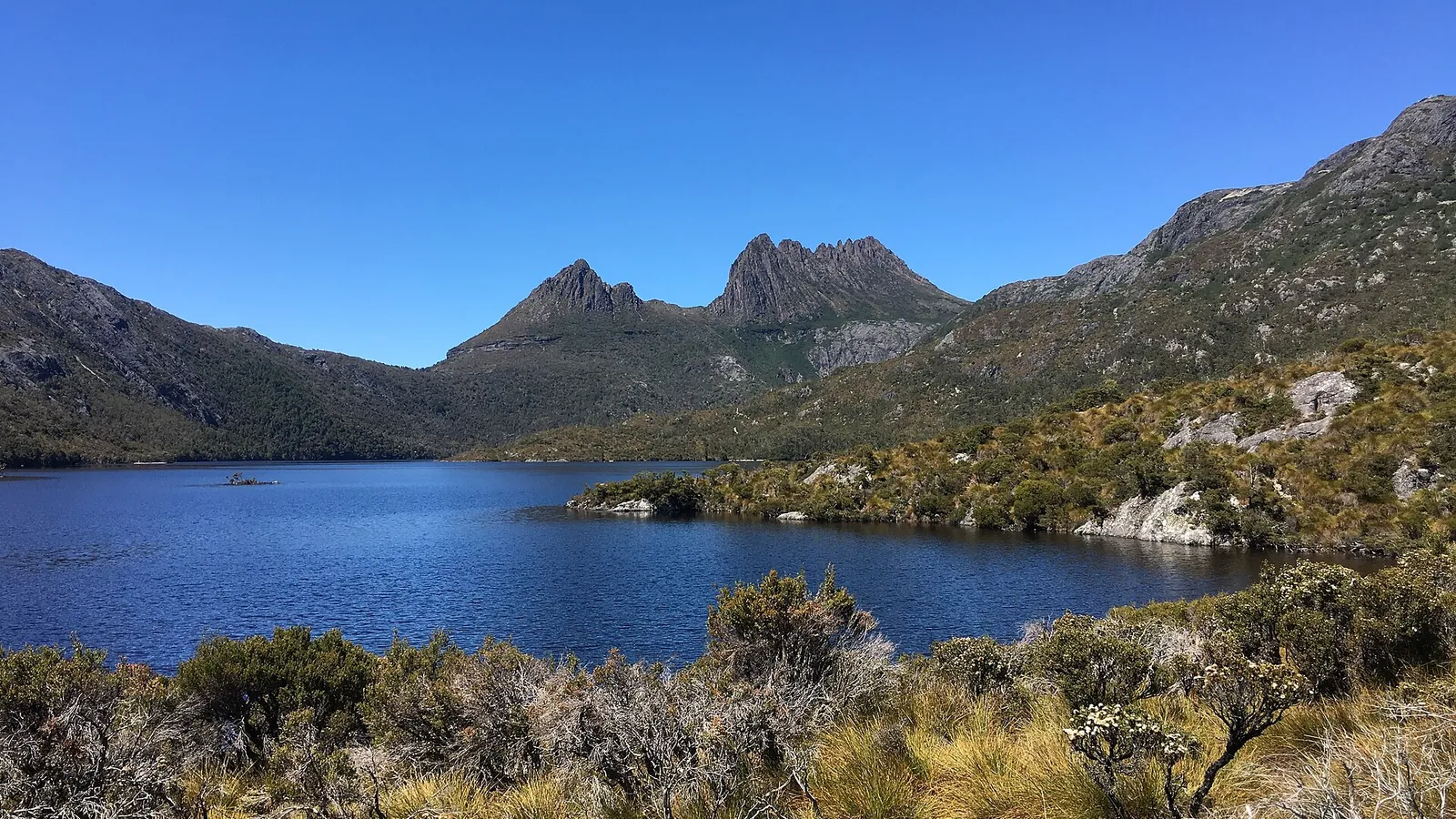
Cradle Mountain reflected in Dove Lake in the Tasmanian wilderness

Tasmania, island state south of the mainland · Australia

Tasmania

A wild, green island of mountains, beaches and ancient forest, with convict history, a bold art museum, Hobart's waterfront and some of the best food and drink in Australia.

  • Best time December–March
  • Stay 5–7 days
  • Good for Hiking, wildlife, food, art, road trips

Photo: BennyG3255 · CC BY-SA 4.0

Welcome to Tasmania

Tasmania is an island about the size of Ireland, 240 km south of the Australian mainland across Bass Strait, and it has long been the country's most unspoilt and least visited state. Around a fifth of it is a World Heritage Area, with mountains, rainforest, wild rivers and beaches, and it is home to unusual animals including the Tasmanian devil, wombats and wallabies. The Palawa people have lived here for at least 40,000 years.

European settlement began in 1803, and the island was a major convict destination, with the notorious Port Arthur penal settlement and other sites now on the UNESCO Australian Convict Sites list. Hobart, on the Derwent River beneath Mount Wellington, is the capital and the second-oldest city in the country, with Georgian sandstone warehouses, a lively waterfront and a Saturday market at Salamanca Place.

In recent years the island has become a food and culture destination. The Museum of Old and New Art, MONA, opened in 2011 and changed the way people saw the state, and Tasmania's whisky, cool-climate wine, cheese, seafood and cider are all outstanding. But the wilderness is still the main attraction, with day walks and multi-day trails through spectacular scenery.

  • Island
  • Nature & Wildlife
  • National Park
  • Food & Wine

Why visit

Why visit Tasmania?

Tasmania combines wild landscapes, food and history in one compact, walkable island.

  • World-class wilderness

    Cradle Mountain, Freycinet and the south-west offer some of Australia's best walking.

  • MONA and Hobart

    A provocative art museum, a lively waterfront and historic streets.

  • Food and drink

    Oysters, cheese, whisky, cider and wine, at cellar doors and farm gates.

  • Convict heritage

    Port Arthur and other sites tell a dark story.

  • Unique wildlife

    Tasmanian devils, wombats, echidnas and wallabies are easily seen.

Main attractions

Top things to see in Tasmania

The island is best explored by car, with a base in Hobart and a loop through the east and north-west.

  1. Stalls at the Salamanca Market in Hobart on a Saturday

    Hobart and Salamanca Place

    The waterfront of the capital, with sandstone warehouses, Battery Point's old streets and the Saturday Salamanca Market, which sells produce and crafts.

    Tip Go early to the market, and stay for lunch on the docks.

  2. The Museum of Old and New Art, MONA, on the Derwent River near Hobart

    MONA

    A privately owned museum built into a sandstone cliff on the Derwent, with a provocative collection of ancient and contemporary art, a winery and a brewery. Reached by ferry from Hobart.

    Tip Take the ferry, and allow at least three hours.

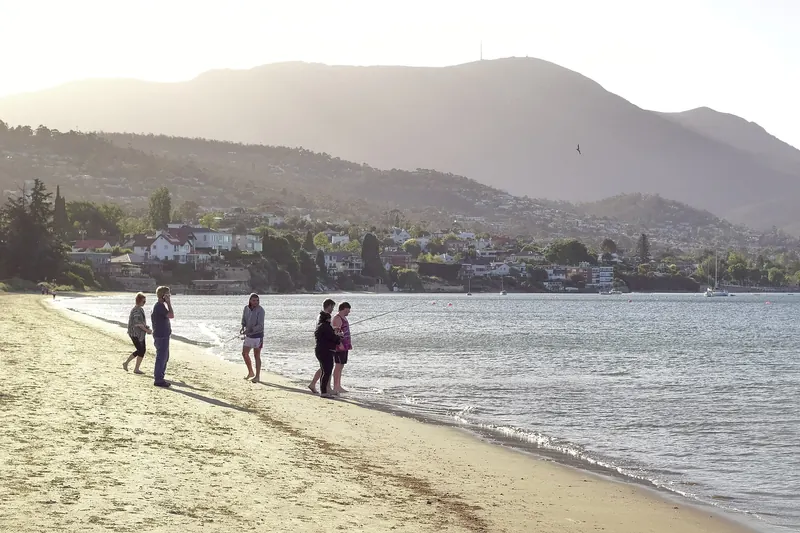
  3. Mount Wellington rising above the suburbs of Hobart

    Mount Wellington (kunanyi)

    The mountain that towers over Hobart, at 1,271 metres, with a road to the summit and views across the city and Derwent estuary. Its Aboriginal name is kunanyi.

    Tip Bring warm clothes, as it is much colder at the top.

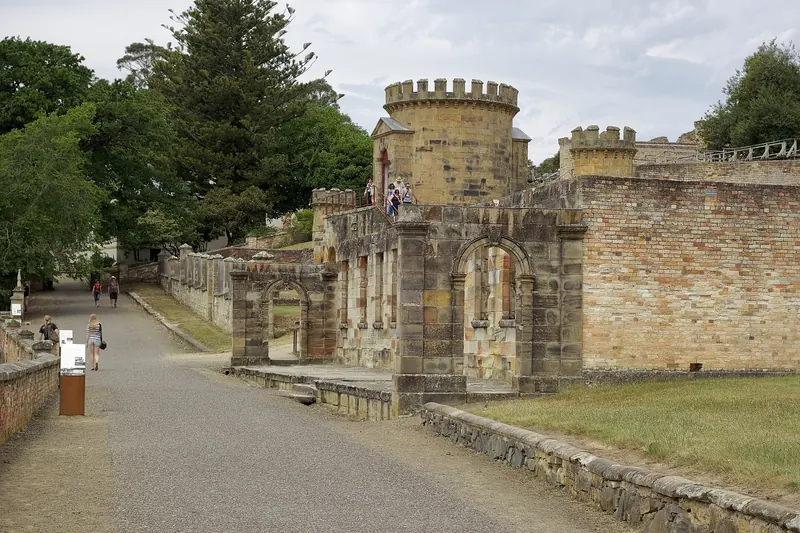
  4. The ruins of the Port Arthur convict settlement, with the guard tower and lawns

    Port Arthur Historic Site

    The most famous convict site in Australia, a settlement of stone buildings and gardens on the Tasman Peninsula, an hour from Hobart. It is also the site of a 1996 massacre, which is commemorated with a memorial garden.

    Tip Allow half a day.

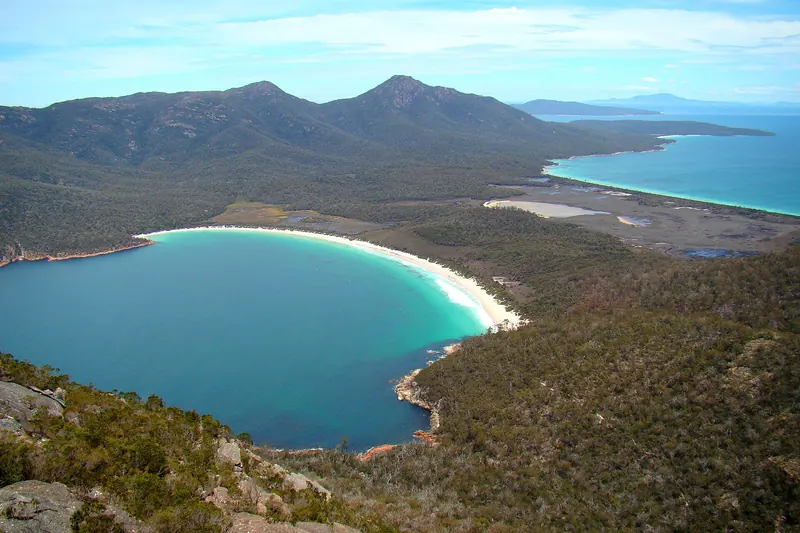
  5. The curved white sand of Wineglass Bay in Freycinet National Park

    Freycinet and Wineglass Bay

    A national park on the east coast, with pink granite peaks and the perfect beach of Wineglass Bay, reached by a walk to the lookout in about an hour return.

    Tip Continue down to the beach if you can.

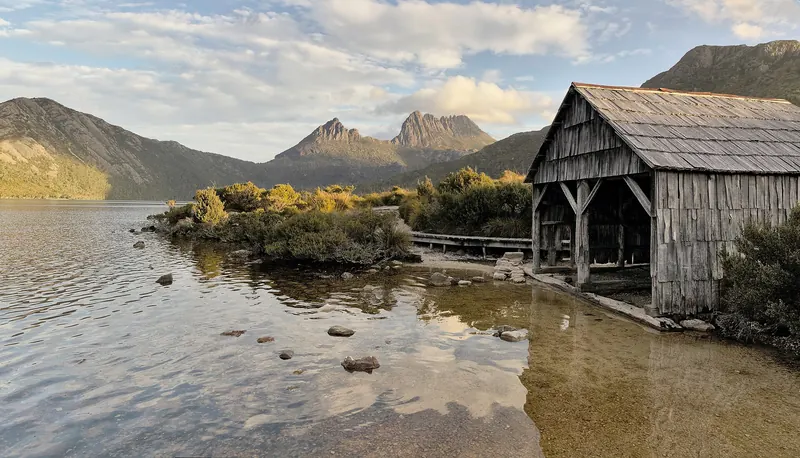
  6. The boat shed at Dove Lake with Cradle Mountain behind

    Cradle Mountain and Dove Lake

    The dramatic peak in the north-west, with a lake circuit walk of about 2 hours, and the start of the Overland Track, a 65-km multi-day walk.

    Tip Book the Overland Track well in advance.

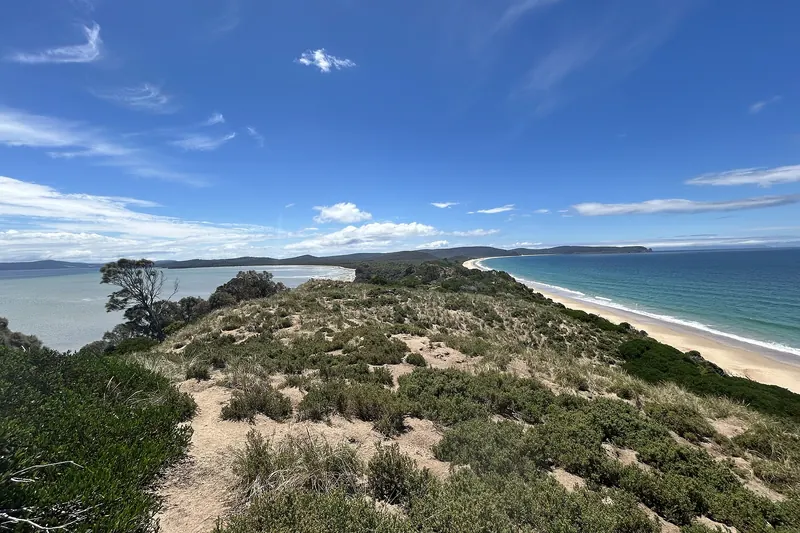
  7. The narrow sandy isthmus known as The Neck on Bruny Island

    Bruny Island

    An island off the south of Hobart, reached by a short ferry, with oysters, cheese, chocolate, whisky, cliffs and wildlife.

    Tip Take a day tour or drive yourself.

Things to do

Best things to do in Tasmania

Tasmania is best for walking, eating and taking your time.

  1. Walk to Wineglass Bay

    A well-graded path to the lookout, and on to the beach.

    Tip Go early to avoid crowds.

  2. Spend a day at MONA

    See the art, eat and taste at the vineyard.

    Tip Buy tickets online.

  3. See a Tasmanian devil

    Wildlife parks and sanctuaries let you see devils, wombats and other animals.

    Tip Visit at feeding time.

  4. Try the local whisky, cider and oysters

    Distilleries, cellar doors and farm gates offer tastings and fresh seafood.

    Tip Book a driver for tastings.

  5. Walk part of the Overland Track

    Even a day walk from Cradle Mountain gives a taste of the wilderness.

    Tip Check the weather.

  6. Explore the Bay of Fires

    A coast of white sand, turquoise water and orange lichen-covered rocks in the north-east.

    Tip Stay near Binalong Bay.

Local food

What to eat in Tasmania

Tasmania punches above its weight in food and drink, with cold, clean waters and fertile land.

  • Oysters and seafood

    Fresh oysters, scallops, salmon, abalone and rock lobster.

    Where to try it Bruny Island, Hobart's waterfront and the east coast.

  • Cheese

    Artisan cheeses from Bruny Island, King Island and northern dairies.

    Where to try it Cellar doors and markets.

  • Whisky

    Tasmanian whisky has won international awards.

    Where to try it Distilleries near Hobart.

  • Cider and wine

    Cool-climate pinot noir, sparkling wine and cider, from the Huon Valley and Tamar Valley.

    Where to try it Cellar doors and MONA.

  • Scallop pie

    A classic Tasmanian pie filled with scallops and a curry sauce.

    Where to try it Bakeries and pie shops.

  • Leatherwood honey

    A distinctive honey from the native leatherwood tree.

    Where to try it Markets and shops.

Accommodation

Where to stay in Tasmania

Stay in Hobart as a base, with a few nights in Freycinet or Cradle Mountain.

  • Hobart and Battery Point

    Hotels, boutique guesthouses and apartments near the waterfront.

    Best for: Restaurants and MONA

  • Freycinet and Coles Bay

    Cabins and lodges near the park.

    Best for: Wineglass Bay

  • Cradle Mountain

    Lodges and cabins near the park entrance.

    Best for: Wilderness

What a night costs

Budget hostel or cabin
A$60–140 per night
Mid-range hotel
A$180–320 per night
Boutique lodge
A$350–800 per night
Meal at a local restaurant
A$30–60 per person

Transport

Getting to and around Tasmania

Tasmania is reached by air or by ferry from Melbourne.

Getting there

  • Flight to Hobart or Launceston

    Direct flights from Melbourne (about 1 hour 20 minutes), Sydney and Brisbane.

    Book ahead for summer.

  • Ferry from Melbourne

    The Spirit of Tasmania sails overnight from Geelong to Devonport, with cabins and vehicle space.

    Book cabins and vehicles well ahead.

  • Hire car

    The main way to explore, at a moderate cost.

    Pick up at the airport.

Getting around

A car is essential for most of the island.

  • Hire car

    Roads are quiet and scenic, though winding.

    Avoid driving at dusk, when wallabies and wombats are active.

  • Tours

    Day tours from Hobart cover Port Arthur, Bruny Island and Mount Wellington.

    Easy if you don't want to drive.

  • Ferries

    Ferries to MONA and Bruny Island.

    Check timetables.

When to go

Best time to visit Tasmania

Tasmania has a cool, changeable maritime climate. Summer is best for walking and beaches, and autumn is often clear and calm.

  • Summer (December–February)

    Best time

    Long, mild days, ideal for walking. The busiest and most expensive time.

  • Autumn (March–May)

    Best time

    Settled weather, autumn colours and fewer people.

  • Winter (June–August)

    Quiet

    Cold and wet, with snow in the mountains and the Dark Mofo festival in June.

  • Spring (September–November)

    Good

    Variable, with wildflowers and green landscapes.

Worth planning around: Winter in the mountains, unless you are equipped, and Christmas week for prices.

Itinerary

Six days in Tasmania

Hobart and its surroundings, then the east coast and Cradle Mountain.

  1. Day1

    Hobart

    The waterfront and the market.

    • Morning Salamanca Place and Battery Point.
    • Afternoon MONA by ferry.
    • Evening Dinner on the waterfront.
  2. Day2

    Port Arthur

    Convict history.

    • Morning Drive to the Tasman Peninsula.
    • Afternoon The Port Arthur Historic Site.
    • Evening Return to Hobart.
  3. Day3

    Bruny Island

    Food and cliffs.

    • Morning Ferry to Bruny Island.
    • Afternoon Oysters, cheese and The Neck.
    • Evening Return to Hobart.
  4. Day4

    Freycinet

    Wineglass Bay.

    • Morning Drive up the east coast.
    • Afternoon The walk to Wineglass Bay.
    • Evening Dinner in Coles Bay.
  5. Day5

    To Cradle Mountain

    Across the island.

    • Morning Drive west via Launceston.
    • Afternoon Arrive at Cradle Mountain.
    • Evening A wildlife walk.
  6. Day6

    Cradle Mountain

    Dove Lake.

    • Morning The Dove Lake circuit.
    • Afternoon Drive to Launceston.
    • Evening Depart.

Travel tips

Tasmania travel tips

A few tips make Tasmania easier.

  • Hire a car, and book it early in summer.
  • Pack layers. The weather changes quickly, even in summer.
  • Avoid driving at dusk and dawn, when wildlife is on the road.
  • Book Overland Track permits, the ferry and Freycinet accommodation well ahead.
  • Take a sunhat and rain jacket.
  • Buy a Parks Pass if visiting several national parks.
  • Leave time. The distances are small but the roads are winding.

FAQ

Tasmania: frequently asked questions

How many days do you need in Tasmania?

At least five days, and a week is better.

What is the best time to visit?

December to March, with autumn also lovely.

Is Tasmania worth the trip?

Yes. It has some of Australia's best scenery, food and history, and is relatively uncrowded.

Can I see a Tasmanian devil?

Yes, in wildlife parks and sanctuaries. Seeing one in the wild is rarer.

Do I need a car?

Yes, for most of the island.

Can I take my car on the ferry?

Yes, on the Spirit of Tasmania. Book well in advance.

Read next

Related travel articles

Road trips

How to Plan a US National Parks Road Trip

American national parks are no longer places you turn up at. Timed entry, permit lotteries and mandatory shuttles now govern the popular ones, and the distances between them are larger than almost any visitor expects. Here is how to plan around both.

Food

A Country-by-Country Food Primer

Eating well abroad is mostly a matter of knowing when meals happen, how the menu is structured and which dish belongs to the place you are standing in. This covers all three for the five countries in this guide, plus the signals that separate a restaurant that feeds locals from one that feeds coaches.

Advertisement