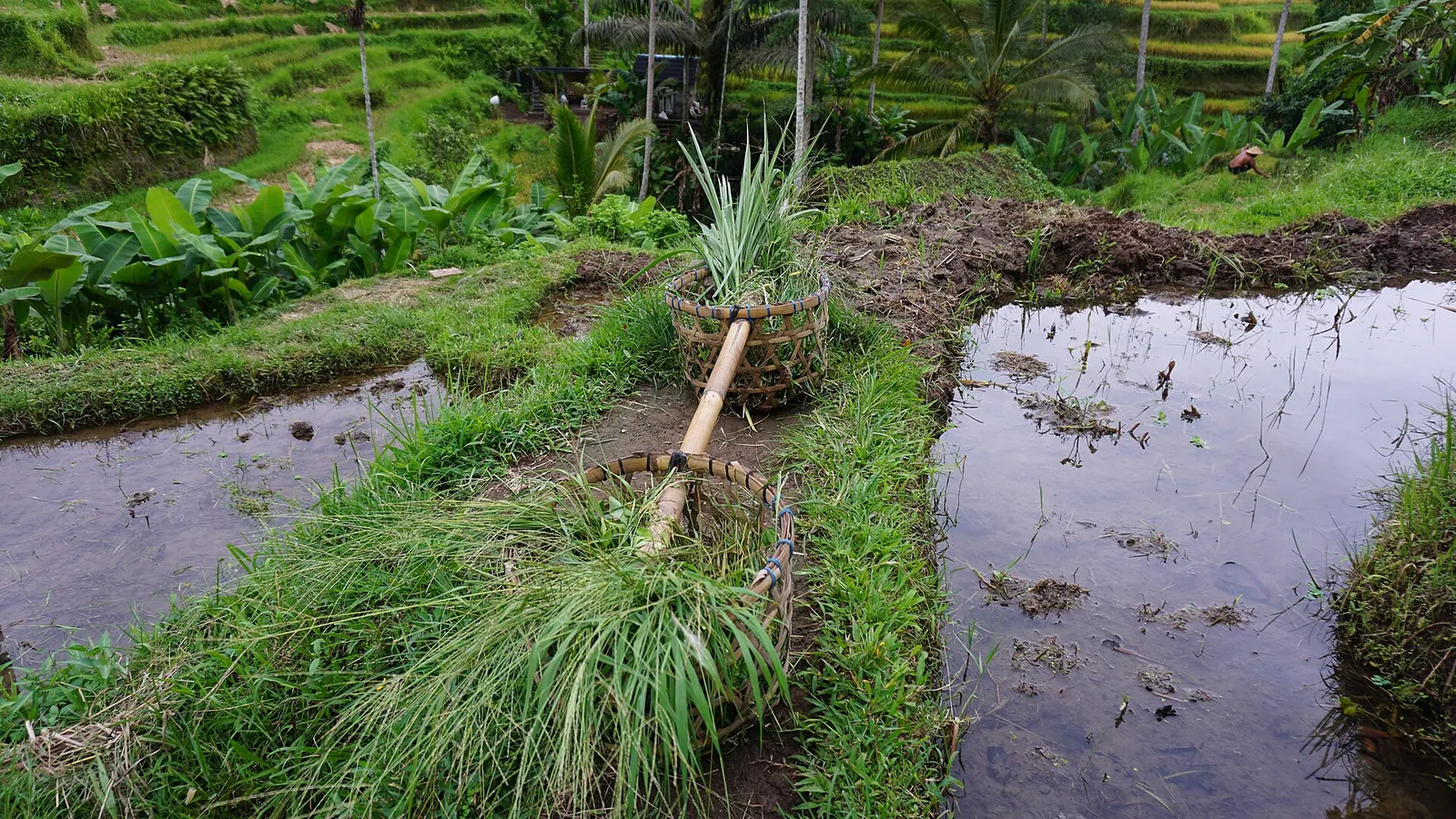
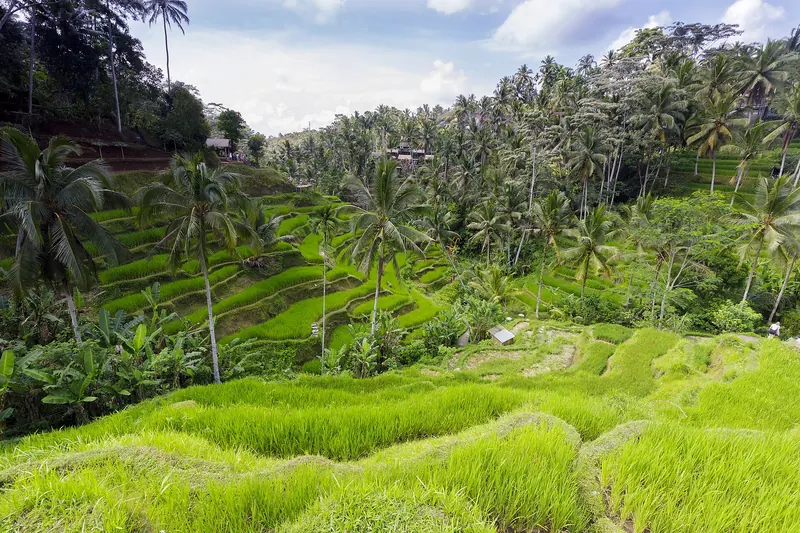
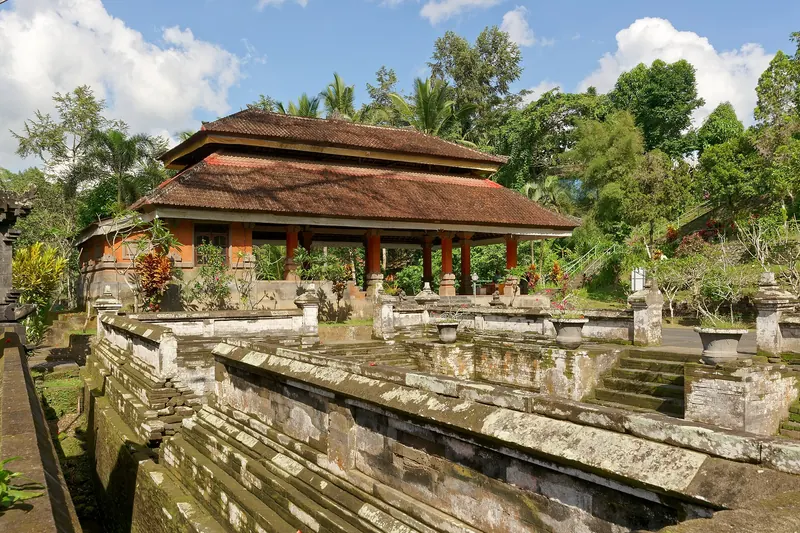
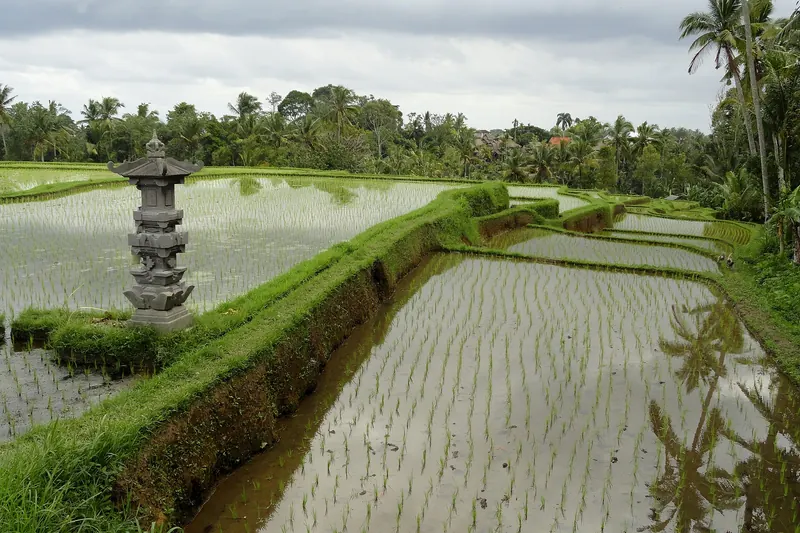
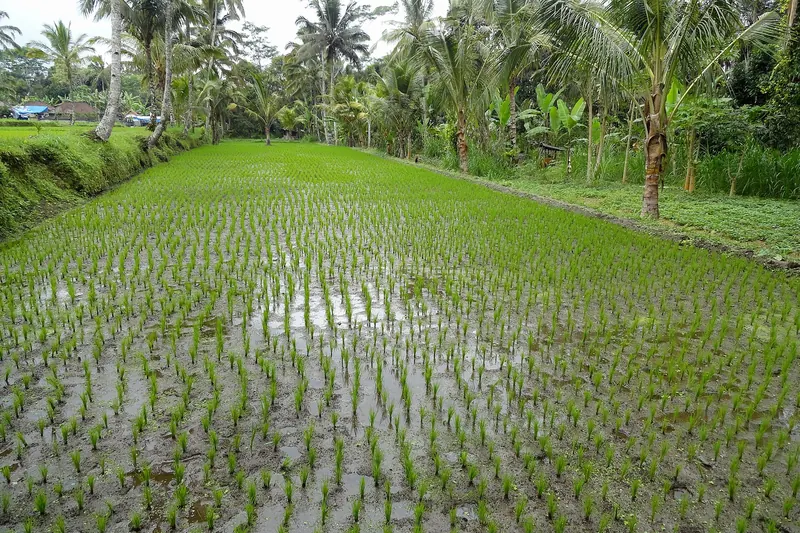
The stepped green tiers of the Tegalalang Rice Terraces near Ubud, Bali

Bali · Indonesia

Ubud

Bali's cultural and spiritual heart, ringed by rice terraces and known worldwide for yoga, arts and a slower pace than the coast.

  • Best time April to October for the driest, most comfortable weather
  • Stay 3-4 days
  • Good for Culture, wellness, a slower pace inland from the coast

Photo: Anggabuana · CC BY 4.0

Welcome to Ubud

Ubud is Bali's cultural and spiritual centre, an inland town of rice terraces, ancient temples and a long-standing arts scene that has drawn visitors seeking something more reflective than the island's beach resorts since well before 'Eat, Pray, Love' put it on the wider map.

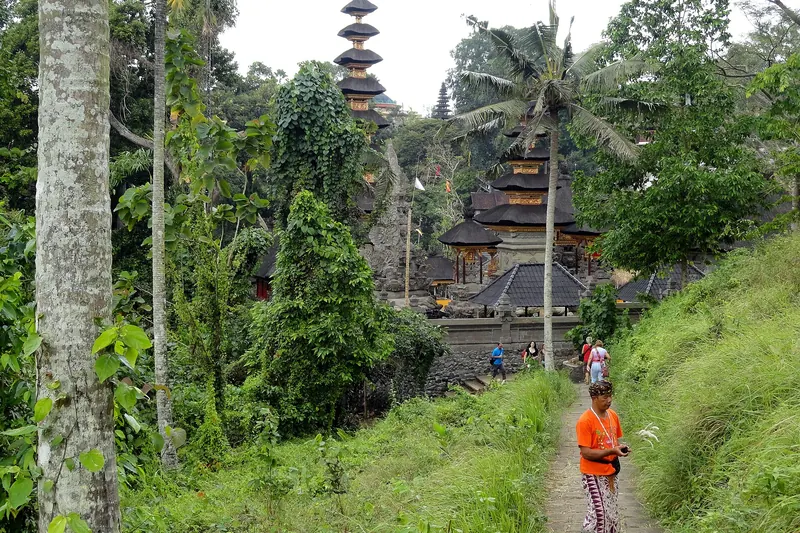
The town itself is compact and walkable, but its real draw spreads into the surrounding countryside — the stepped green tiers of the Tegalalang Rice Terraces, sacred forests thick with monkeys and moss-covered stone, and villages still organised around the same Hindu temple and irrigation traditions that have shaped Balinese life for centuries.

Ubud has also become a global centre for yoga and wellness retreats, but it hasn't lost its working character in the process — rice farmers, temple ceremonies and daily offerings are still very much part of the town's actual rhythm, not just its marketing.

  • Culture
  • Nature & Wildlife
  • Wellness
  • Temples

Why visit

Why visit Ubud?

Ubud's case rests on a genuine depth of culture and nature packed into a compact, walkable town.

  • The Tegalalang Rice Terraces are iconic for a reason

    Stepped, hand-carved paddies cascading down a valley, still actively farmed using Bali's traditional subak irrigation system.

  • It's Bali's deepest cultural centre

    Temples, dance performances, traditional painting and woodcarving are all still active local traditions here, not just tourist shows.

  • The wellness scene is well established

    Decades of yoga studios, retreats and healers have made Ubud a genuine global centre for the practice, not a recent trend.

  • It's a peaceful, greener alternative to the coast

    Cooler, quieter and slower-paced than Bali's beach towns, surrounded by rice fields rather than surf breaks.

  • It works well as a base for wider exploration

    Central enough to reach much of southern and central Bali on manageable day trips.

Main attractions

Top things to see in Ubud

Ubud's essential sights mix its famous rice terraces with significant temples and sacred sites.

  1. The stepped rice paddies of the Tegalalang Rice Terraces

    Tegalalang Rice Terraces

    Bali's most photographed rice terraces, hand-carved into a steep valley and still farmed using the centuries-old subak irrigation system.

    Tip Arrive early morning to beat both the crowds and the midday heat.

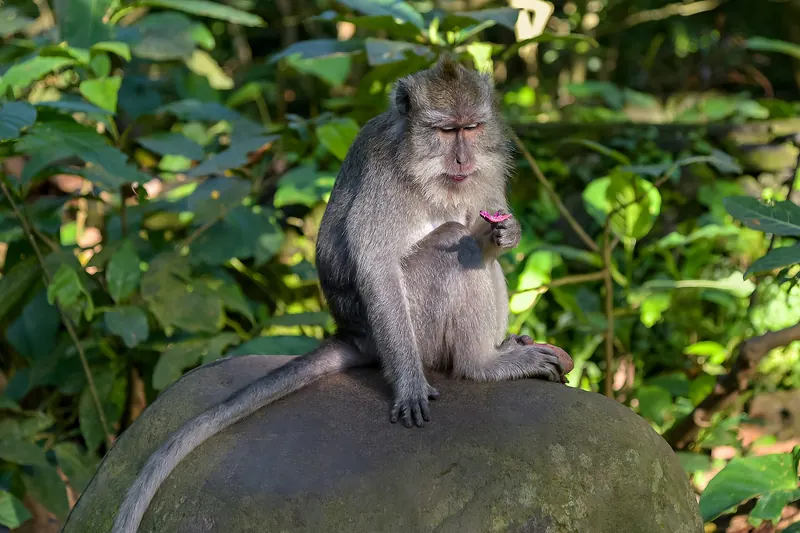
  2. The forested grounds of the Sacred Monkey Forest Sanctuary in Ubud

    Ubud Monkey Forest

    A sacred forest sanctuary home to hundreds of long-tailed macaques and three ancient temples woven through moss-covered stone.

    Tip Keep all food, sunglasses and loose items zipped away — the monkeys are practised opportunists.

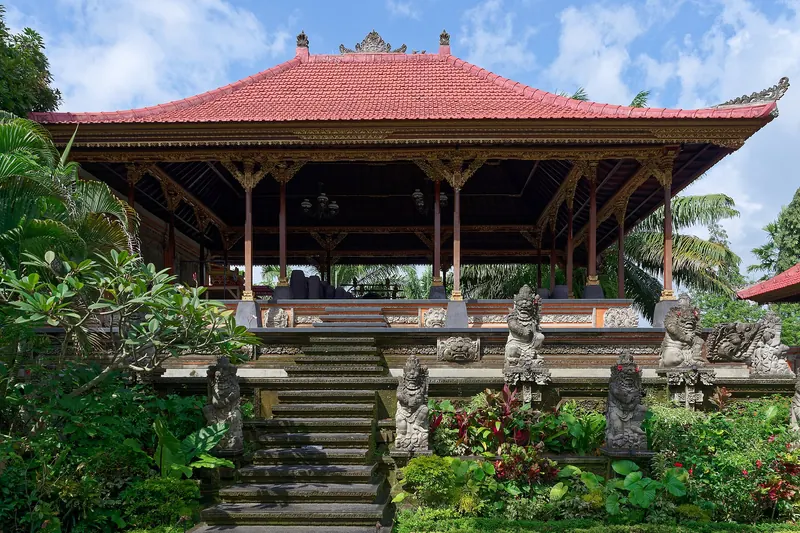
  3. The ornate carved gates of Ubud Palace

    Ubud Palace

    A still-functioning royal residence with elaborately carved stone gates, hosting free traditional dance performances most evenings.

    Tip Arrive early for an evening dance performance — seating fills up fast.

  4. The carved stone entrance to Goa Gajah, the Elephant Cave temple

    Goa Gajah (Elephant Cave)

    A striking 9th-century cave temple, its entrance carved into a demon's face, with bathing pools and ruins in the surrounding gardens.

    Tip The steep steps down to the rice field views behind the cave are easy to miss — don't stop at the cave alone.

  5. The green ridge trail of the Campuhan Ridge Walk near Ubud

    Campuhan Ridge Walk

    An easy, scenic ridge trail through open grassland just minutes from central Ubud, with views over two river valleys.

    Tip Start at sunrise for the coolest temperatures and softest light.

  6. Tegenungan Waterfall cascading into a pool near Ubud

    Tegenungan Waterfall

    An accessible, powerful waterfall just south of Ubud, with a swimmable pool at its base and viewpoints requiring only a short walk down.

    Tip The stone steps down can be slippery — sturdy sandals help more than flip-flops.

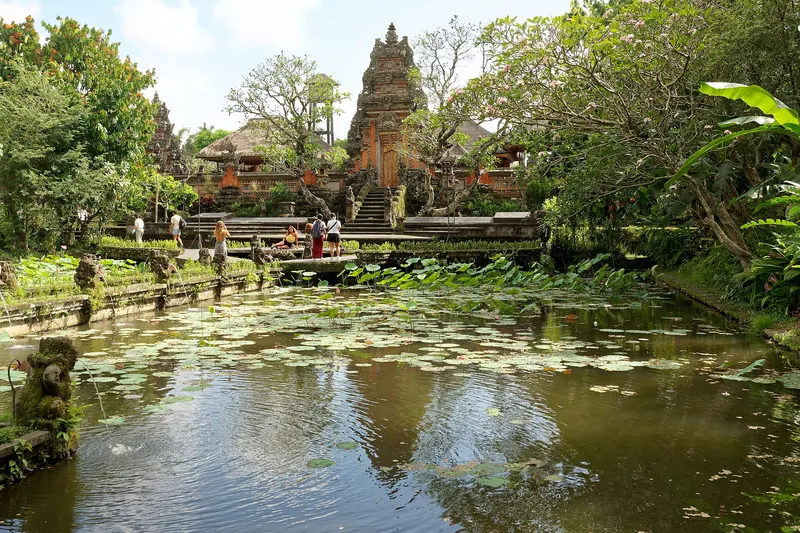
  7. Pura Taman Saraswati, a water temple with a lotus pond, in central Ubud

    Pura Taman Saraswati

    A serene water temple dedicated to the Hindu goddess of knowledge, its lotus ponds sitting right in the middle of central Ubud.

    Tip Evening dance performances are held here with the temple lit up behind the stage.

Things to do

Best things to do in Ubud

Ubud rewards slowing down — its best experiences are cultural and restorative rather than checklist sightseeing.

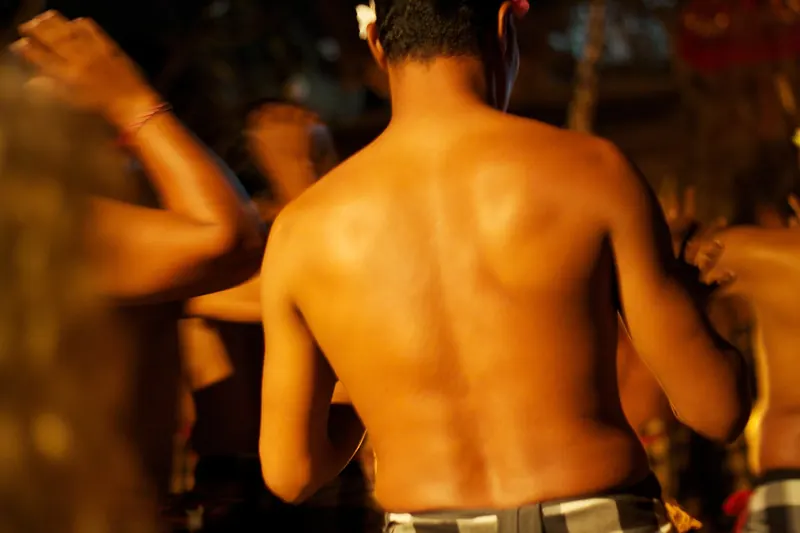
  1. Performers at a traditional Kecak fire dance in Ubud

    Watch a Kecak fire dance

    A mesmerising performance built entirely around a chanting male chorus, telling the Ramayana story without any instruments at all.

    Tip Evening shows run at Ubud Palace and several other venues around town most nights.

  2. Take a Balinese cooking class

    A hands-on way to understand Balinese food, usually starting with a market visit before cooking a full multi-course meal.

    Tip Ask whether the class includes a market tour — the best ones do.

  3. Rice fields in the countryside around Ubud

    Cycle through rice fields and villages

    A peaceful way to see rural Bali up close, pedalling narrow paths between paddies and small family temples.

    Tip Early morning gives the coolest ride and the best light over the fields.

  4. Practice yoga at a retreat

    Ubud's long-established wellness scene means classes range from single drop-in sessions to full multi-day retreats.

    Tip Book popular studios a day or two ahead — well-known classes fill up fast.

  5. Early morning light over the Campuhan Ridge trail

    Walk the Campuhan Ridge at sunrise

    A rewarding way to start the day, with cool air, soft light and far fewer people than the midday crowds.

    Tip The full loop takes about 1-2 hours at an easy pace.

  6. Browse the Ubud Art Market

    A lively covered market of woodcarvings, textiles and paintings, right in the centre of town near the palace.

    Tip Bargaining is expected — start well below the first asking price.

Local food

What to eat in Ubud

Ubud's food spans Balinese classics, a thriving café scene and one of Bali's best concentrations of good restaurants.

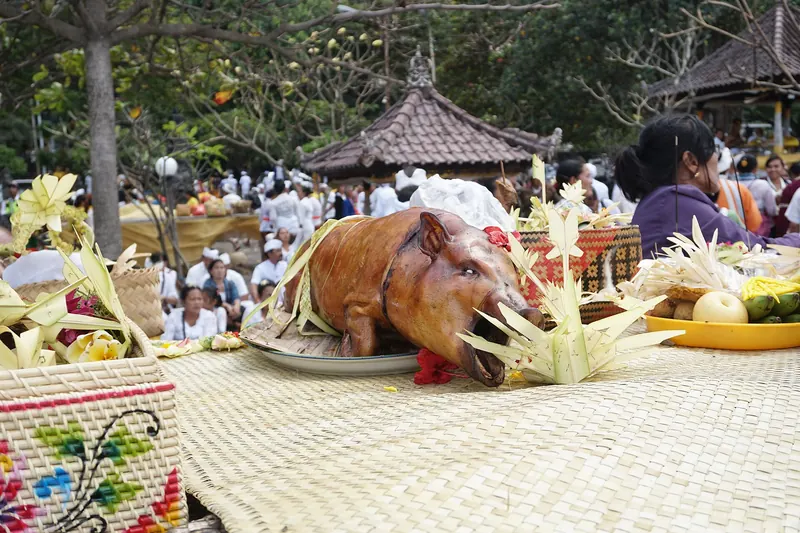
  • Babi guling, Balinese spit-roasted suckling pig

    Babi guling

    Bali's famous spit-roasted suckling pig, stuffed with a dense mix of spices and served with rice and vegetables.

    Where to try it Warungs around Ubud specialising in babi guling, often selling out by early afternoon.

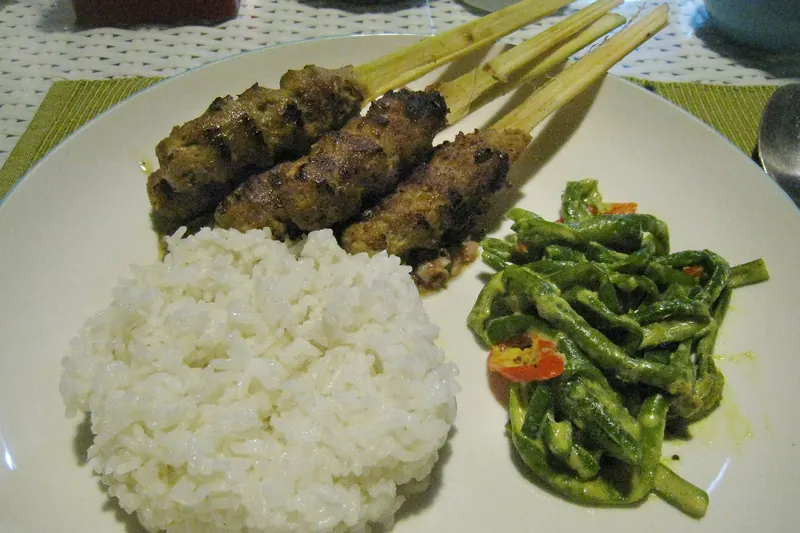
  • Sate lilit, minced Balinese satay wrapped around skewers

    Sate lilit

    A distinctive Balinese satay, minced meat and spices wrapped around lemongrass or bamboo skewers rather than threaded as cubes.

    Where to try it Warungs and restaurants throughout Ubud.

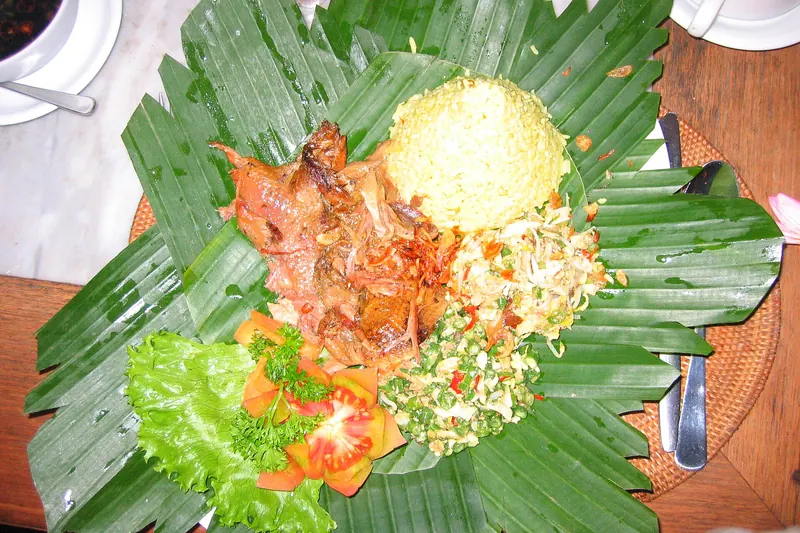
  • Bebek betutu, slow-cooked spiced Balinese duck

    Bebek betutu

    A rich, slow-cooked duck stuffed with spices and wrapped in banana leaves, traditionally cooked for hours in embers.

    Where to try it Ubud's well-known duck restaurants, best ordered a few hours ahead.

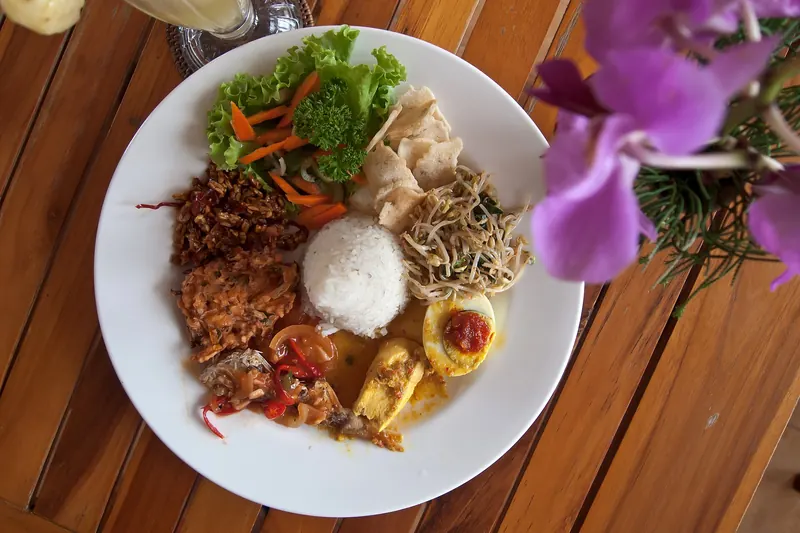
  • A plate of nasi campur with an assortment of Balinese side dishes

    Nasi campur

    An excellent way to sample several Balinese dishes at once, rice served with a rotating mix of vegetables, meat and sambal.

    Where to try it Warungs throughout Ubud, especially near the market.

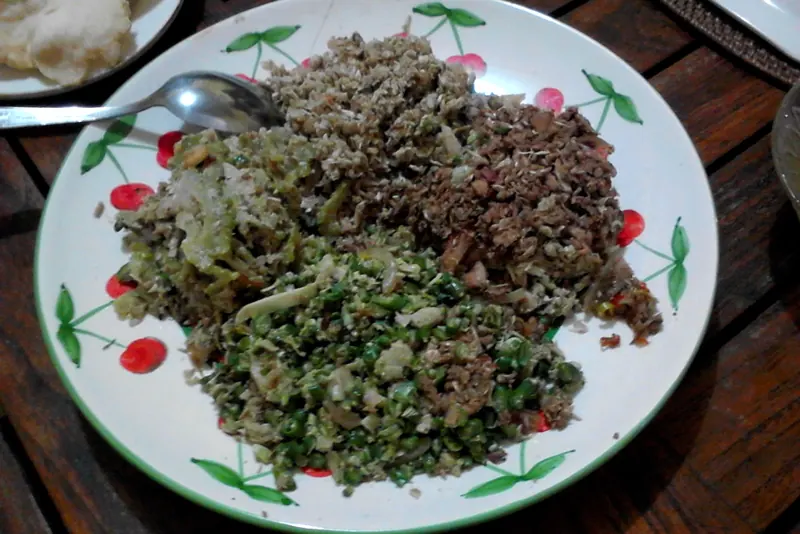
  • Lawar, a traditional Balinese mixed vegetable and meat dish

    Lawar

    A traditional Balinese dish of minced vegetables, coconut and meat, usually seasoned heavily with spice and lime.

    Where to try it Traditional warungs around Ubud, often as part of a nasi campur plate.

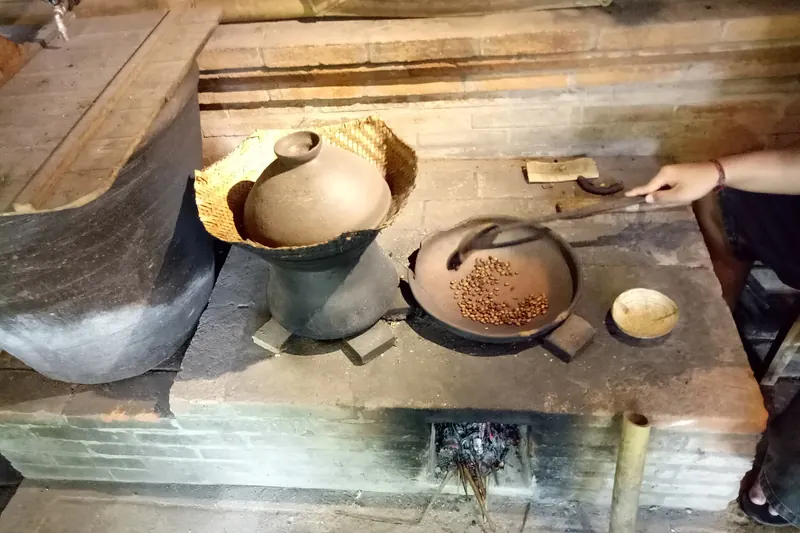
  • Traditional coffee roasting at a plantation near Ubud

    Balinese coffee

    Grown on the island's volcanic slopes, with plantation visits near Ubud offering tastings alongside the notably unusual kopi luwak.

    Where to try it Coffee plantations just north of Ubud, and cafés throughout town.

Accommodation

Where to stay in Ubud

Ubud's accommodation ranges from simple guesthouses to some of Bali's most celebrated luxury resorts.

  • Central Ubud

    The most convenient base, though also the busiest and most built-up part of town.

    Best for: Walking to the palace, market and main sights

  • Campuhan and the rice field edges

    Still a short walk or scooter ride from central Ubud, with a noticeably calmer feel.

    Best for: A quieter stay with rice field or valley views

What a night costs

Guesthouse (Ubud)
Rp 250,000–500,000 per night
Mid-range hotel
Rp 700,000–1,800,000 per night
Luxury rice-field resort
Rp 3,000,000+ per night
Cooking class
About Rp 300,000–500,000

Transport

Getting to and around Ubud

Ubud is reached by road from anywhere else on Bali, with no airport of its own.

Getting there

  • Private car or hotel transfer from the airport

    About 1-1.5 hours from Ngurah Rai International, depending on traffic.

    Most hotels can arrange a transfer, or book one ahead through a driver app.

  • Ride-hailing apps (Gojek, Grab)

    Available for airport transfers, though pickup zones can be restricted near the terminal.

    Often cheaper than a pre-booked hotel transfer.

  • Shared shuttle or tourist bus

    A budget-friendly option connecting Ubud to other parts of Bali.

    Slower than a private car, with multiple stops along the way.

Getting around

Central Ubud is walkable, though a scooter or driver helps for the surrounding sights.

  • On foot

    Covers the palace, market, Monkey Forest and central temples easily.

    Central Ubud's main sights sit within about a 15-20 minute walk of each other.

  • Scooter rental

    The most flexible way to reach Tegalalang, Tegenungan and Goa Gajah.

    An international driving permit is required and increasingly enforced.

  • Private driver for the day

    Affordable and popular for visitors who'd rather not navigate Bali's traffic themselves.

    Typically booked through a hotel or driver app for a fixed daily rate.

When to go

Best time to visit Ubud

Ubud is pleasant year-round thanks to its inland elevation, though the dry season makes exploring outdoor sights noticeably easier.

  • Dry season (April–October)

    Best time

    The most reliable weather for rice terrace walks and outdoor exploring, and also the busiest season.

  • Shoulder months (April, October)

    Good

    Good weather odds with thinner crowds than the July–August peak.

  • Wet season (November–March)

    Good

    Still workable, with short, heavy afternoon downpours rather than constant rain, and lush, vivid green rice terraces.

  • Peak season (July–August, December)

    Good

    The busiest and most expensive time to visit, worth booking well ahead for.

Worth planning around: Nothing strongly — Ubud's inland climate stays comfortable and workable year-round, wet season included.

Itinerary

Two days in Ubud

Built around the rice terraces and temples on day one, culture and wellness on day two.

  1. Day1

    Rice terraces and temples

    Tegalalang, Goa Gajah and central Ubud's temples.

    • Morning The Tegalalang Rice Terraces, arriving early.
    • Afternoon Goa Gajah and Pura Taman Saraswati.
    • Evening A Kecak fire dance performance at Ubud Palace.
  2. Day2

    Culture and wellness

    The Monkey Forest, a cooking class and a spa evening.

    • Morning The Ubud Monkey Forest.
    • Afternoon A Balinese cooking class.
    • Evening A spa treatment or a quiet dinner in central Ubud.

Travel tips

Ubud travel tips

Practical notes that make an Ubud stay noticeably smoother.

  • Dress modestly at temples — a sarong is often required and usually available to rent at the entrance.
  • Keep loose items zipped away at the Monkey Forest — the macaques are skilled opportunists.
  • Book well-known yoga classes and cooking classes a day or two ahead.
  • Carry small rupiah notes — many warungs and market stalls don't take cards.
  • Arrive at Tegalalang early to avoid both the crowds and the heat.
  • Negotiate a private driver's day rate upfront, before setting out.

FAQ

Ubud: frequently asked questions

How many days do you need in Ubud?

Two to four days covers the main sights and a wellness activity or two at a relaxed pace.

Is Ubud worth visiting if I've already seen Bali's beaches?

Yes — Ubud offers a distinctly different, more cultural and inland side of Bali that the coastal towns don't.

How far is Ubud from the airport?

About 1 to 1.5 hours by car, depending on traffic, with no airport of its own.

Is the Ubud Monkey Forest safe to visit?

Yes, with sensible precautions — keep food and loose items secured, and don't make direct prolonged eye contact with the macaques.

Do I need a scooter in Ubud?

Not essential — central Ubud is walkable, and a driver or scooter rental covers the outlying sights well.

Is Ubud good for a yoga retreat?

Yes, one of the world's best-known yoga destinations, with decades of established studios and retreats to choose from.

Read next

Related travel articles

Where to go

Beyond the Big Names: Places Worth the Detour

The most visited place in a country is rarely its best, and it is almost never its best value. This is a method for finding the destinations that do not make the postcards — and a set of examples from five of the 50 countries on this site.

Practical

Packing by Season and Trip Type

Most packing advice is a list of things. This is the opposite: the small number of decisions that determine whether your luggage helps or hinders, organised by the kind of trip you are actually taking.

Advertisement