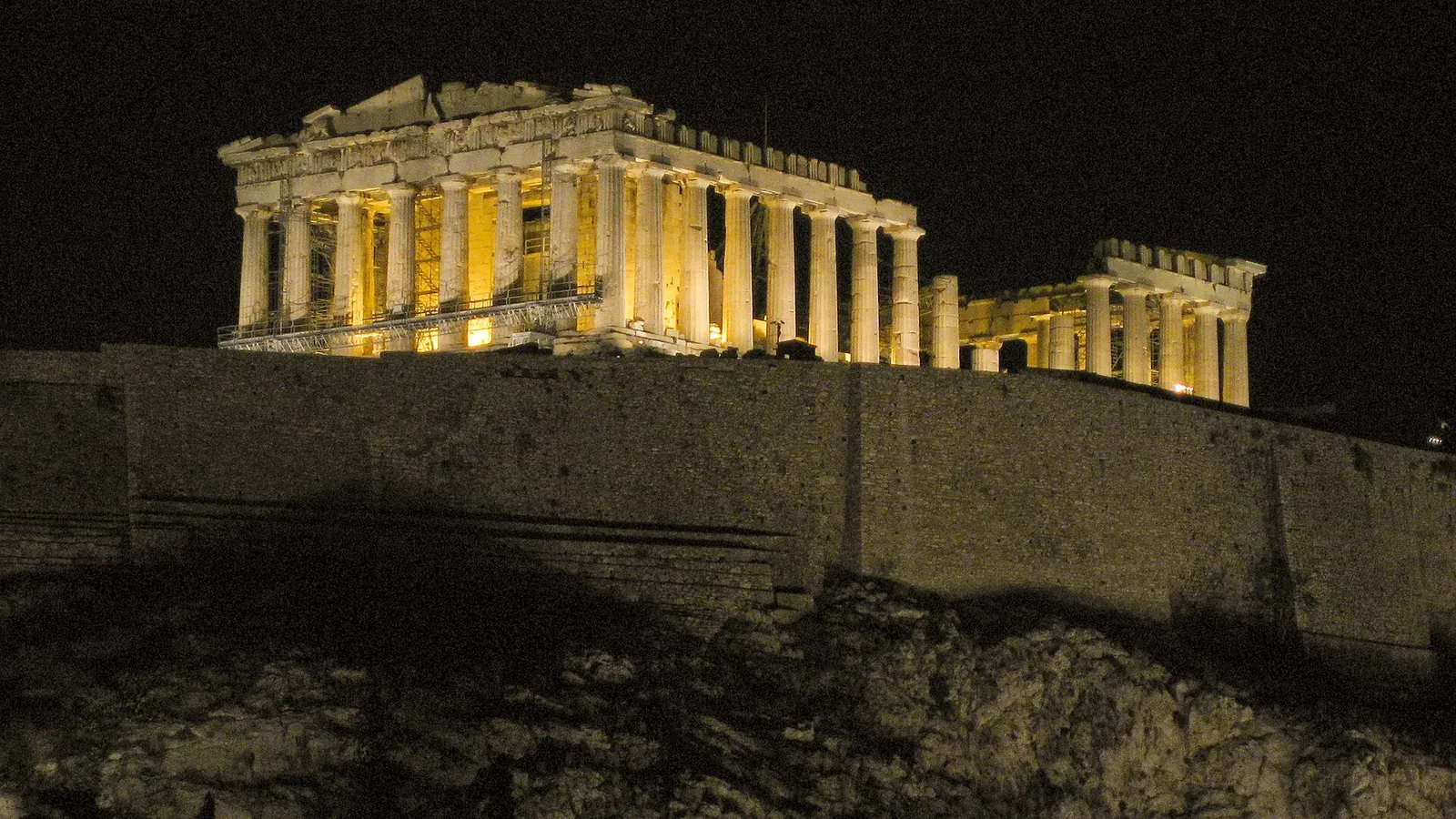
The Acropolis and Parthenon floodlit above Athens at dusk

Attica · Greece

Athens

The birthplace of democracy, its ancient monuments still standing at the heart of a lively, chaotic modern capital rather than fenced off from it.

  • Best time April–June and September–October, for mild weather and manageable crowds
  • Stay 3–4 days
  • Good for History, culture, food, an island-hopping base

Photo: Nicholas Hartmann · CC BY-SA 4.0

Welcome to Athens

Athens gave the world democracy, theatre, and much of the philosophical foundation Western thought still stands on, and the city's ancient monuments remain central to daily life rather than roped off as museum pieces. The Acropolis rises directly above the modern city's rooftops, visible from countless rooftop bars and apartment balconies going about ordinary business beneath it.

The city's more recent history is more layered than the ancient postcard suggests — Ottoman rule, a 1834 rebuilding as the capital of a newly independent Greek state, and a 20th century of rapid, sometimes chaotic growth have all left their mark on a city that can feel simultaneously ancient and unpolished.

That mix is precisely what visitors consistently find compelling: world-class ancient sites within walking distance of graffiti-covered streets, excellent contemporary restaurants and a nightlife scene that runs considerably later than most European capitals.
  • Historic Site
  • City
  • Culture

Why visit

Why visit Athens?

Athens' case is that no other capital holds this much ancient history standing directly within a lived-in modern city.

  • The Acropolis is one of the world's great monuments

    Standing among the Parthenon's columns delivers on the reputation in a way photographs alone never quite capture.

  • The ancient sites are woven into daily life

    Ruins sit directly among residential streets and metro stations rather than sealed away from the modern city.

  • The food scene is excellent

    From neighbourhood tavernas to an increasingly serious modern restaurant scene, Athens rewards eating well at every budget.

  • It's well connected for onward travel

    Piraeus port and Athens' airport make the city the natural gateway to virtually every Greek island.

  • It works as both a destination and a base

    A complete trip on its own, and the practical starting point for island-hopping or mainland day trips.

Main attractions

Top things to see in Athens

Athens' essential sights, spanning the Acropolis and its surrounding ancient city.

  1. The Parthenon on the Acropolis by daylight

    The Acropolis and Parthenon

    The ancient citadel crowning the city, the Parthenon's columns standing since the 5th century BC as one of history's most significant surviving temples.

    Tip Book timed-entry tickets online well ahead in summer, and arrive at opening time to beat both heat and crowds.

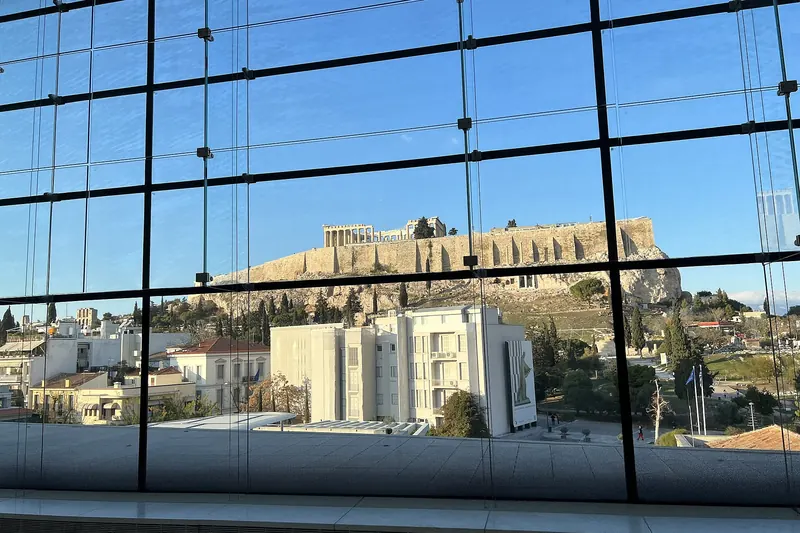
  2. The Acropolis Museum with the Acropolis visible behind it

    The Acropolis Museum

    An excellent modern museum built directly over active excavations, housing artefacts from the Acropolis with a glass floor revealing ruins below.

    Tip The top floor's Parthenon Gallery, aligned with the actual temple's orientation, is worth lingering in.

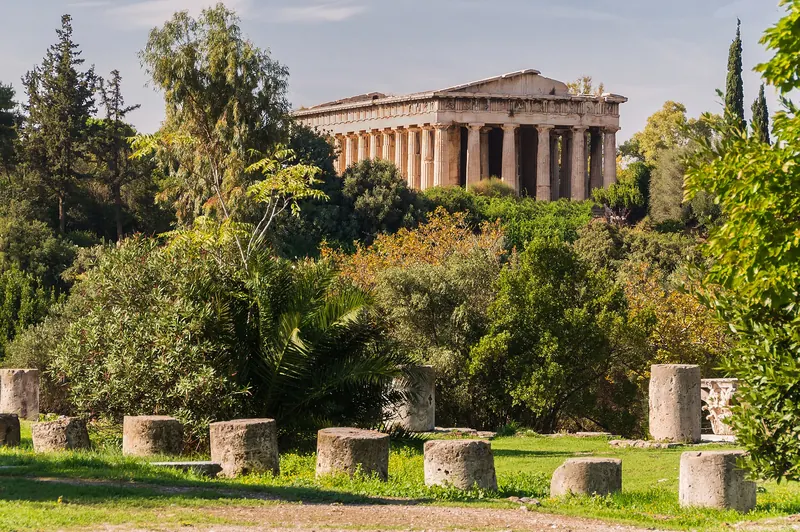
  3. The Temple of Hephaestus at the edge of the Ancient Agora

    The Ancient Agora

    The genuine marketplace and civic heart of ancient Athens, where democracy itself was practiced, with the well-preserved Temple of Hephaestus at its edge.

    Tip The Agora is less crowded than the Acropolis and rewards an unhurried wander among its scattered ruins.

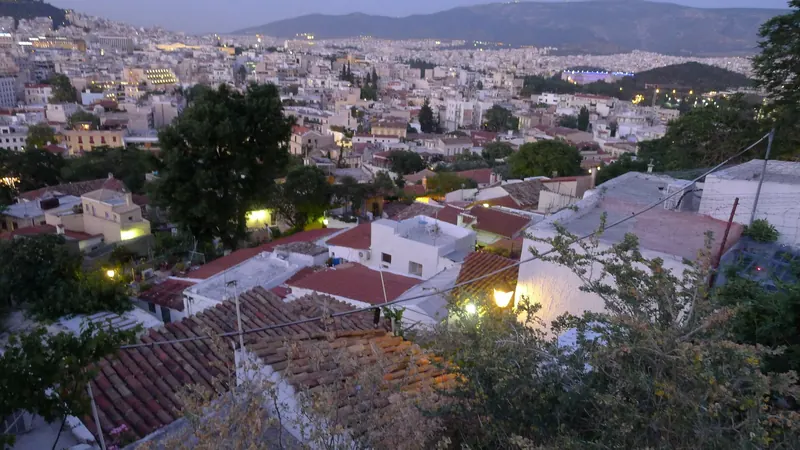
  4. The whitewashed, Cycladic-style lanes of Anafiotika within Plaka

    Plaka neighbourhood

    Athens' oldest surviving neighbourhood, its narrow lanes and neoclassical buildings charming despite sitting directly beneath the tourist-heavy Acropolis slopes.

    Tip Anafiotika, a tiny Cycladic-style enclave tucked within Plaka, is worth seeking out for its whitewashed, island-like lanes.

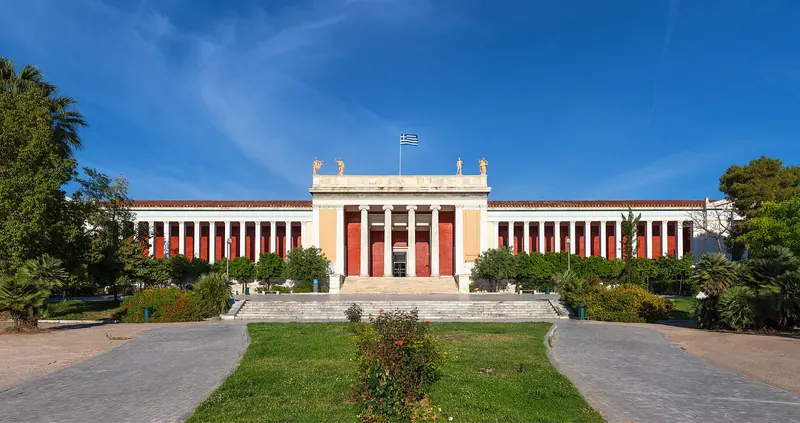
  5. The National Archaeological Museum building in Athens

    The National Archaeological Museum

    Greece's largest archaeological museum, its collection of ancient artefacts, including the Mask of Agamemnon, rivalling any museum in the world for this period.

    Tip Allow at least two hours — the collection is vast and easy to underestimate.

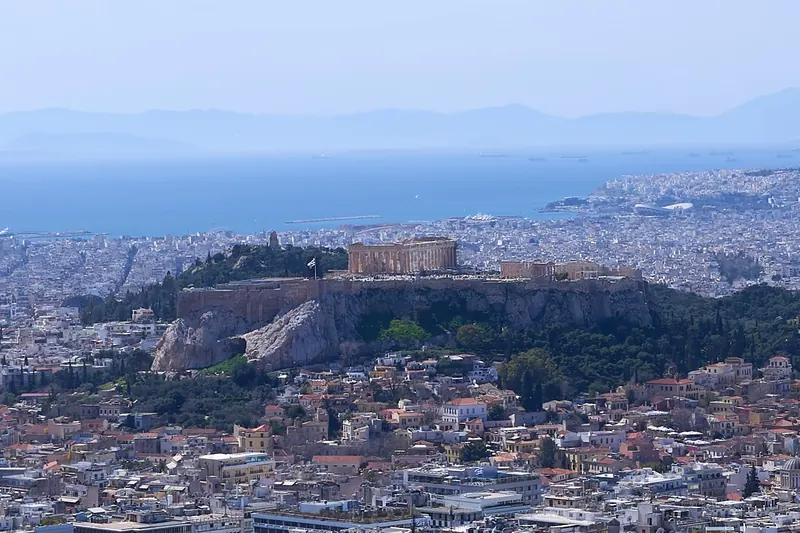
  6. The Acropolis seen across the city from Mount Lycabettus

    Mount Lycabettus

    Athens' highest hill, reachable by funicular or a rewarding hike, offering sweeping views over the entire city and the Acropolis from a distance.

    Tip Sunset from the summit is spectacular, with the Acropolis visible across the city as the light fades.

Things to do

Best things to do in Athens

Beyond the ancient sites, Athens rewards its neighbourhood contrasts and its serious food and nightlife culture.

  1. Stalls at Monastiraki's flea market in Athens

    Wander Monastiraki and Psiri

    A lively flea market district and adjacent nightlife neighbourhood, packed with small bars, street food and vintage shops.

    Tip The Sunday flea market around Avissynias Square is worth timing a visit around, if your dates allow it.

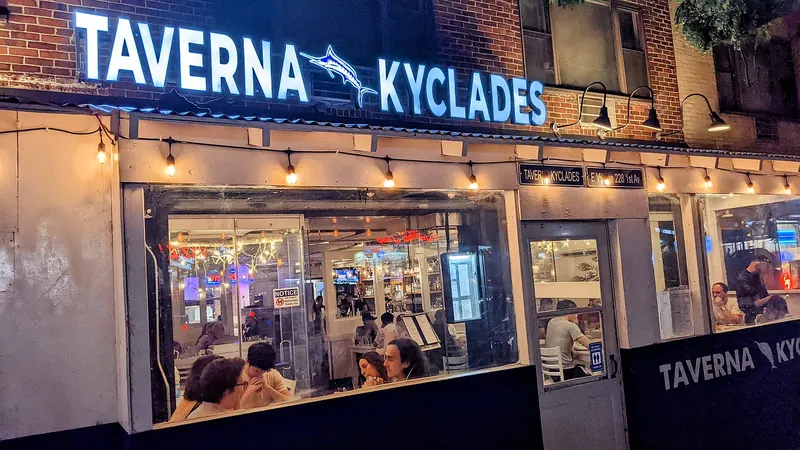
  2. Outdoor seating at a traditional Greek taverna

    Eat at a neighbourhood taverna

    A long, unhurried meal of shared mezze and grilled dishes at a genuine local taverna is essential to understanding Athenian food culture.

    Tip Koukaki and Exarchia both hold excellent, less touristy taverna options than central Plaka.

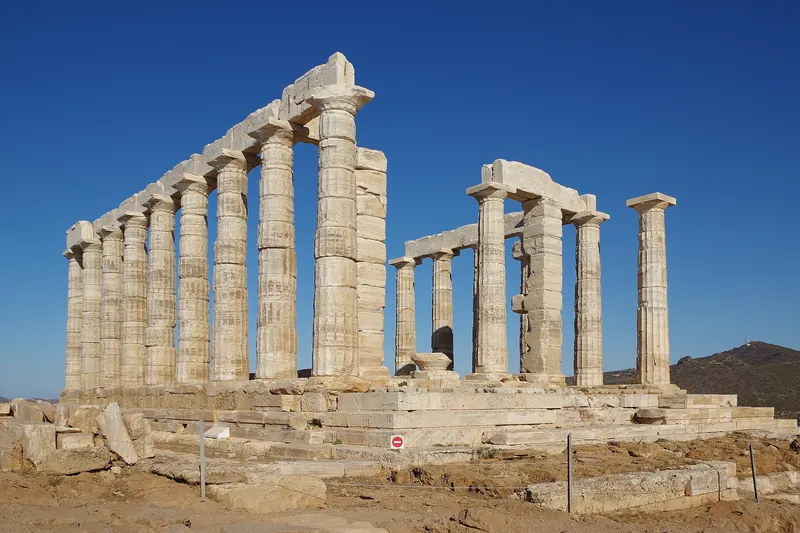
  3. The Temple of Poseidon on the cliffs at Cape Sounion

    Take a day trip to Cape Sounion

    The Temple of Poseidon's dramatic clifftop ruins, a worthwhile sunset day trip about an hour from central Athens.

    Tip Time the drive to arrive for sunset — the temple's columns silhouetted against the sea is a memorable sight.

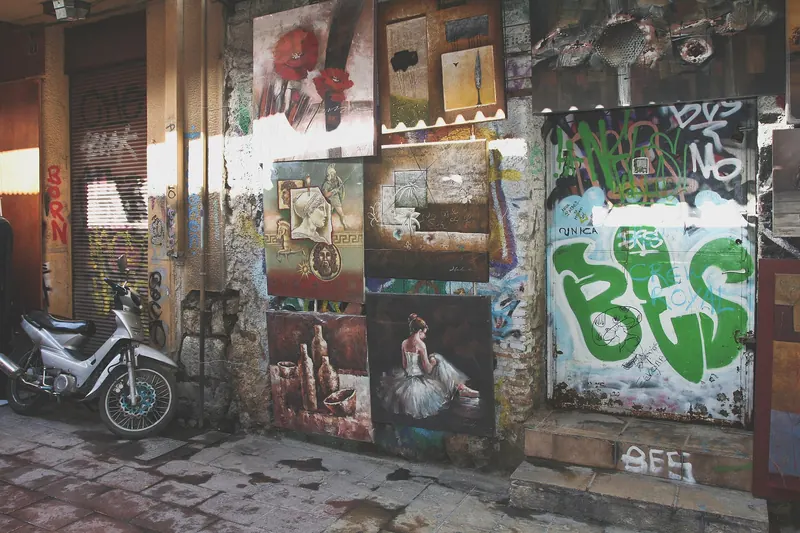
  4. Large-scale street art on a building in central Athens

    Explore Athens' street art scene

    Exarchia and parts of Psiri hold striking large-scale murals and street art, a distinctly modern counterpoint to the ancient sites.

    Tip A dedicated walking tour offers genuine context on the political and artistic movements behind the city's street art.

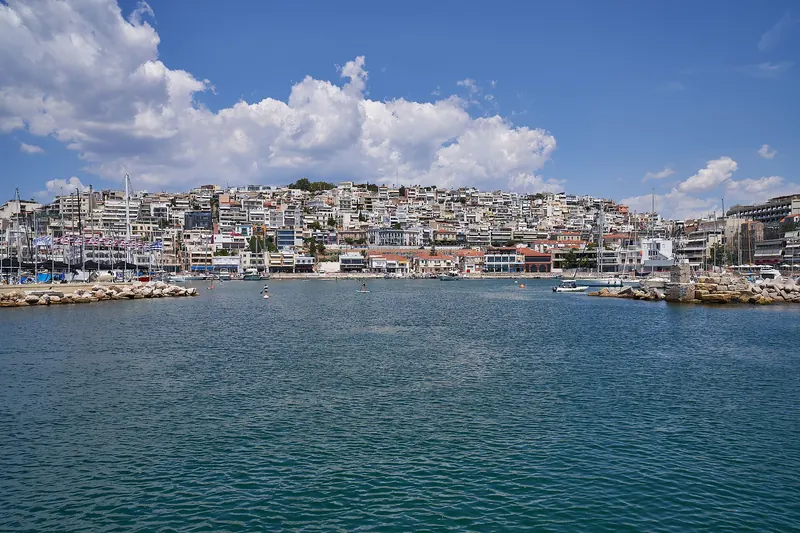
  5. Mikrolimano's small harbour in Piraeus

    Visit Piraeus for a genuine port-city evening

    Athens' historic port, a short metro ride away, offers good seafood tavernas around Mikrolimano's small harbour.

    Tip Mikrolimano's harbourside restaurants are worth the short trip out from central Athens for a relaxed dinner.

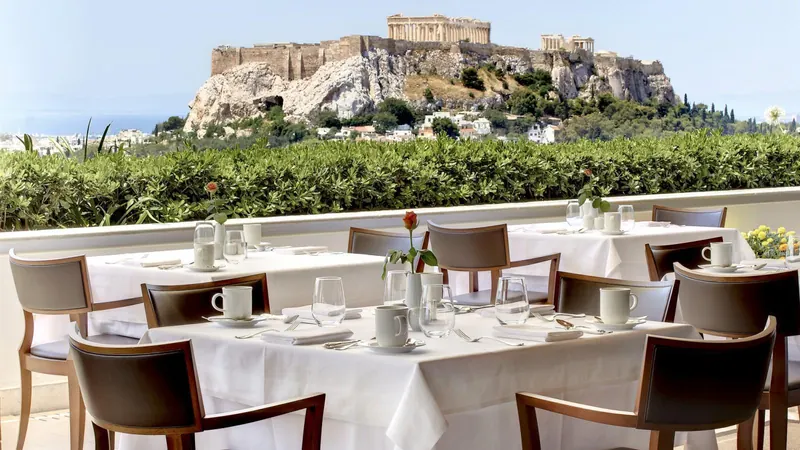
  6. A rooftop bar with an Acropolis view in Athens

    Experience Athens' nightlife

    Rooftop bars with Acropolis views, late-night tavernas and a serious cocktail bar scene keep Athens' evenings running considerably later than most capitals.

    Tip Many rooftop bars require no reservation for a drink, only for dinner — a good way to enjoy the view without a full meal commitment.

Local food

What to eat in Athens

Athens' food scene spans genuine neighbourhood tavernas to an increasingly serious modern Greek restaurant movement.

  • A chicken gyros wrap, Athens' defining fast food

    Souvlaki and gyros

    Athens' defining fast food, grilled skewered meat or a rotisserie wrap, excellent and cheap throughout the city.

    Where to try it Long-running souvlaki shops around Monastiraki and Psiri, several open late into the night.

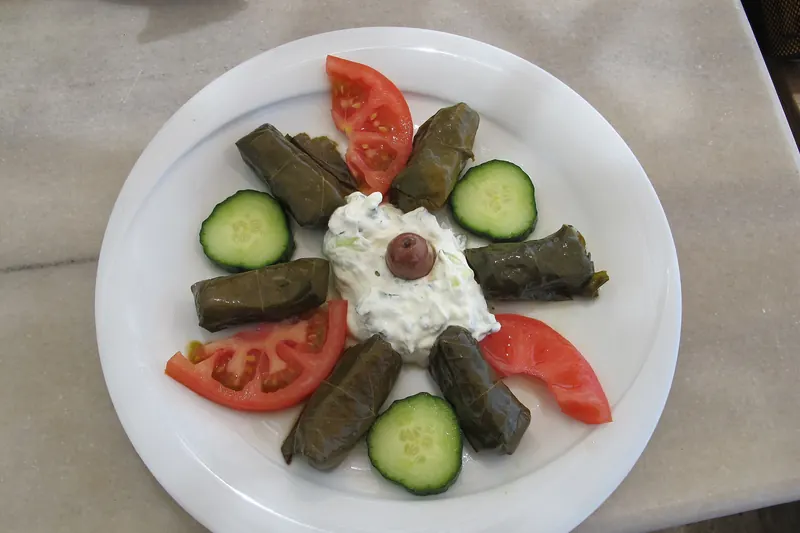
  • A mezze spread of dolma and tzatziki

    Mezze at a traditional taverna

    A shared spread of small dishes — dips, saganaki cheese, dolmades — central to how Athenians actually eat out.

    Where to try it Neighbourhood tavernas in Koukaki, Exarchia or Psiri, away from the most tourist-heavy Plaka strips.

  • Fresh fish in Piraeus or Mikrolimano

    Athens' port district offers excellent fresh seafood, priced by weight and grilled simply.

    Where to try it Mikrolimano's harbourside tavernas, a short metro ride from central Athens.

  • Loukoumades

    Small honey-soaked doughnuts, one of Athens' most beloved street desserts, often topped with cinnamon or crushed nuts.

    Where to try it Dedicated loukoumades shops around Monastiraki, several with decades of history.

  • Modern Greek cuisine

    A serious contemporary restaurant scene has developed in Athens, reinterpreting traditional Greek ingredients and dishes with real ambition.

    Where to try it A growing cluster of modern Greek restaurants in Koukaki and central Athens.

  • A glass of Greek frappé, a cold whipped coffee

    Greek coffee and frappé

    Traditional slow-brewed Greek coffee alongside the beloved cold frappé, an Athenian café culture institution regardless of season.

    Where to try it Neighbourhood kafeneio cafés throughout the city, a genuine daily ritual for locals.

Accommodation

Where to stay in Athens

Athens' neighbourhoods each offer a different base, from central convenience to quieter local atmosphere.

  • Plaka and Monastiraki

    The most central, historic base, putting the major ancient sites within easy walking distance.

    Best for: Walking to the Acropolis and ancient sites

  • Koukaki

    A short walk from the Acropolis Museum, with excellent tavernas and a noticeably more residential, less touristy atmosphere.

    Best for: A genuine local neighbourhood feel

  • Near Syntagma Square

    Central and well connected by metro, including the direct airport line, with a wide range of hotel options.

    Best for: Transport connections

What a night costs

Hostel dorm
€20–35 per night
Mid-range hotel
€75–140 per night
Acropolis entry
€20 (€10 off-season)
Souvlaki wrap
€2.50–4

Transport

Getting to and around Athens

Athens International Airport is Greece's main gateway, with a direct metro line into the city centre.

Getting there

  • Athens International Airport (ATH)

    The metro's Blue Line reaches central Athens in about 40 minutes, a reliable and affordable option.

    A dedicated airport express bus offers an alternative if your accommodation sits away from a metro stop.

  • Ferries from Piraeus

    Athens' port connects directly to Santorini, Mykonos and Crete, with high-speed and conventional options.

    Piraeus is reachable from central Athens by metro in about 25 minutes.

  • Intercity buses (KTEL)

    Reliable bus connections reach Delphi, Meteora and Nafplio from central Athens.

    Book ahead for popular routes in peak season rather than relying on walk-up availability.

Getting around

Central Athens is walkable, with an efficient metro covering the wider city and airport.

  • Walking

    The Acropolis, Plaka, Monastiraki and the Ancient Agora all sit within a compact, walkable central area.

    Comfortable shoes matter for the Acropolis's ancient marble paths, which can be slippery when worn smooth.

  • Metro

    A clean, efficient three-line system covers the city centre, Piraeus port and the airport directly.

    Several metro stations double as small archaeological displays, built around ruins uncovered during construction.

  • Taxis

    Affordable by European capital standards and useful late at night or for reaching Piraeus with luggage.

    Confirm the meter is running, or agree a fare in advance for longer or airport journeys.

When to go

Best time to visit Athens

Athens' summer heat runs intense, and spring and autumn offer the most comfortable balance of weather and crowds for exploring the ancient sites.

  • Spring (April–June)

    Best time

    Mild, increasingly warm weather, ideal for walking the ancient sites without the peak summer heat.

  • Summer (July–August)

    Shoulder

    Intense heat, often exceeding 35°C, alongside the year's biggest crowds at major sites.

  • Autumn (September–October)

    Best time

    Comfortable temperatures and thinning crowds, an excellent window for sightseeing.

  • Winter (November–March)

    Good

    Mild by northern European standards, with quiet major sites and lower accommodation prices.

Worth planning around: Midday hours at the Acropolis in July and August, when heat and crowds both peak — an early morning or late afternoon visit is more comfortable.

Itinerary

Three days in Athens

The Acropolis and ancient city first, then Athens' neighbourhoods at an unhurried pace.

  1. Day1

    The Acropolis and ancient Athens

    Athens' essential ancient monuments.

    • Morning The Acropolis and Parthenon, arriving at opening time.
    • Afternoon The Acropolis Museum and the Ancient Agora.
    • Evening Dinner in Plaka with an Acropolis view.
  2. Day2

    Museums and neighbourhoods

    Deeper history and local Athenian life.

    • Morning The National Archaeological Museum.
    • Afternoon Monastiraki's flea market and Psiri.
    • Evening Sunset from Mount Lycabettus.
  3. Day3

    Cape Sounion or local exploration

    A coastal day trip or deeper city time.

    • Morning Free time in Koukaki or Exarchia.
    • Afternoon A day trip to Cape Sounion's Temple of Poseidon.
    • Evening A final dinner in Piraeus or Mikrolimano.

Travel tips

Athens travel tips

Practical notes on booking, timing and transport that make a real difference to an Athens trip.

  • Book Acropolis tickets online well ahead in summer — walk-up queues can mean significant waiting in the heat.
  • Visit major ancient sites at opening time or late afternoon to avoid both the worst heat and the biggest crowds.
  • Wear comfortable, sturdy shoes — the Acropolis's ancient marble paths are slippery when worn smooth.
  • Carry water and sun protection in summer — shade is limited at most ancient sites.
  • Use the metro rather than driving — central Athens' traffic and parking are difficult.
  • Book ferries from Piraeus ahead if island-hopping onward in July or August, when popular routes sell out.
  • Explore beyond Plaka — Koukaki and Exarchia offer better value and a more local atmosphere.

FAQ

Athens: frequently asked questions

How many days do you need in Athens?

Three to four. Two covers the Acropolis and central ancient sites at a rushed pace; four allows Cape Sounion and deeper neighbourhood time without feeling hurried.

Is Athens a good base for island-hopping?

Yes — Piraeus port and the airport both connect easily to Santorini, Mykonos, Crete and beyond, making Athens the natural start or end point for an island-hopping trip.

Is Athens safe for tourists?

Yes, very — violent crime against visitors is rare. The practical risk is pickpocketing in crowded areas like Monastiraki and on the metro, manageable with ordinary vigilance.

What is the best time of year to visit?

April to June and September to October offer the most comfortable weather for exploring ancient sites on foot. Summer is hot, often exceeding 35°C, and considerably more crowded.

Is Athens worth visiting beyond the Acropolis?

Yes — the food scene, neighbourhood culture, museums and nightlife all stand on their own, and many visitors find the city's less touristy corners just as rewarding as the ancient monuments.

Read next

Related travel articles

Practical

Packing by Season and Trip Type

Most packing advice is a list of things. This is the opposite: the small number of decisions that determine whether your luggage helps or hinders, organised by the kind of trip you are actually taking.

Heritage

UNESCO Sites Worth Planning a Trip Around

A UNESCO listing tells you a place matters; it does not tell you whether it is worth two days and a detour. This is how to read the list usefully — and which sites reward building a trip around them.

Advertisement