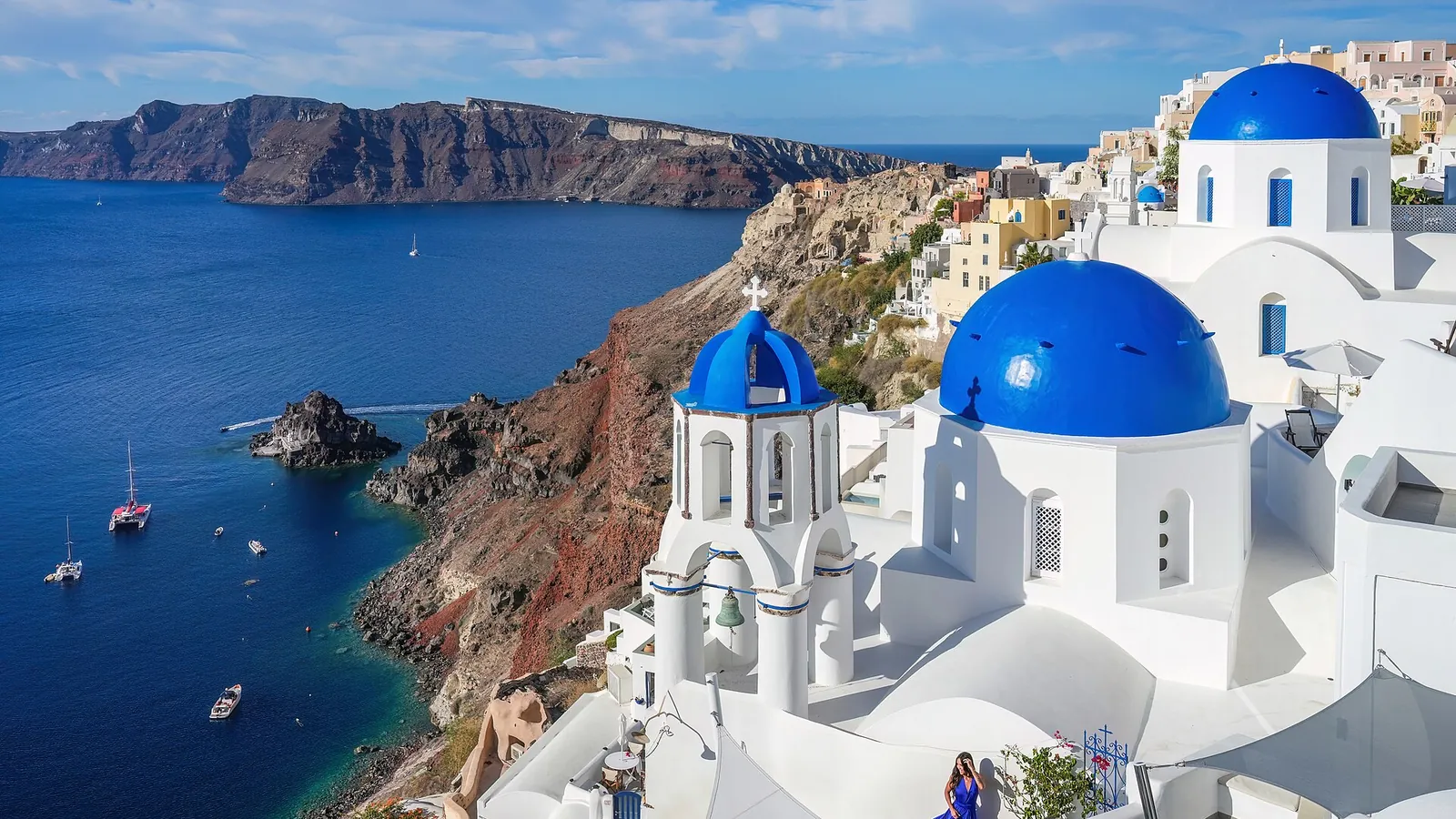
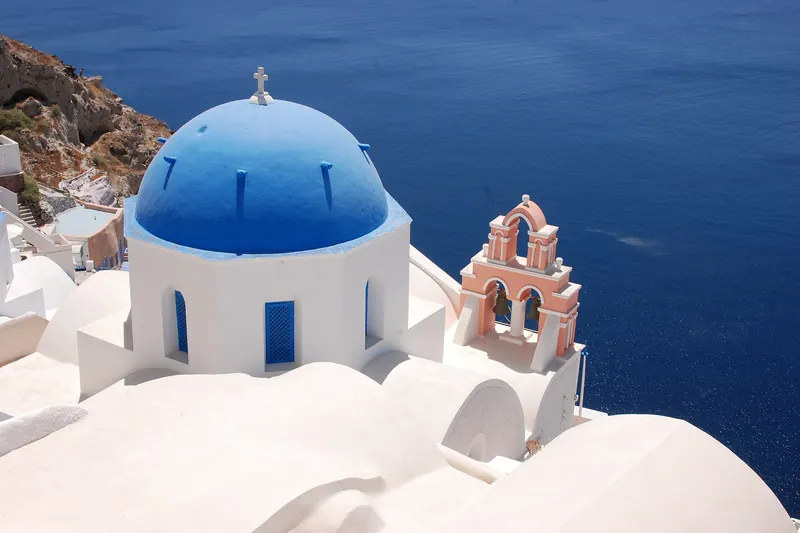
Oia's whitewashed cave houses and blue-domed churches above Santorini's caldera

Cyclades · Greece

Santorini

A volcanic island shaped by one of history's largest eruptions, its whitewashed villages perched along a caldera rim above water in a shade of blue that photographs never quite capture.

  • Best time May–June and September, for warm weather without peak crowds
  • Stay 3 days
  • Good for Romance, sunsets, wine, photography

Photo: Giles Laurent · CC BY-SA 4.0

Welcome to Santorini

Santorini's dramatic crescent shape is the direct result of one of history's largest volcanic eruptions, around 1600 BC, which collapsed the island's centre into the sea and left the sheer caldera cliffs its villages now cling to. The eruption is widely believed to have contributed to the fall of the Minoan civilization and has even been proposed as an inspiration for the Atlantis legend.

The villages that developed along the caldera rim — Oia, Fira, Imerovigli and others — were built specifically to take advantage of that dramatic geology, their whitewashed cave houses and blue-domed churches as photogenic in person as in the millions of photos that have made Santorini one of the world's most recognisable islands.

That fame comes with real crowds, particularly around Oia's famous sunset viewpoints in peak season, but the island's wineries, archaeological sites and quieter villages away from the main caldera-edge path reward visitors willing to look beyond the single iconic view.

  • Island
  • Romantic
  • Scenic Region

Why visit

Why visit Santorini?

Santorini's case is that no other Greek island pairs this dramatic a volcanic landscape with this much genuine architectural beauty built directly into it.

  • The caldera view is as good as the photos

    Rare among famous viewpoints, Oia and Fira's caldera views deliver on their reputation in person, not just in photographs.

  • The volcanic history is significant

    One of history's largest eruptions shaped both the island's dramatic geology and, quite possibly, the ancient Mediterranean world.

  • The wine is distinctive

    Volcanic soil and unique growing methods produce Assyrtiko and other wines unlike anywhere else in Greece.

  • Akrotiri offers genuine ancient depth

    A Bronze Age settlement preserved by volcanic ash, sometimes called Greece's Pompeii, adds real history beneath the postcard views.

  • It works well paired with other Cyclades islands

    Ferry and flight connections make combining Santorini with Mykonos or Crete straightforward.

Main attractions

Top things to see in Santorini

Santorini's essential sights, from its famous caldera-edge villages to its Bronze Age ruins and wineries.

  1. Blue-domed churches in Oia village

    Oia village

    The island's most photographed village, its blue-domed churches and whitewashed cave houses cascading down the caldera cliff toward the sea.

    Tip Walk the village's quieter back lanes away from the main sunset viewpoint for an equally beautiful, considerably less crowded experience.

  2. Fira perched on Santorini's caldera rim

    Fira

    Santorini's lively capital, perched directly on the caldera rim, with excellent views alongside the island's main concentration of shops and restaurants.

    Tip The cable car down to the old port offers a scenic alternative to the steep donkey path or stairs.

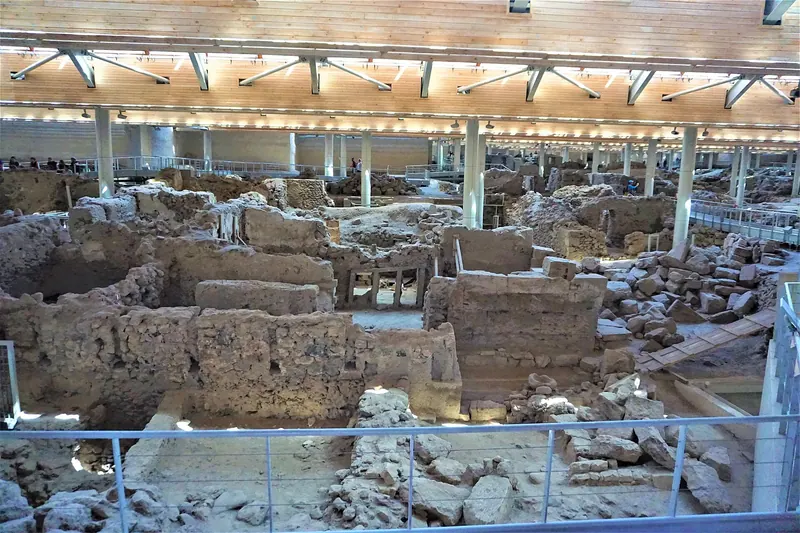
  3. The preserved Bronze Age ruins at Akrotiri

    Akrotiri archaeological site

    A remarkably preserved Minoan Bronze Age settlement, buried and protected by the same volcanic eruption that shaped the island, sometimes called Greece's Pompeii.

    Tip A covered walkway lets you explore the site regardless of weather, well designed for visitor access.

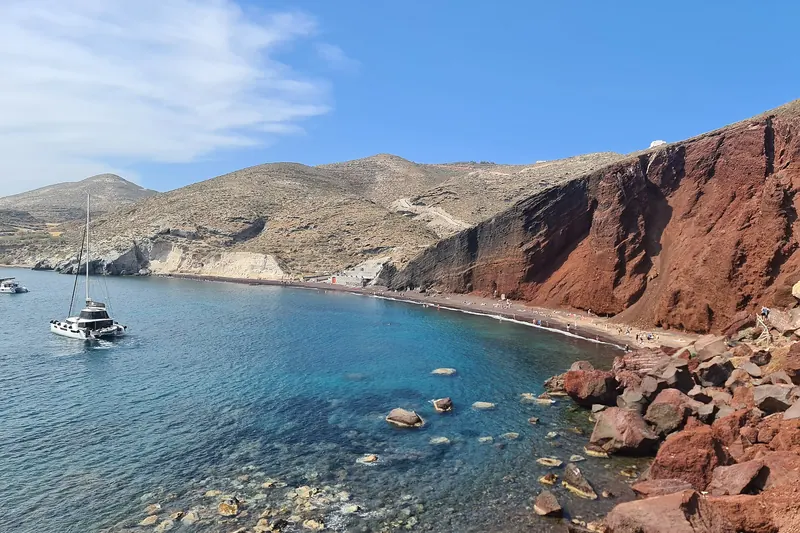
  4. Red Beach beneath dramatic red volcanic cliffs

    Red Beach

    A striking beach beneath dramatic red volcanic cliffs, one of the island's most distinctive stretches of coastline.

    Tip The short walk in from the car park involves loose volcanic rock — proper shoes make it considerably easier.

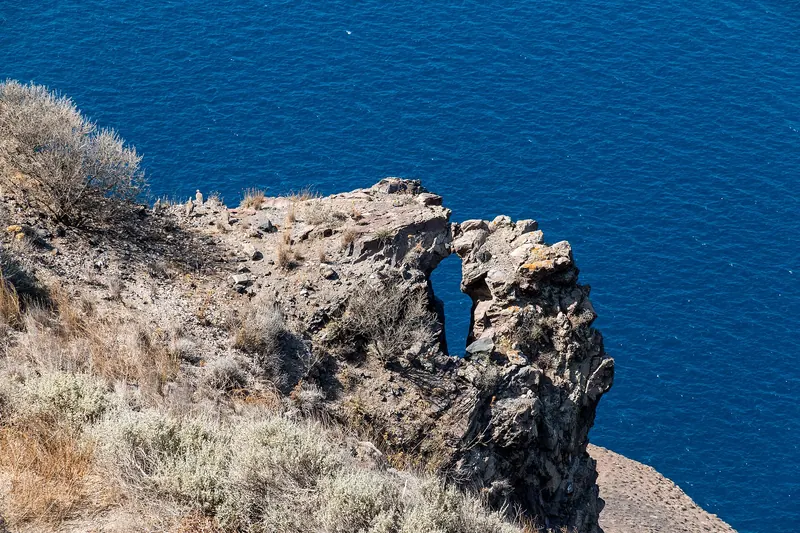
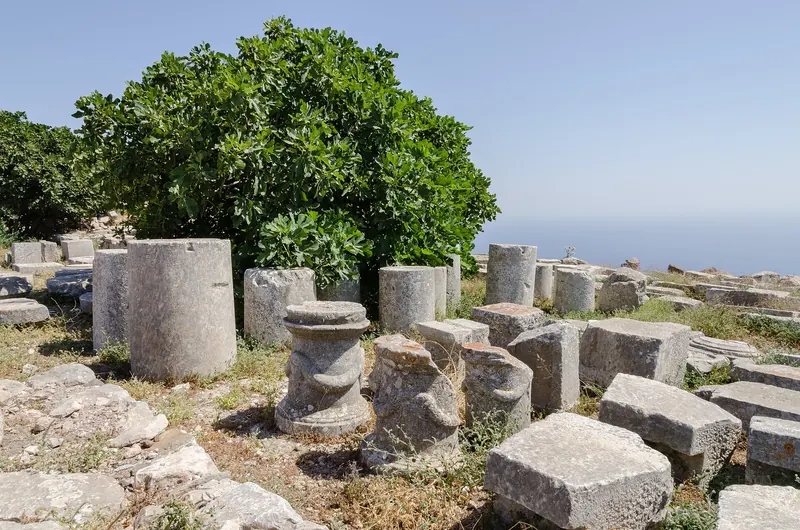
  5. The clifftop ruins of Ancient Thera

    Ancient Thera

    Ruins of an ancient Greek and later Byzantine city on a dramatic clifftop site, less visited than Akrotiri despite comparable historic significance.

    Tip The site is reached by a steep road or hiking trail from Kamari or Perissa — worth the effort for the views alone.

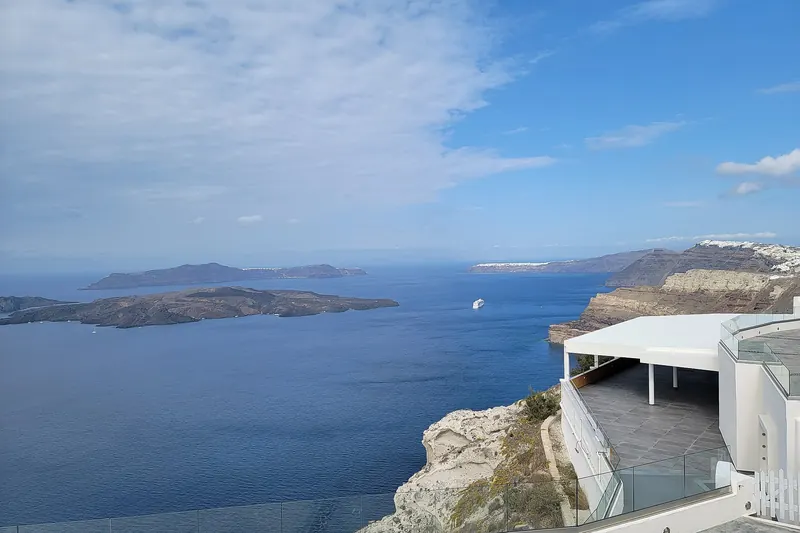
  6. The caldera view from a Santorini winery terrace

    Caldera-edge wineries

    Santorini's volcanic soil and unique basket-trained vines produce distinctive wines, with several wineries offering caldera-view tastings.

    Tip Book a tasting at a winery with a west-facing terrace to combine the wine with a spectacular sunset.

Things to do

Best things to do in Santorini

Beyond the caldera villages, Santorini rewards its wine culture, its volcanic geology and its quieter corners.

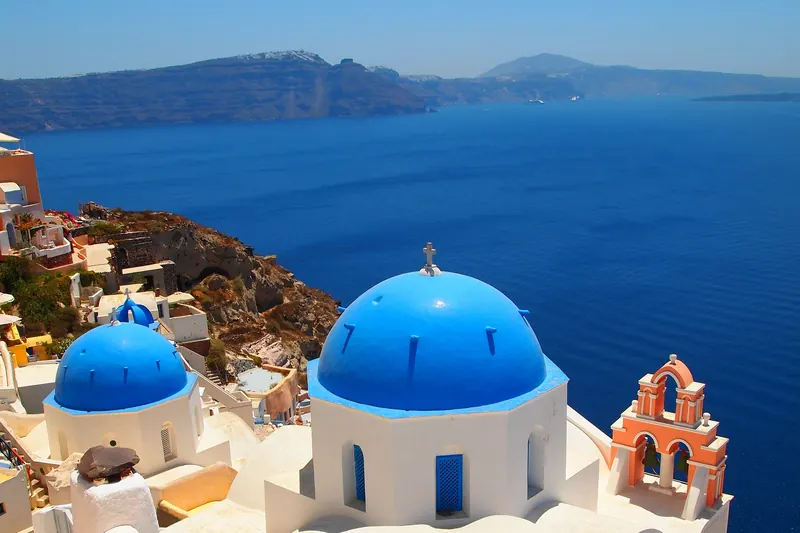
  1. A blue-domed church in Oia, the classic sunset viewpoint

    Watch the sunset in Oia

    The island's single most famous experience, spectacular when the weather cooperates, though also crowded at the main viewpoints.

    Tip Arrive at least 30 to 45 minutes ahead of sunset in peak season to secure a decent viewing spot.

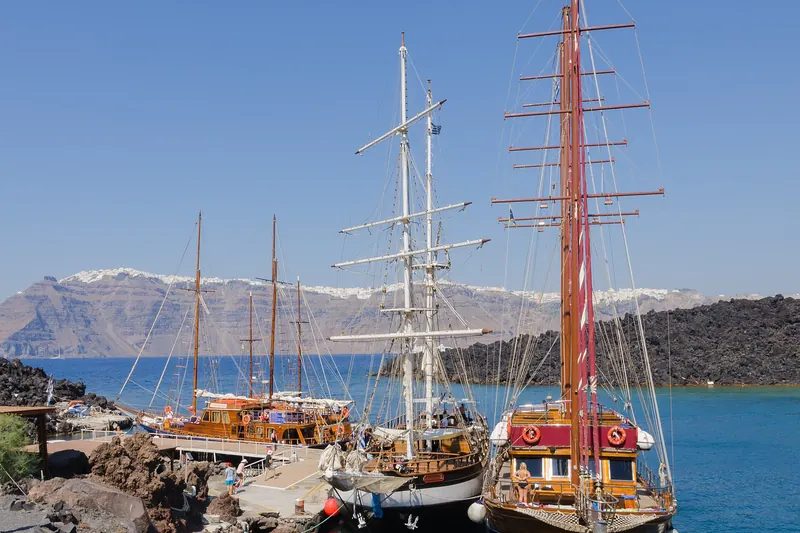
  2. Tour boats at the volcanic island of Nea Kameni

    Take a boat trip to the volcano and hot springs

    A worthwhile excursion to the still-active volcanic islet in the caldera's centre, often paired with a swim in naturally warmed sulphur springs.

    Tip Wear an old swimsuit for the hot springs — the sulphur-rich water can stain fabric.

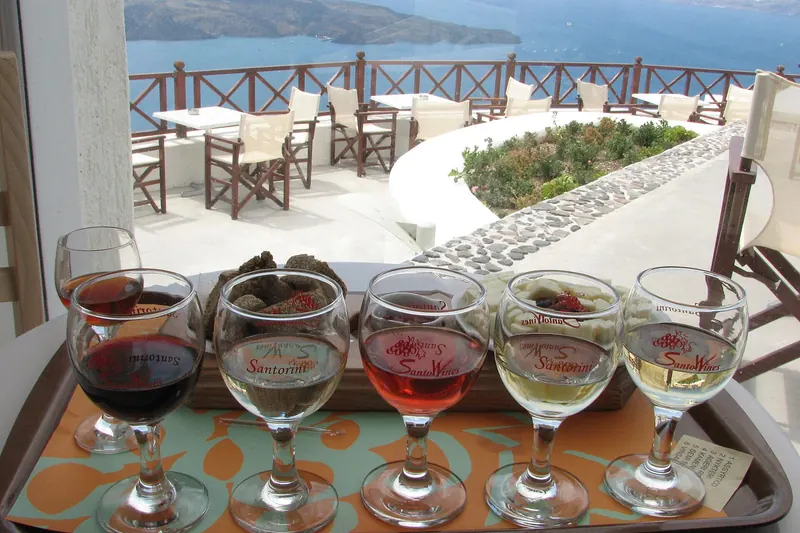
  3. A wine tasting flight at a Santorini winery

    Go wine tasting at a caldera winery

    Santorini's Assyrtiko and other volcanic-soil wines are distinctive, and a tasting flight offers real insight into the island's unusual basket-vine growing method.

    Tip Santo Wines and Venetsanos both combine tastings with spectacular caldera views.

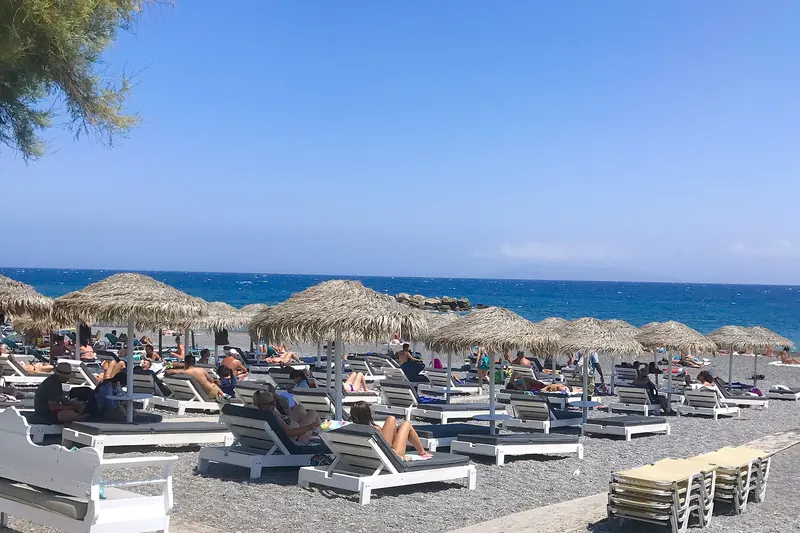
  4. Kamari's black sand beach on Santorini

    Swim at a red or black sand beach

    Santorini's volcanic geology produces distinctive beach colours, from Red Beach's dramatic cliffs to Perissa and Kamari's black sand stretches.

    Tip Black sand beaches heat up considerably in peak summer — sandals help for the walk to the water.

  5. The caldera-edge village of Imerovigli along the Fira-to-Oia walking path

    Walk the caldera-edge path from Fira to Oia

    A rewarding coastal walk of several hours, passing through Imerovigli and Firostefani with continuous caldera views along the way.

    Tip Start early morning to avoid peak summer heat — the path offers little shade along most of its length.

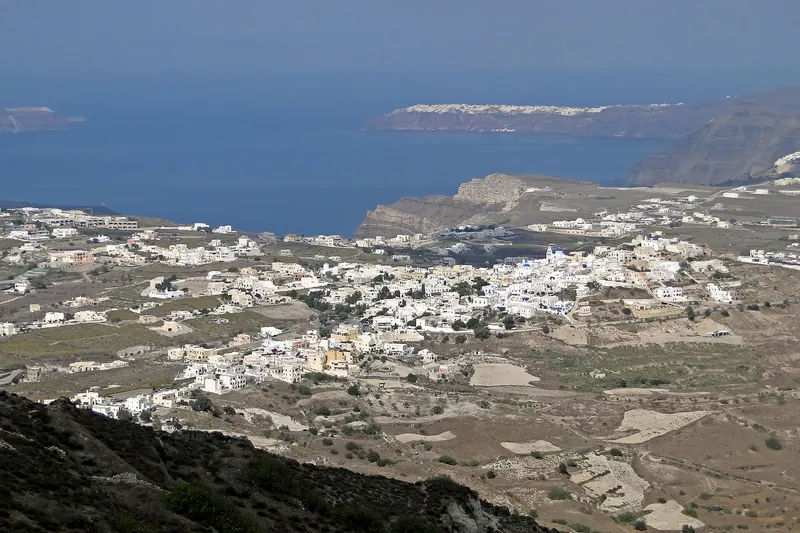
  6. Pyrgos, a quiet hilltop village on Santorini

    Explore Pyrgos village

    A quieter hilltop village away from the main caldera crowds, its narrow medieval lanes offering real insight into pre-tourism Santorini.

    Tip The Byzantine kastro ruins above the village give an excellent 360-degree island view.

Local food

What to eat in Santorini

Santorini's volcanic soil produces distinctive local ingredients found nowhere else in Greece.

  • Santorini fava

    A smooth purée of the island's own yellow split peas, distinct from mainland fava and protected under EU geographical status.

    Where to try it Traditional tavernas across the island, often served with capers and caramelised onion.

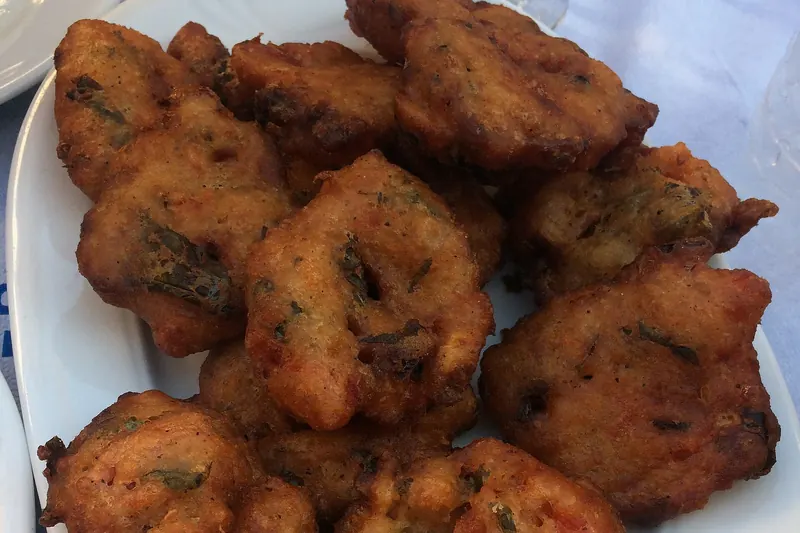
  • Tomatokeftedes, Santorini's tomato fritters

    Tomatokeftedes

    Tomato fritters made with the island's own small, intensely flavoured cherry tomatoes, a genuine Santorini specialty distinct from mainland versions.

    Where to try it Traditional tavernas throughout the island, particularly good in Fira and Oia.

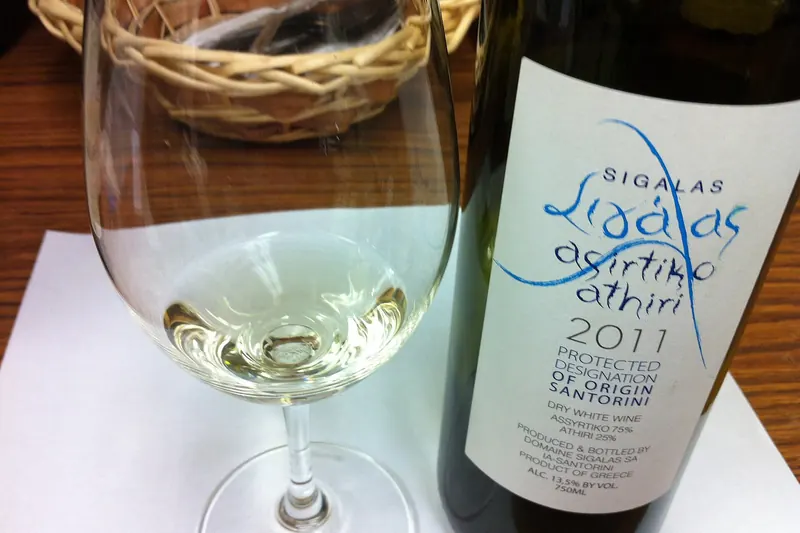
  • A bottle of Assyrtiko, Santorini's signature white wine

    Assyrtiko wine

    Santorini's signature grape, grown in low basket-shaped vines that protect it from the island's strong winds, producing a distinctive mineral, citrus-driven white wine.

    Where to try it Caldera-edge wineries across the island, several offering tastings alongside the view.

  • White aubergine

    A genuine Santorini variety, milder and less bitter than standard aubergine, featured in several island specialities.

    Where to try it Traditional tavernas, particularly in dishes alongside the island's own tomatoes and fava.

  • Chloro cheese

    A soft, tangy local goat's and sheep's milk cheese, a genuine Santorini specialty distinct from more widely available Greek cheeses.

    Where to try it Local producers and traditional tavernas across the island.

  • Vinsanto dessert wine

    A sweet, sun-dried dessert wine made from the island's own grapes, aged for years in oak, a genuine Santorini specialty with protected status.

    Where to try it Caldera wineries offering tastings, often served alongside dessert or local cheese.

Accommodation

Where to stay in Santorini

Santorini's caldera-edge towns command a genuine premium, with quieter, more affordable options further from the rim.

  • Oia

    The most famous, most photographed base, at a genuine premium price, particularly for caldera-view rooms.

    Best for: The classic sunset view

  • Fira and Firostefani

    Central to the island's restaurants, shops and transport, with caldera views at a somewhat lower premium than Oia.

    Best for: Central convenience and nightlife

  • Kamari or Perissa

    Away from the caldera rim but better value, with direct access to the island's black sand beaches.

    Best for: Value and beach access

What a night costs

Hostel dorm
€30–50 per night
Mid-range hotel
€110–220 per night
Caldera-view room supplement
Often double a standard room's rate
Wine tasting flight
€15–30

Transport

Getting to and around Santorini

Santorini is reached by short flight or ferry from Athens, both straightforward in season.

Getting there

  • Flight from Athens

    A short flight from Athens reaches Santorini in about 45 minutes, considerably faster than the ferry alternative.

    Book ahead in peak summer, when popular flight times can sell out or spike in price.

  • Ferry from Piraeus

    High-speed ferries from Athens' port reach Santorini in about 5 hours, with slower conventional ferries also available.

    Book high-speed ferries ahead in July and August, when popular Cyclades routes can sell out.

  • Ferry from Mykonos or Crete

    Direct ferries connect Santorini to Mykonos in about 2–3 hours and to Crete in around 2 hours, making island-hopping straightforward.

    Routes and frequency vary by season — check current schedules before finalising an island-hopping itinerary.

Getting around

Santorini's caldera towns are walkable individually, with buses and rental vehicles covering the wider island.

  • Local buses

    A reasonably reliable network connects Fira to Oia, the airport and the island's main beaches.

    Buses can be crowded in peak season — arrive at the station with extra time.

  • Rental car or ATV

    Offers genuine flexibility for reaching wineries, Ancient Thera and quieter beaches at your own pace.

    Parking in Oia and Fira is limited — expect to walk some distance from where you park.

  • Walking, along the caldera edge

    The path connecting Fira, Firostefani, Imerovigli and on toward Oia is entirely walkable for those with the time and stamina.

    The full Fira-to-Oia walk takes several hours — start early to avoid the midday heat.

When to go

Best time to visit Santorini

Santorini's summer crowds and prices peak hard in July and August, and shoulder season offers comparable weather with real relief from both.

  • Spring (April–June)

    Best time

    Mild, increasingly warm weather with wildflowers and noticeably thinner crowds than peak summer.

  • Summer (July–August)

    Good

    Hot, dry and reliably sunny, but also the island's most crowded and expensive months by a wide margin.

  • Autumn (September–October)

    Best time

    Warm sea temperatures lingering from summer alongside comfortable air temperatures and thinning crowds.

  • Winter (November–March)

    Shoulder

    Quiet and atmospheric, though many hotels, restaurants and the cable car reduce service or close entirely.

Worth planning around: Peak July and August without accommodation booked many months ahead — Santorini's limited rooms fill early and prices spike considerably.

Itinerary

Three days in Santorini

Fira and the caldera walk first, then Oia's sunset, then the island's history and wine.

  1. Day1

    Fira and the caldera path

    Santorini's capital and its classic views.

    • Morning Explore Fira's streets and viewpoints.
    • Afternoon Walk the caldera-edge path toward Imerovigli.
    • Evening Dinner in Fira with a caldera view.
  2. Day2

    Oia and the sunset

    The island's most famous village.

    • Morning Explore Oia's lanes and blue-domed churches.
    • Afternoon A boat trip to the volcano and hot springs.
    • Evening Sunset in Oia, arriving well ahead of time.
  3. Day3

    Akrotiri and wine country

    Ancient history and the island's vineyards.

    • Morning Akrotiri's Bronze Age ruins.
    • Afternoon Red Beach and a caldera winery tasting.
    • Evening A final dinner featuring Santorini fava and tomatokeftedes.

Travel tips

Santorini travel tips

Practical notes on timing, booking and etiquette that make a real difference to a Santorini trip.

  • Book accommodation many months ahead for summer — Santorini's limited rooms sell out and prices spike early.
  • Arrive at Oia's sunset viewpoints at least 30 to 45 minutes ahead of time in peak season.
  • Consider Fira or Imerovigli over Oia for a comparable caldera view at a somewhat lower price.
  • Wear proper shoes for Red Beach and Ancient Thera — both involve loose volcanic rock or steep paths.
  • Book wine tastings ahead at popular caldera-edge wineries, especially around sunset time.
  • Start the Fira-to-Oia caldera walk early morning to avoid peak summer heat, which the path offers little shade against.
  • Pack for genuine wind — Santorini's exposed caldera edge can be considerably breezier than the sheltered parts of the island.

FAQ

Santorini: frequently asked questions

How many days do you need in Santorini?

Three works well — enough for Fira, Oia's sunset, Akrotiri's ruins and at least one wine tasting without feeling rushed.

Is Santorini worth the hype?

Yes — the caldera views deliver on their reputation in person, though visiting outside peak July-August and exploring beyond the main viewpoints both meaningfully improve the experience.

Should I stay in Oia or Fira?

Oia offers the single most famous view at a genuine premium price; Fira offers comparable views, more restaurants and nightlife, and generally better value.

What is the best time of year to visit?

May to June and September offer warm weather with meaningfully lower crowds and prices than July and August, which are the island's busiest, most expensive months.

Is Santorini expensive?

Yes, more so than most of Greece — expect a real premium on accommodation, particularly for caldera-view rooms, though food and activities remain broadly comparable to the rest of the country.

Read next

Related travel articles

Practical

Packing by Season and Trip Type

Most packing advice is a list of things. This is the opposite: the small number of decisions that determine whether your luggage helps or hinders, organised by the kind of trip you are actually taking.

Heritage

UNESCO Sites Worth Planning a Trip Around

A UNESCO listing tells you a place matters; it does not tell you whether it is worth two days and a detour. This is how to read the list usefully — and which sites reward building a trip around them.

Advertisement