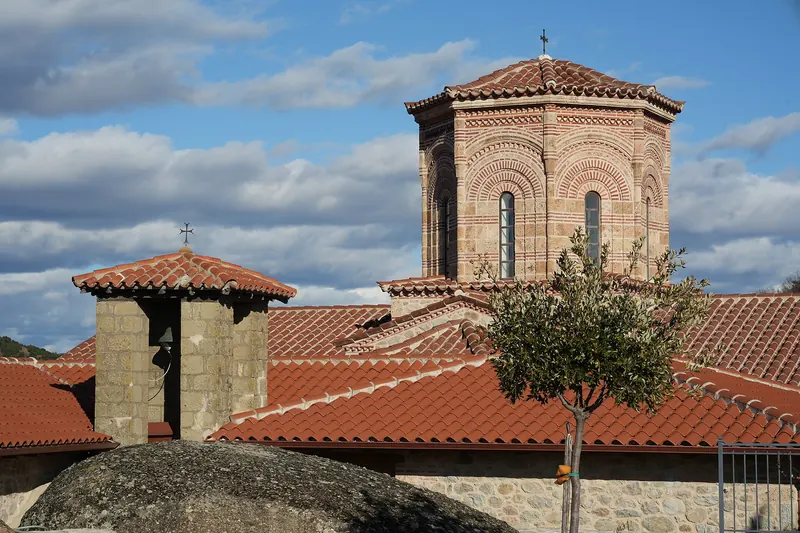
A monastery perched atop a sandstone pillar at Meteora

Thessaly · Greece

Meteora

Six working Eastern Orthodox monasteries perched atop sheer sandstone pillars in central Greece, among the most extraordinary sights in the entire country.

  • Best time April–June and September–October, for mild weather and manageable crowds
  • Stay 2 days
  • Good for History, religion, scenery, photography

Photo: Janmad · CC BY-SA 2.0

Welcome to Meteora

Meteora's six working monasteries sit atop sheer sandstone pillars rising abruptly from the Thessalian plain, an extraordinary sight built by monks seeking isolation from the raids and instability of the wider Byzantine world, beginning in the 11th century and continuing through the monasteries' main construction in the 14th to 16th centuries.

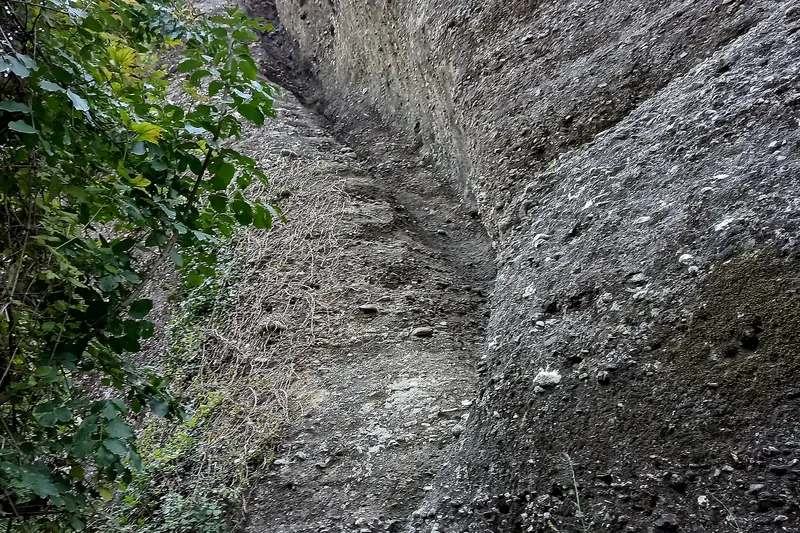
Until relatively recently, reaching the monasteries meant removable ladders or nets winched up by hand — a deliberate barrier to unwanted visitors that has since given way to steps carved into the rock itself, though the sense of dramatic isolation remains intact even with modern access.

A UNESCO World Heritage Site recognised for both its cultural and natural significance, Meteora rewards visitors with frescoed Byzantine chapels, significant religious art and some of the most striking landscape views in Greece, all within easy reach of the small town of Kalabaka.

  • Historic Site
  • UNESCO Site
  • Scenic Region

Why visit

Why visit Meteora?

Meteora's case is that nowhere else in Greece, or arguably Europe, pairs this dramatic a natural landscape with this much genuine living religious history.

  • The setting is unlike anywhere else

    Monasteries perched atop sheer rock pillars create one of the most visually extraordinary sights in Greece.

  • The monasteries are still active

    Working communities of monks and nuns, not museums, giving the site a genuine living religious significance beyond its scenery.

  • The frescoes and art are significant

    Byzantine and post-Byzantine religious art of real historic and artistic importance fills the monasteries' small chapels.

  • It's manageable in a short visit

    Unlike many of Greece's islands, Meteora rewards a focused one- or two-day visit without demanding a full week.

  • The landscape rewards more than the monasteries alone

    Hiking, rock climbing and simply driving the loop road between the pillars are worthwhile beyond the monastery visits themselves.

Main attractions

Top things to see in Meteora

Meteora's essential sights, from its largest and oldest monastery to the dramatic isolated pillar of the Holy Trinity.

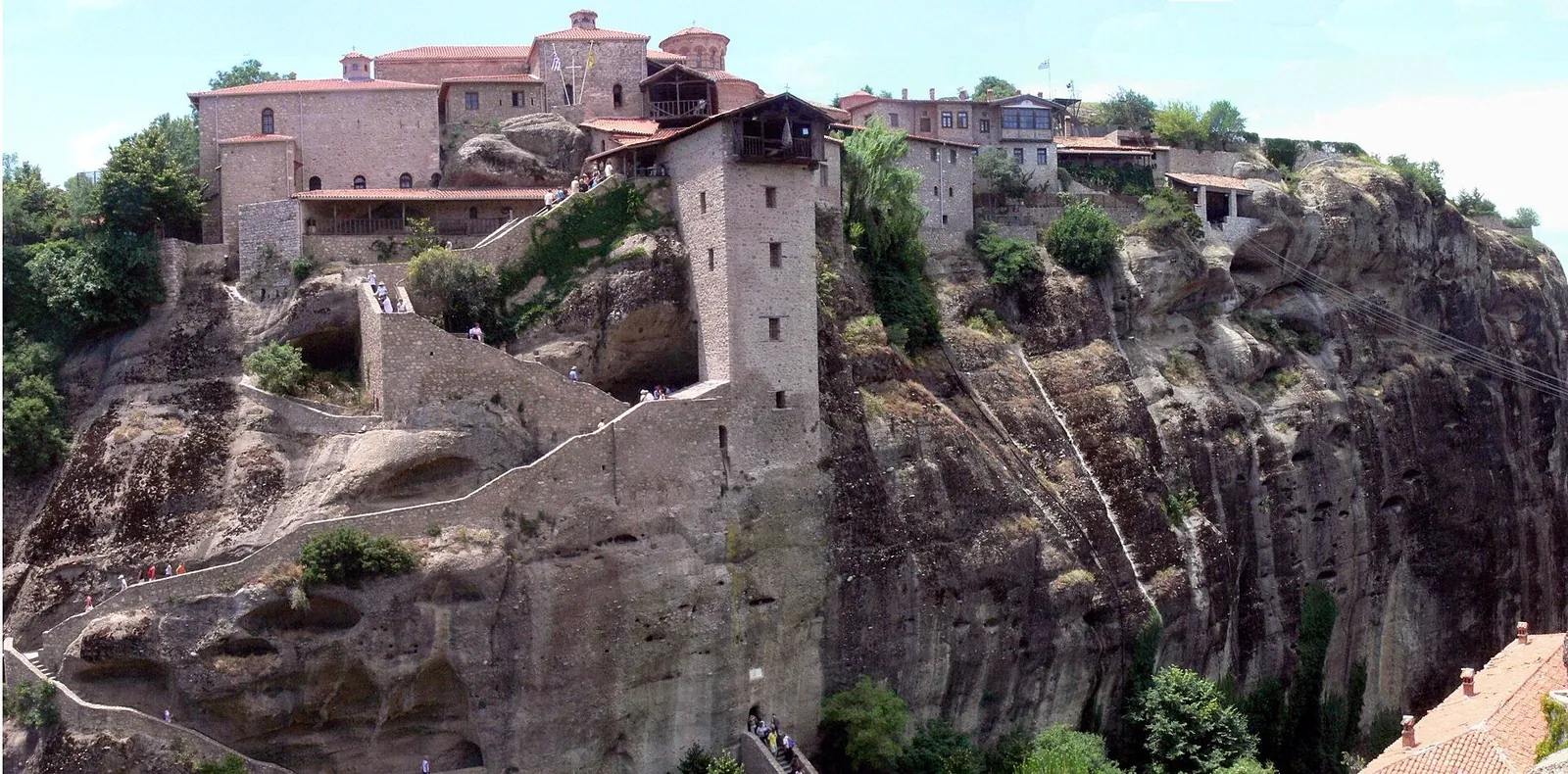
  1. The Great Meteoron Monastery, the largest and oldest at Meteora

    The Great Meteoron Monastery

    The largest and oldest of the six monasteries, founded in the 14th century, its museum and frescoed chapel among Meteora's most rewarding visits.

    Tip Arrive early — Great Meteoron is the most visited of the six and crowds build quickly through the morning.

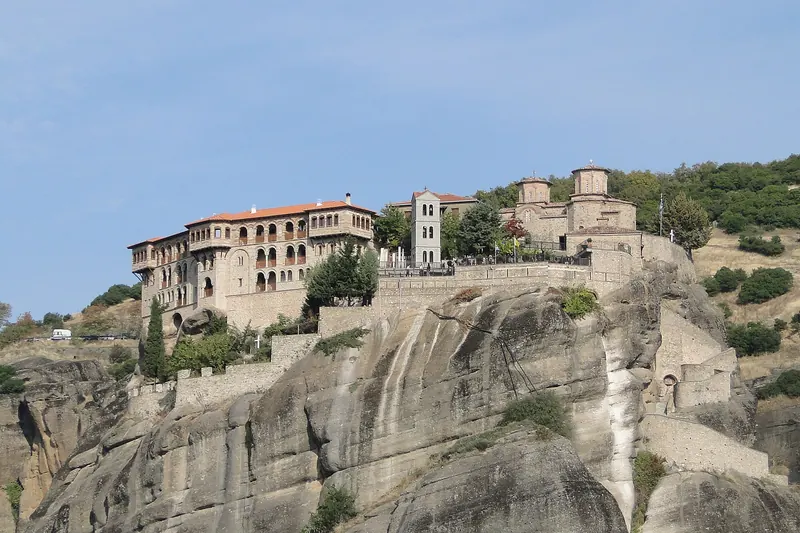
  2. Varlaam Monastery atop its rock pillar

    Varlaam Monastery

    The second-largest monastery, notable for its 16th-century frescoes and the original wooden barrel once used to haul supplies up the cliff face.

    Tip The old hauling tower and net are still visible — a vivid reminder of how the monasteries were once reached.

  3. The Holy Trinity Monastery standing alone atop its own pillar

    Holy Trinity Monastery

    Standing alone atop its own isolated pillar, reached by a steep staircase carved into the rock, the most dramatically sited of the six.

    Tip This monastery featured in the 1981 James Bond film 'For Your Eyes Only' — a detail that adds to its appeal for many visitors.

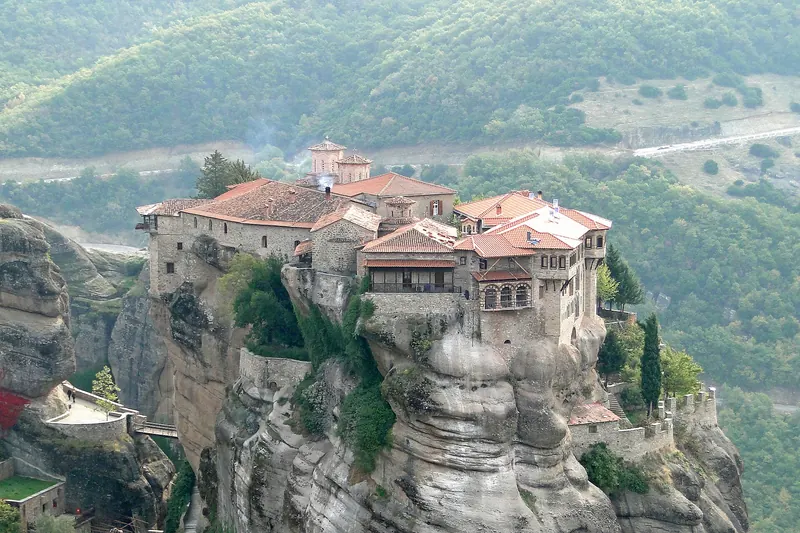
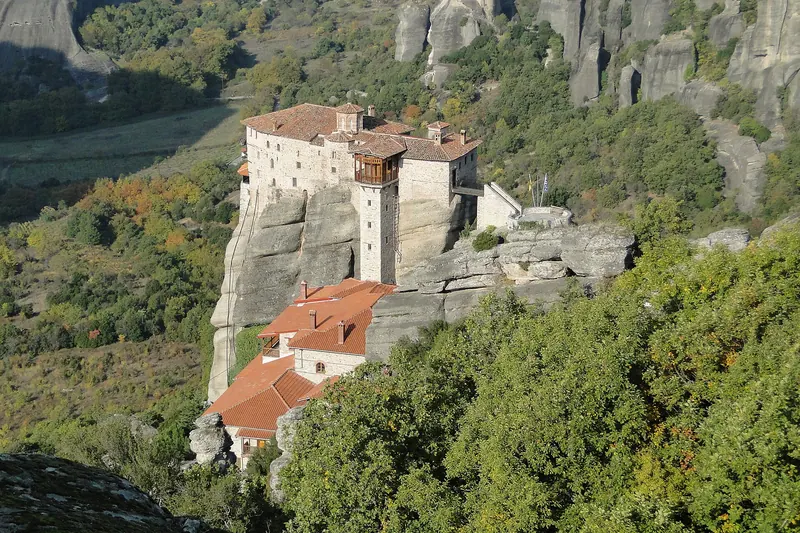
  4. Rousanou Monastery filling the top of its narrow pillar

    Rousanou Monastery

    Home to a community of nuns, striking for how completely it fills the narrow pillar top it's built upon, visible from several viewpoints below.

    Tip Rousanou is one of the more photogenic monasteries from a distance — worth viewing from the road below as well as visiting in person.

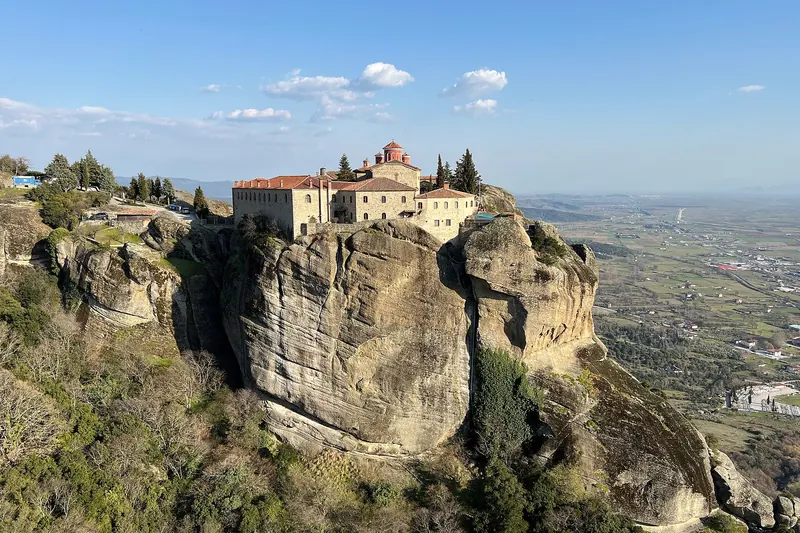
  5. St. Stephen Monastery, reached via a bridge rather than steps

    St. Stephen Monastery

    The most accessible of the six, reached via a bridge rather than steep steps, also home to a community of nuns and welcoming to visitors with mobility concerns.

    Tip Its relatively easy access makes it a good choice if you can only manage one or two monasteries in a short visit.

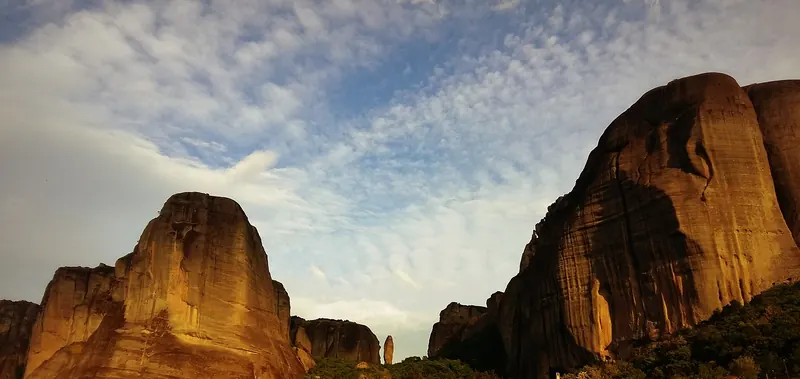
  6. The rock pillars of Meteora seen from the base of the valley

    Kalabaka and the base of the pillars

    The small town beneath Meteora's rock formations, offering striking upward views of the pillars from the streets and surrounding trails.

    Tip The short walk from Kalabaka toward Kastraki village offers excellent views without needing a car.

Things to do

Best things to do in Meteora

Beyond visiting the monasteries themselves, Meteora rewards its viewpoints, its hiking trails and its dramatic driving loop.

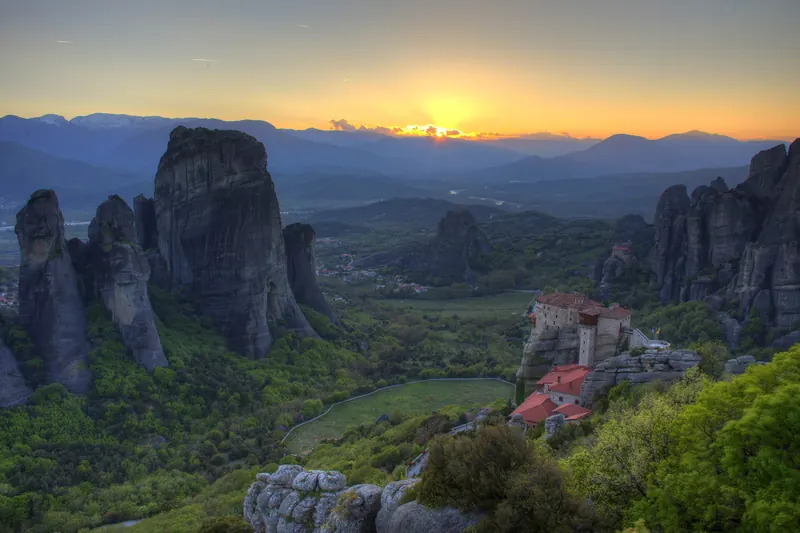
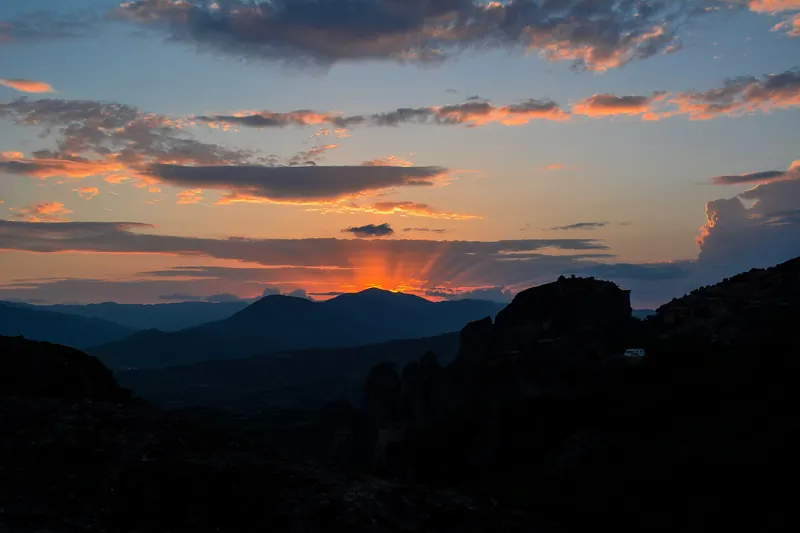
  1. Sunset light over Meteora's rock pillars

    Watch sunset from a Meteora viewpoint

    The rock pillars turn striking shades of orange and red at sunset, with several roadside viewpoints offering excellent vantage points.

    Tip Psaropetra rock is a popular sunset viewpoint — arrive with time to find parking in peak season.

  2. Steps carved into the rock along an old Meteora path

    Hike the old monk paths between monasteries

    Trails once used by monks themselves connect several monasteries, offering a quieter, more atmospheric way to move between them than driving.

    Tip Proper hiking shoes help considerably — the paths are uneven in places, with real elevation change.

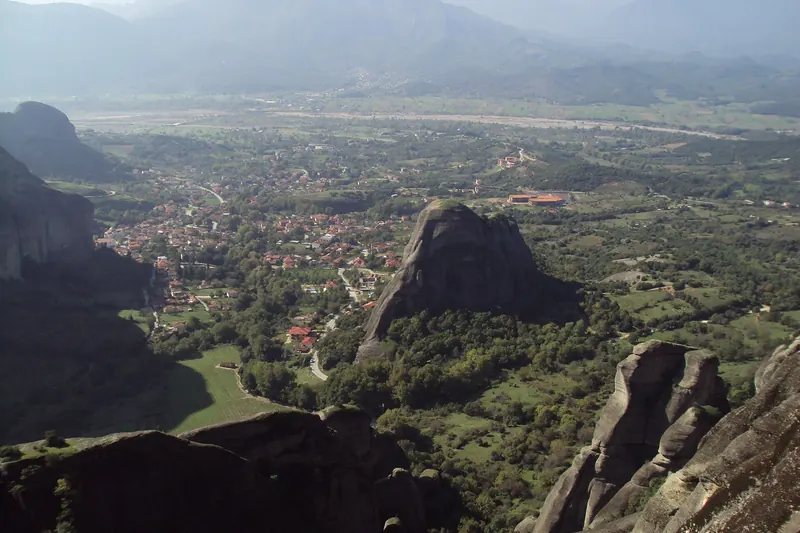
  3. Several of Meteora's rock pillars and monasteries seen together

    Visit multiple monasteries in one day

    Each monastery keeps its own weekly closing day, so planning your route around opening schedules matters for a focused visit.

    Tip Check each monastery's current closing day before setting out — visiting on the wrong day is a common visitor mistake.

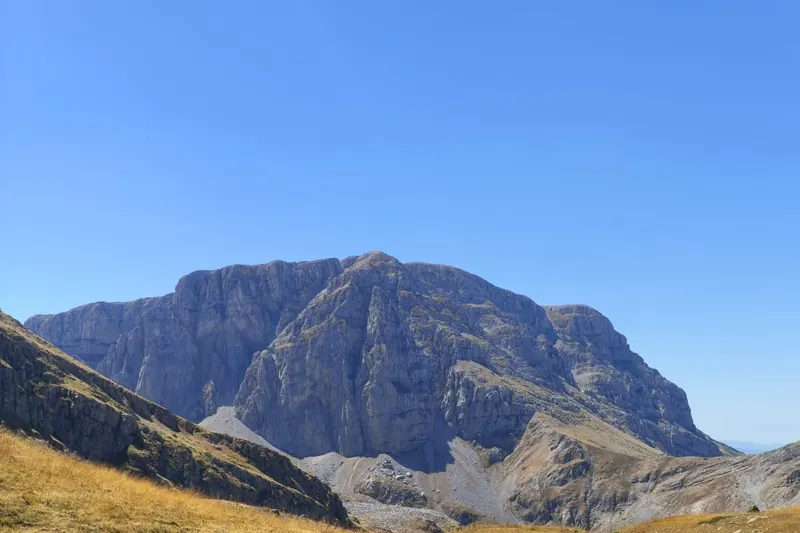
  4. The landscape of rock pillars along Meteora's loop road

    Drive or cycle the Meteora loop road

    A spectacular road links all six monasteries and several viewpoints, rewarding a slow drive or cycle regardless of how many you enter.

    Tip The road includes narrow, winding sections — allow more time than GPS estimates suggest.

  5. A climber on one of Meteora's sandstone pillars

    Try rock climbing on the sandstone pillars

    Meteora is a respected rock climbing destination, its sandstone pillars offering routes for a real range of experience levels.

    Tip Local climbing guides and schools in Kalabaka offer well-regarded introductory sessions for first-timers.

  6. Kastraki village beneath the Meteora rock pillars

    Explore Kastraki village

    A quieter base than Kalabaka, sitting directly beneath the rock pillars with its own excellent upward views.

    Tip Kastraki's tavernas offer good value with the same spectacular views as pricier spots closer to the monasteries.

Local food

What to eat in Meteora

Meteora sits within Thessaly's mountain food culture, with several dishes tied to the region's monastic and rural traditions.

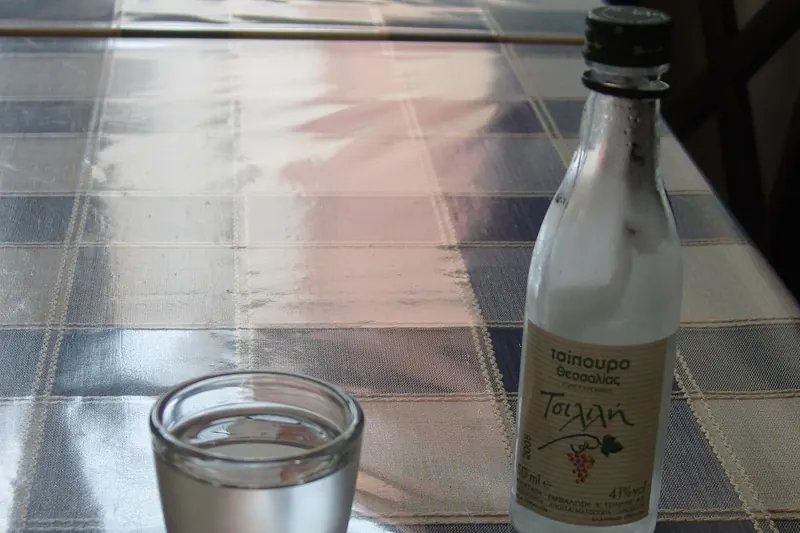
  • A glass of tsipouro, central Greece's grape-pomace spirit

    Tsipouro

    Central and northern Greece's own grape-pomace spirit, distinct from Crete's raki, traditionally served with a spread of small mezedes.

    Where to try it Traditional tavernas across Kalabaka and Kastraki, often accompanied by a free plate of mezedes.

  • Trahanas soup

    A traditional fermented wheat and milk soup, a staple of mainland Greek mountain cooking, warming and hearty in the region's cooler months.

    Where to try it Traditional tavernas across the region, particularly in cooler seasons.

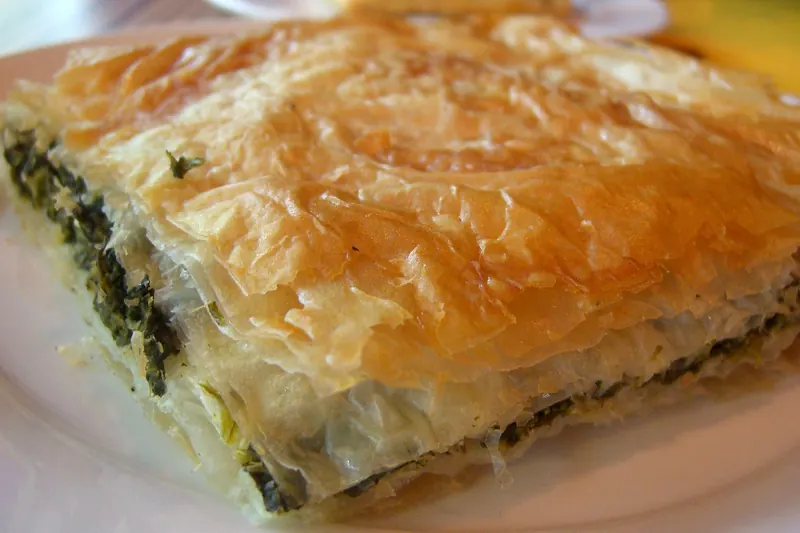
  • A savoury Greek pie filled with greens and cheese

    Thessalian pites

    Savoury pies filled with local greens, cheese or meat, central to Thessaly's home cooking and taverna menus alike.

    Where to try it Bakeries and tavernas throughout Kalabaka and Kastraki.

  • Grilled freshwater trout

    Kalabaka trout

    Freshwater trout from the region's mountain streams, a local specialty given Thessaly's cool rivers, usually served simply grilled.

    Where to try it Tavernas throughout Kalabaka, several specialising in freshwater fish.

  • Jars of honey for sale

    Monastery honey and herbs

    Honey, herbal teas and preserves made and sold by the monasteries themselves, a direct link to the site's living religious communities.

    Where to try it Small shops at or near several of the monasteries, and in Kalabaka's town centre.

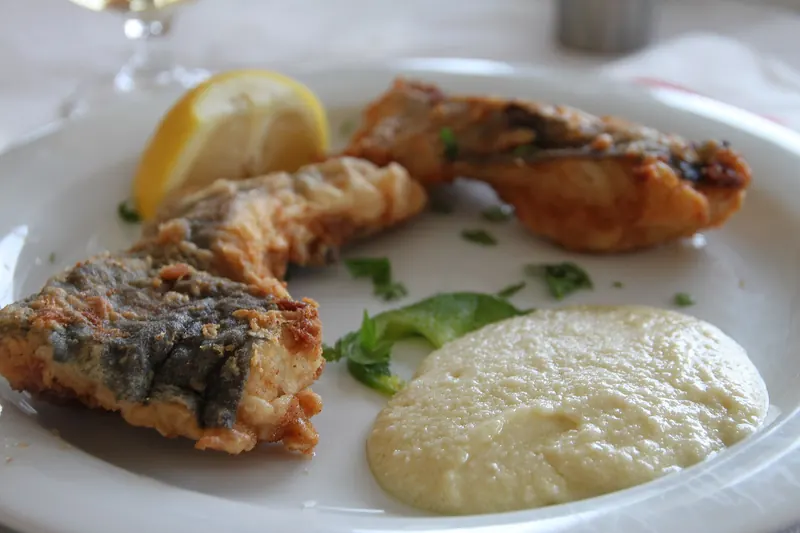
  • Fried salt cod served with garlic dip

    Bakaliaros skordalia

    Fried salt cod served with a pungent garlic dip, a genuine Greek dish traditionally tied to Orthodox fasting periods, fitting well with Meteora's monastic setting.

    Where to try it Traditional tavernas across Kalabaka and Kastraki.

Accommodation

Where to stay in Meteora

Meteora's right base is a straightforward choice between the region's two small towns, both within easy reach of the monasteries.

  • Kalabaka

    The region's main town, with the greatest range of accommodation and dining, sitting directly beneath the rock pillars.

    Best for: The wider choice of hotels and restaurants

  • Kastraki

    A smaller, quieter village even closer to several monasteries, with its own excellent upward views of the pillars.

    Best for: A quieter base with equally dramatic views

What a night costs

Hostel dorm
€18–30 per night
Mid-range hotel
€60–110 per night
Monastery entry
€3 per monastery
Tsipouro with mezedes
€6–10

Transport

Getting to and around Meteora

Meteora sits in central Greece, reachable from Athens by train, bus or car, without its own airport.

Getting there

  • Train from Athens

    Direct trains from Athens reach Kalabaka in around 4–4.5 hours, a comfortable, scenic option.

    Book ahead in peak season, when popular departure times can sell out.

  • Car from Athens or Thessaloniki

    A road trip of around 4 hours from Athens or 2.5 hours from Thessaloniki, offering genuine flexibility for the surrounding region.

    The final approach into Kalabaka offers dramatic first views of the rock pillars.

  • Organised day or overnight tour

    Popular tours run from Athens, either as a long single day or a more relaxed overnight trip.

    An overnight tour allows more monastery visits and a sunset viewpoint that a single long day trip cannot fit in.

Getting around

Kalabaka and Kastraki are each walkable, though reaching the monasteries themselves benefits from a car or organised transport.

  • Rental car

    The most flexible way to visit multiple monasteries and viewpoints at your own pace along the loop road.

    Parking at each monastery is limited — arrive early in peak season for the most popular sites.

  • Local taxi or organised tour

    A convenient option for visitors without a car, with local operators offering half- and full-day monastery circuits.

    Taxis can usually be arranged through your accommodation for a set half-day rate.

  • Walking or cycling

    The closer monasteries and viewpoints around Kastraki are reachable on foot or by bike for those with the time.

    The full loop is a considerable distance — walking suits a single nearby monastery rather than all six.

When to go

Best time to visit Meteora

Meteora's summer heat can make the exposed rock pillars uncomfortable at midday, and shoulder season offers the best balance of weather and thinner crowds.

  • Spring (April–June)

    Best time

    Mild temperatures and green surrounding countryside, the most comfortable season for walking between monasteries.

  • Summer (July–August)

    Good

    Hot and reliably sunny, but also the region's most crowded months, with midday heat intense on the exposed pillars.

  • Autumn (September–October)

    Best time

    Comfortable temperatures and noticeably thinner crowds than summer, with clear skies well suited to photography.

  • Winter (November–March)

    Shoulder

    Cold and occasionally snowy, atmospheric but with some services reduced and cold winds across exposed viewpoints.

Worth planning around: Peak midsummer midday heat if planning to hike between monasteries — the exposed rock paths offer little shade.

Itinerary

Two days in Meteora

The major monasteries first, then a quieter day of hiking, viewpoints and the surrounding villages.

  1. Day1

    The major monasteries

    Meteora's largest and most dramatic sites.

    • Morning Arrive in Kalabaka and visit the Great Meteoron Monastery early.
    • Afternoon Varlaam Monastery, then the Holy Trinity Monastery.
    • Evening Sunset at a Meteora viewpoint, then dinner in Kalabaka.
  2. Day2

    Quieter monasteries and the villages

    A slower day beyond the busiest sites.

    • Morning Rousanou or St. Stephen Monastery, whichever suits your route.
    • Afternoon Explore Kastraki village and a short hike along the old monk paths.
    • Evening A final dinner featuring tsipouro and Thessalian pites.

Travel tips

Meteora travel tips

Practical notes on dress code, timing and transport that make a real difference to a Meteora visit.

  • Dress modestly for every monastery — covered shoulders and knees are required, with wrap skirts often provided at the entrance for those in shorts.
  • Check each monastery's weekly closing day before planning your route — they vary and change seasonally.
  • Arrive early at the Great Meteoron and Varlaam, Meteora's two most visited monasteries, to avoid the worst crowds.
  • Rent a car if possible — the loop road between monasteries and viewpoints is time-consuming without one.
  • Book train tickets from Athens ahead in peak season, when popular departure times can sell out.
  • Bring proper shoes for the monk paths and monastery staircases, both steep and uneven in places.
  • Visit in spring or autumn for the most comfortable hiking and photography conditions.

FAQ

Meteora: frequently asked questions

How many days do you need in Meteora?

Two works well — enough to visit four to six monasteries at a comfortable pace alongside a sunset viewpoint and a short hike.

Can Meteora be visited as a day trip from Athens?

Yes, though it makes for a long day — an overnight stay allows more monastery visits and a proper sunset viewpoint without the rush.

Is there a dress code for the monasteries?

Yes — covered shoulders and knees are required at every monastery, with wrap skirts typically provided at the entrance for visitors in shorts.

Do I need a car in Meteora?

Helpful but not essential — taxis and organised tours cover the monastery circuit well, though a car offers more flexibility for viewpoints and timing.

What is the best time of year to visit?

April to June and September to October offer mild weather and noticeably thinner crowds than the hot, busier summer months.

Read next

Related travel articles

Practical

Packing by Season and Trip Type

Most packing advice is a list of things. This is the opposite: the small number of decisions that determine whether your luggage helps or hinders, organised by the kind of trip you are actually taking.

Heritage

UNESCO Sites Worth Planning a Trip Around

A UNESCO listing tells you a place matters; it does not tell you whether it is worth two days and a detour. This is how to read the list usefully — and which sites reward building a trip around them.

Advertisement