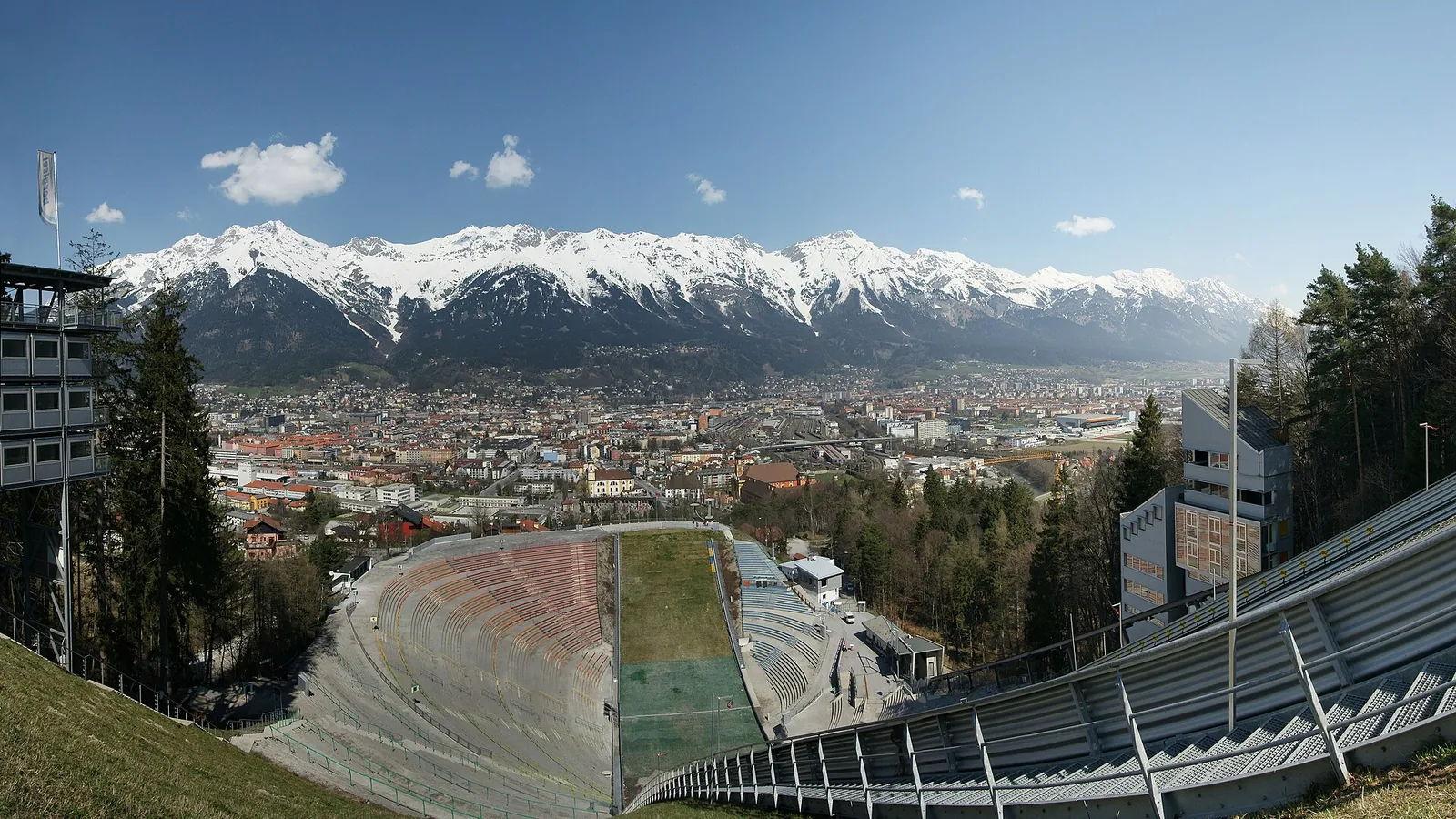
Innsbruck's old town with the snow-capped Nordkette mountains rising directly behind it

Tyrol · Austria

Innsbruck

A capital wedged so tightly between the Alps that the mountains are visible from the end of nearly every street in its medieval old town.

  • Best time December–March for skiing, June–September for hiking
  • Stay 2–3 days
  • Good for Mountains, history, skiing and hiking access

Photo: böhringer friedrich · CC BY-SA 2.5

Welcome to Innsbruck

Innsbruck sits in a narrow Alpine valley so tight that the Nordkette range rises almost directly from the edge of the old town, giving the city a mountain backdrop considerably more dramatic than nearly anywhere else in Austria.

That setting made Innsbruck a natural choice to host the Winter Olympics twice, in 1964 and 1976, and the city's genuine sporting heritage sits alongside a well-preserved medieval old town centred on the Golden Roof, a gilded balcony built for a 15th-century emperor.

The combination of serious mountain access, genuine imperial-era history and a noticeably relaxed, outdoorsy pace compared to Vienna's grandeur has made Innsbruck a natural base for both winter skiing and summer hiking in the Tyrolean Alps.

  • Historic Site
  • Mountains
  • Culture & Arts
  • Scenic Region

Why visit

Why visit Innsbruck?

Innsbruck's case is that no other Austrian city sits this directly against the Alps while still holding a significant historic old town.

  • The mountain backdrop is dramatic

    The Nordkette range rises almost directly from the old town's edge, visible from nearly every street.

  • The Golden Roof is a striking centrepiece

    A gilded balcony built for Emperor Maximilian I, still the old town's defining landmark.

  • It's one of the best Alpine access points in Austria

    A cable car reaches serious hiking and skiing terrain directly from the city centre.

  • The Olympic heritage is still visible

    Ski jumps and venues from the 1964 and 1976 Winter Games remain active landmarks.

  • It works well for both winter and summer visits

    Skiing in winter, hiking and mountain scenery in summer, year-round appeal.

Main attractions

Top things to see in Innsbruck

Innsbruck's essential sights, spanning the medieval old town and the mountains directly above it.

  1. The Golden Roof (Goldenes Dachl)

    A late-Gothic balcony covered in 2,657 gilded copper tiles, built for Emperor Maximilian I, the old town's most photographed landmark.

    Tip The adjoining museum offers worthwhile context on the balcony's history and the emperor who commissioned it.

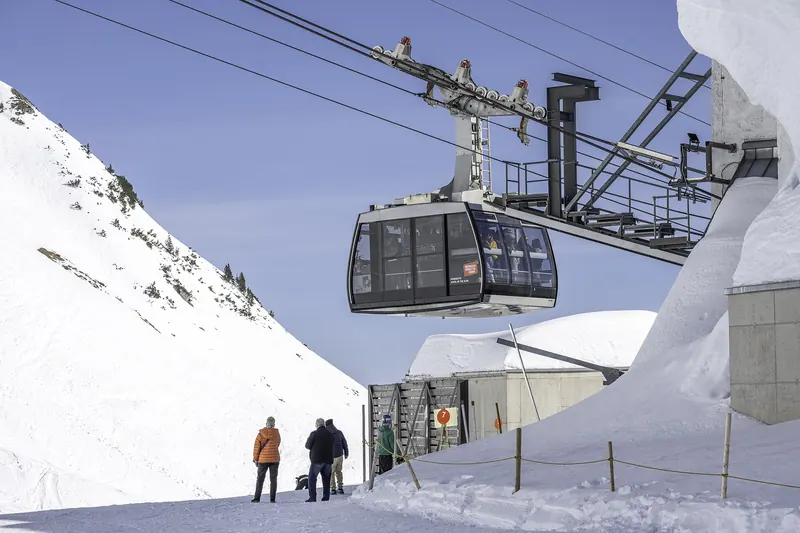
  2. The Nordkette cable car station above Innsbruck, with mountain views

    The Nordkette cable car

    A striking cable car, designed by Zaha Hadid, rising from the city centre directly into serious Alpine terrain in under 20 minutes.

    Tip Ride to the top station, Hafelekar, for sweeping views over the entire Inn Valley.

  3. Innsbruck Cathedral

    A baroque cathedral in the old town, its ornate ceiling frescoes worth stepping inside for beyond the exterior.

    Tip A short, easy stop to combine with the nearby Golden Roof and Hofburg.

  4. The Hofburg Innsbruck

    A former imperial palace, considerably smaller than Vienna's Hofburg but elegant, with rococo state rooms open to visitors.

    Tip The Giant's Hall, with its ceiling frescoes and imperial portraits, is the highlight of the interior.

  5. Bergisel Ski Jump

    A striking modern ski jump tower, designed by Zaha Hadid, still an active Olympic and World Cup venue with a viewing platform and café at the top.

    Tip The view from the top platform rivals the Nordkette cable car for sweeping city and mountain panoramas.

  6. Swarovski Crystal Worlds

    A surreal museum and art installation built into a hillside near Innsbruck, home to a giant crystal-eyed grass giant and immersive crystal chambers.

    Tip A short train or bus ride from the city centre, worth the half-day trip for something completely different from the old town.

Things to do

Best things to do in Innsbruck

Beyond the old town's sights, Innsbruck rewards its immediate access to genuine Alpine hiking and skiing.

  1. Hike in the Nordkette range

    The cable car's quick access to serious Alpine terrain makes a mountain hike possible even on a short city visit.

    Tip Several trails from the Hafelekar top station suit varying fitness levels — check current conditions before setting out.

  2. Ski or snowboard nearby

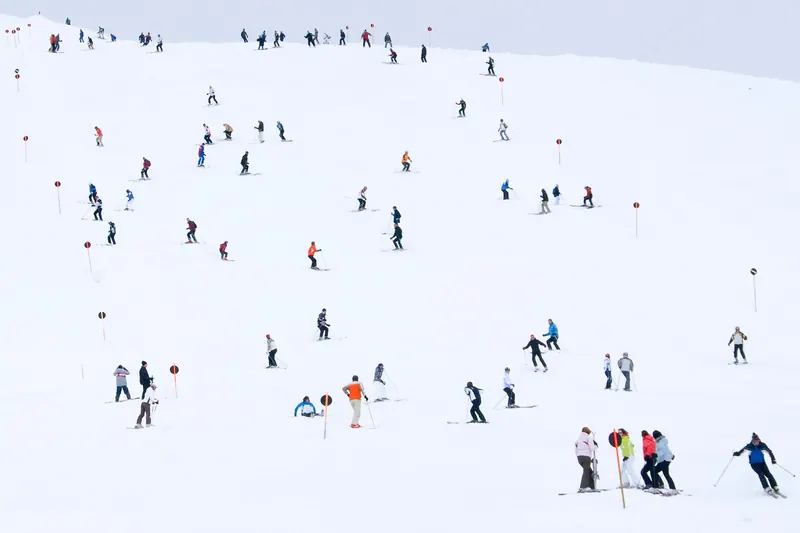
    Innsbruck's surrounding ski areas, part of the same region that hosted two Winter Olympics, offer serious terrain within a short transfer of the city.

    Tip The Innsbruck Card in winter covers several regional ski areas alongside city attractions and transit.

  3. Walk along the Inn River

    The river running through the city offers pleasant walking paths with mountain views on both sides.

    Tip The colourful facades along Mariahilf, across the river from the old town, make a good photo stop.

  4. Visit the Tyrolean Folk Art Museum

    A well-curated museum covering traditional Tyrolean culture, costumes and craftsmanship, a worthwhile complement to the imperial sights.

    Tip Housed in a former convent building worth seeing in its own right, adjacent to the Hofburg.

  5. Take a day trip into the wider Tyrolean Alps

    Innsbruck's position makes it a convenient base for reaching Kitzbühel, Seefeld or other Tyrolean mountain towns.

    Tip Regional trains and buses reach most nearby mountain towns within an hour or so.

Local food

What to eat in Innsbruck

Innsbruck's food scene blends standard Austrian dishes with hearty Tyrolean mountain specialties.

  • Tiroler Gröstl

    A hearty pan-fried dish of potatoes, onions and leftover roast meat, topped with a fried egg, a classic Tyrolean comfort food.

    Where to try it Traditional gasthauses throughout the old town, particularly welcome after a day in the mountains.

  • Tiroler Speck

    A distinctive dry-cured, lightly smoked ham from the Tyrol region, protected by EU geographic indication status.

    Where to try it Local delis and traditional restaurants, often served simply with bread as a starter.

  • Kasspatzln

    Tyrolean cheese spätzle, a rich dish of soft egg noodles baked with mountain cheese and topped with crispy fried onions.

    Where to try it Traditional Tyrolean restaurants throughout the old town.

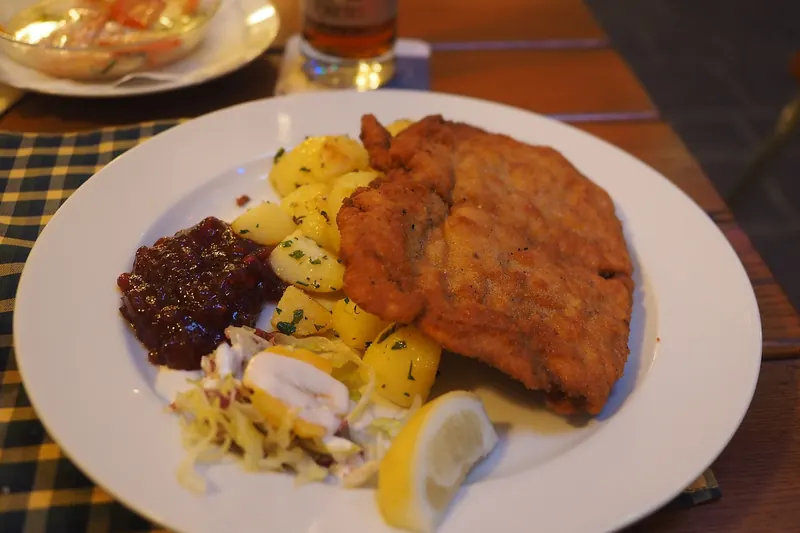
  • A Wiener schnitzel with parsley potatoes

    Wiener schnitzel

    Widely available across the city as elsewhere in Austria, good from Innsbruck's traditional restaurants.

    Where to try it Gasthauses throughout the old town.

  • Kaiserschmarrn

    A shredded, caramelised pancake with fruit compote, satisfying after a day of hiking or skiing.

    Where to try it Mountain huts around the Nordkette and traditional restaurants in the city.

Accommodation

Where to stay in Innsbruck

Innsbruck's old town and the area near the main train station both work well as a convenient base.

  • Altstadt (old town)

    The most central, historic base, putting the major landmarks within easy walking distance.

    Best for: Walking to the Golden Roof and main sights

  • Near the Hauptbahnhof (main station)

    A short walk from the old town, with good value accommodation and easy onward train connections.

    Best for: Transit connections and value

What a night costs

Hostel dorm
€28–45 per night
Mid-range hotel
€95–170 per night
Nordkette cable car return
€47
Tyrolean dinner
€16–25

Transport

Getting to and around Innsbruck

Innsbruck Airport handles regional flights, with fast trains connecting to Vienna, Salzburg and Munich.

Getting there

  • Innsbruck Airport (INN)

    About 4km from the city centre, with limited direct international routes.

    A short taxi or bus ride connects the airport to the old town.

  • Train from Vienna or Salzburg

    Fast Railjet trains connect Vienna (about 4 hours) and Salzburg (about 2 hours) to Innsbruck.

    Book Sparschiene discount fares ahead for meaningfully lower prices.

  • Train from Munich, Germany

    A convenient alternative gateway for many international visitors, roughly 2 hours by train.

    Several visitors fly into Munich specifically to reach Innsbruck and the wider Tyrolean Alps.

Getting around

Innsbruck's old town is compact and walkable, with trams and the Nordkette cable car covering the rest.

  • Walking

    The old town's major sights all sit within a compact, walkable historic centre.

    The old town is largely pedestrianised, making walking the most practical option regardless.

  • Trams and buses

    Cover the wider city and connections to outlying sights like Swarovski Crystal Worlds.

    An Innsbruck Card covers transit alongside museum and cable car discounts.

  • Nordkette cable car

    Reaches the mountains directly from the city centre in under 20 minutes.

    Runs year-round, though winter operating hours can be affected by weather conditions.

When to go

Best time to visit Innsbruck

Innsbruck has two distinct best seasons depending on whether mountain activity is skiing or hiking.

  • Winter (December–March)

    Best time

    The core ski season, with serious terrain accessible directly from the city via the Nordkette cable car and nearby resorts.

  • Spring (April–May)

    Shoulder

    A genuine transition period — too late for reliable skiing, often too early for high-altitude hiking trails to fully clear.

  • Summer (June–September)

    Best time

    The core hiking season, with excellent trail access and warm valley-floor temperatures.

  • Autumn (October–November)

    Shoulder

    A quieter transition period, with hiking trails still accessible at lower elevations before the first significant snow.

Worth planning around: April and November if a specific mountain activity matters — both fall in the genuine gap between reliable skiing and reliable hiking conditions.

Itinerary

Two to three days in Innsbruck

The old town first, then the mountains directly above it.

  1. Day1

    The old town

    Innsbruck's essential historic sights.

    • Morning The Golden Roof and Innsbruck Cathedral.
    • Afternoon The Hofburg Innsbruck and Tyrolean Folk Art Museum.
    • Evening Dinner with mountain views.
  2. Day2

    The Nordkette mountains

    Innsbruck's dramatic Alpine backdrop.

    • Morning The Nordkette cable car to Hafelekar.
    • Afternoon A hike or, in winter, skiing on the mountain.
    • Evening Bergisel Ski Jump's viewing platform at sunset.
  3. Day3

    Swarovski Crystal Worlds or a Tyrol day trip

    An optional third day beyond the city.

    • Morning Swarovski Crystal Worlds, a short trip from the city.
    • Afternoon Free time or a day trip to Seefeld or Kitzbühel.
    • Evening A final Innsbruck dinner.

Travel tips

Innsbruck travel tips

Practical notes on booking, timing and transport that make a real difference to an Innsbruck trip.

  • Check Nordkette cable car operating hours ahead in winter, since weather can affect the schedule.
  • Book ski accommodation well ahead for the December–March peak season.
  • Pack proper mountain layers regardless of season — weather changes quickly at altitude.
  • Use the Innsbruck Card if planning several attractions and cable car rides — it pays for itself quickly.
  • Consider Innsbruck as an alternative gateway via Munich rather than only flying into Vienna.
  • Book Swarovski Crystal Worlds tickets online ahead in peak season to skip queues.

FAQ

Innsbruck: frequently asked questions

How many days do you need in Innsbruck?

Two to three. Two covers the old town and a Nordkette cable car trip at a rushed pace; three allows Swarovski Crystal Worlds or a Tyrol day trip without feeling hurried.

Is Innsbruck good for skiing?

Yes — the surrounding region hosted two Winter Olympics, and several serious ski areas are accessible within a short transfer of the city centre, with the Nordkette itself reachable directly by cable car.

Is Innsbruck worth visiting in summer?

Yes — hiking trails accessible directly from the city via the Nordkette cable car, plus the old town's sights, make Innsbruck a year-round destination rather than only a winter one.

How do I get to Innsbruck?

By train from Vienna or Salzburg, or via Munich, Germany, which many international visitors find a more convenient gateway given more frequent international flight connections.

What is the best time of year to visit?

December to March for skiing, June to September for hiking — April and November fall in a genuine gap between the two, worth avoiding if a specific mountain activity is your priority.

Read next

Related travel articles

Practical

Packing by Season and Trip Type

Most packing advice is a list of things. This is the opposite: the small number of decisions that determine whether your luggage helps or hinders, organised by the kind of trip you are actually taking.

Where to go

Beyond the Big Names: Places Worth the Detour

The most visited place in a country is rarely its best, and it is almost never its best value. This is a method for finding the destinations that do not make the postcards — and a set of examples from five of the 50 countries on this site.

Advertisement