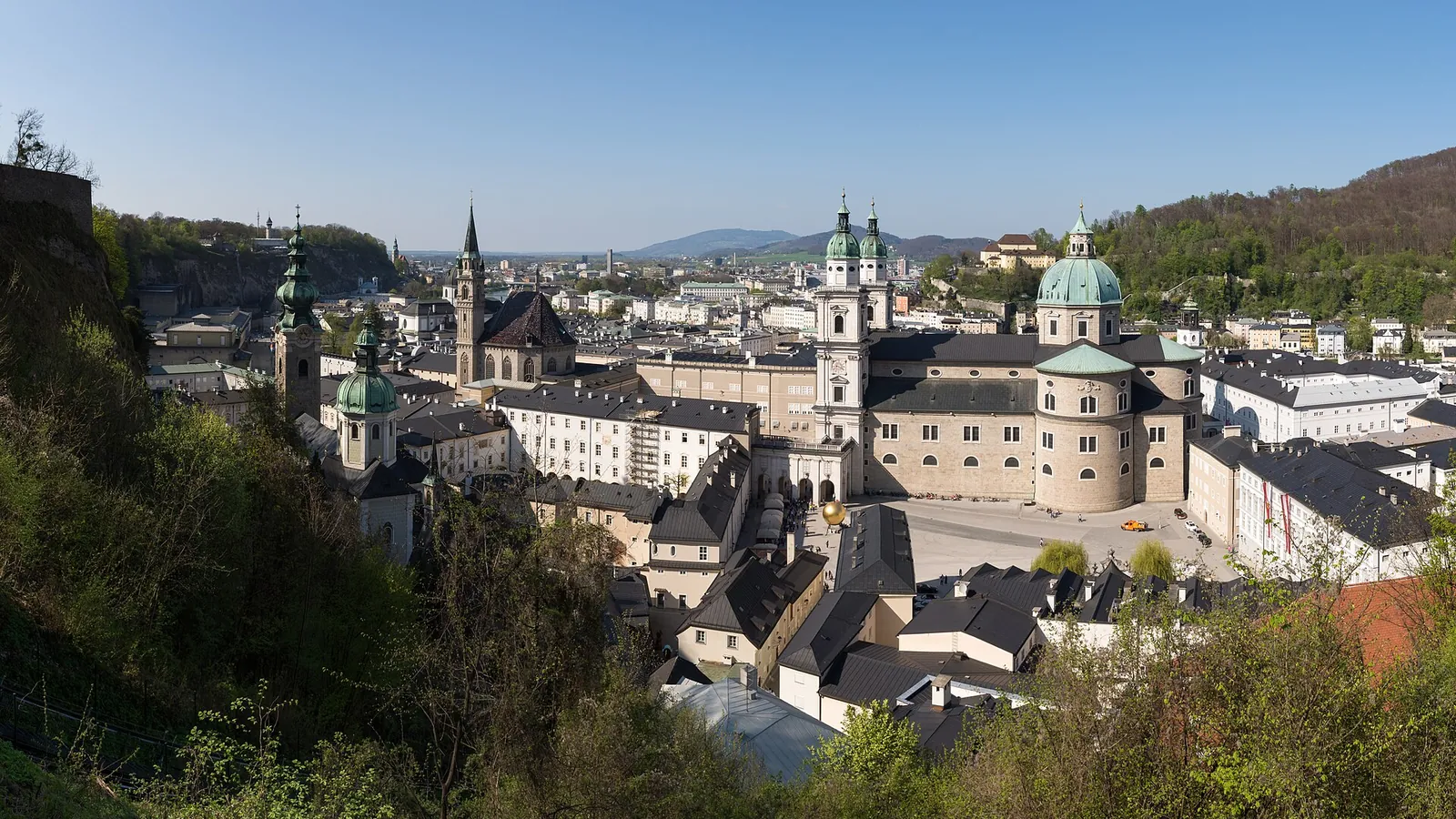
Salzburg's baroque old town beneath the Hohensalzburg Fortress

Salzburg · Austria

Salzburg

Mozart's birthplace, a baroque old town beneath a hilltop fortress, and the rolling hills that became the backdrop to The Sound of Music.

  • Best time April–June and September–October, for mild weather and manageable crowds
  • Stay 2–3 days
  • Good for History, music, architecture, an Alpine gateway

Photo: Uoaei1 · CC BY-SA 4.0

Welcome to Salzburg

Salzburg's baroque old town, wedged between the Salzach River and a hilltop fortress, is compact enough to explore on foot in a day yet dense with history — birthplace of Wolfgang Amadeus Mozart, seat of powerful prince-archbishops for centuries, and a UNESCO World Heritage Site since 1996.

The city's fame extends well beyond Mozart. The Sound of Music was filmed extensively in and around Salzburg, and the rolling hills, lakes and gardens that framed the film still look unchanged, drawing visitors who've never seen the movie as readily as devoted fans retracing its locations.

That combination of serious musical heritage, baroque architecture and Alpine scenery just beyond the city limits makes Salzburg a natural bridge between Vienna's imperial grandeur and the deeper mountain landscapes of Tyrol and the Salzkammergut lakes.

  • Historic Site
  • UNESCO Site
  • Culture & Arts
  • Scenic Region

Why visit

Why visit Salzburg?

Salzburg's case is that no other Austrian city packs this much baroque architecture, musical heritage and Alpine scenery into one compact, walkable old town.

  • Hohensalzburg Fortress is spectacular

    One of Europe's largest, best-preserved medieval fortresses, with sweeping views over the old town below.

  • Mozart's legacy is everywhere

    His birthplace, childhood home and regular concerts across the city make the connection feel lived rather than merely commemorated.

  • The old town is one of the best-preserved in Europe

    A UNESCO listing that holds up — narrow baroque streets largely untouched by modern development.

  • The Sound of Music locations are still stunning

    Whether or not you've seen the film, the gardens and hills that framed it are worth seeing in their own right.

  • It's a natural gateway to the Alps

    Hallstatt and the Salzkammergut lakes are a short, easy trip from Salzburg.

Main attractions

Top things to see in Salzburg

Salzburg's essential sights, spanning the baroque old town and the fortress above it.

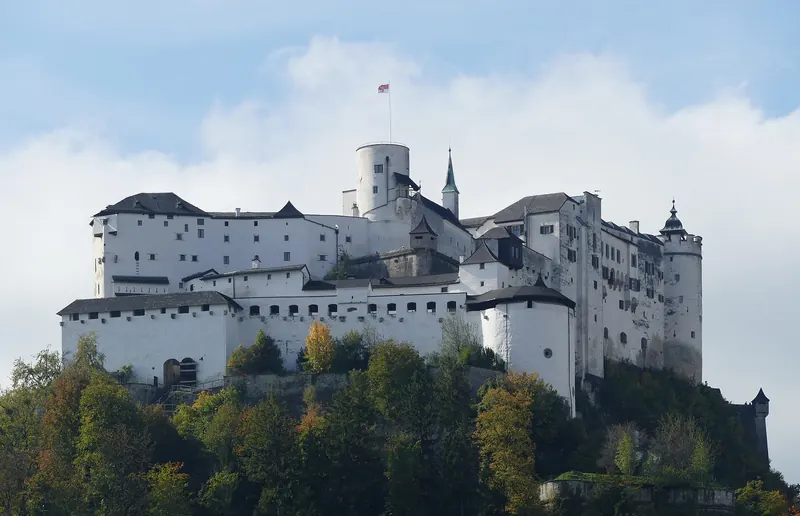
  1. Hohensalzburg Fortress crowning the hill above Salzburg's old town

    Hohensalzburg Fortress

    One of Europe's largest and best-preserved medieval fortresses, its hilltop position offering sweeping views over Salzburg and the surrounding mountains.

    Tip Take the funicular up and walk down for the easiest route, or hike up for a more rewarding, if steeper, approach.

  2. Mozart's Birthplace

    The house where Wolfgang Amadeus Mozart was born in 1756, now a well-curated museum of his early life and instruments.

    Tip Combine with Mozart's Residence, his family's later home, for a fuller picture of his life in the city.

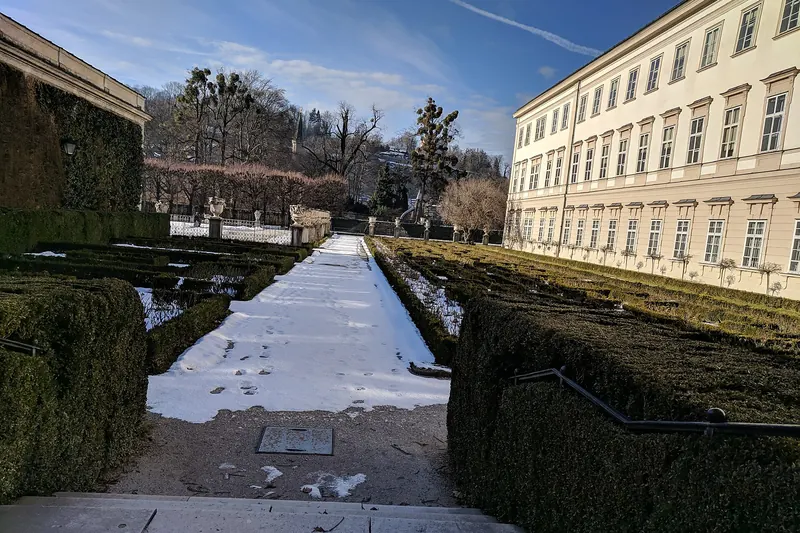
  3. The formal gardens of Mirabell Palace in Salzburg, with the fortress visible behind

    Mirabell Palace and Gardens

    A picturesque baroque garden with the fortress visible behind, famous as a Sound of Music filming location for the 'Do-Re-Mi' sequence.

    Tip The gardens are free to enter and worth an unhurried wander, not just a quick photo stop.

  4. Salzburg Cathedral

    A grand baroque cathedral at the heart of the old town, its dome and twin towers a defining part of Salzburg's skyline.

    Tip The cathedral excavations beneath the square reveal Roman-era foundations, a worthwhile add-on for the curious.

  5. Getreidegasse

    Salzburg's famous shopping street, its narrow medieval lane lined with wrought-iron guild signs, atmospheric even amid the tourist crowds.

    Tip Look up at the guild signs above each shop — many are centuries old and worth noticing beyond the busy street level.

  6. Hellbrunn Palace and Trick Fountains

    A playful 17th-century palace built for entertainment, its trick fountains designed to surprise unsuspecting visitors, a lighter counterpoint to the city's grander sights.

    Tip Wear clothes you don't mind getting wet — the trick fountains do catch visitors off guard.

Things to do

Best things to do in Salzburg

Beyond the old town's sights, Salzburg rewards its music scene and the Sound of Music countryside beyond the city.

  1. Take a Sound of Music tour

    Guided tours visit the film's key locations across Salzburg and the surrounding countryside, popular whether or not you know the film well.

    Tip A bicycle tour offers a more active, scenic way to cover the same locations than a bus tour.

  2. Attend a Mozart concert

    Regular concerts across the city, some in atmospheric historic venues, keep Mozart's music actively performed rather than only commemorated.

    Tip The Salzburg Marionette Theatre offers a unique, if unusual, way to experience Mozart's operas performed by puppets.

  3. Walk along the Salzach River

    The river dividing the old and new towns offers pleasant walking paths with views back toward the fortress and cathedral domes.

    Tip Cross the Mozartsteg pedestrian bridge for a classic photo angle of the old town skyline.

  4. Day trip to the Salzkammergut lakes

    Salzburg makes a convenient base for exploring nearby Alpine lakes, including Wolfgangsee and Fuschlsee, without committing to a full Hallstatt stay.

    Tip Wolfgangsee is reachable by bus in under an hour, an easy half-day trip from the city.

  5. Explore the Salzburg Museum

    A well-curated museum covering the city's history from Roman times through the prince-archbishop era, housed in the New Residence palace.

    Tip The included audio guide adds useful context, particularly for the prince-archbishop era's political history.

Local food

What to eat in Salzburg

Salzburg's food scene blends Austrian classics with a serious sweets tradition tied to its own local specialty.

  • Salzburger Nockerl

    A dramatic soufflé-style dessert, its three peaks said to represent the hills surrounding Salzburg, baked to order and served immediately.

    Where to try it Traditional restaurants across the old town, several specialising in this specific, theatrical dessert.

  • Mozartkugel

    An iconic marzipan, nougat and chocolate confection created in Salzburg and named for the city's most famous resident.

    Where to try it Café Fürst, the original creator, for an authentic handmade version over mass-produced imitations.

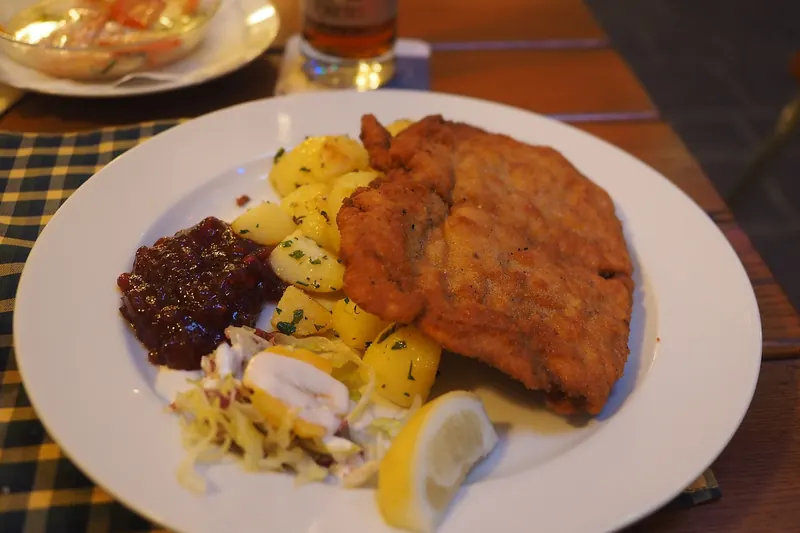
  • A Wiener schnitzel with parsley potatoes

    Wiener schnitzel

    Widely available across the city as elsewhere in Austria, good from Salzburg's traditional gasthauses.

    Where to try it Traditional restaurants throughout the old town.

  • Salzburg beer

    Austria's beer culture is serious, and Salzburg's own breweries, including the historic Augustiner Bräu, offer traditional beer garden settings.

    Where to try it Augustiner Bräustübl, an atmospheric monastery-run beer hall and garden.

  • Apfelstrudel

    Thin pastry rolled around spiced apple filling, a staple dessert across Salzburg's cafés and restaurants.

    Where to try it Traditional konditoreis throughout the old town.

Accommodation

Where to stay in Salzburg

Salzburg's old town and the newer district across the river both work as a convenient base.

  • Altstadt (old town)

    The most central, historic base, putting the fortress, cathedral and Getreidegasse within easy walking distance.

    Best for: Walking to all the major sights

  • Near Mirabell Gardens

    Just across the river from the old town, convenient with a slightly calmer, more residential feel.

    Best for: A quieter, still-central atmosphere

What a night costs

Hostel dorm
€25–40 per night
Mid-range hotel
€95–170 per night
Hohensalzburg Fortress entry (with funicular)
€17
Schnitzel dinner
€15–22

Transport

Getting to and around Salzburg

Salzburg Airport handles regional and some international flights, with fast trains connecting to Vienna and Munich.

Getting there

  • Salzburg Airport (SZG)

    About 20 minutes from the old town by bus or taxi, with limited direct international routes.

    Many visitors fly into Vienna or Munich and take a train onward instead.

  • Train from Vienna

    Fast Railjet trains connect Vienna to Salzburg in about 2.5 hours.

    Book Sparschiene discount fares ahead for meaningfully lower prices.

  • Train to Hallstatt

    A regional train and boat combination reaches Hallstatt in about 1.5–2 hours.

    Trains run regularly through the day, with the connecting boat timed to meet arrivals.

Getting around

Salzburg's old town is compact and walkable, with buses covering the wider city.

  • Walking

    The old town's fortress, cathedral and Getreidegasse all sit within a compact, walkable area.

    Comfortable shoes matter for the fortress hill's cobblestones and inclines.

  • Funicular

    The quickest way up to Hohensalzburg Fortress, sparing the steep walk.

    Combined fortress-and-funicular tickets are better value than paying separately.

  • City buses

    Cover the wider city and outlying sights like Hellbrunn Palace efficiently.

    A Salzburg Card covers transit alongside museum and attraction discounts.

When to go

Best time to visit Salzburg

Salzburg is pleasant most of the year, with spring and autumn offering the best balance of weather and crowds.

  • Spring (April–June)

    Best time

    Mild, increasingly warm weather, ideal for walking the old town and Mirabell Gardens.

  • Summer (July–August)

    Good

    Warm and reliable, though busy, particularly during the Salzburg Festival in late July and August.

  • Autumn (September–October)

    Best time

    Comfortable temperatures and thinning crowds, an excellent window for sightseeing.

  • Winter (November–March)

    Good

    Cold but atmospheric for the Christmas markets against the fortress backdrop.

Worth planning around: Late July through August without accommodation booked ahead, when the Salzburg Festival draws significant crowds and higher prices.

Itinerary

Two to three days in Salzburg

The fortress and old town first, then Mozart's legacy and the Sound of Music countryside.

  1. Day1

    The fortress and old town

    Salzburg's essential sights.

    • Morning Hohensalzburg Fortress, arriving early for the views.
    • Afternoon Salzburg Cathedral and Getreidegasse.
    • Evening Dinner beneath the fortress.
  2. Day2

    Mozart and the gardens

    The city's musical heritage.

    • Morning Mozart's Birthplace and Residence.
    • Afternoon Mirabell Palace and Gardens.
    • Evening A Mozart concert.
  3. Day3

    Sound of Music countryside or a lake day trip

    An optional third day beyond the old town.

    • Morning A Sound of Music tour or Hellbrunn Palace.
    • Afternoon A half-day trip to Wolfgangsee.
    • Evening A final Salzburg dinner.

Travel tips

Salzburg travel tips

Practical notes on booking, timing and transport that make a real difference to a Salzburg trip.

  • Book Hohensalzburg Fortress tickets combined with the funicular for the best value.
  • Book accommodation well ahead during the Salzburg Festival in late July and August.
  • Wear comfortable shoes for the fortress hill's cobblestones and inclines.
  • Check Mozart concert schedules ahead — smaller, historic venues sell out faster than expected.
  • Combine Salzburg with a Salzkammergut lake day trip if you don't have time for a full Hallstatt stay.
  • Dress warmly for winter visits — Salzburg's Alpine-adjacent climate turns cold.

FAQ

Salzburg: frequently asked questions

How many days do you need in Salzburg?

Two to three. Two covers the fortress and old town at a rushed pace; three allows a Sound of Music tour or lake day trip without feeling hurried.

Is Salzburg worth visiting if I don't know The Sound of Music?

Yes — the baroque old town, Hohensalzburg Fortress and Mozart's legacy all stand on their own, and the surrounding countryside is stunning regardless of the film connection.

How do I get from Salzburg to Hallstatt?

A regional train and boat combination covers it in about 1.5–2 hours, with trains running regularly through the day and a connecting boat timed to meet arrivals.

Is Salzburg expensive?

Comparable to the rest of Austria, running slightly below Vienna's capital-city premium — mid-range travel works out to roughly €85–150 per person per day.

What is the best time of year to visit?

April to June and September to October offer the most comfortable weather for sightseeing. Late July and August bring the Salzburg Festival's crowds and higher prices, worth booking well ahead for if that's your focus.

Read next

Related travel articles

Transport

Getting Around Europe by Train

European rail is excellent and confusing — six national operators, three completely different pricing models, and a rail pass that is either a bargain or a waste depending on where you are going. Here is how to work out which.

Where to go

Beyond the Big Names: Places Worth the Detour

The most visited place in a country is rarely its best, and it is almost never its best value. This is a method for finding the destinations that do not make the postcards — and a set of examples from five of the 50 countries on this site.

Advertisement