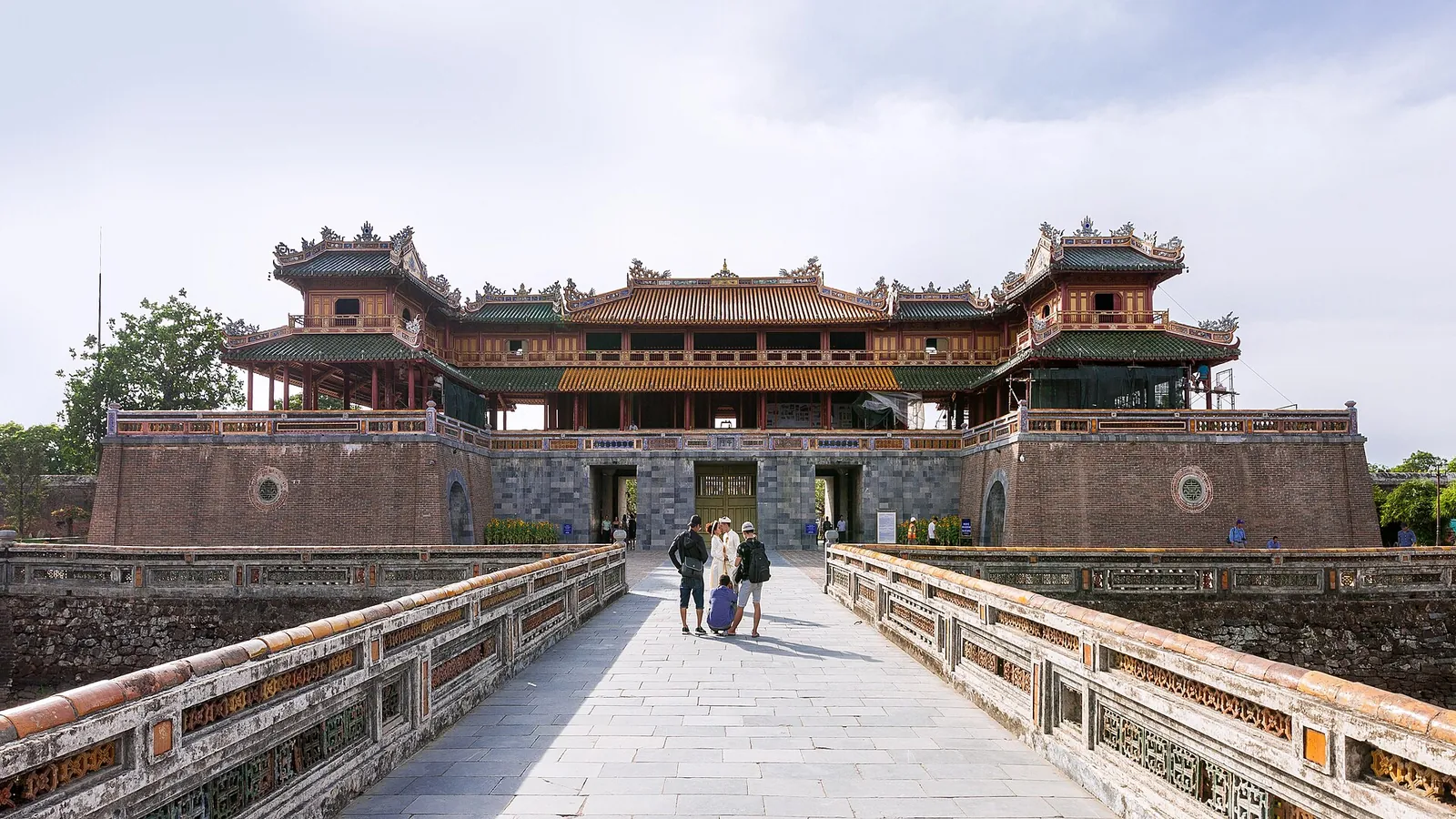
The Meridian Gate of the Imperial City in Hue

Perfume River, central Vietnam · Vietnam

Hue

The imperial capital of Vietnam's last dynasty: a walled citadel, royal tombs in pine forests, a pagoda on the Perfume River and the country's most refined cooking.

  • Best time February–August
  • Stay 2 days
  • Good for History, architecture, food, cycling, a quiet pace

Photo: Supanut Arunoprayote · CC BY 4.0

Welcome to Hue

Hue was the capital of Vietnam from 1802 to 1945, under the Nguyen dynasty, the last of the country's imperial families. Modelled on the Forbidden City in Beijing, the Imperial City, or Citadel, sits on the north bank of the Perfume River, surrounded by walls and moats. UNESCO inscribed the complex of Hue monuments in 1993.

Much of the palace area was damaged during the Battle of Hue in the 1968 Tet Offensive, and restoration continues. What survives, or has been rebuilt, includes the great Meridian Gate, the Thai Hoa throne hall and several temples and gardens, with more to see in the surrounding countryside. Along the river to the south are the tombs of the emperors, built as palaces of the afterlife among pines, lakes and pavilions.

Hue is quieter and more reserved than Hanoi or Ho Chi Minh City, a city of bicycles, river boats and slow lunches. It is also the birthplace of Vietnamese imperial cuisine, and its spicy beef noodle soup, bun bo Hue, is famous across the country.

  • UNESCO Site
  • Historic Site
  • Culture & Arts
  • Capital City

Why visit

Why visit Hue?

Hue is the best place in Vietnam to see imperial history and enjoy a slower pace.

  • The Imperial City

    A walled palace enclosure with ceremonial gates, halls and gardens, partly restored.

  • Royal tombs

    Each emperor designed his own tomb in a landscape of water, trees and buildings.

  • The Perfume River

    A calm river with dragon boats, riverside pagodas and cyclists.

  • Imperial cuisine

    Delicate dishes once served to the court, and hearty street food.

  • A gentle base

    Beaches, lagoons and the Hai Van Pass are all close by.

Main attractions

Top things to see in Hue

The main sights are the Imperial City and three or four tombs.

  1. The Imperial City (Citadel)

    A walled compound of about 500 hectares, entered by the Ngo Mon (Meridian Gate). Inside are the Thai Hoa Palace, temples, courtyards and gardens, some restored and some in ruins, including the Forbidden Purple City.

    Tip Allow half a day, and bring a hat.

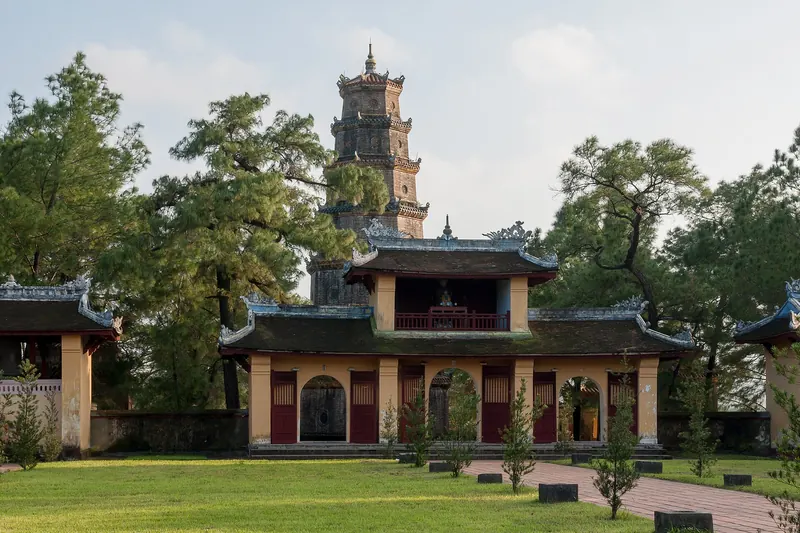
  2. The seven-storey Phuoc Duyen tower of Thien Mu Pagoda above the Perfume River

    Thien Mu Pagoda

    A 17th-century pagoda on a hill above the river, with a seven-storey octagonal tower. It is the symbol of Hue.

    Tip Go by boat or bicycle, and visit late in the afternoon.

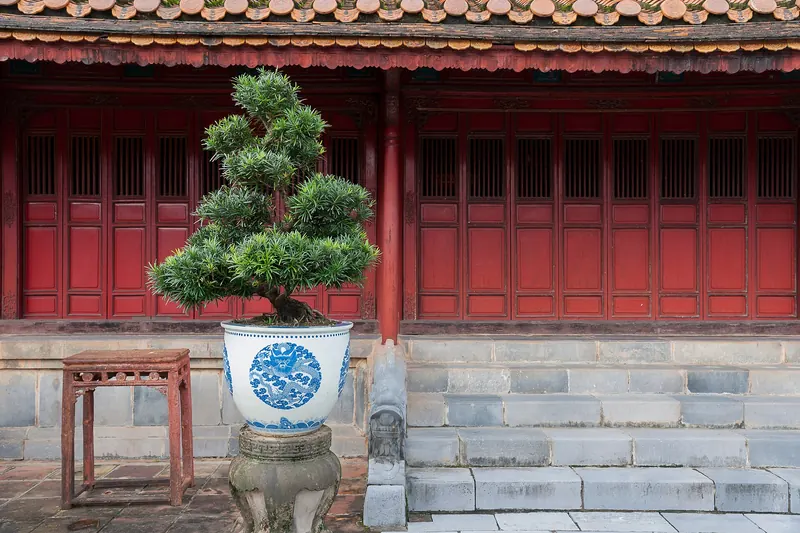
  3. Pavilions and a lake at the Tomb of Emperor Minh Mang in Hue

    The Tomb of Minh Mang

    A symmetrical and elegant tomb complex of courtyards, pavilions and a lake, built between 1840 and 1843.

    Tip Reach it by boat for the full experience.

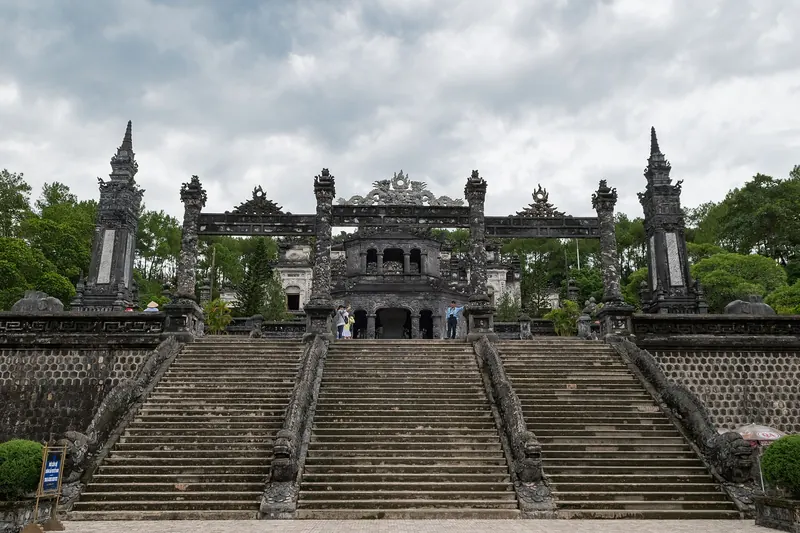
  4. The ornate concrete Tomb of Khai Dinh above terraced steps

    The Tomb of Khai Dinh

    The last of the great tombs, built in the 1920s in a mix of Vietnamese and European styles, with an ornate interior of glass and ceramic mosaics.

    Tip Climb to the top for the interior.

  5. The Tomb of Tu Duc

    A tranquil complex of lakes, pavilions and pine trees, built as a retreat during the emperor's life, and often considered the most romantic of the tombs.

    Tip Visit in the morning.

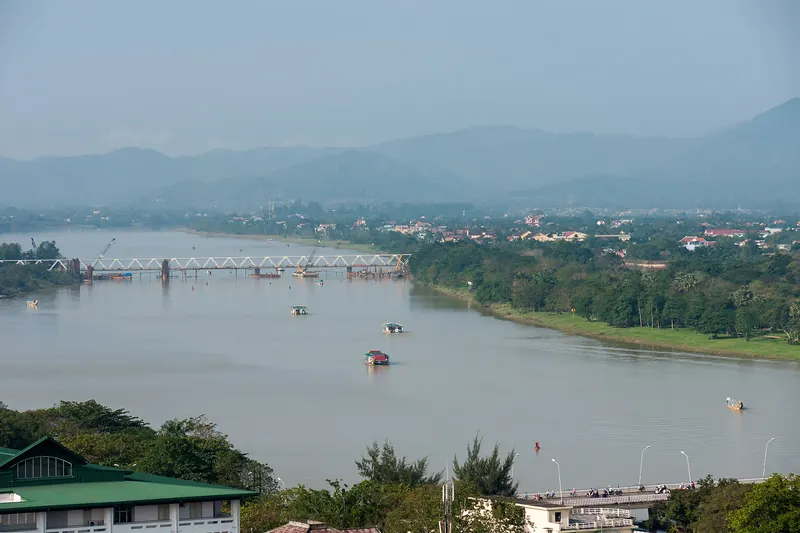
  6. Boats on the Perfume River in Hue

    The Perfume River and Dong Ba Market

    A slow river that flows through the city, with dragon boats for hire, and the busy Dong Ba Market on its bank.

    Tip A sunset boat trip is popular.

Things to do

Best things to do in Hue

Hue is a place for cycling, cooking and river trips.

  1. Visit the tombs by bicycle or boat

    A day trip along the river visits several tombs and the Thien Mu Pagoda.

    Tip Start early, and bring water.

  2. Take a cooking class

    Learn to make bun bo Hue and imperial dishes.

    Tip Book through your hotel.

  3. Try imperial dining

    Several restaurants serve elaborate multi-course menus in the style of the royal court.

    Tip Book ahead.

  4. Ride over the Hai Van Pass

    A spectacular road between Hue and Da Nang, with sea views.

    Tip Hire a car or an easy rider.

  5. See the Hue Festival

    A biennial arts festival with music and processions, usually in spring or summer.

    Tip Check the dates.

  6. Visit the Truong Tien Bridge at night

    The bridge over the river is lit in changing colours after dark.

    Tip A pleasant evening walk.

Local food

What to eat in Hue

Hue's food is known for spice, subtlety and small portions, a legacy of the imperial kitchens.

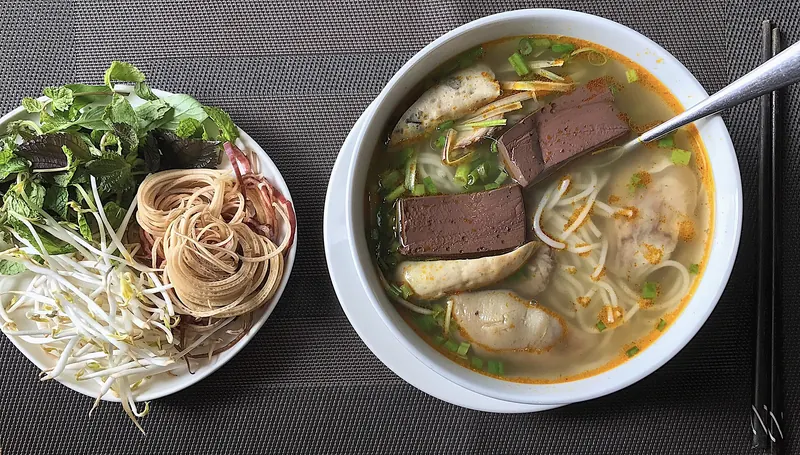
  • A bowl of spicy Hue-style beef noodle soup

    Bun bo Hue

    A spicy, lemongrass-scented beef and pork noodle soup with thick rice noodles.

    Where to try it Street stalls and family shops.

  • Banh khoai

    A crisp rice-flour pancake filled with shrimp, pork and bean sprouts, served with a peanut dipping sauce.

    Where to try it Local restaurants.

  • Com hen

    Rice with small river clams, herbs and chilli.

    Where to try it Restaurants on the river.

  • Banh beo and banh loc

    Small steamed rice cakes topped with shrimp and pork, served with fish sauce.

    Where to try it Specialist eateries.

  • Imperial cuisine

    Elaborate dishes, once served to the emperors, presented like art.

    Where to try it Restaurants in the old town.

Accommodation

Where to stay in Hue

Stay south of the river near the Perfume River for restaurants, or north for the Imperial City.

  • South bank (Le Loi street)

    Hotels and guesthouses along the river.

    Best for: Food, cafés and river views

  • Near the Citadel

    Small guesthouses in residential streets.

    Best for: Quiet

  • Countryside and river

    Resorts near the tombs.

    Best for: Spa retreats

What a night costs

Budget hotel
US$10–30 per night
Mid-range hotel
US$40–90 per night
Luxury hotel
US$120–300 per night
Meal at a local restaurant
US$2–8 per person

Transport

Getting to and around Hue

Hue is on the north-south railway, and has an airport.

Getting there

  • Flight to Phu Bai (HUI)

    Direct flights from Hanoi and Ho Chi Minh City.

    The airport is about 30 minutes from town.

  • Train

    The Reunification Express stops in Hue, about 13 hours from Hanoi and about 2.5 to 3 hours from Da Nang along a scenic coast.

    Book a seat by the window.

  • Road from Hoi An or Da Nang

    About 3 to 4 hours, with the option of stopping over the Hai Van Pass.

    Hire a driver.

Getting around

The town is small, and bicycles and boats are good options.

  • Bicycle

    A pleasant way to see the Citadel and nearby tombs.

    Watch the heat.

  • Grab and taxi

    Convenient for the tombs, some of which are a few kilometres away.

    Use the app.

  • Dragon boat

    A boat on the river connects several sights.

    Agree the price.

When to go

Best time to visit Hue

Hue is one of the wettest cities in Vietnam, with heavy rain and occasional flooding from September to December.

  • Spring (February–May)

    Best time

    Warm, dry and pleasant.

  • Summer (June–August)

    Good

    Hot, but usually dry.

  • Autumn (September–December)

    Think twice

    Heavy rain, typhoons and flooding.

  • Winter (January)

    Quiet

    Cool and drizzly.

Worth planning around: October to December, the wettest and most flood-prone months.

Itinerary

Two days in Hue

The citadel on the first day, and the tombs and river on the second.

  1. Day1

    The Imperial City

    Palaces and food.

    • Morning The Imperial City.
    • Afternoon Dong Ba Market and a cooking class.
    • Evening Imperial-style dinner.
  2. Day2

    Tombs and river

    Royal tombs and a pagoda.

    • Morning Tomb of Minh Mang and Khai Dinh.
    • Afternoon Thien Mu Pagoda by boat.
    • Evening Bun bo Hue and a river walk.

Travel tips

Hue travel tips

A few tips make the visit smoother.

  • Start early. It gets hot by late morning.
  • Choose the tombs you want to see. Visiting all takes a full day.
  • Hire a guide for the Imperial City, where signs are limited.
  • Bring a raincoat outside the dry months.
  • Check whether tombs are open, and their opening times.
  • Try bun bo Hue at breakfast.
  • Dress modestly at pagodas.

FAQ

Hue: frequently asked questions

How many days do you need in Hue?

Two days lets you see the Imperial City, three tombs and the pagoda.

Is Hue worth visiting?

Yes, for its imperial history and food. It is a good stop between Hanoi and Hoi An.

Which tombs should I visit?

Minh Mang for symmetry, Khai Dinh for architecture and Tu Duc for atmosphere.

What is the best time to visit?

February to August. Autumn is wet and often flooded.

How do I get from Hue to Hoi An?

By car over the Hai Van Pass, about 3 to 4 hours, or by train to Da Nang and a taxi.

Is the Imperial City fully restored?

No. Some areas were rebuilt and others remain ruins after damage in the 1968 battle.

Read next

Related travel articles

Heritage

UNESCO Sites Worth Planning a Trip Around

A UNESCO listing tells you a place matters; it does not tell you whether it is worth two days and a detour. This is how to read the list usefully — and which sites reward building a trip around them.

Food

A Country-by-Country Food Primer

Eating well abroad is mostly a matter of knowing when meals happen, how the menu is structured and which dish belongs to the place you are standing in. This covers all three for the five countries in this guide, plus the signals that separate a restaurant that feeds locals from one that feeds coaches.

Advertisement