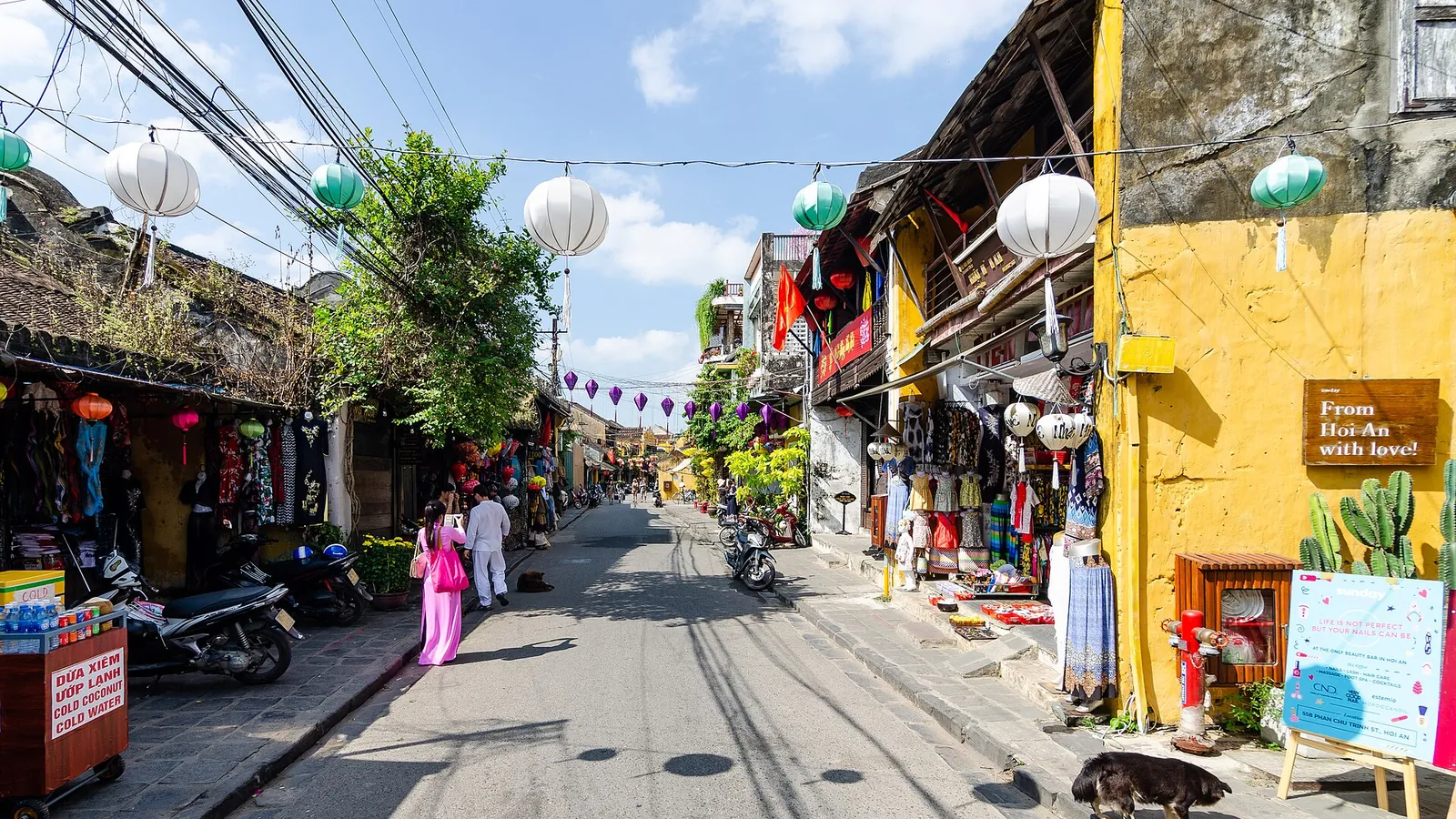
Yellow-walled houses and hanging lanterns in the ancient town of Hoi An

Central coast, near Da Nang · Vietnam

Hoi An

A perfectly preserved trading port of yellow shophouses, silk lanterns and river reflections, with tailors, cooking classes and rice paddies on the doorstep.

  • Best time February–May
  • Stay 3 days
  • Good for Food, culture, cycling, shopping, a relaxed pace

Photo: Steffen Schmitz (more photos) · CC BY-SA 4.0

Welcome to Hoi An

Hoi An was a major Southeast Asian trading port from the 15th to the 19th century, where Chinese, Japanese, Dutch and European merchants came for silk, ceramics and spices. When the river silted up and the trade moved to Da Nang, the town slipped into quiet decline, and its wooden shophouses, temples and assembly halls were left largely untouched. UNESCO inscribed the ancient town in 1999.

Today the old town is a compact, largely pedestrian area of low, ochre-yellow buildings, tiled roofs and narrow lanes, with lanterns in every colour lit at night. Chinese assembly halls, merchants' houses and the famed Japanese Covered Bridge give the town its character, while restaurants, cafés and tailors fill the ground floors.

Hoi An is touristy, but it remains charming, especially early in the morning and away from the busiest lanes. Beyond the old town are rice paddies, riverside villages, the beaches of An Bang and Cua Dai, and the Cham ruins of My Son, and it is a good base for several days.

  • UNESCO Site
  • Historic Site
  • Culture & Arts
  • Coast & Beaches

Why visit

Why visit Hoi An?

Hoi An is the most beautiful town in Vietnam, and a highlight for most visitors.

  • A preserved trading town

    Wooden houses, assembly halls and pagodas from the 17th and 18th centuries.

  • Lantern nights

    The old town is lit by silk lanterns each evening, and on full-moon nights the electric lights are switched off.

  • Superb food

    Cao lau, white rose dumplings, banh mi and chicken rice are local specialities.

  • Tailors and crafts

    Made-to-measure clothes, shoes and leather goods at good prices.

  • Beaches and countryside

    Cycling through rice paddies, and An Bang beach five kilometres away.

Main attractions

Top things to see in Hoi An

The old town is small and can be covered in a day, but its pleasures come from wandering.

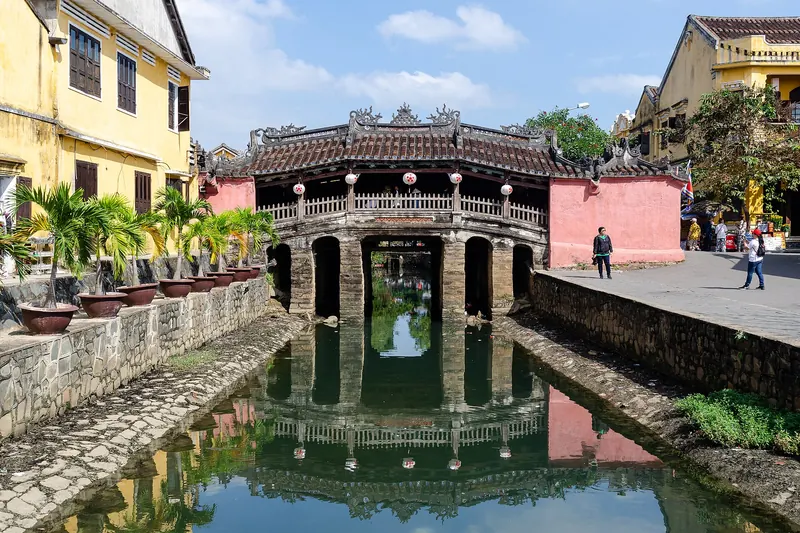
  1. The covered Japanese Bridge in Hoi An with its curved roof

    The Japanese Covered Bridge

    A roofed wooden bridge from the late 16th century, said to have been built by the Japanese community, with a small temple inside. It is the symbol of Hoi An.

    Tip The bridge is part of the old-town ticket.

  2. Merchants' houses and assembly halls

    Old houses such as Tan Ky, and the Chinese assembly halls of the Fujian, Cantonese and other communities, decorated with carved wood and colourful tiles.

    Tip The old-town ticket covers a choice of sites.

  3. The night market and lantern river

    In the evenings, the Hoai River fills with candle-lit boats and the bank with lanterns and stalls.

    Tip Go early to see the town before crowds.

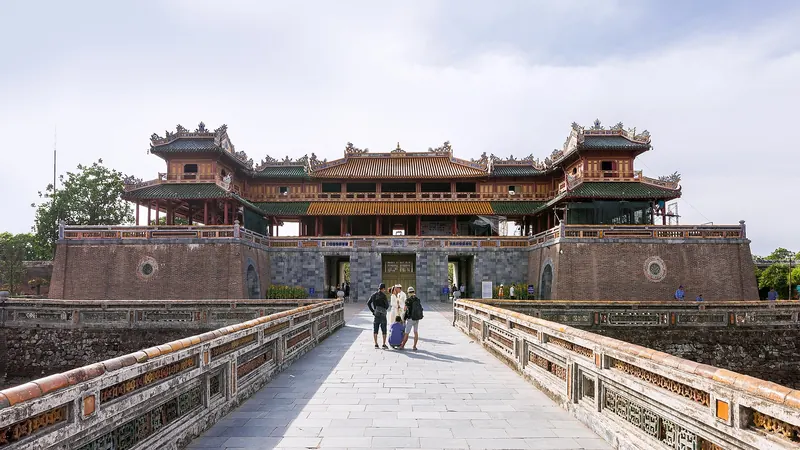
  4. Brick towers of the Cham temple complex at My Son

    My Son Sanctuary

    A UNESCO-listed complex of Hindu temples of the Cham kingdom from the 4th to 13th centuries, about 40 km from Hoi An, partly damaged by bombing in the 1960s.

    Tip Go early to avoid the heat.

  5. An Bang Beach

    A relaxed beach about 5 km from town, with seafood restaurants and beach clubs.

    Tip Go by bicycle.

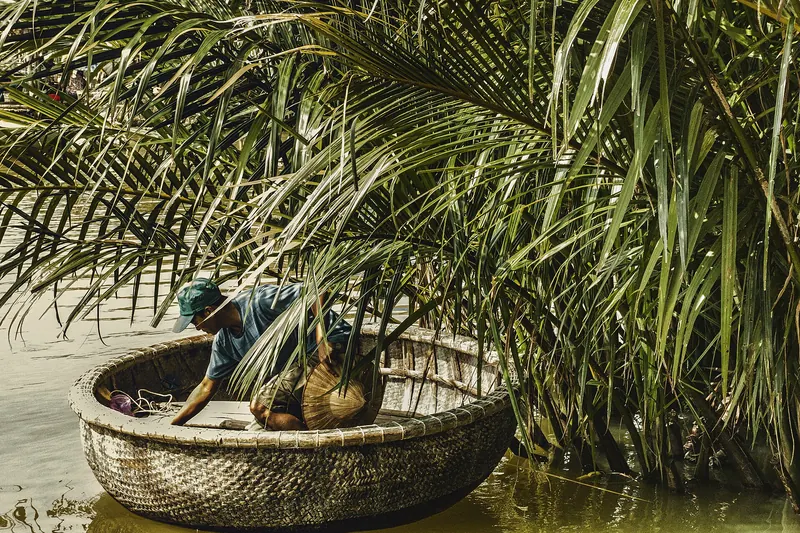
  6. A round basket boat among the nipa palms at Cam Thanh near Hoi An

    Cam Thanh coconut village

    A water-coconut forest where round basket boats are paddled through narrow channels.

    Tip The experience is touristy but fun.

Things to do

Best things to do in Hoi An

Hoi An suits slow days of walking, eating and cycling.

  1. Get clothes made

    Hundreds of tailors will make shirts, dresses and suits in 24 to 48 hours.

    Tip Allow time for fittings, and choose a tailor with good reviews.

  2. Take a cooking class

    Learn to make local dishes, often after a market visit and a boat ride.

    Tip Book a morning class.

  3. Cycle through the rice fields

    Bicycles are free at many hotels, and quiet lanes lead to villages and the beach.

    Tip Go in the early morning.

  4. Float a lantern

    Buy a paper lantern and set it on the river at night.

    Tip Best on full-moon nights.

  5. Try a craft workshop

    Lantern-making, pottery at Thanh Ha or woodcarving at Kim Bong.

    Tip Ask your hotel.

  6. Go to the beach

    Swim and eat seafood at An Bang.

    Tip Swimming is best from March to August.

Local food

What to eat in Hoi An

Hoi An's food is a highlight, with several dishes found only here.

  • Cao lau

    Chewy noodles with pork, greens and crisp croutons, made with local ash water.

    Where to try it Market stalls and small restaurants.

  • White rose dumplings

    Delicate steamed shrimp dumplings shaped like flowers.

    Where to try it Specialist restaurants.

  • Banh mi

    Hoi An's baguettes are among the best in Vietnam.

    Where to try it Bakeries near the market.

  • Com ga (chicken rice)

    Rice cooked in chicken stock and topped with shredded poached chicken and herbs.

    Where to try it Local restaurants.

  • Mi quang

    Turmeric noodles with pork or shrimp, peanuts and rice crackers.

    Where to try it Market stalls.

  • Fresh juice and coffee

    Smoothies, coconut coffee and iced Vietnamese coffee.

    Where to try it Cafés in the old town.

Accommodation

Where to stay in Hoi An

Stay in or near the old town for atmosphere, or near the beach for space.

  • Old town and around

    Boutique hotels, guesthouses and homestays.

    Best for: Walking to everything

  • Countryside near the old town

    Rice-paddy hotels a short cycle from the centre.

    Best for: Quiet and pools

  • An Bang and Cua Dai beach

    Beachside hotels and resorts.

    Best for: The sea

What a night costs

Budget hotel or homestay
US$15–35 per night
Mid-range hotel
US$45–110 per night
Luxury resort
US$150–400 per night
Meal at a local restaurant
US$3–10 per person

Transport

Getting to and around Hoi An

Hoi An has no airport or railway station, and most travellers arrive via Da Nang.

Getting there

  • Flight to Da Nang (DAD)

    Direct flights from Hanoi, Ho Chi Minh City and international destinations. The transfer to Hoi An takes about 45 minutes.

    Use Grab or a hotel shuttle.

  • Train to Da Nang

    The Reunification Express stops at Da Nang, with the scenic Hue to Da Nang stretch.

    Continue by taxi or bus.

  • From Hue over the Hai Van Pass

    About 4 hours by car, with stops, on the scenic coastal road.

    Hire a driver for the day.

Getting around

The old town is pedestrian-friendly, and bicycles are the best way to reach the countryside and beach.

  • Walking

    The old town is small, and motor vehicles are restricted in parts.

    Watch for bicycles and motorbikes.

  • Bicycle

    Free or cheap at most hotels.

    The best way to reach An Bang.

  • Grab

    Cars and motorbikes for longer trips.

    Use the app.

When to go

Best time to visit Hoi An

Hoi An has a tropical monsoon climate, with heavy rain and occasional flooding from October to December.

  • Spring (February–May)

    Best time

    Warm, dry and sunny, ideal for the beach and the old town.

  • Summer (June–August)

    Good

    Hot, sunny and humid.

  • Autumn (September–December)

    Think twice

    Wet, typhoon-prone and often flooded, particularly in October and November.

  • Winter (January)

    Good

    Cool and showery, with fewer visitors.

Worth planning around: October and November, when flooding is common and the old town can be under water.

Itinerary

Three days in Hoi An

The old town, a day in the countryside and a day at My Son and the coast.

  1. Day1

    The old town

    Bridges and lanterns.

    • Morning The Japanese Bridge and merchants' houses.
    • Afternoon A tailor visit and lunch.
    • Evening Lanterns and dinner by the river.
  2. Day2

    Countryside and cooking

    Rice fields and a class.

    • Morning Cycle to the rice paddies and Cam Thanh.
    • Afternoon A cooking class.
    • Evening A last fitting, and dinner.
  3. Day3

    My Son and the beach

    Ruins and the sea.

    • Morning The My Son Sanctuary.
    • Afternoon An Bang Beach.
    • Evening Farewell dinner.

Travel tips

Hoi An travel tips

Hoi An is easy, and a few tips help.

  • Buy an old-town ticket, needed to enter many sites. Check rules and prices, which change.
  • Go early in the morning, when the old town is quiet.
  • Choose a tailor by reviews, and allow at least two fittings.
  • Check the weather in the wet season, as floods happen.
  • Bring cash for small shops, and carry small notes.
  • Visit My Son early, before the heat.
  • Consider staying a little outside the old town to escape the noise.

FAQ

Hoi An: frequently asked questions

How many days do you need in Hoi An?

Three days is ideal: one for the old town, one for the countryside or a class, and one for My Son and the beach.

Do I need to buy a ticket for the old town?

Yes, a ticket is required to enter many of the main sights. Rules and prices change, so check locally.

Is it worth getting clothes made?

Yes, if you choose a good tailor and allow time. Quality varies, so read reviews.

What is the best time to visit Hoi An?

February to May. Autumn is wet and prone to floods.

How far is Hoi An from Da Nang?

About 30 km, or 45 minutes by taxi.

Is Hoi An crowded?

It can be at midday and in the evenings. Mornings are much calmer.

Read next

Related travel articles

Food

A Country-by-Country Food Primer

Eating well abroad is mostly a matter of knowing when meals happen, how the menu is structured and which dish belongs to the place you are standing in. This covers all three for the five countries in this guide, plus the signals that separate a restaurant that feeds locals from one that feeds coaches.

Practical

Packing by Season and Trip Type

Most packing advice is a list of things. This is the opposite: the small number of decisions that determine whether your luggage helps or hinders, organised by the kind of trip you are actually taking.

Advertisement