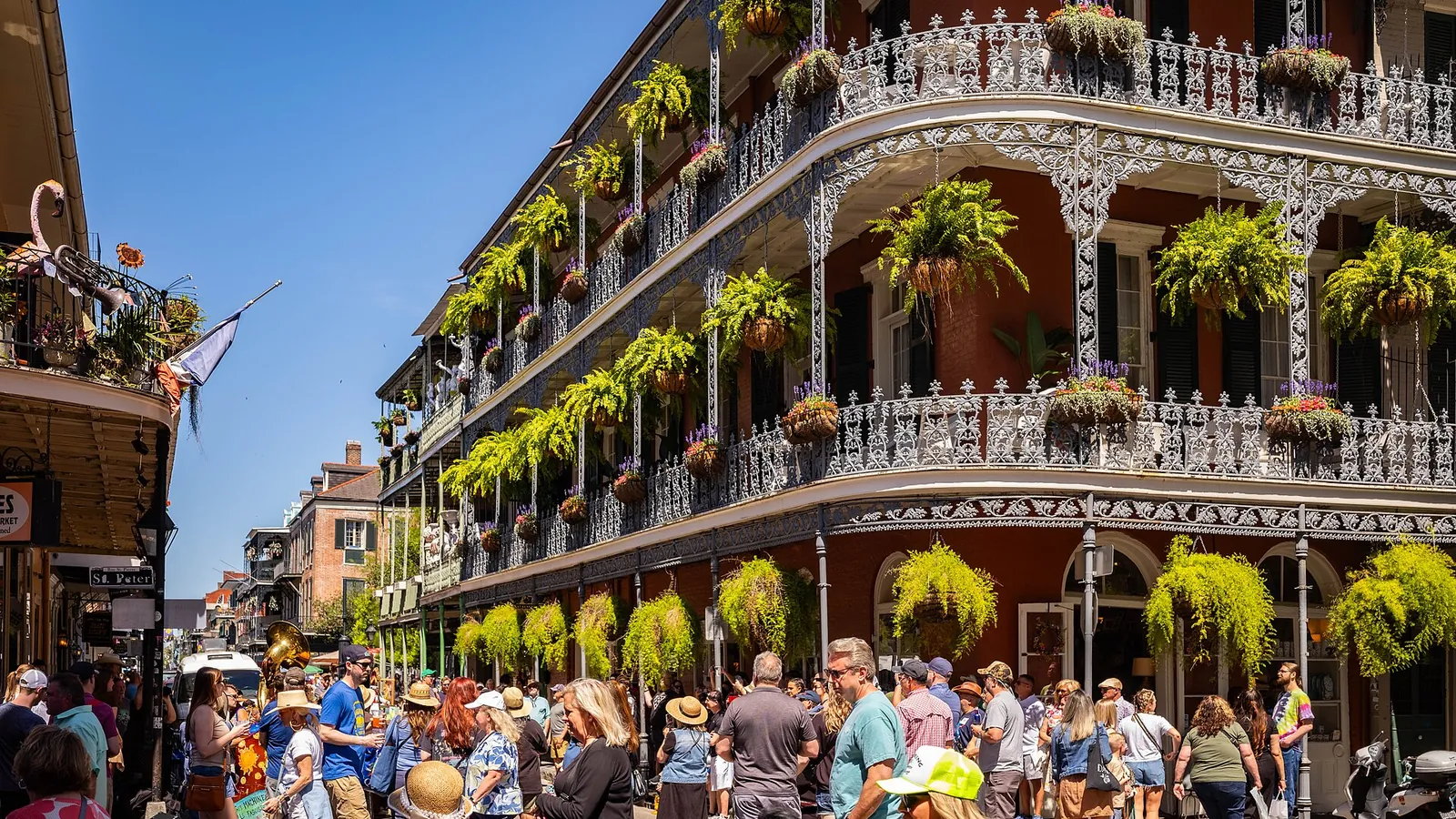
Cast-iron balconies hung with plants above a busy street in the French Quarter of New Orleans

Louisiana · United States

New Orleans

French, Spanish, West African and Caribbean, on a bend in the Mississippi — the least American-feeling city in America, and the one with the best food.

  • Best time February–May and October–November
  • Stay 4 days
  • Good for Food, live music, architecture, walking

Photo: rboed* · CC BY 2.0

Welcome to New Orleans

New Orleans was founded by the French in 1718, handed to Spain in 1763, returned to France in 1800 and sold to the United States three years later as part of the Louisiana Purchase. That sequence explains most of the city: the street names, the Catholic rather than Protestant character, the legal system that still uses French civil law concepts, and the fact that it feels less like the rest of America than any other major city in the country.

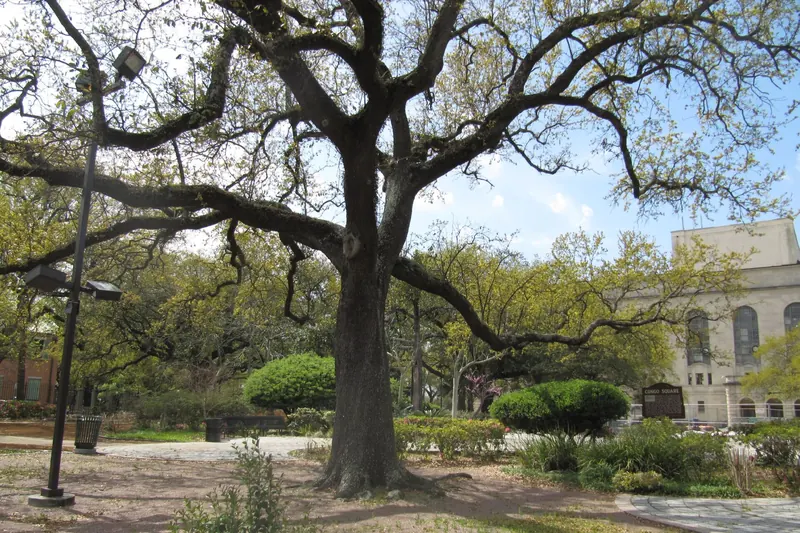
The deeper influence is West African and Caribbean. Enslaved people brought from Senegambia and the Bight of Benin, and free people of colour arriving from Saint-Domingue after the Haitian Revolution, shaped the food, the music and the religious practice. Congo Square, where enslaved people were permitted to gather and drum on Sundays, is generally credited as a birthplace of what became jazz. That lineage runs directly to the brass bands playing on Frenchmen Street tonight.

It is also a city built in a bowl below sea level between a river and a lake, which is why Hurricane Katrina's levee failures in 2005 flooded 80% of it and why the recovery is still visibly uneven twenty years on. Visitors who stay only in the French Quarter — which is on high ground and barely flooded — see a lovely and quite partial version of the place.

  • Major City
  • Culture & Arts
  • Food & Wine
  • Historic Site

Why visit

Why visit New Orleans?

New Orleans has the most distinctive culture of any American city, and it is concentrated enough to experience properly in four days.

  • The food is the best in the country

    Creole and Cajun cooking is a genuine fusion — French technique, Spanish and Caribbean ingredients, West African methods — and produces gumbo, jambalaya, étouffée, po'boys and beignets. It exists nowhere else and the standard at ordinary restaurant level is extraordinarily high.

  • Live music is nightly and everywhere

    Jazz, brass, funk, zydeco and blues, seven nights a week, in rooms that hold forty people and often charge nothing at the door. Frenchmen Street has half a dozen venues within two blocks.

  • The architecture is unlike anywhere in America

    The French Quarter's Spanish-built courtyards and cast-iron balconies, the Garden District's antebellum mansions under live oaks, and the shotgun houses of the Bywater and Tremé. Little of it looks American.

  • It is compact and walkable

    The French Quarter is thirteen blocks by six. The Garden District is a streetcar ride along one of the oldest continuously operating lines in the world. You can see most of the city on foot and by tram.

  • The festivals are world-class

    Mardi Gras is the famous one, but Jazz Fest in late April and early May is arguably the better event, and the city runs some kind of festival most weekends of the year.

Main attractions

Top things to see in New Orleans

The French Quarter is the obvious centre but the city extends well beyond it, and the neighbourhoods either side are where much of the interest is.

  1. The French Quarter

    The original 1718 city, thirteen blocks by six, though most of what stands is Spanish colonial — the French buildings burned in fires of 1788 and 1794. Cast-iron balconies, hidden courtyards, and Jackson Square in front of St Louis Cathedral.

    Tip Walk the residential lower Quarter — Royal, Chartres and Dauphine below St Ann — rather than Bourbon Street, which is a drinking strip and nothing more.

  2. Music bars along Frenchmen Street

    Frenchmen Street

    Three blocks in the Marigny just past the Quarter, holding the city's real live music scene: jazz, brass, funk and blues in small rooms, many with no cover charge, running from early evening until very late.

    Tip Start around 20:00 and move between venues. The Palace Market art market on the street runs most evenings.

  3. A St Charles streetcar under the live oaks

    The Garden District and St Charles streetcar

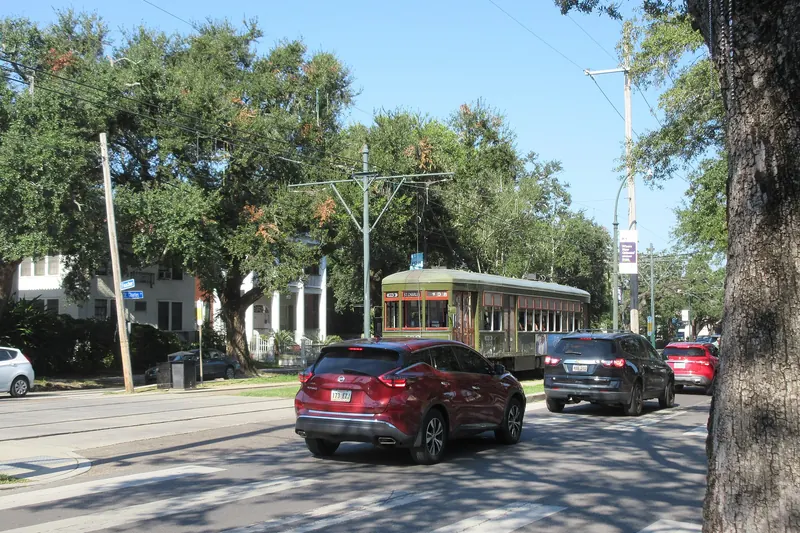
    Antebellum mansions under live oaks hung with Spanish moss, reached on a green streetcar that has run this route since 1835 — one of the oldest continuously operating street railways in the world. Lafayette Cemetery No. 1 sits in the middle of it.

    Tip Ride the whole St Charles line to Audubon Park and walk back through the district. The fare is $1.25 and the ride takes 40 minutes.

  4. The National WWII Museum in New Orleans

    The National WWII Museum

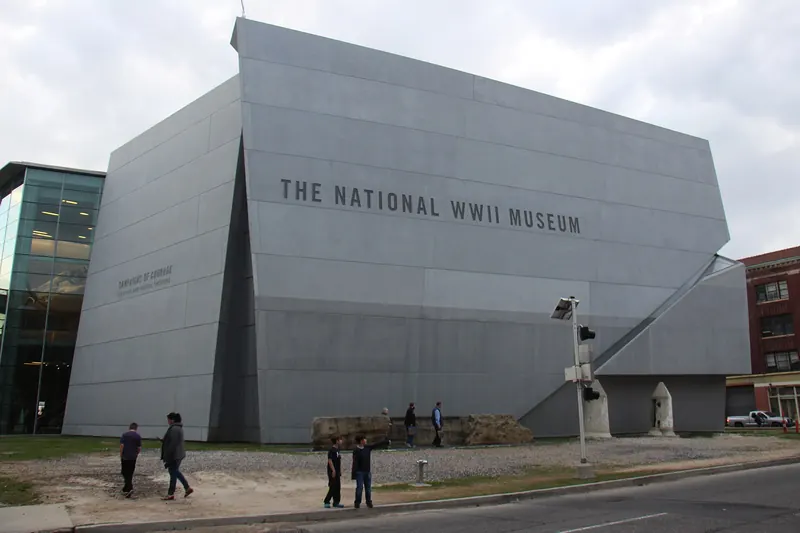
    Consistently rated among the best museums in the United States, built here because the landing craft used on D-Day were designed and manufactured in New Orleans. Immersive, extensive and excellent.

    Tip Allow four hours minimum. The Road to Berlin and Road to Tokyo galleries are the strongest parts.

  5. Congo Square in Tremé

    Tremé and Congo Square

    One of the oldest African American neighbourhoods in the United States, immediately north of the Quarter. Congo Square in Louis Armstrong Park is where enslaved people gathered to drum on Sundays, and is a plausible birthplace of jazz.

    Tip The Backstreet Cultural Museum documents Mardi Gras Indians and jazz funerals, and is small, personal and excellent.

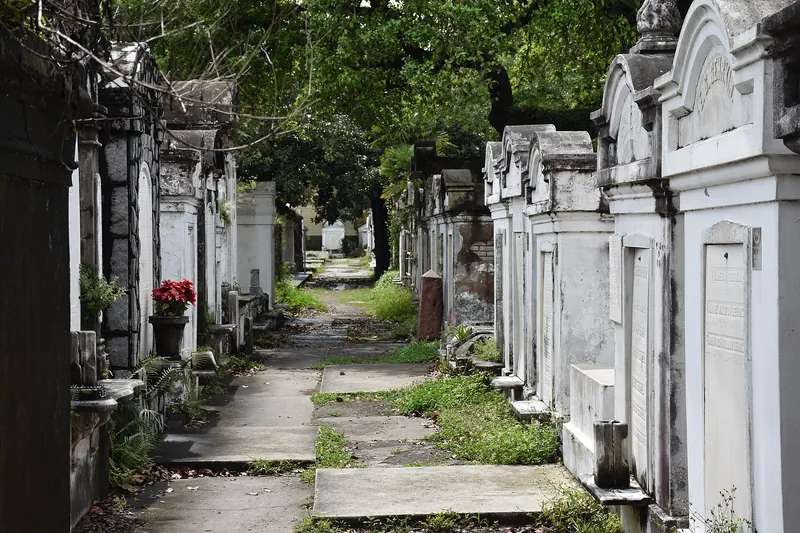
  6. Above-ground tombs at Lafayette Cemetery No. 1

    The cemeteries

    Above-ground tombs built because the water table is too high for burial, arranged in what look like small streets. St Louis No. 1 holds Marie Laveau's tomb and requires a licensed guide; Lafayette No. 1 in the Garden District is more accessible.

    Tip St Louis No. 1 can only be entered with an authorised guide. Book through the archdiocese or a licensed tour.

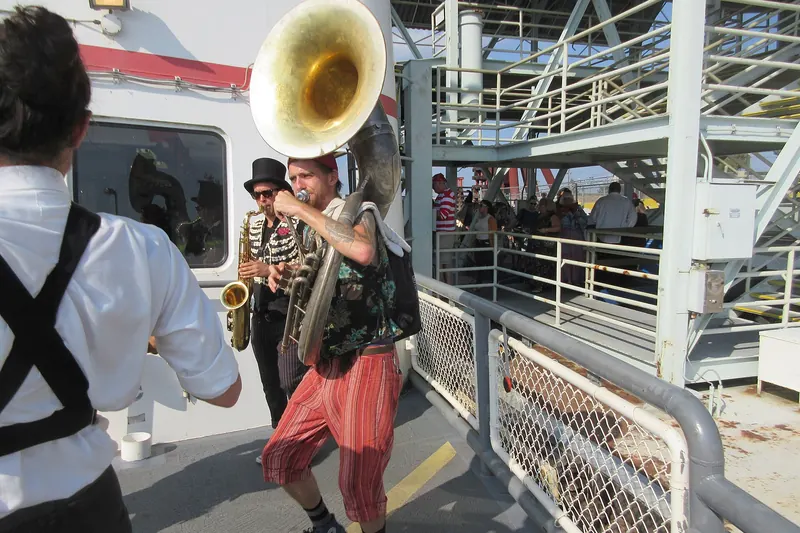
  7. Crossing the Mississippi on the Algiers ferry

    The Mississippi and the Algiers ferry

    The river is 700 metres wide here and the free — or near-free — ferry to Algiers Point gives you the skyline from the water and a quiet 19th-century neighbourhood on the far bank.

    Tip Far better value than the paddle-steamer cruises, and Algiers Point is a pleasant hour.

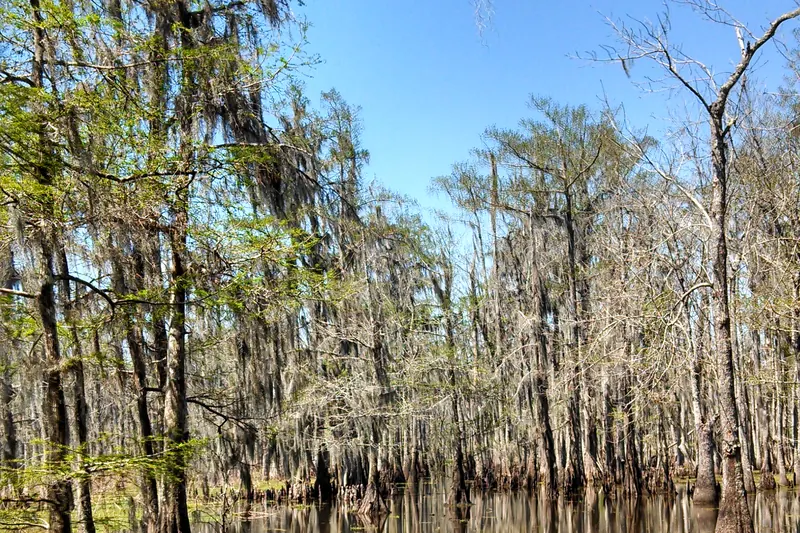
  8. Cypress swamp in the Louisiana bayou

    The swamps and plantations

    Bayou country begins 40 minutes west, with airboat and flat-boat tours through cypress swamps. On the River Road, Whitney Plantation is a museum told from the perspective of the enslaved, and is unlike any other site of its kind.

    Tip Whitney is the one plantation worth visiting and is deliberately uncomfortable. It is about an hour from the city.

Things to do

Best things to do in New Orleans

Eating and listening are the two main activities, and both are best done by moving around rather than settling in one place.

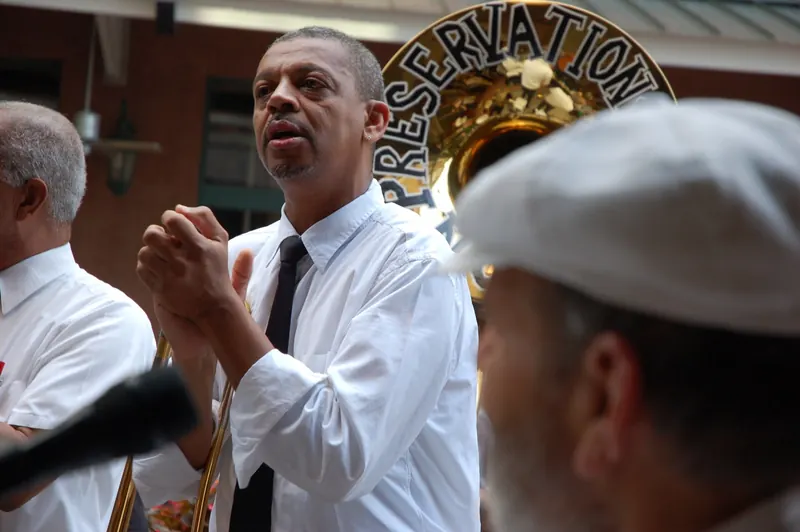
  1. A jazz band playing at Preservation Hall

    Hear live music every night

    Frenchmen Street for jazz and brass, Preservation Hall for traditional jazz in a bare room with no amplification, and neighbourhood bars in the Bywater and Tremé for the local version.

    Tip Preservation Hall sells timed tickets and has no drinks, no air conditioning and mostly no seats. It is 45 minutes and worth it.

  2. Eat a po'boy and a bowl of gumbo

    The po'boy is fried shrimp or oysters, or slow-roast beef with gravy, on crisp Leidenheimer French bread. Gumbo is a dark roux-based stew with okra or filé. Both are everyday food rather than special-occasion.

    Tip 'Dressed' means lettuce, tomato, pickle and mayonnaise. Say yes.

  3. Ride the St Charles streetcar

    Forty minutes through the Garden District and Uptown beneath live oaks, on wooden-seated cars that have run since 1923 on a line dating to 1835. It costs $1.25 and is one of the best things in the city.

    Tip Sit on the left heading uptown for the mansion side. Board at Canal Street.

  4. Take a cemetery or Tremé walking tour

    The above-ground tombs and the neighbourhoods' history are both much better with a guide. Tremé tours in particular put the music and the civil rights history in context that self-guided walking cannot.

    Tip Choose a locally owned operator. The city has a lot of tour companies and the quality varies enormously.

  5. Go out into the swamp

    Cypress swamps, Spanish moss, alligators and herons, 40 minutes west of the city. Flat-boat tours are quieter and better for wildlife than the loud airboats.

    Tip Morning trips see more wildlife. Alligators are inactive below about 20°C, so winter trips see few.

  6. Visit during a festival — or deliberately not

    Mardi Gras in February or March and Jazz Fest in late April are the big two, and both transform the city. Outside them, French Quarter Fest in April is free and locals often prefer it.

    Tip Mardi Gras accommodation books a year ahead at three or four times normal rates. Decide early which side of that you want to be on.

Local food

What to eat in New Orleans

Creole is the city cooking — French-influenced, using tomatoes, butter and cream. Cajun is the country cooking of the bayous — darker roux, more pepper, one-pot. Both are excellent and locals distinguish them carefully.

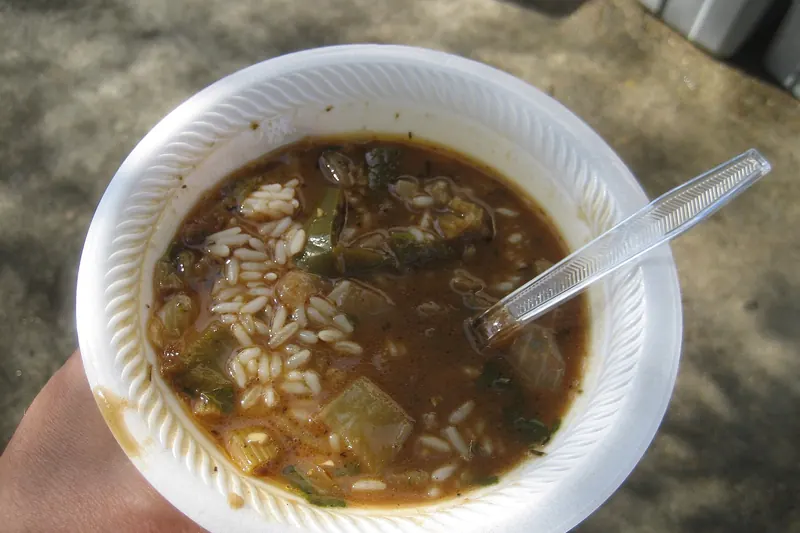
  • Chicken and andouille gumbo over rice

    Gumbo

    A stew built on a roux cooked from blond to dark chocolate, thickened with okra or filé powder, with seafood, chicken and andouille sausage, served over rice. The single most important dish in Louisiana cooking.

    Where to try it Everywhere. Seafood gumbo in the city, chicken and sausage in the country, and every family has opinions.

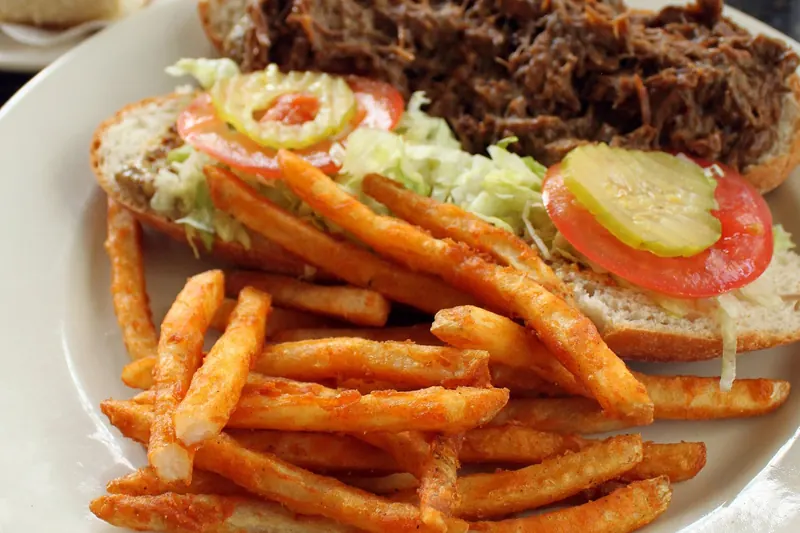
  • A Louisiana po'boy on French bread

    The po'boy

    Fried shrimp, oysters, catfish or slow-roast beef with gravy, on light, crisp Leidenheimer French bread. Named for striking streetcar workers — 'poor boys' — who were fed free in 1929.

    Where to try it Neighbourhood po'boy shops in Uptown, Mid-City and the Bywater rather than the Quarter.

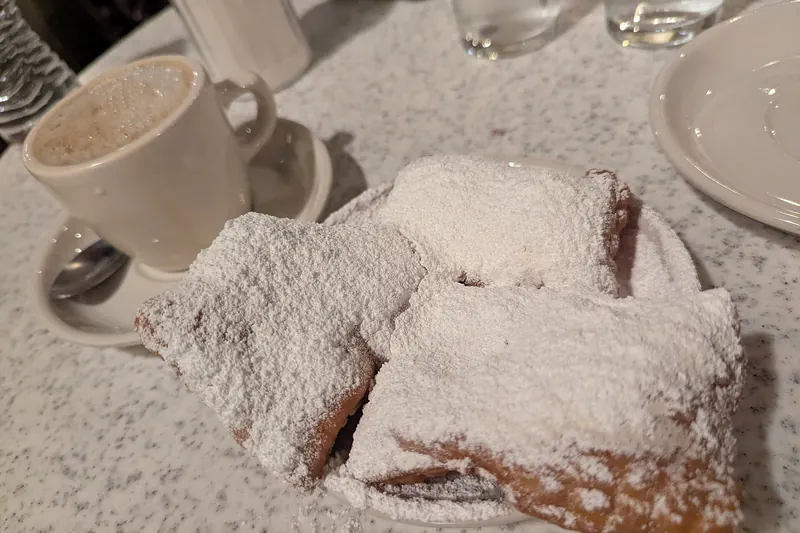
  • Beignets buried in icing sugar at Café du Monde

    Beignets

    Square doughnuts, deep fried and buried under icing sugar, served three at a time with chicory coffee. A French colonial inheritance and the city's standard breakfast or 02:00 snack.

    Where to try it Café du Monde in the French Market, open 24 hours, and its quieter branches elsewhere in the city.

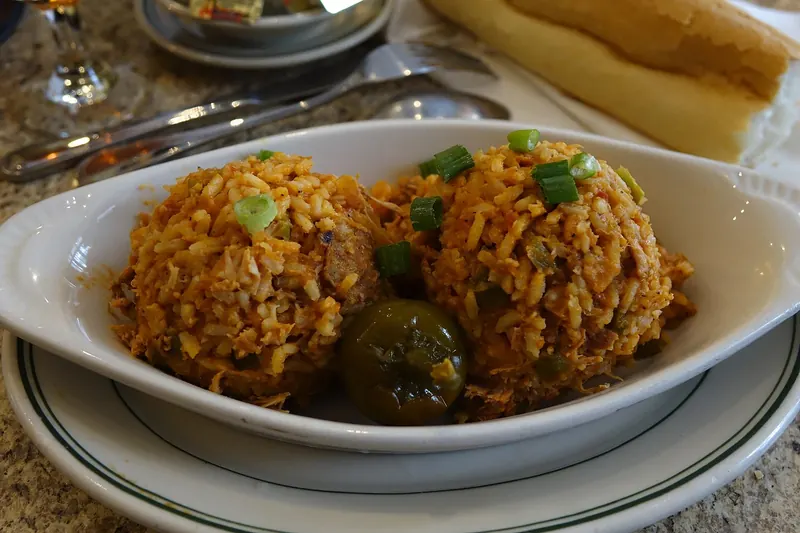
  • Jambalaya cooked with meat and rice in one pot

    Jambalaya and étouffée

    Jambalaya is rice cooked with meat and stock in one pot, a relative of paella. Étouffée is crawfish or shrimp smothered in a butter-and-roux sauce and served over rice. Both are staples rather than specialities.

    Where to try it Creole restaurants across the city. Crawfish étouffée is best in spring when crawfish are in season.

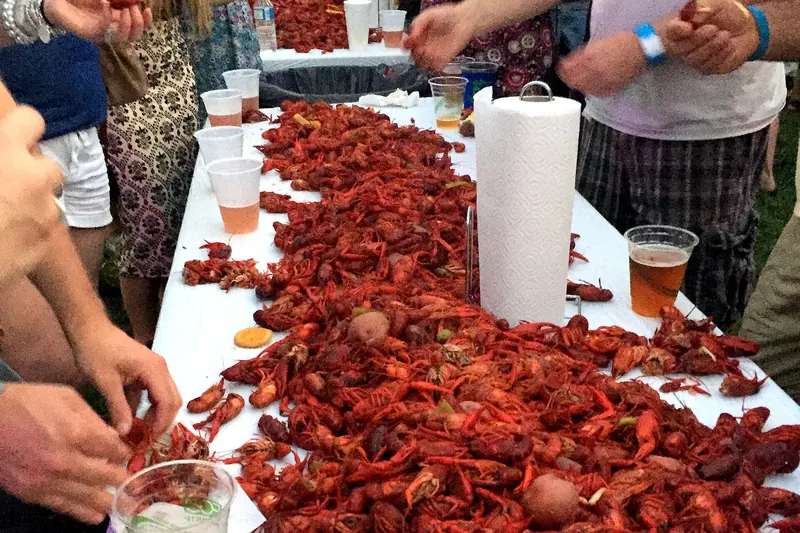
  • A Louisiana crawfish boil

    Char-grilled oysters and a crawfish boil

    Oysters grilled in the shell with garlic butter and parmesan, and — from roughly February to May — boiled crawfish with corn, potato and heavy spice, eaten by the pound off newspaper.

    Where to try it Oyster bars year-round; crawfish boils in spring at neighbourhood joints and back-yard events.

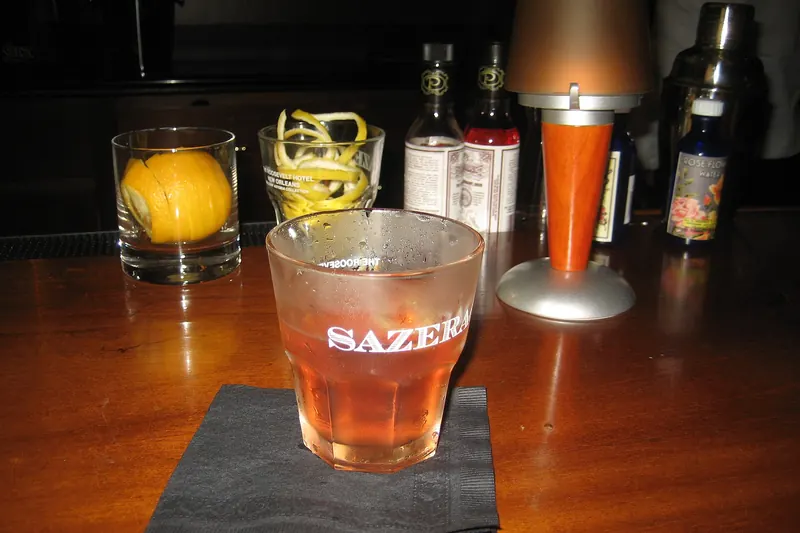
  • A Sazerac cocktail

    The Sazerac and chicory coffee

    The Sazerac — rye, bitters, sugar and an absinthe rinse — is claimed as the first American cocktail and is the official drink of the city. Chicory coffee dates to Civil War shortages and stuck.

    Where to try it Old hotel bars in the Quarter for the Sazerac; Café du Monde or any café for the chicory.

Accommodation

Where to stay in New Orleans

The French Quarter is central and noisy; the neighbourhoods immediately either side are quieter, cheaper and closer to how the city actually lives.

  • The French Quarter

    Courtyard hotels and guesthouses in the middle of everything, and on high ground. The blocks around Bourbon Street are loud until 04:00; the lower Quarter below St Ann is residential and much calmer.

    Best for: First-time visitors, walking everywhere

  • Faubourg Marigny

    Immediately downriver from the Quarter, with Frenchmen Street's venues and streets of Creole cottages. Walkable to everything and considerably quieter than Bourbon Street.

    Best for: Music and a local feel

  • The Garden District and Uptown

    Mansions under live oaks, on the St Charles streetcar line about 20 minutes from the Quarter. Residential, green, and where many locals would rather you stayed.

    Best for: Quiet, elegance, the streetcar

  • The Warehouse District

    Between the Quarter and the Garden District, with the WWII Museum, contemporary galleries and converted warehouse hotels. Central, walkable and less atmospheric.

    Best for: Museums and modern hotels

  • The Bywater

    Downriver past the Marigny, with brightly painted shotgun houses, good restaurants and a riverside park. Cheapest of the walkable areas and a 25-minute walk or short ride to the Quarter.

    Best for: Value and neighbourhood life

What a night costs

Hostel dorm
$35–60 per night
Comfortable hotel or guesthouse
$150–260 per night
Mardi Gras and Jazz Fest
Three to four times normal rates, booked a year ahead
Live music
Free to $20 cover on Frenchmen Street; Preservation Hall about $35

Transport

Getting to and around New Orleans

New Orleans has one airport with good domestic connections, and sits at the end of some long but scenic drives through the Gulf South.

Getting there

  • Louis Armstrong Airport (MSY)

    Eighteen kilometres west, rebuilt in 2019. The E2 airport bus runs to the Central Business District for a few dollars; taxis charge a flat fare of around $36 to the Quarter.

    Mostly domestic routes, with a handful of international services. Connections via Atlanta, Dallas or Houston are common.

  • By car

    Houston is about 5h30, Memphis 6h, Charleston, South Carolina 11h and Atlanta 7h. The Gulf coast drive east through Mississippi and Alabama is pleasant and slow.

    A car is not needed in the city and parking in the Quarter is expensive. Rent for excursions only.

  • Amtrak

    The City of New Orleans runs north to Memphis and Chicago overnight, and the Crescent runs to Atlanta, Washington and New York. Both are slow and scenic rather than practical.

    The Chicago route follows the Blues Highway and is a genuine music-history journey.

  • Onward to the South

    The music trail north to Memphis and the Mississippi Delta, or east along the Gulf to Mobile, Savannah and Charleston, both make strong road-trip routes.

    New Orleans to Charleston is a comfortable four-day drive with stops.

Getting around

Walk the Quarter and take the streetcar for everything else. The city is flat and compact, and a car is a hindrance downtown.

  • Streetcars

    Four lines, of which St Charles is the historic one — running since 1835 with 1923 wooden cars — plus Canal, Riverfront and Rampart. A flat fare of $1.25 or a cheap day pass.

    Slow by design. The St Charles line is as much a sightseeing route as transport.

  • Walking

    The French Quarter is thirteen blocks by six and entirely flat. The Marigny and Bywater continue downriver, and the Warehouse District is 15 minutes upriver.

    Pavements in the older neighbourhoods are uneven and tree roots lift the flagstones. Sensible shoes matter.

  • Bicycle

    The city is flat with a growing lane network and a bike-share scheme. The riverfront trail runs from the Quarter through the Bywater.

    A good way to reach City Park and Mid-City, which are otherwise awkward without a car.

  • The Algiers ferry

    Crosses the Mississippi from the foot of Canal Street in about ten minutes, giving the best free view of the skyline from the water.

    Runs frequently until late evening. Algiers Point on the far side is worth an hour.

  • Rental car for excursions

    Needed for the swamp tours, Whitney Plantation and the River Road, all 40 minutes to an hour out of the city.

    Organised tours cover the same ground with hotel pickup and no parking problem.

When to go

Best time to visit New Orleans

New Orleans is subtropical and sits below sea level in a swamp. The summer humidity is the single biggest factor in planning, and hurricane season overlaps it.

  • Spring (February–May)

    Best time

    The best window: 18–28°C, low humidity by local standards, crawfish in season, and the festival calendar at its fullest with Mardi Gras, French Quarter Fest and Jazz Fest. Book far ahead for all three.

  • Summer (June–September)

    Think twice

    Hot and extremely humid at 32–35°C with dew points that make it feel worse, plus daily afternoon thunderstorms. This is also peak hurricane season. Hotel rates are at their lowest for exactly these reasons.

  • Autumn (October–November)

    Best time

    The humidity breaks in October and the weather becomes excellent — 18–26°C, clear, with the hurricane risk falling away by November. Quieter than spring and cheaper.

  • Winter (December–January)

    Good

    Mild at 10–18°C, occasionally cold and damp, and the quietest and cheapest time of year. Oysters are at their best and the city functions normally.

Worth planning around: Hurricane season runs 1 June to 30 November and peaks in August and September. Travel insurance that covers weather disruption is worth having if you travel then.

Itinerary

Four days in New Orleans

Built around late nights, because the music does not start until 20:00 and the good rooms are still going at 01:00. Mornings start accordingly.

  1. Day1

    The French Quarter

    Get oriented in the oldest part of the city, then find the music.

    • Morning Beignets and chicory coffee at the French Market, then Jackson Square and the cathedral.
    • Afternoon The residential lower Quarter — Royal, Chartres and Dauphine — and the courtyards off them.
    • Evening Frenchmen Street from 20:00, moving between three or four rooms.
  2. Day2

    Uptown and the Garden District

    The green half of the city, by streetcar.

    • Morning The St Charles streetcar to Audubon Park, then walk back through the Garden District.
    • Afternoon Lafayette Cemetery, Magazine Street's shops, and a po'boy somewhere unglamorous.
    • Evening Dinner Uptown, then back downtown for a late set.
  3. Day3

    Tremé and the museums

    The city's history, told properly.

    • Morning The National WWII Museum — four hours minimum, and it earns them.
    • Afternoon Congo Square, the Backstreet Cultural Museum and a walking tour of Tremé.
    • Evening Preservation Hall for a 45-minute traditional jazz set, then dinner.
  4. Day4

    The swamp and the river

    Out of the city, and one last night in it.

    • Morning A flat-boat swamp tour west of the city, or Whitney Plantation on the River Road.
    • Afternoon Back for the Algiers ferry across the Mississippi and an hour on the far bank.
    • Evening A Sazerac in an old hotel bar, and a last set on Frenchmen Street.

Travel tips

New Orleans travel tips

New Orleans specifics, including one thing visitors get wrong about the geography of the nightlife.

  • Bourbon Street is a drinking strip aimed at visitors and has almost no live music worth hearing. Frenchmen Street, three blocks past the Quarter in the Marigny, is where the city's actual music scene is, and much of it has no cover charge.
  • Eat outside the French Quarter for at least half your meals. Uptown, Mid-City and the Bywater have better food at lower prices, and the streetcar reaches most of it for $1.25.
  • St Louis Cemetery No. 1 can only be entered with a licensed guide, following years of vandalism. Lafayette No. 1 in the Garden District is freely accessible.
  • Summer humidity is not a minor inconvenience — June to September runs 32–35°C with dew points that make outdoor sightseeing draining, and it coincides with hurricane season.
  • Mardi Gras and Jazz Fest multiply hotel rates three or fourfold and book out a year ahead. French Quarter Fest in April is free, excellent and far less overwhelming.
  • Drinking in the street from a plastic cup is legal in the Quarter, which is unusual in the United States. Glass containers are not, and bars will pour your drink into a go-cup on request.
  • A car is unnecessary and parking in the Quarter is expensive. Rent one only for the swamp tours or the River Road, or take an organised trip with hotel pickup.
  • The city extends far beyond the high ground of the Quarter, and the recovery from the 2005 levee failures is still visibly uneven. A guided tour of the Lower Ninth Ward or Tremé gives context the tourist areas do not.

FAQ

New Orleans: frequently asked questions

Where should I go for live music in New Orleans?

Frenchmen Street in the Marigny, three blocks past the French Quarter — half a dozen venues within two blocks, playing jazz, brass, funk and blues seven nights a week, many with no cover charge. Preservation Hall in the Quarter does traditional jazz in a bare, unamplified room for 45-minute sets. Bourbon Street, despite its reputation, is a drinking strip with very little worth hearing.

How many days do you need in New Orleans?

Four. One for the French Quarter, one for the Garden District and Uptown by streetcar, one for Tremé and the WWII Museum, and one for the swamps or the River Road. The city is compact, but the nights run late and the days need to start accordingly — three days feels rushed.

What is the difference between Creole and Cajun food?

Creole is the city cooking — French-influenced, using tomatoes, butter and cream, and shaped by Spanish, West African and Caribbean ingredients. Cajun is the country cooking of the bayous west of the city, brought by Acadians expelled from Canada: darker roux, more pepper, one-pot dishes, no tomatoes. Both are excellent and locals distinguish them carefully.

When is the best time to visit New Orleans?

February to May and October to November. Spring has the best weather, crawfish season and the festival calendar — Mardi Gras, French Quarter Fest and Jazz Fest. Autumn is quieter and cheaper with similar weather. Avoid June to September: 32–35°C with punishing humidity, daily thunderstorms and peak hurricane season.

Is New Orleans safe for tourists?

The tourist areas — the French Quarter, Marigny, Garden District and Warehouse District — are heavily patrolled and fine with normal precautions. The city does have high crime statistics overall, concentrated in neighbourhoods visitors have no reason to be in. The practical advice is to stay in well-lit populated streets late at night, take a ride rather than walking home alone at 03:00, and be aware that Bourbon Street after midnight attracts the usual problems of any drinking strip.

Should I visit during Mardi Gras?

It depends what you want. Mardi Gras is extraordinary — weeks of parades run by century-old krewes, with the city entirely given over to it — but hotel rates triple or quadruple, everything books a year ahead, and the crowds are immense. Many people prefer Jazz Fest in late April or the free French Quarter Fest in April, both of which show the city's culture with far less strain.

Do you need a car in New Orleans?

No. The French Quarter is thirteen blocks by six and entirely flat, the St Charles streetcar reaches the Garden District and Uptown for $1.25, and the city is compact and walkable. Parking in the Quarter is expensive and awkward. Rent a car only for the swamp tours or the River Road plantations, or take an organised trip with hotel pickup.

Read next

Related travel articles

Where to go

Beyond the Big Names: Places Worth the Detour

The most visited place in a country is rarely its best, and it is almost never its best value. This is a method for finding the destinations that do not make the postcards — and a set of examples from five of the 50 countries on this site.

Road trips

How to Plan a US National Parks Road Trip

American national parks are no longer places you turn up at. Timed entry, permit lotteries and mandatory shuttles now govern the popular ones, and the distances between them are larger than almost any visitor expects. Here is how to plan around both.

Practical

Packing by Season and Trip Type

Most packing advice is a list of things. This is the opposite: the small number of decisions that determine whether your luggage helps or hinders, organised by the kind of trip you are actually taking.

Advertisement