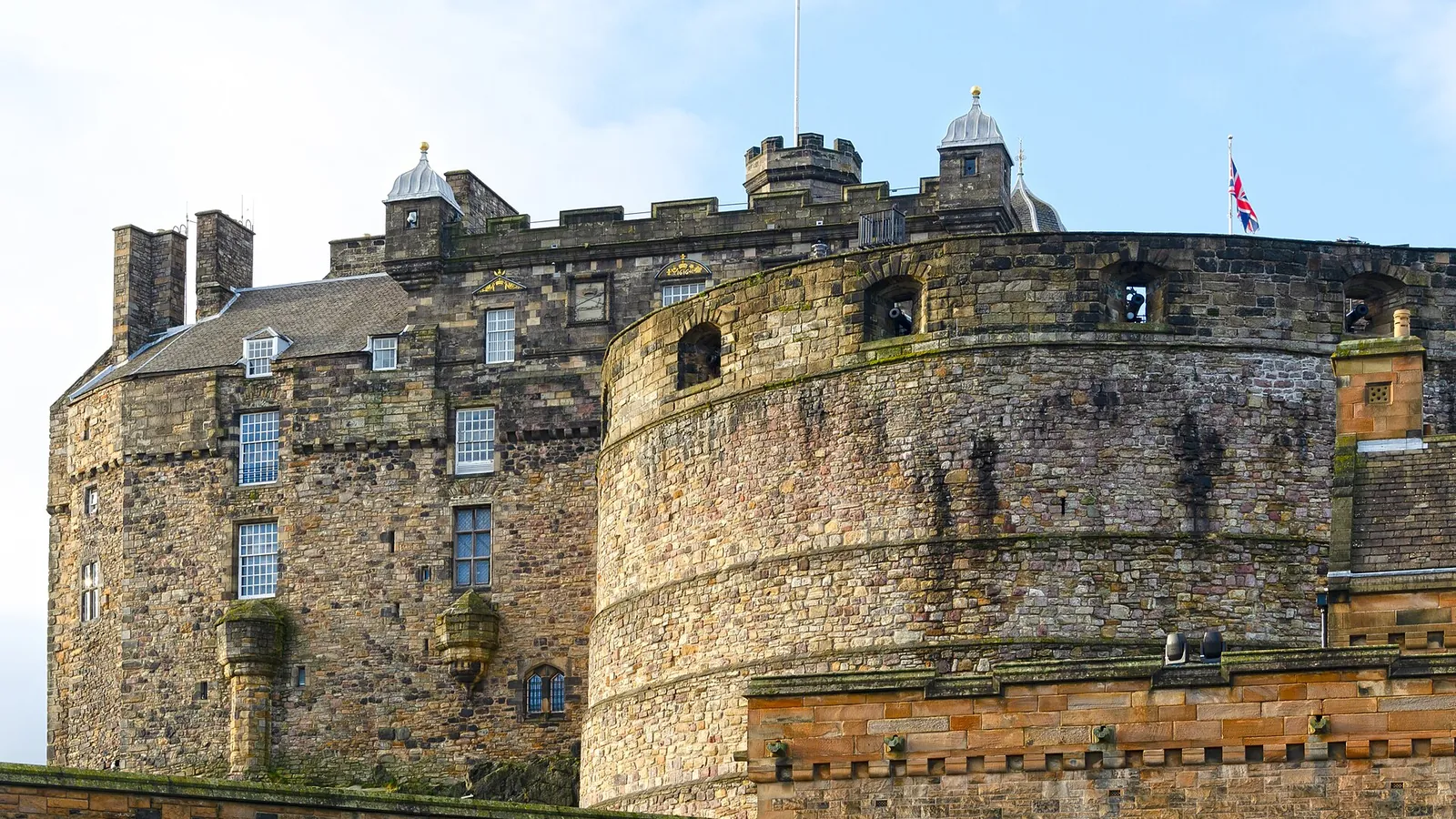
Edinburgh Castle rising above the Old Town

Scotland · United Kingdom

Edinburgh

A medieval Old Town and a Georgian New Town, both UNESCO-listed, built on and around an extinct volcano, with a castle on top and, every August, the largest arts festival on earth.

  • Best time May–June and September, or August for the Festival
  • Stay 3–4 days
  • Good for History, culture, walking, whisky

Photo: Peulle · CC BY 4.0

Welcome to Edinburgh

Edinburgh is a city shaped by its geology as much as its history. An extinct volcanic complex left behind a series of dramatic crags, and the city's medieval Old Town grew up along the ridge leading down from the largest of them, Castle Rock, where a fortress has stood in some form for over a thousand years. Below and beside it, an entirely different Edinburgh emerged in the eighteenth century: the New Town, a masterpiece of Georgian urban planning, laid out in ordered squares and crescents that stand in deliberate contrast to the Old Town's medieval tangle.

Both halves of the city are UNESCO World Heritage Sites, and the contrast between them — vertical, atmospheric medieval closes and wynds against horizontal, rational Georgian terraces — is part of what makes Edinburgh feel unlike anywhere else in Britain. Arthur's Seat, the extinct volcano itself, rises directly behind the Old Town, giving the city a genuine wilderness peak within a twenty-minute walk of its centre.

For three weeks every August, the city becomes something else again: host to the Edinburgh Festival, a collection of overlapping festivals — the Fringe above all — that together make it the largest arts festival on earth, transforming every spare room, church hall and pub back room into a performance space.

  • Capital City
  • Historic Site
  • Culture Arts
  • UNESCO Site

Why visit

Why visit Edinburgh?

Edinburgh's case is a dramatic setting matched by significant history, topped by the biggest arts festival in the world for those who time it right.

  • The setting is unmatched in Britain

    A castle on a volcanic crag, an extinct volcano peak within city limits, and two UNESCO-listed historic town plans in immediate contrast to each other.

  • The Old Town is medieval

    Narrow closes and wynds running off the Royal Mile preserve a street pattern and atmosphere largely unchanged since the medieval city, not a reconstruction.

  • The New Town is a planning masterpiece

    One of the largest and best-preserved examples of Georgian urban design anywhere, its ordered squares a deliberate, successful counterpoint to the Old Town.

  • August makes it the cultural capital of the world

    The Fringe, the International Festival and several parallel festivals together form the largest arts festival on earth, an experience with no real equivalent.

  • It is the natural gateway to the Highlands

    Edinburgh pairs naturally with a Scottish Highlands and Isle of Skye extension, making it more than just a city stop.

Main attractions

Top things to see in Edinburgh

Edinburgh rewards a slower pace than its compact centre suggests. These are the sights worth building days around.

  1. Edinburgh Castle

    A fortress occupying Castle Rock since at least the twelfth century, holding the Scottish Crown Jewels, the Stone of Destiny and the One O'Clock Gun, fired daily except Sundays.

    Tip Book timed entry online in advance — it is Scotland's most visited paid attraction and queues build quickly without a booked slot.

  2. The Royal Mile lined with historic buildings

    The Royal Mile

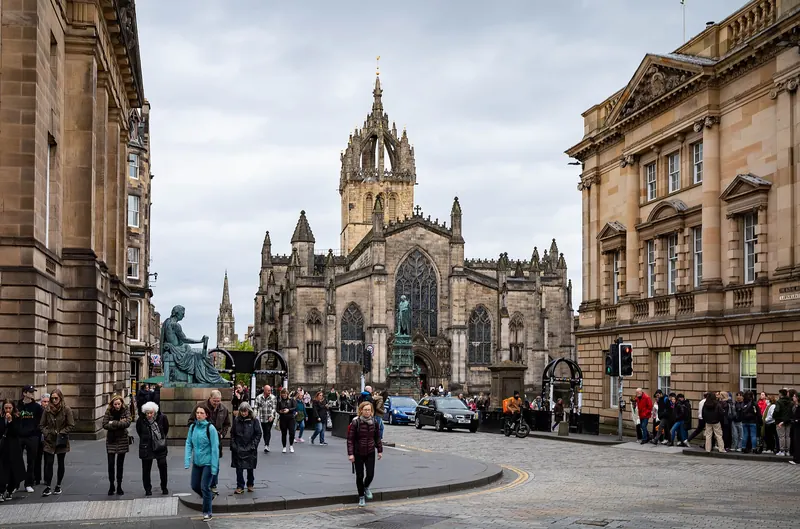
    The spine of the Old Town, running from the Castle down to Holyroodhouse, lined with historic closes, the Cathedral of St Giles and countless shops and pubs in old buildings.

    Tip Duck into the narrow closes off the main street — Mary King's Close and others hold some of the city's most atmospheric, least crowded corners.

  3. Arthur's Seat, the extinct volcanic peak behind Edinburgh's Old Town

    Arthur's Seat

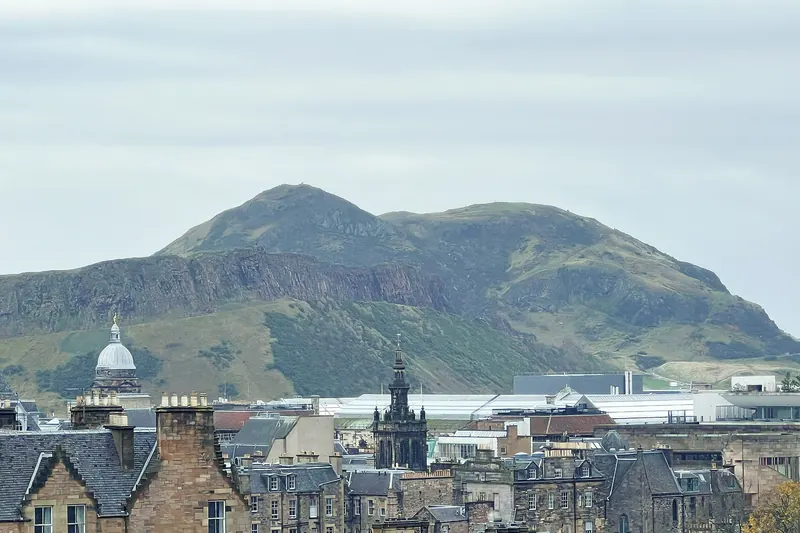
    The main peak of an extinct volcanic complex, rising to 251 metres directly behind the Old Town, with a genuine hilltop hike rewarded by a sweeping view over the whole city and the Firth of Forth.

    Tip The ascent takes about an hour round trip from Holyrood Park's edge. Wear proper shoes — the paths are exposed and can be slippery.

  4. The glass-roofed Grand Gallery of the National Museum of Scotland

    The National Museum of Scotland

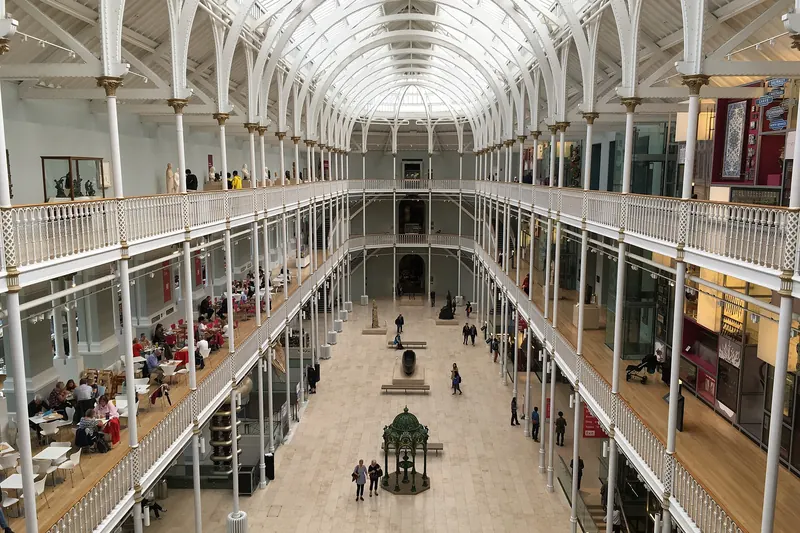
    A free, excellent museum covering Scottish history, natural science and world cultures, its Victorian glass-roofed Grand Gallery among the most beautiful museum spaces in Britain.

    Tip The roof terrace, reached from the upper floors, gives a free view over the city worth seeking out.

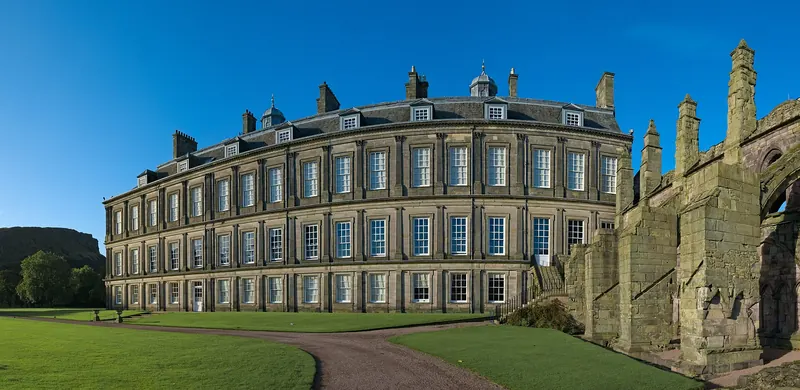
  5. The Palace of Holyroodhouse and the ruined abbey beside it

    The Palace of Holyroodhouse

    The monarch's official residence in Scotland, at the foot of the Royal Mile, with state apartments open to visitors and the ruined abbey of Holyrood adjoining the grounds.

    Tip Closed during royal visits — check the schedule before planning a visit around it specifically.

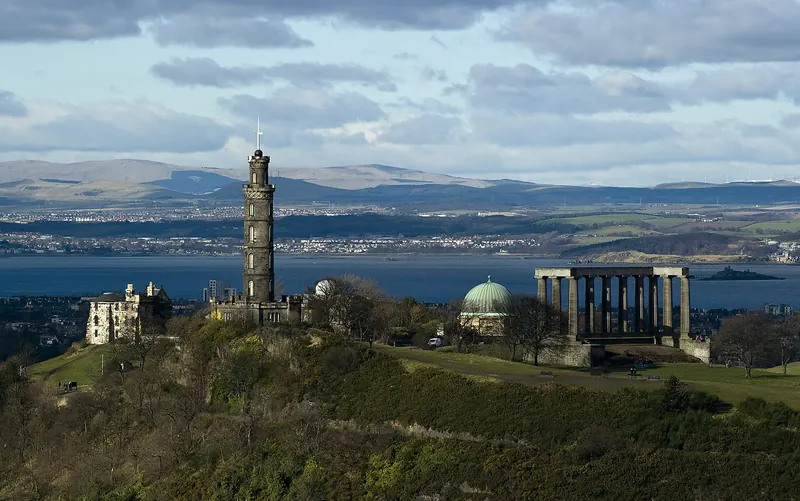
  6. Monuments on the summit of Calton Hill

    Calton Hill

    A smaller hill on the New Town's edge, its summit dotted with monuments including an unfinished Parthenon replica, offering one of the best and least strenuous views over the city.

    Tip A popular sunset spot — arrive early to secure a good vantage point, particularly in summer.

Things to do

Best things to do in Edinburgh

Edinburgh rewards pairing the Old Town's atmosphere with the New Town's order, and leaving evenings free for whatever the city's pubs and venues offer.

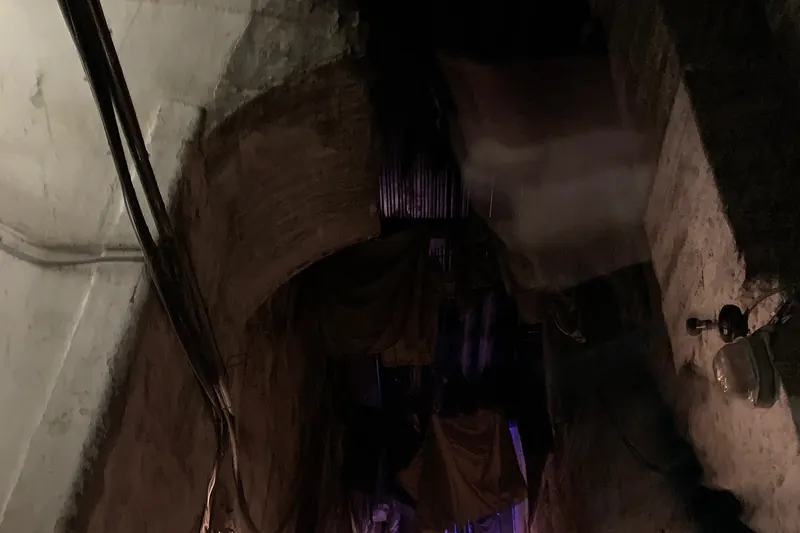
  1. A narrow historic passage in Mary King's Close

    Walk the Old Town's hidden closes

    Narrow medieval alleyways running off the Royal Mile, some open to the sky and some covered, hold centuries of history and considerably fewer crowds than the main street.

    Tip Mary King's Close offers a guided underground tour through a close built over by later development, an atmospheric experience.

  2. Climb Arthur's Seat for the view

    A genuine hilltop walk within the city, rewarded by a panoramic view over Edinburgh, the Firth of Forth and, on a clear day, well beyond.

    Tip Sunrise and sunset both offer particularly good light, though sunset draws considerably more people.

  3. A street performer entertaining crowds during the Edinburgh Fringe

    Experience the Fringe (in August)

    Thousands of shows across the city, from world-class comedy and theatre to experimental work, performed in venues ranging from proper theatres to converted cupboards.

    Tip Book major shows ahead, but leave room for spontaneous choices — some of the Fringe's best experiences are unplanned discoveries.

  4. A bottle of Scottish single malt whisky

    Taste whisky properly

    Scotland's national drink, tasted with real context at a dedicated whisky bar or tasting experience rather than just ordered as a single dram at random.

    Tip The Scotch Whisky Experience offers a structured introduction; dedicated whisky bars around the Old Town offer a more knowledgeable, less touristy alternative.

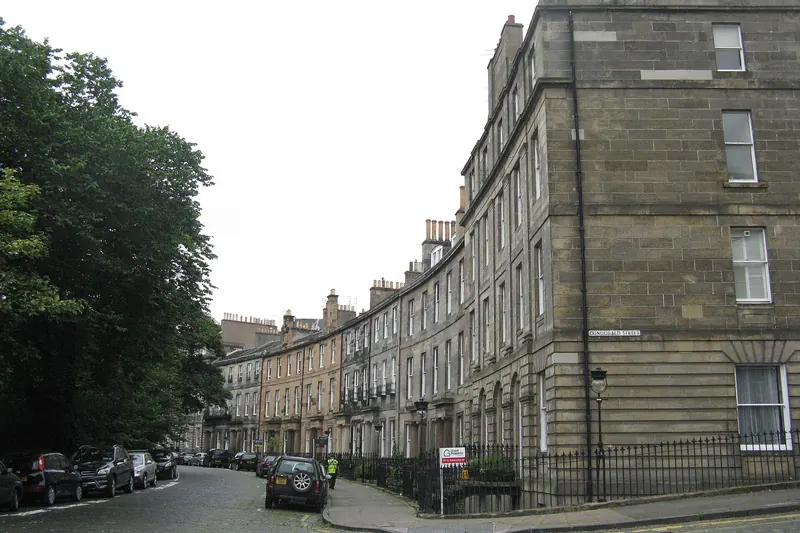
  5. A Georgian crescent of townhouses in Edinburgh's New Town

    Walk the New Town's Georgian streets

    Ordered squares, crescents and terraces laid out in the eighteenth century, a deliberate contrast to the Old Town and a pleasant, quieter counterpoint to it.

    Tip Charlotte Square and Moray Place are among the finest examples of the New Town's Georgian planning.

  6. Take a day trip into the Highlands' southern edge

    The Scottish Highlands begin surprisingly close to Edinburgh, and a day trip north gives a taste of the landscape without committing to the full Highlands and Skye itinerary.

    Tip Organised day tours are the simplest option without a car; the Trossachs are among the closest genuine Highland scenery to the city.

Local food

What to eat in Edinburgh

Scottish food draws on the country's coastline, moors and a strong baking tradition, alongside a genuine national relationship with whisky.

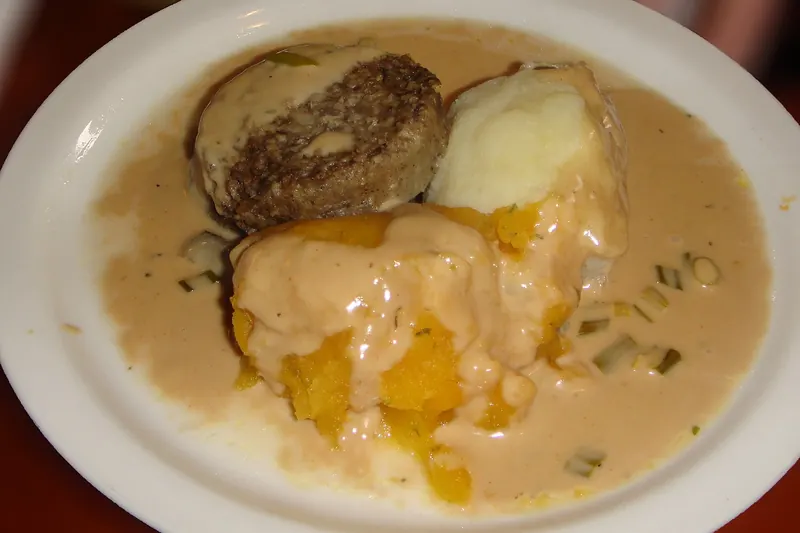
  • A plate of haggis, neeps and tatties at an Edinburgh pub

    Haggis, neeps and tatties

    Scotland's national dish — a savoury pudding of offal, oats and spices, traditionally served with mashed swede (neeps) and potatoes (tatties) — considerably better than its reputation suggests.

    Where to try it Traditional Scottish restaurants across the Old Town, particularly around Burns Night in late January if timing allows.

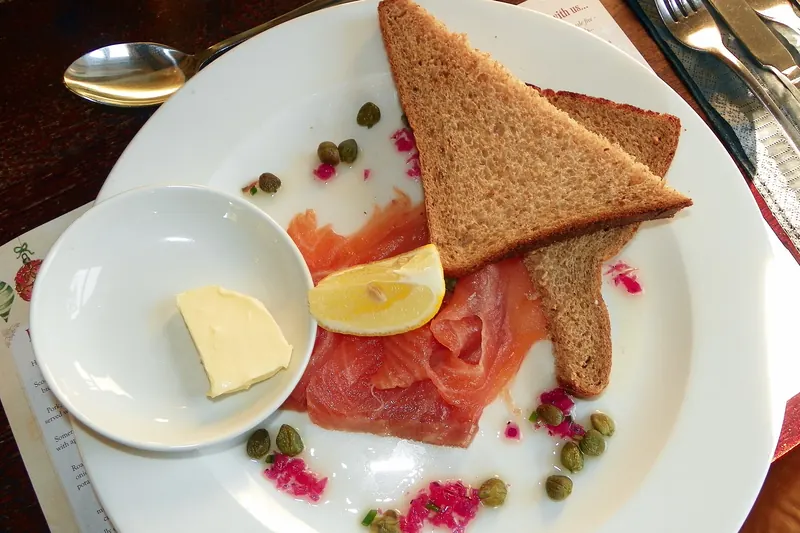
  • Scottish smoked salmon served with brown bread and lemon

    Scottish salmon

    Farmed and wild salmon from Scotland's rivers and coastal waters, smoked or fresh, considered among the best in the world and a genuine point of national pride.

    Where to try it Seafood restaurants across the city, and smoked salmon specifically from delicatessens for a picnic option.

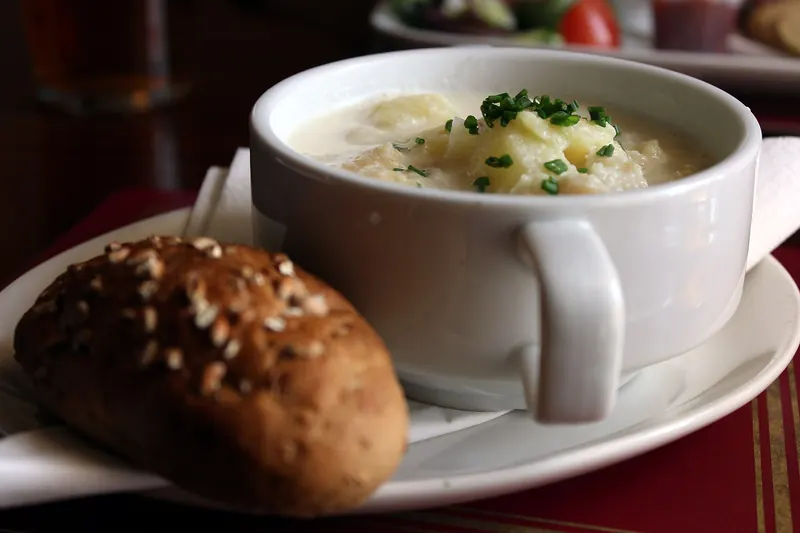
  • A bowl of cullen skink, a smoked haddock and potato soup

    Cullen skink

    A rich, smoky soup of smoked haddock, potato and onion, originating in the fishing town of Cullen on the northeast coast — a genuine Scottish comfort food classic.

    Where to try it Traditional pubs and restaurants across Edinburgh, especially in colder months.

  • A bottle of Macallan single malt Scotch whisky

    Scotch whisky

    Single malts from distilleries across Scotland's distinct whisky regions — Speyside, Islay, Highland and others — each with a different character shaped by water, peat and cask.

    Where to try it Dedicated whisky bars in the Old Town, or the Scotch Whisky Experience for a structured tasting introduction.

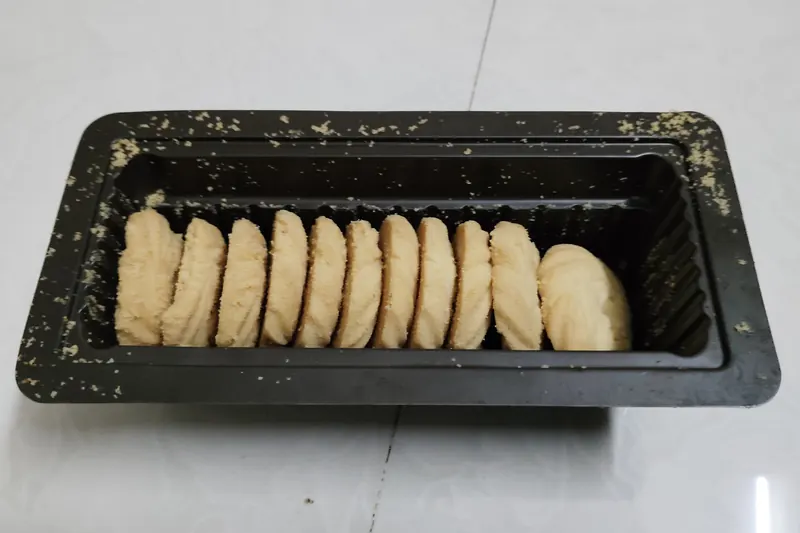
  • Buttery Scottish shortbread biscuits

    Shortbread and Scottish baking

    Buttery, crumbly shortbread alongside tablet (a firmer, sweeter cousin of fudge) and other traditional Scottish baking, different from the export versions found abroad.

    Where to try it Bakeries throughout the Old and New Town, and specialist shops along the Royal Mile.

  • A proper Scottish breakfast

    A full breakfast with the addition of tattie scones and, for the adventurous, a slice of haggis alongside the standard eggs, bacon and sausage.

    Where to try it Traditional cafes across the city, particularly in the New Town's quieter streets.

Accommodation

Where to stay in Edinburgh

Edinburgh's compact centre means most central areas work well, though the Old Town and New Town offer different atmospheres.

  • The Old Town

    Walking distance to the Castle, Royal Mile and Arthur's Seat, in historic buildings, though noisier and busier, especially in August.

    Best for: Atmosphere and first visits

  • The New Town

    Georgian terraces and squares a short walk from the Old Town's sights, generally calmer and with excellent independent shopping and dining.

    Best for: Elegance and quiet

  • Stockbridge

    A short walk or bus ride from the centre, with a village-like atmosphere, good cafes and the Water of Leith walkway nearby.

    Best for: A local, residential feel

What a night costs

Hostel dorm
£25–45 per night
Mid-range hotel
£110–200 per night, considerably higher in August
Edinburgh Castle ticket
£19.50–21, cheaper booked online
Whisky tasting experience
£20–35

Transport

Getting to and around Edinburgh

Edinburgh has its own airport and sits at the northern end of Britain's east coast rail line, making it an easy add-on to a London-based trip.

Getting there

  • Edinburgh Airport (EDI)

    Scotland's busiest airport, connected to the city centre by tram or bus in around 35–45 minutes.

    A wide range of European and some long-haul direct routes, alongside frequent domestic connections.

  • Inter-city rail

    Edinburgh Waverley connects directly to London in about 4h30 on the East Coast Main Line, and to York in around 2h30.

    Book via Trainline or National Rail well ahead for the cheapest advance fares on this popular route.

  • By road

    Motorways connect Edinburgh to the rest of the UK, though rail is generally faster and less stressful for the London route specifically.

    A car becomes more useful once heading further into the Highlands than for reaching Edinburgh itself.

Getting around

Edinburgh's centre is compact and highly walkable, with trams and buses covering the wider city and the airport.

  • Walking

    The Old Town, New Town and Arthur's Seat are all within comfortable walking distance of each other, and walking is the best way to experience the city's contrasts.

    The Old Town's hills and cobbles mean comfortable shoes matter more here than in a flatter city.

  • Trams and buses

    A single tram line runs from the airport through the New Town, and an extensive bus network covers the rest of the city.

    Contactless payment is accepted on both, capped at a daily maximum fare.

  • Taxis and ride-hailing

    Widely available and useful late at night or for luggage, though the compact centre rarely requires them for daytime sightseeing.

    Black cabs can be hailed on the street; ride-hailing apps also operate widely in the city.

When to go

Best time to visit Edinburgh

Edinburgh's weather is cool and changeable year-round, which makes crowds and events, more than temperature, the main factor in timing a visit.

  • Spring (April–June)

    Best time

    Mild, increasingly long daylight hours, and comfortable crowds before the August festival rush — a strong all-round choice.

  • Summer (July–August)

    Good

    August brings the Festival and Fringe, an experience with no real equivalent, at the cost of the year's highest prices, biggest crowds and a stretched accommodation market.

  • Autumn (September–October)

    Best time

    Comfortable temperatures and a considerable drop in crowds and prices immediately after the Festival ends in late August.

  • Winter (November–March)

    Shoulder

    Cold, short days, but atmospheric — the Christmas markets and Hogmanay New Year celebrations are genuine highlights if you dress for the weather.

Worth planning around: Nothing to actively avoid, but understand that August is a fundamentally different city — book many months ahead if visiting then, for both accommodation and Fringe shows.

Itinerary

Three days in Edinburgh

The Castle and Old Town, Arthur's Seat and the New Town, then a Highlands taste — a pace that covers the city properly without rushing.

  1. Day1

    The Old Town

    The Castle and the Royal Mile.

    • Morning Edinburgh Castle at opening, booked ahead.
    • Afternoon The Royal Mile and its closes down to Holyroodhouse.
    • Evening Dinner and a whisky bar in the Old Town.
  2. Day2

    Arthur's Seat and the New Town

    A hilltop hike, then Georgian elegance.

    • Morning Climb Arthur's Seat for the city view.
    • Afternoon The National Museum of Scotland, then the New Town's Georgian streets.
    • Evening Dinner in Stockbridge or the New Town.
  3. Day3

    Calton Hill and beyond

    A last viewpoint, then flexible time.

    • Morning Calton Hill for the monuments and the view.
    • Afternoon A day tour into the Highlands' southern edge, or more of the Old Town's closes and shops.
    • Evening A final traditional Scottish dinner.

Travel tips

Edinburgh travel tips

Edinburgh-specific practicalities, most of which are about the Castle, the Festival and the city's hills.

  • Book Edinburgh Castle online in advance — it is Scotland's most visited paid attraction and queues build quickly on the day.
  • If travelling in August, book accommodation many months ahead — the Festival strains the city's capacity and prices rise sharply.
  • Wear comfortable, sturdy shoes — the Old Town's cobbles and hills, plus Arthur's Seat and Calton Hill, are considerably more demanding underfoot than a flat city centre.
  • Check the weather and dress in layers regardless of season — Edinburgh's climate is changeable even by British standards.
  • The One O'Clock Gun fires daily except Sundays from the Castle — a genuine, sudden surprise if you don't know to expect it.
  • If whisky is a specific interest, book a proper tasting rather than just ordering a single dram — the context improves the experience.
  • Holyroodhouse closes during royal visits — check the schedule before building a day around it specifically.

FAQ

Edinburgh: frequently asked questions

How many days do you need in Edinburgh?

Three to four. That covers the Castle and Old Town properly, a day for Arthur's Seat and the New Town, and a day for Calton Hill plus either a Highlands day trip or more unhurried city time. Two days is workable but rushes the hills, which are a genuine part of Edinburgh's appeal.

Is the Edinburgh Festival worth planning a trip around?

Yes, if you want a unique cultural experience — it is the largest arts festival on earth. Be aware it also means the highest prices, biggest crowds and a fundamentally busier city than the rest of the year, so it suits a specific kind of trip rather than everyone's preference.

What is the best time of year to visit Edinburgh?

May to June and September for the best balance of weather and crowds. August delivers the Festival at the cost of crowds and price; winter is cold but atmospheric, particularly around Christmas and Hogmanay.

Is Edinburgh walkable?

Very, though hilly — the Old Town, New Town and Arthur's Seat are all within comfortable walking distance of each other, but comfortable shoes matter more here than in a flatter city given the cobbles and inclines.

What should I eat in Edinburgh?

Haggis, neeps and tatties for the essential Scottish experience, Scottish salmon and cullen skink for the country's coastal and river traditions, and a proper whisky tasting rather than a single casual dram, to understand what makes Scotch distinctive.

Read next

Related travel articles

Transport

Getting Around Europe by Train

European rail is excellent and confusing — six national operators, three completely different pricing models, and a rail pass that is either a bargain or a waste depending on where you are going. Here is how to work out which.

Planning

Planning Your First Trip to Europe

Most first European trips go wrong in the same three ways: too many cities, too little time in each, and a route shaped by a cheap flight rather than by geography. Here is how to avoid all three.

Advertisement