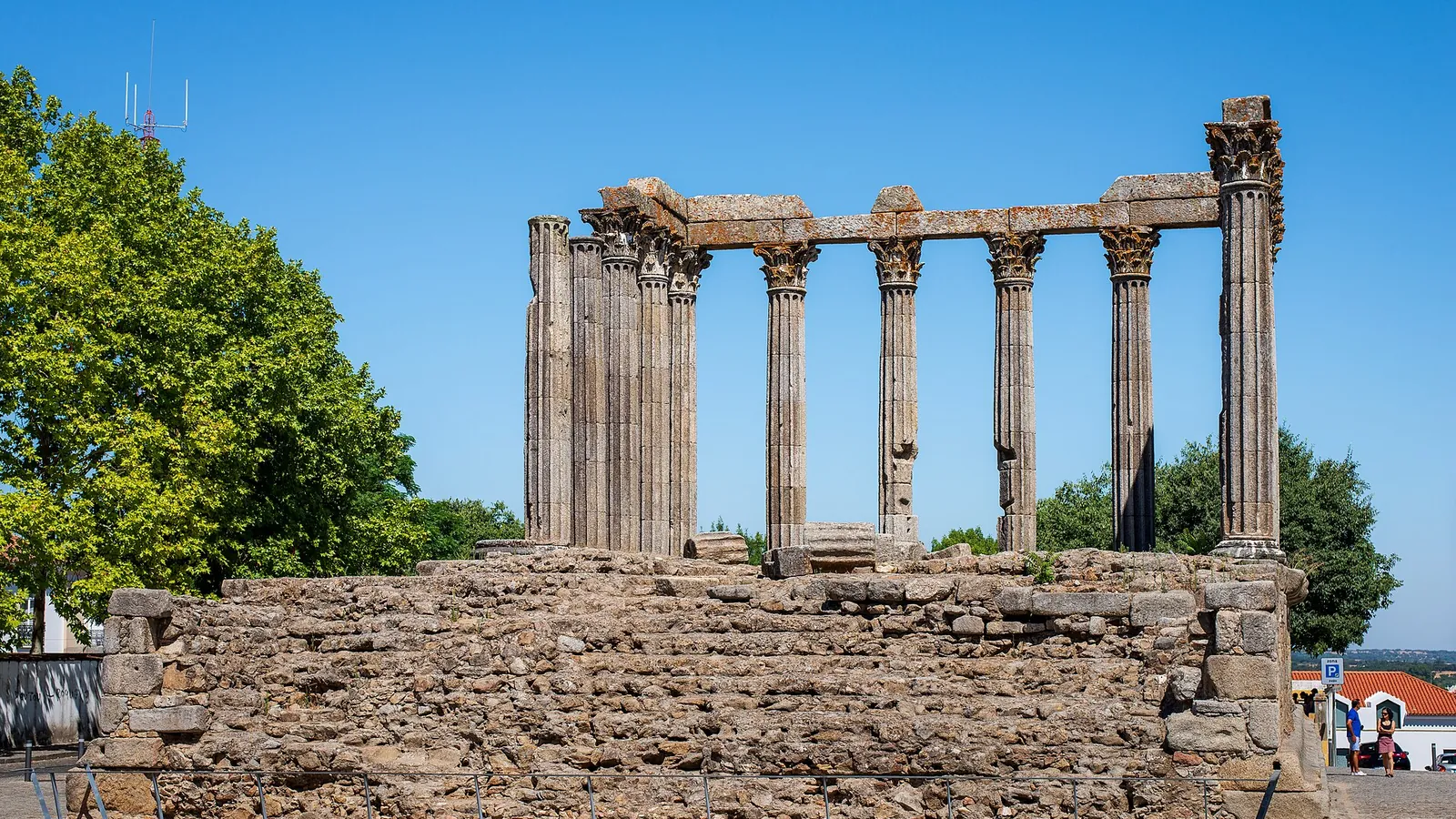
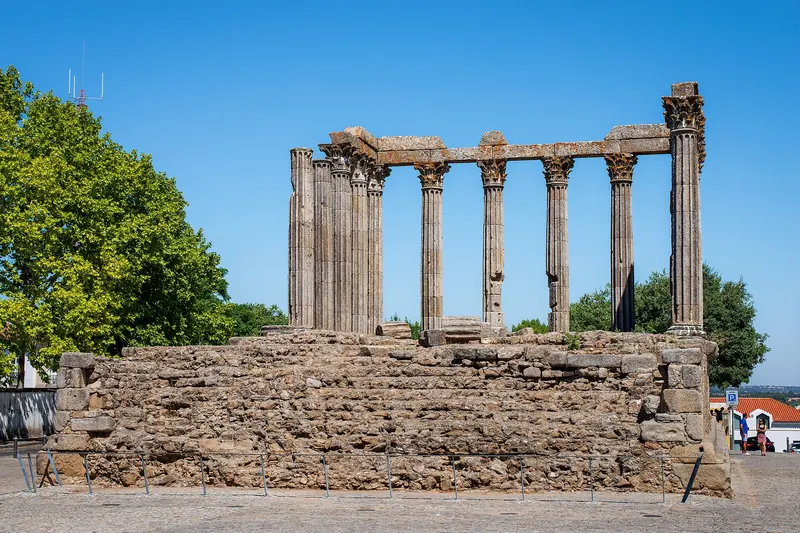
The Roman Temple of Évora, its ancient columns standing at the heart of the city

Alentejo · Portugal

Évora

A walled Alentejo city built directly around a 2,000-year-old Roman temple, with an unsettling chapel walled entirely in human bones.

  • Best time April–June and September–October, for mild weather in a hot inland region
  • Stay 2 days
  • Good for History, archaeology, wine, a quieter alternative to the coast

Photo: Norbert Nagel · CC BY-SA 3.0

Welcome to Évora

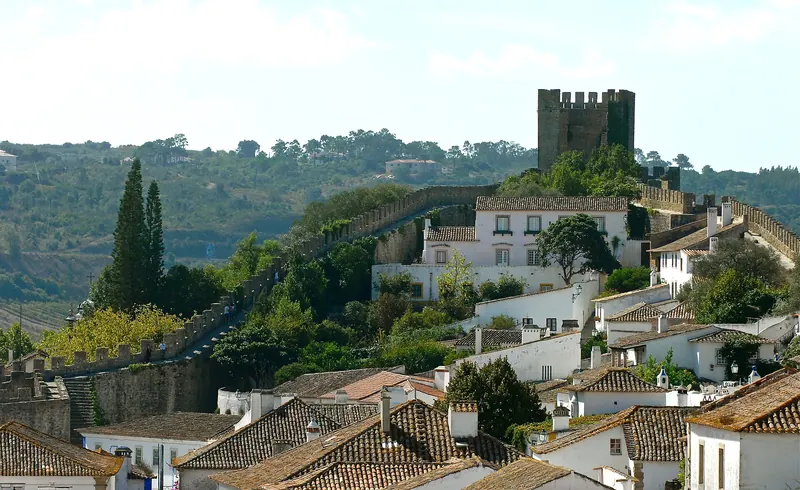
Évora is the Alentejo region's historic capital, a well-preserved walled city whose layered history — Roman, Moorish, medieval — remains visible in a way few Portuguese cities can match, all recognised with UNESCO World Heritage status for the old town as a whole.

The city's most striking sight is its most literal: a 1st-century Roman temple stands nearly intact at the heart of the old town, its Corinthian columns surviving centuries of reuse as a slaughterhouse and fortress before its true nature was rediscovered.

That ancient history sits alongside the unsettling Chapel of Bones, its interior walls and columns built from the skulls and bones of thousands of monks and locals, and a surrounding Alentejo countryside of cork oak plains and increasingly respected wine estates that reward slowing down beyond the city walls.

  • Historic Site
  • UNESCO Site
  • Archaeology
  • Off the Beaten Path

Why visit

Why visit Évora?

Évora's case is that no other Portuguese city holds this much visible ancient history within one walkable walled centre.

  • The Roman Temple is remarkable

    Standing nearly intact at the city's heart, one of the best-preserved Roman temples on the Iberian Peninsula.

  • The Chapel of Bones is unforgettable

    An interior built entirely from human bones, unlike anything else on a typical Portugal itinerary.

  • The old town is dense with layered history

    Roman, Moorish and medieval architecture sit within a compact, UNESCO-listed walled centre.

  • The Alentejo wine country is excellent

    Increasingly respected wine estates surround the city, considerably less crowded than the Douro Valley.

  • It's much quieter than Lisbon or Porto

    A relaxed, low-key pace with a fraction of the coastal cities' visitor numbers.

Main attractions

Top things to see in Évora

Évora's essential sights, spanning its Roman, medieval and religious layers of history.

  1. The Roman Temple of Évora, its ancient columns standing at the heart of the city

    Roman Temple of Évora

    A 1st-century temple, likely dedicated to the cult of Emperor Augustus, its Corinthian columns among the best preserved Roman remains anywhere in Portugal.

    Tip Visit at dusk when the temple is floodlit — the columns take on a striking presence against the darkening sky.

  2. Chapel of Bones (Capela dos Ossos)

    A macabre 16th-century chapel, its walls and columns built from the bones and skulls of thousands of monks and locals, intended as a meditation on mortality.

    Tip The chapel's Latin inscription at the entrance, translating roughly to 'we bones, here, await yours,' sets the tone.

  3. Évora Cathedral (Sé de Évora)

    An imposing granite Gothic cathedral, its rooftop terrace offering sweeping views over the old town's rooftops.

    Tip Climb to the cathedral's rooftop terrace for one of the best views in the city.

  4. University of Évora

    A historic university, its main courtyard lined with azulejo-tiled classrooms still in active academic use.

    Tip Free to wander the main courtyard and admire the tilework, even without a formal tour.

  5. Praça do Giraldo

    Évora's central square, the social heart of the city, ringed by cafés and arcaded buildings.

    Tip A good spot to simply sit with a coffee and watch the city's unhurried daily rhythm.

  6. The city walls and aqueduct

    Évora's medieval walls and the 16th-century Água de Prata aqueduct, worth a walk for a different perspective on the city's layered architecture.

    Tip Parts of the aqueduct have been built directly into, with houses incorporated along its arches.

Things to do

Best things to do in Évora

Beyond the Roman and religious sights, Évora rewards the surrounding Alentejo countryside and its wine culture.

  1. Taste Alentejo wine at a local estate

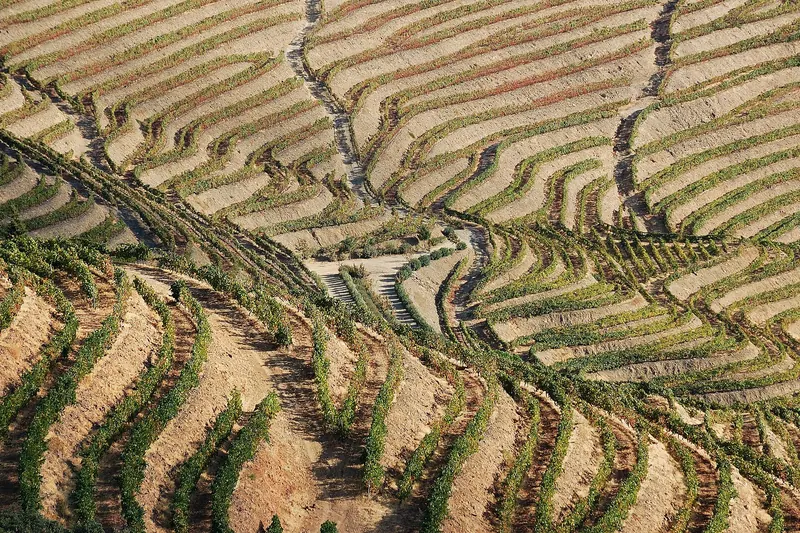
    The Alentejo has become one of Portugal's most respected wine regions, its estates producing excellent reds from the plains surrounding Évora.

    Tip Several wine estates near Évora offer worthwhile tours combining tastings with the region's cork oak landscape.

  2. Explore the cork oak countryside

    The Alentejo produces a significant share of the world's cork, its distinctive oak groves a defining feature of the landscape around Évora.

    Tip A countryside drive or guided tour explains the fascinating, sustainable cork harvesting process.

  3. Visit the Cromlech of the Almendres

    A significant prehistoric stone circle predating Stonehenge, a short drive from Évora and considerably less visited than its British counterpart.

    Tip A rental car or organised tour is necessary — public transport doesn't reach the site well.

  4. Wander Évora's old town streets

    The compact walled centre rewards slow, unhurried wandering beyond the headline sights.

    Tip Évora's whitewashed houses with yellow trim are a distinctive Alentejo architectural style worth noticing.

  5. Visit a nearby Alentejo village

    Villages like Monsaraz, a picturesque hilltop settlement, offer a worthwhile day trip into the wider Alentejo countryside.

    Tip Monsaraz overlooks the Alqueva reservoir, Europe's largest artificial lake, worth the detour for the view alone.

Local food

What to eat in Évora

Évora sits at the heart of Alentejo cuisine, distinct from the rest of Portugal for its bread-based dishes and excellent wine.

  • Açorda alentejana

    A simple, satisfying bread soup flavoured with garlic, coriander and olive oil, often topped with a poached egg, an Alentejo staple.

    Where to try it Traditional restaurants throughout Évora's old town.

  • Migas

    Fried breadcrumbs typically served alongside pork, a hearty Alentejo dish reflecting the region's tradition of using every part of the bread.

    Where to try it Traditional Alentejo restaurants throughout the city.

  • Alentejo wine

    Increasingly respected reds from the plains surrounding Évora, excellent and considerably less internationally known than Douro wines.

    Where to try it Wine estates around Évora, or wine bars throughout the old town.

  • Porco preto (black Iberian pork)

    Pork from free-range black pigs fed partly on acorns from the region's cork and holm oak forests, one of the Alentejo's finest products.

    Where to try it Traditional restaurants throughout Évora, often served simply grilled.

  • Queijo Serpa cheese

    A distinctive sheep's milk cheese from the wider Alentejo region, with a soft, creamy texture and protected geographic status.

    Where to try it Local markets and traditional restaurants throughout Évora.

Accommodation

Where to stay in Évora

Évora's walled old town offers a convenient, compact base for most visitors.

  • Inside the city walls

    The most central, historic base, putting Évora's main attractions within easy walking distance.

    Best for: Walking to the Roman Temple and main sights

  • A rural quinta near Évora

    Several converted country estates near the city offer a peaceful, rural alternative to staying in town.

    Best for: A genuine Alentejo countryside experience

What a night costs

Guesthouse room
€65–120 per night
Boutique hotel
€120–220 per night
Chapel of Bones entry
€6
Alentejo dinner
€15–25

Transport

Getting to and around Évora

Évora is an easy train or bus trip from Lisbon, or a short drive through the Alentejo countryside.

Getting there

  • Train from Lisbon

    Direct trains from Lisbon reach Évora in about 1.5 hours.

    A comfortable, straightforward connection with no changes required.

  • Bus from Lisbon

    Regular buses offer a comparable journey time to the train, often at a lower price.

    A reasonable alternative if train timings don't suit your schedule.

  • Rental car

    Offers the flexibility to explore the wider Alentejo countryside, including the Cromlech of the Almendres and nearby villages.

    Worthwhile if combining Évora with wine estates or countryside villages beyond the city itself.

Getting around

Évora's walled old town is compact and entirely walkable.

  • Walking

    The Roman Temple, cathedral and Chapel of Bones all sit within a compact, walkable historic centre.

    The old town's flat layout within the walls makes walking considerably easier than in Lisbon or Porto.

  • Rental car for the countryside

    Necessary for reaching the Cromlech of the Almendres, wine estates and nearby villages like Monsaraz.

    Public transport to these outlying sites is limited.

When to go

Best time to visit Évora

Évora's inland Alentejo location makes it hotter in summer than Portugal's coastal cities, favouring spring and autumn visits.

  • Spring (April–June)

    Best time

    Mild, increasingly warm weather, ideal for walking the old town and countryside before summer's inland heat.

  • Summer (July–August)

    Shoulder

    Intense heat, often exceeding 35°C, being considerably further inland than the coast.

  • Autumn (September–October)

    Best time

    Comfortable temperatures and the wine harvest in the surrounding countryside.

  • Winter (November–March)

    Good

    Mild and quiet, with the Alentejo countryside at its greenest after autumn rains.

Worth planning around: Midday hours outdoors in July and August, when the Alentejo's inland heat exceeds coastal Portugal by a significant margin.

Itinerary

Two days in Évora

The Roman Temple and Chapel of Bones first, then the surrounding Alentejo countryside.

  1. Day1

    The old town

    Évora's essential historic sights.

    • Morning The Roman Temple and Évora Cathedral.
    • Afternoon The Chapel of Bones and University of Évora.
    • Evening Dinner in the old town.
  2. Day2

    Alentejo wine and countryside

    The region beyond the city walls.

    • Morning The Cromlech of the Almendres.
    • Afternoon A wine estate tour and tasting.
    • Evening A final Évora dinner.

Travel tips

Évora travel tips

Practical notes on booking, timing and transport that make a real difference to an Évora trip.

  • Visit the Roman Temple at dusk when it's floodlit for a striking view.
  • Rent a car if you want to visit the Cromlech of the Almendres or nearby villages like Monsaraz.
  • Pack for genuine inland heat in summer — Évora runs considerably hotter than coastal Lisbon or Porto.
  • Book a wine estate tour ahead, particularly during the autumn harvest season.
  • Wear comfortable shoes for the old town's cobblestones, though the terrain itself is flatter than Lisbon or Porto.
  • Combine Évora with a countryside day trip if you have time — the wider Alentejo rewards it.

FAQ

Évora: frequently asked questions

Is Évora worth a day trip from Lisbon?

It's possible as a day trip, but an overnight stay is better — the Roman Temple lit at dusk and the surrounding wine country reward more time than a rushed single day allows.

How many days do you need in Évora?

Two days covers the old town's Roman and religious sights comfortably, with a countryside day for wine tasting or the Cromlech of the Almendres a worthwhile addition.

What is the Chapel of Bones?

A 16th-century chapel whose interior walls and columns are built from the bones and skulls of thousands of monks and locals, intended as a meditation on mortality — one of Portugal's most unusual sights.

Is Évora expensive?

No, one of Portugal's more affordable regions — mid-range travel runs roughly €65–120 per person per day, noticeably below Lisbon and comparable to Porto.

What is the best time of year to visit?

April to June and September to October offer the most comfortable weather. Évora's inland Alentejo location runs hotter than coastal Portugal in July and August.

Read next

Related travel articles

Where to go

Beyond the Big Names: Places Worth the Detour

The most visited place in a country is rarely its best, and it is almost never its best value. This is a method for finding the destinations that do not make the postcards — and a set of examples from five of the 50 countries on this site.

Heritage

UNESCO Sites Worth Planning a Trip Around

A UNESCO listing tells you a place matters; it does not tell you whether it is worth two days and a detour. This is how to read the list usefully — and which sites reward building a trip around them.

Advertisement