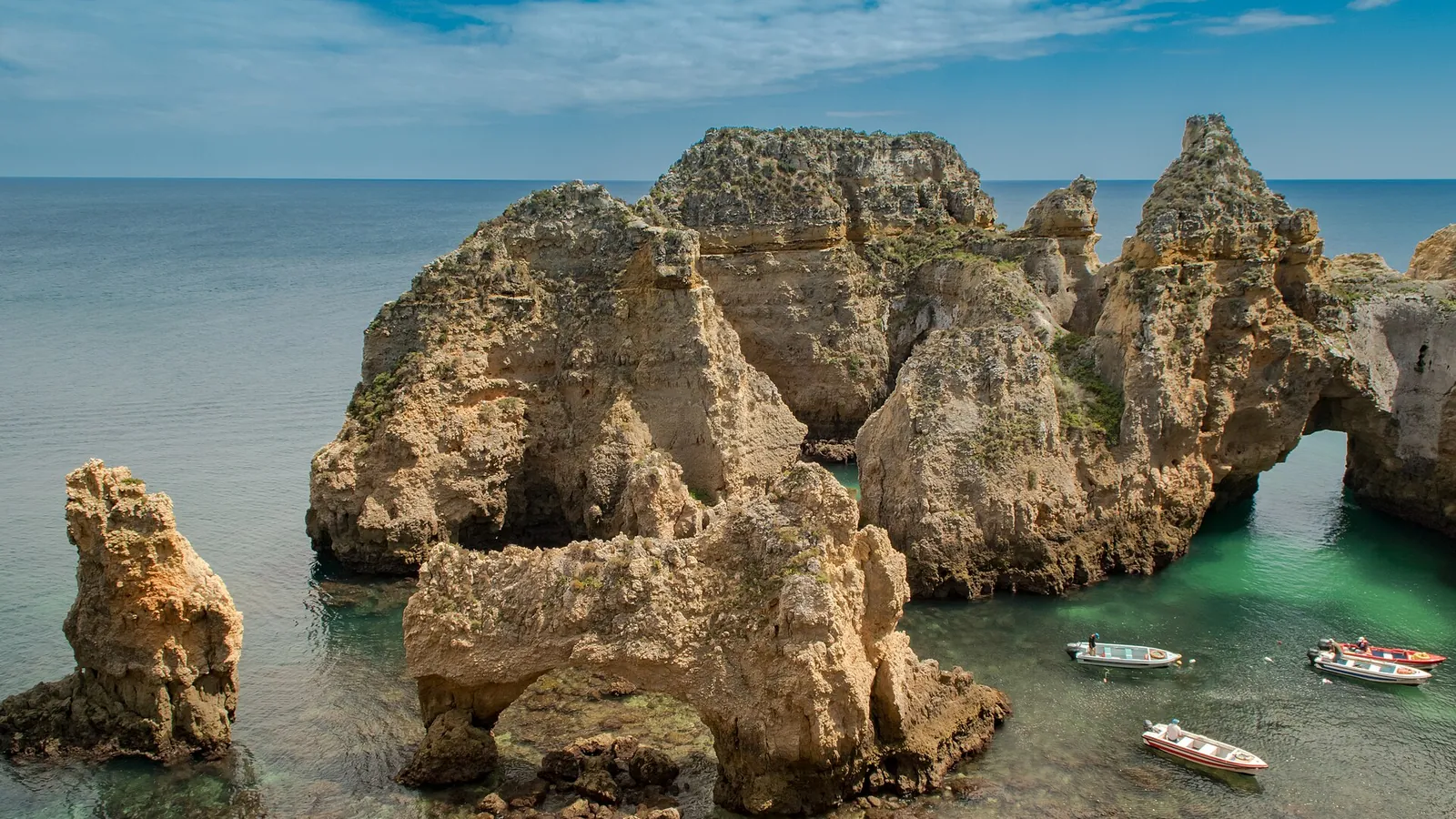
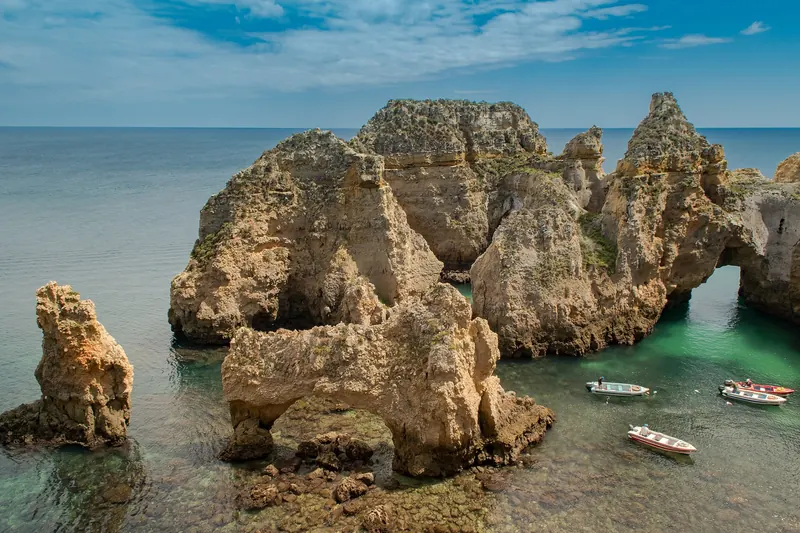
The ochre limestone cliffs and sea stacks of Ponta da Piedade near Lagos

Algarve · Portugal

The Algarve

Portugal's southern coastline, where wind-and-wave-carved limestone cliffs meet water that stays swimmable without the Mediterranean's summer crush.

  • Best time May–June and September, for warm swimmable water with fewer crowds
  • Stay 4–5 days
  • Good for Beaches, scenery, a relaxed coastal pace

Photo: Dronepicr · CC BY 3.0

Welcome to the Algarve

The Algarve is Portugal's southernmost region, its coastline carved over millennia into a dramatic sequence of ochre limestone cliffs, hidden grottoes and sea stacks that rank among the most striking coastal scenery in Europe, without the crowds or prices of the Mediterranean's better-known equivalents.

The region's character shifts noticeably along its length — the eastern Algarve holds flatter, quieter beaches and the historic town of Tavira, the central stretch around Lagos and Albufeira concentrates the famous cliff scenery and resort infrastructure, and the wilder western coast, the Costa Vicentina, trades development for dramatic, wind-battered cliffs and surf breaks.

That range means the Algarve suits very different kinds of trip — a resort-focused family beach holiday, a boat trip through sea caves, or a quieter clifftop hike along the Rota Vicentina trail — all within a coastline that's easy to combine by rental car.

  • Coast & Beaches
  • Scenic Region
  • Nature & Wildlife
  • Major City

Why visit

Why visit the Algarve?

The Algarve's case is that its limestone coastline rivals anywhere in the Mediterranean, at a fraction of the crowds and cost.

  • The limestone cliffs are spectacular

    Ponta da Piedade and the wider coastline's sea stacks and grottoes rank among Europe's most striking coastal scenery.

  • The water is clean and swimmable

    Atlantic-cooled but clear, with Blue Flag beaches along much of the coastline.

  • The region offers real range

    From resort-town convenience to the wild, undeveloped Costa Vicentina, all within a short drive.

  • It's noticeably better value than comparable Mediterranean coasts

    Lower prices than Spain's Costa del Sol or the French Riviera for comparable scenery.

  • The sea cave boat trips are worth it

    Ponta da Piedade's grottoes and hidden beaches are best experienced from the water, not just the clifftop.

Main attractions

Top things to see in the Algarve

The Algarve's essential sights, spread along the coastline from Lagos to the eastern beaches.

  1. The ochre limestone cliffs and sea stacks of Ponta da Piedade near Lagos

    Ponta da Piedade

    A dramatic headland of ochre limestone cliffs, sea stacks and hidden grottoes near Lagos, among the most photographed coastal scenery in Portugal.

    Tip A boat trip into the grottoes reveals sights invisible from the clifftop viewpoints alone.

  2. Benagil Cave

    A famous sea cave with a natural skylight opening onto a hidden beach, reachable only by boat, kayak or a swim from the nearest cove.

    Tip Visit early morning by kayak or paddleboard for a considerably less crowded experience than the popular midday boat tours.

  3. Lagos old town

    A charming walled town with a real maritime history, its cobbled streets and historic fort considerably more substantial than a typical beach-resort centre.

    Tip The town's small archaeological museum offers worthwhile context on Lagos's role in Portugal's Age of Discovery.

  4. Tavira

    An elegant eastern Algarve town of Moorish-influenced architecture, considerably quieter and less developed than the region's central resort strip.

    Tip A short boat ride reaches Tavira Island's long, uncrowded sandbar beach.

  5. Praia da Marinha

    Consistently ranked among Europe's most beautiful beaches, its dramatic cliff backdrop and clear water justify the reputation.

    Tip Arrive early to secure a spot on the sand — the beach's fame means significant crowds by midday in summer.

  6. Sagres and Cabo de São Vicente

    Continental Europe's southwesternmost point, its dramatic, wind-battered cliffs marking where the Algarve gives way to the wilder Costa Vicentina.

    Tip Sunset from Cabo de São Vicente's lighthouse is one of the most striking in Portugal.

Things to do

Best things to do in the Algarve

Beyond the beaches and cliffs, the Algarve rewards boat trips, coastal hiking and its own regional food culture.

  1. Take a sea cave boat or kayak tour

    The best way to see Benagil Cave and the wider coastline's grottoes, inaccessible from land.

    Tip A kayak or paddleboard tour offers a quieter, more intimate experience than a larger motorboat tour.

  2. Hike a stretch of the Rota Vicentina

    A well-marked long-distance coastal trail along the wilder western Algarve and Alentejo coast, considerably less developed than the central resort strip.

    Tip The Fishermen's Trail section, closest to the water, offers the most dramatic clifftop scenery.

  3. Learn to surf on the western coast

    The Algarve's Atlantic-facing west coast, particularly around Sagres, offers excellent, consistent surf breaks suited to beginners and experienced surfers alike.

    Tip Surf schools around Sagres offer lessons for all levels, including complete beginners.

  4. Visit a quieter eastern Algarve beach

    The eastern stretch around Tavira and Cacela Velha offers long, flat, uncrowded sandbar beaches, a real contrast to the central coast's cliffs.

    Tip Tavira Island's beach is reachable only by boat, keeping it quieter than mainland-accessible alternatives.

  5. Visit a local market

    Loulé's covered market and similar traditional markets across the region offer good local produce, cheese and regional specialties.

    Tip Loulé's Saturday gypsy market adds an additional, lively outdoor market alongside the permanent covered one.

Local food

What to eat in the Algarve

The Algarve's food scene leans heavily on excellent fresh seafood alongside standard Portuguese dishes.

  • Cataplana

    A hearty seafood stew cooked and served in a distinctive copper clam-shaped pot, the Algarve's signature dish.

    Where to try it Traditional seafood restaurants throughout Lagos, Tavira and the coastal towns.

  • Grilled sardines

    Simply grilled whole sardines, excellent along the Algarve's coastal towns, especially in summer.

    Where to try it Beachside restaurants and traditional tascas throughout the region.

  • Percebes (goose barnacles)

    A prized, unusual-looking shellfish harvested from the region's rocky Atlantic coastline, a real local delicacy.

    Where to try it Traditional seafood restaurants, particularly around Sagres and the western coast.

  • Piri piri chicken

    Grilled chicken marinated in a fiery piri piri chilli sauce, a Portuguese classic with roots tracing back to the country's African colonial trade routes.

    Where to try it Grilled chicken restaurants (churrasqueiras) throughout the region.

  • Medronho

    A potent local spirit distilled from the fruit of the strawberry tree, a distinctive Algarve tradition worth trying in moderation.

    Where to try it Local producers and traditional restaurants across the region's inland towns.

Accommodation

Where to stay in the Algarve

The Algarve's central and western stretches offer different bases depending on your priorities.

  • Lagos

    A historic walled town with easy access to Ponta da Piedade and the region's most photographed cliffs.

    Best for: A genuine old town alongside beach access

  • Tavira

    Considerably less developed than the central resort strip, with elegant architecture and uncrowded beaches.

    Best for: A quieter, more authentic Algarve experience

  • Sagres

    A small town at the region's edge, well positioned for the Rota Vicentina and Cabo de São Vicente.

    Best for: Surfing and the wilder western coast

What a night costs

Hostel dorm
€20–35 per night
Mid-range hotel
€85–160 per night
Benagil Cave boat tour
€20–35 per person
Cataplana for two
€35–55

Transport

Getting to and around the Algarve

Faro Airport is the Algarve's main gateway, with a rental car essential for exploring the wider coastline.

Getting there

  • Faro Airport (FAO)

    Direct flights from across Europe and connections from Lisbon, with the airport central to the region.

    A rental car picked up directly at the airport is the most practical way to explore the coast.

  • Train from Lisbon

    Regular trains connect Lisbon to Faro and Lagos, taking roughly 3 hours.

    A scenic option, though a car remains useful once you've arrived for reaching individual beaches.

  • Rental car

    Essential for exploring beyond your base town, particularly for reaching quieter beaches and the western coast.

    Book ahead in peak summer season, when rental availability can run tight.

Getting around

A rental car is the most practical way to explore the Algarve's spread-out coastline.

  • Rental car

    The most flexible way to combine several beaches, towns and viewpoints along the coast.

    Parking near popular beaches fills up quickly in peak summer — arrive early.

  • Regional trains and buses

    Connect the main coastal towns, though service to individual beaches is limited.

    A reasonable option if basing yourself in one town and making occasional day trips.

  • Boat tours

    The only way to reach certain sea caves and grottoes, including Benagil Cave.

    Depart from Lagos, Albufeira and Portimão marinas throughout the day in high season.

When to go

Best time to visit the Algarve

The Algarve's summer heat and crowds peak in July and August, and late spring and early autumn offer the best balance of warm weather and manageable crowds.

  • Spring (April–June)

    Best time

    Warming weather and swimmable water by late spring, with crowds well below the July-August peak.

  • Summer (July–August)

    Good

    Hot and reliably dry, the most popular season, but the most crowded and expensive.

  • Autumn (September–October)

    Best time

    Warm sea temperatures lingering from summer and noticeably thinner crowds than August.

  • Winter (November–March)

    Shoulder

    Mild by northern European standards, popular with golfers, though too cool for most swimming.

Worth planning around: August without accommodation booked far ahead — Portuguese and wider European summer holidays push the region to its busiest, most expensive point of the year.

Itinerary

Four days in the Algarve

Lagos and the famous cliffs first, then the wider coastline's range.

  1. Day1

    Arrive and settle in

    • Morning Arrive and transfer to Lagos.
    • Afternoon Explore the old town and walls.
    • Evening Dinner with cataplana.
  2. Day2

    Ponta da Piedade and Benagil Cave

    • Morning A boat or kayak tour to Benagil Cave.
    • Afternoon Ponta da Piedade's cliffs and grottoes.
    • Evening Sunset drinks overlooking the coast.
  3. Day3

    The wilder west coast

    • Morning Drive to Sagres and Cabo de São Vicente.
    • Afternoon A surf lesson or a Rota Vicentina hike.
    • Evening A final Sagres dinner.
  4. Day4

    The quieter east, or a beach day

    • Morning Drive to Tavira for a quieter Algarve.
    • Afternoon A boat to Tavira Island's beach.
    • Evening A final Algarve dinner.

Travel tips

The Algarve travel tips

Practical notes on booking, timing and transport that make a real difference to an Algarve trip.

  • Rent a car for the trip — public transport to individual beaches and viewpoints is limited.
  • Book Benagil Cave boat tours ahead in peak season, or visit early morning by kayak for fewer crowds.
  • Arrive early at popular beaches like Praia da Marinha — parking and space fill up by midday in summer.
  • Book accommodation well ahead for July-August, when the region reaches its busiest, most expensive point.
  • Pack layers for the western coast — Sagres and the Costa Vicentina run windier and cooler than the sheltered central Algarve.
  • Consider the eastern Algarve around Tavira for a quieter, more authentic alternative to the central resort strip.

FAQ

The Algarve: frequently asked questions

How many days do you need in the Algarve?

Four to five. Three covers Lagos and the main cliff scenery at a rushed pace; five allows the eastern towns or the wilder west coast without feeling hurried.

Do I need a car in the Algarve?

Yes — the region's best beaches, viewpoints and towns are spread along a long coastline, and public transport between them is limited. A rental car is the most practical way to explore properly.

Is the Algarve only for beach resorts?

No, not — Lagos and Tavira both offer real historic towns, and the western Costa Vicentina around Sagres offers wild, undeveloped cliffs and surfing considerably different from the central resort strip.

Is the Algarve expensive?

Mid-range travel runs about €75–140 per person per day, noticeably lower than comparable Mediterranean coastlines in Spain, France or Italy for similar scenery and water quality.

What is the best time of year to visit?

May, June and September offer the best balance of warm, swimmable water and manageable crowds. July and August are hottest and busiest, with the best weather guarantee but genuine crowds and higher prices.

Read next

Related travel articles

Practical

Packing by Season and Trip Type

Most packing advice is a list of things. This is the opposite: the small number of decisions that determine whether your luggage helps or hinders, organised by the kind of trip you are actually taking.

Where to go

Beyond the Big Names: Places Worth the Detour

The most visited place in a country is rarely its best, and it is almost never its best value. This is a method for finding the destinations that do not make the postcards — and a set of examples from five of the 50 countries on this site.

Advertisement