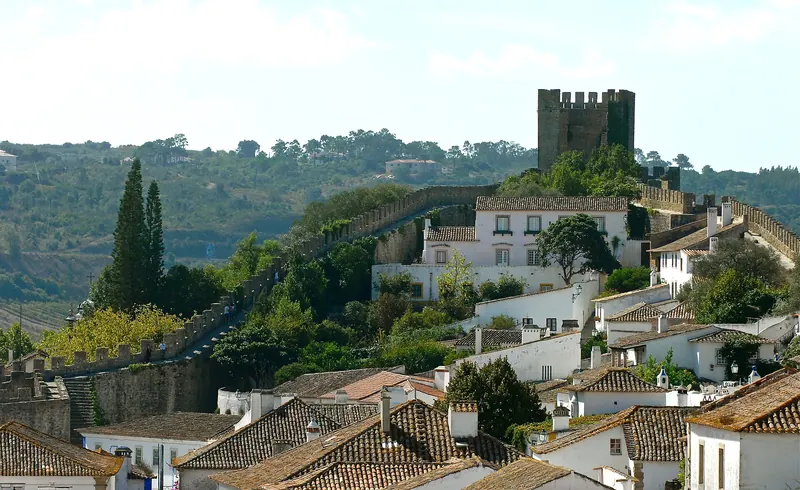




Pena Palace's colourful towers rising above the forested hills of Sintra

Lisbon district · Portugal

Sintra

A hillside town of fairy-tale palaces and misty forests that so captivated Lord Byron he called it a 'glorious Eden' — now an easy, worthwhile day trip from Lisbon.

  • Best time April–June and September–October, for mild weather and manageable crowds
  • Stay 1 day, or overnight to see it without crowds
  • Good for Palaces, architecture, an easy Lisbon day trip

Photo: CEphoto, Uwe Aranas · CC BY-SA 3.0

Welcome to Sintra

Sintra was the summer retreat of Portugal's kings for centuries, and the extraordinary collection of palaces, castles and estates scattered across its forested, mist-prone hills reflects generations of royal and aristocratic wealth poured into increasingly fantastical architecture.

Pena Palace is the headline act — a riot of clashing colours and architectural styles built in the 1840s for King Ferdinand II, deliberately eccentric and unlike any other royal palace in Europe — but the wider town holds equally compelling sights, from the Moorish Castle's ancient ramparts to Quinta da Regaleira's symbolism-laden gardens and initiation well.

Lord Byron called Sintra a 'glorious Eden' after visiting in 1809, and while the crowds have grown considerably since, the town's UNESCO World Heritage status and genuine architectural density make it one of the most worthwhile day trips anywhere near a European capital.

  • Historic Site
  • UNESCO Site
  • Scenic Region
  • Off the Beaten Path

Why visit

Why visit Sintra?

Sintra's case is that no other easy capital-city day trip delivers this much fantastical royal architecture in one place.

  • Pena Palace is unlike any other palace

    A deliberately eccentric, colour-clashing 19th-century royal retreat that looks more like a fairy tale than history.

  • The Moorish Castle delivers genuine ancient history

    8th-century ramparts offering sweeping views over Sintra's forested hills toward the Atlantic.

  • Quinta da Regaleira is strange and compelling

    A symbolism-laden estate with an underground initiation well unlike anything else in Portugal.

  • It's an easy Lisbon day trip

    Under an hour by train, making a full, worthwhile day without extending your itinerary much.

  • An overnight stay reveals it without the crowds

    Day-trippers leave by late afternoon, leaving the town peaceful for an evening visit.

Main attractions

Top things to see in Sintra

Sintra's essential sights, spread across the hillside town and its surrounding forested estates.

  1. Pena Palace's colourful towers rising above the forested hills of Sintra

    Pena Palace

    A deliberately eccentric 19th-century royal palace, its clashing red, yellow and violet towers combining Gothic, Moorish and Manueline styles into something unlike anywhere else in Europe.

    Tip Book timed-entry tickets online well ahead in summer, and arrive as early as possible to beat both crowds and the region's frequent morning mist.

  2. Moorish Castle (Castelo dos Mouros)

    8th-century fortress ramparts snaking along a forested ridge, offering sweeping views over Sintra and, on clear days, toward the Atlantic coast.

    Tip The walk along the walls involves steep, uneven sections — wear proper shoes and take it slowly.

  3. Quinta da Regaleira

    A strange and compelling early 20th-century estate, its gardens hiding a symbolism-laden underground 'initiation well' and tunnel network.

    Tip Descend the initiation well via its spiral staircase, then explore the connecting tunnels for a memorable, slightly eerie experience.

  4. Sintra National Palace

    A palace in the town centre itself, its two enormous conical chimneys among Sintra's most recognisable landmarks, with Moorish-influenced interiors dating back centuries.

    Tip Considerably less crowded than Pena Palace, worth the visit if you have time for a second palace.

  5. Monserrate Palace

    A romantic, less-visited palace surrounded by an exceptional botanical garden, combining Gothic, Indian and Moorish architectural influences.

    Tip A worthwhile stop if you have a full day — its gardens are among the most beautiful and least crowded in Sintra.

Things to do

Best things to do in Sintra

Beyond the palaces, Sintra rewards its forested hiking trails and the nearby Atlantic coast.

  1. Hike between the hillside estates

    Forested trails connect several of Sintra's palaces and viewpoints, offering a good alternative to the shuttle bus between sights.

    Tip The walk between the Moorish Castle and Pena Palace is manageable and scenic for reasonably fit visitors.

  2. Visit Cabo da Roca

    Continental Europe's westernmost point, a dramatic clifftop a short drive or bus ride from Sintra.

    Tip Combine with a stop in the coastal town of Cascais for a full day beyond the palaces themselves.

  3. Wander Sintra's historic centre

    The town's small centre, with narrow streets and traditional shops, offers a pleasant break between palace visits.

    Tip Try queijadas de Sintra, a traditional local pastry, from one of the town's historic bakeries.

  4. Explore Monserrate's botanical gardens

    An exceptional landscaped garden surrounding Monserrate Palace, with plant species from across the former Portuguese empire.

    Tip Allow at least an hour beyond the palace visit — the gardens reward an unhurried wander.

  5. Stay overnight for a quieter Sintra

    Day-trip crowds from Lisbon thin out by late afternoon, leaving the town considerably more peaceful for an evening visit.

    Tip An overnight stay also allows an early-morning visit to Pena Palace before the first tour buses arrive.

Local food

What to eat in Sintra

Sintra's food scene centres on traditional Portuguese pastries alongside standard regional dishes.

  • Queijadas de Sintra

    A distinctive local pastry of sweet cheese, cinnamon and sugar in a thin crust, a Sintra specialty with centuries of history.

    Where to try it Casa do Preto or Piriquita, both historic bakeries in Sintra's town centre.

  • Travesseiros

    A rich, flaky pastry filled with almond and egg cream, another Sintra specialty traditionally paired with the queijada.

    Where to try it Piriquita, a long-running Sintra bakery famous for both local pastries.

  • Bacalhau à Brás, a Portuguese salt cod dish with eggs and shoestring potatoes

    Bacalhau (salt cod)

    Widely available across the town as elsewhere in Portugal, good from Sintra's traditional restaurants.

    Where to try it Traditional restaurants throughout Sintra's historic centre.

  • Ginjinha

    A potent sour cherry liqueur, available across the town as a small shot, a common way to end a day of sightseeing.

    Where to try it Cafés and bars throughout Sintra's centre.

  • The Adega Regional de Colares, a historic wine cellar near Sintra

    Colares wine

    A distinctive wine from vines planted directly in coastal sand dunes near Sintra, among the few in Europe never affected by the phylloxera blight — one of Portugal's oldest demarcated wine regions.

    Where to try it The Adega Regional de Colares cooperative cellar, a short drive from central Sintra toward the coast.

Accommodation

Where to stay in Sintra

Sintra works well as a day trip from Lisbon, or an overnight stay for a quieter visit.

  • Sintra town centre

    The most convenient base, close to the train station and central sights.

    Best for: Walking distance to the National Palace and shuttle buses

  • Near the palaces (São Pedro de Sintra)

    A short distance from the main centre, with good access to the hillside estates.

    Best for: A quieter, more residential atmosphere

What a night costs

Guesthouse room
€70–130 per night
Boutique hotel
€140–260 per night
Pena Palace entry
€14–20
Queijada pastry
€1.20–2

Transport

Getting to and around Sintra

Sintra is an easy train trip from Lisbon, one of the most straightforward day trips near any European capital.

Getting there

  • Train from Lisbon

    Frequent regional trains from Lisbon's Rossio station reach Sintra in about 40 minutes.

    Trains run every 15–20 minutes through the day — no advance booking required.

  • Bus to Cabo da Roca and Cascais

    Regular buses connect Sintra's town centre to the coast, useful for combining a palace visit with Continental Europe's westernmost point.

    The 403 bus route covers both Cabo da Roca and onward to Cascais.

  • Organised day tour from Lisbon

    A convenient option for visitors wanting transport between palaces handled for them.

    Worthwhile if you're short on time and want to see several palaces without navigating shuttle buses yourself.

Getting around

Sintra's palaces are spread across forested hills, with a shuttle bus connecting the main sights.

  • Tourist shuttle bus (434 or 435)

    Connects the train station to Pena Palace, the Moorish Castle and other key sights.

    Buy a day pass if visiting multiple palaces — it's better value than single tickets.

  • Walking

    Trails connect several hillside estates for fit visitors willing to hike between them.

    The walk between the Moorish Castle and Pena Palace is manageable for most visitors.

  • Taxi or ride-hailing app

    A convenient alternative to the shuttle bus, particularly for visitors short on time.

    Fares between the main sights are reasonable given the short distances involved.

When to go

Best time to visit Sintra

Sintra's hillside microclimate is cooler and mistier than Lisbon, and spring and autumn offer the best sightseeing weather.

  • Spring (April–June)

    Best time

    Mild weather and blooming gardens, though morning mist is common on the hills.

  • Summer (July–August)

    Shoulder

    Warm but the busiest season, with significant queues at Pena Palace without advance tickets.

  • Autumn (September–October)

    Best time

    Comfortable temperatures and thinning crowds, an excellent window for the palaces and gardens.

  • Winter (November–March)

    Good

    Cool and often misty, but quiet, with the palaces' forests looking particularly atmospheric in the fog.

Worth planning around: Midday hours in July and August without pre-booked tickets, when Pena Palace's queues can mean hours of waiting.

Itinerary

One day in Sintra

The two essential palaces first, then Quinta da Regaleira and the town centre if time allows.

  1. Day1

    Sintra's palaces

    The essential day-trip circuit.

    • Morning Pena Palace, arriving as early as possible.
    • Afternoon The Moorish Castle and Quinta da Regaleira.
    • Evening A queijada pastry before the train back to Lisbon.

Travel tips

Sintra travel tips

Practical notes on booking, timing and transport that make a real difference to a Sintra trip.

  • Book Pena Palace tickets online well ahead in summer — walk-up queues can mean hours of waiting.
  • Arrive as early as possible, both to beat crowds and Sintra's frequent morning mist.
  • Buy a shuttle bus day pass if visiting multiple palaces — it's better value than single fares.
  • Wear comfortable shoes — the Moorish Castle's ramparts and hillside trails involve uneven terrain.
  • Consider an overnight stay if you want to see Pena Palace without the day-trip crowds.
  • Don't try to see every palace in a single rushed day — Pena Palace, the Moorish Castle and Quinta da Regaleira are enough for one visit.

FAQ

Sintra: frequently asked questions

Is Sintra worth a day trip from Lisbon?

Yes, essential — it's under an hour away by train and offers palace architecture found nowhere else in Portugal, making it one of the most worthwhile day trips near any European capital.

How many palaces can I see in one day?

Realistically two to three with good planning — Pena Palace and the Moorish Castle together, plus Quinta da Regaleira if time allows. Trying to add more risks rushing all of them.

Should I stay overnight in Sintra?

Worth considering if you want to see Pena Palace without the day-trip crowds — most visitors, though, manage a satisfying day trip from Lisbon without needing to change accommodation.

How do I get around Sintra?

The tourist shuttle bus (434 or 435) connects the train station to the main palaces, the most practical option for most visitors, though fit walkers can hike between some sights instead.

What is the best time of year to visit?

April to June and September to October offer the most comfortable weather and manageable crowds. Summer is the busiest season, requiring advance tickets to avoid long queues.

Read next

Related travel articles

Heritage

UNESCO Sites Worth Planning a Trip Around

A UNESCO listing tells you a place matters; it does not tell you whether it is worth two days and a detour. This is how to read the list usefully — and which sites reward building a trip around them.

Planning

Planning Your First Trip to Europe

Most first European trips go wrong in the same three ways: too many cities, too little time in each, and a route shaped by a cheap flight rather than by geography. Here is how to avoid all three.

Advertisement