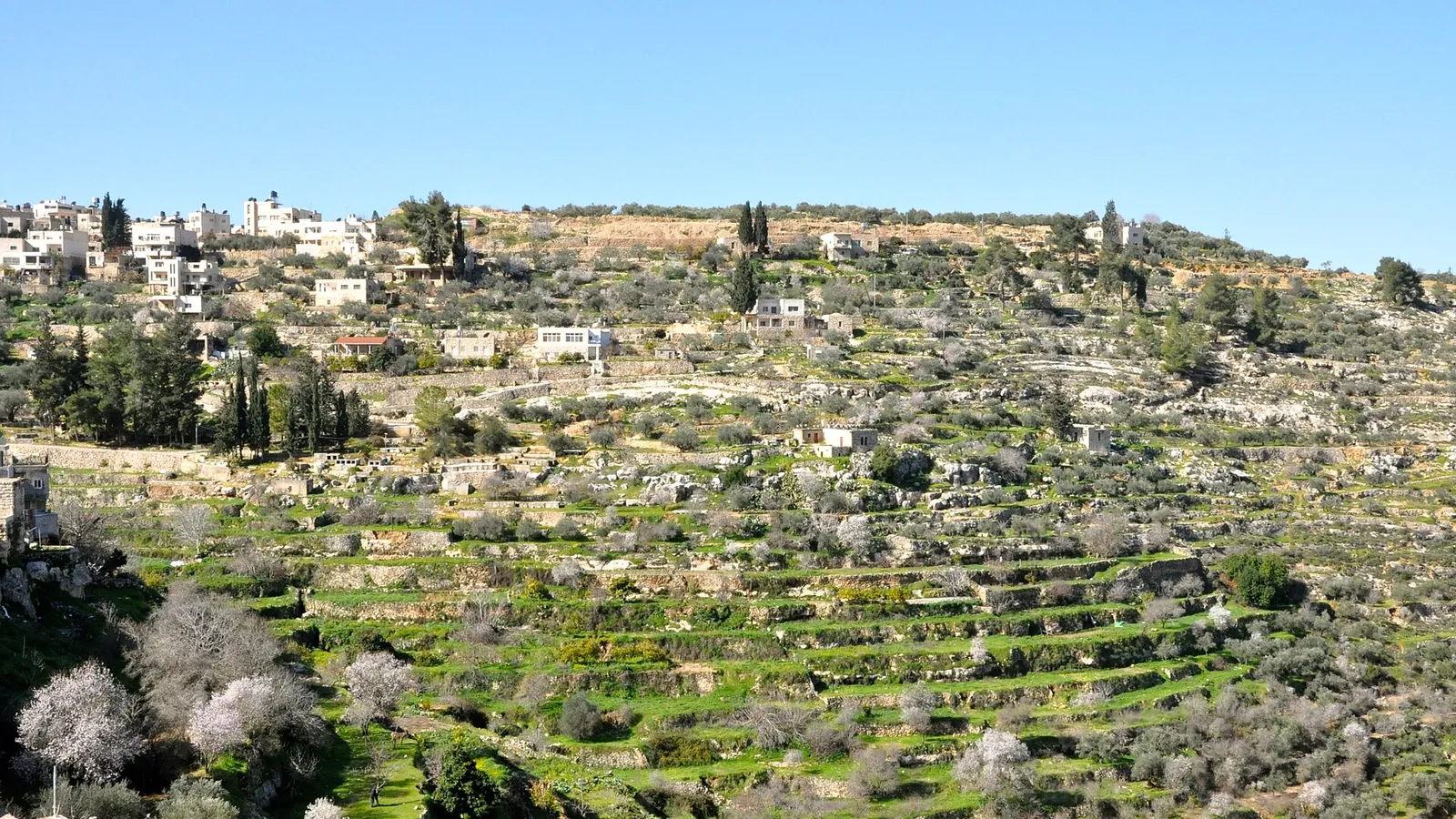
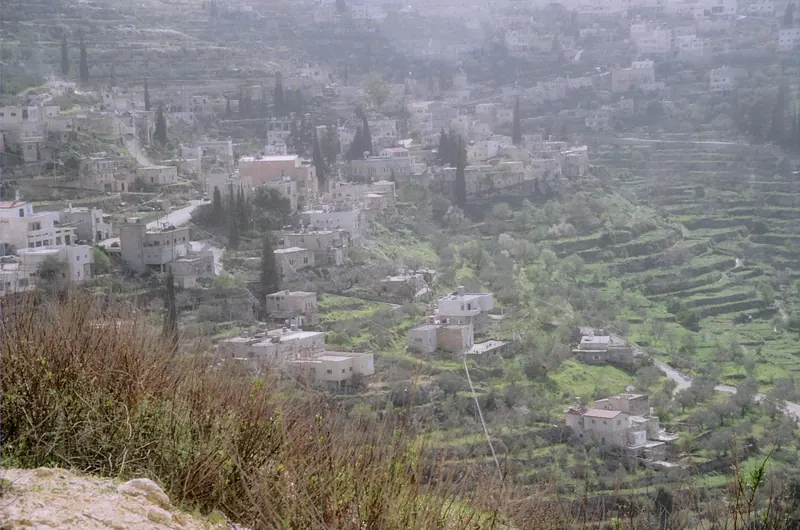
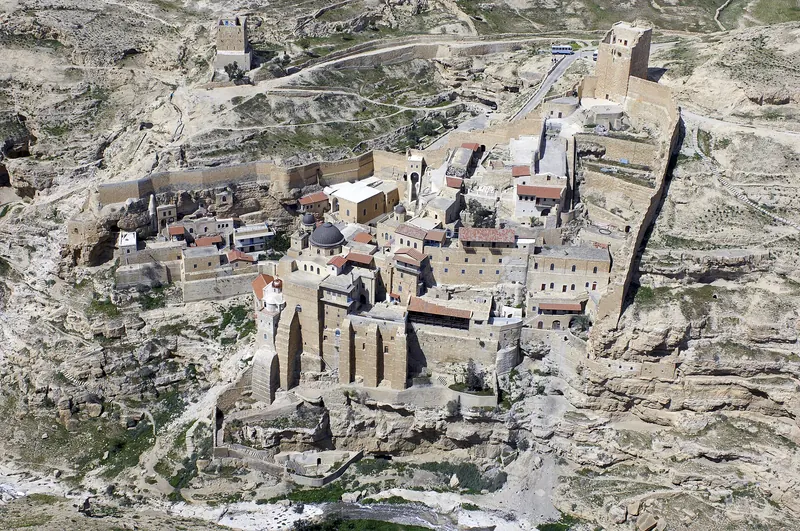
The stone houses of Battir above their terraced valley

Bethlehem Governorate, west of Bethlehem · Palestinian Territories

Battir

A stone village above a valley of ancient irrigated terraces, still farmed and still watered by a spring-fed system shared out among the village's families for centuries.

  • Best time March–May and September–November
  • Stay Half a day
  • Good for Walking, landscape, agriculture, a quiet half-day from Bethlehem

Photo: Labour Palestine · CC BY 2.0

Welcome to Battir

Battir is a small village of about 4,000 people, seven kilometres west of Bethlehem, on the edge of a steep valley called Wadi al-Makhrour. The valley is terraced with dry-stone walls that hold small plots of olives, vines, figs, almonds and vegetables. It is watered by springs, and by an irrigation system that has been in use since Roman times, and that is shared among the village's families in a rotating schedule that has hardly changed in centuries.

In 2014, UNESCO inscribed the landscape as 'Palestine: Land of Olives and Vines, Cultural Landscape of Southern Jerusalem, Battir', and put it on the List in Danger because of the threat from planned development and the separation barrier. The Palestinian community and Israeli conservation groups jointly challenged the route of the barrier through the valley in the courts, and the case became a symbol of community-led heritage protection.

At the bottom of the valley runs the old Jaffa–Jerusalem railway, built by the Ottomans in 1892, where trains still pass. The village is a quiet, green place to walk, and the trails through the terraces are an easy half-day. It is small, quiet and a welcome contrast to the noise of the cities.

  • UNESCO Site
  • Scenic Region
  • Off the Beaten Path

Why visit

Why visit Battir?

Battir is a place to walk, look and slow down, and it shows a side of Palestine that is rarely on the news.

  • An ancient landscape still in use

    The terraces and irrigation system are not a reconstruction or a museum piece. Families still farm them and share the water.

  • An easy and beautiful walk

    The trails through the valley are a couple of hours, mostly flat, and pass springs, pools and old farm buildings.

  • A village cooperative

    Local guides, cafés and a small eco-museum offer visitors a warm welcome, and income goes to the community.

  • Battiri aubergines

    The village is famous for its small, sweet aubergines, grown in the terraces and served in local dishes.

  • Close to Bethlehem

    Only 10–15 minutes by car, so it fits into a day with the Church of the Nativity.

Main attractions

Top things to see in Battir

Battir is small, and a visit takes two to four hours. A local guide adds a lot.

  1. The terraced fields and olive trees in the Battir valley

    The terraced valley

    Wadi al-Makhrour, the valley of Battir, is a stepped hillside of stone terraces, planted with olives, fruit trees and vegetables. The paths that run along it are easy to follow.

    Tip Go in spring or autumn, when the terraces are green and the light is soft.

  2. The Roman-era irrigation system

    A network of channels and pools, fed by a spring called Ain al-Balad, that delivers water to each family's plot in turn. The system dates from Roman times and is still managed by the families.

    Tip Ask a guide to explain how the turns work.

  3. The Ottoman railway

    The Jaffa–Jerusalem line, opened in 1892, runs along the bottom of the valley through a small station. Trains still use it, and a walking path follows the tracks.

    Tip Trains run at times, so stay off the tracks and listen.

  4. The village and its old houses

    Stone houses with arched doors and flat roofs, old olive presses and a small mosque line the village lanes. The centre is quiet and friendly.

    Tip Ask permission before entering courtyards.

  5. The Battir Eco-Museum and visitor centre

    A small centre run by the local community, with displays on the landscape, the irrigation system and village life, and a base for guided walks.

    Tip Book a guide in advance.

  6. Walking trails to Bethlehem and Wadi Fukin

    Longer routes follow the terraces to nearby villages and hills, including sections of the Masar Ibrahim al-Khalil walking trail.

    Tip Check the route and conditions with a local guide.

Things to do

Best things to do in Battir

Battir is small, and a slow visit works best.

  1. Walk the valley

    A two-hour circuit along the terraces, springs and railway is the highlight of a visit.

    Tip Wear sturdy shoes and bring water.

  2. Hire a local guide

    Guides from the village explain the irrigation system, the history and the politics of the area.

    Tip Book through the eco-museum or your accommodation.

  3. Have lunch in the village

    Village restaurants and homes serve local dishes, including the famous Battir aubergine, with olive oil, herbs and bread.

    Tip Ask in advance for a home-cooked meal.

  4. Pick fruit or help with the harvest

    In season, visitors can join families in the olive harvest or fruit picking.

    Tip Ask your guide about opportunities.

  5. Visit in spring

    The terraces are green, the flowers are out, and the light is soft.

    Tip March and April are the best months.

  6. Combine with Bethlehem

    A morning at the Church of the Nativity and an afternoon in Battir make a satisfying day.

    Tip Hire a driver for the day.

Local food

What to eat in Battir

Food in Battir is simple and rural, based on the produce of the terraces.

  • Battiri aubergine

    A small, sweet, thin-skinned aubergine, grown for centuries in the valley, and served stuffed, grilled or in stews.

    Where to try it Village restaurants and home meals.

  • Village mezze

    Salads, dips, olives and cheeses made from local produce, with freshly baked bread.

    Where to try it Restaurants and homes in the village.

  • Musakhan

    Roast chicken on taboon bread with sumac and onions, especially in the olive-harvest season.

    Where to try it Homes and village restaurants.

  • Olive oil

    The village's olive trees produce a fragrant, peppery oil, sold in bottles and used in everything.

    Where to try it Village shops and cooperatives.

  • Fresh fruit and figs

    Figs, grapes and almonds are picked in season.

    Where to try it Terraces and roadside stalls.

  • Sweet mint tea

    A welcome for every visitor.

    Where to try it Homes and cafés.

Accommodation

Where to stay in Battir

Most visitors come for a half-day from Bethlehem, but a few guesthouses in Battir and the nearby villages welcome overnight guests.

  • Battir village

    Simple guesthouses and a homestay run by local families.

    Best for: A quiet overnight stay

  • Bethlehem

    A wider choice of hotels and restaurants, 15 minutes away.

    Best for: Most visitors

What a night costs

Guesthouse or homestay
₪150–250 per night
Local guide
₪100–200 for a half-day
Village lunch
₪40–80 per person
Entry
Free, with donations welcome

Transport

Getting to and around Battir

Battir is about 7 km west of Bethlehem, and a taxi is the easiest way there.

Getting there

  • Taxi from Bethlehem

    A short drive of 15 minutes. Taxis can wait or come back for you.

    Agree the fare and the return time.

  • Private driver or tour

    Many tours combine Battir with Bethlehem and other sites.

    Check the itinerary.

  • On foot from Bethlehem

    A walking trail links the two, mostly through hills and villages, and takes about four hours.

    Go with a guide.

Getting around

Everything is on foot in the valley and the village.

  • Walking

    The valley paths are well defined and mostly flat, with a few steps.

    Wear sturdy shoes.

  • Guided walk

    A guide from the village leads groups along the terraces and irrigation channels.

    Book in advance.

  • Taxi

    Useful for the journey to the village and to nearby sites.

    Agree the fare.

When to go

Best time to visit Battir

Battir is in the hills at about 700 m. Spring and autumn are the best seasons for walking, and winter can be cold and wet.

  • Spring (March–May)

    Best time

    Green terraces and wildflowers. The best time.

  • Summer (June–August)

    Shoulder

    Warm and dry. Walk early or late.

  • Autumn (September–November)

    Best time

    Warm and clear, with the olive harvest in October and November.

  • Winter (December–February)

    Quiet

    Cool and wet. Paths can be muddy.

Worth planning around: Rainy days, when paths are slippery, and days of unrest.

Itinerary

Half a day in Battir

A guided walk in the morning and a village lunch. Assumes a driver from Bethlehem.

  1. Day1

    Terraces and lunch

    A gentle half-day.

    • Morning A guided walk through the terraces and along the railway.
    • Afternoon A home-cooked lunch in the village, then a visit to the eco-museum.
    • Evening Back in Bethlehem for the evening.

Travel tips

Battir travel tips

Battir is quiet and small, and a few tips help.

  • Go with a local guide. It adds a lot, and it supports the village.
  • Wear sturdy shoes, and take water and a hat.
  • Respect the terraces. Stay on the paths, and do not climb on the walls or pick fruit without permission.
  • Stay off the railway tracks. Trains still pass.
  • Buy olive oil and local products from the village cooperatives.
  • Check conditions before you go. Battir is close to the barrier and checkpoints, and access can change.
  • Combine it with Bethlehem for a full day.

FAQ

Battir: frequently asked questions

Why is Battir a UNESCO site?

For its ancient terraced landscape and irrigation system, which have been used and managed by local families for centuries. It was inscribed in 2014 and placed on the List in Danger.

How long do you need in Battir?

Half a day is enough for a guided walk and lunch. A night in the village is a quiet and relaxing addition.

Do I need a guide?

It is not required, but a local guide adds a great deal and supports the community. Book in advance.

Is Battir easy to reach from Bethlehem?

Yes. It is about 15 minutes by taxi, and is often combined with the Church of the Nativity. You can also walk between them with a guide.

When is the best time to visit?

March to May and September to November. Spring is greenest, and autumn brings the olive harvest.

What is Battir famous for?

Its terraces, its irrigation system and its small green aubergines, known as Battiri aubergines.

Read next

Related travel articles

Heritage

UNESCO Sites Worth Planning a Trip Around

A UNESCO listing tells you a place matters; it does not tell you whether it is worth two days and a detour. This is how to read the list usefully — and which sites reward building a trip around them.

Where to go

Beyond the Big Names: Places Worth the Detour

The most visited place in a country is rarely its best, and it is almost never its best value. This is a method for finding the destinations that do not make the postcards — and a set of examples from five of the 50 countries on this site.

Advertisement