Welcome to Teotihuacán
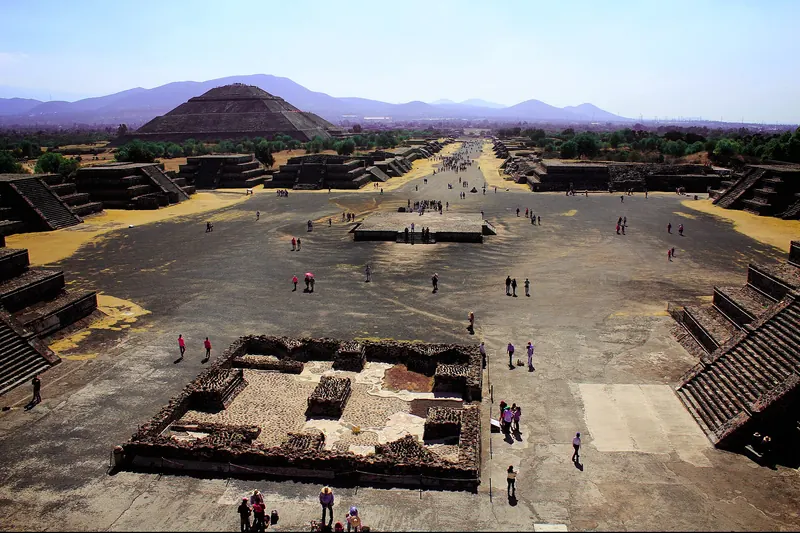
Teotihuacán was, at its height around 450 CE, one of the largest cities in the world, with perhaps 100,000 or more inhabitants. It was laid out on a grid, with a ceremonial avenue, the Avenue of the Dead, running for about 2 km between monumental pyramids and palaces. Its people are known as the Teotihuacanos, but we do not know what they called themselves or what language they spoke.
The Aztecs found the city in ruins in the 14th century, and, awed, named it Teotihuacán, 'the place where the gods were created', and they believed the gods had sacrificed themselves there to create the sun. The names of its buildings, such as the Pyramid of the Sun and the Avenue of the Dead, are Aztec inventions.
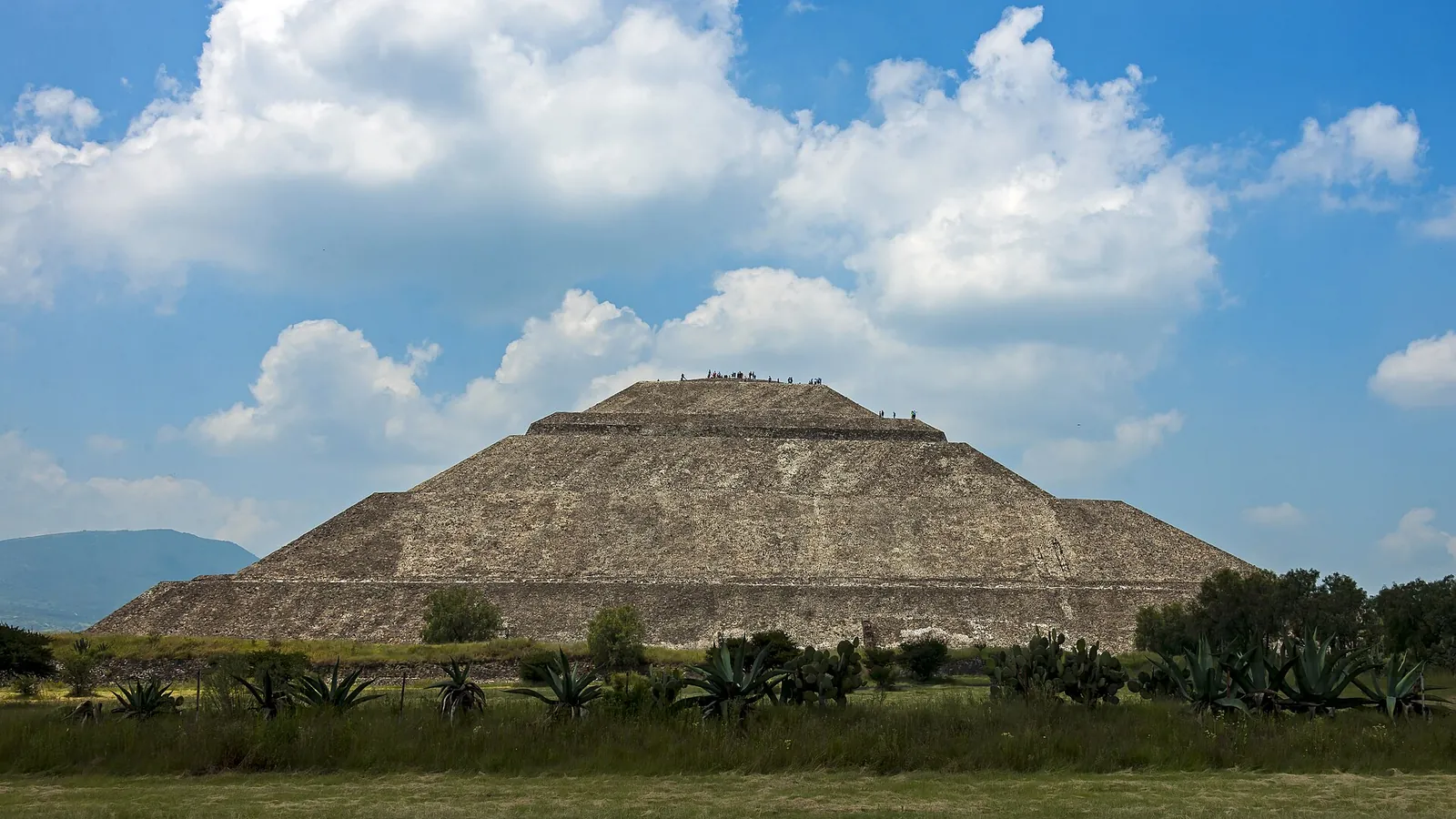
The site, about 50 km north-east of Mexico City, was inscribed by UNESCO in 1987. Its central monuments are the Pyramid of the Sun, about 65 metres high, the Pyramid of the Moon and the Citadel, with the Temple of the Feathered Serpent, and many of its apartment compounds still hold painted murals. It is a big, hot, open site, and its scale is best absorbed early in the morning.
- UNESCO Site
- Archaeology
- Historic Site