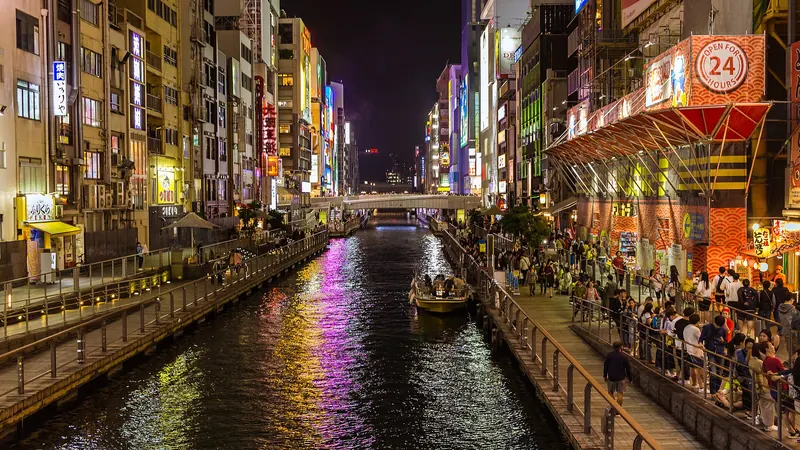
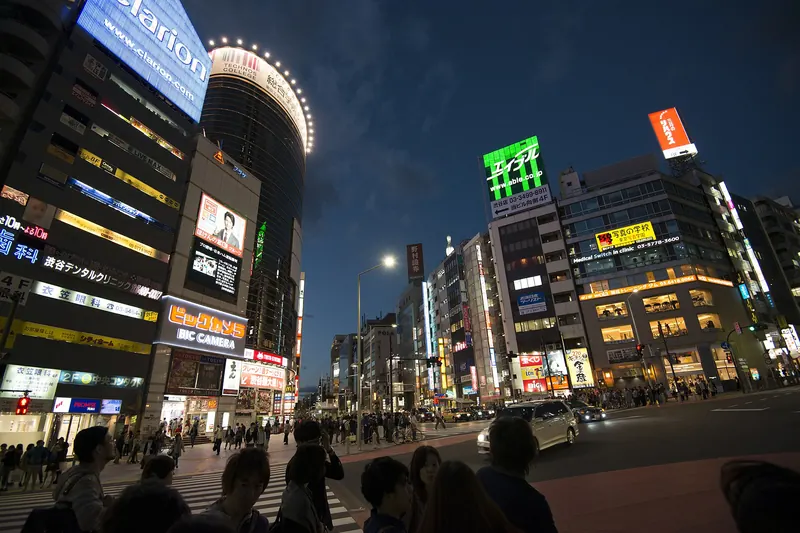
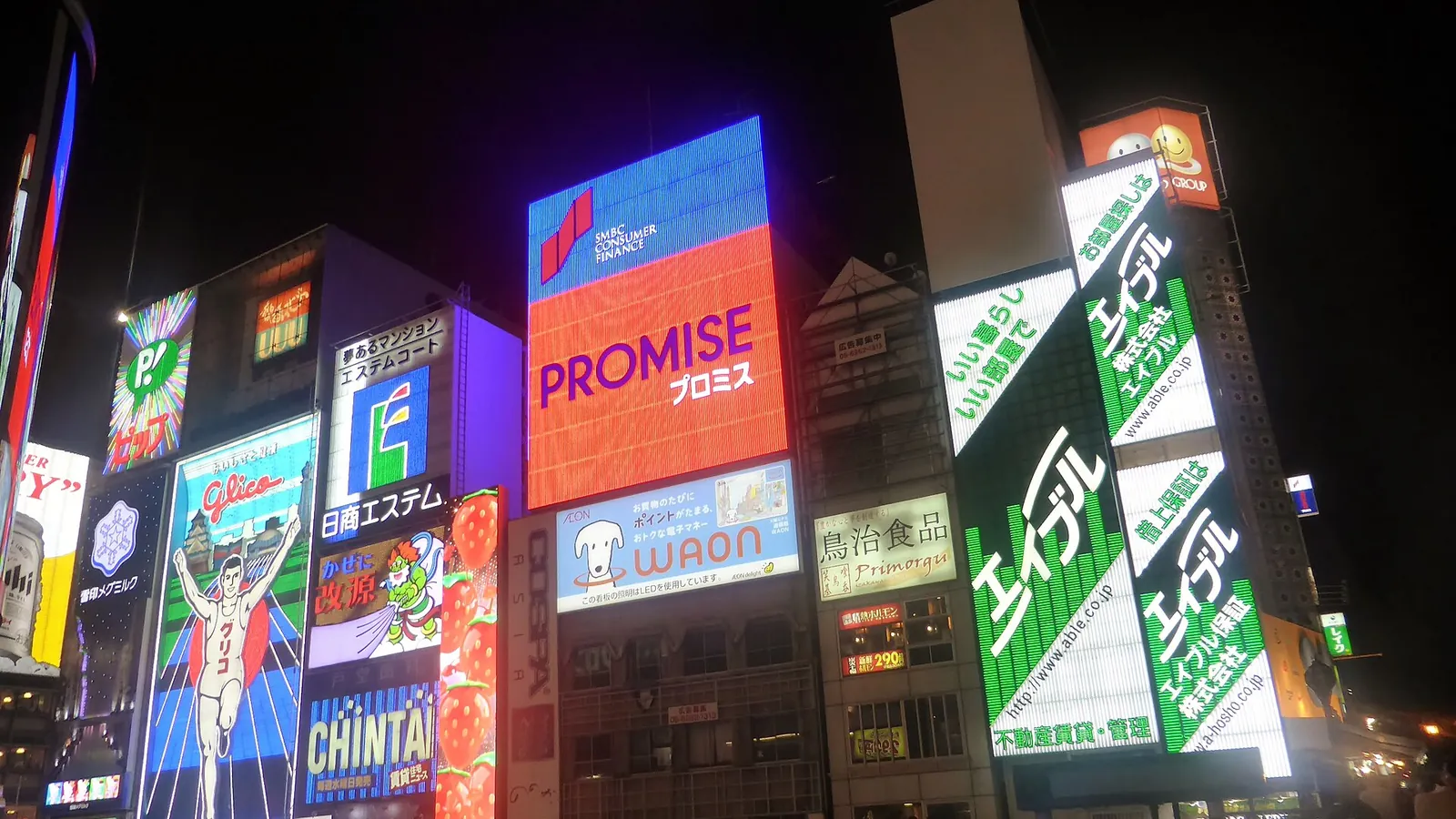
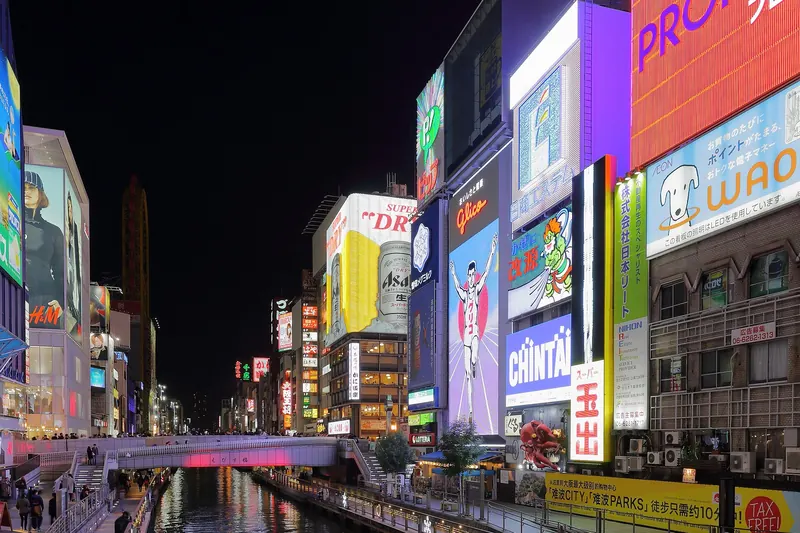
Dotonbori's neon signs reflected in the canal at night in Osaka

Kansai · Japan

Osaka and Nara

Japan's food capital and its first permanent capital, a neon-lit street food city paired with a deer-filled ancient park, both an easy day trip apart.

  • Best time March–May and October–November, for mild weather and clear skies
  • Stay 3 days
  • Good for Food, nightlife, an easy historic day trip

Photo: Tokumeigakarinoaoshima · CC0

Welcome to Osaka and Nara

Osaka carries a genuine reputation within Japan as the country's food capital, summed up in the local phrase 'kuidaore' — to eat oneself into ruin — and a livelier, more direct social culture than the country's reputation for reserve generally suggests. Where Tokyo can feel formal and Kyoto ceremonial, Osaka is loud, funny and food-obsessed in a way visitors consistently find refreshing.

Nara, less than an hour away by train, offers real contrast: Japan's first permanent capital, established in 710, its park is home to over a thousand freely roaming sacred deer and Todai-ji temple's Great Buddha Hall, one of the largest wooden buildings on earth housing one of the country's largest bronze Buddha statues.

The pairing works because the two cities complement rather than compete — Osaka's food and nightlife energy in the evening, Nara's ancient temples and parkland as an easy, rewarding day trip, both connected by a short, frequent train line.
  • City
  • Food
  • Historic Site

Why visit

Why visit Osaka and Nara?

The Osaka-Nara pairing's case is that no other easy day-trip combination in Japan swings this far between neon street food and ancient temple parkland.

  • Osaka's food culture is unmatched

    Okonomiyaki, takoyaki and kushikatsu all trace their origins here, eaten at a density and quality few other cities approach.

  • Nara's deer are free-roaming and sacred

    Over a thousand deer wander Nara Park freely, considered messengers of the gods and a unique wildlife encounter.

  • Todai-ji's Great Buddha is enormous

    Housed in one of the world's largest wooden buildings, the bronze statue's scale is difficult to appreciate from photos alone.

  • Osaka's energy is different from Tokyo or Kyoto

    Louder, funnier and more direct, Osaka offers a real contrast to the reserve visitors often expect from Japan.

  • The pairing is convenient

    Nara sits under an hour from Osaka by train, making the combination an easy, well-paced few days without a rushed itinerary.

Main attractions

Top things to see in Osaka and Nara

Osaka's neon streets and castle grounds, paired with Nara's ancient temples and deer-filled park.

  1. Dotonbori's neon signage over the canal at night

    Dotonbori

    Osaka's famous neon canal-side district, the giant mechanical Glico running man sign and Kani Doraku crab among its landmarks, alive with street food stalls late into the night.

    Tip The view from the Ebisubashi bridge takes in most of Dotonbori's famous signage in one frame, best after dark.

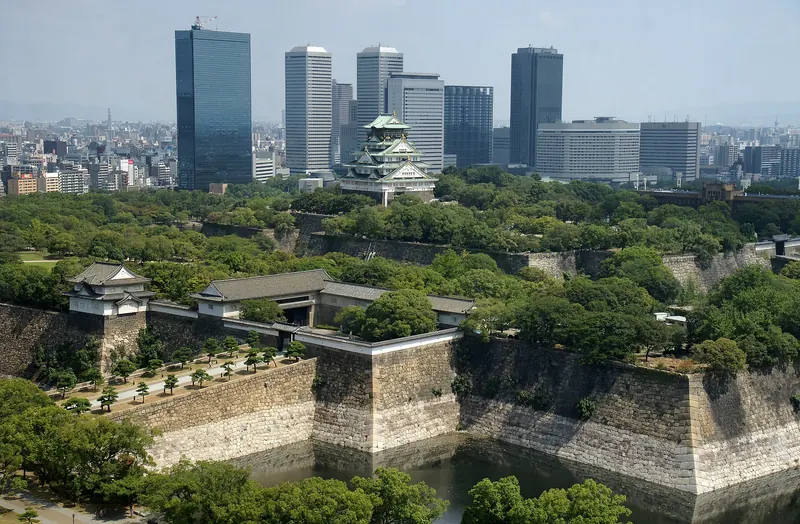
  2. Osaka Castle's reconstructed keep above its stone walls

    Osaka Castle

    A reconstructed keep set within substantial stone walls and a wide moat, one of Japan's most historically significant castles, home to a reunification-era warlord.

    Tip The surrounding Nishinomaru Garden offers an excellent castle view and is particularly worthwhile during cherry blossom season.

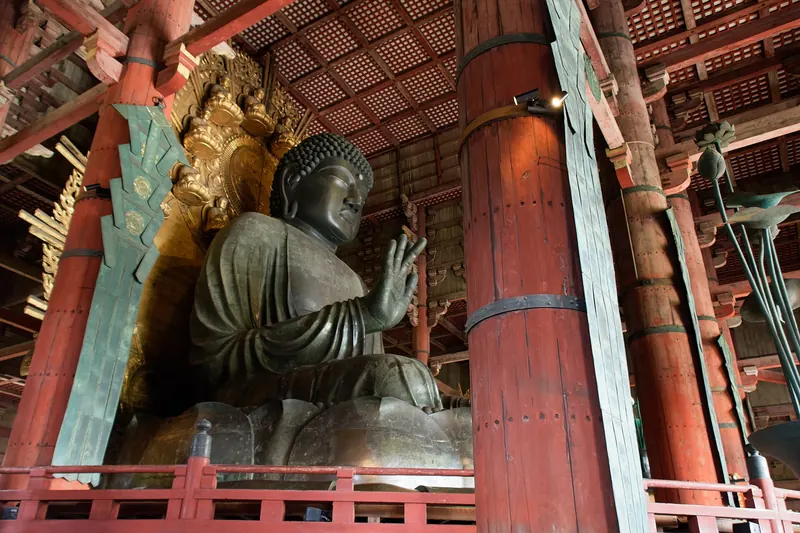
  3. The bronze Great Buddha statue inside Todai-ji's Great Buddha Hall

    Todai-ji Temple, Nara

    One of the world's largest wooden buildings, housing a bronze Great Buddha statue whose scale is difficult to appreciate until standing directly beneath it.

    Tip A pillar inside has a hole said to match the Buddha's nostril — squeezing through is said to guarantee enlightenment, a popular tradition for children and flexible adults.

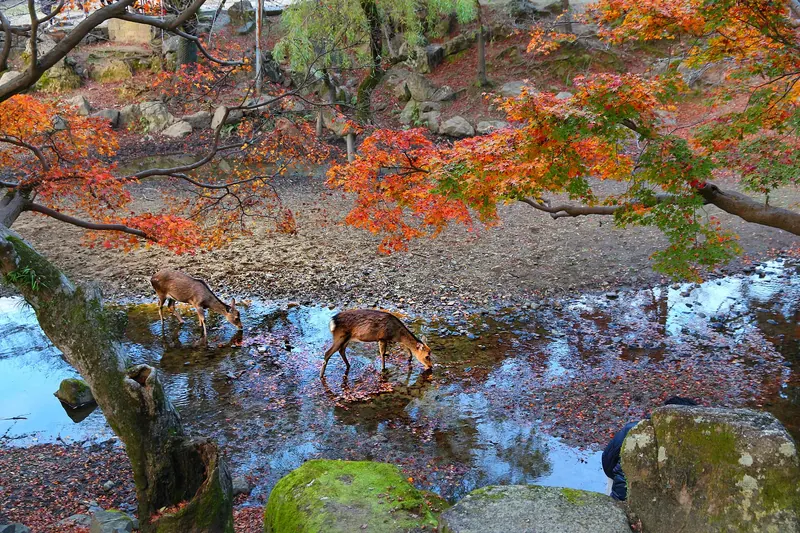
  4. Sacred sika deer roaming freely in Nara Park

    Nara Park's deer

    Over a thousand freely roaming sika deer, considered sacred messengers of the gods, share the park's grounds directly with visitors in a unique encounter.

    Tip Deer crackers ('shika senbei') are sold throughout the park — bow to a deer before offering one, and many will bow back.

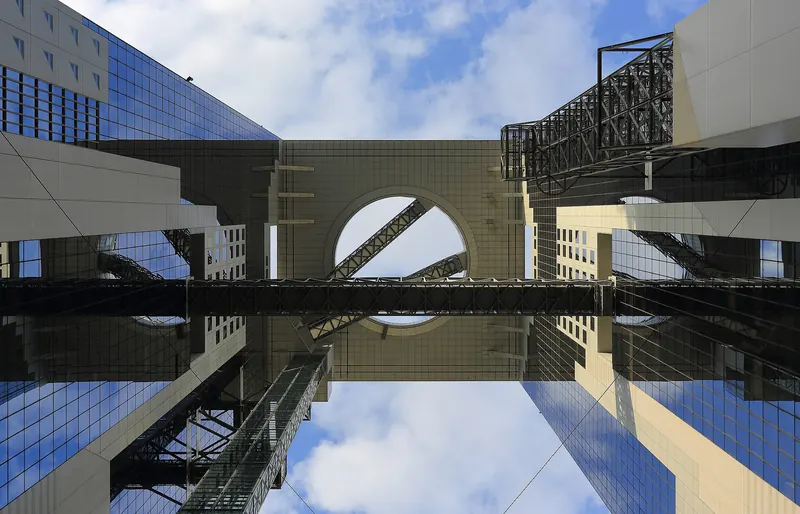
  5. The connected twin towers of Osaka's Umeda Sky Building

    Umeda Sky Building

    A striking connected-tower structure with an open-air rooftop observation deck, offering sweeping views across Osaka's skyline.

    Tip Sunset offers the best light for photographs, with the city's lights beginning to switch on as the sky darkens.

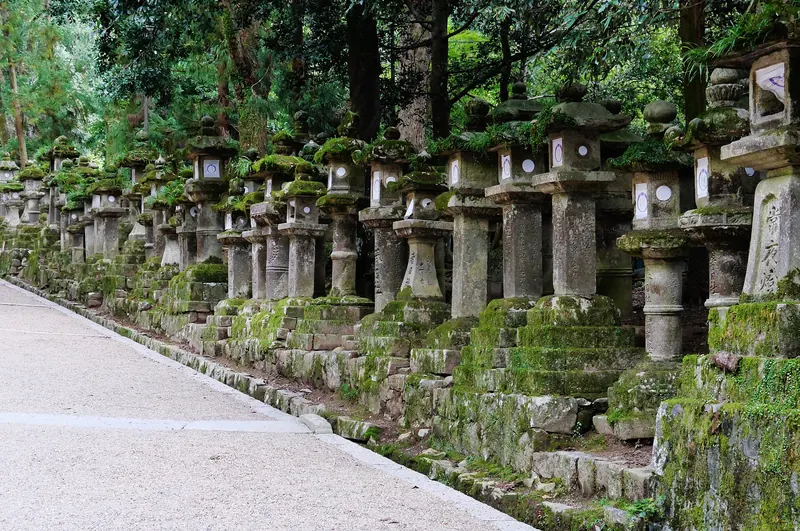
  6. Rows of stone lanterns lining the approach to Kasuga Taisha

    Kasuga Taisha, Nara

    A Shinto shrine famous for its thousands of bronze and stone lanterns lining forested approach paths, atmospheric and less crowded than Todai-ji.

    Tip The lanterns are lit twice yearly for special festivals — check current dates if the illuminated version is the draw.

Things to do

Best things to do in Osaka and Nara

Beyond the major sights, this pairing rewards Osaka's street food crawl and Nara's slower, parkland pace.

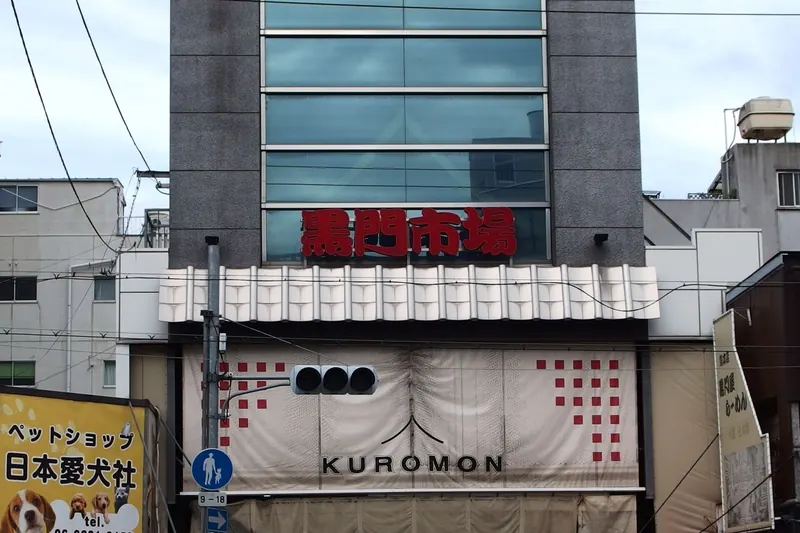
  1. Stalls at Osaka's Kuromon Ichiba Market

    Eat your way through Dotonbori and Kuromon Market

    Takoyaki, okonomiyaki and kushikatsu from stall after stall, an essential Osaka experience that justifies the city's food-capital reputation.

    Tip Kuromon Ichiba Market during the day offers a calmer, less crowded version of the same excellent street food.

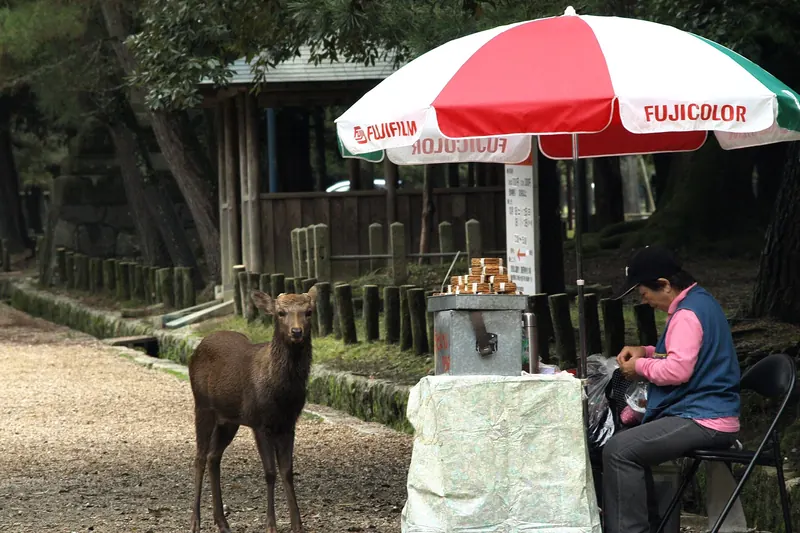
  2. Deer gathering near a cracker stand in Nara Park

    Feed and greet the deer in Nara Park

    A charming, occasionally chaotic encounter with the park's bowing, cracker-hungry deer, best enjoyed with a sense of humour about being mobbed.

    Tip Hold crackers up and away from small children and bags — the deer are polite but persistent.

  3. The Dotonbori canal in Osaka's Namba entertainment district

    Explore Namba's nightlife

    Osaka's dense entertainment district, packed with bars, karaoke boxes and late-night eateries, a lively contrast to Kyoto's more subdued evenings.

    Tip Many smaller bars in Namba charge a modest table charge (otoshi) alongside drink prices — a normal, expected practice.

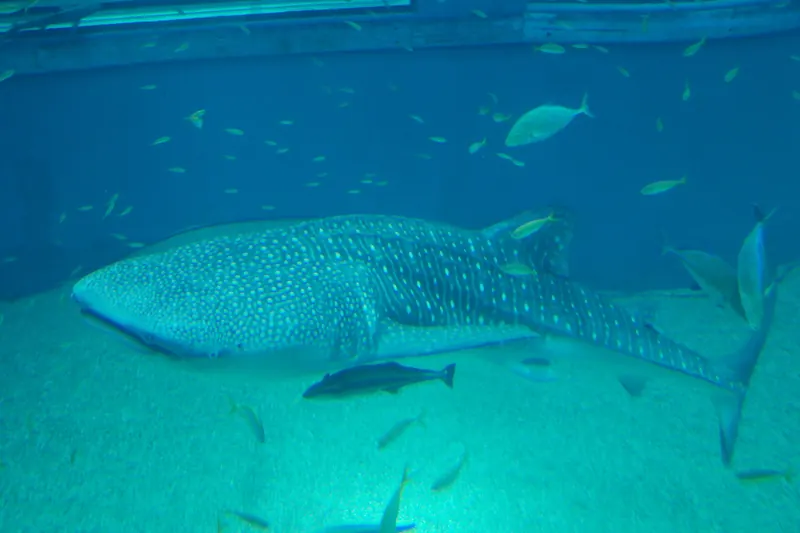
  4. A whale shark in the central tank of the Osaka Aquarium

    Visit the Osaka Aquarium

    One of the world's largest aquariums, its central tank home to whale sharks, an impressive spectacle for visitors of any age.

    Tip Book tickets online ahead on weekends and holidays, when queues can otherwise run long.

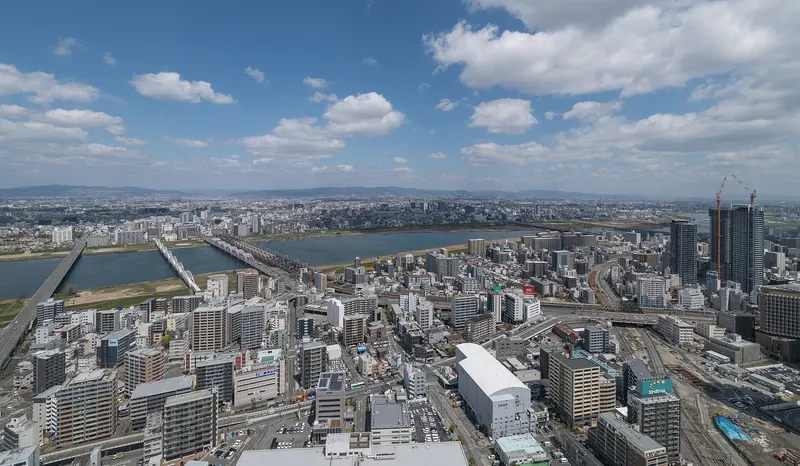
  5. The view over Osaka from the Umeda Sky Building's observation deck

    Climb the Umeda Sky Building's observation deck

    An open-air walkway connecting the building's twin towers offers a dramatic, slightly vertiginous view over the city.

    Tip The building's basement 'Takimi Koji' recreates a nostalgic early-20th-century Japanese street, worth a look before heading up.

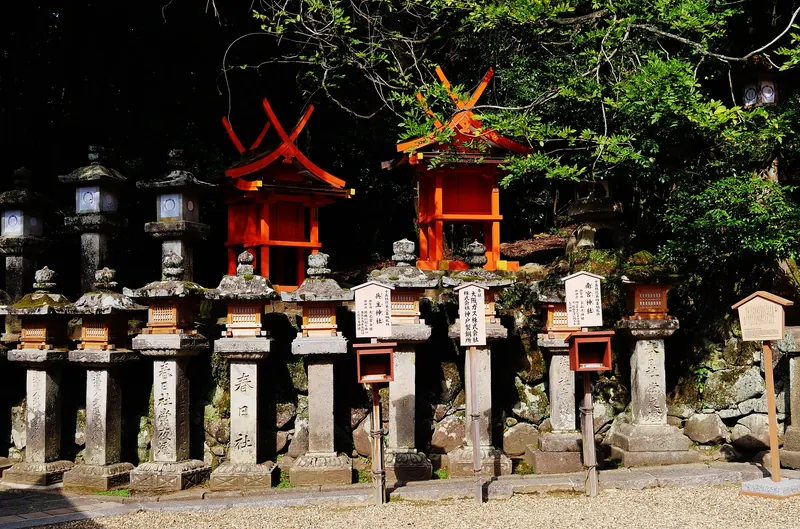
  6. A forested lantern-lined path near Kasuga Taisha in Nara

    Walk Nara's lantern-lined approach paths

    The forested paths to Kasuga Taisha, lined with thousands of stone and bronze lanterns, offer a peaceful contrast to Todai-ji's crowds nearby.

    Tip Early morning gives the paths a quiet, almost meditative atmosphere before tour groups arrive.

Local food

What to eat in Osaka and Nara

Osaka's food culture gave Japan several of its most beloved dishes, and eating well here is less a choice than an inevitability.

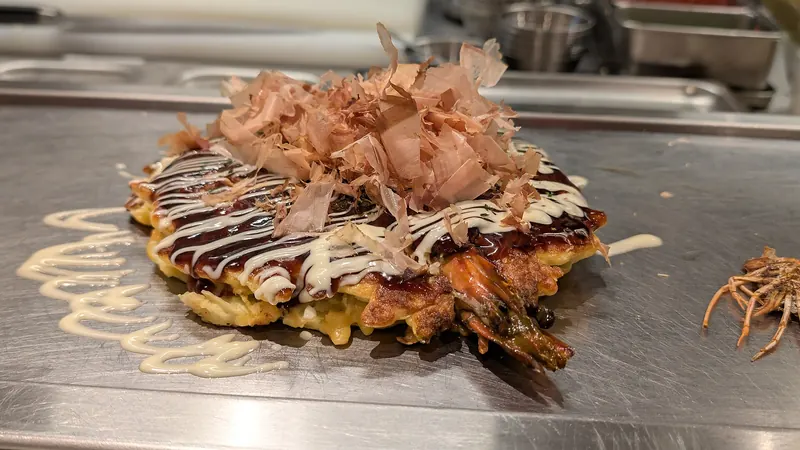
  • Okonomiyaki, a savoury grilled pancake, in Osaka

    Okonomiyaki

    A savoury grilled pancake of batter, cabbage and a choice of fillings, topped with sauce, mayonnaise and bonito flakes, a genuine Osaka invention.

    Where to try it Dotonbori's dedicated okonomiyaki restaurants, many with tableside grills for cooking it yourself.

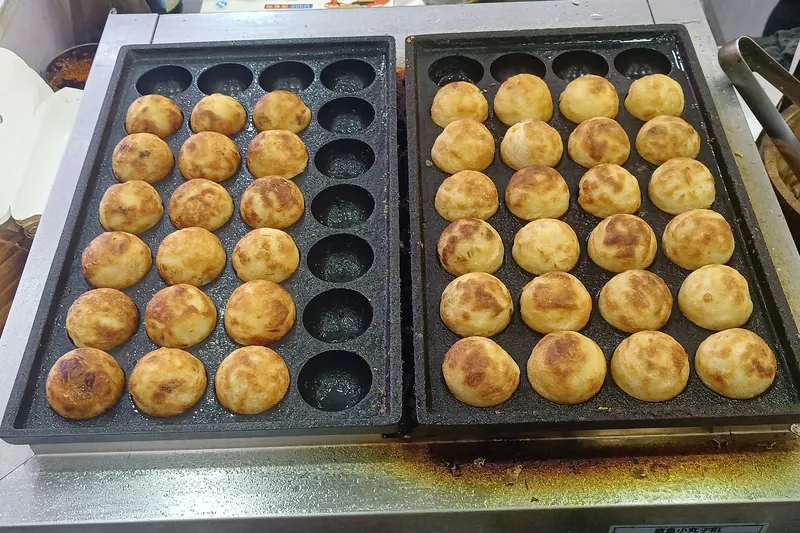
  • Freshly cooked takoyaki octopus balls

    Takoyaki

    Ball-shaped batter filled with diced octopus, cooked in a special moulded pan and topped with sauce and bonito flakes, Osaka's most iconic street snack.

    Where to try it Street stalls throughout Dotonbori, several claiming to be the dish's genuine original inventor.

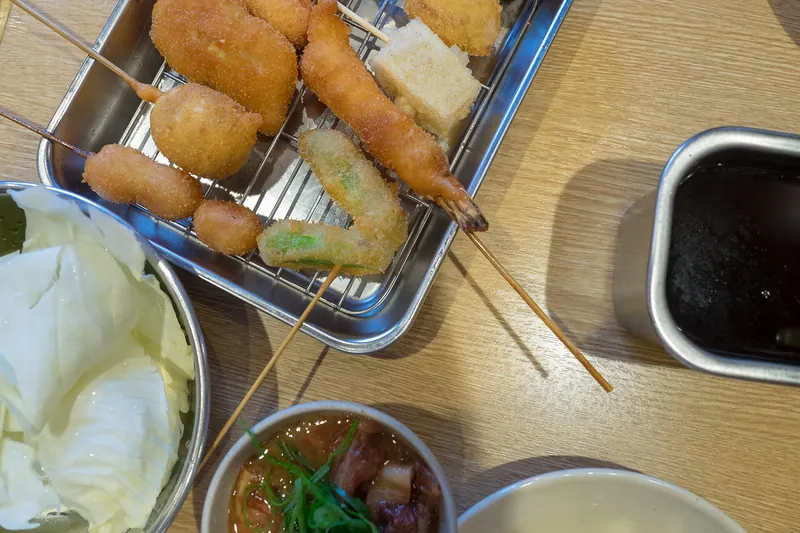
  • Skewered, breaded and deep-fried kushikatsu in Osaka's Shinsekai district

    Kushikatsu

    Skewered, breaded and deep-fried meat, seafood and vegetables, dipped in a shared sauce under one firm rule: no double-dipping.

    Where to try it The Shinsekai district's dedicated kushikatsu restaurants, the dish's genuine historic home.

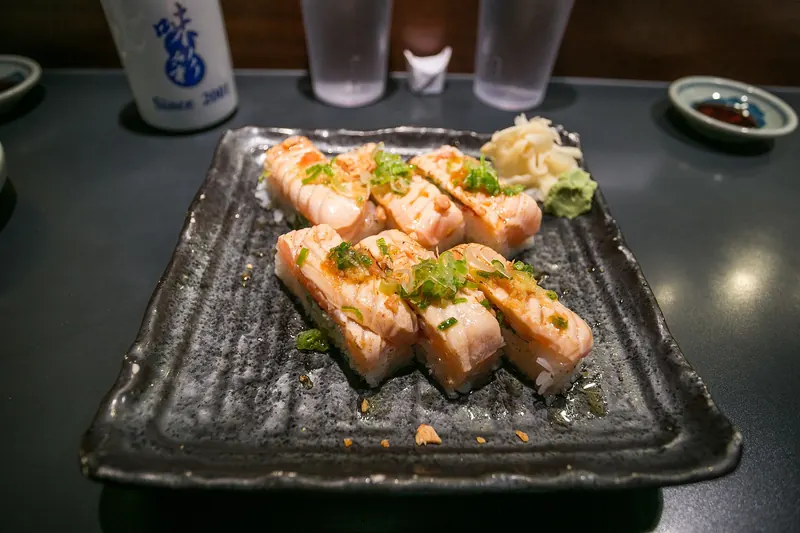
  • Osaka-style pressed sushi, rice and toppings shaped in a mould

    Osaka-style pressed sushi (battera)

    Vinegared rice and toppings pressed into a rectangular mould, a distinct regional sushi style from the hand-formed nigiri more associated with Tokyo.

    Where to try it Traditional sushi restaurants throughout Osaka, particularly around Kuromon Market.

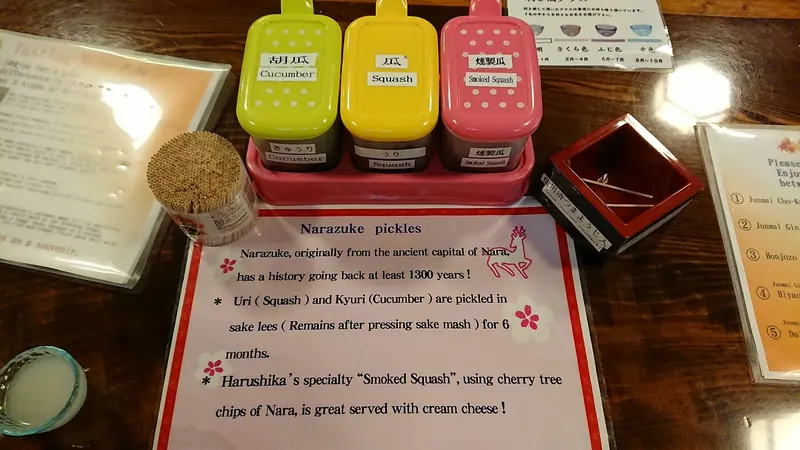
  • Nara-zuke, vegetables pickled in sake lees

    Nara-zuke pickles

    Vegetables pickled in sake lees, a genuine local specialty with a distinctive strong, slightly boozy flavour dating back over a thousand years in the region.

    Where to try it Specialist pickle shops throughout Nara's old town, near the park.

  • Kuidaore culture, generally

    Osaka's phrase for eating oneself into ruin is less a single dish than an entire local philosophy, best experienced by simply following your nose from stall to stall.

    Where to try it Dotonbori and Shinsekai above all, where the density of options makes overindulging easy.

Accommodation

Where to stay in Osaka and Nara

Osaka's central districts put you within easy reach of both the city's nightlife and the train line out to Nara.

  • Namba and Dotonbori

    The most central, energetic base, putting Osaka's famous food streets directly on your doorstep.

    Best for: Nightlife and street food

  • Umeda

    Osaka's northern hub, with excellent rail connections and a more polished, business-district atmosphere.

    Best for: Transport connections and shopping

  • Nara city centre

    Staying overnight in Nara itself allows early, quiet park access before day-trippers from Osaka and Kyoto arrive.

    Best for: An unhurried Nara visit

What a night costs

Hostel dorm
¥2,800–4,800 per night
Mid-range hotel
¥11,000–20,000 per night
Osaka Aquarium entry
¥2,700–2,900
Street food crawl dinner
¥2,000–3,500

Transport

Getting to and around Osaka and Nara

Osaka's Kansai International Airport is the region's main international gateway, with Nara an easy onward train ride.

Getting there

  • Kansai International Airport (KIX)

    The Nankai and JR lines both reach central Osaka in under an hour, the main international gateway for the wider Kansai region.

    The Nankai Rapi:t express is a comfortable, direct option into Namba.

  • Shinkansen from other Japanese cities

    Bullet trains connect Osaka to Kyoto in about 15 minutes and to Hiroshima in under 2 hours.

    Shin-Osaka Station, the shinkansen stop, sits a short subway ride from the city's central districts.

  • Local trains to Nara

    The JR or Kintetsu lines both reach Nara from central Osaka in around 40 minutes, making it an easy day trip.

    The Kintetsu line runs directly from Namba, generally the more convenient option for visitors based there.

Getting around

Osaka's subway network covers the city thoroughly, while Nara's compact park area is best explored on foot.

  • Osaka subway and trains

    A dense network reaches nearly every district, usable with a Suica, Pasmo or ICOCA IC card.

    Namba and Umeda stations are both vast — allow extra time to find the correct exit.

  • Walking, in Nara

    Nara Park and its temples sit within a compact, walkable area from Kintetsu Nara Station.

    Comfortable shoes matter — the park's paths cover real distance between its main temples.

  • Bicycle rental in Nara

    A pleasant way to cover more of Nara's park and outlying temples without a full day of walking.

    Rental shops cluster near Kintetsu Nara Station, with both regular and electric-assist options.

When to go

Best time to visit Osaka and Nara

Osaka and Nara share the wider Kansai region's climate, and spring and autumn offer the most comfortable conditions for both street food crawling and park walking.

  • Spring (March–May)

    Best time

    Cherry blossoms at Osaka Castle and throughout Nara Park draw real crowds, with comfortable temperatures across the season.

  • Summer (June–August)

    Shoulder

    Hot and humid, though also home to Osaka's lively Tenjin Matsuri festival in July.

  • Autumn (October–November)

    Best time

    Comfortable temperatures and spectacular foliage in Nara Park, with noticeably thinner crowds than spring.

  • Winter (December–February)

    Good

    Cold but usually clear, with peaceful temple visits and Osaka's Umeda Sky Building illuminations in December.

Worth planning around: Golden Week (late April into early May) without accommodation booked well ahead, when both cities see domestic travel surge nationwide.

Itinerary

Three days in Osaka and Nara

Osaka's neon streets first, then a full day trip to Nara's deer and temples.

  1. Day1

    Osaka Castle and Dotonbori

    Osaka's history and its famous food streets.

    • Morning Osaka Castle and Nishinomaru Garden.
    • Afternoon Kuromon Ichiba Market.
    • Evening Dotonbori's street food and neon.
  2. Day2

    Day trip to Nara

    Ancient temples and free-roaming deer.

    • Morning Todai-ji Temple and the Great Buddha.
    • Afternoon Nara Park's deer and Kasuga Taisha's lantern paths.
    • Evening Return to Osaka for dinner in Namba.
  3. Day3

    Umeda and Shinsekai

    City views and old-Osaka atmosphere.

    • Morning The Umeda Sky Building's observation deck.
    • Afternoon The Osaka Aquarium or free time for shopping.
    • Evening Kushikatsu in Shinsekai's retro streets.

Travel tips

Osaka and Nara travel tips

Practical notes on timing, tickets and etiquette that make a real difference to an Osaka and Nara trip.

  • Visit Nara Park in the early morning to see the deer and temples before day-trip crowds from Osaka and Kyoto arrive.
  • Never double-dip a kushikatsu skewer in the shared sauce — it's a firmly observed rule, not a suggestion.
  • Get an IC card (Suica, Pasmo or ICOCA) on arrival — it covers nearly all local transport across both cities.
  • Book Osaka Aquarium tickets online ahead on weekends, when queues can otherwise run long.
  • Keep food and loose bags away from Nara's deer — they are polite but persistent around anything that smells like a cracker.
  • Try okonomiyaki cooked tableside if the restaurant offers it — part of the experience, not just the meal.
  • Book cherry blossom season accommodation many months ahead if visiting in late March or April.

FAQ

Osaka and Nara: frequently asked questions

How many days do you need for Osaka and Nara?

Three works well — two full days in Osaka and a single day trip to Nara, which comfortably covers its main temples and park in one visit.

Is Nara worth an overnight stay, or just a day trip?

A day trip from Osaka or Kyoto covers the essentials well, though an overnight stay allows quiet early-morning access to the park before crowds arrive.

Are the deer in Nara Park safe to approach?

Generally yes — they are accustomed to visitors and rarely aggressive, though they can be insistent around visible food, so hold crackers carefully and keep small children supervised.

What is the best time of year to visit?

March to May and October to November offer the best weather — cherry blossoms in spring, comfortable temperatures and foliage in autumn. Summer is hot and humid; winter is cold but clear.

Is Osaka expensive compared to Tokyo or Kyoto?

Generally somewhat cheaper, particularly for food — Osaka's street food culture makes excellent, affordable eating easy to find throughout the city.

Read next

Related travel articles

Practical

Packing by Season and Trip Type

Most packing advice is a list of things. This is the opposite: the small number of decisions that determine whether your luggage helps or hinders, organised by the kind of trip you are actually taking.

Heritage

UNESCO Sites Worth Planning a Trip Around

A UNESCO listing tells you a place matters; it does not tell you whether it is worth two days and a detour. This is how to read the list usefully — and which sites reward building a trip around them.

Advertisement