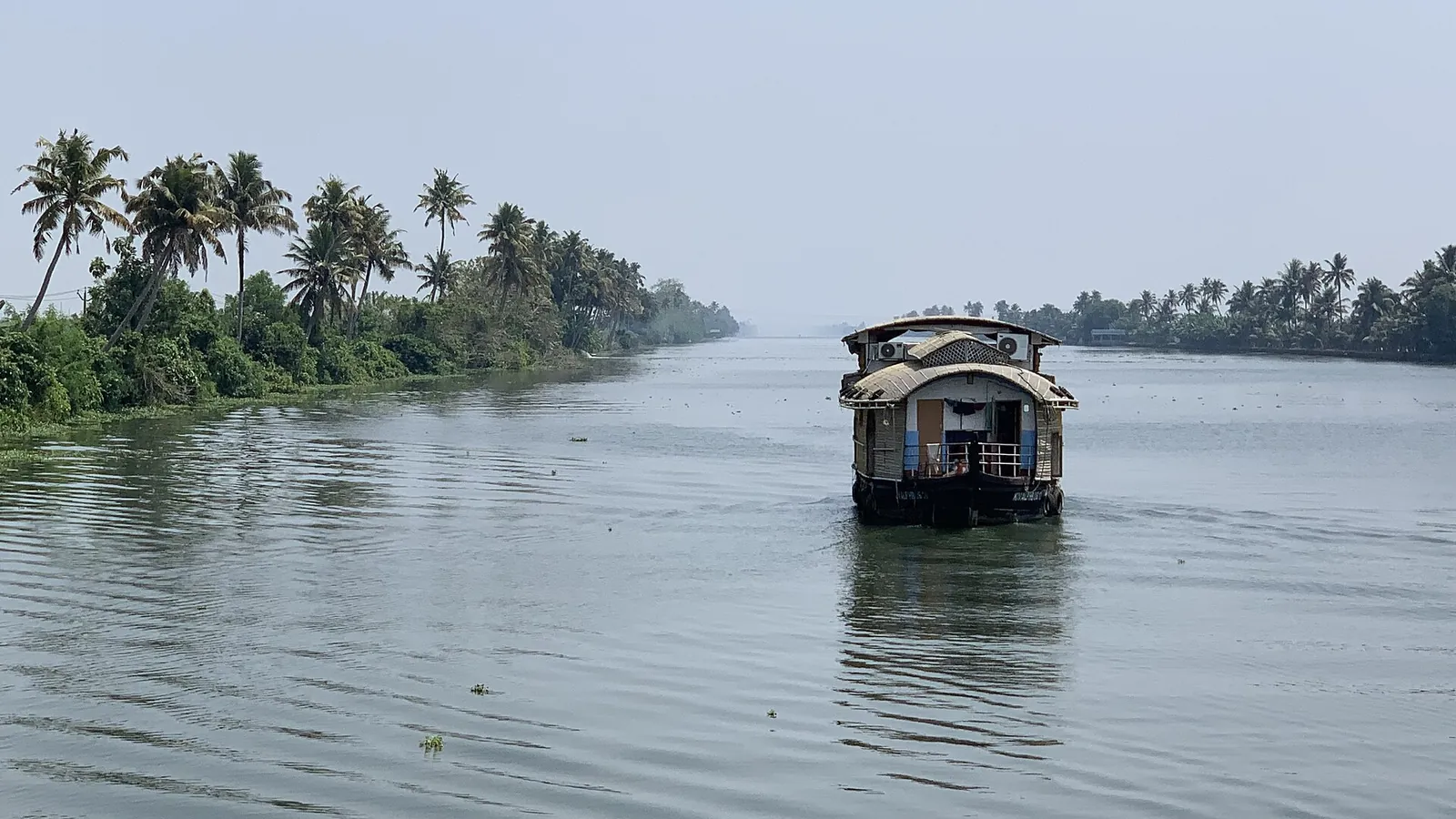
A traditional houseboat on the palm-lined backwaters near Alleppey in Kerala

Kerala, south-western India · India

Kerala: Backwaters and Kochi

A green, laid-back coast of palm-fringed backwaters, spice hills, old Portuguese and Dutch trading quarters and one of India's best regional cuisines.

  • Best time October–March
  • Stay 4 days
  • Good for Relaxing, nature, food, culture, a gentler India

Photo: Paul Arps from The Netherlands · CC BY 2.0

Welcome to Kerala

Kerala is a narrow strip of land on India's south-western coast, between the Arabian Sea and the Western Ghats. Its long trading history brought Arab, Chinese, Portuguese, Dutch, British and Jewish merchants to its ports, and the mix of influences shows in its architecture, food and religion. Hindus, Muslims and Christians live side by side, and the state has some of the highest literacy and health indicators in India.

The backwaters, a network of lagoons, canals and rivers running behind the coast for hundreds of kilometres, are the region's signature. Around Alleppey (Alappuzha) and Kumarakom, villages, rice paddies and coconut groves line the water, and life moves by boat. A night on a traditional houseboat, or a day in a canoe, is the standard way to experience it.

Kochi (Cochin) is the gateway. Its old quarter, Fort Kochi, has Portuguese and Dutch buildings, a 16th-century synagogue, art galleries and the famous cantilevered Chinese fishing nets. In the hills inland, Munnar's tea plantations offer cool air and views. Kerala is the easiest and calmest part of India for a first visit, and a natural counterpart to the north.

  • Nature & Wildlife
  • Scenic Region
  • Culture & Arts
  • Coast & Beaches

Why visit

Why visit Kerala?

Kerala offers a slower, greener India, with excellent food and easy travel.

  • The backwaters

    A maze of canals and lagoons, best seen from a small boat or a canoe.

  • Fort Kochi

    Colonial buildings, galleries and cafés in an atmospheric old port.

  • Tea hills and spices

    Munnar's rolling plantations and the spice gardens near Thekkady.

  • Superb food

    Coconut-based curries, fresh seafood, appam and banana-leaf meals.

  • Living traditions

    Kathakali dance-drama, temple festivals and Ayurvedic treatment.

Main attractions

Top things to see in Kerala

A typical trip runs from Kochi to the backwaters, with an optional detour to the hills.

  1. The Alleppey backwaters

    The heart of the backwater region, with canals and lagoons around Alleppey and the huge Vembanad Lake. Houseboats, shared ferries and canoes all travel through them.

    Tip Choose a small canal in the early morning, when it is calm.

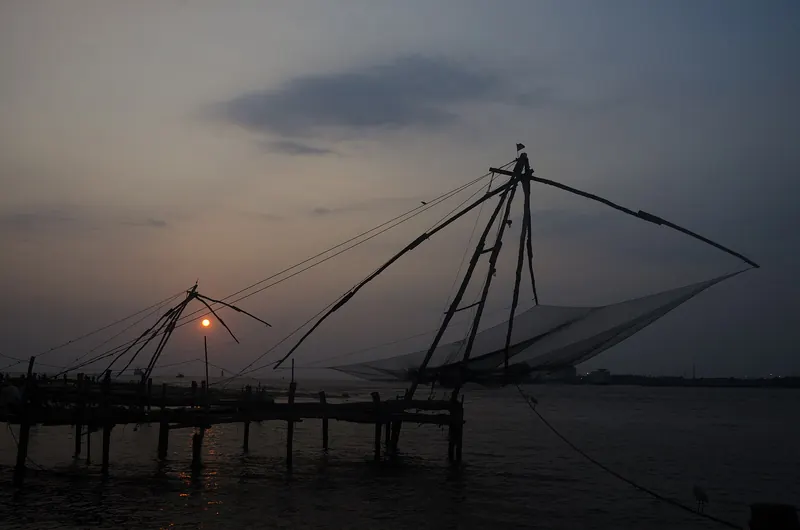
  2. Chinese fishing nets silhouetted at sunset in Fort Kochi

    The Chinese fishing nets, Fort Kochi

    Huge cantilevered nets, lowered into the water by teams of fishermen, along the waterfront at Fort Kochi. They are traditionally linked to Chinese traders, and are best at sunset.

    Tip Buy fresh fish and have it cooked nearby.

  3. Jew Town and the Paradesi Synagogue

    A quarter of antique shops and spice warehouses in Mattancherry, with a synagogue dating from 1568, one of the oldest in the Commonwealth, decorated with blue Chinese tiles.

    Tip Check opening days, as it is closed on Saturdays.

  4. Mattancherry Palace and St. Francis Church

    A Portuguese-built palace with Kerala murals, and one of the oldest European churches in India, where Vasco da Gama was first buried in 1524.

    Tip See both in the same morning.

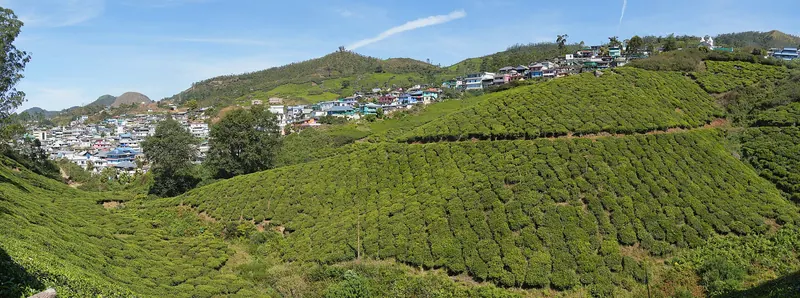
  5. Rolling green tea plantations in the hills around Munnar

    Munnar tea plantations

    A hill station at about 1,500 metres in the Western Ghats, surrounded by tea estates, waterfalls and viewpoints. It is about 4 hours by road from Kochi.

    Tip Allow at least one night.

Things to do

Best things to do in Kerala

Kerala is for slowing down, and for time on and beside the water.

  1. Stay on a houseboat

    A converted kettuvallam, a traditional rice barge, with a crew and cook, drifts through the backwaters.

    Tip Choose a licensed boat and check the type of fuel and waste practices.

  2. Take a canoe trip

    A small boat can reach narrow canals that big houseboats cannot, past homes, rice fields and temples.

    Tip Go early in the morning.

  3. Watch a Kathakali performance

    A traditional dance-drama with elaborate make-up and costumes, based on epics.

    Tip Arrive early to watch the make-up.

  4. Try an Ayurvedic massage

    Kerala is a centre for Ayurveda, with treatments from short massages to multi-week programmes.

    Tip Choose accredited centres.

  5. Visit a spice plantation

    See pepper, cardamom, cinnamon and vanilla growing, near Thekkady and Munnar.

    Tip Buy spices directly.

  6. Take a ferry

    A public ferry from Alleppey to Kottayam offers a cheap backwater trip of a few hours.

    Tip Check the schedule.

Local food

What to eat in Kerala

Kerala's cuisine relies on coconut, curry leaves, pepper, seafood and rice, and it is one of the best in India.

  • Appam and stew

    A lacy rice-flour pancake with a soft centre, eaten with a mild coconut milk stew of vegetables or chicken.

    Where to try it Breakfast in homestays and restaurants.

  • Kerala fish curry

    Fish cooked in a sour, spicy sauce with coconut milk and kokum, often in a clay pot.

    Where to try it Toddy shops and local restaurants.

  • Sadya

    A vegetarian feast served on a banana leaf, with more than 20 dishes, at festivals such as Onam.

    Where to try it Restaurants and homes during Onam.

  • Karimeen pollichathu

    Pearl spot fish marinated in spices, wrapped in banana leaf and grilled.

    Where to try it Backwater restaurants.

  • Puttu and kadala curry

    Steamed cylinders of rice flour and coconut with a black chickpea curry.

    Where to try it Breakfast stalls.

  • Toddy

    A mild palm sap alcohol, sold in licensed toddy shops with spicy food.

    Where to try it Toddy shops near Alleppey.

Accommodation

Where to stay in Kerala

Stay in Fort Kochi for its atmosphere, and choose a houseboat or a homestay for the backwaters.

  • Fort Kochi

    Restored colonial houses and small hotels.

    Best for: Heritage and cafés

  • Alleppey and Kumarakom

    Houseboats, resorts and homestays by the water.

    Best for: Backwaters

  • Munnar

    Plantation bungalows and hill resorts.

    Best for: Tea hills and cool air

What a night costs

Budget homestay
US$15–40 per night
Mid-range hotel or houseboat
US$60–150 per night
Luxury heritage hotel or houseboat
US$200–500 per night
Meal at a local restaurant
US$4–12 per person

Transport

Getting to and around Kerala

Kochi is the main gateway to Kerala, with an international airport and rail links.

Getting there

  • Flight to Cochin (COK)

    Direct flights from Delhi, Mumbai, Bengaluru, and some Gulf and international cities.

    The airport is about 45 minutes from Fort Kochi.

  • Train

    Long-distance trains reach Ernakulam Junction from Mumbai, Bengaluru and Chennai.

    Book well ahead.

  • Road to Alleppey

    About 1 hour 30 minutes to 2 hours from Kochi by car or bus.

    Trains and buses run frequently.

Getting around

Kerala's compact size makes it easy to move between the main places by road, train or boat.

  • Taxi or driver

    The easiest way to link Kochi, Alleppey and Munnar.

    Agree the itinerary and price.

  • Trains and buses

    Frequent services on the coast.

    Buses are cheap, and trains are comfortable.

  • Ferries and boats

    Public ferries in Kochi and on the backwaters.

    Very cheap.

When to go

Best time to visit Kerala

Kerala is tropical, with a strong monsoon from June to September.

  • Winter (November–February)

    Best time

    Warm, dry and pleasant. Peak season.

  • Spring (March–May)

    Good

    Hot and humid, cooler in the hills.

  • Monsoon (June–September)

    Quiet

    Heavy rain, lush landscapes and cheaper rates. Popular for Ayurveda.

  • Post-monsoon (October–November)

    Good

    Green and warm, with showers.

Worth planning around: The heaviest monsoon weeks in July if you want to be outdoors.

Itinerary

Four days in Kerala

Kochi's heritage first, then the backwaters, and a rest.

  1. Day1

    Fort Kochi

    Heritage and a sunset.

    • Morning Arrive and walk Fort Kochi.
    • Afternoon Jew Town, Mattancherry and St. Francis Church.
    • Evening The Chinese fishing nets and a Kathakali show.
  2. Day2

    To the backwaters

    A houseboat afternoon.

    • Morning Drive to Alleppey.
    • Afternoon Board a houseboat.
    • Evening Dinner on board.
  3. Day3

    Dawn on the canals

    Canoes and villages.

    • Morning A canoe trip at dawn.
    • Afternoon A village walk.
    • Evening A rest, or a beach at Marari.
  4. Day4

    Munnar or return

    Hills or home.

    • Morning Drive to Munnar, or return to Kochi.
    • Afternoon Tea plantations, or shopping.
    • Evening Depart or stay in the hills.

Travel tips

Kerala travel tips

A few things help you enjoy Kerala.

  • Choose a small houseboat, or a canoe, for a quieter experience.
  • Check that a houseboat is licensed, and ask about waste disposal.
  • Carry insect repellent for the evenings on the water.
  • Try a banana-leaf meal at a local restaurant.
  • Dress modestly at temples, and ask before entering.
  • Carry a rain jacket, even outside the monsoon.
  • Book Munnar accommodation in advance in high season.

FAQ

Kerala: frequently asked questions

How many days do you need in Kerala?

Four days for Kochi and the backwaters, and six or seven if you add Munnar and the beaches.

Are houseboats worth it?

For one night, yes, for the experience. Big, crowded houseboats can be less pleasant than small boats or canoes.

What is the best time to visit Kerala?

October to March. The monsoon is wet but green, and popular for Ayurveda.

Is Kerala safe?

It is considered one of the safest and calmest parts of India.

Is Kerala vegetarian?

No. Seafood, chicken and beef are all eaten, though there are excellent vegetarian dishes.

Do I need to worry about the monsoon?

It brings heavy rain and some travel disruption, but many visitors enjoy the green landscapes and quiet.

Read next

Related travel articles

Food

A Country-by-Country Food Primer

Eating well abroad is mostly a matter of knowing when meals happen, how the menu is structured and which dish belongs to the place you are standing in. This covers all three for the five countries in this guide, plus the signals that separate a restaurant that feeds locals from one that feeds coaches.

Practical

Packing by Season and Trip Type

Most packing advice is a list of things. This is the opposite: the small number of decisions that determine whether your luggage helps or hinders, organised by the kind of trip you are actually taking.

Advertisement