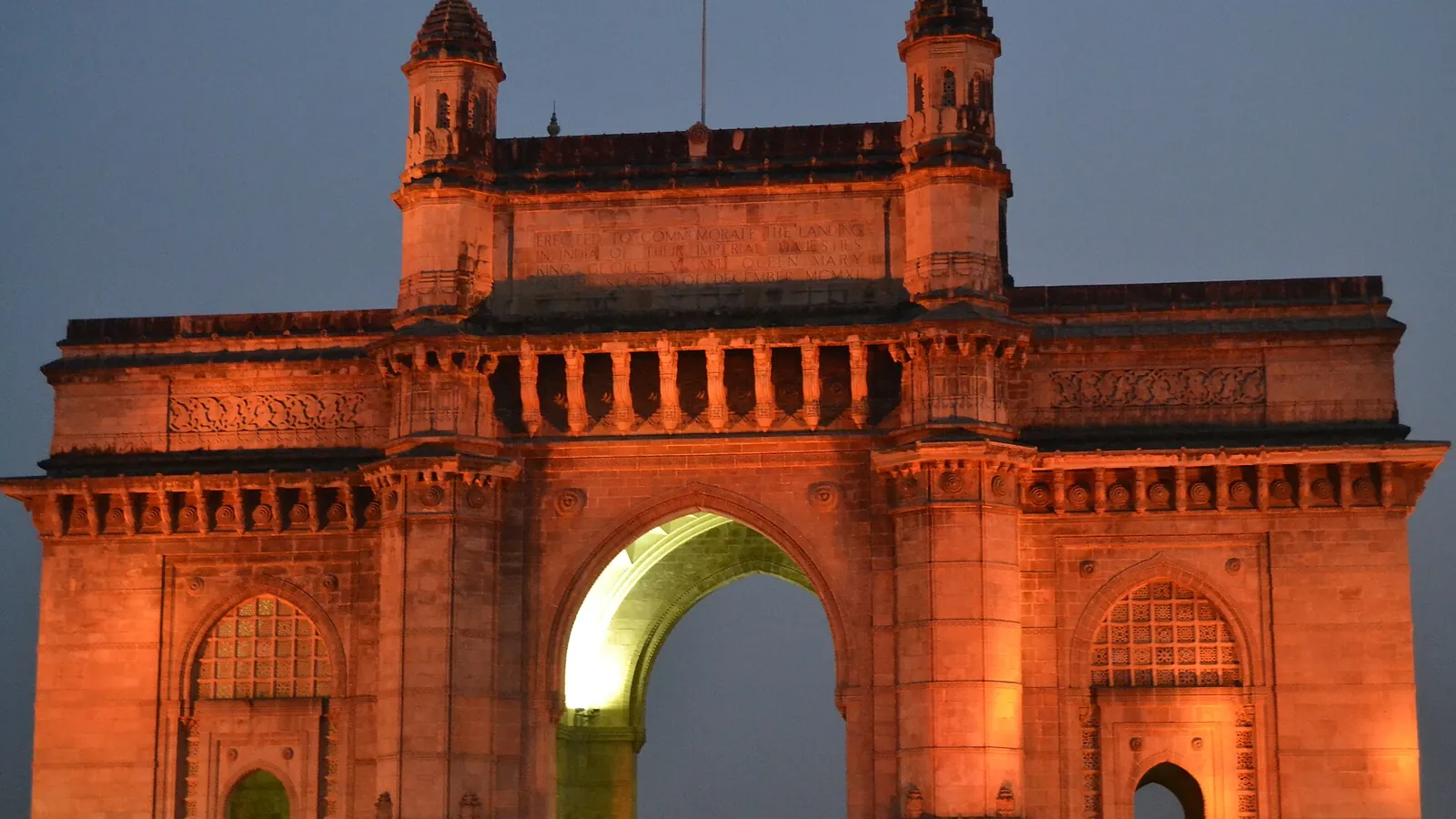
The Gateway of India monument by the harbour in Mumbai in the evening

Maharashtra, west coast · India

Mumbai

India's biggest, fastest and most cosmopolitan city: Victorian Gothic railway stations, Art Deco seafront blocks, Bollywood dreams and the country's best street food.

  • Best time November–February
  • Stay 2–3 days
  • Good for Architecture, food, urban energy, nightlife, a gateway to Goa

Photo: SriSriChinmaya · CC BY-SA 4.0

Welcome to Mumbai

Mumbai, formerly Bombay, is India's largest city and the engine of its economy, with more than 12 million people in the city itself and about 20 million in the wider metropolitan area. It grew from seven islands, ceded by the Portuguese to the British in 1661 as part of a royal dowry, into one of the great ports of the British Empire, and it kept growing after independence as a centre of finance, industry and film.

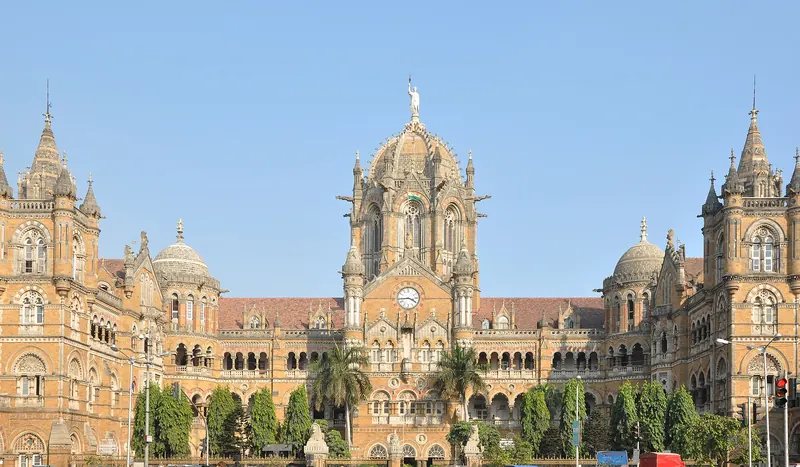
The colonial legacy is unusually visible. South Mumbai has the largest collection of Victorian Gothic buildings in the world outside Britain, including the Chhatrapati Shivaji Terminus, and along Marine Drive and Oval Maidan a large group of 1930s Art Deco apartments and cinemas. UNESCO listed the Victorian and Art Deco ensemble in 2018.

Beyond the architecture, Mumbai is a city of contrasts, of gleaming towers and huge slums, of Bollywood studios and street-side tea stalls, of daily commuters packed into local trains and of a food culture that ranges from vada pav at street corners to fine dining. It is a good place to see modern India, and its energy is infectious.

  • Major City
  • Coast & Beaches
  • Culture & Arts
  • UNESCO Site

Why visit

Why visit Mumbai?

Mumbai is a different India from the north, faster, more modern and more mixed.

  • Colonial and Art Deco architecture

    Two UNESCO listings cover the Victorian Gothic and Art Deco buildings of the south.

  • Street food

    Vada pav, pav bhaji, bhel puri, kebabs and Irani café chai, among the best snacks in India.

  • Bollywood and culture

    Film studios, theatres, art galleries and the country's biggest music scene.

  • Elephanta Caves

    A short ferry ride to rock-cut temples dedicated to Shiva.

  • The sea

    Marine Drive, Chowpatty and the promenades along the Arabian Sea.

Main attractions

Top things to see in Mumbai

Most sights are in South Mumbai, and can be visited on foot and by short taxi rides.

  1. The Gateway of India

    A basalt arch on the waterfront, built in 1924 to commemorate the visit of King George V and Queen Mary in 1911, and the point from which the last British troops left India in 1948. Ferries to Elephanta leave from here.

    Tip Go early or late, to avoid the crowds and heat.

  2. The Victorian Gothic façade of Chhatrapati Shivaji Terminus railway station in Mumbai

    Chhatrapati Shivaji Terminus

    The great railway station, completed in 1887 as Victoria Terminus, is a fantasy of domes, turrets and carved stone in Victorian Gothic and Indian styles. It is still a working station used by millions.

    Tip Look at the exterior from the road, and walk in to see the concourse.

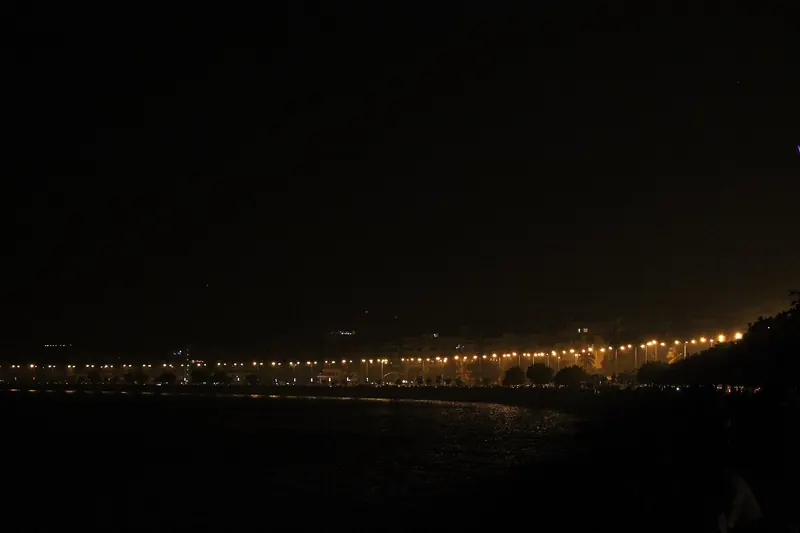
  3. The curving Marine Drive promenade beside the Arabian Sea in Mumbai

    Marine Drive

    A curving promenade of about 3.5 km along Back Bay, lined with Art Deco buildings, and known as the Queen's Necklace for its lights at night. A favourite evening walk.

    Tip Go at sunset.

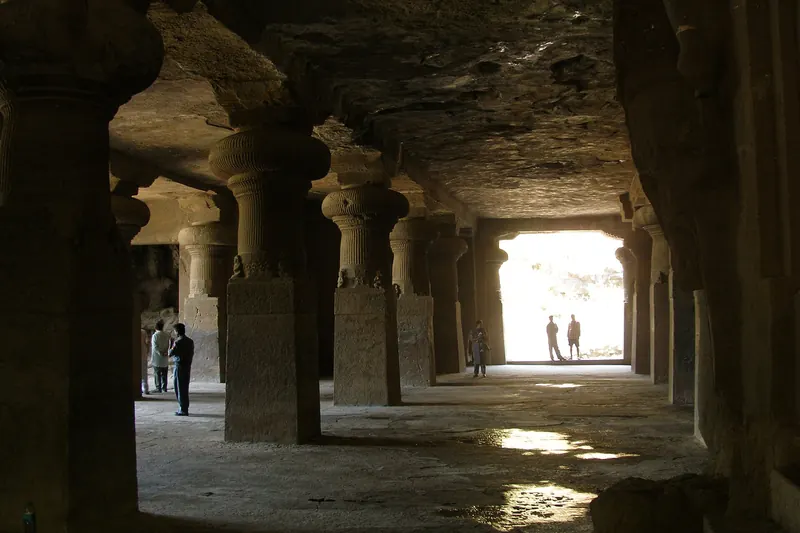
  4. Rock-cut columns inside the Elephanta Caves near Mumbai

    Elephanta Caves

    A UNESCO-listed cave temple complex on an island in the harbour, carved in the 5th to 8th centuries, with a huge sculpture of the three-faced Shiva. A ferry from the Gateway of India takes about an hour.

    Tip Closed on Mondays, and take the earliest ferry.

  5. Colaba and Kala Ghoda

    The area around the Gateway has a mix of cafés, bookshops, art galleries and the Chhatrapati Shivaji Maharaj Vastu Sangrahalya museum, in an Indo-Saracenic building.

    Tip Walk the Kala Ghoda art district.

  6. Dhobi Ghat and Haji Ali

    An open-air laundry where clothes are washed by hand, seen from a bridge, and the Haji Ali Dargah, a mosque and tomb on a causeway in the sea.

    Tip Visit Haji Ali at low tide when the causeway is open.

Things to do

Best things to do in Mumbai

Mumbai rewards a mix of walking, eating and riding its transport.

  1. Take a local train

    The suburban rail system carries about 7 million passengers a day, and a short ride is an experience in itself.

    Tip Avoid rush hours, and use the first-class or women's carriage if you prefer.

  2. Eat street food

    Sample vada pav, pav bhaji, bhel puri and kulfi at Chowpatty, Juhu and around the stations.

    Tip Choose busy stalls.

  3. Visit an Irani café

    Old Parsi-Irani cafés serve bun maska, chai and keema pav in period interiors.

    Tip Try Kyani & Co. or other established cafés.

  4. See the art scene

    Galleries in Kala Ghoda and the museum of modern art give a taste of India's contemporary art.

    Tip Visit during the Kala Ghoda Arts Festival.

  5. Walk through Bandra

    The suburb has street art, cafés and shops, and is popular for evenings.

    Tip Go by taxi.

  6. Watch a cricket match on the maidans

    Cricket games take place on open grounds across the city on weekends.

    Tip Join in if invited.

Local food

What to eat in Mumbai

Mumbai's food is defined by its street snacks, its seafood and its mixed communities.

  • Vada pav

    A spiced potato fritter in a soft bun with chutneys, and the city's iconic snack.

    Where to try it Street stalls near stations.

  • Pav bhaji

    A buttery vegetable mash with toasted rolls.

    Where to try it Chowpatty and Juhu beaches.

  • Bhel puri

    Puffed rice tossed with chutneys, onion and crisp noodles.

    Where to try it Chowpatty Beach.

  • Bombay duck and seafood

    Fresh fish and prawns cooked in Koli and Goan styles. Bombay duck is a dried fish, not a bird.

    Where to try it Seafood restaurants in Colaba and Bandra.

  • Irani café classics

    Bun maska, keema pav and Irani chai in old cafés.

    Where to try it Irani cafés in the south.

  • Kulfi and falooda

    Rich frozen dessert and rose-flavoured milk drinks.

    Where to try it Ice-cream parlours near the sea.

Accommodation

Where to stay in Mumbai

South Mumbai is convenient for sightseeing, and Bandra and Juhu are better for nightlife.

  • Colaba and Fort

    Hotels near the Gateway of India, cafés and museums.

    Best for: Sights and heritage hotels

  • Marine Drive and Churchgate

    Hotels along the waterfront.

    Best for: Sea views and Art Deco

  • Bandra and Juhu

    A more residential area, near the airport.

    Best for: Nightlife and cafés

What a night costs

Budget hotel
US$25–60 per night
Mid-range hotel
US$80–160 per night
Luxury hotel
US$200–600 per night
Meal at a local restaurant
US$5–15 per person

Transport

Getting to and around Mumbai

Mumbai is the busiest air hub in western India.

Getting there

  • Flight to Mumbai (BOM)

    Direct flights from Europe, the Middle East, Asia and other Indian cities.

    Traffic to the city can take an hour or more.

  • Train

    Long-distance trains from Delhi (about 16 hours on the Rajdhani, less on Vande Bharat), Goa and Pune.

    Book early.

  • Onward to Goa

    About 1 hour by air, or 8 to 12 hours by train or road.

    Fly for convenience.

Getting around

Distances are long and traffic is heavy, so plan by area.

  • Taxis and ride-hailing

    Black-and-yellow taxis use meters, and apps such as Uber and Ola work.

    Insist on the meter or use apps.

  • Local trains and metro

    The Western, Central and Harbour lines cover the suburbs, and metro lines are growing.

    Avoid rush hours.

  • Walking

    South Mumbai's colonial core can be explored on foot.

    Watch the heat and traffic.

When to go

Best time to visit Mumbai

Mumbai is hot and humid for most of the year, with a heavy monsoon from June to September.

  • Winter (November–February)

    Best time

    Warm, dry and comfortable.

  • Spring (March–May)

    Think twice

    Hot and humid.

  • Monsoon (June–September)

    Quiet

    Heavy rain, flooding at times, and green landscapes. Ganesh Chaturthi in August or September is a big festival.

  • Post-monsoon (October)

    Good

    Warm and humid, with clearing skies.

Worth planning around: Peak monsoon weeks in July and August, when flooding can disrupt travel.

Itinerary

Three days in Mumbai

Colonial Mumbai first, then Elephanta and the neighbourhoods.

  1. Day1

    Colonial South Mumbai

    Architecture and the sea.

    • Morning The Gateway of India and Colaba.
    • Afternoon The museum and Chhatrapati Shivaji Terminus.
    • Evening Marine Drive and Chowpatty.
  2. Day2

    Elephanta Caves

    A day on the water.

    • Morning The ferry to Elephanta.
    • Afternoon The caves.
    • Evening Dinner in Colaba.
  3. Day3

    Neighbourhoods

    Markets and suburbs.

    • Morning Dhobi Ghat and Haji Ali.
    • Afternoon A local train ride.
    • Evening Bandra for dinner.

Travel tips

Mumbai travel tips

Mumbai is fast, and a few tips help.

  • Use the black-and-yellow taxis with meters, or ride-hailing apps.
  • Avoid travel in rush hours (about 8–11am and 5–9pm).
  • Take the first ferry to Elephanta.
  • Carry small notes for taxis and tips.
  • Carry a rain jacket during the monsoon.
  • Eat at busy places, and avoid raw salads.

FAQ

Mumbai: frequently asked questions

How many days do you need in Mumbai?

Two or three days. One day covers the Gateway of India and the colonial core.

Is Mumbai safe?

Generally, yes, with the usual big-city precautions. Watch for pickpockets in crowds.

When is the best time to visit?

November to February.

Is Mumbai worth visiting?

Yes, particularly for food, architecture and a modern side of India.

Can I see Bollywood?

Studio tours are available, though filming is often closed to the public.

How do I get to Elephanta Caves?

By ferry from the Gateway of India, about an hour each way. The caves are closed on Mondays.

Read next

Related travel articles

Food

A Country-by-Country Food Primer

Eating well abroad is mostly a matter of knowing when meals happen, how the menu is structured and which dish belongs to the place you are standing in. This covers all three for the five countries in this guide, plus the signals that separate a restaurant that feeds locals from one that feeds coaches.

Heritage

UNESCO Sites Worth Planning a Trip Around

A UNESCO listing tells you a place matters; it does not tell you whether it is worth two days and a detour. This is how to read the list usefully — and which sites reward building a trip around them.

Advertisement