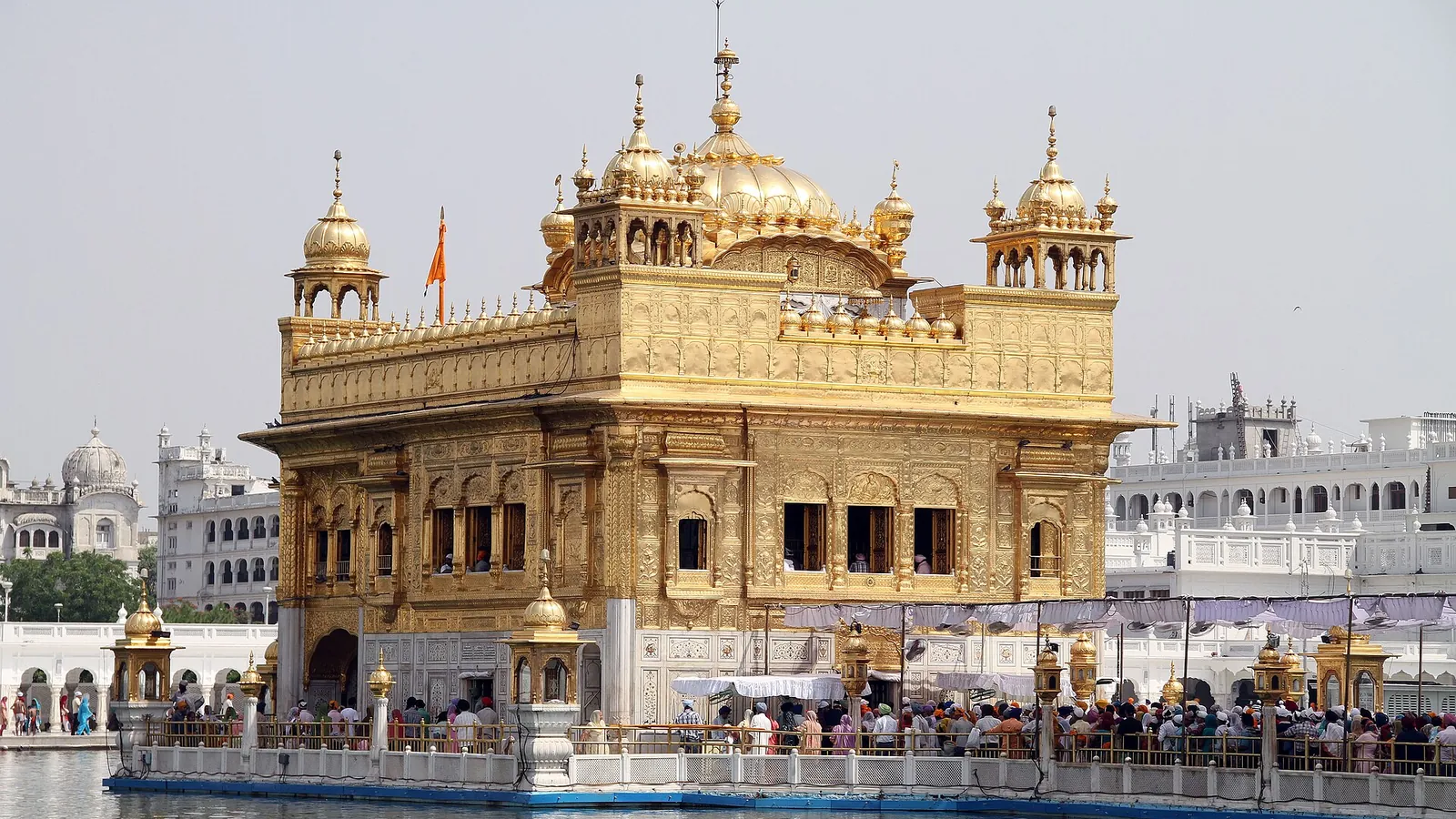
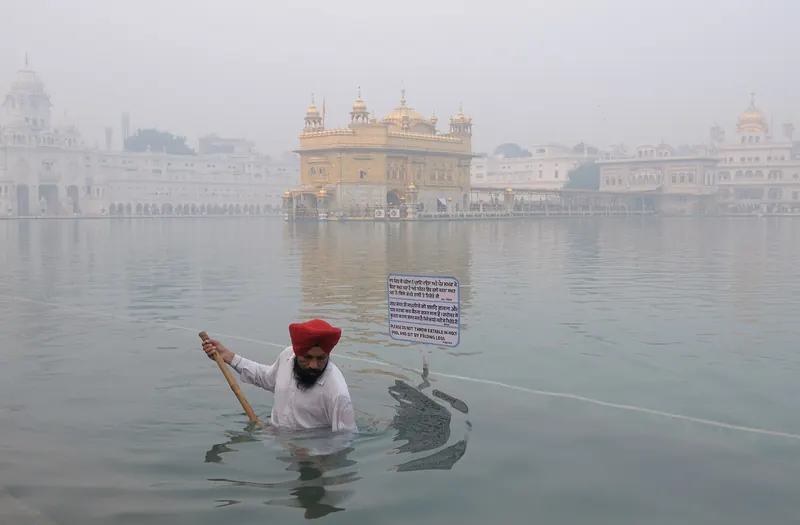
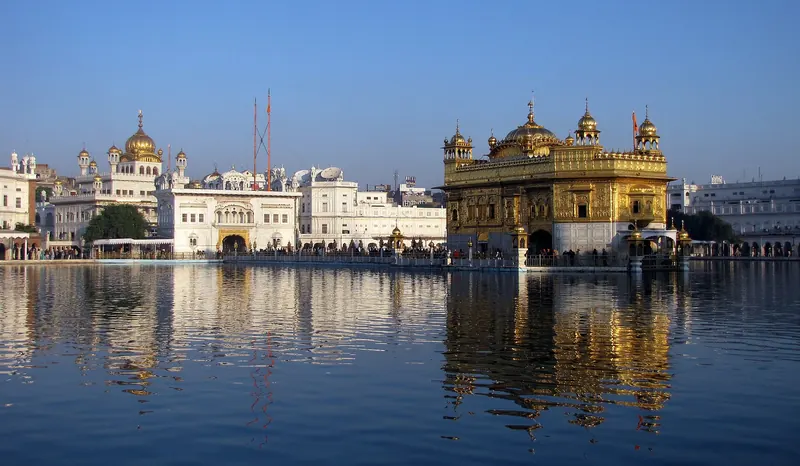
The gold-covered Harmandir Sahib temple reflected in the sacred pool at Amritsar

Punjab, north-western India · India

Amritsar

The spiritual home of Sikhism: a gold-domed temple shimmering on a sacred pool, a kitchen that feeds tens of thousands a day and the food of the Punjab.

  • Best time October–March
  • Stay 2 days
  • Good for Spiritual experience, food, history, a change from the tourist trail

Photo: Oleg Yunakov · CC BY-SA 3.0

Welcome to Amritsar

Amritsar was founded in 1577 by Guru Ram Das, the fourth Sikh guru, around a sacred pool, and it has been the spiritual centre of Sikhism ever since. The Harmandir Sahib, known to visitors as the Golden Temple, sits in the middle of the pool, and its gold-plated upper floors were added in the early 19th century under Maharaja Ranjit Singh. The Guru Granth Sahib, the Sikh holy scripture, is read there day and night.

The Golden Temple is unusual among great religious sites in how open it is. People of every faith and none are welcome, entry is free, and the community kitchen, or langar, serves free vegetarian meals to tens of thousands of people every day, prepared and served by volunteers. Visiting is one of the most welcoming spiritual experiences in India.

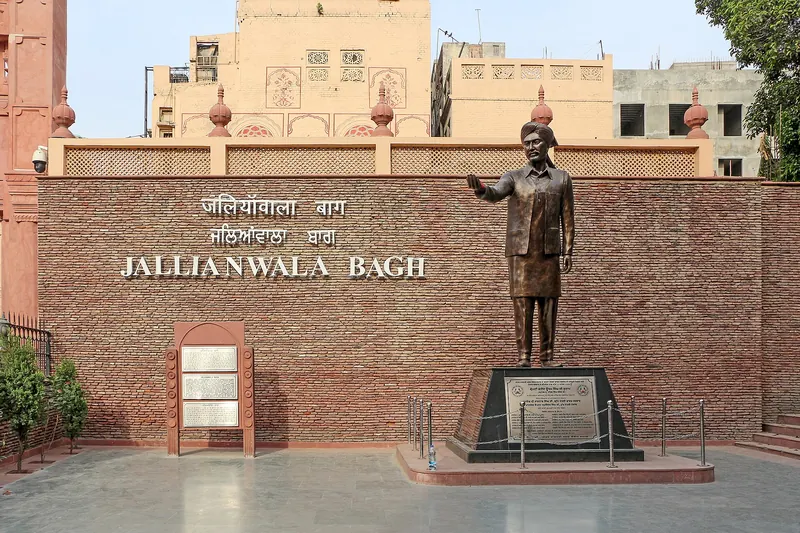
Amritsar also has darker layers of history. The Jallianwala Bagh, where British troops killed hundreds of unarmed civilians in 1919, is a short walk from the temple, and the Partition Museum records the upheaval of 1947, when the Punjab was split between India and Pakistan and millions were displaced. The city is also a centre for Punjabi food, with kulchas, lassi and tandoori dishes.

  • Historic Site
  • Culture & Arts
  • Off the Beaten Path

Why visit

Why visit Amritsar?

Amritsar is one of India's most moving and welcoming places, and less touristy than the Golden Triangle.

  • The Golden Temple

    A serene, glowing temple on water, with an atmosphere of devotion and hospitality.

  • The langar

    One of the world's largest free kitchens, open to all, where visitors can eat and help.

  • History that matters

    Jallianwala Bagh and the Partition Museum tell important stories of modern South Asia.

  • Punjabi food

    Amritsari kulcha, chole, lassi and fish, in its home region.

  • The Wagah border ceremony

    A theatrical daily flag-lowering at the India-Pakistan border.

Main attractions

Top things to see in Amritsar

The Golden Temple is the centre of the city, with the other sights within walking distance or a short ride.

  1. The Golden Temple and its sacred pool in Amritsar

    The Harmandir Sahib (Golden Temple)

    The holiest Sikh shrine, in the centre of the Amrit Sarovar pool, reached by a causeway. Visitors walk around the pool, and can queue to enter the temple itself. The complex is at its most beautiful at dawn and at night.

    Tip Cover your head, remove shoes, wash your feet and avoid tobacco and alcohol.

  2. The Guru Ka Langar

    The community kitchen, where volunteers cook and serve simple vegetarian meals of dal, roti and rice to tens of thousands of people every day, eaten sitting on the floor.

    Tip Accept the meal with both hands, and consider helping to wash dishes.

  3. The Akal Takht building beside the Golden Temple complex in Amritsar

    The Akal Takht

    The seat of temporal authority in Sikhism, facing the Golden Temple, damaged in 1984 and rebuilt.

    Tip Ask a volunteer to explain the history.

  4. The memorial gardens at Jallianwala Bagh in Amritsar

    Jallianwala Bagh

    A walled garden where, on 13 April 1919, British troops fired on a crowd, killing hundreds of civilians. A memorial and a preserved well mark the site, and bullet marks remain on some walls.

    Tip Visit with quiet respect.

  5. The Partition Museum

    A museum in the old town hall that records the 1947 Partition of India through personal stories, letters and objects.

    Tip Allow at least two hours.

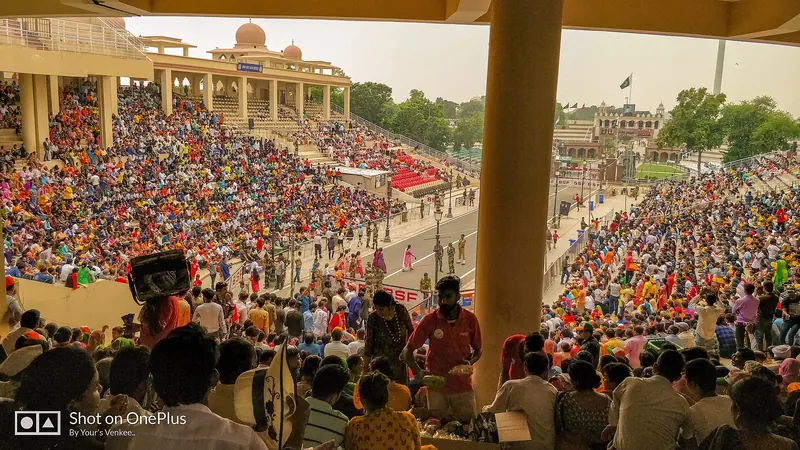
  6. The border gates and stands at the Attari–Wagah ceremony ground

    The Wagah–Attari border ceremony

    A daily ceremony at the border with Pakistan, about 30 km from Amritsar, where soldiers on both sides lower the flags with marching and stamping. It has been scaled back at times when tensions have risen.

    Tip Check whether the ceremony is running and in what form.

Things to do

Best things to do in Amritsar

Amritsar rewards those who take their time at the temple and eat well.

  1. Visit the Golden Temple at dawn and at night

    The mood changes through the day, and both early morning and evening are memorable.

    Tip Stay for the palki sahib procession at night, if it suits your schedule.

  2. Eat in the langar

    Sit on the floor with pilgrims and share a simple meal.

    Tip Take only what you can eat, and do not waste food.

  3. Try Amritsari kulcha

    Stuffed leavened bread baked in a tandoor, served with chole and butter.

    Tip Go for breakfast.

  4. Walk the old city

    The lanes around the temple are full of shops selling phulkari embroidery, juttis (shoes) and sweets.

    Tip Bargain lightly.

  5. Visit Gobindgarh Fort

    An 18th-century fort turned heritage attraction, with shows and exhibits.

    Tip Check the schedule.

  6. Watch the border ceremony

    A boisterous show of patriotism, whose atmosphere is lively.

    Tip Arrive early for a seat.

Local food

What to eat in Amritsar

Amritsar's food is robust Punjabi cooking, with wheat, dairy and tandoor at its centre.

  • Amritsari kulcha

    A stuffed flatbread of potato or paneer, baked in a clay oven, served with chole and a knob of butter.

    Where to try it Famous kulcha shops in the old city.

  • Chole bhature

    Spiced chickpeas with puffy fried bread.

    Where to try it Breakfast spots.

  • Amritsari fish

    Fish fillets in a spiced gram flour batter, deep fried until crisp.

    Where to try it Restaurants near Lawrence Road.

  • Lassi

    A thick, sweet yoghurt drink in a large glass, topped with cream.

    Where to try it Ahuja Milk Bhandar and other shops.

  • Tandoori chicken and butter chicken

    Punjabi classics, cooked in the tandoor.

    Where to try it Dhabas and restaurants.

  • Jalebi and kheer

    Sweet, syrupy treats.

    Where to try it Sweet shops.

Accommodation

Where to stay in Amritsar

Staying near the Golden Temple is convenient, and many pilgrim guesthouses take foreigners.

  • Near the Golden Temple

    Guesthouses and hotels in the old city.

    Best for: Walking to the temple

  • Ranjit Avenue and Mall Road

    Mid-range and luxury hotels, in the newer parts.

    Best for: Comfort and restaurants

What a night costs

Budget hotel or guesthouse
US$15–40 per night
Mid-range hotel
US$50–110 per night
Luxury hotel
US$130–300 per night
Meal at a local restaurant
US$3–10 per person

Transport

Getting to and around Amritsar

Amritsar is in the far north-west of India, near the Pakistan border.

Getting there

  • Train from Delhi

    About 5 to 6 hours on the Shatabdi express, or overnight on other trains.

    Book through IRCTC.

  • Flight to Amritsar (ATQ)

    Direct flights from Delhi and other Indian cities, and some international routes.

    The airport is about 30 minutes from the city.

  • Road

    About 450 km from Delhi, taking 7 to 9 hours.

    Trains are more comfortable.

Getting around

The old city and the temple are best on foot, and rickshaws and cabs cover the rest.

  • Walking

    The temple, the Bagh and the old city are within walking distance.

    Comfortable shoes are useful.

  • Auto-rickshaws and cycle rickshaws

    Cheap for short trips.

    Agree the price.

  • Taxi

    To Wagah, and to the airport.

    Book through your hotel.

When to go

Best time to visit Amritsar

Amritsar has hot summers and cold winters, with fog from December to January.

  • Winter (November–February)

    Best time

    Cool and clear, though fog can delay travel. Nights are cold.

  • Spring (March–April)

    Best time

    Warm and pleasant. Vaisakhi in April is a major Sikh festival.

  • Summer (May–June)

    Think twice

    Very hot, often above 40°C.

  • Monsoon (July–September)

    Quiet

    Hot and humid with rain.

Worth planning around: May and June. Gurpurab celebrations in November are wonderful but crowded.

Itinerary

Two days in Amritsar

The temple and history on the first day, and food, the border and the old city on the second.

  1. Day1

    The Golden Temple and history

    Temple and memory.

    • Morning The Golden Temple at dawn, and langar.
    • Afternoon Jallianwala Bagh and the Partition Museum.
    • Evening The Golden Temple at night.
  2. Day2

    Food and the border

    Eat and watch.

    • Morning Kulcha for breakfast, and the old city.
    • Afternoon Gobindgarh Fort.
    • Evening The Wagah border ceremony.

Travel tips

Amritsar travel tips

A few points of etiquette make the visit smoother.

  • Cover your head at the temple. Scarves are available at the entrance.
  • Remove your shoes, and wash your feet in the shallow channel.
  • Do not bring tobacco, alcohol or drugs into the complex.
  • Dress modestly, and behave with respect.
  • Follow local guidance about photography, and do not take photos of people at prayer without permission.
  • Check the status of the Wagah ceremony before making plans.
  • Consider a donation to the langar.

FAQ

Amritsar: frequently asked questions

Can non-Sikhs visit the Golden Temple?

Yes. It welcomes people of all faiths, and entry is free.

What should I wear?

Modest clothes, with your head covered and shoes removed.

How many days do you need in Amritsar?

Two days, or one long day if you are short of time.

Is the Wagah border ceremony open?

It has been open to visitors in normal times, but it has been scaled back or suspended during periods of tension, so check locally.

Is Amritsar safe?

It is generally safe and friendly, and used to visitors.

Is the food vegetarian?

The langar is vegetarian. The city also has excellent non-vegetarian dishes.

Read next

Related travel articles

Where to go

Beyond the Big Names: Places Worth the Detour

The most visited place in a country is rarely its best, and it is almost never its best value. This is a method for finding the destinations that do not make the postcards — and a set of examples from five of the 50 countries on this site.

Food

A Country-by-Country Food Primer

Eating well abroad is mostly a matter of knowing when meals happen, how the menu is structured and which dish belongs to the place you are standing in. This covers all three for the five countries in this guide, plus the signals that separate a restaurant that feeds locals from one that feeds coaches.

Advertisement